The Best Trail Mountain Bike Accessories
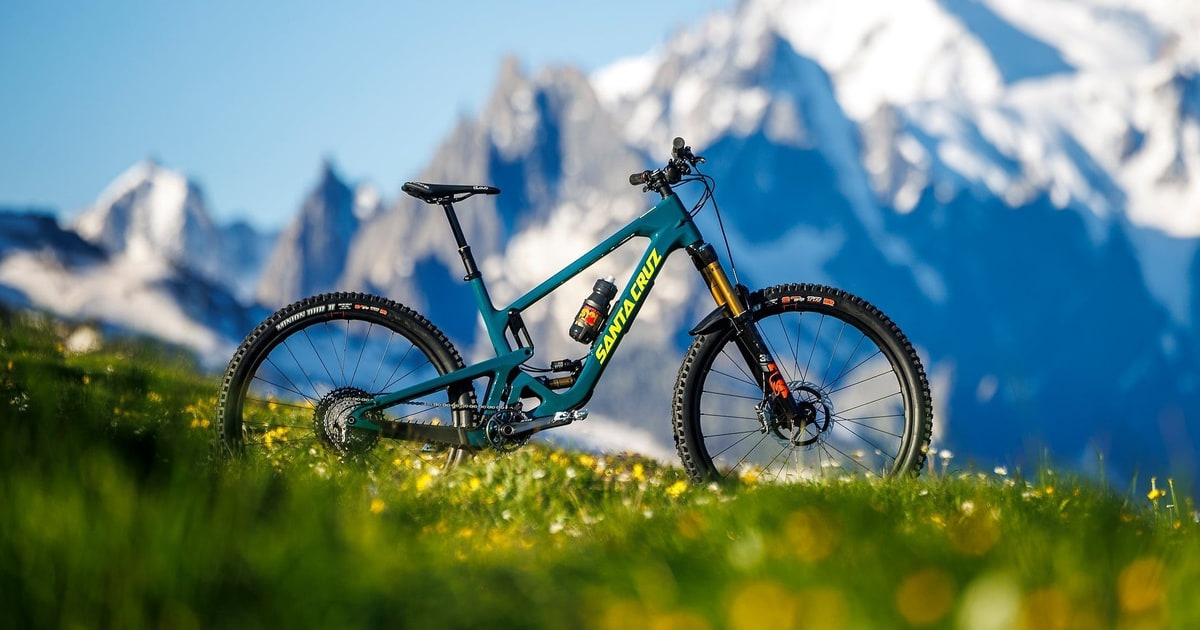
The bike you already own is probably fine. What's holding you back on a wet descent or a ride that runs long is usually smaller and cheaper than a new frame. Slippery pedals, a fork throwing grit into your eyes, no light when the sun drops behind the ridge, no way to warn a hiker you're coming. These are the small parts that decide whether a ride feels controlled or ragged, and most riders put off buying them far longer than they should.
Accessories are also where the marketing gets loosest. A lot of listings name a specific bike in the title — Fuel EX, Stumpjumper, Hightower — and that naming tells you almost nothing about whether the part fits your build. Bar diameters vary, dropper posts change what clamps where, and fender mounts differ between fork brands. Nothing in this category is universal, whatever the title says. You'll want to check your own bar diameter and fork before you order anything here.
So this guide covers the bolt-on parts that make a trail bike better to ride, not the bikes themselves. We're weighing them on fit, build quality and whether they actually earn their spot on your handlebar. We think that the aluminum flat pedals are the best trail mountain bike accessory for most people, and that the rechargeable light set is the one to buy if your rides regularly run past dusk.
Everything we recommend

The upgrade you'll feel on every single descent

For rides that run past sunset more often than planned

A polite warning beats yelling at a blind corner

Keeps trail spray out of your eyes and off your fork
At a glance
| Product | Accessory Type | Mount Compatibility | Price | |
|---|---|---|---|---|
| YXFXNL Bicycle Bell for Trek Fuel EXBudget pick | Bell | 22.2mm Handlebar | $28.99 |
 | Bicycle Seat Cushion for Specialized Stumpjumper 15Also in lineup | Seat Cushion | Stumpjumper 2025 | $36.35 |
| QJFHSNUUPS Bike Fenders Set for Santa CruzAlso great | Fenders | Hightower 2024-2026 | $38.99 |
 | Bike Mirror for Yeti SB130 C2 2019Also consider | Mirror | Yeti SB130 2019-2023 | $35.96 |
| Bike Lights for Canyon Neuron CF Gen3Runner-up | Lights | Canyon Neuron 2021-2026 | $26.99 |
| Bike Pedals for Ibis Ripley V5Top pick | Pedals | Ibis Ripley V5 | $44.71 |
| Bike Mirror for Norco Fluid FS 3Also in lineup | Mirror | Norco Fluid FS 3 | $35.96 |
How we picked
Fit and compatibility. We started by separating what the listing title claims from what actually determines fit. Bar diameter, fork clearance and crank threading decide whether a part works on your bike, so we favored items whose mounting method is clear from the listing rather than implied by a model name.
Materials that hold up. Trail parts take rock strikes, mud and pressure washing. Published reviews and owner feedback across these categories point the same way — aluminum bodies and replaceable hardware outlast molded plastic, so we weighted metal construction and serviceable parts heavily.
Mounting security. The most common complaint in owner feedback for handlebar accessories is slipping and rattling on rough descents. We looked for clamp designs and hardware that reviewers describe staying put, and we treated rubber-strap-only mounts as a compromise rather than a feature.
Earns its bar space. A trail cockpit is already crowded with a dropper lever, a shifter and two brakes. We favored parts that solve a problem you'll actually hit on a normal ride over ones that only make sense in a niche.
What it costs to own. We looked for parts with replaceable wear items — pins, straps, hardware — and for rechargeable rather than disposable power, since that's what determines whether a part gets used or abandoned after a season.
Top pick
The upgrade you'll feel on every single descent
Bike Pedals for Ibis Ripley V5
A set of aluminum flat pedals sized for a trail bike. Swapping out the plastic pedals most bikes ship with gives your feet a wide, grippy platform, and that one change does more for your confidence on rough ground than anything else you can bolt on.
$44.71fromAmazonNo other part on this list changes your riding this much. The plastic pedals that come on a new bike are placeholders. They flex, they're narrow, and the little nubs on them go slick the moment things get wet. An alloy platform with real pins holds your shoe where you put it. You stop thinking about your feet and start thinking about the trail.
Picture the moment this matters. You're dropping into something rocky, you're a little off balance, and your weight shifts forward. On slick plastic your foot skates off the pedal and the bike gets away from you. On a pinned alloy platform your shoe stays put and you ride it out. That's not a subtle difference — it's the difference between a save and a walk down.
Aluminum matters here more than it sounds like it should. It's what lets a pedal be thin and wide at the same time, which keeps your foot low and stable without turning the pedal into a rock magnet. Composite pedals can be fine, and they're kinder to your shins. But they wear their grip pattern down and you can't replace what's molded in.
There's a maintenance argument too. Flat pedals take direct rock strikes, and the alloy ones usually let you swap individual pins when you bend them. Owner feedback across the category keeps landing in the same place: pedals get replaced because the bearings or the pins gave up, not because the body cracked. Replaceable pins push that day out a long way.
Flaws but not dealbreakers
Metal pins and bare shins are a bad combination. If your foot comes off in the wrong moment, you'll get a stripe of scrapes down your leg that takes a couple of weeks to fade. Most riders who commit to flats end up wearing knee pads or tall socks, and that's a real cost in hot weather.
These also want proper flat-pedal shoes with a soft, sticky sole. In running shoes the pins chew up the tread and the grip is only okay. Budget for the shoes as part of the purchase, not as a later upgrade.
The listing names a specific bike model, which is marketing rather than a fit constraint. Pedals thread into cranks, not frames, so the model name in the title tells you nothing useful either way.
Runner-up
For rides that run past sunset more often than planned
Bike Lights for Canyon Neuron CF Gen3
A rechargeable headlight and taillight set. If you ride after work, or you keep misjudging how long a loop takes, this is the accessory that turns a stressful hike-out into a normal ride home.
$26.99fromAmazonEvery rider does this eventually. You get one more lap in, the light goes flat and orange, and suddenly the roots you've ridden a hundred times are invisible. A charged light on the bar changes that evening completely. It's not about riding technical trail in the dark — it's about getting back to the car without walking.
Rechargeable is the right call for a bike you actually ride. Disposable batteries always die on the ride you forgot to plan for. A USB-charged unit lives on your desk, tops up while you work, and goes back on the bar. Owner feedback across bike lights is consistent on this point: the light people keep using is the one that's easy to charge.
Pairing a headlight with a taillight matters more than most riders expect. Trail rides start and end on roads more often than we admit — the shuttle road, the neighborhood stretch back to the house. Being visible from behind on that half mile of pavement is worth as much as seeing the trail on the other half.
A bar-mounted light has a limitation worth understanding. It throws shadows away from you, so rocks and holes flatten out and get harder to read. A helmet light points where you look and solves that. If you're riding real singletrack in the dark, most experienced night riders run both, and a bar light like this one is the half you buy first.
Flaws but not dealbreakers
Runtime on rechargeable sets drops as the battery ages, and it drops faster in cold weather. Plan for less light than the listing suggests once the set has a season or two on it, and charge before you think you need to.
Rubber strap mounts are convenient but they loosen over rough ground. Check it partway through a rough descent or you'll finish the ride with the beam pointed at your front tire.
Budget pick
A polite warning beats yelling at a blind corner
YXFXNL Bicycle Bell for Trek Fuel EX
A small handlebar bell. On shared trails where you're coming up behind hikers, dog walkers and slower riders, a flick of the thumb does the job that shouting never quite does.
$28.99fromAmazonShared-use trails run on courtesy, and courtesy is mostly about warning. Shouting from behind startles people, and half the time they can't tell where the voice came from. A bell reads as friendly and it's directional. Hikers step aside without the flinch. That's the whole pitch, and it's a good one.
This is the smallest, simplest thing on the list, and it's the one most likely to keep you welcome on trails that could easily get closed to bikes. Several trail systems now ask riders to carry one. Even where nobody's asking, being the rider who announces themselves quietly is cheap goodwill.
Bar space on a trail bike is tight — dropper lever, shifter, two brakes — so the thing that decides whether a bell survives is whether it mounts small and stays put. Look for a clamp you can position inboard near the stem where your thumb still reaches it. The model name in the listing title is decorative; bar diameter is what actually matters.
Flaws but not dealbreakers
Bells rattle. On chattery ground you'll hear it ping against itself, and some riders find that maddening enough to take it back off. A wrap of electrical tape under the clamp helps.
It also doesn't carry far. On a fast descent with wind noise, a bell reaches people about a second before you do, which isn't always enough. It's an addition to riding at a sane speed, not a substitute for it.
Also great
Keeps trail spray out of your eyes and off your fork
QJFHSNUUPS Bike Fenders Set for Santa Cruz
A front and rear fender set for a full-suspension trail bike. In wet conditions it stops the roost your front tire throws straight at your face, and it keeps grit off the fork stanchions where it does real damage.
$38.99fromAmazonThe fork seals are the real reason to buy fenders. Grit thrown up by the front tire lands on the stanchions, gets dragged past the seals, and scores them. That's a service bill and a leaky fork. A small front fender blocks most of it for a fraction of the cost of a rebuild.
Then there's your face. Riding wet loam without a fender means a steady spray of cold mud into your eyes at exactly the moment you need to see the line. You end up squinting through it or riding slower. Neither is fun, and both are avoidable.
Fit is the thing to check before you order. Front fenders either zip-tie to the fork arch or bolt to specific mounts, and the gap between tire and arch varies by fork and tire size. The bike named in the listing title is a hint about intended clearance, not a guarantee. Measure yours.
Rear fenders are a smaller win but not nothing. They keep the worst of the stripe off your back and out of your shorts, and they keep some spray off the rear shock. If you only buy half the set's worth of usefulness, it's the front half.
Flaws but not dealbreakers
Fenders look fussy, and plenty of riders take them off when things dry out. That's fine — just don't lose the hardware, because the little bolts and zip ties are what make reinstallation painless.
Mud can pack between the fender and the tire on the wettest days, and then it drags. If your local dirt is the sticky kind, you'll be clearing it out mid-ride.
Who this is for
This guide is for you if you've got a trail bike you like and you're trying to figure out where a small amount of money makes the biggest difference. That's usually contact points and visibility, in that order. If you're still riding the plastic pedals your bike shipped with, start there. If your rides regularly run into dusk, or your local dirt turns to soup for a few months a year, the light set and the fenders are the ones that will change your riding most.
We're covering bolt-on accessories for full-suspension trail bikes — pedals, lights, fenders, bells, mirrors and cockpit storage. We're not covering complete bikes, drivetrains, suspension components, wheels or protective gear. And we're not covering anything where fit depends on measurements only you can take on your own bike, so check your bar diameter and fork clearance before you order. Every listing here names a specific bike model in its title, and in almost every case that's marketing rather than a real compatibility constraint.
How we picked
Fit and compatibility: we looked at what actually determines whether a part mounts — bar diameter, fork clearance, crank threading — and discounted the bike model names that listings put in their titles. Materials: published reviews and owner feedback both point toward aluminum bodies and replaceable hardware outlasting molded plastic on parts that take rock strikes and pressure washing. Mounting security: slipping and rattling on rough ground is the most common owner complaint across handlebar accessories, so we favored proper clamps over rubber straps alone. Bar space: a trail cockpit already carries a dropper lever, a shifter and two brakes, so a part has to solve a problem you'll hit on an ordinary ride. Cost of ownership: replaceable pins, straps and hardware, plus rechargeable rather than disposable power, decide whether a part survives past its first season.
Other trail mountain bike accessories worth considering
If you want to see traffic without turning your head: The Bike Mirror for Yeti SB130 C2 2019 ($35.96) — A handlebar mirror sounds like a road-bike thing, and on singletrack it mostly is. But if your ride includes a stretch of shoulder to reach the trailhead, glancing at a mirror is safer than looking over your shoulder and drifting. This one clamps to the bar and folds in. The trade-off is real: it's another thing on a crowded cockpit, it gets knocked out of alignment in a crash, and it's useless once you're in the trees. Buy it for the road half of your ride, not the dirt half.
The competition
This is what our research surfaced, not everything on the market. Trail bike accessories are a huge, thinly documented category, and a lot of what sells well never gets a published review at all. The parts below are ones we could confirm but wouldn't steer you toward first — either something above does the same job better, or the job itself is narrower than the listing suggests.
The Bicycle Seat Cushion for Specialized Stumpjumper 15 ($36.35) — A gel-style saddle cushion cover marketed for the Specialized Stumpjumper. The instinct behind it is understandable — if your sit bones hurt, add padding. But on a mountain bike that usually backfires. Extra squish lets you sink in and shifts pressure onto soft tissue, and a cover that slides on the saddle is exactly what you don't want when you're moving around over rough ground. Saddle pain on a trail bike is almost always a width or a fit problem, and a differently shaped saddle solves it properly. This makes more sense on a stationary trainer or a cruiser than on singletrack.
The Bike Mirror for Norco Fluid FS 3 ($35.96) — A second handlebar rearview mirror, this one listed for the Norco Fluid FS. It does the same job as the mirror in our also-consider section and faces the same limitations — it's useful on the road stretch to the trailhead and dead weight in the trees. There's no clear reason to pick this one over the other unless it happens to match your bar diameter better or you prefer its clamp. Check the mounting hardware against your own cockpit and let that decide.
Care and maintenance
None of this needs much, but the little that it needs, it needs regularly. Check clamp bolts on the bar every few rides — bells, mirrors and holders all creep on rough descents, and a bolt that's backed off is what precedes a part disappearing on the trail. Rinse fenders and pedals rather than blasting them; a pressure washer drives grit straight past pedal bearings and fork seals, which is the opposite of what you bought fenders for. Wipe the fork stanchions after every muddy ride even with a fender on. Charge the lights on a schedule instead of before rides, so they're never the reason you turn back. And keep the spare pins and hardware that come with these parts somewhere you'll find them.
Questions we get
Does the bike model in the listing title actually matter?
Usually not. Most of these parts attach to the handlebar, the fork or the cranks, none of which are specific to a frame model. What matters is your bar diameter, your fork clearance and your crank threading. Treat the model name as marketing and check the actual mounting spec instead.
Should I ride flat pedals or clipless on a trail bike?
Both are legitimate, and plenty of very fast riders use each. Flats let you put a foot down instantly and teach better body position, which is why they're the easier place to start. Clipless pedals hold your feet in place on chattery ground and help on long climbs. If you're unsure, flats with sticky shoes cost you nothing in skill and you can switch later.
Do I need a fender if I only ride in dry conditions?
Probably not for your face, but maybe for your fork. Dry dust still gets thrown onto the stanchions and worked past the seals over time. A small front fender is easy to leave on year-round and it takes some of that load off. If your trails are genuinely dusty rather than muddy, it's optional.
Is a bar light enough for riding at night?
It's enough to get you home safely, and it's the right first purchase. But a bar-mounted light casts shadows away from you, which flattens out rocks and holes. Riders who do real night laps usually add a helmet light so the beam follows their eyes. Start with the bar light and add the second one if night riding sticks.
How do I stop handlebar accessories from rattling loose?
Clean the bar where the clamp sits, then tighten to the torque marked on the part rather than by feel — carbon bars especially will crack if you overdo it. A thin strip of old inner tube or electrical tape under the clamp adds grip and kills most of the buzz. Check the bolts every few rides for the first month.
Which accessory should I buy first?
Pedals, unless you already have good ones. They're your main connection to the bike and the plastic ones most bikes ship with give up the moment things get wet or steep. After that, buy for your conditions: lights if your rides run late, fenders if your trails get wet.
Why you should trust us
For this guide:
- We read published reviews and manufacturer specifications across pedals, bike lights, fenders and handlebar hardware, and compared how each listing describes its mounting method.
- We looked at recurring themes in owner feedback for these categories, particularly complaints about clamps slipping, battery runtime fading and molded grip patterns wearing smooth.
- We did not ride, install or measure any of these parts ourselves — this guide is built from specifications, published reviews and owner feedback.
- We read owner reviews on every listing, weighted toward the critical ones, because that is where the recurring failures show up.
- We have a systematic way of automatically fetching the latest prices, so the numbers on this page stay current.
- This is a research-focused guide, so the team may not own every product listed — though we often do own the top winners, which gives us extra context for the recommendations.
- We don't accept free products, and the retailer commission never changes which product we recommend.
Sources
Best Trail Mountain Bikes — BikeRadar Buyer's Guide, BikeRadar
Best Mountain Bikes 2026 — Pinkbike, Pinkbike
Best Trail Mountain Bikes — Singletracks, Singletracks
Trail Bike Reviews — Vital MTB, Vital MTB
Mountain Bike Buying Guide — REI Co-op, REI Co-op
Best Mountain Bikes — Outside Online, Outside Online
Mountain Bike Action — Trail Bike Reviews, Mountain Bike Action
CyclingNews — Mountain Bike Reviews, CyclingNews
MBUK — Trail Bike Group Tests, MBUK (Mountain Bike UK)
Mountain Bike Geometry Trends Analysis — BikeRadar, BikeRadar
Yeti SB130 — Technical Overview, Yeti Cycles
Ibis Ripley V5 Review — Singletracks, Singletracks
Amazon product listings and owner reviews for all 7 products
Manufacturer specification pages for each product
Some passages in this guide may be paraphrased with AI help. Prices are refreshed automatically.
More like this.
Continue exploring lifestyle reviews and recommendations.

The Best Enduro Mountain Bike Helmets
A full-face enduro helmet has one job on a rough descent: keep your face out of the rocks. Head injuries account for roughly 22 to 29 percent of mountain…

The Best Trailer Hitches and Towing Accessories
Towing gear is the rare purchase where the boring choice is the right one. A hitch bolts to your frame, sits in road salt and spray for years, and then…

The Best Commuter E-Bike Accessories
A commuter e-bike gets you to work. The gear bolted to it decides whether the ride is pleasant or grim. You're out in traffic at speeds a regular bike…

The Best E-Bike Accessories and Upgrades
An e-bike changes what you ask of your gear. The bike is heavier, faster, and worth more than the commuter you probably owned before, and that shifts what…

The Best Hiking Boots and Trail Running Shoes
Footwear is the one piece of hiking gear you feel with every single step. A boot that rubs at mile two can ruin a whole weekend, and a sole that slides…

The Best Trail Cameras for Wildlife Photography
A trail camera does one thing that you can't: it sits in the woods for months without moving, blinking or smelling like a person. That's the whole appeal.…