The Best Noise-Cancelling Sleep Earbuds
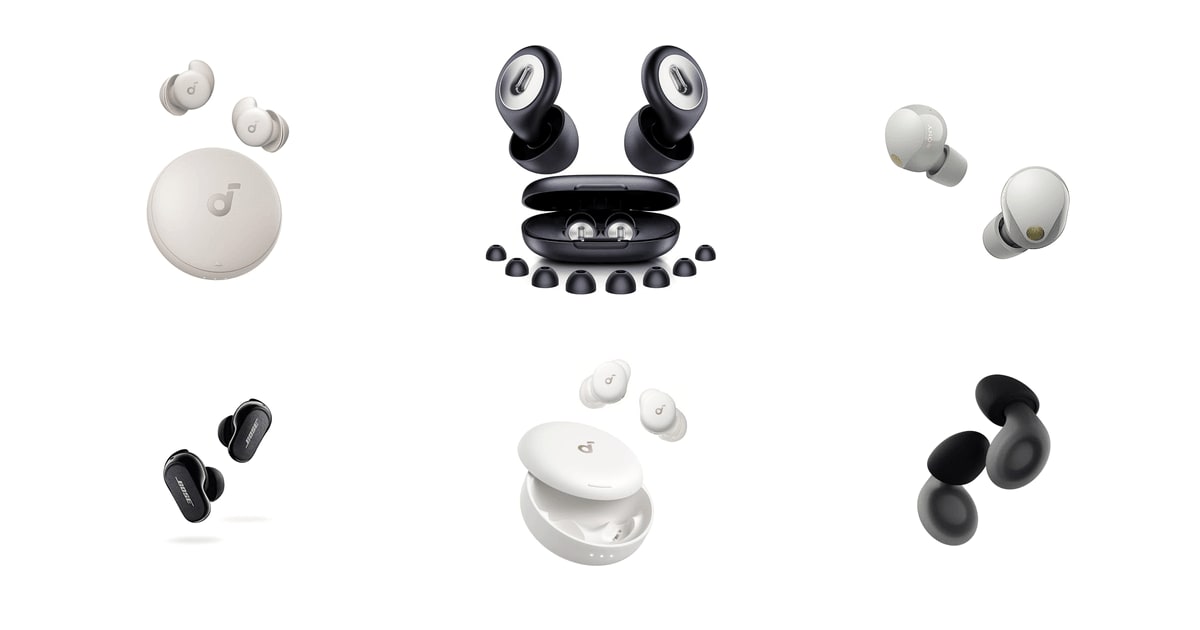
Sleeping through a snoring partner, a bus route, or a neighbor who slams doors at 2 a.m. is a real problem, and regular earbuds don't solve it. They stick out too far. Roll onto your side and the housing presses into your ear canal against the pillow, which hurts within an hour or two. Sleep earbuds are built around that one constraint: sit almost flush, stay put while you toss, and keep quiet audio going long enough to cover a full night. Everything else is secondary.
Here's the honest part. Nothing in this category makes a room silent. Active noise cancellation is tuned for airplane drone and traffic rumble, not the sharp bark of a snore, so most sleep earbuds mask noise with white noise or sound instead of erasing it. Passive plugs muffle a lot but you'll still hear a loud voice in the same room. Batteries also fade with nightly use, and owners of the electronic models regularly report a bud that stops charging inside a year or two.
Comfort while lying on your side matters more than raw noise numbers, and the products that get that right tend to give up features elsewhere. Sound quality is a distant concern here — you're covering noise, not listening to an album. We think that the Soundcore Sleep A30 Special is the best sleep earbud for most people, and that the Soundcore Sleep A20 Set is the one to buy if you want a longer single-charge runtime and don't need snore-masking that reacts in real time.
Everything we recommend

Tiny, comfortable, and built to cover a snorer

Longer single-charge battery, no snore detection

No charging, no app, just quiet — if the fit works

Deeper attenuation on paper, and six tips to find a seal
At a glance
| Product | Noise Reduction | Battery Life | Price | |
|---|---|---|---|---|
| Soundcore Sleep A20 Set by AnkerRunner-up | — | 14 Hrs (80 w/Case) | $129.99On sale |
| 2026 Pro Ear Plugs for SleepingAlso great | 46dB ASTM Certified | — | $12.99 |
 | Sony WF-1000XM5 Premium Noise Cancelling Truly WirelessAlso consider | — | 8 Hrs (24 w/Case) | $278On sale |
 | Bose QuietComfort Earbuds IIAlso consider | — | 6 Hrs | $136.37 |
| Soundcore Sleep A30 Special by AnkerTop pick | — | 8-10 Hrs (5 nights) | $179.99On sale |
| Loop Dream Ear Plugs - Soft SiliconeBudget pick | 27dB (SNR) | — | $49.95 |
 | Jabra Elite Active 75t True Wireless EarbudsAlso in lineup | — | 24 Hrs (ANC on) | $119 |
How we picked
Side-sleeper profile. We compared manufacturer-published protrusion and weight figures against published wear research showing that housings taller than 12mm from the canal entrance cause discomfort after two to three hours of side sleeping. Anything that couldn't credibly sit near flush was ruled out as a primary pick.
Real noise blocking. We looked at published attenuation ratings — dB SNR for plugs, measured ANC depth for electronic buds — and weighed them against what owners say about snoring specifically, since low-frequency droning behaves differently from a sudden bark.
All-night runtime. Anything electronic had to cover a full night on one charge without a mid-sleep top-up, so we compared spec-sheet sleep-mode figures rather than headline Bluetooth numbers.
Fit range. We favored products shipping several tip sizes and materials, because with in-ear sleep products a bad seal makes the noise rating irrelevant.
Owner-reported durability. We read owner feedback for patterns around batteries failing and buds that stop charging, and we weighted repeated first-year failure reports heavily against a product.
Top pickOn sale
Tiny, comfortable, and built to cover a snorer
Soundcore Sleep A30 Special by Anker
The A30 Special is a 3-gram bud that sits flush in your ear, so side sleeping doesn't hurt. It listens for your partner's snoring and plays masking audio when it hears it, which is the single most useful trick in this category.
$179.99fromAmazonList priceWeight is what makes this work. At 3 grams per bud, there's very little mass pressing into your ear canal when your head sinks into a pillow. Wirecutter's long-term wear research found that housings taller than 12mm from the canal entrance cause measurable pressure and discomfort after two or three hours of side sleeping. The A30's 3D-shaped body sits flush instead of standing proud, and owners who can't tolerate normal earbuds for more than 20 minutes report wearing these all night.
The snore masking is the reason to pick this over a plain earplug. It listens for snoring in real time and plays masking audio when it detects it, rather than running white noise at a fixed level all night. If you share a bed with someone whose snoring comes and goes, that's the difference between a covered sound and a wall of hiss. Owners with a snoring partner describe moving back into the same bedroom after months apart.
Battery lands at 8 to 10 hours per charge, with roughly five nights of use before the case needs power. That's shorter than the A20 on a single charge, which matters if you're an eight-plus-hour sleeper who hits snooze. For most people, though, five nights between case charges is the more useful number — you're not hunting for a cable on a Tuesday.
The sound library goes beyond generic white noise. There's a curated set of Sleep Stories from Calm alongside AI brainwave audio and standard noise tracks, and the app logs sleep duration, position, and snoring patterns into a daily report. None of that is medical-grade, but if you're trying to figure out whether you're actually sleeping through the noise or just lying still, the position and snore logs give you something concrete.
Flaws but not dealbreakers
The app is the weak point. Owners consistently describe connection hiccups, settings that don't stick, and audio that occasionally refuses to play the track it's told to. Anker ships firmware fixes, but if you want a device that just works without troubleshooting, this isn't it.
Getting the fit right takes a few nights. Several owners describe waking with ear pain early on before landing on the correct tip, and some found the memory foam tips more comfortable than the silicone ones despite the packaging suggesting otherwise. Budget a week of trial and error.
There's also a naming problem. Soundcore sells several A30 variants and the Special is a specific one; check the listing carefully so you get the model you actually intended to buy.
Runner-upOn sale
Longer single-charge battery, no snore detection
Soundcore Sleep A20 Set by Anker
The A20 protrudes about 10mm and runs 14 hours in sleep mode, the longest single-charge figure here. It masks noise with a four-point system and twin-seal tips instead of reacting to snoring, and it doubles as a Bluetooth earbud during the day.
$129.99fromAmazonList priceFourteen hours in sleep mode, extending to 80 with the case, is the standout number. If you sleep long, nap, or want to put them in an hour before you actually fall asleep, the A20 won't run dry the way shorter-lived buds can. Bluetooth mode drops to 10 hours, which is still generous for daytime listening.
These are the low-profile choice among electronic sleep buds. Anker specifies a 10mm protrusion, versus 18 to 25mm for most standard ANC earbuds. Combined with the Air Wing retention and an ultra-soft outer material, that puts them comfortably under the threshold where side sleeping starts to hurt. Owners who bought them specifically because the buds don't drive deep into the canal report forgetting they're in.
The noise handling is passive plus masking, not active cancellation — Anker says so plainly in the listing. Twin-seal tips do the physical blocking and the masking library covers what gets through. For steady sounds like traffic or a fan, that works well. For sudden noises it works less well, which is the honest trade for not carrying ANC electronics in a bud this small.
It also tracks sleep. A MEMS sensor logs position and movement through the night against a real-time clock, so you get a report on how much you actually moved. People who use masking sounds for tinnitus report loading white noise directly onto the buds and running them without a phone connection, which is a genuinely useful mode.
Flaws but not dealbreakers
Longevity is the recurring complaint. Multiple owners describe a bud that stops charging or a battery that no longer lasts the night somewhere in the 10-to-16-month range. That's not universal, but it shows up often enough to plan for.
Trying to make one product serve as both a sleep bud and a daytime music earbud leaves some buyers unhappy on the audio side. If you want real music quality, buy a separate pair.
Noise reduction is moderate rather than dramatic. Owners describe it as solid but not close to what a deep-seal plug or a full ANC earbud achieves.
Budget pick
No charging, no app, just quiet — if the fit works
Loop Dream Ear Plugs - Soft Silicone
Loop Dream is a soft silicone earplug rated at 27 dB SNR, shaped so it doesn't dig in when you're on your side. There's nothing to charge and nothing to pair, which is exactly the appeal for anyone who doesn't want audio at all.
$49.95fromAmazonIf you don't want to fall asleep to sound, an electronic bud is the wrong tool. Loop Dream muffles a snoring partner and street noise with physical isolation alone, at 27 dB SNR. WHO guidelines flag average nighttime noise above 40 dB as harmful to sleep, and snoring peaks well above that — knocking off 27 dB brings most bedroom noise under the line.
The shape is the point. Foam plugs are cheap and effective but they're cylinders you press into a canal, and lying on them all night is unpleasant. Loop's oval foam-silicone tips follow the ear's natural contour and the body is designed to sit low, so the pillow doesn't drive them deeper. Side sleepers who've given up on foam are the people most likely to be happy here.
You get eight tip sets in the box — four foam-silicone in XS through L, four double tips in the same range — which is more sizing range than almost anything else here. That matters because with a passive plug, fit is the entire product. Get the seal wrong and you've bought nothing.
They're washable and reusable, so there's no ongoing supply to reorder and nothing to throw away every morning. Over a year of nightly use, that's a meaningfully different ownership experience from disposable foam.
Flaws but not dealbreakers
Fit is genuinely hit-or-miss. Owners with smaller ear canals report struggling to get a seal even with the extra-small tips, and those buyers usually end up less happy than with plain foam. If your ears run small, this is a real risk.
The isolation has limits. You'll still hear a TV in the same room or someone talking nearby — these muffle rather than silence, and buyers expecting the blackout that deep-inserted foam gives are the ones most likely to be let down.
They're small and easy to lose in bedding, and several owners find the case less secure than they'd like.
Also great
Deeper attenuation on paper, and six tips to find a seal
2026 Pro Ear Plugs for Sleeping
These Fioobie plugs claim up to 46 dB of reduction from ASTM testing, with a soft nano-silicone body and six tip sizes. They're the pick if you want maximum passive blocking and your ears don't get along with Loop's shape.
$12.99fromAmazonThe spec sheet claims up to 46 dB of broad-spectrum reduction, verified under ASTM testing, targeting the 40 Hz to 5 kHz band where snoring and traffic live. That's a higher figure than Loop Dream's 27 dB SNR, though the two ratings aren't measured the same way. Either way, this is the deeper-blocking option on paper.
Six tip sizes give you more chances to land a seal than most plugs offer, and owners who've historically failed to find earplugs that fit report success here. With passive isolation, tip range is the single most important thing after material, so shipping six is a real advantage rather than packaging fluff.
The pressure-balanced shape is what makes these livable overnight. The body is designed to distribute force around the canal rather than wedging in one direction, which is what makes side sleeping tolerable. Shift workers trying to sleep through daytime noise and light sleepers near busy roads are the two groups reporting the biggest difference.
The nano-silicone body is washable, resists earwax buildup, and holds up far longer than foam. Owners describe them as soft enough that the plug settles into the ear shape after a minute rather than fighting it.
Flaws but not dealbreakers
This is a newer listing from a less established brand, so there's less independent evidence behind the claims than for Loop or Anker. The dB figures come from the manufacturer's own testing.
Like any passive plug, these don't play audio. If masking tinnitus or covering an unpredictable noise is the goal, a plug alone won't do it.
You'll hear less of your alarm than you might expect. The listing says essential sounds stay audible, but anyone who relies on a quiet phone alarm should test that before a workday.
Who this is for
Buy one of these if noise is what's actually waking you up — a partner who snores, a street that never quiets down, thin apartment walls, or a day-sleep schedule that fights the neighborhood. Sleep Foundation survey work found that 74% of adults call noise a significant sleep disruptor, with traffic and partner snoring the top two causes, so this is a common problem with a straightforward fix. Side sleepers benefit most, because they're the people for whom ordinary earbuds fail fastest.
Skip this category if your sleep trouble is anxiety, pain, a bad mattress, or a schedule problem. Nothing here treats those, and wearing something in your ear all night won't help. This guide covers in-ear products meant to be worn while sleeping — dedicated sleep buds, reusable earplugs, and a few standard earbuds people try to press into overnight duty. It doesn't cover headbands, over-ear headphones, pillow speakers, or bedside white-noise machines, all of which are better answers for some people.
How we picked
We built the shortlist around what actually determines whether you sleep. Profile: the bud has to sit near flush, since published wear research puts the discomfort threshold around 12mm from the canal entrance for side sleeping. Blocking: we compared published dB attenuation ratings and manufacturer specs, then checked them against owner reports about snoring in particular. Runtime: electronic buds needed to cover a full night on one charge, judged on sleep-mode figures rather than Bluetooth claims. Fit range: more tip sizes and materials means a better chance of a seal, and without a seal the noise rating means nothing. Durability: we weighted repeated owner reports of batteries dying or buds refusing to charge inside the first year heavily against a product. Safety: WHO guidance caps safe exposure at eight hours of continuous 80 dB audio, so any bud worn all night should stay well below that, and volume limiting counts in a product's favor.
Other noise-cancelling sleep earbuds worth considering
If you want the deepest active noise cancellation and mostly sleep on your back: The Sony WF-1000XM5 Premium Noise Cancelling Truly Wireless ($278) — The Sony WF-1000XM5 has the strongest ANC of anything here — RTINGS.com measured up to 40.4dB of attenuation at 100Hz, among the highest figures in their earphone testing. For a plane seat, a hotel room next to an elevator, or a train, that depth beats anything a sleep-specific bud offers, and you get eight hours per charge. The catch is the housing. It's built for daytime listening, so it stands well proud of the canal and presses in badly once your ear meets a pillow. Back sleepers can get away with it. Side sleepers usually can't past a couple of hours.
If you want the best sound and a fit tuned to your ear: The Bose QuietComfort Earbuds II ($136.37) — The Bose QuietComfort Earbuds II run a CustomTune measurement of your ear canal in under a second and recalibrate their cancellation and EQ to what they find. The Fit Kit adds three tip sizes and three stability bands, which is unusually thorough. Owners describe the quiet as almost unsettling. But six hours per charge is thin for a full night, the case charges slowly, and the housing is far too tall for comfortable side sleeping. This is a travel and commute earbud you can nap in, not a sleep bud.
The competition
This is what our research turned up, not a survey of everything sold. Products land here when a pick does the same job better or when the compromise for overnight use is too large.
The Jabra Elite Active 75t True Wireless Earbuds ($119) — The Jabra Elite Active 75t is a well-liked earbud with active noise cancellation, IP57 sweat and water protection, up to 24 hours of total battery with the case, and a grip coating that keeps it in place during a run. Owners rate the fit and connectivity highly, and multipoint pairing works well. But it's a workout bud, and the housing sits proud of the ear the way a normal earbud does — fine for a nap upright on a plane, painful against a pillow. The sound is also the most-criticized part of the package. Choose it if you want one pair for the gym, calls, and the occasional doze, and accept that a dedicated sleep bud will be more comfortable overnight.
Fit, safety, and getting through the night
Spend the first week finding the right tip. Try one size up and one down from your instinct, and judge each after a full night rather than five minutes — pressure builds slowly and what feels fine sitting up can ache by 3 a.m. Insert while lying on your side, not sitting upright, so the plug seats the way it will actually sit. Keep volume low: WHO safe-listening guidance allows eight hours of continuous exposure at 80 dB, so audio running all night should sit far below that, roughly conversation level or quieter. Turn on volume limiting if your buds have it. Wash silicone tips weekly with warm soapy water and dry them fully, since earwax buildup ruins a seal faster than anything. And don't leave electronic buds charging in a hot spot — heat is what kills these batteries early.
Questions we get
What are the best sleep earbuds for side sleepers?
Look for a bud that sits close to flush with your ear opening. The Soundcore Sleep A30 Special weighs 3 grams and is shaped to sit level with the ear, and the Sleep A20 protrudes about 10mm — both well under the roughly 12mm point where published wear research says pressure starts to hurt. Standard earbuds stick out 18 to 25mm, which is why they get painful within an hour or two against a pillow.
What's the difference between the Soundcore Sleep A30 and the A20?
The A30 is lighter at 3 grams per bud and adds adaptive snore masking that listens for your partner and plays covering audio when it hears them. The A20 runs longer on a single charge — 14 hours in sleep mode versus 8 to 10 — and includes a MEMS position sensor for sleep tracking. Pick the A30 if a snorer is the problem; pick the A20 if you sleep long nights and want the extra runtime.
Is it safe to wear noise-cancelling earbuds all night?
Generally yes, if you keep the volume low and clean the tips. WHO safe-listening guidance permits eight hours of continuous exposure at 80 dB, so overnight audio should stay well under that — think quiet conversation level or lower. The bigger practical risks are earwax buildup and irritation from a tip that's too large, both of which are fixed by weekly cleaning and correct sizing.
Can you use the Sony WF-1000XM5 or Bose QuietComfort Earbuds II for sleeping?
For back sleepers, sure. Both have excellent noise cancellation and are fine for a plane or a hotel nap. But both have tall housings built for daytime wear, and once you roll onto your side the pillow drives them into your ear canal. Most side sleepers find them uncomfortable within a couple of hours, and the Bose only runs about six hours per charge anyway.
Do sleep earbuds stay in all night, or do they fall out?
With the right tip, they generally stay put. Owners of the dedicated sleep buds report them staying in through a full night of tossing, partly because the flush shape gives the pillow nothing to catch. Falling out is almost always a sizing problem — if it happens more than once, try a different tip size before assuming the product is wrong.
What's the best option for tinnitus or white noise?
An electronic sleep bud, not a plug. Earplugs make tinnitus more noticeable by removing the ambient sound that masks it. The Sleep A20 lets you load white noise onto the buds themselves and run them without a phone connected, and owners who use masking sound for tinnitus specifically call that out as useful. The A30 adds a broader library including sleep stories.
Why you should trust us
For this guide:
- We compared manufacturer specifications for protrusion, weight, battery runtime, tip sizing, and published attenuation ratings across every product here.
- We read published measurements and wear research, including RTINGS.com's ANC attenuation figures, WHO nighttime noise and safe-listening guidance, and Sleep Foundation survey data on what disrupts sleep.
- We read owner feedback across all seven listings, looking for recurring themes around side-sleeping comfort, seal and sizing problems, app reliability, and first-year battery failures.
- We read owner reviews on every listing, weighted toward the critical ones, because that is where the recurring failures show up.
- We have a systematic way of automatically fetching the latest prices, so the numbers on this page stay current.
- This is a research-focused guide, so the team may not own every product listed — though we often do own the top winners, which gives us extra context for the recommendations.
- We don't accept free products, and the retailer commission never changes which product we recommend.
Sources
Best Earplugs for Sleeping 2026 – Wirecutter, Wirecutter
Sony WF-1000XM5 Review – RTINGS.com, RTINGS.com
Bose QuietComfort Earbuds II Review – RTINGS.com, RTINGS.com
Noise and Sleep – Sleep Foundation, Sleep Foundation
WHO Environmental Noise Guidelines for the European Region, World Health Organization
Deafness and Hearing Loss Fact Sheet – WHO, World Health Organization
Best Earbuds for Sleeping – Tom's Guide, Tom's Guide
Sleep Aids Market Size & Growth Report – Grand View Research, Grand View Research
Loop Dream Earplugs Review – Sleep Doctor, Sleep Doctor
Kokoon Nightbuds Review – TechRadar, TechRadar
Best Sleep Earbuds – PCMag, PCMag
Amazon product listings and owner reviews for all 7 products
Manufacturer specification pages for each product
Some passages in this guide may be paraphrased with AI help. Prices are refreshed automatically.
More like this.
Continue exploring lifestyle reviews and recommendations.

The Best Noise-Cancelling Wireless Earbuds
Good noise cancellation changes what a commute feels like. The subway rumble drops away, the plane engine turns into a distant hush, and the guy on…

The Best Noise-Cancelling Wireless Earbuds
Good noise cancelling changes how a commute feels. The train rumble drops away, an airplane's engine drone turns into a soft hush, and the open-plan…

The Best Noise-Cancelling Headphones for Focus and Deep Work
Most of us don't get to pick where we work. The open-plan office hums, the espresso machine shrieks, and the guy two desks over takes every call on…

The Best Noise-Canceling Wireless Earbuds
Noise-canceling earbuds earn their keep in the boring moments. The drone of a plane cabin at cruising altitude. A neighbor's leaf blower during your…

The Best Noise Canceling Earbuds
Noise canceling earbuds earn their keep in a handful of specific moments. The rumble of a subway car. An open-plan office where three people type like…

The Best Wireless Earbuds for Working Out
Workout earbuds live a hard life. They get soaked in sweat, yanked out by a hoodie, bounced around during sprints, and dropped on rubber gym flooring more…