The Best Chainsaws for Homeowners
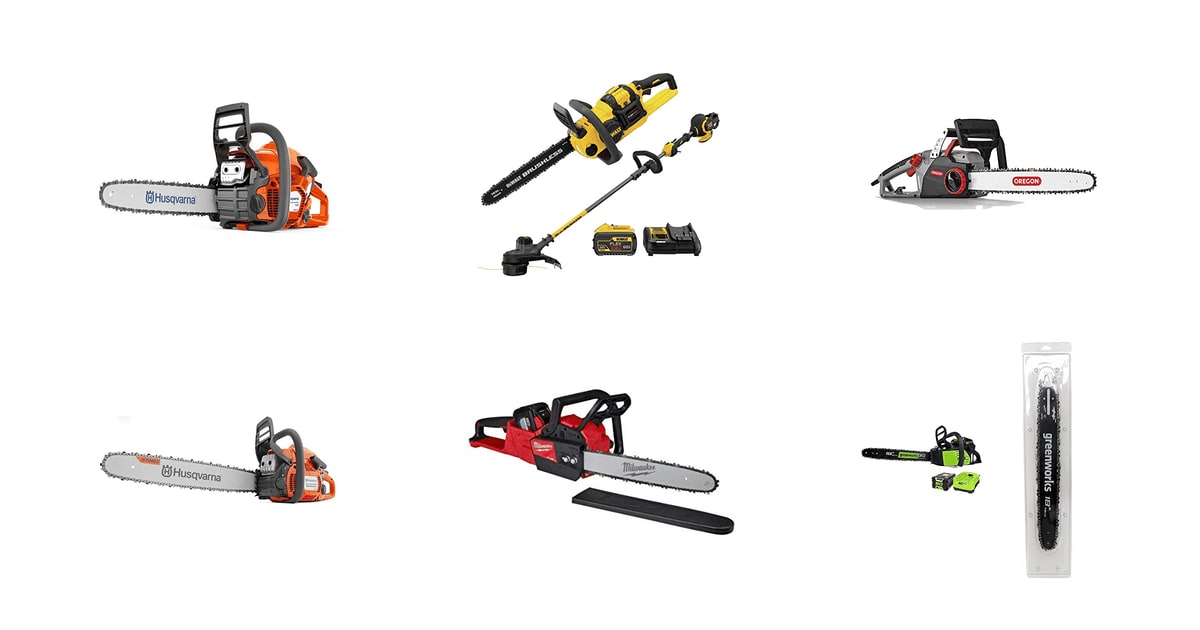
A chainsaw is a tool you use twice a year and then desperately for a whole weekend after a storm. That pattern shapes what matters. You want something that starts on the first try after sitting in the garage since spring, cuts a downed limb without bogging, and doesn't wreck your shoulders in twenty minutes. Raw engine size matters less than you'd think. For limbing branches and bucking logs under a foot thick, a 16-inch bar handles most of what a yard throws at you.
Here's the part no chainsaw fixes: this is the most dangerous tool most homeowners will ever pick up. The Consumer Product Safety Commission attributes roughly 36,000 emergency room visits a year to chainsaws, and about 40% of those injuries come from kickback — the bar jerking up and back toward your face. Every saw here has a chain brake and a low-kickback chain. None of them substitute for chaps, a helmet with a face shield, and gloves. Quieter saws still cut just as deep.
Battery saws have quietly taken over the homeowner market, and for good reason. High-voltage platforms cut fast enough for yard work, start with a trigger pull, and skip the fuel mixing and carburetor gumming that kill gas saws left in a shed. Gas still wins on a big rural lot where you're cutting all day and the nearest outlet is a hundred yards away. We think that the Greenworks Pro 80V 18-Inch Cordless Chainsaw is the best chainsaw for most homeowners, and that the Milwaukee 2727-20 M18 FUEL 16-inch chainsaw is the one to buy if you already own M18 batteries.
Everything we recommend

Enough cordless power for storm cleanup, and it arrives ready to cut
A strong cordless saw if you already own the batteries
Plug it in and cut, with a chain that sharpens itself

Real gas power for firewood and acreage, with the noise to match
At a glance
| Product | Bar Length | Power | Price | |
|---|---|---|---|---|
 | Husqvarna 135 Mark II Gas Powered ChainsawAlso in lineup | 16 in | 38cc 2.1HP | $299.99 |
 | DEWALT FLEXVOLT 60V MAX* String Trimmer &Also consider | — | 60V MAX | $879 |
| Oregon CS1500 Self-Sharpening Electric Chain SawBudget pick | 18 in | 15A | $133.87 |
| Husqvarna 450 Rancher 20 Inch Gas ChainsawUpgrade pick | 20 in | 50.2cc 3.2HP | $399On sale |
| Milwaukee 2727-20 M18 FUEL 16 in. ChainsawRunner-up | 16 in | M18 18V | $279 |
| Greenworks Pro 80V 18-Inch Cordless Chainsaw withTop pick | 18 in | 80V | $246.98 |
How we picked
Power that fits the job. We compared engine displacement on gas saws against voltage and motor type on cordless ones, using manufacturer specs and published reviews. The threshold was simple: it had to work through a 12-inch log without bogging down.
Bar length. This Old House puts a 16-inch bar at roughly 90% of homeowner tasks. We treated 16 to 18 inches as the useful range and skipped anything shorter as too limiting for storm cleanup.
Kickback protection. Every saw here has an inertia-activated chain brake and a low-kickback chain. The CPSC estimates that combination cuts kickback injury risk by about 70% compared with saws lacking both.
Weight and vibration. We looked at published weights alongside reporting on vibration, including Family Handyman's finding that gas saws shake eight to ten times as much as equivalent battery models. That's what decides whether hour two feels like hour one.
Parts and service. We favored saws using common bar-and-chain sizes and, for gas models, a real dealer network. A saw you can't get serviced locally is a saw you end up replacing.
Top pick
Enough cordless power for storm cleanup, and it arrives ready to cut
Greenworks Pro 80V 18-Inch Cordless Chainsaw with
This is a complete kit — saw, 80V battery and charger — with an 18-inch bar that handles storm limbs and firewood rounds without a fuel can in sight. Greenworks rates it for about 150 cuts through 4x4 lumber on the included pack, which covers a long afternoon of yard work.
$246.98fromAmazonThe 80-volt platform is what makes this saw feel like a gas saw. Voltage is a rough proxy for how hard a cordless motor can pull, and 80V sits at the top end of homeowner gear. Greenworks pairs it with a brushless motor, which wastes less energy as heat and holds torque when the chain gets buried in oak. Owners who came from gas describe it working through small and medium trunks without stalling out.
The kit matters more than the spec sheet here. Buy a tool-only cordless saw and you'll spend a good chunk again on a battery and charger before you can cut anything. This one shows up with both, plus a spare bar-and-chain combo. If you don't already own a cordless outdoor platform, that's the difference between cutting the day it lands on your porch and waiting on a second order.
The 18-inch bar is longer than most homeowners strictly need, and that's not a complaint. You can run it into a 14-inch trunk without leaning around the far side, and limbing gets easier because the tip reaches. It does add weight over a 16-inch setup — call it a pound or two — which you'll notice by the end of a long cleanup session.
It's quiet enough to run on a Saturday morning without irritating the whole street. Greenworks claims the saw is roughly nine times quieter than a comparable gas model and shakes about five times less. Independent reporting supports the vibration side: Family Handyman found gas saws generate eight to ten times the vibration of equivalent battery models, which starts to matter once you're past a couple of hours of cutting.
Flaws but not dealbreakers
The included battery is a 2Ah pack, which is on the small side for an 80V saw. It's fine for a session of limbing. If you're bucking a whole downed tree into rounds, you'll want a second, larger pack sitting on the charger, and that's another purchase.
Greenworks doesn't have the dealer network that Husqvarna and STIHL do. If something fails, you're working through phone and mail support rather than dropping the saw off across town. Owner feedback on this specific model is also thin compared with the long-running gas saws here, so there's less of a track record to lean on.
Runner-up
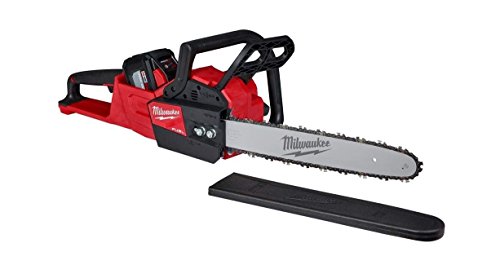
A strong cordless saw if you already own the batteries
Milwaukee 2727-20 M18 FUEL 16 in. Chainsaw
Milwaukee's 16-inch M18 FUEL saw runs on the same packs as your drill and impact driver, which is the whole argument for it. It ships as a bare tool, so you'll need to bring your own battery — preferably a high-capacity one.
$279fromAmazonMost people who buy this saw already have a pile of red packs on a shelf. That's the point. It runs on any M18 battery, and Milwaukee says plainly that higher-capacity packs yield higher performance — a big high-output battery makes this a noticeably different saw than a small one does. If you're already in the system, you skip the most expensive part of going cordless.
The 16-inch bar is the sweet spot for homeowner work. This Old House puts a 16-inch setup at roughly 90% of homeowner jobs — limbing up to 8 inches, bucking logs under 12, felling trees under 10 — while weighing a pound or two less than an 18-inch saw. Owners report cutting 14-inch hardwood with this one, which is already past what most yards ask of a saw.
Small things add up. A variable-speed trigger lets you feather the chain into a cut instead of slamming it, which helps when you're notching a limb that's under tension. The automatic oiler keeps the bar fed without you thinking about it. And it comes with an Oregon bar and chain — the same brand that stocks replacement chains at most hardware stores, so you're not hunting for a proprietary part.
Quiet is the underrated part of going cordless. Owners consistently note how much less punishing this is than a two-stroke screaming next to your ear. You still want hearing protection. But you can clear a fallen limb early on a Sunday without the saw announcing your project to everyone within three blocks.
Flaws but not dealbreakers
It's a bare tool. No battery, no charger. If you're not already on M18, the real cost of getting this saw cutting is a good deal higher than the box suggests, and a complete kit makes more sense.
Owners run into two recurring gripes. Batteries drain fast under load — a smaller pack can get warm in a single cut through a thick log — and the chain occasionally jumps the sprocket when tension drifts. Neither is unusual for a cordless saw. Both mean checking tension before every session and keeping a second pack charged.
Budget pick
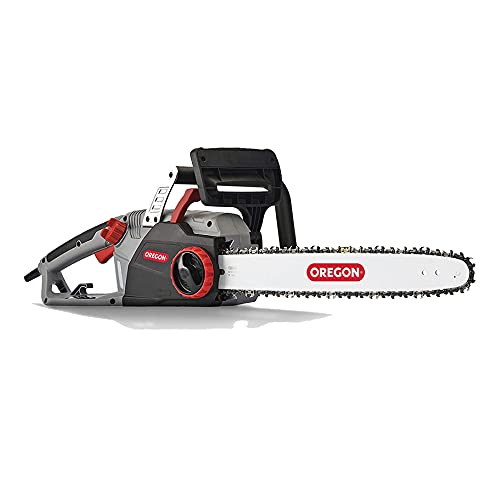
Plug it in and cut, with a chain that sharpens itself
Oregon CS1500 Self-Sharpening Electric Chain Saw
A corded 15-amp saw with an 18-inch bar and a built-in sharpener that brings a dull chain back in a few seconds. There's no battery to charge and no fuel to mix — just an extension cord and a trigger.
$133.87fromAmazonThe self-sharpening system solves a problem most homeowners never get around to. Oregon's built-in PowerSharp restores a dull chain in about three to five seconds, with no tools and no removing the chain. A dull chain is what makes a saw feel weak and underpowered, and sharpening is the maintenance step people skip for years. Here you pull a lever mid-job and get back to work.
Corded has real advantages if your cutting stays near the house. There's no runtime limit, no pack to remember to charge, and no fuel stabilizer ritual before the off-season. Storm cleanup in the front yard, pruning the maple, bucking a limb into fireplace lengths — all fine on a cord. Just buy a heavy-gauge outdoor extension cord, because a thin one starves a 15-amp motor.
It arrives pre-assembled, with tool-free tensioning and an automatic oiler. That's about as low as the barrier gets for a first chainsaw, and owners buying their first saw generally describe an easy first afternoon. The chain also stops the instant you let off the trigger. The 18-inch bar is more saw than a beginner needs, but you won't be stuck when a bigger limb comes down.
Against the cordless saws here, it's slower into thick hardwood and heavier than its size suggests at about 12.6 pounds before you add the cord. But it's the least complicated tool in this guide by a wide margin. Nothing to prime, nothing to charge, nothing that refuses to start after a long winter in the shed.
Flaws but not dealbreakers
The cord is the obvious limitation. You're tethered to the house, and stretching much past a hundred feet of extension means voltage drop and a motor that bogs. Back-lot work is out.
The PowerSharp system is also what owners complain about most. It works when it works, but the sharpening stone wears out and the proprietary chain costs more than a standard one. A fair number of long-term owners end up running ordinary chains and sharpening by hand. Motor failures also show up in owner feedback, usually under repeated heavy use the saw wasn't really built for.
The CS1500 comes with a two-year Oregon warranty.
Upgrade pickOn sale
Real gas power for firewood and acreage, with the noise to match
Husqvarna 450 Rancher 20 Inch Gas Chainsaw
A 50.2cc, 3.2-horsepower saw that takes bars from 13 to 20 inches and drops trees up to 18 inches thick in a single pass. This is what to buy if you heat with wood or keep a few acres of trees in line.
$399fromAmazonList priceNothing battery-powered in this guide keeps up with it over a long day. The 50.2cc X-Torq engine puts this saw a class above everything else here, and Husqvarna rates the 20-inch bar for trunks up to 18 inches in one pass. If you're putting up a cord of firewood, you refuel in about ten seconds and keep going. There's no charging break, and no second pack to buy.
Starting a gas saw is where most people give up on them. Husqvarna's Smart Start takes much of the resistance out of the pull cord, and the combined choke/stop control makes flooding less likely while you're still learning the sequence. Owners routinely report first- or second-pull starts. It's not as simple as squeezing a trigger, but it's a long way from the saws you may remember fighting.
Ergonomics get real attention here. LowVib dampeners sit between the engine and the handles, the asymmetrical rear handle and soft inlay keep your grip from cramping, and the balance is good for an 11-pound saw. That matters more than it sounds. Family Handyman reports gas saws produce eight to ten times the vibration of comparable battery models, which becomes a health issue past a couple of hours.
The dealer network is part of what you're paying for. Husqvarna saws get serviced at outdoor power equipment shops in most towns, so a fuel line or carburetor problem three years out is a drop-off rather than a mail-in. Air Injection helps too — the centrifugal cleaner spins larger debris out before it reaches the air filter, which stretches how often you're cleaning it.
Flaws but not dealbreakers
It's loud, it's heavy, and it demands maintenance you can't skip: mixed fuel, a clean air filter, stabilizer before the saw sits for a season. Skip those and you'll be shopping for a carburetor kit instead of cutting. Fuel use is noticeably higher than smaller saws, too.
Owner feedback isn't spotless. There's a cluster of reports about chains jumping the bar and units that choke out and won't restart, plus at least one spark plug torqued down far too hard at the factory. Most of it is dealer-fixable. Still, check chain tension and the plug before your first serious cut.
Who this is for
This guide is for homeowners — people who clear branches after a storm, cut a fallen limb into fireplace lengths, and take down the occasional small tree. If that's a few weekends a year on a suburban lot, a cordless saw is almost certainly your answer. You'll skip fuel mixing, off-season carburetor problems, and the noise that makes neighbors shut their windows. If you have an acre or more and burn wood through the winter, gas still earns its keep.
We're not covering professional felling saws, pole saws, or the one-handed mini pruning saws that have gotten popular. And if you're taking down a mature tree near a house, a fence, or a power line, hire an arborist. That's not false modesty about the tools — a saw that can drop a big tree can just as easily drop it on your roof. First-time buyers should also budget for chaps, a helmet with a face shield, and cut-resistant gloves before the saw itself.
How we picked
Power source: we weighed gas, corded and cordless against how homeowners actually cut — short bursts, a few times a year — and gave cordless the edge for anything under an acre. Bar length: a 16-inch bar covers roughly 90% of yard work, so we treated longer bars as a bonus rather than a requirement and ruled out short-bar saws. Safety: every saw here has an inertia-activated chain brake and a low-kickback chain, a combination the CPSC estimates reduces kickback injury risk by around 70%. Weight and vibration: we compared published weights and vibration reporting, because fatigue is what ends most cutting sessions. Service: we favored saws with standard chains you can buy locally and, for gas, a dealer within driving distance.
Other chainsaws for homeowners worth considering
If you already own DEWALT 60V FLEXVOLT batteries: The DEWALT FLEXVOLT 60V MAX* String Trimmer & ($879) — This combo pairs the DCCS670X1 chainsaw with a 15-inch string trimmer and a 3Ah FLEXVOLT pack, so you get two yard tools sharing one battery. DEWALT publishes chain speed of up to 70 feet per minute, which lands it in the same neighborhood as an entry-level 30 to 35cc gas saw. The saw has tool-free tensioning, an automatic oiler with a quarter-turn cap, and a chain brake. The catch is that 3Ah pack — it's thin for a saw this size, and owners say the trimmer runs it down in about half an hour, so plan on a second battery. The two tools also ship in separate boxes that may show up on different days. If you don't want a trimmer, a saw-only kit makes more sense.
The competition
This is what our research surfaced in the homeowner range, not a census of everything on the market. The saw below is one we looked at closely and passed over.
The Husqvarna 135 Mark II Gas Powered Chainsaw ($299.99) — The Husqvarna 135 Mark II is a 38cc, 2.1-horsepower gas saw with a 16-inch bar, and on paper it's exactly what a first-time gas buyer wants. Smart Start takes the fight out of the pull cord, there's an inertia chain brake and LowVib dampening, and the side-mounted tensioner sits where you can actually reach it. Air Injection spins debris out before it hits the air filter. What kept it out of the picks is owner feedback, which splits harder than any other saw here — a real cluster of reports about rough idling, stalling after every cut, and units that quit inside the first year. Some of that is carburetor tuning a dealer sorts out in an afternoon. But you're buying a gas saw to avoid fuss. If you want a light Husqvarna for limbing and there's a service shop nearby, it's still worth a look.
Care and maintenance
Whatever you buy, the chain does the work — not the engine. A sharp chain pulls itself into the wood and throws chunky chips; a dull one makes fine sawdust and forces you to push, which is exactly when kickback happens. Check tension before every session, with the saw cold and the chain snug against the bar but still turnable by hand. Top off the bar oil every time you refuel or swap batteries, because running a bar dry ruins it fast. For gas saws, drain the fuel or add stabilizer before the saw sits for a season, since ethanol gums up carburetors. Cordless packs prefer a partial charge and a shelf indoors over a freezing garage.
Questions we get
Is a gas or battery chainsaw better for homeowners?
For most suburban homeowners, battery. High-voltage cordless platforms cut fast enough for limbing and bucking, start with a trigger, and skip fuel mixing and off-season carburetor trouble. Gas still wins if you're processing firewood on acreage or cutting all day away from an outlet. The rough dividing line is about an acre, and whether you heat with wood.
What size chainsaw bar do I need?
A 16-inch bar handles about 90% of homeowner jobs, according to This Old House — limbing branches up to 8 inches, bucking logs under 12, and felling trees under 10 inches across. An 18-inch bar adds reach and a pound or two of weight. As a rule, your bar should be roughly 2 inches longer than the thickest wood you plan to cut in one pass.
Can a homeowner chainsaw cut down a tree with a 20-inch trunk?
Technically yes, by cutting from both sides, and the Husqvarna 450 Rancher is rated for 18-inch trunks in a single pass. But cutting a trunk wider than your bar is an advanced technique with a narrow margin for error. A tree that size can weigh several tons and won't forgive a sloppy hinge. If it's anywhere near a house, a fence, or a power line, hire an arborist.
What safety gear do I need before using a chainsaw for the first time?
Chaps rated for chainsaw use, a helmet with a face shield, hearing protection, and cut-resistant gloves — all of it, every time. The CPSC ties roughly 36,000 emergency room visits a year to chainsaws, and about 40% of those come from kickback. Chaps are the piece people skip and the piece that saves legs. Sturdy boots and close-fitting sleeves help too.
How often do I need to sharpen a chainsaw chain?
Sharpen when the saw stops pulling itself into the wood. A sharp chain throws chunky chips; a dull one makes fine sawdust and makes you lean on it. In clean wood that might be every few tanks or batteries, but hit dirt or a hidden nail once and you're dull immediately. The Oregon CS1500's built-in PowerSharp system does the job in a few seconds without removing the chain.
How do I store a chainsaw over the winter?
For gas saws, either run the tank dry or add fuel stabilizer, because ethanol-blended gas gums up a carburetor within a few months of sitting. Clean the chips out of the sprocket cover and air filter, wipe the bar, and hang the saw with a scabbard on. Cordless packs should come inside, since a freezing garage shortens their life. Store batteries partly charged rather than full or empty.
Why you should trust us
For this guide:
- We read manufacturer spec sheets for every saw here, along with published reviews from This Old House, Family Handyman and Popular Mechanics and safety guidance from the U.S. Consumer Product Safety Commission.
- We compared displacement, voltage, bar length and published weight across gas, corded and cordless saws to see which trade-offs actually matter at yard scale.
- We read owner feedback for recurring themes — chain tension trouble, battery drain under load, hard starting — rather than weighing one-off complaints.
- We read owner reviews on every listing, weighted toward the critical ones, because that is where the recurring failures show up.
- We have a systematic way of automatically fetching the latest prices, so the numbers on this page stay current.
- This is a research-focused guide, so the team may not own every product listed — though we often do own the top winners, which gives us extra context for the recommendations.
- We don't accept free products, and the retailer commission never changes which product we recommend.
Sources
Best Chainsaws of 2026 — Wirecutter, Wirecutter
Best Chainsaws Tested by Our Pros — Popular Mechanics, Popular Mechanics
Best Chainsaws for Home Use — This Old House, This Old House
Best Chainsaws — Bob Vila, Bob Vila
Best Chainsaws of 2026 — Family Handyman, Family Handyman
Chainsaw Safety — U.S. Consumer Product Safety Commission, U.S. Consumer Product Safety Commission
STIHL MS 170 Product Specifications, STIHL USA
Husqvarna 450 Rancher Specifications, Husqvarna USA
Best Battery-Powered Chainsaws — Consumer Reports, Consumer Reports
PowerSharp Self-Sharpening System — Oregon Products, Oregon Products
Best Chainsaws for Homeowners — The Spruce, The Spruce
Global Chainsaw Market Report 2024–2027, Grand View Research
Amazon product listings and owner reviews for all 6 products
Manufacturer specification pages for each product
Some passages in this guide may be paraphrased with AI help. Prices are refreshed automatically.
More like this.
Continue exploring home reviews and recommendations.

The Best Homeowner Tool Sets
Most home repairs come down to a handful of moves. You tighten a wobbly toilet bolt, swap a cabinet hinge, put together a bookshelf, or pull the shipping…

The Best Airtight Pantry Storage Containers
A bag of flour rolled shut with a chip clip isn't sealed. Air gets in, and so does everything else. Cereal goes soft, brown sugar turns into a brick, and…

The Best Garage Storage Cabinets
A garage cabinet does one job better than any shelf or pegboard: it hides the mess and locks the dangerous stuff away. Open shelving turns into a dust…

The Best Leaf Blowers
Leaf blowers get judged on two numbers, and only one of them matters most days. CFM is air volume - how much leaf litter you can push across a lawn in one…

The Best Wet/Dry Shop Vacuums
A shop vacuum is the tool you drag out when a regular vacuum would die trying. Broken tile, wet sawdust, a burst supply line under the sink, the gravel…

The Best Truck Bed Organizers
A truck bed is a great place to put things and a terrible place to keep them. Gear slides to the tailgate on every stop and back toward the cab on every…