The Best Woks for High-Heat Cooking
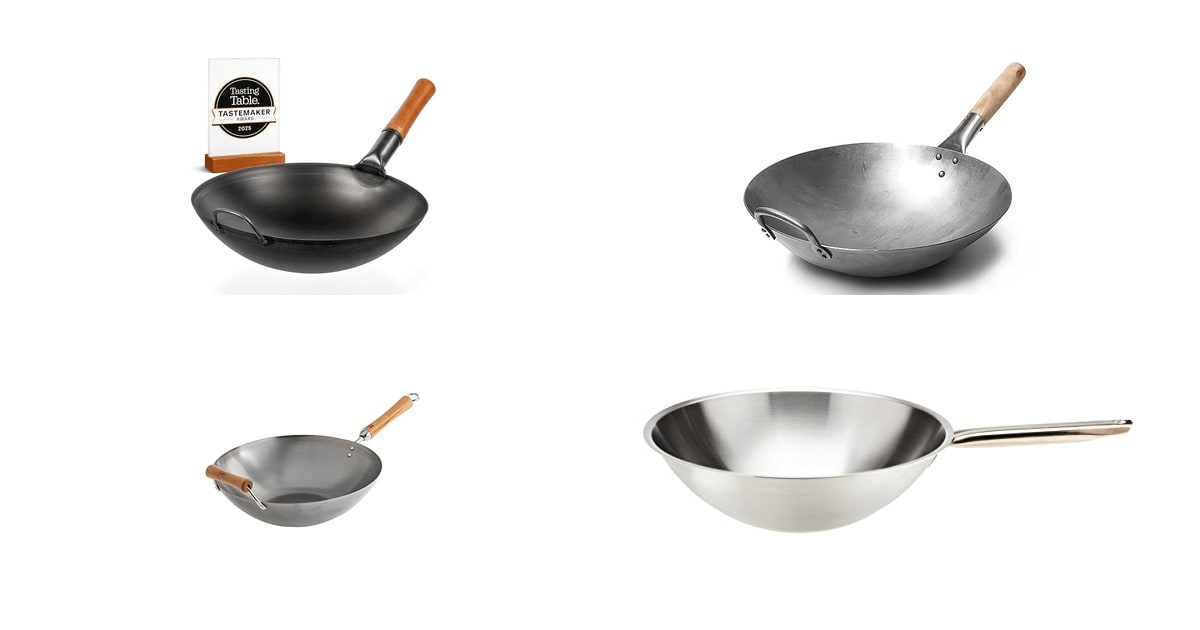
A wok does one thing no skillet can: it gets brutally hot and stays hot while you keep the food moving. That's how green beans blister at the edges and beef browns instead of stewing in its own juice. Carbon steel is what makes it possible. The metal is thin, it heats in a couple of minutes, and it builds a dark, slick patina the more you cook on it. You don't buy a wok because it's convenient. You buy it for the heat.
Here's the honest part. Nothing you cook at home will match a restaurant wok station, because your burner puts out a small fraction of the heat theirs does. Every pan here also demands upkeep: hand wash, dry it on the burner, wipe it with a little oil. Skip that and you'll find rust, which owners report over and over. And the two woks that cook best have round bottoms, so they need a gas flame or a wok ring to sit still.
Most people reading this cook on a residential gas range and want better stir-fry than a nonstick pan can give them. That's who these picks are for. We think that the Craft Wok Traditional Hand Hammered Chinese Carbon Steel Wok is the best wok for most people, and that the YOSUKATA 14-inch Carbon Steel Wok is the one to buy if you'd rather start with a pre-seasoned surface and a lighter pan in your hand.
Everything we recommend

The traditional round-bottom wok, if you cook on gas

Nearly the same wok, pre-seasoned and a little lighter

A flat-bottom starter that works on any stove you own
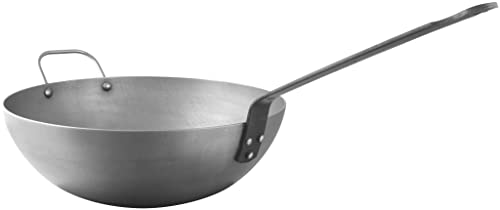
Serious heat retention, if you can handle the weight
At a glance
| Product | Diameter | Material | Price | |
|---|---|---|---|---|
| YOSUKATA 14" Carbon Steel Wok with RoundRunner-up | 14 in | Carbon Steel | $64.99 |
| Craft Wok Traditional Hand Hammered Chinese CarbonTop pick | 14 in | Carbon Steel | $65.75 |
| JOYCE CHEN Classic Series 14-Inch Carbon SteelBudget pick | 14 in | Carbon Steel | $36.95On sale |
 | Matfer Bourgeat Tradition Stainless Steel WokAlso in lineup | 12 in | Stainless Steel | $221.20 |
| Mauviel M'Steel Black Carbon Natural Nonstick Wok/StirUpgrade pick | 11.8 in | Carbon Steel | $147.46On sale |
How we picked
Material and heat. We limited the field to uncoated carbon or black steel, the material professional wok kitchens actually use. Coated pans degrade at the temperatures real stir-fry requires, so they were out from the start.
Stove compatibility. We checked each manufacturer's stated compatibility rather than assuming, because several woks that read as universal are explicitly gas-only. A pan that can't sit flat on your burner is not a pan you'll use.
Gauge and weight. Published specs let us compare wall thickness and weight directly, from 1.5mm and 3.24 pounds up to extra-thick steel at over six. We looked for a gauge that recovers heat quickly without being too heavy to move.
Seasoning reports. Owner feedback is the clearest signal for how forgiving a wok is during its first hours, and that's where most people fail. We weighted patterns in rust, sticking and patchy patina heavily.
Handles and balance. We favored a long handle that keeps your hand out of the flame, plus a helper handle on anything heavy. Published reviews and owner comments both flag handle heat and loose rivets as long-term annoyances.
Top pick
The traditional round-bottom wok, if you cook on gas
Craft Wok Traditional Hand Hammered Chinese Carbon
A hand-hammered carbon steel wok with a round bottom, built the way professional Chinese kitchens build them. On a gas burner it heats fast, tosses easily, and turns genuinely slick once seasoned — but it needs a flame, and it needs you to do that seasoning right.
$65.75fromAmazonThe round bottom is the whole point. On a gas burner the flame wraps up the curved sides, so you're heating far more of the pan than a flat disc ever gets. Food slides back toward the center hot spot on its own, which makes tossing feel natural instead of like a wrestling match. Once the motion clicks, you'll flip a batch of rice one-handed without thinking about it.
The steel is 15-gauge — about 1.8mm — hammered by hand in Guangzhou. That thickness sits in a useful middle. It holds temperature better than the thin Joyce Chen when you drop in cold beef, but it stays light enough that a wristy toss doesn't wear out your forearm halfway through dinner. At roughly 4.6 pounds, it's a little heavier than the Yosukata and much lighter than the Mauviel.
Owner feedback on this one is unusually consistent. People season it once, cook on it constantly, and describe a surface that's genuinely non-stick after a few months. The complaints follow a pattern too, and it's a revealing one: most trace back to a rushed or incomplete first burn-in rather than anything wrong with the steel. Do that step properly and this is a pan you keep for decades.
Two handles help more than you'd expect. The long wooden one keeps your palm well clear of the flame, and the looped steel helper handle gives you something to grab when the pan is loaded with two pounds of food and hot oil. It also hangs on a hook, which matters, because a round-bottom wok is a nuisance to store in a cabinet.
Flaws but not dealbreakers
It will not work on a flat electric or induction cooktop. That's not a quibble, it's the manufacturer's own warning — the curved base barely touches a flat surface, so you get a small scorched circle and cold walls. A wok ring lets you use it on a standard gas grate, but the ring lifts the pan away from the flame and costs you some of the heat you bought the wok for.
It arrives bare, with a factory anti-rust coating you have to scrub off and a full seasoning cycle ahead of you before the first meal. That's an hour of work at the stove with the vent on. A handful of buyers have also reported receiving a differently branded pan from third-party sellers, so it's worth checking what actually shows up in the box.
Runner-up
Nearly the same wok, pre-seasoned and a little lighter
YOSUKATA 14" Carbon Steel Wok with Round
Nearly the same pan as our top pick — round bottom, hammered carbon steel, gas and open fire only — but it arrives pre-seasoned and weighs about three-quarters of a pound less. That's a real head start if you've never seasoned a pan, and the lighter body is easier to toss.
$64.99fromAmazonThe Yosukata and the Craft Wok are close cousins, and choosing between them comes down to two things: how much you weigh the head start of factory seasoning, and how much your arm cares about 0.8 pounds. At 3.8 pounds this is the lighter pan, and over a long session of tossing you feel that. Owners who cook for two or three people most nights tend to prefer it for exactly that reason.
Pre-seasoning saves you the worst part of day one. The pan comes out of the box already blackened at high temperature, so you're adding to a base coat rather than building one from bare metal. You still need to oil and heat it a couple of times before the first meal — the maker says so plainly — but you skip the long scrub-and-strip that a raw wok demands.
It's built for fire, not just for a kitchen range. Owners pair it with outdoor propane wok burners and campfire setups constantly, and the round base drops neatly into a burner cradle. The wooden handle is long enough to keep your hand out of the heat plume, which matters more outdoors, where the flame comes up the sides much further than it does on a home burner.
The hammered surface isn't only decoration. The dimpled texture gives oil somewhere to sit and keeps food in contact with metal instead of sliding around in a puddle, which is part of why a seasoned carbon steel pan browns so aggressively. It also hides the uneven patina you'll get during the first few months of use.
Flaws but not dealbreakers
Quality control isn't perfect. A small but real share of buyers report pinholes or thin spots in the cooking surface on arrival — enough that you should inspect the pan under good light before you start seasoning it rather than after. It's a returnable defect, but only if you catch it early.
Like the Craft Wok, it's gas or open flame only, so induction and glass-top owners can stop reading here. The wooden handle also chars if you run a burner at full output with the flame licking past the pan's edge, so keep the ring of fire under the wok, not around it.
Budget pickOn sale
A flat-bottom starter that works on any stove you own
JOYCE CHEN Classic Series 14-Inch Carbon Steel
A thin, light, flat-bottomed carbon steel wok that sits stable on any burner, including electric coils and glass tops. It's the least demanding pan here to swing around and the most demanding to season, which is exactly the trade you make at this end of the range.
$36.95fromAmazonList priceThis is the least intimidating way into real carbon steel. It weighs 3.24 pounds, so a beginner can practice the toss without their shoulder giving out after two minutes. The flat bottom sits securely on a gas grate, an electric coil, or a glass top with no ring and no wobble. If you're not sure wok cooking is for you, this is the pan that lets you find out cheaply.
The steel is 1.5mm, thinner than everything else here, and that cuts both ways. It comes up to temperature in a hurry on a modest burner, which helps if your range tops out around 12,000 BTU. But it also dumps heat the moment cold food lands. Cook in small batches — think under a pound at a time — and preheat until a water droplet skitters, and it does fine work.
Birch handles stay cool through a long session and give you a comfortable grip, which is why culinary classrooms have leaned on this pan for a very long time. The shape is a straightforward 14-inch bowl with generous walls, so there's room to toss without flinging scallions onto the burner.
Flaws but not dealbreakers
Owner feedback on this one is genuinely split, and the split is almost entirely about seasoning. The thin steel scorches oil easily, so the layer goes gummy or blotchy if you apply too much or run the burner too hot, and people who end up with a patchy surface report sticking and rust spots soon after. We still recommend it because the failures cluster around technique rather than the pan itself — but go in knowing you may need to strip it and start over once.
The rivets holding the birch handles can work loose after years of heavy use, and the thin gauge gives you more pronounced hot spots than the thicker woks when you overload it. Neither is a dealbreaker for a couple of stir-fries a week. Both are reasons this is a starter pan rather than a lifetime one.
Upgrade pickOn sale
Serious heat retention, if you can handle the weight
Mauviel M'Steel Black Carbon Natural Nonstick Wok/Stir
Extra-thick French black steel with a riveted iron handle, flat-bottomed and rated for every cooking surface. It holds temperature better than anything else here, so cold chicken hits the pan without killing the sear — but at over six pounds, tossing is basically off the table.
$147.46fromAmazonList priceNothing else here holds heat like this pan. At just over six pounds of thick black steel, it behaves more like a deep sauté pan than a traditional wok. Drop in a cold chop or a duck breast and the surface barely flinches, so you get an actual crust instead of gray, steamed meat. If a lot of your cooking is searing protein and only some of it is stir-fry, this is the one.
It's flat-bottomed and rated for every cooking surface, induction included, which quietly makes it the most flexible pan in this guide. Owners on glass tops and induction hobs — the people our two round-bottom picks leave out entirely — consistently land here. The extra mass also compensates a little for induction's lower ceiling: it takes longer to get there, then stays there.
Mauviel is a long-established French cookware maker, and the build shows it. Stainless rivets, a solid iron handle, a heavy uniform wall — owners who've used it almost daily for years describe a surface that turned slick and non-stick and stayed that way. The natural seasoning does what a coating can't: it improves under the high heat that destroys nonstick.
The iron handle is a genuine feature, not just old-fashioned. It survives an open flame and full oven heat, so you can start a whole fish on the stove and finish it under the broiler without swapping pans. Just remember it conducts, and plan accordingly.
Flaws but not dealbreakers
The weight is the real cost. Add two pounds of food to a six-pound pan and traditional tossing stops being a technique and starts being a lift. Owners with strong arms and hot burners still say it's too heavy to move the way a wok wants to be moved. You'll be stirring with a spatula, not flipping.
That iron handle gets hot within a couple of minutes on the stove, so a towel or a silicone sleeve is mandatory rather than optional. The pan also ships coated in a protective wax you have to bake or scrub off before the first seasoning, and a few owners find this steel fussier to season evenly than other French carbon steel pans. At 11.8 inches it's on the small side too, which limits batch size.
Who this is for
Buy a carbon steel wok if you have a gas burner and you're willing to hand wash it, dry it on the stove and wipe it with oil every single time. That routine takes about ninety seconds and it's non-negotiable. If you cook on induction or a glass top, your realistic options here narrow to the Joyce Chen and the Mauviel, and you should adjust your expectations about wok hei — those surfaces can't reach the temperatures an open flame does. And if you want a pan you can leave in the sink overnight, this whole category is the wrong purchase.
This guide covers uncoated carbon and black steel woks roughly 12 to 14 inches across, the size that suits a household of two to four. We don't cover electric woks, nonstick or ceramic-coated woks, or cast iron, all of which fail on either high-heat safety or sheer weight. We also don't cover wok rings, spatulas or lids, though a round-bottom pick will need a ring unless your burner is built for one.
How we picked
Material: uncoated carbon or black steel only, since coatings break down at stir-fry temperatures and the seasoned patina is the whole appeal. Stove fit: we took each maker's stated compatibility at face value, because round-bottom woks genuinely don't work on flat electric or induction. Gauge: thin steel heats faster and tosses easier, thick steel recovers faster after cold food goes in, and we wanted picks at both ends of that trade. Handles: a long handle that keeps your hand clear of the flame, plus a helper handle on anything past four pounds. Upkeep: we leaned on owner feedback about rust, sticking and failed seasoning, since that's where most woks actually die.
The competition
This is what our research turned up in this lineup, not a survey of every wok sold. One pan here didn't make the picks, and it's worth explaining why rather than leaving it unmentioned.
The Matfer Bourgeat Tradition Stainless Steel Wok ($221.20) — The Matfer Bourgeat Tradition Wok is a well-made 12-inch pan from a respected French professional supplier, with a sealed stainless handle set at a comfortable angle and low-profile rivets that don't catch food. But it's stainless steel, not carbon steel, and that's a category difference rather than a small one: it won't build the dark seasoned patina that makes a wok release food, so sticking at high heat is a live problem. At 2.06 pounds it's also by far the lightest pan here, which means temperature crashes the moment cold ingredients land. There's almost no owner feedback to check any of this against, either. It could still make sense if you flatly refuse to maintain seasoning and want something that won't rust when it sits in the sink — but for stir-fry, the carbon steel picks are better tools.
Seasoning and care
Every wok here needs a proper first seasoning, pre-seasoned ones included. Scrub the pan with hot soapy water and an abrasive pad to strip the factory anti-rust coating, then dry it on the burner until no moisture is left. Wipe on a very thin layer of high-smoke-point oil — grapeseed, avocado or flaxseed — across the whole interior including the walls, heat until it just wisps smoke, and let it cool. Repeat two or three times. Thin coats are the trick; too much oil turns sticky. After that, cook fatty aromatics like scallions, ginger and garlic for the first several sessions to build the patina fast. Never use the dishwasher, never soak it, and dry it on heat after every wash.
Questions we get
What's the best wok for a home gas stove?
For a standard residential gas range, the Craft Wok is the pick, used with a wok ring so the round base sits steady on the grate. If your range has a high-output burner rated well above 15,000 BTU, or you're cooking on an outdoor propane burner, the round bottom really earns its keep because the flame climbs the curved walls. On a modest burner, the flat-bottomed Joyce Chen gets more of your heat into the pan.
Can you use a wok on an induction cooktop?
Only if it's flat-bottomed and magnetic. The Mauviel is explicitly rated for all cooking surfaces, and the flat Joyce Chen works too, though its thin steel gives back heat quickly. The round-bottom Craft Wok and Yosukata won't make usable contact with a flat induction surface, and their makers say so directly. Keep in mind that induction can't reach open-flame temperatures, so thicker pans that hold heat are the better bet there.
Carbon steel or cast iron for a wok?
Carbon steel, for almost everyone. It heats several times faster and weighs a fraction as much — the woks here run from about three to six pounds, while a comparable cast iron wok can top ten. That weight difference is what makes tossing possible at all. Cast iron holds heat a little longer once hot, but it responds slowly when you adjust the flame, and professional wok kitchens use carbon steel exclusively.
Flat bottom or round bottom?
Round bottoms cook better; flat bottoms fit more kitchens. A round wok lets the flame heat the sides and returns food to the center on its own, which is why our top two picks have one. But it needs a gas flame and usually a ring, and it's useless on electric or induction. If you have a glass top, coils, or an induction hob, buy flat and don't think about it again.
What is wok hei, and can you get it at home?
Wok hei is the faintly smoky, caramelized flavor that separates restaurant stir-fry from most home versions. It comes from a very hot pan, fast browning, and oil vapor igniting around the food as you toss it. A restaurant wok range puts out many times the heat of a home burner, so you won't fully replicate it indoors. You can get close: preheat until the pan is nearly smoking, cook well under a pound at a time, and keep the food moving. An outdoor propane wok burner closes most of the gap.
Are nonstick woks safe at high heat?
No, not for real stir-fry. PTFE coatings start breaking down and giving off fumes at temperatures a wok routinely blows past, and those fumes are unpleasant for people and dangerous for pet birds. Ceramic coatings tolerate heat better but lose their release properties within a year or two of high-heat use. A properly seasoned carbon steel wok gives you plenty of release with no coating to destroy.
Why you should trust us
For this guide:
- We compared manufacturer specifications for every pan in this lineup — steel gauge, weight, diameter and stated stove compatibility — rather than relying on how the listings describe themselves.
- We read published kitchen-equipment reviews and material comparisons covering wok geometry, carbon steel behavior at high heat and the limits of coated pans.
- We worked through owner feedback for each listing, looking for repeated patterns in seasoning failures, rust, handle heat and manufacturing defects.
- We read owner reviews on every listing, weighted toward the critical ones, because that is where the recurring failures show up.
- We have a systematic way of automatically fetching the latest prices, so the numbers on this page stay current.
- This is a research-focused guide, so the team may not own every product listed — though we often do own the top winners, which gives us extra context for the recommendations.
- We don't accept free products, and the retailer commission never changes which product we recommend.
Sources
The Best Woks, Tested and Reviewed, Wirecutter / The New York Times
The Best Woks for Stir-Frying at Home, Serious Eats
The Science of Wok Cooking — The Food Lab Complete Guide, Serious Eats
Which Wok Should I Buy?, Cook's Illustrated / America's Test Kitchen
Best Woks of 2025, Bon Appétit
Wok Cookware Reviews, Food Network Kitchen
Carbon Steel vs. Cast Iron Cookware: What's the Difference?, The Spruce Eats
Are Nonstick Pans Safe at High Heat?, Consumer Reports
Amazon product listings and owner reviews for all 5 products
Manufacturer specification pages for each product
Some passages in this guide may be paraphrased with AI help. Prices are refreshed automatically.
More like this.
Continue exploring appliances reviews and recommendations.

The Best Carbon Steel Woks
A carbon steel wok is the rare pan that gets better the longer you own it. It's thin enough to heat fast, heavy enough to hold that heat when you dump in…

The Best High-Pressure Shower Heads
A shower head is the fixture you touch every single morning, and a bad one sets the tone for the whole day. Weak pressure means standing under a lukewarm…

The Best Instant Pots and Pressure Cookers
An electric pressure cooker earns its counter space by collapsing time. A pot roast that needs three hours on the stove is done in under an hour,…

The Best Dutch Ovens for Slow Cooking
A Dutch oven earns its shelf space by doing one thing better than anything else in your kitchen: it turns cheap, tough cuts into something worth serving.…

The Best Slow Cookers
A slow cooker is the rare appliance that does its best work while you're gone. You put a chuck roast, some onions and a can of tomatoes in the pot before…

The Best Multi-Cookers and Pressure Cookers
A good multi-cooker changes what a Tuesday night looks like. You throw in dried beans you forgot to soak, a chuck roast straight from the fridge, or rice…