The Best Sous Vide Machines
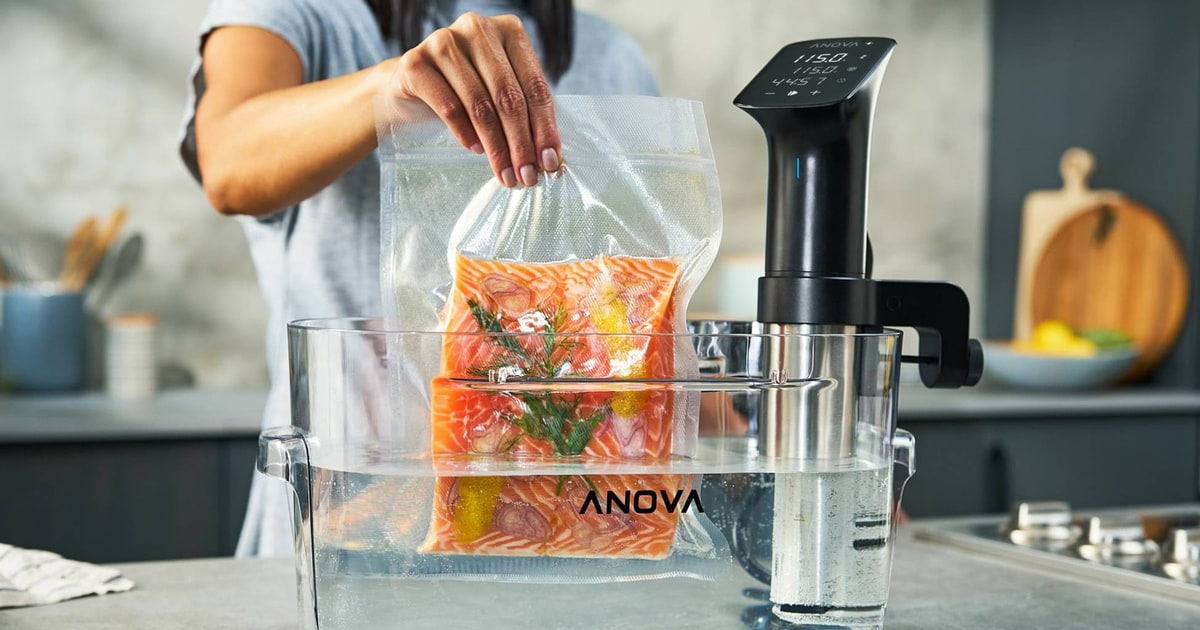
Sous vide takes the guesswork out of dinner. You drop a sealed bag into a water bath, set a number, and the machine holds that number for hours. A chicken breast comes out juicy instead of chalky. A steak is the same pink from edge to edge, and you only need a hot pan for the last minute. Lab testing at Good Housekeeping found sous vide pork tenderloin lost about 25% less weight to evaporation than the same cut roasted in an oven. That's the whole appeal.
No circulator browns anything, though. You still need a screaming-hot skillet or a torch for the crust, and that last step is where most people undo their careful work. Sous vide is also slow. A steak takes hours, not minutes, so it rewards planning over improvisation. Every unit here makes noise you'll notice in a quiet room; published measurements across the category run from roughly 42 to 58 decibels. And a big open bath puts humidity into your kitchen. None of that is a dealbreaker, but no machine fixes it.
Most people don't need restaurant hardware, and plenty of people don't want to open a phone app just to heat water. So we weighted heating power, temperature stability, how well the clamp grips a real pot, and how the thing behaves with the app closed. We leaned on manufacturer specifications, published reviews from kitchen-testing outlets, and recurring themes in owner feedback. We think that the Anova Precision Cooker Pro is the best sous vide machine for most people, and that the Breville Joule Turbo is the one to buy if counter and drawer space is tight.
Everything we recommend
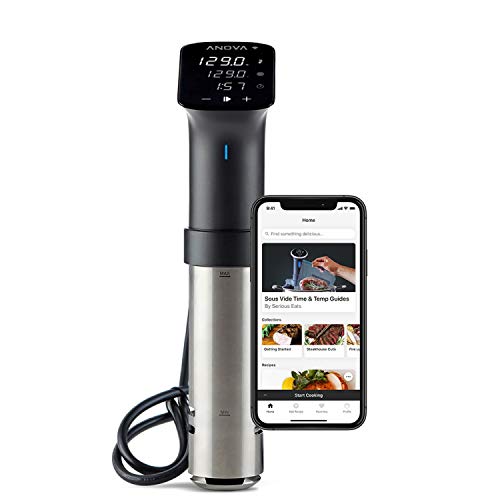
Built to run for days, with an app that actually helps
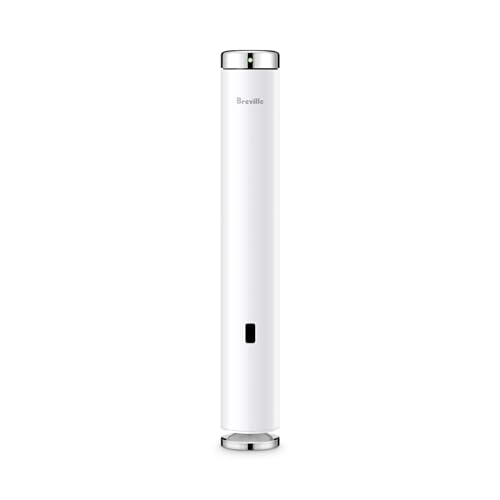
Faster cooks and a tiny footprint, if you live in the app

Nearly premium accuracy and WiFi, for a lot less

A quiet dial-and-go cooker with no accounts to set up
At a glance
| Product | Wattage | Temp Range | Price | |
|---|---|---|---|---|
| Anova Culinary Sous Vide Precision Cooker ProTop pick | 1200 Watts | — | $198.96On sale |
| Breville BSV600PSS Joule Turbo Sous Vide MachineRunner-up | — | — | $227.27On sale |
| INKBIRD WIFI Sous Vide Cooker ISV-100W BundleBudget pick | 1000 Watts | 77-210°F | $128.99 |
 | Sous VideAlso consider | 1100W | 25-90°C | $43.99 |
 | Fityou Accu Slim Sous Vide Thermal ImmersionAlso in lineup | 1100W | 77-203°F | $79.99 |
| Greater Goods Sous Vide CookerAlso great | 1100W | 68-203°F | $89.99 |
How we picked
Temperature stability. We compared manufacturer accuracy claims against variance figures from independent testing outlets. Anything rated to hold within roughly a tenth to two-tenths of a degree Celsius across a long cook made the cut, because that's the range culinary scientists treat as reliable for protein.
Heating power and speed. We looked for at least 1000 watts, since preheat time is what decides whether sous vide is a weeknight option or a weekend project. Published head-to-head testing showed meaningful preheat differences between units at similar prices.
Controls and connectivity. We favored cookers you can run from the unit itself, then treated WiFi as a bonus and Bluetooth-only as a limitation. Owner feedback repeatedly flags app dependence as the thing people regret.
Clamp and container fit. We checked rated water volumes and clamp designs against the containers people actually own: a 12-quart tub, a stockpot, sometimes a cooler. A cooker that only grips thin pot walls is a daily irritation.
Noise and cleanup. We weighed published decibel measurements and motor type, since a circulator runs for hours in a room you're living in. Removable or rinsable housings broke ties.
Top pickOn sale
Built to run for days, with an app that actually helps
Anova Culinary Sous Vide Precision Cooker Pro
The Precision Cooker Pro is the sturdiest, most powerful circulator here, with a stainless body rated for continuous use and onboard controls that work without a phone. It heats far more water than a home cook will ever need, which means it never strains on a family-size batch.
$198.96fromAmazonList priceIt's the most powerful cooker in this lineup, and it never sounds like it's working hard. The Pro draws 1200 watts and Anova rates it for baths up to 100 liters in a covered container. You'll probably use a 12-quart tub. That gap matters more than it sounds: a machine running well below its ceiling comes up to temperature quickly and recovers fast when you drop in cold food, which is exactly what a weeknight cook needs.
Anova builds this one for abuse. The housing is stainless steel, it's drop resistant, and the company rates it for a minimum of 10,000 hours of continuous operation. If you cook a big Sunday batch of chicken breasts every week, or you leave short ribs going for two days, that rating is the reason to buy this over a lighter plastic unit. Owner feedback on Anova's line consistently points at longevity as the reason people repurchase.
The app is the best reason to pick Anova over anyone else. Anova says its app has passed 5 million downloads and carries more than 1,000 guided recipes with step-by-step temperature and timing. If you've never cooked an egg at 167°F and have no idea whether that's right, that library is worth real money. Dual WiFi and Bluetooth means you can check the bath from the couch, or from the grocery store.
You can ignore all of that and still cook. Time and temperature both set on the unit itself, so the Pro works fine if your WiFi drops or you never make an account. The clamp is large and fully adjustable, and it grips thick-walled polycarbonate tubs and thin stockpots equally well. Anova's temperature control holds within about a tenth of a degree Celsius across a long cook, which is the threshold that matters for protein.
Flaws but not dealbreakers
It's big. At nearly 14 inches long and about three pounds, this is the least drawer-friendly cooker here. If your kitchen storage is already a game of Tetris, that's a genuine daily annoyance, and the Joule Turbo below solves it.
The best recipe content sits behind a subscription. Controlling time and temperature in the app is free, but Anova gates its guided chef content behind a monthly or yearly plan. It's optional, and the cooker doesn't need it. It still stings on a cooker that already costs more than most.
Runner-upOn sale
Faster cooks and a tiny footprint, if you live in the app
Breville BSV600PSS Joule Turbo Sous Vide Machine
The Joule Turbo is about as thick as a paper towel roll and weighs roughly two pounds, so it slides into a drawer. Turbo mode cuts protein cook times sharply, and the doneness picker makes it the easiest unit here to get right on your first try.
$227.27fromAmazonList priceNothing else here is this small. The Joule Turbo is under two inches across and weighs a bit over two pounds, with a magnetic base that sticks to a steel pot so you're not fighting a clamp. If you cook in a galley kitchen or an apartment where every drawer is spoken for, that's the single biggest practical difference between this and our top pick.
Turbo mode is the headline, and it's real. Breville uses cloud-computed cooking algorithms to run proteins hotter at the start and then settle in, which the company says finishes chicken, steak and fish in about half the usual time. Head-to-head testing at The Spruce Eats found the Joule Turbo's 1100-watt element brought a 12-liter bath up to 135°F roughly 15% faster than comparably priced rivals.
Visual Doneness is the friendliest onramp in sous vide. Instead of asking you to know that 129°F means medium-rare, the app shows you pictures of a cut at each doneness level and you tap the one you want. Prime Time then gives you a window when the food is at its best, so dinner isn't ruined because someone's running late. For a first-time sous vide cook, that's worth more than a spec sheet.
Breville's cook guides come from its own test kitchen. The presets cover the core proteins with times and temperatures the company's chefs worked out, and the Joule app adds full guided recipes on top. You can follow a whole meal, not just heat a bag. The polished stainless finish also wipes clean easily, which matters more than you'd think after a fatty brisket cook.
Flaws but not dealbreakers
There are no controls on the cooker. Everything runs through your phone. Lose the phone, kill the battery, or hand the kitchen to a houseguest, and the Joule Turbo is a metal stick. Our top pick and both of the app-free cookers below don't have this problem.
Turbo leans on the cloud. The accelerated cook times are computed remotely, so a flaky connection can leave you in standard mode. Standard mode still cooks well, but you'd be paying for a feature you can't always reach.
Budget pick
Nearly premium accuracy and WiFi, for a lot less
INKBIRD WIFI Sous Vide Cooker ISV-100W Bundle
The Inkbird ISV-100W gives you 1000 watts, real WiFi remote monitoring and a touch LCD at a fraction of what the premium units cost. This bundle adds a hard-shell case, which is the tidiest storage answer of any cooker here.
$128.99fromAmazonIt holds temperature close enough that you won't taste the difference. Inkbird rates the ISV-100W at ±0.1°C, and independent testing at Wirecutter measured about ±0.2°C variance in practice, comparable to units costing considerably more. For a steak or a chicken breast, a fifth of a degree is invisible. That's the whole argument for buying this instead of spending twice as much.
You still get WiFi, not just Bluetooth. The cooker joins a 2.4 GHz network, so you can check and adjust the bath from anywhere in the house rather than hovering within Bluetooth range. Fourteen presets cover the usual proteins if you don't want to look anything up. It's a genuinely modern feature set on a budget cooker.
It's quiet and it handles a family-size bath. Inkbird rates the motor at under 40 decibels and the unit for water volumes up to 20 liters, which covers a 12-quart tub with room to spare. The 1000-watt element gets there quickly enough for a weeknight. Owners of Inkbird cookers consistently call out low noise as the reason they keep it on the counter.
Small touches make it easier to live with. The stainless body rinses clean, and a built-in calibration function lets you nudge the reading if it drifts against a thermometer you trust. The bundled EVA case with a shockproof shell and mesh pocket means the cooker and cord live in one place instead of rolling around a cabinet.
Flaws but not dealbreakers
Twenty liters is the ceiling. That's plenty for a 12-quart container, but if you want to run a giant cambro for weekly meal prep, the Anova Pro's 100-liter rating is a different class of machine.
The app is functional, not delightful. Inkbird's recipe library is thin next to Anova's thousand-plus guided cooks, and the setup only works on 2.4 GHz networks. If your router hides that band, expect a few minutes of fiddling.
Also great
A quiet dial-and-go cooker with no accounts to set up
Greater Goods Sous Vide Cooker
The Greater Goods cooker has no app, no WiFi and no pairing — just one dial and a bright angled display. A brushless motor keeps it unusually quiet, which matters if your kitchen opens onto the room where people are actually sitting.
$89.99fromAmazonYou set it with one dial, and that's the whole interface. Twist for temperature, press, twist for time, press. There's no account, no firmware update, no phone. If you've ever been locked out of an appliance by a login screen, this is the cooker for you, and it's the one to hand to a family member who won't read a manual.
It's built to be quiet on purpose. A brushless motor replaces the buzzing pump most circulators use. That's a real difference in an open-plan apartment, where published measurements across the category top out near 58 decibels — loud enough to hear from the couch through a whole dinner cook.
The precision controls are more serious than the simple interface suggests. You get 68 to 203°F in half-degree Fahrenheit steps, a live readout to a tenth of a degree, easy °F/°C switching, and built-in calibration so you can match it to your own thermometer. The 1100-watt element handles baths up to 15 liters, and the timer runs from one minute to 99 hours for brisket or yogurt.
It's the easiest one to clean and put away. The stainless housing pops off and goes in the dishwasher, which is a rare feature and a welcome one after a fatty cook. A color-coded status light tells you across the kitchen whether it's heating, cooking or done. A storage bag and cord tie come in the box.
Flaws but not dealbreakers
No app means no remote monitoring. If you like starting a cook and then leaving the house, this is the wrong machine. You have to walk over and look at it.
Fifteen liters is a modest ceiling. Fine for a 12-quart tub and a family dinner. Not enough if you're filling a big cooler for batch cooking.
Who this is for
Buy a sous vide cooker if you cook protein often and you're tired of the two-minute window between perfect and overdone. It's transformative for chicken breast, salmon, pork tenderloin, eggs, and tough cuts like short ribs and brisket that need long, gentle heat. It's also excellent for meal prep, because you can hold a full bath of portions at temperature and finish them all week. Skip it if you mostly improvise dinner at seven o'clock — a steak still needs a couple of hours in the bath, and no machine changes that.
This guide covers immersion circulators: the stick-shaped units that clamp onto a container you already own. We don't cover all-in-one water ovens, which take up permanent counter space and cap you at their built-in tub size, and we don't cover vacuum sealers or bags. You don't need a sealer to start; the zip-lock water displacement method works for nearly every home recipe. What you do need is a container with a lid or some plastic wrap, since evaporation is the main enemy of a long cook.
How we picked
We judged every cooker on the same handful of things. Temperature stability: manufacturer accuracy ratings checked against variance measured by independent testing outlets, with roughly a tenth to two-tenths of a degree Celsius as the bar. Heating power: at least 1000 watts, because preheat time decides whether you'll actually use this on a Tuesday. Controls: onboard time and temperature settings first, WiFi as a real bonus, Bluetooth-only as a strike. Container fit: rated water volume and clamp range measured against the 12-quart tubs and stockpots people already own. Noise and cleanup: published decibel figures, brushless versus standard motors, and whether the housing comes off for washing.
Other sous vide machines worth considering
If you want a cooker you can rinse under the tap: The Sous Vide ($43.99) — The Wancle is IPX7 waterproof, so you can hold the whole thing under running water instead of wiping around a vent. It's also the lightest cooker here at well under two pounds, with 1100 watts, a 3D circulation design, a range of 25 to 90°C, and a 99-hour timer with a delayed-start reservation function. Everything sets on a big angled screen with one hand, no app involved. What you give up is remote monitoring, a recipe library, and the build quality of our stainless top pick — and the 90°C ceiling is lower than most, so very hot vegetable cooks are off the table.
The competition
This is what our research surfaced, not a census of every circulator sold. Sous vide hardware turns over constantly, and plenty of capable machines never make it onto a testing outlet's radar. Here's the remaining unit we looked at and why it didn't earn a pick.
The Fityou Accu Slim Sous Vide Thermal Immersion ($79.99) — The Fityou Accu Slim is a 1100-watt app-free circulator with a full touch screen, a 77 to 203°F range, a 99-hour timer and 0.1°C resolution, wrapped in 304 stainless. On paper it's close to the Greater Goods cooker, and it's a reasonable starter machine. But it doesn't have the Greater Goods unit's removable dishwasher-safe housing, its half-degree Fahrenheit adjustment or its status light, and there's no independent testing of its temperature stability to lean on. Choose it if it's the app-free cooker you can get your hands on; otherwise the Greater Goods is the safer version of the same idea.
Setup and care
Fill your container between the minimum and maximum lines etched on the cooker — too little water and it'll alarm, too much and it can't circulate properly. Cover the bath with a lid or plastic wrap for anything over an hour, because evaporation drops the level and steams up your cabinets. Use the water displacement trick with a zip-lock bag: seal all but one corner, lower it in, and let the water push the air out before you close it. Descale every couple of months if you have hard water; a bath of water and white vinegar run at 140°F for an hour clears the impeller. Wipe the stainless sleeve after fatty cooks, and if your cooker's housing comes off, run it through the dishwasher.
Questions we get
Do I need a vacuum sealer for sous vide?
No. The water displacement method works for nearly every home recipe: put food in a zip-lock bag, leave one corner open, and lower it into the bath so water pressure pushes the air out. Then seal that corner. A vacuum sealer helps for long cooks and freezer storage, but it's not required to start.
Is it safe to cook chicken sous vide, and at what temperature?
Yes, as long as you hold it long enough. Serious Eats found chicken breast at 140°F for one hour reaches full pasteurization while keeping roughly 20% more moisture than conventionally poached chicken. Pasteurization is about time at temperature, not just peak temperature, so don't cut the hold short. For beef, the USDA confirms 130°F held for 112 minutes pasteurizes it — that's how you get safe medium-rare.
What size container do I need?
A 12-quart polycarbonate tub handles family-sized meals comfortably and fits every cooker here. A large stockpot works fine too, and it's what most people start with. For big weekly batch cooking you'll want a full cambro, and that's where the Anova Precision Cooker Pro's much higher rated volume earns its keep.
Is WiFi worth it over Bluetooth or no app at all?
It depends on how you cook. Bluetooth only reaches about 30 feet, so it mostly tells you what you could see by walking into the kitchen. WiFi lets you check or adjust a long cook from anywhere, which is genuinely useful for an overnight brisket. If you'd rather not deal with accounts and pairing, an app-free cooker like the Greater Goods does the same job with a dial.
How long can food safely stay in the bath?
Once it's up to temperature, food holds safely for a while past the target time, which is why sous vide is forgiving about dinner running late. The limit is texture, not safety — proteins eventually turn mushy as connective tissue breaks down, and a steak left for six hours won't be as good as one pulled at two. The Breville Joule Turbo's Prime Time feature is built around exactly this window.
Is sous vide worth it for a home cook?
If you cook protein a few times a week, yes. America's Test Kitchen measured 3–4% more retained juice in sous vide steaks that were seared afterward compared to pan-seared steaks of the same cut and thickness, and the consistency is the real prize — no more guessing at doneness. If you cook mostly stir-fries, pasta and roasted vegetables, it'll gather dust.
Why you should trust us
For this guide:
- We read manufacturer specification sheets for every circulator here, comparing rated wattage, temperature accuracy, maximum bath volume and clamp range side by side.
- We reviewed published findings from kitchen-testing outlets including Wirecutter, Serious Eats, America's Test Kitchen, The Spruce Eats, Good Housekeeping and Consumer Reports, plus USDA guidance on pasteurization times.
- We looked for recurring themes in owner feedback — pump noise, clamp fit, app frustration and long-term reliability — rather than individual complaints.
- We read owner reviews on every listing, weighted toward the critical ones, because that is where the recurring failures show up.
- We have a systematic way of automatically fetching the latest prices, so the numbers on this page stay current.
- This is a research-focused guide, so the team may not own every product listed — though we often do own the top winners, which gives us extra context for the recommendations.
- We don't accept free products, and the retailer commission never changes which product we recommend.
Sources
Best Sous Vide Machines — Wirecutter (NYT), Wirecutter
Sous Vide Cooking: The Complete Guide — Serious Eats, Serious Eats
Best Sous Vide Cookers — Good Housekeeping Institute, Good Housekeeping
Sous Vide Equipment Reviews — America's Test Kitchen, America's Test Kitchen
Best Sous Vide Cookers — Consumer Reports, Consumer Reports
Breville Joule Turbo Sous Vide Review — The Spruce Eats, The Spruce Eats
Anova Precision Cooker 3.0 Review — Reviewed (USA Today), Reviewed.com
USDA Time-Temperature Tables for Sous Vide Food Safety, USDA Food Safety and Inspection Service
PolyScience CHEF Series Precision Cooker Specs, PolyScience Culinary
Sous Vide Steak: The Ultimate Guide — Serious Eats, Serious Eats
2024 Specialty Food Trends Report — Specialty Food Association, Specialty Food Association
Amazon product listings and owner reviews for all 6 products
Manufacturer specification pages for each product
Some passages in this guide may be paraphrased with AI help. Prices are refreshed automatically.
More like this.
Continue exploring appliances reviews and recommendations.

The Best Bread Machines
Fresh bread from a machine is really about mornings. You load flour, water, salt and yeast the night before, set the timer, and wake up to a warm loaf and…

The Best Bread Machines
A bread machine turns baking into a chore you can ignore. You dump in flour, water, yeast, salt and a little oil, press a button, and walk away. Three…

The Best Chocolate Tempering Machines
Tempered chocolate is the difference between a truffle that snaps when you bite it and one that smears on your fingers. That snap comes from getting cocoa…

The Best Soda Makers and Sparkling Water Machines
If you drink sparkling water every day, you already know the routine: hauling cases home, stacking cans in the garage, hauling the empties back out. A…

The Best Portable Washing Machines for Apartments
Laundry day in an apartment without hookups is a logistics problem. You haul a bag down three flights, feed quarters into a machine someone else just left…

The Best Washing Machines
A washing machine is the appliance you notice least until it goes wrong. You load it, you walk away, and you want the clothes clean the first time, so you…