The Best Carbon Steel Woks
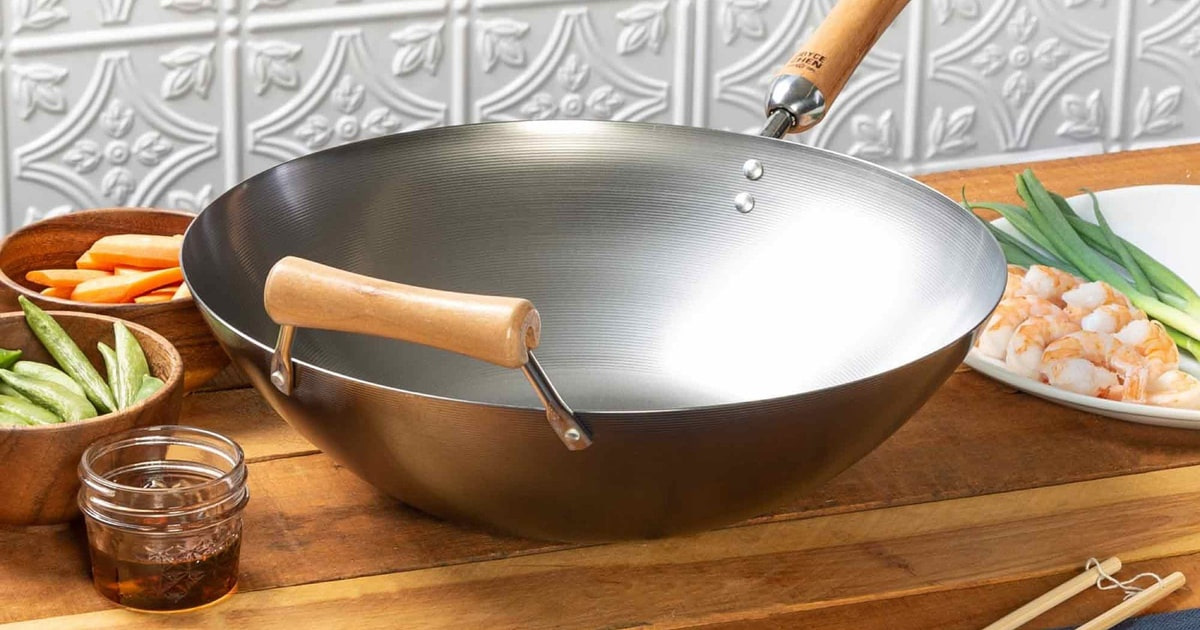
A carbon steel wok is the rare pan that gets better the longer you own it. It's thin enough to heat fast, heavy enough to hold that heat when you dump in cold broccoli, and light enough to shake with one hand. You season it, cook in it, wipe it out, and the surface slowly turns dark and slick. That's the whole appeal. You're not buying a coating that wears out in a few years. You're buying bare steel that you finish yourself, one dinner at a time.
Here's the honest part: no wok fixes your stove. Wok hei — that smoky, faintly charred flavor you get from a restaurant kitchen — comes from heat most home burners can't reach. A round bottom over a strong gas flame gets you close. Electric and induction get you partway, and no amount of good steel makes up the rest. Every wok here also arrives needing work: seasoning passes, careful drying, a light wipe of oil before it goes in the cabinet. Skip that and it rusts.
So the real question isn't which wok is best. It's what you cook on. Round bottoms belong on gas, flat bottoms belong everywhere else, and picking the wrong shape is the one mistake seasoning can't undo. After that it comes down to steel thickness, handle comfort and size. We think that the Craft Wok Traditional Hand Hammered Chinese Carbon Steel Wok is the best carbon steel wok for most people, and that the YOSUKATA Flat Bottom Wok Pan is the one to buy if you cook on electric or induction.
Everything we recommend

Restaurant-style stir-fry, if your stove has a real flame

A flat bottom and a cool handle, with less heat in reserve

Pre-seasoned and flat, for stoves without a flame
At a glance
| Product | Diameter | Bottom Type | Price | |
|---|---|---|---|---|
| Craft Wok Traditional Hand Hammered Chinese CarbonTop pick | 14 in | Round | $51.08On sale |
| YOSUKATA Flat Bottom Wok Pan - 13.5"Also great | 13.5 in | Flat | $127.99On sale |
| JOYCE CHEN Classic Series 14-Inch Carbon SteelBudget pick | 14 in | Flat | $36.95On sale |
 | Helen's Asian Kitchen Carbon Steel Wok StirAlso consider | 12 in | Flat | $27.49 |
 | Matfer Bourgeat Tradition Stainless Steel WokAlso in lineup | 12 in | — | $198.81 |
How we picked
Bottom shape. We started by matching pan shape to stove type, because it's the one thing you can't correct later. Round-bottom woks had to be paired with gas; anything recommended for electric or induction needed a genuinely flat base.
Steel gauge. We compared published thickness figures, from about 1.5mm up to roughly 1.8mm, against what reviewers report about temperature recovery. Anything too thin to hold heat through a full batch of cold ingredients got flagged as a small-batch pan.
Handles and weight. We looked at listed pan weight alongside handle material and length, since a heavy wok with a short handle is one you'll stop tossing. Cool-touch or wooden handles counted in a pan's favor.
Seasoning demands. We noted which woks ship bare and which arrive pre-seasoned, and how much work published reviews say each needs before it turns non-stick. A pan that takes three sessions to become usable has to earn that patience.
Joint construction. We checked how each handle attaches — welded, riveted or sealed — because the handle joint is where cheap woks fail. Solid welds and low-profile commercial rivets beat thin crimping.
Top pickOn sale
Restaurant-style stir-fry, if your stove has a real flame
Craft Wok Traditional Hand Hammered Chinese Carbon
A 14-inch, round-bottom wok in 15-gauge steel, hammered by hand in Guangzhou and shaped for the way a gas flame wraps around a curve. It's the closest you'll get to a restaurant wok on a home burner, and it takes seasoning fast.
$51.08fromAmazonList priceThe curved base is the entire design, and it needs a gas flame. On a strong burner the fire climbs the sides instead of hitting one flat spot, so the whole lower half of the pan runs hot. That's what lets you push food up the walls to hold, then pull it back down to sear. Craft Wok says the same thing on the listing: this pan is built for home gas stovetops and high-output burners.
At 15-gauge — roughly 1.8mm — the steel keeps its heat when the food hits. A thin wok drops temperature the second you add cold chicken, and then you're steaming instead of searing. This one carries enough mass to recover quickly, but not so much that preheating turns into a project. For a weeknight stir-fry for three or four people, that's the balance you want.
Hand-hammering isn't just decoration. The process work-hardens the steel and leaves a faintly dimpled surface, and oil settles into those small irregularities as you build up seasoning. Published reviews of this wok repeatedly note how fast it darkens into a usable patina. A few cooks in, eggs stop grabbing. The finish looks handmade because it is.
Two handles make 4.6 pounds feel reasonable. The long wooden stick handle stays cool and gives you leverage, so you can toss one-handed without gripping hot metal. The short steel helper handle is there for when the pan is loaded and you want both hands on it — lifting it off the burner, tipping rice into a bowl. It doubles as a hook for hanging, too.
Flaws but not dealbreakers
It won't work on flat electric, glass-ceramic or induction. Craft Wok puts that warning in the listing in capital letters, and it isn't fussiness. A round bottom meets a flat surface at one small point, so you get a scorching spot in the middle and cold walls. If your stove isn't gas, buy the Yosukata or the Joyce Chen instead. No accessory fixes this.
It doesn't stand up on its own, and it arrives bare. You'll need a wok ring or a burner grate that cradles the curve, or the pan tips the moment you set it down. There's no factory seasoning either, so plan on several thin oil-and-heat passes before the first meal. That's one evening of setup, once.
The steel helper handle gets hot. It's built to survive high heat, but surviving isn't the same as staying touchable. After a long session over a big flame, grab it with a towel. It's a small annoyance rather than a dealbreaker, though it catches people who assume both handles are safe.
Budget pickOn sale
A flat bottom and a cool handle, with less heat in reserve
JOYCE CHEN Classic Series 14-Inch Carbon Steel
A 14-inch flat-bottom wok with a birch stick handle and a cool-touch helper handle. It's the low-risk way into carbon steel: it sits flat on any stove you own, it's light enough for anyone to toss, and it asks almost nothing of you beyond seasoning.
$36.95fromAmazonList priceThe flat bottom means it works on whatever stove you already have. Gas, electric coil, glass-ceramic, induction — all of them, with no wok ring and no adapter. Carbon steel is magnetic, so induction hobs read it fine as long as the base makes full contact. If you rent, or you're not sure what stove your next kitchen will have, that flexibility is worth a lot.
America's Test Kitchen has named it their top wok recommendation. That verdict has held up across years of published cookware roundups, and it comes down to unglamorous things: sensible balance, predictable seasoning behavior, a handle system that doesn't fight you. Plenty of woks are thicker or prettier. Few of them are this consistently endorsed by reviewers who compare pans side by side.
The phenolic helper handle never needs a mitt. That's a bigger deal than it sounds. When you're still learning to move a loaded wok around a hot burner, being able to grab the second handle bare-handed makes the whole thing less intimidating. The birch stick handle gives you the traditional feel for tossing, and it stays cool too.
At 3.24 pounds, it's the easiest wok here to shake. Lighter steel means you can actually use one-handed tossing technique instead of dragging food around with a spatula. It also heats up fast, which suits a single stir-fry after work. If wrist strength is a concern, this is the pan to start with.
Flaws but not dealbreakers
At 1.5mm, it's the thinnest steel among our picks. You'll notice it when you cook for more than two or three people. Add a pound of cold protein and the surface temperature sags, and instead of a hard sear you get gray, watery beef. The fix is cooking in smaller batches, which works but adds time. For one weeknight stir-fry, the difference barely registers.
The cool-touch handle caps how hot you can go outside the burner. Phenolic tops out around 350°F, so this isn't a wok you finish in a hot oven or slide under a broiler. It also arrives unseasoned, so budget an evening for the initial oil passes before you cook anything sticky in it.
Also greatOn sale
Pre-seasoned and flat, for stoves without a flame
YOSUKATA Flat Bottom Wok Pan - 13.5"
A 13.5-inch blue carbon steel wok that comes pre-seasoned at high heat and ships with a vented stainless lid. On an electric or induction range, its flat base makes full contact where a round wok would only touch at one point.
$127.99fromAmazonList priceYou can cook in it the day it arrives. Yosukata seasons these at over 600°F at the factory, so instead of an evening of oil passes you get a quick wipe of oil and a preheat. If the seasoning ritual is what's kept you away from carbon steel, this removes that hurdle. The blue-black color comes from that heat treatment, and it's a decent sign the steel was properly tempered.
The flat base is the right shape for a coil, a glass top or an induction hob. Full contact means even heat across the bottom instead of one hot ring. You lose some of the tossing geometry a round wok gives you, but on these stoves that trade isn't optional — a curved pan simply can't heat evenly on a flat element.
The lid makes it more than a stir-fry pan. With the cover on you can steam dumplings, braise short ribs or finish a curry without moving anything to another pot. The lid is stainless with a tempered glass insert and steam holes, so you can watch what's happening without lifting it. In a small kitchen, one pan doing four jobs earns its cabinet space.
The walls are tall and the shape is deep. That's useful well beyond stir-fry: deep-frying splatters less, and you can toss a full load of noodles without flinging half of it onto the burner. Yosukata pitches it for pan-frying, braising and deep-frying, and the geometry backs that up.
Flaws but not dealbreakers
Pre-seasoned doesn't mean finished. The factory layer is thin. It gets you cooking on day one, but you'll want two or three more oil-and-heat passes before you trust it with eggs or fish. Treat the pre-seasoning as a head start, not a finished surface.
The listing is thin on the numbers that matter. Yosukata doesn't publish a steel gauge or a pan weight, so you can't compare its thickness to the Craft Wok or the Joyce Chen directly. Reviewers generally describe it as the heavier of the flat-bottom options, which makes one-handed tossing more of a workout.
A flat bottom limits the technique. You can't slide food up a gentle curve and back down the way you can on a round wok, and the corner where the base meets the wall collects bits. It's the correct pan for a flat stove. It's still a compromise against the shape woks were designed around.
Who this is for
Buy one of these if you make stir-fry more than a couple of times a month and your nonstick pan keeps turning dinner gray and soggy. A wok gives you the heat and the shape that a flat skillet can't, and carbon steel takes the temperatures that ruin coatings. You should also be honest about the upkeep: you'll dry it on the burner, oil it lightly, and re-season it now and then. If that sounds like a chore rather than a small ritual, a good stainless skillet will make you happier.
This guide covers carbon steel woks sized for home kitchens, from a 12-inch pan for one or two people up to the 14-inch size that suits most households of three or four. We're not covering nonstick woks, cast iron woks, electric wok appliances, or the huge 16-inch pans that need a commercial burner to heat evenly. We also aren't ranking accessories — rings, spatulas, steamer racks — beyond noting when one comes in the box.
How we picked
Bottom shape: we matched every wok to a stove type first, since a round base needs a gas flame and a flat base is mandatory on electric, glass-ceramic and induction. Steel gauge: we compared published thickness, roughly 1.5mm to 1.8mm here, against how well reviewers say each pan holds temperature when cold food goes in. Handles and weight: listed pan weight matters less than how it's balanced, so we weighed handle length and material together with it. Seasoning demands: we noted which woks ship bare and how many oil-and-heat passes each needs before it turns slick. Joint construction: we favored welded or tightly riveted handle joints, because that's where inexpensive woks come apart.
Other carbon steel woks worth considering
If you want a smaller wok for a one- or two-person kitchen: The Helen's Asian Kitchen Carbon Steel Wok Stir ($27.49) — Helen's Asian Kitchen makes a plain, 12-inch flat-bottom wok in 1.6mm carbon steel with a riveted bamboo handle, and it's the least demanding way to find out whether you actually like cooking this way. At 2.6 pounds it's the lightest pan here, it heats almost instantly, and the flat base works on gas, electric and induction alike. It carries a lifetime warranty against manufacturer's defects, which is more than most woks at this level offer. What you give up is size and heat reserve: 12 inches gets crowded fast past two servings, and the thinner steel cools quickly when you add a lot at once. The patina also takes longer to build than on thicker pans, and the riveted handle joint is worth an occasional look after a few years of hard use. As a first wok, though, it's honest and it works.
The competition
This is what our research turned up, not a census of every wok sold. Carbon steel woks are a crowded, lightly branded category, and plenty of good pans never make it into published reviews at all. The wok below came up often enough to look at closely, but it didn't fit what most home cooks are after.
The Matfer Bourgeat Tradition Stainless Steel Wok ($198.81) — The Matfer Bourgeat Tradition wok is a serious piece of French professional cookware, and it's the odd one out here for a simple reason: the listing describes it as thick stainless steel without a sandwich bottom, not carbon steel. That difference drives everything. Stainless won't build the dark, slick patina that makes a seasoned carbon steel wok worth its upkeep, so food grips more until you learn how the pan behaves and where its hot spots sit. In exchange you get a wok that never rusts, never needs seasoning, and cleans up without ceremony. The 12-inch pan weighs about 2 pounds, and the handle is a sealed stainless design attached with low-profile rivets, angled so it stays cooler than a bare steel bar. Matfer builds to commercial standards, so this is a pan meant to survive a restaurant line. If you want wok shape and French build quality but have no interest in the seasoning routine, it makes sense. If you came here for wok hei and a surface that improves every time you cook, it isn't the pan.
Seasoning and care
Wash a new wok in hot soapy water to strip the factory coating, then dry it on the burner over medium heat until it's bone dry. Wipe on a very thin layer of a high-smoke-point oil — flaxseed, grapeseed and avocado all work — using a paper towel held in tongs. Heat it until the oil smokes and the surface darkens, about two minutes, let it cool a minute, and repeat three to five times. The classic mistake is too much oil, which goes sticky instead of hard. After that, the routine is easy: no soaking, dry it on the burner every time, and wipe on a whisper of oil before it goes away. If rust shows up, scrub it off with steel wool, dry it over heat, and re-season that spot twice.
Questions we get
Can I use a carbon steel wok on an induction cooktop?
Yes, but only a flat-bottom one. Carbon steel is magnetic, so induction reads it without any trouble — the issue is contact area. A round bottom touches a flat induction surface at one small point, which gives you a scorched center and cold walls. The Yosukata and the Joyce Chen are both flat and work fine.
How do I season a new wok the first time?
Scrub off the factory coating with hot soapy water, then dry the pan on the burner over medium heat. Wipe on a very thin coat of flaxseed, grapeseed or avocado oil with a paper towel in tongs, and heat until it smokes and the steel darkens, roughly two minutes. Cool briefly and repeat three to five times. Then cook something fatty — bacon, ground pork, well-oiled fried rice — before you try eggs.
Is carbon steel better than cast iron for stir-fry?
For stir-fry, yes, and it isn't close. Carbon steel is far lighter at the same size, so you can actually toss with one hand instead of stirring a boat anchor. It also heats faster and responds to burner changes almost immediately, which is what fast cooking demands. Cast iron holds heat beautifully but changes temperature slowly, and upkeep for both is about the same.
What size wok should I buy?
Fourteen inches suits most households of three or four, and it's the size we'd default to. Twelve inches is right for one or two people and heats faster, but it crowds quickly — and crowding is the reason home stir-fry steams instead of sears. Go bigger than 14 inches only if you cook for five or more, and know that most home burners struggle to heat that much steel evenly.
Why is my wok rusting, and can I save it?
It rusted because it went into the cabinet damp, or sat wet in a humid kitchen without an oil coat. It's fixable. Scrub the rust off with stainless steel wool, or with coarse salt and a little neutral oil, then wash with hot water and dry immediately on the burner. Re-season the bare spot two or three times and it'll be as good as it was.
What is wok hei, and can I get it on a home stove?
Wok hei is the smoky, slightly charred flavor that marks good restaurant stir-fry, and it comes from very high surface heat plus constant tossing that flicks food through the flame. On a strong gas burner you can get most of the way there: crank the heat, preheat until the pan smokes, and cook in small batches. On electric or induction you'll get partway. Those stoves top out well below a gas flame, and that gap is the flavor.
Why you should trust us
For this guide:
- We read published wok reviews from established kitchen-testing outlets and compared their conclusions against what each manufacturer states about gauge, weight and stove compatibility.
- We compared listed steel thickness, pan weight, handle materials and bottom shape across all five woks to see where the real trade-offs fall.
- We took each maker's own compatibility warnings seriously, particularly the ones about round bottoms on flat cooktops.
- We read owner reviews on every listing, weighted toward the critical ones, because that is where the recurring failures show up.
- We have a systematic way of automatically fetching the latest prices, so the numbers on this page stay current.
- This is a research-focused guide, so the team may not own every product listed — though we often do own the top winners, which gives us extra context for the recommendations.
- We don't accept free products, and the retailer commission never changes which product we recommend.
Sources
The Best Woks — Equipment Reviews and Testing, Serious Eats
The Wok Skills of the Trade: Wok Hei — J. Kenji López-Alt, Serious Eats
Best Wok Reviews — Tested and Rated, Wirecutter / The New York Times
Carbon Steel Wok Equipment Reviews, America's Test Kitchen
How to Season a Carbon Steel Wok — Step-by-Step Guide, The Woks of Life
Carbon Steel Wok Buying Guide — What to Know Before You Buy, The Woks of Life
Best Woks Tested by the Good Housekeeping Institute, Good Housekeeping
How to Care for Carbon Steel Cookware, Bon Appétit
Amazon product listings and owner reviews for all 5 products
Manufacturer specification pages for each product
Some passages in this guide may be paraphrased with AI help. Prices are refreshed automatically.
More like this.
Continue exploring appliances reviews and recommendations.

The Best Woks for High-Heat Cooking
A wok does one thing no skillet can: it gets brutally hot and stays hot while you keep the food moving. That's how green beans blister at the edges and…

The Best Adjustable Carbon SUP Paddles
Your paddle is the one piece of SUP gear you hold the entire time you're out. You'll lift it a few thousand times on a two-hour cruise, so weight you…

The Best Carbon Monoxide Detectors
Carbon monoxide doesn't announce itself. It has no color, no smell, and no taste, and the CPSC warns that by the time you notice the headache and the…

The Best Pizza Stones and Baking Steels
Home ovens are lousy pizza ovens. They top out around 500 or 550°F, and a bare oven rack does nothing to crisp the bottom of a crust. A slab of steel or…

The Best Stainless Steel Colanders and Strainers
A colander sits in the cabinet until the moment you need it most: one hand on a hot pot, steam in your face, a pound of spaghetti sliding toward the…

The Best Countertop Stainless Steel Microwaves
A microwave is the appliance you touch every single day and think about almost never - until it dies. Then you discover how much of your routine runs…