The Best Tire Chains and Snow Traction Cables
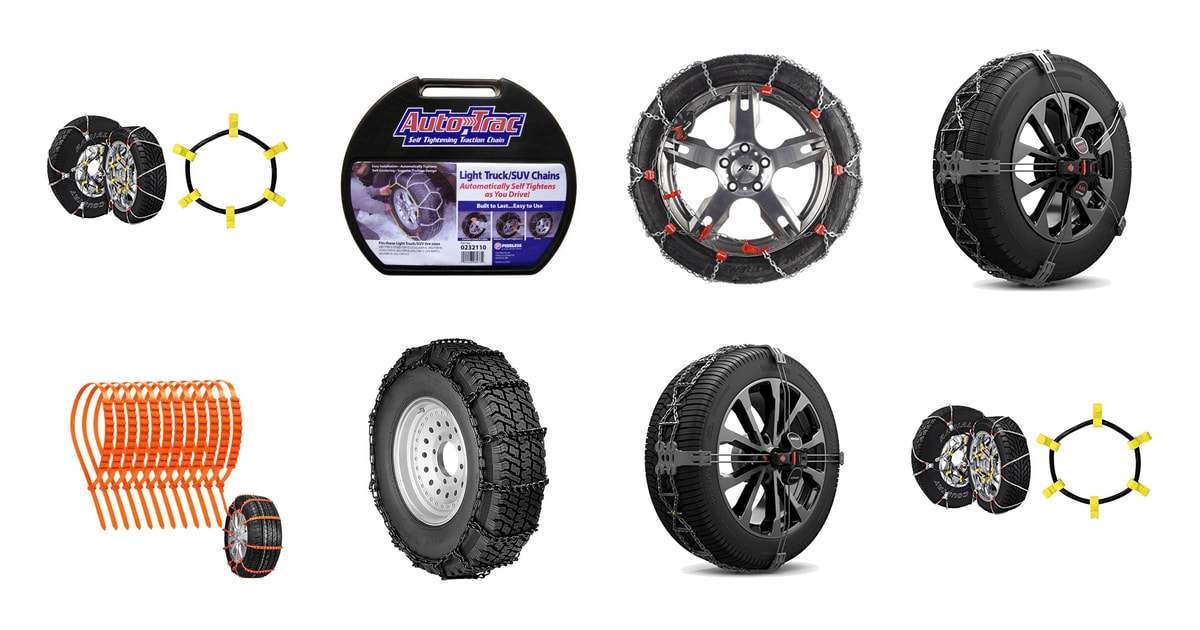
Chains live in your trunk for years and matter for about twenty minutes. But those twenty minutes tend to happen on a dark shoulder, in falling snow, with a line of cars behind you and a state trooper waving traffic past. What separates a good set from a bad one isn't grip on paper. It's whether you can get them on your tires quickly, alone, in the cold, without crawling under the car — and whether they'll clear the ABS sensor and brake line packed tight behind your wheel.
Here's the honest part: no chain in this category is pleasant to use. Every one of them limits you to roughly 20 to 30 mph, and going faster doesn't just wear them out, it can snap a link that tears through a wheel well. All of them need a practice fitting in a dry driveway before the season, because sizing problems can't be diagnosed until you try. And none of them do the one thing buyers most want, which is to make winter driving feel normal. They buy you traction and legal compliance, nothing more.
We looked at cable chains, traditional D-link sets, wheel-nut mounting systems and emergency straps, and weighed clearance requirements, installation method and durability against what owners report going wrong. We think that the Security Chain Company SZ441 Super Z6 is the best tire chain for most people, and that the König K-Summit K44 is the one to buy if your car's wheel wells are too tight for anything that wraps behind the tire.
Everything we recommend

Fits tight wheel wells and goes on without moving the car

Bolts to your wheel nuts, so clearance stops being a problem

Hardened steel links that outlast cable by seasons, not months
Solid highway-rated link chain if you don't mind the extra steps
At a glance
| Product | Price | |
|---|---|---|
| Security Chain Company SZ441 Super Z6 CableTop pick | $169.94 |
 | Auto-Trac Peerless Light Truck/SUV Tire ChainsAlso consider | $8.95 |
| pewag Servo RS974 94791 RS967Also great | $232.82 |
 | KÖNIG K-Summit XXL K67 Snow ChainsAlso consider | $679.95 |
 | Snow Tire ChainsAlso in lineup | $17.88 |
| Security Chain Company QG2219 Quik Grip LightBudget pick | $120.34 |
| König K-Summit K44 - Snow ChainsUpgrade pick | $499.95 |
| Security Chain Company SZ441 Super Z6 CableAlso in lineup | $168.99 |
How we picked
Clearance and fit. We compared each manufacturer's stated clearance requirement against what modern wheel wells actually offer, since ABS sensors and brake lines are the most common reason a chain can't be used. Anything above roughly 12mm of required clearance we treated as unsuitable for most cars built in the last decade.
How you put it on. We weighted installation method heavily, because published timed comparisons and owner feedback both show that quick-connect and self-tensioning designs go on far faster for first-timers than traditional chains. Systems that need no vehicle repositioning ranked highest.
Traction and braking. We leaned on published braking comparisons between link and cable designs on glare ice, plus each maker's tread pattern specs. Hardened link chains consistently stop shorter on ice; cable and hybrid designs spread contact more evenly on packed snow.
Durability. We compared rated operating hours and construction material, since chains fail by fatigue rather than a single event. Anything in hardened steel that claims several hundred hours we treated as a multi-season buy.
Legal compliance. We checked which sets explicitly claim SAE Class S certification or equivalent European homologation, because plastic aids and uncertified cables don't satisfy the stricter tiers of state chain-control laws.
Top pick
Fits tight wheel wells and goes on without moving the car
Security Chain Company SZ441 Super Z6 Cable
A hybrid cable-and-link chain that needs just 6.33mm of clearance behind the wheel, so it fits most modern cars, crossovers and light trucks. The included rubber tightener cinches it down as you roll forward, which means no jack and no lying in slush.
$169.94fromAmazonThe clearance number is the whole story here. Most chains want 12 to 20mm of space behind the tire. Cars built in the last decade often don't have it — ABS sensor wiring, brake lines and suspension arms crowd right up against the inside of the wheel. The Super Z6 asks for 6.33mm and exceeds SAE Class S requirements. That single spec is why it fits vehicles where more aggressive chains simply cannot be mounted safely.
Installation is the part you'll actually remember. You drape the chain over the tire, connect it behind the wheel, roll forward a few inches, then hook up the rubber tightener. It pulls the chain snug as the wheel turns. No jack, no repositioning the car, no reaching blindly into the wheel well while traffic goes by. If you've only ever wrestled with old-style link chains and manual tensioners, the difference is significant.
The diagonal crossmember pattern matters more than it sounds. Straight-pattern cables lay parallel bars across the tread, so there are moments when nothing is biting. The diagonal alloy-steel layout keeps something in contact with the road through the whole rotation. It grips packed snow and ice better than plain cable, and it spreads wear across more of the chain instead of concentrating it.
This is the set that works for the widest range of drivers. It covers passenger cars, pickups and SUVs, and Security Chain designed it to play nicely with ABS and electronic stability systems rather than confusing them. If you're a weekend skier heading over a pass a few times a winter, or a commuter who hits chain control twice a year, this is the set you buy and then mostly ignore.
Flaws but not dealbreakers
It costs more than a basic cable chain, and the gap is real if you'll use it once a season. Cable-style chains also don't bite glare ice as hard as a proper hardened link chain does — published braking comparisons consistently favor link designs on sheer ice. For most drivers on plowed mountain highways that trade is fine, but if your route is regularly polished to a shine, a link chain is the stronger tool.
There's also a confusing sibling. Security Chain sells a nearly identical bundle with a different tightener model number, and buyers regularly order the wrong one when they're just replacing a lost tensioner. Check which tightener you already have before you click.
Upgrade pick
Bolts to your wheel nuts, so clearance stops being a problem
König K-Summit K44 - Snow Chains
Instead of wrapping around the tire, the K-Summit K44 mounts to one of your original wheel nuts and needs zero clearance inside the wheel. It's the answer for low-profile tires and tight wheel wells where nothing else fits, and it goes on fast once you've practiced.
$499.95fromAmazonThe mounting approach is genuinely different. A conventional chain has to pass behind the tire, which is exactly where your car has no room. The K44 attaches to one of the original wheel nuts or bolts and sits flush against the wheel face, with an integrated ratchet body doing the tensioning. Nothing goes behind the wheel at all. If you drive a sedan on 45-series rubber, this may be the only chain you can legally and safely fit.
Owners who've bought several sets over the years keep coming back to this design specifically because it doesn't touch anything it shouldn't. No contact with alloy rims, no rubbing on brake lines. The tread portion mixes injection-molded plastic plates with hard metal studs and steel chain, and the active tensioning elements keep it fitting properly as your tires wear. It's certified to Ö-Norm, UNI and TÜV standards, which is a meaningful paper trail.
The size coverage runs from 205/80-14 up through 295/25-21, which takes in nearly every passenger car, hatchback and sports coupe sold here. Published timed comparisons of quick-connect systems like this one put first-time users at roughly a third of the time traditional link chains take. That gap closes if you practice, but the first attempt on a cold roadside is exactly when it counts.
Flaws but not dealbreakers
It's the second most expensive set here, and it only makes financial sense if you actually have a clearance problem. If the Super Z6 clears your wheel well, you're paying a lot for a solution to a problem you don't have.
Ease of installation is the most divided thing owners say about it. Plenty describe it as quick and simple. Others report a real struggle in an actual snowstorm, and a few say the chain came off after they thought they'd followed the instructions. The common thread in the positive reports is adjusting the ring to your exact tire size first and doing a dry run in a parking lot. Skip that and this is the chain most likely to embarrass you. Some owners also note the connector piece that seats over the lug nut can bind and get stubborn to remove, and that wear shows on those metal pieces sooner than expected.
Also great
Hardened steel links that outlast cable by seasons, not months
pewag Servo RS974 94791 RS967
A traditional link chain from Austria's oldest chain maker, built in hardened stainless steel and rated for well over 500 operating hours. It's aimed at front-wheel-drive cars and it bites hard ice better than any cable design here.
$232.82fromAmazonIf you chain up often, buy the thing that lasts. Braided cable chains generally give you 150 to 200 hours before strands start fraying. The Servo RS974 is rated past 500. For a mountain resident, a contractor, or anyone who runs chain-control corridors most weeks of the winter, that's the difference between one purchase and three.
Hardened links interact with ice differently than cable does. The angular steel edges dig into a compacted surface instead of rolling across it, which is why published braking comparisons put link chains meaningfully ahead of cables on glare ice at the same approach speed. Pewag builds specifically for Alpine conditions and recommends this set for front-wheel drive, which covers most passenger cars on American roads.
The self-centering design helps more than the spec sheet suggests. Traditional link chains have a reputation for fiddliness in the dark, and a chain that pulls itself into position as you roll forward removes a chunk of that. It's still slower to fit than a wheel-nut system. It's just not the ordeal older D-link sets were.
Flaws but not dealbreakers
This is the most expensive chain-type set here, and it's heavier than any cable design. That weight matters twice: once in your trunk all season, and again when you're lifting a cold, dense pile of steel out of the back at a pullout. If you have limited trunk space or trouble handling heavy awkward objects, factor that in.
It's also a traditional link chain, which means it needs more steps to fit than the quick-connect systems. Pewag notes it's built for city driving and paved roads, so it isn't the tool for backcountry access.
Budget pick
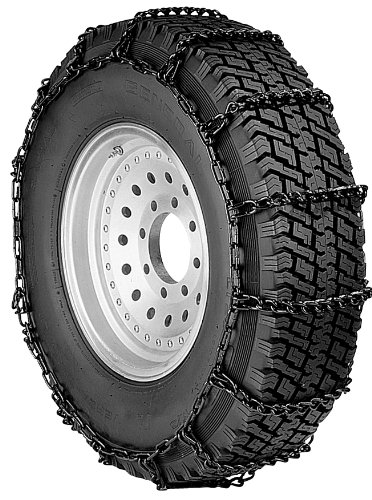
Solid highway-rated link chain if you don't mind the extra steps
Security Chain Company QG2219 Quik Grip Light
A no-frills link chain sized for light trucks and SUVs and rated for highway service, meaning it's built for repeated runs through chain control rather than one emergency. You trade convenience for durability at a much lower price than the quick-install systems.
$120.34fromAmazonThe highway-service rating is what you're buying. It means this chain is built to take sustained 20 to 25 mph running across multiple chain-control zones, not just one desperate trip. It comes as a set of two, which covers the drive axle on a front-, rear- or four-wheel-drive light truck. Owners have run these on genuinely abusive duty — one reports plowing gravel and ice on a skid steer without trouble.
Link construction earns its keep on ice. The same braking advantage that makes the pewag worth its price applies here, at a fraction of the cost. If your winter driving is mostly hardpack and glare ice on a light truck, this gets you the right chain geometry without paying for Austrian steel or a quick-mount ring.
It's also light for what it is, and it packs into a fairly small box. That makes it easier to leave in the truck bed or behind the seat from October onward without thinking about it.
Flaws but not dealbreakers
There's no self-tensioning ratchet and no quick-mount ring, so you fit these the old-fashioned way: drape, connect, tension by hand, drive a mile, pull over and re-tighten. That first-mile re-tightening stop is the single most common thing new chain users forget, and forgetting it is how chains come loose. Note also that the QG20074-10 tightener is required and sold separately — check what's in the box before you leave.
Sizing is tight and specific to light truck dimensions. This is not the set for a compact sedan, and it's the one that most rewards a driveway test fit before the season.
Who this is for
Buy chains if you drive over a mountain pass in winter, live somewhere that gets snowed in, or take a route that goes under chain control. That includes weekend skiers, mountain-pass commuters and anyone building a serious trunk kit. It also includes drivers with all-wheel drive, because plenty of states have a top-tier condition where every vehicle chains up, no exceptions. Good winter tires are a better everyday investment than chains, but they don't get you past a road closure and they don't satisfy the law.
You probably don't need these if you live somewhere that gets a dusting a few times a year and you can wait a day. This guide covers traction devices you mount on a tire for on-road winter driving. It doesn't cover winter tires, studs, recovery boards, or heavy commercial truck chains. And nothing here is an off-road tool — most of these sets say so explicitly. If you want to reach a remote trailhead, you want tires and a different strategy.
How we picked
We built the picks around five things. Clearance: how much room a set needs behind the wheel, measured against what modern cars with ABS sensors and low-profile tires actually have. Installation: whether you can fit it alone, in the dark, without a jack or moving the car, since that's where most failures start. Traction: hardened links versus cable, using published braking comparisons on glare ice and each maker's tread geometry. Durability: rated operating hours and material, because chains die of fatigue rather than one bad day. Compliance: whether a set claims SAE Class S or an equivalent European homologation, which decides whether it's legal when conditions tighten.
Other tire chains and snow traction cables worth considering
If you want chains that re-tighten themselves: The Auto-Trac Peerless Light Truck/SUV Tire Chains ($8.95) — The Auto-Trac's polycarbonate ratchets cinch and center the chain as the wheel turns, which kills the roadside re-tightening stop that trips up almost every new chain user. You connect it, attach the two self-tighteners, and drive. It meets Class S clearance and it's built for light trucks and SUVs. Two caveats keep it out of the picks: it's a fairly heavy set at 16 pounds, and stock has been thin enough that we can't count on you being able to buy it. Mechanical ratchets can also stiffen when they've been sitting in sub-zero cold, so store them somewhere warm.
If you drive a heavy SUV or full-size truck: The KÖNIG K-Summit XXL K67 Snow Chains ($679.95) — The K-Summit XXL K67 is the same wheel-nut mounting system as our upgrade pick, scaled up for vehicles over 2,000 kg empty. It needs no clearance behind the wheel, doesn't touch alloy rims, and its size list runs from 245/75-15 to 285/35-22 — which is nearly every large SUV and full-size pickup fitment sold here. It's the most expensive set in this guide, and it's strictly a paved-road tool; König says explicitly not for off-road use. Check your door jamb sticker for curb weight before ordering, and expect the same learning curve the K44 has.
The competition
These are the products our research turned up in this category, not a survey of everything sold. Chain fitment is unusually specific, so a set that lost here may still be exactly right for your tire size — always check the manufacturer's fitment chart against the numbers on your sidewall before buying anything.
The Security Chain Company SZ441 Super Z6 Cable ($168.99) — This is the same Super Z6 chain as our top pick, bundled with SZ1174 rubber tighteners instead of the SZ1176 set. Same 6.33mm clearance, same alloy-steel diagonal crossmembers, same Class S compliance, same fitment range from 7.50-16LT up to 305mm. The only real difference is the tightener part number, and that difference matters only if you already own Super Z6 chains and are replacing a lost or broken tensioner — in which case, match the number you have. For a first-time buyer, either listing is fine; take whichever one is actually in stock.
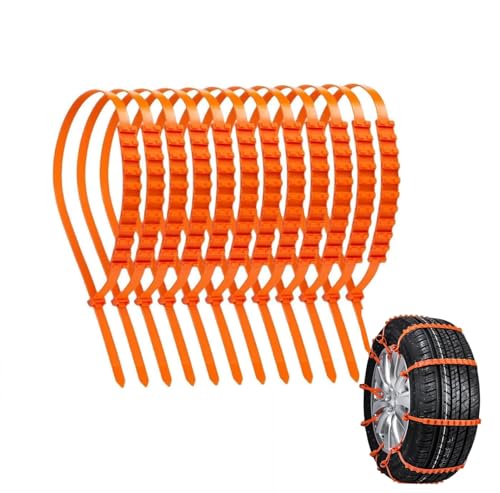
The Snow Tire Chains ($17.88) — These orange plastic straps are essentially heavy-duty zip ties with an anti-skid pattern, and owners describe them accurately as a one- or two-use emergency item. They go on with no tools, no jack and no moving the vehicle, they pack flat in a glove box, and they'll help break a car out of a snowy rut or an icy driveway. They also don't satisfy any state's chain-control requirement, and plastic won't survive sustained driving. Owner reactions split sharply between people who used them as intended and people who expected real chains. Keep a set as a backup for reaching a safe pullout — not as your winter plan.
Installation notes
Do a test fit in a dry parking lot before the season starts. Fifteen minutes on a clear afternoon tells you whether the size is right, whether the chain clears your suspension, and how the tensioner works — all questions you don't want to answer on a shoulder at night. Wear gloves and bring a flashlight so you're rehearsing the real thing. Then respect the speed rating: most sets top out around 20 to 30 mph, and going faster fatigues the steel until something lets go, which can tear a wheel well or cut a brake line. Take them off as soon as the road turns to wet or dry pavement, since bare asphalt chews through chains fast. Store them dry between seasons so they don't rust or turn brittle.
Questions we get
What's the difference between chains and cables, and which should I buy?
Chains use hardened steel links that dig into ice, and published comparisons show they stop noticeably shorter on glare ice than cables do. Cables use braided steel strands — lighter, quicker to fit, and they spread contact more evenly on packed snow. A hybrid like the Super Z6 splits the difference and suits most drivers. Go with straight link chains if your route is regularly polished ice or if you need the strictest legal compliance.
Do I need chains on all four tires or just the drive wheels?
Most chain-control rules ask for chains on the drive wheels only — front on a front-wheel-drive car, rear on a rear-wheel-drive one. On all-wheel drive, chaining all four gives you better stability and braking. Some states have a top-tier condition that requires chains on every vehicle regardless of drivetrain. Check your state's current requirement before you head into the mountains, and carry at least enough sets to cover your drive axle.
Will chains damage my car or my ABS sensors?
Correctly sized, low-clearance-rated chains won't. The damage happens when a chain needs more room behind the wheel than your car has, and it contacts a sensor, brake line or suspension arm. Look for SAE Class S or an explicit low-clearance rating, and check the fitment chart against your exact tire size. A wheel-nut system like the K-Summit sidesteps the problem entirely because nothing sits behind the wheel.
How fast can I drive with chains on?
Most sets are rated for 20 to 30 mph, and you should treat that as a hard ceiling rather than a suggestion. Going faster fatigues the metal quickly, and a chain that breaks at speed can tear through a wheel well or damage brake lines in seconds. Set a speed alert on your phone before you enter a chain-control zone. Add extra time to your trip planning — chained driving is slow by design.
How do I figure out what size I need?
Read the numbers off your tire sidewall — something like 225/60R17, where 225 is the width in millimeters, 60 is the aspect ratio and 17 is the wheel diameter in inches. Match all three against the manufacturer's fitment chart exactly. Don't round up and don't assume a close size will work. A wrong size won't connect, won't tension properly, or will rub something it shouldn't, and you can't find out until you try to fit it.
How long do chains last before they wear out?
Cable chains generally give you a couple hundred operating hours before strands start fraying. Hardened link chains last considerably longer — the pewag Servo is rated past 500 hours. Everything wears far faster if you exceed the speed rating or drive on dry pavement. Store them dry and temperature-stable between seasons so they don't rust or get brittle.
Why you should trust us
For this guide:
- We read manufacturer specification sheets and homologation claims for every set here, focusing on stated clearance requirements, tire size coverage and rated operating life.
- We compared published reviews and timed installation comparisons between traditional link chains and quick-connect systems, and weighed them against each design's braking behavior on ice.
- We read owner feedback across these listings for recurring failure modes — chains coming loose after improper sizing, connectors binding on lug nuts, and plastic aids being mistaken for legal chains.
- We read owner reviews on every listing, weighted toward the critical ones, because that is where the recurring failures show up.
- We have a systematic way of automatically fetching the latest prices, so the numbers on this page stay current.
- This is a research-focused guide, so the team may not own every product listed — though we often do own the top winners, which gives us extra context for the recommendations.
- We don't accept free products, and the retailer commission never changes which product we recommend.
Sources
Tire Chains & Traction Devices Buying Guide, Tire Rack
Best Tire Chains, Car and Driver
Best Tire Chains for Snow and Ice, Popular Mechanics
Best Snow Chains Tested, Road & Track
Tire Chains Expert Advice, REI
Amazon product listings and owner reviews for all 8 products
Manufacturer specification pages for each product
Some passages in this guide may be paraphrased with AI help. Prices are refreshed automatically.
More like this.
Continue exploring electronics reviews and recommendations.

The Best Heavy Duty Jumper Cables
A dead battery almost never picks a good moment. It's the grocery store lot at closing time, or your driveway on the coldest morning of the winter. Jumper…

The Best Motorcycle Chain Lube And Cleaners
Your chain is one of the least demanding parts of your bike to maintain and one of the most expensive to neglect. A dry, grit-packed chain doesn't just…

The Best Cervical Neck Traction Pillows
Neck pain from a desk job creeps up slowly. You spend eight hours with your chin drifting toward your chest, then another two on your phone, and by…

The Best Tire Pressure Gauges
Air leaks out of tires slowly, and you can't see it happening. A tire can look completely normal and still be several pounds low. That's a mileage…

The Best Tire Tread Depth Gauges
Tread depth is the one safety check on your car that costs almost nothing to make and almost nothing to fix - if you catch it early. Worn tread doesn't…

The Best Tire Pressure Monitoring Systems
Your tires are losing air right now. Nothing dramatic - just the ordinary seep of one to two pounds a month, according to the Tire Industry Association,…