The Best Motorcycle Chain Lube And Cleaners
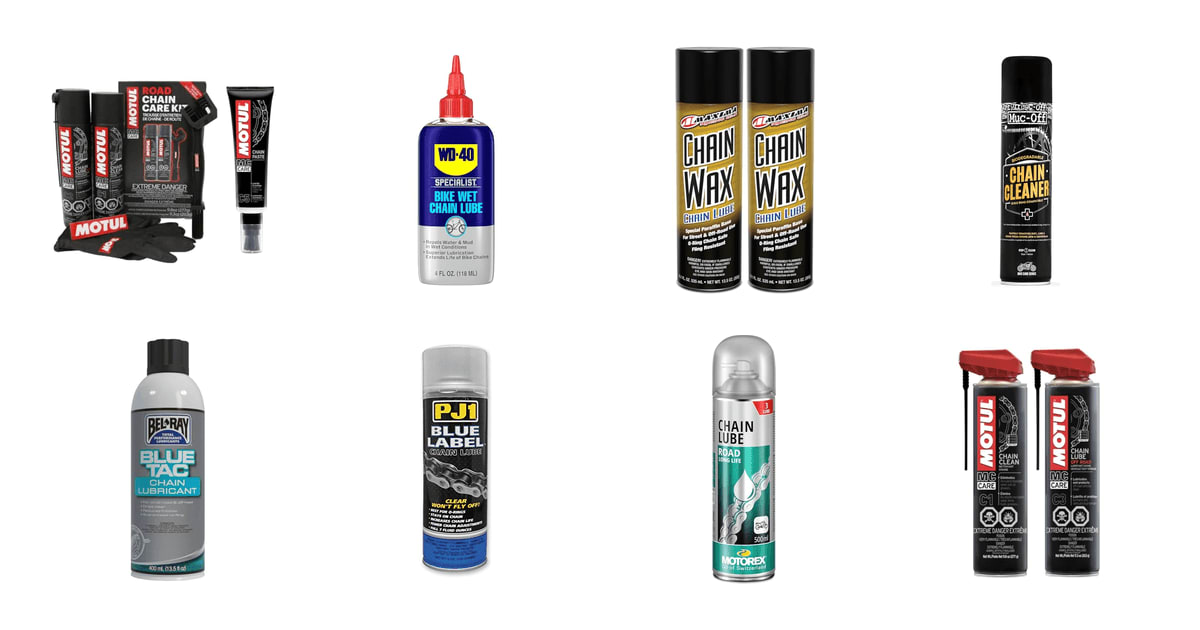
Your chain is one of the least demanding parts of your bike to maintain and one of the most expensive to neglect. A dry, grit-packed chain doesn't just wear itself out — it chews through both sprockets at the same time, so a simple chain swap turns into a chain-and-sprocket job. Most riders only need to spend five minutes every few hundred miles. Clean the chain, let it dry, spray on fresh lube, wipe the excess. That's the whole routine, and it's the difference between a drivetrain that lasts and one that doesn't.
Here's the honest catch: no single product wins everywhere. Wet and tacky lubes cling through rain and mud, then grab road dust like flypaper once things dry out. Wax lubes keep your chain and swingarm remarkably clean, then wash off faster in sustained rain. Cleaners don't lubricate, and lubes don't clean. And almost every product in this category makes a mess somewhere — on your rim, your garage floor, or your hands. You're picking the compromise that matches your climate and your riding, not finding a formula that does it all.
One rule cuts across everything: whatever you buy has to say it's safe for O-ring, X-ring, and Z-ring chains. Solvents that aren't seal-safe dry out the rubber that holds the factory grease inside your chain links, and once those seals crack, no lube brings the chain back. We think that the Motul Motorcycle Chain Care Bundle is the best motorcycle chain care setup for most people, and that the WD-40 Specialist Bike Wet Chain Lube is the one to buy if you want wet-weather protection without spending much.
Everything we recommend

Cleaner, lube, paste, brush and gloves in one box

Real wet-weather protection for very little money
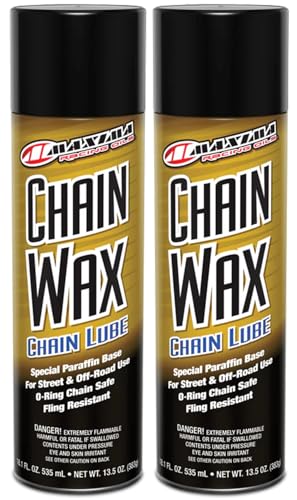
The cleanest-running option if your roads are dry

The sticky stuff that survives mud and water crossings

Motul's kit in off-road trim, if dirt is your normal
At a glance
| Product | Formula | Volume | Price | |
|---|---|---|---|---|
| Motul Motorcycle Chain Care BundleTop pick | — | — | $50.11On sale |
| WD-40 Specialist Bike Wet Chain LubeBudget pick | Wet Chain Lube | 4 oz | $9.96 |
| Maxima Racing Oils 74920-2PK Chain WaxAlso great | Chain Wax | 27 fl oz (2-Pack) | $28.14 |
| Bel-Ray Blue Tac Chain Lube 400MlUpgrade pick | Chain Lube | 400 ml | $18.40 |
 | PJ1 1-22 Blue Label Chain Lube -Also in lineup | O-Ring Chain Lube | 13 oz | $20.80 |
 | Motorex Chainlube 622 Strong Street - 500ml.Also consider | Chainlube | 500 ml | $23.37 |
| Motul Chain Care SetRunner-up | — | 19.6 fl oz | $25.40On sale |
How we picked
Sealed-chain safety. We required every product to state compatibility with O-ring, X-ring, and Z-ring chains on its own listing or manufacturer documentation. A solvent that damages seals disqualifies a product regardless of how well it cleans.
Fling and adhesion. We compared manufacturer claims and published reviews on how well each lube stays on the chain at road speed. Owner feedback about a dirty rear wheel and swingarm was the practical signal we weighted most.
Dirt attraction. We looked at whether each formula dries to a film or stays tacky, since that determines how much grit collects between services. Wax and dry formulas won on cleanliness; tacky wet formulas won on rain and mud.
Volume per can. We compared listed volumes across the lineup to see how many services each purchase realistically supports. Small bottles are fine for occasional riders and frustrating for anyone lubing every few hundred miles.
Complete routine. We favored products that make it easy to clean before lubing, either by including a cleaner or by pairing cleanly with one. Skipping the cleaning step is the single most damaging habit in chain maintenance.
Top pickOn sale
Cleaner, lube, paste, brush and gloves in one box
Motul Motorcycle Chain Care Bundle
This kit pairs Motul's C1 chain cleaner with the C2 road lube and C5 paste, then throws in a brush and gloves. If you've never done chain maintenance, it's everything you need in one purchase, and every piece is rated safe for sealed chains.
$50.11fromAmazonList priceIt solves the mistake most riders make: lubing a dirty chain. People buy lube, skip the cleaner, and spray fresh oil over compacted grit and metal shavings. That's sanding your chain from the inside. This kit puts the cleaner in the same box as the lube, so the step you're most likely to skip is already sitting on the shelf. That alone makes it worth more than the sum of its cans.
The C1 cleaner is safe on every sealed chain type you're likely to own. Motul rates it for O-ring, X-ring, and Z-ring chains, which matters because the seals holding grease inside your chain links are rubber and don't survive aggressive solvents. You don't have to cross-reference a datasheet or guess whether the degreaser under your bench will eat them. Spray, let it work, brush it off.
The C2 lube is the road formula, and it stays where you put it. Published reviews and rider forums consistently rank C2 near the top for fling resistance, which you notice as a rear wheel and swingarm that stay clean after a highway run. It goes on as a fine mist that works into the rollers before it sets into a film. If you commute on pavement, this is the lube you want.
The brush and gloves sound like filler until you've done this once. Chain cleaner strips oil off skin fast, and picking grime out of roller gaps with a rag doesn't work. A stiff brush with side bristles reaches the inner plates where the gunk actually lives. Buying these separately means two more orders and more spent overall. Here they're just in the box.
The C5 paste covers the high-wear spots the spray can't. It's dense and it stays put, which makes it useful on contact points that see the hardest loading. Most riders won't use it every service, but having it means you can add a thicker film where you want one without buying a fourth product.
Flaws but not dealbreakers
You pay for the whole system, and you may already own half of it. If there's a working cleaner and a lube you trust on your bench, this kit's incremental value drops sharply. Buying a can of C2 on its own costs less and gets you the same lube. This bundle earns its keep for first-timers, riders starting from nothing, and anyone buying a gift.
It's a road kit, so it's the wrong choice if you spend real time in the dirt. The C2 formula is tuned for pavement. Mud, river crossings, and sustained grit will strip it faster than an off-road lube. Adventure and dual-sport riders should look at the C1 + C3 set instead, which swaps in the heavier off-road formula.
This bundle is new enough that owner feedback is thin. The individual Motul products underneath it have long track records, but the kit as a package hasn't accumulated much history yet. If you'd rather buy something with years of owner reports behind it, a standalone lube is the safer bet.
Budget pick
Real wet-weather protection for very little money
WD-40 Specialist Bike Wet Chain Lube
This is a proper wet lube with a water-repelling coating, and it costs less than anything else here. The no-wax formula won't cake up inside your chain links. Just make sure you're grabbing the Specialist Bike can, not the classic blue-and-yellow one.
$9.96fromAmazonIt's genuinely built for rain and mud, not just cheap. WD-40 formulated the Specialist Bike Wet line for wet, muddy, and extreme conditions, and it leaves behind a coating that repels water rather than washing off with it. If you ride through weather regularly and don't want to spend much, this covers the job that matters most: keeping bare metal off bare metal when everything's soaked.
The no-wax formula avoids a slow-building problem. Wax lubes can leave residue that packs inside chain links over many applications, and that buildup blocks fresh lube from reaching the rollers. This one skips wax entirely, so what you spray on penetrates instead of layering. Over a few seasons of frequent re-application, that's a real difference in how well the chain drinks.
It's the easiest product here to find and restock. WD-40 sits on shelves everywhere, which sounds trivial until you're mid-trip with a chain that got rained on and no lube in your bag. Being able to walk into almost any hardware or bike shop and get the same can back is worth something.
For a new rider, the low stakes are the point. Chain maintenance is a habit before it's a skill, and habits form faster when the consumable is cheap. Spraying too much and wiping it off doesn't sting. That's how you end up actually lubing every 300 to 500 miles instead of telling yourself you'll do it next weekend.
Flaws but not dealbreakers
The 4-ounce bottle is small, and you'll notice. Most motorcycle-specific lubes here come in cans two to five times the size. If you ride a lot or lube often, you'll be reordering while other riders are still on their first can. Run the math on cost per application, not per bottle, before you commit to it as your only lube.
It's a wet lube, so it collects dust in dry weather. Ride mostly on dry pavement and you'll see grit accumulating on the chain faster than with a wax formula. That grime is abrasive. If you live somewhere dry, a wax lube keeps things visibly cleaner between services.
It's marketed for bicycles, so check your chain before you commit. The formula is drivetrain-safe and separate from the original WD-40 in every meaningful way, but the labeling targets bike chains rather than motorcycle O-ring chains. Confirm compatibility with your specific sealed chain rather than assuming it. And to be blunt about the real risk here: never put original WD-40 on a motorcycle chain. It's a solvent, and it attacks the seals.
Also great
The cleanest-running option if your roads are dry
Maxima Racing Oils 74920-2PK Chain Wax
Maxima's parafilm wax dries into a hard film that shrugs off road dust instead of collecting it. If you commute on dry pavement and hate scrubbing black gunk off your swingarm, this is the formula that keeps things looking tidy between services.
$28.14fromAmazonWax dries to a film, and dry films don't hold dirt. Maxima's parafilm formula sets into a coating similar to cosmoline, the anti-corrosion layer used for long-term equipment storage. Dust doesn't stick to it the way it sticks to oil. Your chain stays visibly cleaner between 300 to 500 mile intervals, and your rear wheel stops looking like it lost a fight.
It's rated for humidity and water, which is more than most wax lubes claim. Maxima specifically pitches the parafilm coating for wet and high-humidity environments, so this isn't a fair-weather-only product. It's not what you want for river crossings. But a muggy summer or an occasional caught-in-the-rain commute won't strip it.
The extreme-pressure additives are API-rated and safe for sealed chains. Heavy-duty anti-wear and EP additives handle the loading between rollers and sprocket teeth, and the formula works across chain types. It penetrates into areas you can't reach with a brush, which is where chain stretch actually starts.
Two cans of 27 total fluid ounces means you're not rationing it. Wax needs a slightly more generous application than a thin aerosol, and this pack gives you the volume to do it right without watching the can. For a rider who lubes on schedule, that's a lot of services out of one order.
Flaws but not dealbreakers
Sustained rain washes it off faster than an oil lube. This is the trade-off wax makes. In a hard multi-day downpour or repeated water crossings, the film gives up before a tacky wet lube would. Adventure and dual-sport riders should use Bel-Ray Blue Tac or the Motul off-road set instead.
Application takes a bit longer. You need the wax to set before you ride, so it's not a spray-and-go product. Budget a few extra minutes over an aerosol wet lube. Not a dealbreaker, but worth knowing if you tend to lube the chain on your way out the door.
Upgrade pick
The sticky stuff that survives mud and water crossings
Bel-Ray Blue Tac Chain Lube 400Ml
Bel-Ray Blue Tac is thick, tacky, and built to cling through conditions that strip a normal lube in a few dozen miles. If you ride gravel, mud, or long stretches of rain, this is the formula riders have leaned on for decades.
$18.40fromAmazonIt clings instead of relying on viscosity, which is why it survives water. Bel-Ray designed Blue Tac to resist fling-off even at high speed, and the mechanism is adhesion rather than thickness alone. Ride through a river crossing or a solid hour of rain and the film is still there. Thinner road lubes are gone well before that.
It's the lube adventure and dual-sport riders keep coming back to. Blue Tac has a long track record in off-road communities, and that longevity is the strongest signal you get in a category where marketing claims are hard to verify. Owners report it staying put through the kind of abuse that makes them re-lube other formulas mid-ride.
A 400ml can covers a serious riding season. That's generous volume for a lube you're applying more often than a road rider would. Adventure riders in heavy mud should re-apply every 150 to 200 miles, and this can supports that cadence without constant reordering.
It protects the part of the chain you can't inspect. The tacky layer keeps a barrier between rollers and pins where water and grit want to get in. On a bike that sees standing water regularly, that barrier is doing the work that decides whether your chain lasts one season or three.
Flaws but not dealbreakers
On dry pavement, the same tackiness that saves you becomes the problem. Blue Tac grabs road dust, sand, and grit and holds them against the side plates. That creates an abrasive paste that speeds up wear. If you ride sealed asphalt in a dry climate, this is the wrong lube — pick the wax or a road formula.
It's messy, and it fights back when you clean it off. Thick tacky lube takes real effort to remove during your next service. Plan on a dedicated cleaner and a brush rather than a quick wipe, and expect a heavier chain cleaning session than a lighter formula would need.
Runner-upOn sale
Motul's kit in off-road trim, if dirt is your normal
Motul Chain Care Set
This set swaps the road lube in Motul's bundle for the heavier C3 off-road formula, keeping the same seal-safe C1 cleaner. It's the clean-and-protect combination to pack for a trip through gravel, water crossings, and mud.
$25.40fromAmazonList priceIt's the off-road answer to our top pick, with the same cleaner underneath. The C1 cleaner here is the same seal-safe formula, rated for O-ring, X-ring, and Z-ring chains. What changes is the lube: the C3 is built for varied conditions including off-road as well as street, so it handles grit loads the road formula wasn't designed for.
Buying the cleaner and lube together removes a real failure point. Riders who buy an off-road lube alone often pair it with whatever degreaser is on the shelf, which is how sealed chains get damaged. This set puts a compatible cleaner in the same box, so the whole routine is accounted for.
The kit format travels well. Both cans fit in a pannier, and Motul's instructions are as simple as it gets: spray the cleaner, let it work, wipe it off, follow with the lube. No extra tools needed. On a multi-day trip where you're servicing the chain in a parking lot, that simplicity matters.
Off-road riding needs a heavier film, and C3 provides it. Gravel and mud strip lube fast, and a light road formula won't last between services in those conditions. The extra body in C3 buys you more miles of protection where the chain is taking the most abuse.
Flaws but not dealbreakers
On pavement, the heavier formula collects dust faster. The extra mass that helps in mud works against you on clean asphalt. If you never leave the road, our top pick's C2 lube keeps the chain cleaner between services. Choosing this set for a pure street bike means a grimier chain for no benefit.
No brush or gloves in this one. Unlike the road-focused bundle, this set is just the two cans. You'll want a chain brush anyway, so factor that in as a separate purchase if you don't already own one.
Who this is for
This guide is for anyone with a chain-driven motorcycle who wants the drivetrain to last. If you commute, tour, or ride trails, you need both a cleaner and a lube, and you need them to be safe for sealed chains. Riders on belt-drive or shaft-drive bikes can skip all of it. And if your chain already shows a wave pattern on the sprocket teeth or has stiff links that won't flex, no product here helps — that's a replacement job.
We cover consumer chain cleaners, chain lubes, and clean-and-lube kits. We don't cover chain tools, wear gauges, paddock stands, or automatic oilers, and we don't cover industrial degreasers sold for general shop use — plenty of those are cheap and effective at stripping grease, and plenty of them destroy chain seals. Pick based on your climate first and your riding surface second. Those two answers point at your formula, and everything else is preference.
How we picked
We scored the lineup on the things that decide whether a chain lasts. Seal safety: every product had to state compatibility with O-ring, X-ring, and Z-ring chains, since an incompatible solvent kills a chain faster than neglect does. Fling and adhesion: we weighed manufacturer claims and published reviews on how well each formula stays put at speed, using owner reports of a clean swingarm as the practical test. Dirt attraction: dry and wax films shed grit, tacky wet formulas hold it, and we matched that trade-off to riding conditions rather than picking a winner. Volume per can: we compared listed sizes to gauge how many services you actually get. Complete routine: we favored products that pair with or include a cleaner, because lubing over grime does more damage than not lubing at all.
Other motorcycle chain lube and cleaners worth considering
If you tour long distances and want fewer stops: The Motorex Chainlube 622 Strong Street - 500ml. ($23.37) — Motorex Chainlube 622 Strong Street is the high-viscosity option built for sustained highway speed. The Swiss formula is designed to hold up near a hot exhaust on a sport-touring bike, where thinner lubes gradually thin out and start flinging. The 500ml aerosol is one of the largest cans in this lineup and lays down an even coat without much overspray, which is handy when you're servicing the chain at a motel instead of a workbench. What you give up is availability and familiarity — Motorex isn't stocked as widely in North America as Motul or Maxima, so plan ahead rather than counting on finding a can mid-trip. For riders putting on serious annual mileage, the extended interval is worth the planning.
The competition
This is what our research surfaced in a crowded category, not a census of everything on the shelf. Chain lube is a segment where dozens of brands make broadly similar claims, and the differences that matter — seal safety, adhesion, dirt attraction — are hard to verify from a label. The product below is good at what it does. It just lost out to a pick for a specific reason, and there's a rider for whom it's still the right can.
The PJ1 1-22 Blue Label Chain Lube - ($20.80) — PJ1 Blue Label is a petroleum-based O-ring chain lube built around one goal: keeping the seals moist and pliable rather than drying them out. That's a real engineering focus, and it pairs with a clear formula that resists fling-off and cushions the rollers against the sprocket. It lost to the Motul kit mostly on breadth — it's a lube only, so you're still buying a cleaner, and for general street riding it doesn't do anything the C2 lube doesn't. Owners who ride hard on premium O-ring chains and want the most seal-conservative formula they can find still have a good reason to pick it. The 13-ounce can also goes a long way.
How to clean and lube a chain
Put the bike on a paddock or center stand so the rear wheel spins freely. Spray the cleaner along the chain, let it sit for a minute, then work a chain brush into the inner and outer plates while rotating the wheel by hand. Wipe it down and let the chain dry completely — trapped solvent under fresh lube is a wasted service. Then apply lube to the inner side of the links as they come around the lower sprocket, in short bursts, rotating as you go. Wait three to five minutes before riding so it penetrates. Wipe any overspray off the rim, and keep lube well away from the tire — even a thin film there costs you traction. Repeat every 300 to 500 miles, and always after a wet ride.
Questions we get
How often should I lube my chain?
Every 300 to 500 miles in normal dry riding. Re-apply right after any ride through rain, standing water, or mud, because water flushes lube off and leaves bare pins to corrode within hours. If you're riding heavy mud on an adventure bike, tighten that to every 150 to 200 miles. A chain left dry for a long stretch develops internal corrosion that no lube reverses.
Can I use regular WD-40 on my motorcycle chain?
No. Original WD-40 is a water-displacing solvent, not a lubricant, and its petroleum compounds degrade the nitrile seals in O-ring, X-ring, and Z-ring chains. One application won't kill a chain overnight, but repeated use dries and cracks the seals, which leads to internal pin corrosion. The WD-40 Specialist Bike Wet Chain Lube is a completely different product from the same brand and is formulated for drivetrain use.
What's the difference between wax and oil chain lube?
Wax lubes dry into a solid film after you apply them, so they fling less and collect far less road dust. Oil and wet lubes stay liquid or tacky, which gives them better adhesion in rain and mud but means they grab more grit in dry weather. If you ride dry pavement, wax keeps everything cleaner. If you ride weather or dirt, use a wet or tacky formula.
Do I really need a cleaner, or can I just wipe the chain down?
Use a cleaner. Wiping takes off surface grime but leaves old lube and metal wear particles packed inside the rollers, where they keep grinding on every revolution. A proper cleaner dissolves that internal contamination so it can drain out before you re-lube. It's the difference between rinsing a coffee filter and actually washing it — the outside looks fine, but the damage is happening inside.
How do I keep chain lube off my tire?
Rotate the wheel slowly by hand on a stand and aim at the inner link sides as they come around the lower sprocket, not at the outer plates. Apply in short bursts while the chain moves. Wipe any overspray off the rim with a cloth. Never let lube touch the tire's contact patch, since even a thin film noticeably cuts traction.
How do I know if my chain needs replacing instead of lubing?
Look for one percent or more stretch measured with a chain wear gauge, stiff or kinked links that don't flex smoothly around the sprocket, hooked or wave-shaped sprocket teeth, or cracks in the side plates. Lube prevents wear but can't reverse it. Once a chain hits that point, replace it along with both sprockets — a new chain on worn sprockets wears out fast.
Why you should trust us
For this guide:
- We read manufacturer specifications and listing documentation for every product here, checking each one for stated compatibility with O-ring, X-ring, and Z-ring chains.
- We compared published reviews and rider-community discussion on fling resistance, dirt attraction, and how each formula holds up in rain, and weighed owner feedback themes about mess, bottle size, and how often people find themselves re-applying.
- We did not use, apply, or test any of these products ourselves; every claim here traces to specifications, published reviews, or owner reports.
- We read owner reviews on every listing, weighted toward the critical ones, because that is where the recurring failures show up.
- We have a systematic way of automatically fetching the latest prices, so the numbers on this page stay current.
- This is a research-focused guide, so the team may not own every product listed — though we often do own the top winners, which gives us extra context for the recommendations.
- We don't accept free products, and the retailer commission never changes which product we recommend.
Sources
How to Lube Your Motorcycle Chain — Step-by-Step Guide, RevZilla Common Tread
Best Motorcycle Chain Lubes — Long-Term Testing, WebBikeWorld
Motorcycle Chain Maintenance: A Complete How-To, Cycle World
How to Clean and Lube a Motorcycle Chain, Motorcyclist Magazine
Chain Lube Community Comparison Thread, ADVrider Forums
Amazon product listings and owner reviews for all 7 products
Manufacturer specification pages for each product
Some passages in this guide may be paraphrased with AI help. Prices are refreshed automatically.
More like this.
Continue exploring lifestyle reviews and recommendations.

The Best Tire Chains and Snow Traction Cables
Chains live in your trunk for years and matter for about twenty minutes. But those twenty minutes tend to happen on a dark shoulder, in falling snow, with…

The Best Waterproof Motorcycle Covers
A motorcycle parked outside takes a beating you don't see happening. Sun bleaches the paint and dries out rubber seals, rain finds its way into…

The Best Electric Heated Motorcycle Gloves
Your hands are the first thing to quit on a cold ride. They're out in the wind, wrapped around metal, doing all the precise work - clutch, brake,…

The Best Gutter Cleaning Tools
Gutters only matter when they stop working. Then a storm rolls through, water sheets over the front lip, and you end up with a flooded flower bed, a damp…

The Best Pool Cleaning Robots
A pool robot buys back your Saturday morning. Instead of dragging a pole around the deck and pushing dirt into corners, you drop a machine in the water,…

The Best Motorcycle Phone Mounts
Your phone is your GPS, your music player, and the thing that tells you where the next gas station is. On a motorcycle, it also sits a few inches from an…