The Best Electric Heated Motorcycle Gloves
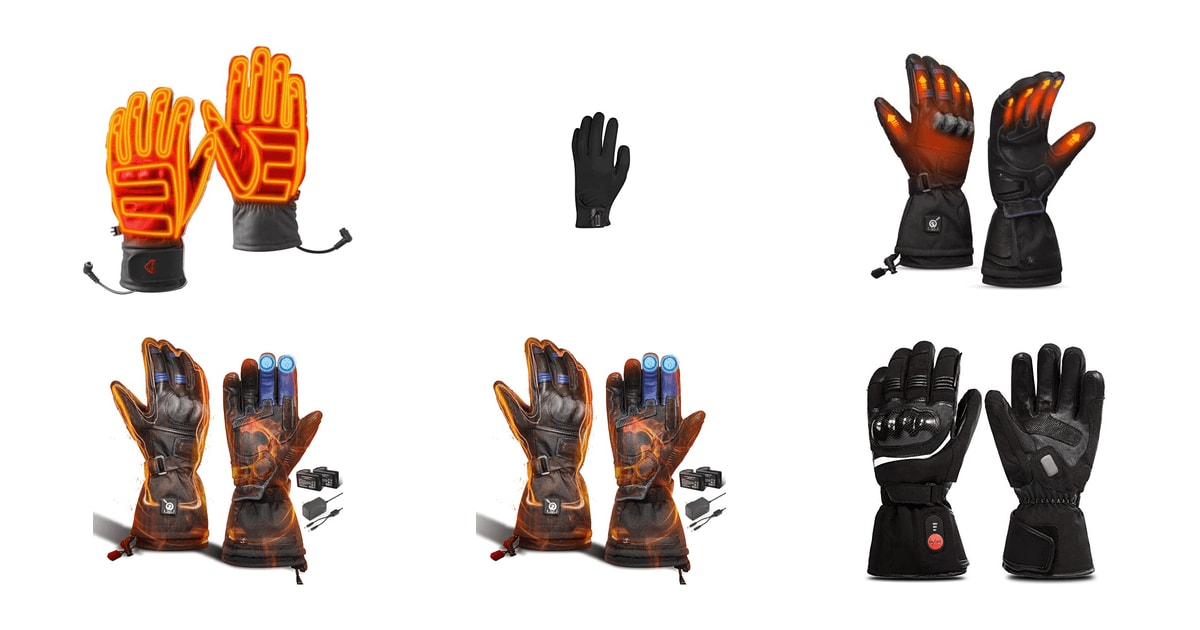
Your hands are the first thing to quit on a cold ride. They're out in the wind, wrapped around metal, doing all the precise work — clutch, brake, throttle. The National Weather Service puts 40°F at 60 mph at a wind chill of about 18°F, so you don't need a deep freeze to lose feeling in your fingertips. Heated gloves fix that with a heating element sewn into the shell. Get warmth into the fingers, and a miserable commute turns into a normal one.
No heated glove nails everything. Wired 12V gloves run as long as your engine does, but they tether you to the bike, and you'll spend an afternoon routing a harness. Battery gloves skip all that, then fade — riders on ADVrider report roughly two to three and a half hours on high, and cold shrinks that further. Every heated glove is thicker than a summer glove, so lever feel suffers a little. And sizing across this category is inconsistent enough that you should plan on an exchange.
So buy for the ride you actually take. If you commute an hour each way in the dark, or you tour all day in the rain, wired heat is the only version that doesn't run out on you. If you ride twenty minutes to work and don't want to touch your bike's wiring, a battery glove is plenty. We think that the Gerbing Hero Heated Gloves are the best electric heated motorcycle gloves for most people, and that the SAVIOR Professional Heated Motorcycle Gloves are the ones to buy if you want wired and battery power in one glove.
Everything we recommend
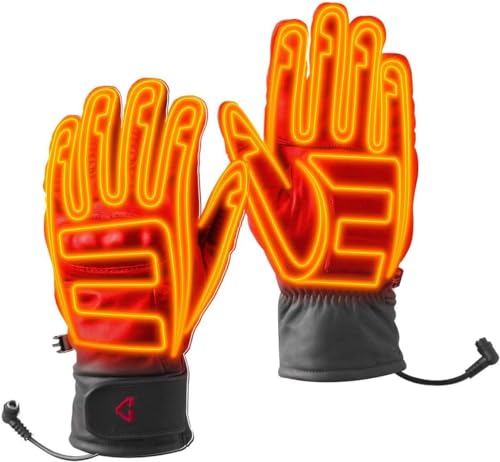
Unlimited wired heat, warm all the way to the fingertips

Wired or battery power in one glove, with real armor

Cordless warmth for short commutes, no wiring required
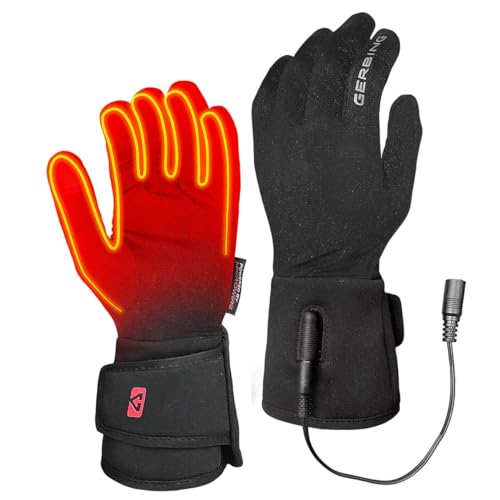
Add wired heat to the gloves you already like
At a glance
| Product | Power Source | Heat Levels | Price | |
|---|---|---|---|---|
| Gerbing Hero Heated Gloves - 12V MotorcycleTop pick | 12V | — | $149.95 |
 | Firstgear Heated Glove LinerAlso consider | — | — | $92.76 |
 | SAVIOR HEAT Heated Motorcycle Gloves for MenAlso consider | 7.4V 3000mAh | 3 Levels | $119.99 |
| SAVIOR Professional Heated Motorcycle Gloves for MenAlso in lineup | 12V | 3 Levels, 40-60°C | $119.99 |
| SAVIOR Professional Heated Motorcycle Gloves for MenRunner-up | 12V | 3 Levels, 40-60°C | $119.99 |
| SAVIOR HEAT Heated Motorcycle Gloves for MenBudget pick | 7.4V | — | $113.79 |
| Gerbing 12V Heated Glove Liners XXLAlso great | 12V | 3 Levels | $99.99 |
How we picked
Heat where it counts. We prioritized gloves whose manufacturer specifications describe heating elements running to the fingertips, not just a strip across the back of the hand. Owner feedback across the category keeps circling back to cold fingers in gloves with warm palms.
Power source and runtime. We treated 12V wired power as the standard for long rides, since it runs as long as the engine does. For battery gloves, we leaned on owner reports and ADVrider community feedback describing two to three and a half hours on the highest setting.
Wet-weather sealing. Cold injury guidance from the Wilderness Medical Society notes that wet hands shed heat far faster than dry ones, so we required a stated waterproof or water-resistant membrane. A glove that soaks through cancels out its own heating element.
Feel at the levers. Motorcyclist Magazine's dexterity protocol scores gloves on throttle roll, lever pull and fine-motor tasks against bare-hand performance. We favored thinner constructions and liners, which give up the least control feel.
Protection and fit. We looked for knuckle armor and leather palms, and noted where brands publish a CE EN 13594 rating — Level 2 requires a 70-joule palm impact versus 50 for Level 1. Recurring sizing complaints counted against a glove.
Top pick
Unlimited wired heat, warm all the way to the fingertips
Gerbing Hero Heated Gloves - 12V Motorcycle
The Hero is a full-leather 12V glove that pulls power from your motorcycle, so the heat never runs out mid-ride. Microwire runs to the tip of every finger, which is where cold actually starts, and TPU knuckle armor and a water-resistant membrane come standard.
$149.95fromAmazonHeat that reaches your fingertips is the whole point. Plenty of heated gloves warm only the back of your hand, and it shows: your palm feels fine while your fingers go numb on the levers. Gerbing runs microwire through the glove and out to the tip of every finger. That's the layout that keeps you comfortable, and it's the first spec you should check on any glove you're considering.
Because these run off your bike, runtime isn't a number you have to think about. Gerbing lists a draw of roughly 18 to 22 watts per pair, which is a small ask of most charging systems. Turn the key and you have heat until you shut the bike off. Battery gloves can't match that on a long day, and WebBikeWorld's evaluations found the gap widens on rides past three hours.
The rest of the glove is built like a real riding glove, not a warming accessory with a leather cover. Gerbing uses premium aniline cowhide, TPU knuckle protection, and an AQUATEX breathable membrane, with a stated max of 135°F. That membrane matters more than it sounds: wet hands shed body heat dramatically faster than dry ones, so soaked gloves undo the electronics entirely.
Gerbing is the reference point here for a reason. The company has built 12V heated clothing for more than forty years, and its harness-and-controller approach is the one other brands copy. If you already own a Gerbing jacket liner, or you plan to add one, these plug into the same system and share a controller. That ecosystem is a big part of why touring riders stick with one brand.
Flaws but not dealbreakers
Sizing is the recurring complaint. Owners describe fingers that run short even when they follow the size chart, and several report receiving a size other than the one they ordered. Order early in the season so you have room to swap, and measure your hand rather than guessing from your usual glove size.
Durability feedback is mixed. Some owners have commuted through multiple winters down into single-digit temperatures and stayed happy, while others report seams splitting in the leather after a few weeks, or hot spots across the knuckles on the highest setting. These are also the most expensive gloves here, and they need a harness run to your battery before they do anything at all.
Runner-up
Wired or battery power in one glove, with real armor
SAVIOR Professional Heated Motorcycle Gloves for Men
This SAVIOR glove runs off a 12V cord to your motorcycle battery or off a rechargeable pack, so you can pick your power source ride by ride. Goatskin leather, a carbon fiber back shell and rubber knuckle pads make it a legitimate riding glove, not just a warm one.
$119.99fromAmazonDual power is the feature that makes this glove worth a look. Plug the 12V cord into your bike and the heat runs continuously, exactly like a wired glove. Pull the cord, drop in a pack, and you can walk into the office without unplugging anything. Most gloves force you to choose one or the other when you buy, and plenty of riders want both.
Protection is better than you'd expect at this level. There's goatskin leather, a carbon fiber shell across the back of the hand, and rubber over the knuckles, plus a laminated waterproof layer inside. Owners riding into the teens on the highway report hands that stayed comfortable for half-hour stretches. One nice touch: a wiper blade on the index finger for clearing your visor.
You get three settings, which SAVIOR lists as roughly 40 to 60°C, and a touchscreen sensor on the index finger. The glove is thick enough to feel protective without turning your hand into a mitten, and several owners note they're warm even with the heat off — useful on a ride that starts cold and ends mild.
Owner feedback skews positive but isn't unanimous, and the split is worth understanding. Riders on faired bikes with wind protection report the best results. Riders on naked bikes, in sustained sub-freezing air, are the ones most likely to say the heat isn't enough. Match your expectations to your bike and your route.
Flaws but not dealbreakers
The overheat protection is well intentioned and mildly irritating. Five to ten minutes after you switch to high, the glove steps itself down to medium. You can push it back up by hand, but on a long cold ride you'll be doing that repeatedly.
The wrist strap is short, and at least one large-handed owner found it barely usable on the biggest size. Touchscreen response also drops off in genuine cold, so plan on using face unlock rather than fingerprints. And SAVIOR doesn't publish a CE impact rating for these, so you can't compare their protection against a CE Level 1 or Level 2 glove on paper.
Budget pick
Cordless warmth for short commutes, no wiring required
SAVIOR HEAT Heated Motorcycle Gloves for Men
These battery gloves heat the whole back of your hand and every finger to the tip, with no harness to install. They're the easy way into heated gear if your rides are short and you'd rather not touch your motorcycle's electrical system.
$113.79fromAmazonThe appeal is that there's nothing to set up. Charge two packs, slide them into the cuffs, press the button on the outside of the glove and go. If your commute is twenty or thirty minutes each way, you'll never come close to the runtime limit, and you can wear them shoveling the driveway or standing at a bus stop.
The heating layout is better than most battery gloves. SAVIOR runs far-infrared fiber elements across the entire back of the hand and down all five fingers to the tips, instead of the single back-of-hand strip that budget gloves usually use. That's the difference between hands that feel warm and fingers that still ache on the levers.
Construction holds up reasonably well for the money. There's a lambskin-and-polyester shell, a HIPORA waterproof layer, and a carbon fiber shell over the knuckles. Owners who've had these for several winters report the elements still working, and some pair them with heated grips to cover highway speeds into the low 30s.
Flaws but not dealbreakers
Runtime is the ceiling you'll hit. Owners consistently describe roughly three hours on medium, and less on high — fine for commuting, not enough for a touring day. Heat also tapers as the packs drain, and cold weather cuts battery capacity further, so the last stretch of a ride is the least warm.
Fit runs long in the fingers for a lot of buyers, including riders who ordered by SAVIOR's own measurement chart, and women in particular report an awkward fit. On the coldest days these keep your hands functional rather than genuinely toasty, which is exactly what some riders want and a disappointment to others.
SAVIOR's listing states a 30-day money-back and free-replacement window for these gloves.
Also great
Add wired heat to the gloves you already like
Gerbing 12V Heated Glove Liners XXL
These thin 12V liners go inside whatever gloves you already ride in, so you keep the fit, armor and lever feel you're used to. They tap into a Gerbing jacket, a 12V battery pack or your motorcycle directly.
$99.99fromAmazonLiners solve a problem full heated gloves can't. If you've already found gloves that fit your hands and protect them properly, replacing them with a heated pair means giving all that up. A liner slips underneath instead. You keep your armor, your break-in, and your clutch feel, and you add heat only where it was missing.
Gerbing places elements across the fingers and the back of the hand, and builds the liner from soft stretch lycra that wicks moisture. It's described as thin and lightweight, which is the entire design brief — a bulky liner defeats the purpose by stealing the room your fingers need inside your existing glove.
Power is flexible in a way full gloves usually aren't. Run them off a Gerbing 12V jacket liner, off a 12V battery, or straight from your motorcycle or ATV. Add a controller and you get three heat levels shared with the rest of your Gerbing gear, managed from one place on the handlebar.
Flaws but not dealbreakers
You need outer gloves with spare room inside. If your current gloves fit snugly, a liner will make them tight, and a tight glove cuts circulation — which makes your hands colder, not warmer. Riders often size their outer glove up a half step to accommodate a liner.
A liner is only the heat. It has no impact protection and no weatherproofing of its own, so your outer glove has to handle both. There's also almost no owner feedback on this particular listing yet, so long-term durability is an open question.
Who this is for
Buy heated gloves if you ride when it's genuinely cold and you're tired of cutting rides short. That's commuters heading out before sunrise, touring riders crossing a mountain pass, and anyone whose hands run cold for medical reasons — Raynaud's affects an estimated 5 to 10% of people in the US, and for those riders warmth isn't a luxury. If you already run heated grips and still lose your fingertips at highway speed, gloves are the missing half: grips warm your palms, gloves warm the side of your hand facing the wind.
You can skip all of this if you ride mostly in mild weather or park the bike from first frost to spring — a good insulated winter glove and a set of bar muffs will cover you for less hassle. This guide covers electric heated gloves and heated liners for motorcycle use, both 12V wired and battery-powered. It doesn't cover heated grips, handguards, unheated winter gloves, or the controllers and harnesses you may need to buy separately to run wired gear.
How we picked
We built the shortlist around five things. Heat coverage: elements have to reach the fingertips, since fingers go numb long before palms do. Power source: 12V wired gloves run as long as your engine does, while battery models cap out at roughly two to three and a half hours on high according to community reports. Weatherproofing: a stated waterproof or water-resistant membrane is non-negotiable, because wet hands lose heat far faster than dry ones. Dexterity: thinner shells and liners preserve the clutch and brake feel that thick gloves cost you. Protection and fit: knuckle armor, a leather palm, and sizing that owners don't consistently complain about.
Other electric heated motorcycle gloves worth considering
If you want a battery glove that can also plug into the bike: The SAVIOR HEAT Heated Motorcycle Gloves for Men ($119.99) — This SAVIOR model ships with 3000mAh packs and a motorcycle charging cable, so it covers both power modes like our runner-up but leans harder on the battery side. There are three heat settings, a four-level battery display on the cuff, a carbon fiber shell and touch-sensitive index finger and thumb. SAVIOR claims up to 7.5 hours on the packs, which realistically means the low setting. Owners are broadly happy, describing warm hands in single-digit temperatures, though a few say the high setting isn't as hot as they'd like. They're bulkier than our budget pick, and the battery care instructions are strict — don't leave the packs charging unattended.
If you're already running Firstgear heated gear: The Firstgear Heated Glove Liner ($92.76) — Firstgear's liner does the same job as our Gerbing liner pick — heat the gloves you already own — and it plugs into the Firstgear Synergy system, where one handlebar controller manages your jacket liner, pants liner and gloves together. RevZilla points to that single-controller convenience as the main reason touring riders commit to one brand instead of mixing. What you give up is heat output: owners describe the liners as working but noticeably less warm than expected, even under a heavy outer glove, and one reports getting a defective pair. Wiring it into a jacket liner also takes some figuring out the first time.
The competition
This is what our research surfaced, not a survey of everything sold. Heated glove listings turn over constantly, and several well-regarded brands sold elsewhere aren't represented here. Here's the remaining glove we looked at and where it landed.
The SAVIOR Professional Heated Motorcycle Gloves for Men ($119.99) — This is the same SAVIOR Professional glove as our runner-up, listed in XX-Large rather than Large. Everything we said about the dual power modes, the goatskin shell and the overheat step-down applies identically. Buy this listing if it's the size you need. One caveat from owner feedback on the larger sizes: the wrist strap is cut short, and riders with big hands have struggled to cinch it properly over a jacket cuff. If you're between sizes, that's worth weighing, since a glove you can't close at the wrist lets cold air straight in.
Wiring and battery care
Wired gloves need a fused lead run from your battery to under the seat, then a splitter or controller up to the bars. Fuse it, and route the harness where it won't snag on the steering stops. A 12V pair draws roughly 18 to 22 watts, so check your bike's charging output before you add a jacket liner on the same circuit — small singles and older bikes don't have much headroom. Get in the habit of unplugging at the bars when you park, or you'll eventually walk away and pull the connector apart. For battery gloves, pull the packs out when you store the gloves for the season, charge them where you can see them, and top them off every couple of months so they don't sit flat.
Questions we get
Are 12V wired heated gloves better than battery-powered ones?
For long rides, yes. Wired gloves draw from your motorcycle's electrical system, so the heat stays constant for as long as the engine runs. WebBikeWorld's evaluations found wired models hold temperature far more consistently than battery gloves on rides past three hours, and the gap gets wider below freezing. Battery gloves win only on convenience — no harness, no cord, and you can wear them off the bike.
How long do battery-powered heated gloves last on a charge?
Plan on two to three and a half hours on the highest setting and five to seven hours on the lowest, based on community reports across brands. Cold shrinks those numbers, because lithium packs lose capacity in low temperatures — exactly when you need the heat most. Most riders carry a spare set of packs if they're out for more than a couple of hours.
Can I use heated motorcycle gloves in the rain?
You can, as long as the glove has a waterproof membrane, and you should treat that as a requirement rather than a bonus. Wet hands lose body heat many times faster than dry ones, so a soaked glove wastes whatever heat the elements produce. Check whether the listing says waterproof or merely water-resistant — they're not the same, and a water-resistant glove will eventually wet through in sustained rain.
Are heated gloves worth it if I have Raynaud's?
Many riders with Raynaud's treat heated gloves as necessary equipment rather than a comfort upgrade, and the condition affects an estimated 5 to 10% of people in the US. If that's you, prioritize fingertip heating coverage above everything else, and lean toward a 12V wired glove so the warmth doesn't fade partway through a ride. Talk to your doctor about your own situation — a glove manages symptoms, it doesn't treat the condition.
What CE rating should motorcycle gloves have?
The standard is CE EN 13594. Level 1 requires a glove to withstand a 50-joule palm impact; Level 2 raises that to 70 joules at the palm plus 50 joules at the knuckles. Level 2 is the safer choice for sustained highway riding. Many heated gloves only meet Level 1, and some — including a couple in this guide — don't publish a rating at all, so you're relying on the visible armor instead.
Should I buy heated gloves or heated grips?
They solve different halves of the problem. Grips warm the palm side of your hand through the bars, but do nothing for the back of your hand and fingers, which is the part facing the wind. Heated gloves warm the whole hand. Riders in genuinely cold climates often run both, and several owners describe that combination as what finally made highway speeds tolerable in the 30s.
Why you should trust us
For this guide:
- We compared manufacturer specifications across every glove here for heating element placement, power source, wattage and waterproofing.
- We read published evaluations from WebBikeWorld and Motorcyclist Magazine, along with the CE EN 13594 impact standard and National Weather Service wind chill data, to understand where heated gloves typically fall short.
- We read owner feedback across these listings for recurring themes around sizing, runtime, warmth in sub-freezing air, and long-term durability of the heating elements.
- We read owner reviews on every listing, weighted toward the critical ones, because that is where the recurring failures show up.
- We have a systematic way of automatically fetching the latest prices, so the numbers on this page stay current.
- This is a research-focused guide, so the team may not own every product listed — though we often do own the top winners, which gives us extra context for the recommendations.
- We don't accept free products, and the retailer commission never changes which product we recommend.
Sources
Best Heated Motorcycle Gloves — RevZilla Common Tread, RevZilla
Heated Motorcycle Gloves Buyer's Guide — WebBikeWorld, WebBikeWorld
Best Heated Motorcycle Gloves Reviewed — Motorcyclist Magazine, Motorcyclist Magazine
Best Heated Motorcycle Gloves 2025 — Motorcycle News (MCN), Motorcycle News (MCN)
Heated Gear Megathread (community long-term testing) — ADVrider Forums, ADVrider
Cold-Weather Motorcycle Gloves Tested — Cycle World, Cycle World
Oxford Heatguard Gloves Long-Term Review — Visor Down, Visor Down
CE EN 13594:2015 Motorcycle Glove Safety Standard Explained — European Committee for Standardization, European Committee for Standardization (CEN)
Wind Chill Chart and Cold Injury Risk — National Weather Service, National Weather Service
Raynaud's Disease: Facts and Statistics — Raynaud's Association, Raynaud's Association
Heated Apparel Market Size & Forecast to 2030 — Grand View Research, Grand View Research
How to Wire 12V Heated Gear to Your Motorcycle — Total Motorcycle, Total Motorcycle
Amazon product listings and owner reviews for all 7 products
Manufacturer specification pages for each product
Some passages in this guide may be paraphrased with AI help. Prices are refreshed automatically.
More like this.
Continue exploring lifestyle reviews and recommendations.

The Best Heated Work Gloves
Cold hands make you slow and careless. You fumble the bolt, you drop the shovel, you pull a glove off to work your phone and lose ten minutes of warmth…

The Best Motorcycle Jackets And Gloves
Gear is the part of riding you notice every day, long before you ever need it. A jacket that's too warm stays on the hook, and gloves that pinch turn a…

The Best Heated Motorcycle Grips
Cold hands ruin a ride faster than anything else. Your fingers go numb, your grip gets sloppy, and you start planning stops around gas-station hand…

The Best Electric Blankets and Heated Throws
A heated blanket changes the arithmetic of a cold house. You stop trying to warm every room and warm the two feet around your body instead. On the couch,…

The Best Boxing Gloves and Punching Bags for Home Training
Hitting a bag at home is one of the few workouts that doubles as stress relief. You don't need a gym membership or a training partner. But the gear…

The Best Workout Gloves and Lifting Grips
Your hands are the weak link in most lifts long before your back or legs are. Skin tears at the base of the fingers, calluses catch on knurling, and a bar…