The Best Trail Cameras for Wildlife Photography
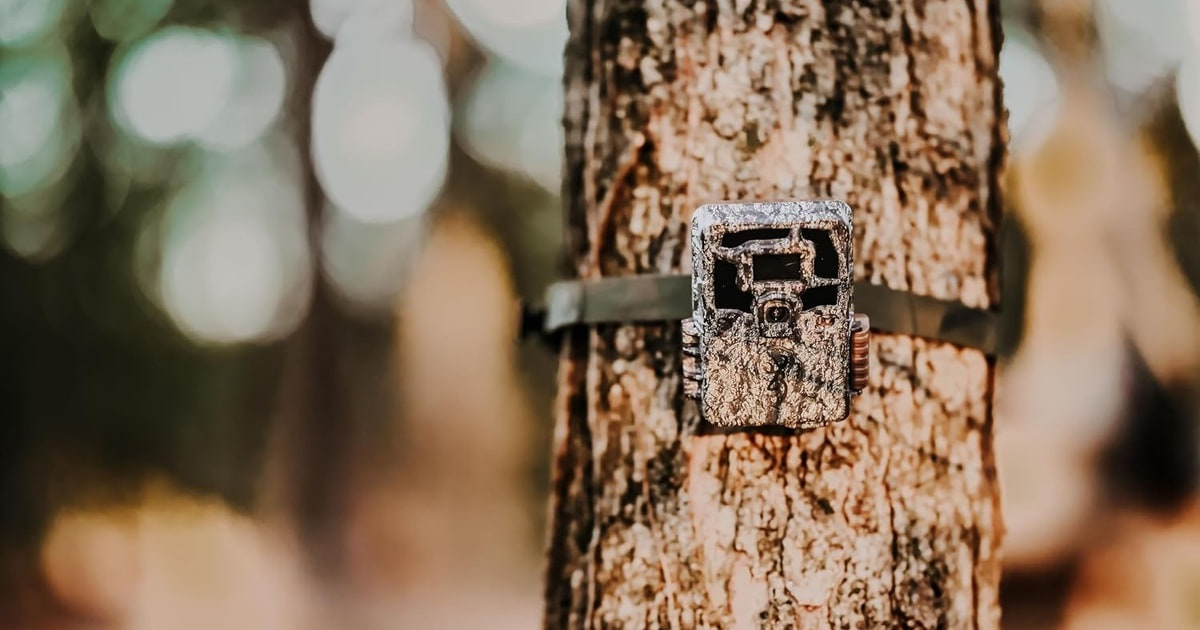
A trail camera does one thing that you can't: it sits in the woods for months without moving, blinking or smelling like a person. That's the whole appeal. You strap it to a tree, walk away, and come back to find out which animals actually use that trail and when. But the gap between a camera that captures a fox mid-stride and one that captures an empty trail comes down to a handful of specs — mostly how fast it wakes up, how far its flash reaches, and whether the animals can see that flash at all.
Here's the honest caveat: no trail camera gives you the image quality of a real camera and a real lens. The megapixel numbers on these boxes are mostly interpolated, night shots are monochrome infrared with visible grain, and anything moving fast at 40 feet will blur a little. False triggers from wind-blown branches waste batteries on every model here. And the cellular cameras that spare you from disturbing a site come with a monthly data bill that keeps running whether the deer show up or not.
We think that the Browning Strike Force Pro DCL Nano is the best trail camera for most people, and that the Tactacam Reveal X Gen 2.0 is the one to buy if you want photos on your phone without hiking back to pull an SD card.
Everything we recommend

Fast trigger, long flash reach, no monthly bill

Photos on your phone, without visiting the site

Cellular convenience with a genuinely free tier

The best app if you're running several cameras
At a glance
| Product | Resolution | Night Vision Range | Price | |
|---|---|---|---|---|
| Browning Trail Cameras Strike Force Pro DCLTop pick | 26MP | 130 ft | $149.99On sale |
| 2 Pack TACTACAM Reveal X Gen 2.0Runner-up | — | 96 ft | $159.99 |
 | Bushnell Core DS-4K No Glow Trail CameraAlso in lineup | 32MP | 120 ft | $169.55On sale |
| SPYPOINT Flex-M Twin Pack Cellular Trail CamerasBudget pick | 28MP | — | $89.99On sale |
| Moultrie Edge 2 Cellular Trail Camera -Also great | 36MP | 100 ft | $159 |
 | Cuddeback Cuddelink 2 Long Range IR CamerasAlso consider | — | 100 ft | $308 |
 | Browning Dark Ops Pro X 1080 TrailAlso consider | 24MP | 90 ft | $299 |
How we picked
Trigger speed. We compared published trigger ratings against Popular Mechanics' analysis of how much delay it takes to lose a walking animal from the frame. Anything slower than about half a second had to earn its place another way.
Flash and detection reach. We treated detection range and flash range as separate specs and looked for cameras where illumination reaches close to where the sensor triggers. A gap between the two leaves dark edges on wide shots.
Infrared visibility. Field & Stream's wavelength comparison notes that 940nm no-glow emits nothing a human or animal eye can see, while 850nm low-glow shows a faint red at close range. We flagged which cameras use which so you can match it to how pressured your subjects are.
Ongoing cost. For cellular models we read the published plan structures and MorningMoss's cost analysis of what owners actually spend per camera per month. A camera with a low sticker and a permanent data bill is not a cheap camera.
Owner reliability themes. We read through owner feedback looking for repeated failure patterns rather than one-off complaints — connectivity drops, early hardware failures, and how support responded when things went wrong.
Top pickOn sale
Fast trigger, long flash reach, no monthly bill
Browning Trail Cameras Strike Force Pro DCL
Browning's Strike Force Pro DCL Nano pairs a 0.15-second trigger with a 130-foot infrared flash and two separate lenses — one tuned for daylight, one for dark. It runs on six AA batteries and stores to an SD card, so there's nothing to subscribe to.
$149.99fromAmazonList priceTrigger speed is the spec that decides whether you get an animal or a tail, and this one is quick. Browning rates the DCL Nano at 0.15 seconds. Popular Mechanics' engineering analysis found that every extra 0.3 seconds of delay roughly doubles your odds of catching only the back half of a walking deer at 10 feet. At a sixth of a second, you're getting the whole animal on trails where slower cameras keep missing.
The dual-lens design is the less obvious reason to pick this one. Most trail cameras use a single lens and a movable IR filter, which is a compromise in both directions. Here one lens handles daylight and a second handles infrared, each optimized for its job. Owners describe the resolution as very good for a trail camera rather than cinema-grade — a fair way to put it, and better than most of what's in this lineup.
The 130-foot flash range is the longest in this group, and reach matters more than people expect. Detection range and flash range are separate specs. A camera that senses motion at 80 feet but only lights 50 feet leaves the edges of your frame black. With this much illumination behind it, you can point the DCL Nano down a long trail or across a field edge and still get a usable subject at the far end.
Six AA batteries is a small number for a camera this capable — many competitors want eight or twelve. Owners report long runtimes between swaps. If you're deploying somewhere cold, load lithium AAs rather than alkaline; Game & Fish Magazine's field reporting puts lithium at three to four times the sub-freezing performance, which is the difference between roughly 2,000 images and over 8,000 per change.
Flaws but not dealbreakers
The infrared here is illumination, not true no-glow. If you're chasing a pressured buck or a mountain lion that's already learned to avoid red flashes, the Dark Ops Pro X in our also-consider list is the safer choice. For most backyards, food plots and rural property, it won't matter.
There's no cellular option. Every image lives on the SD card until you walk out and get it, and that visit leaves scent and disturbance behind. Outdoor Life's cellular comparison trial found SD-only setups returned meaningfully fewer usable wildlife images per season for exactly this reason.
It's also a very new listing with a thin owner-feedback record. The specs and Browning's long track record are what we're leaning on, not a deep pile of long-term reports.
Browning does not publish a warranty term in this listing, so check with the seller before you buy.
Runner-up
Photos on your phone, without visiting the site
2 Pack TACTACAM Reveal X Gen 2.0
The Tactacam Reveal X Gen 2.0 sends images over LTE the moment something trips the sensor, so you never walk in to check a card. A 0.4-second trigger and 96-foot low-glow flash cover most trail setups, and the plans are month-to-month with no contract.
$159.99fromAmazonIf you want to stop disturbing the spot you're monitoring, this is the camera to get. Every trip to pull an SD card leaves scent and noise that pushes animals off the location for days. Outdoor Life's trial comparing cellular and standard cameras found cellular units returned about 40% more usable wildlife images per season, almost entirely because photographers stopped showing up in person.
Owners run these in serious numbers — one describes a wall of about twenty across a property, another has used the same pair for over two years. That's the kind of feedback that matters more than any single spec. The recurring themes are reliable connectivity, genuinely responsive US-based support, and an app that's easy to live with day to day.
At 0.4 seconds, the trigger is slower than our top pick's. On a straight trail with a walking animal that's fine. On a fast crossing at close range you'll clip subjects that the Browning would have caught whole. The trade you're making is speed for convenience, and for most wildlife monitoring the convenience wins.
The power flexibility is what keeps this camera in the woods for a full season. It runs on twelve AA batteries out of the box, and you can add Tactacam's lithium cartridge or a solar panel for effectively unlimited runtime. One owner reports roughly six months on batteries — though notably less when a branch keeps waving in front of the lens, which is a fair warning about your clearing work.
Flaws but not dealbreakers
Image quality is the compromise. Several owners say the pictures are decent rather than impressive, especially compared with SD-card cameras at similar cost. Cellular transmission compresses images, and you're paying data for every one that goes out.
The app and on-camera interface both take some getting used to. Owners describe menu elements as slightly cumbersome, and dialing in sensitivity from a remote location takes some trial and error.
The data plan is an ongoing cost that never stops. MorningMoss's cost analysis notes that per-camera monthly data adds meaningfully to what you actually spend over a year — run four cameras and the math changes a lot.
Tactacam does not state a warranty term in this listing.
Budget pickOn sale
Cellular convenience with a genuinely free tier
SPYPOINT Flex-M Twin Pack Cellular Trail Cameras
Spypoint's Flex-M twin pack is the least expensive way into cellular monitoring. It picks its own carrier, shoots 28MP stills, and Spypoint's free plan transmits up to 100 photos a month with no card, no fees and no commitment.
$89.99fromAmazonList priceA free plan is the reason to look here first. Spypoint transmits up to 100 photos a month at no cost, with paid tiers if you need more. For a backyard naturalist watching what raids the bird feeder, or someone checking on a distant property a few times a week, 100 images is genuinely enough. Nobody else in this lineup lets you run a cellular camera indefinitely without a bill.
Cross-carrier switching is handled for you. There's no SIM to choose and no carrier to guess at — the camera watches for the strongest available LTE signal and connects. Owners with mixed technical backgrounds consistently describe setup as straightforward, which counts for a lot when you're standing in the woods with the manual in your pocket.
Owner reports on picture quality and trigger speed are better than the modest price suggests, with several describing a clear step up from Spypoint's older Link Micro. The Buck Tracker species filtering in the app is genuinely useful once you're getting hundreds of images and don't want to scroll past a thousand squirrels to find the bobcat.
The twin pack changes the calculus if you're covering ground. Two cameras on two trails tells you far more about animal movement than one camera does, and this is the least expensive way in this lineup to get a second angle.
Flaws but not dealbreakers
Video is 720p, the lowest here by a wide margin. If moving footage matters to you at all, this isn't the camera.
Reliability reports are mixed. A meaningful share of owners report units that fail early or need support, and one specifically flags that photo capture stops once the included card fills rather than overwriting. Buying the twin pack softens the risk a little, but go in expecting more variance than with Browning or Tactacam.
IP65 water resistance is the lowest rating in the lineup. It handles rain fine. It's less reassuring for a spot that gets driving weather for months.
Also great
The best app if you're running several cameras
Moultrie Edge 2 Cellular Trail Camera -
Moultrie's Edge 2 shoots 36MP stills, detects out to 100 feet, and connects to any major carrier automatically. Its real draw is the Moultrie Mobile app, which sorts photos, charts activity patterns and maps multiple cameras across a property.
$159fromAmazonIf you're monitoring more than one location, the software becomes the product. Moultrie's app handles pattern analysis, activity charting over time, and interactive property maps in a way the other apps here don't try to match. When you have four cameras feeding you images, being able to see when and where movement clusters is more useful than another few megapixels.
This listing is a four-pack, which tells you who it's for. Wildlife researchers covering a study area, property owners watching several access points, photographers scouting multiple spots before committing — those are the people who get their money's worth. For a single tree in the backyard, it's overkill.
The hardware is solid without being exceptional. 36MP stills lead this lineup on paper, 1080p video with audio is standard, and the low-glow flash reaches out with the 100-foot detection range. Owners call setup easy and image quality good. The one consistent gripe is battery appetite — it goes through cells faster than most.
Auto Connect handles the carrier for you, and there's no third-party data plan to arrange. That's convenient. But the subscription is per camera, and with four cameras that adds up in a way that surprised at least one owner enough to say so.
Flaws but not dealbreakers
The per-camera subscription is the real cost of this system. Four cameras means four plans, every month, indefinitely. Price that out before you commit.
Battery consumption runs high, and with four units you're buying and swapping a lot of AAs. Budget for lithium cells or plan on frequent trips.
The owner-feedback pool is small and split — mostly enthusiastic, with a hard negative reaction to the subscription structure. Not much long-term data to go on yet.
Who this is for
This guide is for anyone who wants to know what's moving through a piece of ground when nobody's watching. That includes wildlife photographers scouting locations before hauling in real gear, hunters learning game patterns before a season, rural property owners keeping tabs on their land, researchers and citizen scientists logging species, and people who just want to know what's been emptying the bird feeder at 2 a.m. If your subjects are pressured — predators, elk, a buck that's already been spooked off a spot — pay close attention to which cameras use no-glow infrared.
If you're after frame-worthy daylight portraits, a trail camera isn't the tool. Even the best of these produce images that look like what they are: wide-angle, fixed-focus, heavily processed captures from a plastic box on a tree. They're documentation instruments, not cameras you'd shoot a magazine cover with. We're also only covering cameras in this lineup, which skews toward the mainstream US brands — DSLR camera-trap rigs, security-focused units and specialist scientific hardware are outside what we looked at.
How we picked
Trigger speed: we compared published ratings against how much delay it takes to lose a walking animal from the frame, and treated anything slower than roughly half a second as needing a strong reason to stay. Flash and detection reach: we looked at illumination range and detection range separately, because a camera that senses at 100 feet and lights 50 leaves the far half of your frame dark. Infrared visibility: no-glow 940nm emits nothing an eye can catch, low-glow 850nm shows a faint red up close, and which one you need depends on how pressured your animals are. Ongoing cost: for cellular models we read the published plan tiers and independent analysis of real monthly spend, since a low sticker with a permanent data bill isn't cheap. Owner reliability themes: we looked for repeated failure patterns in owner feedback rather than isolated complaints.
Other trail cameras for wildlife photography worth considering
If you want true no-glow infrared for skittish animals: The Browning Dark Ops Pro X 1080 Trail ($299) — Browning's Dark Ops Pro X shoots 24MP stills with 90 feet of genuinely invisible infrared and a 0.22-second trigger, and this bundle throws in a steel security box, a 32GB card and a card reader. The invisible IR is the point — Field & Stream's wavelength comparison notes that 940nm produces no visible glow at any distance, while low-glow units show a faint red inside about 10 feet. For bears, mountain lions, or deer that have already learned what a red flash means, that's worth more than any resolution number. You give up 4K video, since this records 1080p, and the flash reach is shorter than our top pick's. The included security box is a real bonus if you're mounting somewhere people walk.
If you need to cover a big open property: The Cuddeback Cuddelink 2 Long Range IR Cameras ($308) — Cuddeback's CuddeLink pair pushes 100 feet of detection and 100 feet of low-glow flash — the longest matched pair of ranges here — and the CuddeLink network relays images from remote cameras back to a home unit without cellular fees. The included solar power banks keep each camera running indefinitely with decent sun, which matters on a ranch where a battery swap is a half-day trip. Owners running a dozen or more units over years report almost no failures. The catch is setup: the documentation is widely described as confusing, and support is slow when you need it. If you're patient and covering open meadows or food plots, nothing else here reaches as far.
The competition
This is what our research surfaced, not a survey of every trail camera sold. A few well-regarded models — Reconyx's professional units among them — didn't make this lineup, and their absence isn't a judgment. Here's the one camera we looked at that didn't earn a spot above.
The Bushnell Core DS-4K No Glow Trail Camera ($169.55) — Bushnell's Core DS-4K No Glow has the best spec sheet in this entire lineup on paper: dual sensors, 32MP stills, 4K video at 30fps, a 0.15-second trigger and 120 feet of no-glow infrared. That combination should have made it a pick. Owner feedback is what kept it out. Reports cluster around soft focus on one side of the frame, a motion sensor that catches subjects entering from one direction but not the other, menus that feel a generation behind, and customer service experiences that owners describe in blunt terms. Enough people also report receiving units that don't appear new. If you're willing to gamble on getting a good copy and dealing with Bushnell directly if you don't, the specs are genuinely excellent and the no-glow flash reaches further than anything else here. We'd rather point you at a camera that shows up working.
Setup and placement notes
Most disappointing trail camera results come from placement, not the camera. Mount at roughly chest height on the animal you're after, angle slightly down the trail rather than straight across it, and clear every branch and tall stem in the detection zone — wind-blown vegetation is the top cause of wasted triggers and dead batteries. Face the camera north if you can, so sunrise and sunset don't wash out the sensor. Use lithium AAs in cold weather; they last three to four times as long as alkaline below freezing. For SD cards, buy a Class 10 U3 card and size it for your recording mode: 4K video eats roughly 50 to 100MB per minute, so a 32GB card fills after five to ten hours of footage. Check the first day's images before you walk away.
Questions we get
What trigger speed do I actually need for deer or foxes?
Half a second or faster is the practical threshold for animals moving at a walk. Popular Mechanics' analysis found that every additional 0.3 seconds of delay roughly doubles your odds of catching only the rear half of a deer at 10 feet, though the margin grows to about 0.6 seconds at 20 feet. Our top pick's 0.15-second rating is fast enough for close crossings. If your camera sits back from the trail, a 0.4-second trigger like the Tactacam's is fine.
What's the difference between no-glow and low-glow, and does it matter for deer?
No-glow uses 940nm infrared that emits nothing a human or animal eye can detect at any distance. Low-glow uses 850nm and shows a faint red flash within about 5 to 10 feet. For a backyard or an unpressured property, low-glow is fine and usually gives you brighter night images. For deer that have been spooked off a spot before, or for predators, no-glow is worth the trade.
Are cellular trail cameras worth it for wildlife photography?
They are if you'd otherwise be walking in regularly to swap cards. Outdoor Life's comparison trial found cellular models returned about 40% more usable wildlife images per season, mostly because photographers stopped disturbing the site. The counterweight is a monthly data plan per camera that runs whether animals show up or not. If your camera is somewhere you already visit often, an SD-card model saves you that.
How many megapixels do I need?
Fewer than the boxes suggest. Most trail camera megapixel claims are interpolated up from a smaller native sensor, so a 36MP rating doesn't mean 36MP of real detail. Anything from about 20MP up is plenty for identifying species and documenting behavior. Lens quality, sensor design and flash reach affect your images far more than the headline number.
How long do batteries last in cold weather?
Much less than in summer, unless you switch chemistry. Game & Fish Magazine's field reporting puts lithium AAs at three to four times the sub-freezing performance of alkaline — roughly 8,000 images per change versus about 2,000. If you're deploying through a real winter, buy lithium or add a solar panel. It's cheaper than the trips you'll save.
What SD card should I use?
A Class 10, U3 card is the right spec for any camera here, and some — the Tactacam among them — specifically require it. Size it to how you shoot: 4K video consumes roughly 50 to 100MB per minute, so a 32GB card fills after five to ten hours of footage. For stills only, 32GB lasts a long season. Format the card in the camera rather than on your computer.
Why you should trust us
For this guide:
- We compared published manufacturer specifications across every camera in this lineup, treating trigger speed, detection range and flash range as separate figures rather than accepting marketing summaries.
- We read field reporting and comparative analysis from Outdoor Life, Field & Stream, Popular Mechanics, Game & Fish Magazine and Deer & Deer Hunting on trigger timing, infrared wavelength, battery chemistry and cellular versus SD-card capture rates.
- We reviewed owner feedback for each listing looking for repeated reliability themes — connectivity problems, focus defects, early failures and how manufacturers responded.
- We read owner reviews on every listing, weighted toward the critical ones, because that is where the recurring failures show up.
- We have a systematic way of automatically fetching the latest prices, so the numbers on this page stay current.
- This is a research-focused guide, so the team may not own every product listed — though we often do own the top winners, which gives us extra context for the recommendations.
- We don't accept free products, and the retailer commission never changes which product we recommend.
Sources
Best Trail Cameras of 2026 — Outdoor Life, Outdoor Life
Best Trail Cameras — Field & Stream, Field & Stream
Trail Camera Reviews & Buyer's Guide — Popular Mechanics, Popular Mechanics
Reconyx HyperFire 2 Product Specifications, Reconyx (Manufacturer)
Bushnell Core S-4K Specifications, Bushnell (Manufacturer)
Spypoint Flex-M Overview and Pricing, Spypoint (Manufacturer)
Best Trail Cameras for Wildlife — Deer & Deer Hunting, Deer & Deer Hunting
Trail Camera Buying Guide — Game & Fish Magazine, Game & Fish Magazine
Cuddeback Long Range IR Specifications, Cuddeback (Manufacturer)
Best Trail Cameras — New York Times Wirecutter, Wirecutter / NYT
Wildlife Camera Trap Research Applications — Journal of Wildlife Management, Journal of Wildlife Management
Trail Camera Technology Overview — MorningMoss, MorningMoss
Amazon product listings and owner reviews for all 7 products
Manufacturer specification pages for each product
Some passages in this guide may be paraphrased with AI help. Prices are refreshed automatically.
More like this.
Continue exploring lifestyle reviews and recommendations.

The Best Trail Mountain Bike Accessories
The bike you already own is probably fine. What's holding you back on a wet descent or a ride that runs long is usually smaller and cheaper than a new…

The Best Hiking Boots and Trail Running Shoes
Footwear is the one piece of hiking gear you feel with every single step. A boot that rubs at mile two can ruin a whole weekend, and a sole that slides…

The Best Trailer Hitches and Towing Accessories
Towing gear is the rare purchase where the boring choice is the right one. A hitch bolts to your frame, sits in road salt and spray for years, and then…

The Best Trailer Wiring Harness Adapters
Trailer wiring is the part of towing nobody thinks about until the lights don't work. You hitch up the boat trailer at 5 a.m., flip on the turn signal,…

The Best Trailer Hitch Locks
A trailer sitting in your driveway is one of the easiest things on your property to steal. Someone backs a truck up, drops your coupler onto a ball, and…

The Best Wheel Chocks for RVs and Trailers
A wheel chock is one of those things you don't think about until the trailer moves. Park on a slight grade, crank down the stabilizer jacks, and you'd…