The Best Lawn Mowers
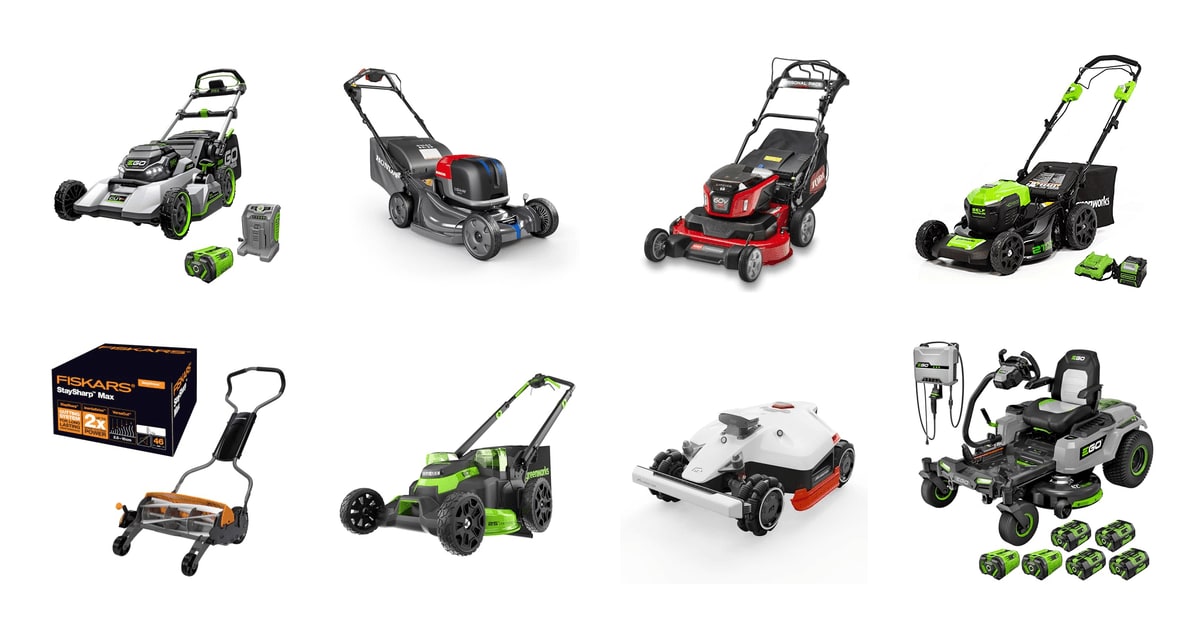
A lawn mower is one of the few tools you use on a schedule, whether you feel like it or not. So the boring stuff matters most: whether it starts on the first try, whether it pulls itself up the slope by your driveway, whether you can wrestle it back into the garage without moving the bikes. Cut quality counts too, but nearly every modern mower cuts grass acceptably. What really separates them is how much of your Saturday they take, and how much they ask of you the rest of the year.
No mower does everything. Cordless models have gotten good enough for most suburban lawns, but Consumer Reports' structured testing still found them trailing gas by roughly 15% on wet, thick turf — and that gap shows up on the exact weekend you let the grass get away from you. Robots mow beautifully and slowly, and they still need you to clear sticks and free them from a mud patch now and then. Every machine here needs sharp blades, and none of them will edge your sidewalk for you.
Most people shopping now are choosing between a cordless walk-behind and a robot, and the answer comes down to lot size and how much you mind mowing. Under half an acre and mostly flat? A self-propelled battery mower is the easy call. Hills, odd corners, and no patience? A robot earns its keep. We think that the EGO Power+ LM2156SP is the best lawn mower for most people, and that the Greenworks 60V 21-inch self-propelled mower is the one to buy if you want nearly the same experience for less money.
Everything we recommend

Gas-like power without the gas, and enough battery for most lawns

Nearly the same cordless experience, with less battery in the box

Better mulching and real dealer support, if you can pay for it

Hands-off mowing for a small, hilly or awkward yard
At a glance
| Product | Voltage | Cutting Width | Price | |
|---|---|---|---|---|
| EGO Power+ Electric Lawn MowerTop pick | 56V | — | $1,399 |
| Honda HRX-BE 21-Inch Walk Behind Battery PoweredUpgrade pick | — | 21 in | $999On sale |
| Also great | — | — | $1,699 |
| Greenworks 60V 21in Self-Propelled Lawn MowerRunner-up | 60V | 21 in | $699.99 |
 | RYOBI RY40LM10-Y 21 in. 40-Volt Brushless Lithium-IonAlso in lineup | 40V | 21 in | $699.95 |
How we picked
Power and cut quality. We looked for motors and blade systems that published testing found competitive with gas on dry turf, and we weighted mulching quality heavily since most people never bag. Torque ratings and blade design mattered more to us than deck width.
Runtime you can trust. We compared manufacturer runtime claims against published test results and owner reports, and treated any big gap as a strike. A mower has to finish a typical lawn on one charge, not two.
Slopes and traction. Self-propel is close to mandatory on grades over about 15 degrees or lots past a quarter acre, so we favored rear-wheel drive with adjustable speed. For robots, we compared published maximum incline ratings.
Noise and upkeep. Cordless and robotic mowers run far below the 90 to 95 dB(A) of a gas push mower, and they skip oil changes, spark plugs, and carburetor cleaning. We treated that as a real advantage, not a footnote.
Storage and handling. We noted weight, folded length, and whether the handlebar collapses, because a mower that doesn't fit your garage is a mower you'll resent. Anything near 100 pounds needs a good reason.
Top pick
Gas-like power without the gas, and enough battery for most lawns
EGO Power+ Electric Lawn Mower
It's a 21-inch self-propelled mower that ships with two big 56V batteries, so one runs while the other charges and you never think about fuel again. Wirecutter's real-world testing clocked about an hour of runtime on a third-acre lawn, which covers most suburban yards with room to spare.
$1,399fromAmazonThis is the mower to buy if you want to stop thinking about mowing. It comes with two 56V 10.0Ah batteries, and the 700W charger refills a pack in about an hour, so the spare is ready before the first one dies. EGO rates each battery at up to 75 minutes; Wirecutter's testing on a third-acre mixed-grass property came in closer to 60. Either number means you finish the job in one go.
Grass doesn't always wait for you. The Select Cut blade system and 8.3 foot-pounds of cutting torque give it real bite in the tall, damp stuff that makes lesser cordless mowers stall and beep. Owners who've gone after shin-high grass after a rainy week report it simply keeps chewing. Self-propel speed runs from 0.9 to 3.1 mph and adjusts at the handle, so you can crawl through the thick patch and hustle across the open part.
The batteries are half the reason to buy it. EGO's 56V ARC Lithium packs are shared across the company's trimmers, blowers, chainsaws, and snow throwers, so the two in this box can run your whole yard kit. EGO rates them to hold more than 80% of their capacity after 1,000 full charges — roughly a decade of weekly mowing seasons, if the spec holds up.
The quiet is what you'll notice first. A gas push mower runs somewhere around 90 to 95 dB(A), loud enough that you reach for ear protection and think twice about starting early. Cordless cuts that dramatically, and there's no exhaust cloud trailing you around the yard. The EPA figures an hour behind a gas mower puts out about as much hydrocarbon pollution as driving a modern car 300 miles.
Flaws but not dealbreakers
It's heavy and it's big. At around 99 pounds with both batteries in, it's a two-person lift into a truck bed, and at nearly six feet long with the handle up it takes real garage space. The handlebar folds, but this isn't a mower you tuck behind the recycling bins.
Batteries are the long-term question mark. The cycle-life spec is strong on paper, but a minority of owners report packs fading well before that, and a replacement pack is a meaningful purchase on its own. A few owners also note that mulching thick grass means walking slower than they did behind a gas mower — not a dealbreaker, just a few extra minutes.
Runner-up
Nearly the same cordless experience, with less battery in the box
Greenworks 60V 21in Self-Propelled Lawn Mower
A 21-inch, 60V brushless self-propelled mower that costs meaningfully less than our top pick and gives up less than you'd guess. You get rear-wheel drive, four-way cutting, headlights, and a four-year warranty covering both the tool and the batteries.
$699.99fromAmazonThis one does the core job for less money and skips very little. The 60V brushless motor and rear-wheel self-propel handle slopes and thick turf, and you adjust your pace on the fly. It mulches, bags, side-discharges, and has a turbo mode for sucking up leaves, so you're not buying attachments later. At around 65 pounds, it's the easiest mower here to swing around a flower bed.
The batteries are where you feel the difference. Two 4.0Ah packs is a smaller tank than the two 10.0Ah packs in the EGO kit. Greenworks claims up to three-quarters of an acre per charge, and owners on flat, dry lawns get somewhere near it. Drop the deck to a low cutting height or push through thick St. Augustine and that number falls off fast. For a quarter-acre lawn, it's plenty.
Small things make it pleasant. The LED headlights actually help when you're finishing up after sunset. The batteries fit more than 75 other Greenworks 60V tools, so this kit doubles as the start of a cordless trimmer-and-blower setup. And several owners in their seventies describe it as the first mower they can manage comfortably, which says something about the balance and the controls.
Flaws but not dealbreakers
That three-quarter-acre claim deserves a squint. Owners with big lots, tall grass, or a low deck setting report running out well short of it, and the mower can bog down if you try to scalp thick turf. Plan on two sessions for anything approaching an acre, or buy a second pair of packs.
Day one is awkward. The shipping box is heavy enough that the label calls for a two-person lift, and the handle assembly rewards reading the instructions before you start folding things. Once it's together, it's easy to live with.
The Greenworks mower carries a four-year limited warranty on both the tool and the batteries.
Upgrade pickOn sale
Better mulching and real dealer support, if you can pay for it
Honda HRX-BE 21-Inch Walk Behind Battery Powered
The battery version of Honda's HRX keeps the 21-inch deck, the twin-blade MicroCut system, and the 4-in-1 Versamow setup that lets you bag and mulch at the same time. It's the finest-cutting mower here, and the only one backed by a nationwide dealer network.
$999fromAmazonList priceIf you've spent years behind a Honda HRX, this is the one to look at. It keeps the 21-inch deck and that smooth self-propel feel, but swaps the GCV engine for a battery and an e-Select electric transmission adjustable from 0 to 4 mph. Owners coming off decade-old Honda gas mowers — including one who went shopping for an electric-start gas model and found the lineup had gone battery — report it holds power in thick Bermuda and heavy spring growth.
Nothing here mulches like it. The twin-blade MicroCut system puts four cutting surfaces to work, chopping clippings fine enough that they disappear into the turf instead of sitting on top in gray rows. Good Housekeeping's field testing found MicroCut clippings filter down within a day. The 4-in-1 Versamow setup adds a Clip Director lever, so you can send some clippings to the bag and mulch the rest without swapping a single attachment.
Runtime is the trade-off. The included 12Ah battery is rated for about 45 minutes, or roughly a third of an acre, and the second battery bay sits empty until you buy another pack. Owners generally find the rating conservative — a third-acre lot tends to leave charge to spare. But if you've got a full acre, plan on the second battery from the start.
Service matters more than it used to. Cordless mowers are full of proprietary electronics, and most brands hand you a phone number and a shipping label when something quits. Honda supports these through its dealer network with parts available nationwide, which is the sort of thing you don't care about at all until the drive system dies mid-season.
Flaws but not dealbreakers
Early units have had assembly problems. Some owners received mowers with the height-adjustment lever installed wrong from the factory, which makes setting the cut height impossible until it's corrected. Another described a broken blade-engagement part and a five-week wait for replacements — dealer support only moves as fast as the parts pipeline behind it.
It's also the most expensive walk-behind in this guide, and what you're buying is cut quality and long-term support rather than runtime. Both the EGO and the Greenworks give you more battery in the box.
Also great
Hands-off mowing for a small, hilly or awkward yard
A wire-free robot that maps your yard with LiDAR and cameras instead of a buried perimeter wire, so setup happens on your phone. All-wheel drive and 80% climbing ability make it the pick for terraced lots and steep banks that stop other robots cold.
$1,699fromAmazonYou'll never bury a boundary wire. Older robots ask for a few hours on your knees, stapling wire around every bed, tree, and downspout before the thing will run. The Luba mini 2 uses a 360-degree LiDAR and two cameras instead, and you draw the boundaries from your phone. There's even a DropMow mode that skips mapping entirely: set it on the grass, press the button, and it works the area out as it goes.
Hills are its party trick. Two independent 88-watt drive motors give it all-wheel traction on grades up to 80%, and an adaptive suspension lets it step over roots, curbs, and the lip between lawn and patio. If your yard is terraced, or there's one bank by the driveway that you dread every week, this is the machine that deals with it.
It's quiet enough for a neighborhood with opinions. Published measurements put a comparable premium robot at 58 dB(A), below the level of a normal conversation, against 90 to 95 dB(A) for a gas push mower. It also mows a little every day rather than everything at once, which is why robot lawns look consistently tidy instead of cycling between shaggy and shorn.
The app is where your setup time goes. You can split the yard into as many as 20 zones and schedule each one separately, cap charging at 80% to be gentler on the battery, and push charging to off-peak hours. Location tracking runs even in low-power standby, which is reassuring for a machine that lives outdoors.
Flaws but not dealbreakers
It doesn't really mulch. The blades cut what's standing but don't lift the grass first, so owners who want a manicured look still run a trimmer along beds and edges. It's slow, too, and cuts a narrow path. That's fine when it's working while you're inside, but don't expect it to rescue a lawn that's already knee-high.
Coverage tops out around 0.37 acres, so larger lots need a bigger model in the same family. Support can also drag: one owner whose unit failed early described a months-long round trip for a warranty replacement, long enough to swallow most of a mowing season.
Who this is for
This guide is for people with lawns up to about an acre who push a mower themselves or want a robot to do it instead. It covers walk-behind mowers and residential robotic mowers only. If your property runs well past an acre, or you're cutting rough field grass, you want a riding mower or a zero-turn, and you won't find one here. Reel mowers and corded electrics aren't covered either.
If your gas mower still starts on the second pull, there's no urgency — keep it until the carburetor gums up, then switch. The people who benefit most from a change are the ones tired of hauling gas cans and paying for annual tune-ups, anyone whose neighborhood has strong feelings about noise, and homeowners with hilly or oddly shaped yards where a robot quietly solves a weekly problem. If you mow thick, wet turf in a long season, gas still has an edge, and buying the highest-torque cordless model you can is the way to close it.
How we picked
Power and cut quality: we favored motors and blade systems that published testing rated close to gas on dry turf, with mulching fine enough that you don't see clippings the next day. Runtime: manufacturer claims had to survive a comparison with published tests and owner reports, because a mower that needs a mid-job charge isn't saving you time. Traction: self-propel with adjustable speed for anything sloped or larger than a quarter acre, and for robots, a published incline rating we could check. Noise and upkeep: we counted the absence of oil changes, spark plugs, and 90-plus dB(A) engine noise as a genuine benefit. Storage: weight, folded length, and whether the handle collapses, since your garage has a vote.
The competition
This is what our research surfaced, not a census of everything sold. Plenty of good mowers exist that we couldn't evaluate against consistent published testing, and one model that looked promising on paper didn't hold up once we read what owners had to say.
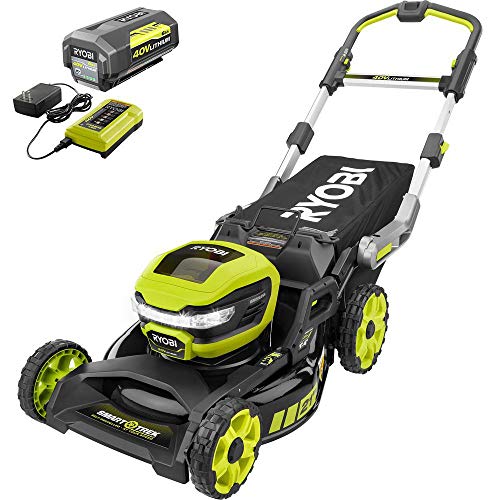
The RYOBI RY40LM10-Y 21 in. 40-Volt Brushless Lithium-Ion ($699.95) — The Ryobi 40V HP Brushless 21-inch Smart Trek self-propelled mower should be an easy recommendation. The 40V platform is enormous, the brushless motor handles tall grass well, and if you already own Ryobi batteries the math is tempting. But owner feedback here is the roughest in this lineup, and it clusters around one thing: the self-propel system. Drive assist that only engages when you push down on the handlebar, switch assemblies coming apart inside the handle, long waits for replacement parts. If you're already committed to Ryobi batteries, buy it somewhere with a generous return window.
Care and maintenance
Sharp blades do most of the work. A dull edge tears grass instead of slicing it, and you'll see the result as ragged brown tips across the whole lawn a day later. Sharpen or swap blades once or twice a season, more often if you're hitting rocks and roots. Pull the battery before you tip the mower to reach the underside, and scrape the packed clippings off the deck while they're still damp and easy. Store batteries indoors — a conditioned space is ideal, an uninsulated shed that bakes in summer is not. Robots need their own routine: check the small blades monthly and rinse grass out of the wheels. And raise your cut height when the weather turns hot and dry, since taller grass shades its own roots.
Questions we get
Are battery mowers as powerful as gas mowers for thick or wet grass?
On dry grass, essentially yes. Consumer Reports' structured testing found battery mowers matched gas for dry-grass mulching, then trailed by roughly 15% on wet, thick turf. That gap shows up as a slower walking pace, not as a mower that quits on you. If you regularly cut damp St. Augustine or let the lawn get ahead of you, buy the highest-torque model you can.
What size lawn mower do I need for a half-acre yard?
A 21- or 22-inch self-propelled mower is the sweet spot. Wider decks mean fewer passes, but they get clumsy around beds and fences, and they're heavier to store. The real question at half an acre is runtime — you want either two batteries or one large one, so look at kits rather than single-pack bundles.
What's the best robot lawn mower that doesn't need a perimeter wire?
Of the machines in this guide, the Mammotion Luba mini 2 AWD. It maps with LiDAR and cameras, so setup happens on your phone instead of on your knees with a spool of wire and a staple gun. It covers up to about 0.37 acres and climbs 80% grades, steeper than most robots manage. Bigger lots need a bigger model in the same line.
Are robot lawn mowers worth it?
It depends on how much you dislike mowing. Wire-free models removed the biggest barrier — the multi-hour boundary-wire installation that used to come with the purchase — so setup is now an afternoon with an app. They pay off most on awkward, sloped, or obstacle-heavy yards you'd otherwise dread. They're a weak fit for large open lots and for anyone who wants crisp mower stripes.
How often should lawn mower blades be sharpened?
Once or twice a mowing season covers most lawns. Sandy soil, gravel driveways, and shallow roots dull an edge faster, so check the blade any time the cut starts looking shredded or the grass tips brown a day after you mow. On a battery mower there's a second reason to keep it sharp: a dull blade makes the motor work harder and eats your runtime.
Is EGO or Greenworks better for a battery mower system?
Both are solid, and the deciding factor is what else you plan to buy. EGO's 56V line is the deeper and more refined ecosystem, and its flagship mower comes with far more battery in the box. Greenworks 60V works with more than 75 tools, costs less, and carries a four-year warranty on the tool and batteries. Starting from scratch on a budget, go Greenworks; if you want the stronger mower, go EGO.
Why you should trust us
For this guide:
- We read published testing and reviews from Wirecutter, Consumer Reports, Good Housekeeping, and CNET alongside each manufacturer's own specification sheets.
- We compared torque ratings, deck widths, runtime claims, slope limits, weight, and warranty terms across every model in this guide.
- We also worked through owner feedback for each one, looking for the complaints that repeat rather than the one-off bad unit.
- We read owner reviews on every listing, weighted toward the critical ones, because that is where the recurring failures show up.
- We have a systematic way of automatically fetching the latest prices, so the numbers on this page stay current.
- This is a research-focused guide, so the team may not own every product listed — though we often do own the top winners, which gives us extra context for the recommendations.
- We don't accept free products, and the retailer commission never changes which product we recommend.
Sources
Best Lawn Mowers — Wirecutter / The New York Times, Wirecutter
Best Lawn Mowers — Consumer Reports Ratings & Buying Guide, Consumer Reports
Best Lawn Mowers Tested by the Good Housekeeping Institute, Good Housekeeping
Best Lawn Mowers We've Tested — Popular Mechanics, Popular Mechanics
Best Lawn Mowers Reviewed — This Old House, This Old House
Best Robot Lawn Mowers of 2026 — Tom's Guide, Tom's Guide
Best Lawn Mowers of 2026 — Forbes Home, Forbes Home
Best Lawn Mowers Tested for 2026 — CNET, CNET
Best Lawn Mowers — Bob Vila, Bob Vila
Gas vs. Electric Lawn Mowers: Which Should You Buy? — The Spruce, The Spruce
Small Spark-Ignition Engine Emissions — U.S. Environmental Protection Agency, U.S. EPA
Amazon product listings and owner reviews for all 5 products
Manufacturer specification pages for each product
Some passages in this guide may be paraphrased with AI help. Prices are refreshed automatically.
More like this.
Continue exploring lifestyle reviews and recommendations.

The Best Lawn Mowers
Mowing is a chore you repeat 25 or 30 times a season, so small annoyances compound fast. A mower that starts on the first try, cuts evenly, and doesn't…

The Best Robot Lawn Mowers
A robot mower changes the chore, not just the tool. Instead of one sweaty hour every Saturday, a small machine shaves a couple of millimeters off your…

The Best Lawn Mowers
Mowing is a chore you repeat 25 or 30 times a season, so the small annoyances matter more than the spec sheet. How hard is it to start? Can you get up the…

The Best Cordless Lawn Mowers
A cordless mower asks almost nothing of you. You pull the safety key, squeeze the bail, and it goes - no primer bulb, no pull cord, no stale fuel to drain…

The Best Hose-End Sprayers for Lawn Fertilizer
Liquid fertilizer is the fastest way to green up a lawn, and a hose-end sprayer is what makes it practical. You screw it onto the hose, pour concentrate…

The Best Zero-Turn Mower Accessories and Attachments
A zero-turn mower is a big purchase, and most of them ship set up for one job: throwing clippings out the side. The accessories that matter change what…