The Best Raised Garden Bed Kits
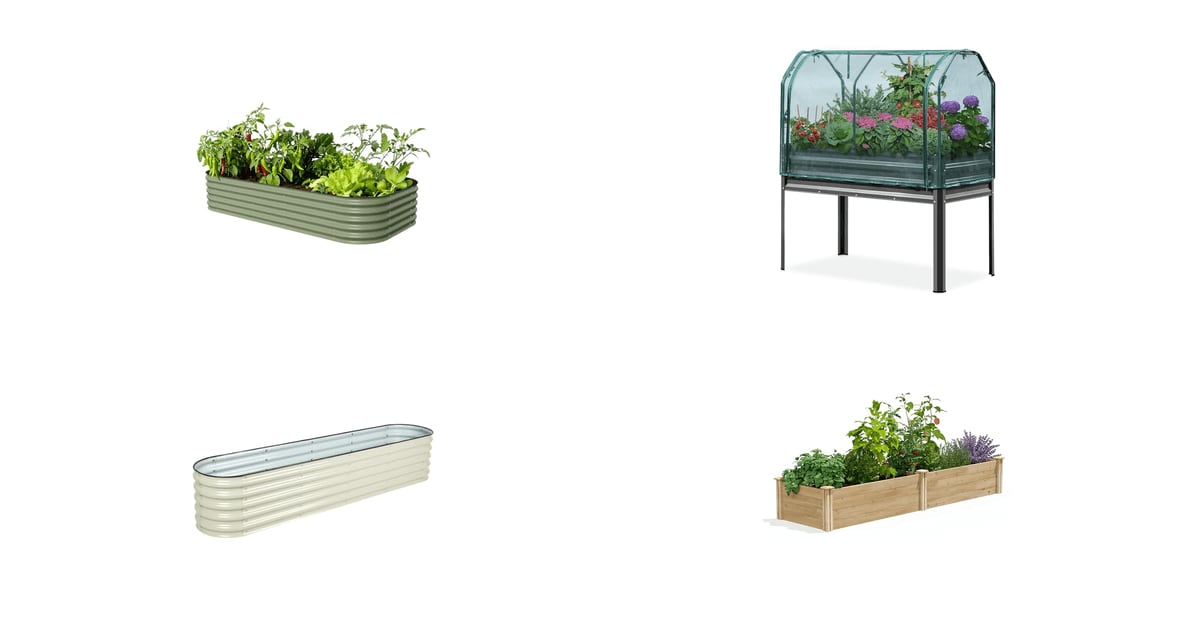
A raised bed changes gardening in two boring, useful ways. You control the soil instead of fighting whatever clay or sand came with your yard, and you stop kneeling in it. That second part matters more than people expect by the third weekend of the season. The walls also keep grass and creeping weeds out, so weeding turns into a five-minute pass instead of an hour on your hands and knees. And because the soil sits above grade, it drains faster and warms sooner in spring.
Here's the honest part. No kit here solves the expensive problem, which is filling it. A bed that's a few feet across and a foot deep swallows a startling amount of soil, and that soil usually costs more than the bed did. Depth is the other trade-off nobody warns you about. Shallow beds are cheaper and lighter, but you can't grow a decent carrot in six inches, and you'll figure that out about the time you're too invested to start over.
Metal, cedar, and composite each win on something different, so the right pick depends mostly on where you're putting it and who's doing the bending. We think that the Vego Garden 17" 10-in-1 is the best raised garden bed kit for most people, and that the KING BIRD elevated planter with netting is the one to buy if birds and squirrels keep getting to your crops first.
Everything we recommend

Deep enough for real vegetables, and it lasts

Standing height plus a cover that keeps birds out

Nearly the same depth for a lot less money

Untreated cedar, if the look is what you're after

Counter-height growing on a patio or a deck
At a glance
| Product | Height | Footprint Size | Price | |
|---|---|---|---|---|
| Vego garden Raised Garden Bed KitTop pick | 17 in | 10x10 in | $199.95 |
| KING BIRD Large Raised Garden Bed withAlso great | 30 in | 48x24 in | $114.99 |
| BPS 9-in-1 Metal Raised Garden BedBudget pick | 17 in | 71x35 in | $84.99 |
| Greenes Fence Premium Cedar Raised Garden BedUpgrade pick | 14 in | 2x8 ft | $185.99 |
| Frame It All The Elevated Escape 24inAlso great | 34.5 in | 24x48 in | $293.73 |
How we picked
Depth that matters. We treated 12 inches as the working threshold, since that's what extension guidance recommends for the bulk of vegetable crops. Beds under that got downgraded unless they had a specific reason to exist, like patio placement.
Food-safe materials. We read manufacturer material claims closely and cross-checked them against published guidance on galvanized coatings and treated lumber. Untreated cedar, coated steel with a stated food-safe finish, and inert composite all cleared; anything pressure-treated was out.
Assembly reality. Manufacturer setup times and owner reports rarely agree, so we weighted owner feedback heavily. Recurring complaints about instructions, protective film, or sharp edges counted against a bed even when the finished product was well liked.
Structure under load. Wet soil is heavy and it pushes outward. We compared panel gauge, board thickness, and corner design, and looked for owner reports of bowing or warping after a season or two of wet-dry cycling.
Where it can go. Open-bottom beds need bare ground; closed-base beds work on concrete and decks. We made sure the lineup covers yards, patios, and balconies rather than assuming everyone has a lawn to dig into.
Top pick
Deep enough for real vegetables, and it lasts
Vego garden Raised Garden Bed Kit
A modular metal bed that goes together in ten different shapes and stands 17 inches tall. That depth handles carrots and tomatoes as easily as lettuce, and the zinc-aluminum-magnesium steel is built to outlive several rounds of cedar.
$199.95fromAmazonDepth is the thing most people get wrong, and this bed fixes it. At 17 inches, you can grow carrots, parsnips, potatoes, and tomatoes in the same box you use for basil. Most extension guidance puts 12 inches as the working minimum for the bulk of vegetable crops, so you've got room to spare. Buying shallow and regretting it is the single most common first-season mistake, and this one takes the decision off the table.
The material is the other reason we'd start here. Vego uses a zinc, magnesium, and aluminum coated steel with a USDA-approved paint, rated for 20-plus years, and owners who've replaced rotted-out cedar with these are the loudest fans. Several report beds coming through North Dakota winters looking the way they did on day one. Cedar looks lovely and then quietly turns to compost. Steel doesn't.
You get ten configurations out of one kit — rectangles, L-shapes, U-shapes — which sounds like marketing until you rearrange your yard. If you rent, or you're not sure where the sun actually falls, that flexibility is worth paying for. Vego also sells 6-inch and 13-inch panel sets, so you can build tiers or run a shallow herb bed alongside a deep one and keep everything matching.
Assembly is straightforward, but budget an afternoon, not twenty minutes. This is a fastener-based kit, and there are a lot of fasteners. Owners consistently describe it as easy but time-consuming, and the parts count is the reason. The upside is a bed that doesn't wobble or bow once it's full. The oval design skips sharp corners entirely, and rubber edging covers the top rim.
The open bottom is a quiet advantage over elevated planters. Earthworms and soil life move up from the native ground into your bed, which does more for long-term fertility than anything you can buy in a bag. Water drains straight down instead of pooling. You'll want a weed barrier if you're setting it on grass, but that's a cheap sheet of fabric and one afternoon.
Flaws but not dealbreakers
It costs more than a basic rectangular kit, and there's no way around that. You're paying for the coating, the depth options, and the modular panel set. If you just want one plain box in one plain shape and you're not sure you'll still be gardening in three years, that premium is hard to justify.
Watch your hands during assembly. A few owners report metal burrs on hardware and panel edges, including one who got a nasty jab in the thumb from a screw head. Wear gloves, count your parts first, and take your time peeling the protective film. The dark finish also soaks up sun, so in a hot climate your soil will run warmer than you might want by midsummer.
Also great
Standing height plus a cover that keeps birds out
KING BIRD Large Raised Garden Bed with
An elevated galvanized planter on legs with a zippered netting enclosure built in. It stands about 30 inches to the soil line, holds 50 gallons, and the cover stops birds and cabbage moths without you rigging anything yourself.
$114.99fromAmazonThe netting is the whole point, and it works. If something has been eating your lettuce and strawberries before you get to them, this solves it in one purchase. Row covers and bird netting are fiddly, ugly, and never quite stay put. Here the frame is part of the bed, with a zippered door so you can reach in without dismantling anything. Owners report critters simply staying out.
The soil sits about 30 inches up, which is a genuine relief for anyone with bad knees or a stiff back. You tend it standing. The bed is 11.8 inches deep, better than the 8 inches typical of elevated planters, and holds enough soil for tomatoes, strawberries, herbs, and greens. Drainage holes and a non-woven liner come standard, so you're not improvising a bottom layer.
The netting frame doubles as a trellis. Peas, beans, and cucumbers will climb it, which means you're using vertical space in a footprint that's only two feet deep. That matters on a balcony or a narrow patio strip. Owners who bought one and then bought two or three more usually mention exactly this — it fits places a ground bed can't go.
Galvanized steel handles humid and coastal air better than wood, and this one's rated to 400 pounds. It holds up outdoors without seasonal treatment. One owner reports the cover blowing off only once across several months, on a genuinely windy day, which is about what you'd expect from any fabric enclosure.
Flaws but not dealbreakers
The instructions are the recurring complaint, and it's not a small one. Multiple owners describe them as unclear or seemingly written for a different product, and say they assembled the bed by studying the parts and the box photo instead. Plan on a couple of hours and a second pair of hands, especially for the bottom panel.
It's also the shakiest performer here on consistency. Owner feedback skews positive, but the low ratings cluster around thin paint and the bottom design, which suggests build quality varies unit to unit. And the netting gets old if you're harvesting daily — unzipping and resecuring it every single evening is more friction than it sounds like.
Budget pick
Nearly the same depth for a lot less money
BPS 9-in-1 Metal Raised Garden Bed
A 6-by-3-foot galvanized bed that also stands 17 inches tall and assembles nine different ways. It gives up the premium coating and some rigidity, but the growing area and depth are close to the top pick's for a fraction of the outlay.
$84.99fromAmazonYou get the depth that matters without the premium price. This one is also 17 inches tall, which puts it in the same crop range as our top pick — root vegetables included. That's unusual at this end of the market, where 6- and 8-inch beds are the norm. If your budget is the constraint but you still want to grow carrots and tomatoes, start here rather than buying shallow and wishing you hadn't.
The kit ships as 4 corner pieces and 8 side pieces that combine nine ways, so you're not locked into one rectangle. Powder-coated steel resists rust and fading, and it's light enough at 29 pounds that one person can move the panels around before filling. Owners routinely put theirs together alone in about twenty minutes and describe the result as sturdy.
At 6 by 3 feet, the footprint is big enough to be a real garden and not a novelty. That's room for a few tomato plants, a run of greens, and herbs along one edge. For a first raised bed, this is roughly the right amount of space — enough to produce something you'll actually eat, small enough that you won't abandon it in August.
Flaws but not dealbreakers
Remove the protective plastic film before you assemble anything. Owners describe this as genuinely maddening — one spent over two hours peeling two units. It's on every panel, inside and out. Do it first, with a helper, and skip the interior surfaces if you're short on patience.
The construction is lighter than the top pick's, and it shows under a full soil load, especially after heavy rain. Panels can flex where the premium kit stays rigid. A few owners also report alignment fussiness on the first build, and the taller versions really do want two people. It's a good bed for the money, not a bed that shrugs off a decade of neglect.
Upgrade pick
Untreated cedar, if the look is what you're after
Greenes Fence Premium Cedar Raised Garden Bed
An 8-foot cedar bed with thick 3/4-inch boards and dovetail joints that snap together without tools. It's chemical-free North American cedar, 14 inches deep, and it looks far better in a yard than any metal bed does.
$185.99fromAmazonSome people don't want a metal box in the garden, and that's a legitimate reason to buy this. Cedar reads as warm and settled the way steel never quite does, especially in a cottage or farmhouse yard. It's left untreated and ages to a soft silver-gray. If your bed is going somewhere you look at every day from the kitchen window, that matters more than a spec sheet does.
Cedar is one of the few woods you can safely use for food without treating it. Western red cedar makes its own preservative oils, so it resists rot and insects with zero chemical help. That's the whole argument against pressure-treated lumber in an edible bed, and this sidesteps it entirely. For organic growers, or parents whose kids pick tomatoes straight off the vine, it's the simplest answer available.
The build quality holds up where cheap cedar kits don't. These are 3/4-inch boards with 2.5-inch square corner posts, not the half-inch stock bargain kits use, so the sides don't bow under wet soil. Dovetail joints mean tool-free setup, and routed posts let you stack a second tier or link beds end to end without visible hardware. At 14 inches deep, you're fine for beets, turnips, and shorter carrots.
It's 2 feet by 8 feet, which is a smart shape. You can reach the center from either side without stepping into the soil, and long-and-narrow suits a fence line or a driveway edge better than a square does.
Flaws but not dealbreakers
Cedar has a clock on it. Figure 10 to 15 years in a temperate climate, less if you're somewhere wet or coastal, versus 20-plus for good steel. An annual coat of food-safe linseed oil pushes it toward the top of that range, but that's a chore you're signing up for. Steel asks nothing.
It arrives heavy and in pieces. One owner in their eighties couldn't manage the box at all and returned it. The parts go together easily once they're out, but getting a shipping box of 8-foot cedar boards from the curb to the yard is a two-person job. A few owners also mention needing to sand a rough edge or two.
Skip it for a balcony or rooftop. Cedar weighs considerably more than steel before you add a grain of soil, and it isn't something you'll relocate on a whim.
Also great
Counter-height growing on a patio or a deck
Frame It All The Elevated Escape 24in
A composite planter on an aluminum frame that puts the soil surface at 34.5 inches — roughly kitchen counter height. The closed base means it sits on concrete, decking, or a balcony without staining anything underneath.
$293.73fromAmazonAt 34.5 inches, this is the one you buy if bending is the problem. That's counter height, which means planting, weeding, and harvesting happen standing straight up. For gardeners with arthritis, a hip replacement, or a back that files complaints, it's the difference between gardening and not. It's also the only bed here that a wheelchair user can genuinely work at.
The closed base opens up surfaces the other beds can't use. Concrete patios, asphalt driveways, wooden decks, balconies — the growing medium stays entirely inside, so nothing stains or stays damp underneath. Open-bottom beds on a hard surface need a liner and still leak soil at the edges. This one doesn't have that problem at all.
The boards are a recycled plastic and hardwood-fiber composite on an aluminum frame, so nothing rots, nothing gets eaten by insects, and there's nothing to seal each spring. Each bed uses about 18.75 pounds of recycled plastic. Assembly needs a screwdriver or a drill and not much else.
The 24-by-48-inch top is small next to a ground-level bed, but at standing height every inch of it is within easy arm's reach. You're never leaning across three feet of soil to get to the far row. Frame It All also sells compatible tiers if you want to build depth for root crops later.
Flaws but not dealbreakers
The closed base cuts both ways. Without native ground below, water has nowhere to go once the drainage layer saturates, so you need gravel or a similar medium at the bottom and some discipline about watering. Elevated soil also dries out faster in hot weather, which means more frequent attention in July, not less.
There isn't much owner feedback on this one yet, so we're leaning on the specs and the material description more than we'd like. It's also the most specialized bed here — you're paying for the accessibility engineering, and if you can comfortably kneel, a ground-level bed gives you far more growing area for the money. The composite looks like composite, too. Nobody will mistake it for cedar.
Who this is for
Buy a raised bed if your native soil is bad, if weeds keep winning, or if getting down to ground level has stopped being comfortable. It's also the right move for growing food on a patio, a driveway, or a balcony, where planting in the ground isn't an option at all. If you already have good loose soil and a back that cooperates, you may not need one — beds cost real money and the soil to fill them costs more.
This guide covers kits you assemble yourself: modular metal panels, cedar plank beds, and elevated planters. We're not covering fabric grow bags, individual containers, greenhouse structures, or custom-built beds from raw lumber. And a caution worth repeating: whatever bed you choose, price out the soil before you order. Filling a bed a foot deep and a few feet across takes far more cubic feet than most people estimate, and that bill often exceeds the bed itself.
How we picked
We started with the specs and worked outward. Depth: 12 inches is the practical floor for most vegetables, and beds shallower than that had to earn their place another way. Materials: untreated cedar, coated steel with a stated food-safe finish, and inert composite all qualified; pressure-treated lumber didn't. Assembly: we leaned on owner reports rather than manufacturer estimates, because the gap between the two is where the frustration lives. Structure: panel gauge, board thickness, and corner design decide whether a full bed bows outward after a wet spring. Placement: the lineup had to cover bare ground, concrete, and balconies, since not everyone has a yard to sink a bed into.
The competition
This is what the research surfaced, not a census of the market. Raised bed kits are a crowded category, and plenty of decent beds — particularly regional cedar kits and store-brand steel panels — never turn up in national listings or published reviews. Every product below is one we looked at closely; each of them ended up as a pick because the lineup is small and each fills a distinct role.
Setting up and filling your bed
Level the ground first. A bed that's out of level looks fine empty and then bows or drains unevenly once it's full, and you can't fix it afterward. On grass or weeds, lay cardboard or a weed barrier under an open-bottom bed before you fill — it smothers what's there and slows anything trying to come up. Don't fill the whole thing with bagged potting mix, which is expensive and drains too fast at depth. Most gardeners layer coarse organic material at the bottom, then topsoil and compost in the top foot where roots actually live. Closed-base elevated beds need gravel or a similar drainage layer instead, since water has nowhere else to go. Top up with compost each spring; the level always drops as material breaks down.
Questions we get
Wood, metal, or composite — which should I get?
Coated steel is the most durable and needs no seasonal upkeep, with lifespans typically rated at 20 years or more. Cedar looks better and is chemical-free out of the box, but figure 10 to 15 years and an annual oiling if you want the long end of that. Composite is the answer for elevated beds on hard surfaces, where rot resistance and a sealed base matter more than looks.
How deep does a raised bed need to be?
Six inches works for lettuce, spinach, and herbs, and that's about it. Tomatoes, peppers, and brassicas want 12 inches, which is the number most extension services land on. Carrots, parsnips, and full-size potatoes need more, so 17 inches gives you the whole catalog. When you're torn, go deeper — you can grow shallow-rooted crops in a deep bed, but not the reverse.
Is galvanized metal safe for growing food?
For home gardening, yes. Zinc does migrate into surrounding soil in tiny amounts, but university extension guidance consistently finds those levels stay well below anything that affects plant health or the food you eat. Cadmium in older galvanizing compounds was the historical worry, and it's rare in modern manufacturing. If you want extra reassurance, look for beds that state a food-safe coating, as Vego does.
Can I put a raised bed on concrete or a balcony?
Yes, but pick the right type. An elevated closed-base bed like the Frame It All is built for it — the soil stays inside and nothing seeps onto the surface below. An open-bottom bed on concrete needs a liner, and it'll still lose some soil at the edges. For any balcony or roof, add up the bed, dry soil, and water weight at full saturation before you commit, because residential balconies are typically rated somewhere around 50 to 75 pounds per square foot.
What tools do I actually need?
Less than you'd think. A hand trowel, a hand fork for turning soil between plantings, and a watering can or drip line cover almost everything. Raised bed soil stays loose because you're not walking on it, so spades and tillers sit unused. A cheap soil thermometer is the one optional buy worth making — knowing when the soil has warmed enough does more for germination than any tool.
Which bed is best if I can't kneel or bend?
The Frame It All Elevated Escape, at 34.5 inches, is the clearest answer — that's counter height, so you work fully upright. The KING BIRD is a close second at roughly 30 inches to the soil line, and it adds pest netting. If you'd rather have a large ground-level bed, a 17-inch deep bed paired with a garden kneeler or low seat gets you most of the way there for less.
Why you should trust us
For this guide:
- We read the manufacturer specifications and material claims for every bed here, comparing panel depth, coating type, board thickness, and stated lifespan side by side.
- We reviewed published horticultural guidance from university extension services on soil depth requirements by crop and on the safety of galvanized coatings and treated lumber in edible gardens.
- We worked through owner feedback for each listing to find the failure modes that show up repeatedly — unclear instructions, protective film, burrs, and bowing under wet soil — rather than the ones that only sound plausible.
- We read owner reviews on every listing, weighted toward the critical ones, because that is where the recurring failures show up.
- We have a systematic way of automatically fetching the latest prices, so the numbers on this page stay current.
- This is a research-focused guide, so the team may not own every product listed — though we often do own the top winners, which gives us extra context for the recommendations.
- We don't accept free products, and the retailer commission never changes which product we recommend.
Sources
Best Raised Garden Beds — The Spruce, The Spruce
Best Raised Garden Beds — Bob Vila, Bob Vila
Best Garden Hand Tools — This Old House, This Old House
How to Build and Fill a Raised Garden Bed — Old Farmer's Almanac, Old Farmer's Almanac
Raised Bed Gardening Guide — Gardener's Supply Company, Gardener's Supply Company
Is Galvanized Steel Safe for Raised Garden Beds? — Gardening Know How, Gardening Know How
Best Garden Hand Tools Review — Family Handyman, Family Handyman
Raised Bed Gardening — University of Minnesota Extension, University of Minnesota Extension
Amazon product listings and owner reviews for all 5 products
Manufacturer specification pages for each product
Some passages in this guide may be paraphrased with AI help. Prices are refreshed automatically.
More like this.
Continue exploring lifestyle reviews and recommendations.

The Best Indoor Hydroponic Herb Garden Kits
Fresh herbs are the one grocery item that always seems to rot before you use half the bunch. That's the pitch for a countertop hydroponic garden: you snip…

The Best Deer Repellents for Gardens
Deer don't browse politely. They work through a hosta bed overnight, snap the tops off daylilies, and strip a young arborvitae to the height they can…

The Best Expandable Garden Hoses
An expandable hose earns its keep in the two minutes before and after you water. There's no wrestling a stiff coil off a reel, no dragging fifteen pounds…

The Best Outdoor Solar Garden Lights
Solar garden lights solve a problem that used to mean digging a trench. You want the front walk lit so nobody trips on the step, or the back fence lit so…

The Best Smart Garden Systems for Fresh Herbs
Fresh herbs go bad fast. You buy a clamshell of basil for one recipe, use a third of it, and find the rest slimy in the crisper a week later. A smart…

The Best Truck Bed Tents
A truck bed tent turns the back of your pickup into a bedroom that's level, off the ground, and ready the moment you park. That matters more than it…