The Best Garden Tools for Spring Planting
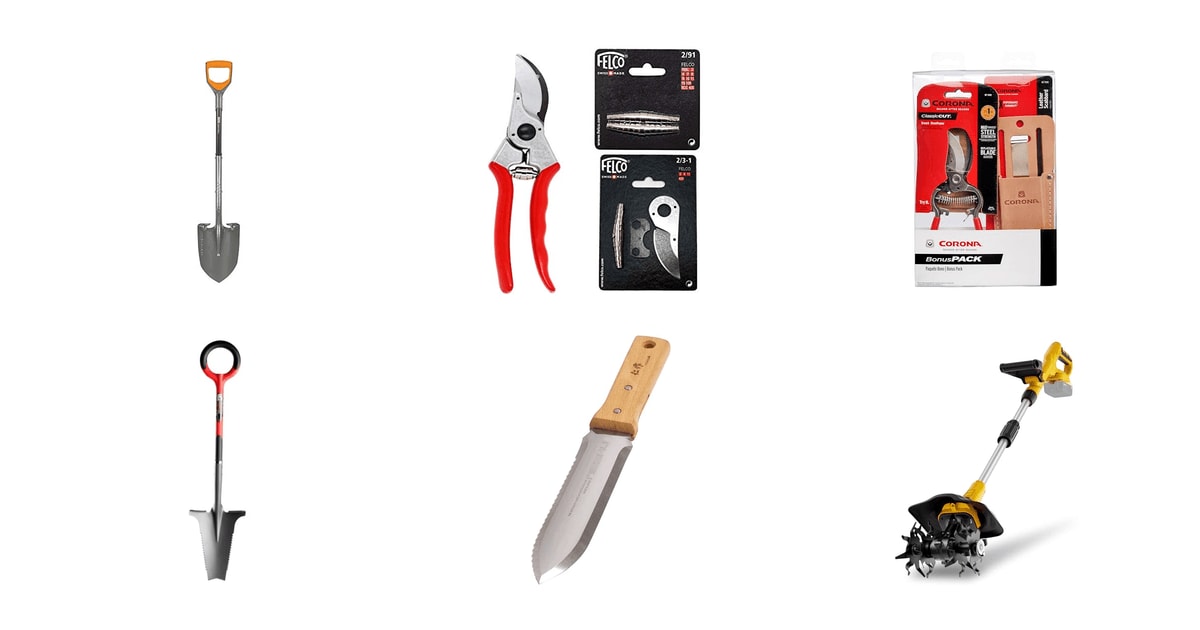
Spring gardening lives or dies on a handful of tools. You need something to break ground, something to loosen it, something to cut, and something small enough to set a bulb at the right depth. That's about it. The trouble is that most of what's sold in garden centers is stamped steel with a hollow handle, and it bends the first time you lever it against a root. A good spade or pruner isn't a luxury purchase. It's the difference between a Saturday of planting and a Saturday of trips back to the hardware store.
No single tool does everything, and anyone who tells you otherwise is selling something. A spade that's heavy enough to punch through clay is tiring to use for scooping loose compost. A cordless cultivator that's perfect for fluffing a raised bed won't break new sod. Ergonomic grips reduce strain but add bulk. And nearly every steel tool here will rust if you leave it out in the rain — carbon steel especially, which holds a better edge but needs a wipe of oil after each use. Buying well means accepting these trade-offs, not dodging them.
We looked at what published reviews, manufacturer specs and owner feedback say about the tools that keep showing up in spring-planting recommendations, then sorted them by the job they actually do. We think that the Fiskars 44" Pro Garden Shovel is the best garden tool for spring planting for most people, and that the Root Slayer 22011 Garden Shovel is the one to buy if your beds are full of roots and compacted ground.
Everything we recommend
The one shovel that handles most spring digging jobs

Cuts roots a flat blade would just bounce off

One small tool that replaces three or four in your bucket

Pricey, but you can rebuild it instead of replacing it

A serious pruner for people who prune a few times a year
At a glance
| Product | Tool Type | Blade/Head Material | Price | |
|---|---|---|---|---|
| Fiskars 44" Pro Garden ShovelTop pick | Shovel | Steel | $54.99 |
| FELCO 2 Classic Bypass Pruner with ReplacementUpgrade pick | Bypass Pruner | — | $105 |
| Corona Tools BP 3180D ClassicCUT Bypass PrunerBudget pick | Bypass Pruner | — | $41.16On sale |
| Root Slayer 22011 Garden ShovelRunner-up | Shovel | Carbon Steel | $59.99 |
| NISAKU NJP650 The Original Hori Hori NamibagataAlso great | Weeding Knife | Stainless Steel | $22.10 |
 | Paxwrenx Cordless Garden 9" Tiller Cultivator forAlso consider | Tiller Cultivator | Hardened Steel | $69.99 |
 | Flexrake Flex-Steel Shrub Rake with 48 InchAlso consider | Shrub Rake | Steel | $29.99 |
How we picked
Forged over stamped. We gave weight to tools with forged or heavy-gauge steel working ends rather than thin stamped blades crimped onto tubes. Consumer Reports' durability work puts the difference at 15-plus years versus 3 to 5, which is the single biggest factor in whether a tool is worth its price.
Handle and grip. We looked at handle material, diameter and shape against ergonomic guidance from the Arthritis Foundation and vibration findings from Popular Mechanics. D-handles and cushioned grips of at least 1.5 inches came out ahead for long sessions.
Repairability. We favored brands that publish replacement parts and honor long warranties. Felco's parts record since 1948 and Corona's lifetime coverage were both decisive.
Real spring tasks. We scoped the guide to the core set University of Minnesota Extension identifies for spring planting — spade, fork, trowel, bypass pruners, rake — and judged each tool by how well published reviews and owner feedback say it does those specific jobs.
Rust behavior. We noted whether a tool is carbon or stainless steel and how it's finished, since Gardener's Supply identifies rust, not breakage, as the usual cause of premature tool failure.
Top pick
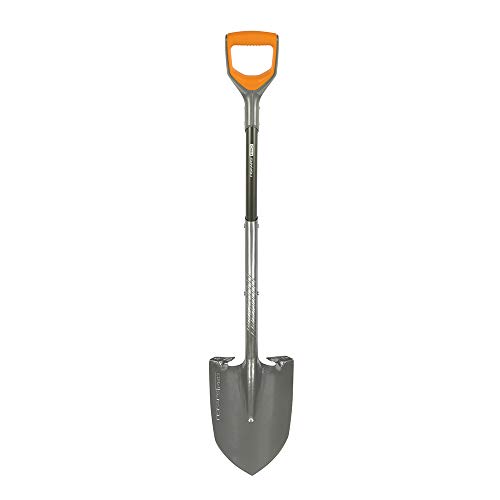
The one shovel that handles most spring digging jobs
Fiskars 44" Pro Garden Shovel
A heavy-gauge steel spade with a sharpened edge and an aluminum D-handle, sized for digging planting holes and turning beds. It's built to be stomped on and levered against, which is where cheaper shovels give up first.
$54.99fromAmazonThis is the shovel you buy so you stop buying shovels. The blade is heavy-gauge steel with a sharpened edge, joined to an aluminum D-handle and a teardrop shaft. That last detail matters more than it sounds — a teardrop shaft sits in your palm with a clear front and back, so you know which way the blade is pointing without looking down. Owners who've broken shovels on roots consistently say this one hasn't.
For spring bed prep you're mostly doing three things: cutting an edge, opening a hole, and turning soil that's been sitting compacted all winter. The sharpened edge does the first two well enough that you rarely need to go find a different tool. Fiskars puts a low-friction coating on its Ergo spade blades, which the company and Wirecutter estimate cuts soil drag by roughly 30% in clay compared with bare steel — useful if your beds go sticky after rain.
It's a forged-and-welded assembly rather than a stamped blade crimped onto a tube. Consumer Reports' 2025 durability work found forged steel garden tools lasting 15 or more years against 3 to 5 for stamped equivalents stored the same way. That gap is the whole argument for spending more once. The lifetime warranty backs it up.
At 44 inches it's a good length for most adults, and the D-handle gives you a solid two-hand grip when you're rocking the blade to free a rootball. Owners of shorter stature specifically mention it working well for them, which isn't always true of long-handle shovels.
Flaws but not dealbreakers
It's heavy — about five and a half pounds. Several owners say the same thing: great for digging down, less great for pitching dirt into a wheelbarrow, and they switch to a lighter fiberglass shovel for that part of the job. If most of your work is moving loose material rather than breaking ground, this is more shovel than you want.
The weight also makes it a poor choice if you have wrist or shoulder issues. The Arthritis Foundation points to cushioned grips of at least 1.5 inches as a way to cut joint strain by up to half, and an aluminum D-handle isn't that. Look at the hori-hori or a lighter tool for detail work.
The Fiskars 44" Pro Garden Shovel comes with a lifetime warranty.
Runner-up
Cuts roots a flat blade would just bounce off
Root Slayer 22011 Garden Shovel
A serrated, concave carbon steel blade with a V-shaped cutting tip, designed to saw through roots instead of skipping over them. If you're planting under mature trees or in ground that's never been worked, this is the shovel that gets in.
$59.99fromAmazonSome yards are just full of roots. If you've ever tried to plant a shrub under an established maple, you know the feeling of a flat spade bouncing off something you can't see. The Root Slayer's serrated edges and inverted-V tip attack that problem directly — they saw rather than push. Bob Vila's side-by-side trials estimated roughly 40% less effort to cut through 2-inch roots compared with a standard flat spade.
The narrow, concave blade is the underrated part. It slips into tight spots between existing plants where a wide spade won't fit, and the curve holds soil when you're lifting a rootball out for transplanting. Owners who divide perennials and move shrubs tend to reach for this over a conventional shovel for exactly that reason.
It's carbon steel with a powder-coated finish and a resin-encased steel shaft, so it's stiff where it needs to be. Popular Mechanics found fiberglass handles transmitting 22% less vibration to the wrist than ash wood across 200 digging cycles, and the composite shaft here follows the same idea — less sting through your hands when the blade hits something hard.
Flaws but not dealbreakers
The manufacturer explicitly says it isn't meant for prying or heavy leverage, and owner feedback bears that out — at least one buyer reports bending it on the first outing by using it as a lever. This is a cutting tool. When you need to pry a rock loose, use a bar.
It's also a specialist. For plain scooping or clean edging in soft, root-free soil, the Fiskars does a better all-around job, and the serrations don't help you there.
Also great
One small tool that replaces three or four in your bucket
NISAKU NJP650 The Original Hori Hori Namibagata
A Japanese stainless steel soil knife with a serrated edge, a straight edge, a pointed tip and depth markings on the blade. It plants bulbs, pries weeds, cuts roots and slices open bags of potting mix.
$22.10fromAmazonA hori-hori does more per ounce than anything else in the garden. Fine Gardening found experienced gardeners replacing an average of 3.2 single-purpose tools per planting session with one — trowel, weeder and soil knife collapsed into a single instrument. If you've been walking back to the shed mid-job, this is the fix.
The blade has inch markings stamped into it, which sounds gimmicky until you're setting a hundred daffodil bulbs and need each hole at a consistent depth. Stab, twist, drop, done. The serrated edge handles the taproots that snap when you pull a dandelion by hand, and the pointed tip gets under a weed's crown where a trowel just scrapes past.
It's stainless rather than carbon steel. Gardener's Supply notes that carbon holds a keener working edge in soil, but stainless shrugs off the rust that ends most tools' lives — and owners who've left this one out in the rain say it came through fine. For a tool you'll misplace in a mulch pile at least once, that's the right trade.
At about 10 ounces with a wooden handle, it's light enough to carry all day on a belt. It also hangs on a pegboard hook, which is a small thing that keeps it from disappearing into a drawer.
Flaws but not dealbreakers
The included sheath is the weak point, and owners say so plainly. It's thin and doesn't inspire much confidence for a blade this sharp. Some buyers replace it or step up to a Nisaku variant with better carrying gear.
It isn't full tang, and at least one owner wishes it were. Treat it as a knife, not a pry bar, and don't lean your weight on the handle to lift a rock.
Upgrade pick
Pricey, but you can rebuild it instead of replacing it
FELCO 2 Classic Bypass Pruner with Replacement
The Swiss bypass pruner that professional horticulturists have used for decades, sold here with replacement springs and a blade repair kit. Every wear part comes off with a screwdriver, so a worn pruner becomes a new one.
$105fromAmazonRepairability is the entire argument for the Felco 2. Felco has made replacement blades, springs, bolts and grips for every pruner model since 1948, which gives this one a documented multi-decade service record that almost no consumer pruner can match. This bundle ships with springs and a blade repair kit, so the first two things that wear out are already in your drawer.
The cutting is genuinely better too. Good Housekeeping Institute testers put the Felco 2 through 500 cuts on 1-inch branches and found its blade retention and cut cleanness clearly ahead of stamped-blade pruners in the same batch. A clean cut heals faster on a shrub, which matters if you're pruning roses or fruit trees in spring.
The bypass action — a curved blade passing a fixed hook, like scissors — is what you want for living green stems. Anvil pruners crush. If you're cutting back perennials, deadheading and shaping woody shrubs with one tool, bypass is the right geometry, and this is the reference implementation.
The hardened steel blade takes a sharpening well, so a few passes with a stone at the start of the season brings it back rather than sending you shopping.
Flaws but not dealbreakers
It's the most expensive tool in this guide by a wide margin, and if you prune a dozen times a year the Corona will serve you just as well. The Felco pays off through volume of use and years of service, not through any one afternoon.
Counterfeits are a real problem. At least one buyer of this listing believes they received a knockoff. Check the fit and finish when it arrives, and be wary of any Felco offered well below the going rate.
The handles are firm aluminum with a light grip, not a cushioned ergonomic design. If arthritis is a factor, look for a ratcheting or rotating-handle pruner instead.
Budget pickOn sale
A serious pruner for people who prune a few times a year
Corona Tools BP 3180D ClassicCUT Bypass Pruner
A carbon steel bypass pruner with a 1-inch cut capacity, bundled with a leather scabbard that holds it on your belt. It's the straightforward, old-fashioned kind — no gimmicks, sharp out of the package.
$41.16fromAmazonList priceMost gardeners don't need a professional pruner. You cut back some perennials in spring, shape a hydrangea, snip herbs, and that's the year. The Corona ClassicCUT handles all of that with a carbon steel blade rated for 1-inch stems, and owners consistently describe it as sharp straight out of the box.
The leather scabbard is a better inclusion than it looks. Pruners get set down on a wall and lost more often than they get broken. A belt sheath that also fits a folding saw keeps the tool on you while you work through a bed, and owners specifically call out the fit.
Corona backs its ClassicCUT line with a lifetime warranty, which puts it in different company from the disposable pruners sold in blister packs. Carbon steel holds a keener working edge than stainless, per Gardener's Supply — the catch is that it needs a wipe of oil after use or it'll spot with rust.
Flaws but not dealbreakers
The handles are hard and unpadded. One owner with hand pain regrets not buying a ratcheting model instead, and that's the honest limit of this design — a long pruning session will make itself felt. If your hands bother you, spend the extra on an ergonomic pruner.
The blade isn't a serviceable replacement part the way Felco's is. When it's finally worn past sharpening, you buy another pruner.
Corona backs the ClassicCUT BP 3180D with a lifetime warranty.
Who this is for
This guide is for anyone setting up or refreshing a spring planting kit — a first-time homeowner facing an empty bed, a longtime gardener whose stamped-steel spade finally folded, or someone building out a raised-bed setup. If you already own forged tools that work, you don't need to replace them; sharpening and oiling what you have will get you further than a new purchase. The tools here skew toward buy-once quality, which means several of them cost more up front than the equivalent at a big-box store.
We cover hand and long-handled tools for digging, cutting, loosening and finishing soil, plus one battery-powered cultivator for people with raised beds. We don't cover gas rototillers, irrigation, wheelbarrows, kneelers or gloves. And if grip strength or joint pain is your main constraint, treat our ergonomic notes as a starting point — most of the heavy digging tools here are demanding by nature, and a lighter multi-tool like a hori-hori will serve you better than a five-pound spade.
How we picked
We weighed each tool against a short list of things that actually predict whether you'll still be using it in a decade. Steel: forged or heavy-gauge working ends over stamped sheet, since Consumer Reports puts the life gap at 15-plus years versus 3 to 5. Handles: shape, diameter and vibration damping, judged against Arthritis Foundation grip guidance and Popular Mechanics' finding that fiberglass transmits 22% less vibration than ash. Repairability: published replacement parts and warranties that outlast the receipt. Task fit: the five core spring jobs University of Minnesota Extension identifies, not marketing categories. Corrosion: carbon versus stainless and how the tool is finished, because rust ends more tools than breakage does.
Other garden tools for spring planting worth considering
If you want a powered tiller for raised beds: The Paxwrenx Cordless Garden 9" Tiller Cultivator for ($69.99) — The Paxwrenx cordless cultivator runs on DeWalt 20V MAX batteries you may already own, and at 9 pounds with a telescoping pole it's easy to steer down a row. Its 300W motor turns four hardened steel blades through a 9-inch-wide, 7-inch-deep path — plenty for fluffing raised-bed soil, mixing in compost, or knocking down weeds between plantings. The manufacturer rates a 4.0Ah pack at about 30 minutes and 400 square feet. What you give up is torque. This won't break new sod or fight through hard-packed clay the way a gas tiller does, and the manufacturer's own tip to work back and forth in hard ground is a tell. Owners are happy with it as a medium-duty tool and frustrated when they ask more of it.
If you want to clean between plants without wrecking them: The Flexrake Flex-Steel Shrub Rake with 48 Inch ($29.99) — The Flexrake shrub rake has an 8-inch steel head on a 48-inch wood handle, and it weighs under a pound. That narrow head is the point — it reaches between perennials, around ornamental boulders and into the corners of a bed where a full-width bow rake would flatten everything in its path. Owners use it to pull bark mulch back down to bare soil before planting. It's not a seedbed-leveling tool, though. The head is too narrow to grade a bed evenly, and the flexible tines aren't built for dragging soil. Buy it as a detail tool alongside a wider rake, not instead of one.
The competition
This is what our research surfaced for spring planting, not a survey of everything sold. Several well-regarded tools — dedicated spading forks, ergonomic ratcheting pruners, hand trowels — didn't have a listing in this lineup, so we haven't written about them. Everything in the lineup appears somewhere in this guide, either as a pick, an also-consider, or here.
Care and maintenance
Rust ends more garden tools than breakage does, and the fix takes about a minute. When you're done for the day, knock the soil off the blade, wipe it dry, and rub on a light coat of oil — any general-purpose machine oil works. Carbon steel tools like the Root Slayer and the Corona pruner need this most, since carbon holds a better edge than stainless but corrodes faster. Store everything under cover, hanging if you can, so moisture doesn't sit against the metal. Once a season, touch up cutting edges with a file or sharpening stone. On the Felco, that's also the moment to check the blade bolt and swap the spring if it's lost tension. Wooden handles want a wipe of linseed oil once a year to keep them from drying out and splintering.
Questions we get
What are the essential garden tools every beginner needs for spring planting?
University of Minnesota Extension horticulturists name five: a spade, a garden fork, a hand trowel, bypass pruners and a bow rake. That set covers nearly every spring task. You can compress it further — a good spade and a hori-hori will handle most of a small garden on their own.
Are Felco pruners worth it compared with cheaper alternatives?
It depends on how much you prune. Felco has made replacement parts for every model since 1948, so a Felco 2 can be rebuilt indefinitely rather than replaced, and Good Housekeeping's 500-cut testing found its blade retention clearly better than stamped-blade pruners. If you prune weekly, that pays off. If you prune a few times a year, the Corona will do the job.
What's the difference between a spade and a shovel, and which do I need?
A spade has a flatter, squarer blade for cutting into soil and slicing edges. A shovel has a curved, pointed blade for scooping and moving loose material. Most spring planting is cutting work, so a spade-style tool like the Fiskars is the one to buy first. If you're mostly hauling compost, a lighter scooping shovel makes more sense.
Do I need a rototiller, or will a fork do?
For established beds, a fork is usually enough. The Spruce's garden trials found a four-tine spading fork loosening clay roughly 35% faster than a flat spade while disturbing earthworm populations less. A powered cultivator like the Paxwrenx is a good middle ground for raised beds, but it won't break new ground — that's still tiller territory.
Is a hori-hori knife worth buying, or can I just use a trowel?
A hori-hori does more. Fine Gardening found gardeners replacing an average of 3.2 single-purpose tools per session with one, since the pointed tip plants, the serrated edge cuts roots, and the depth markings set bulbs consistently. A trowel only scoops. If you're buying one small tool, buy this.
How do I tell forged steel from stamped steel before I buy?
Look at where the blade meets the handle. Forged tools have a thick, tapered socket or a solid strap that's noticeably heavier than the blade edge; stamped tools are a uniform sheet crimped into a thin tube. Weight is the giveaway — a forged spade feels dense in the hand. Listings that say heavy-gauge, forged or solid-socket are usually telling the truth.
Why you should trust us
For this guide:
- We read manufacturer specifications and published reviews from Consumer Reports, Good Housekeeping Institute, Popular Mechanics, Bob Vila, Fine Gardening, The Spruce and This Old House for durability, ergonomics and cutting performance across these categories.
- We compared blade material, handle construction and stated warranty terms for every tool in this lineup against horticultural guidance from University of Minnesota Extension, the Arthritis Foundation and Gardener's Supply Company.
- We reviewed recurring themes in owner feedback — weight complaints, rust behavior, sheath quality and counterfeit concerns — and let them shape the flaws sections rather than the spec claims.
- We read owner reviews on every listing, weighted toward the critical ones, because that is where the recurring failures show up.
- We have a systematic way of automatically fetching the latest prices, so the numbers on this page stay current.
- This is a research-focused guide, so the team may not own every product listed — though we often do own the top winners, which gives us extra context for the recommendations.
- We don't accept free products, and the retailer commission never changes which product we recommend.
Sources
Best Garden Tools 2026 — Wirecutter (NYT), Wirecutter
Best Pruning Shears of 2026 — Good Housekeeping, Good Housekeeping
Garden Tool Reviews 2026 — Popular Mechanics, Popular Mechanics
Best Garden Tools Tested — Bob Vila, Bob Vila
Hori-Hori Knife Review — Fine Gardening Magazine, Fine Gardening
Best Cordless Garden Tools 2026 — This Old House, This Old House
Garden Tool Durability Study — Consumer Reports, Consumer Reports
Spring Gardening Statistics 2025 — National Gardening Association, National Gardening Association
Ergonomic Garden Tool Guide — Arthritis Foundation, Arthritis Foundation
Best Spading Forks Reviewed — The Spruce, The Spruce
Tool Steel Comparison Guide — Gardener's Supply Company, Gardener's Supply Company
Spring Planting Tool Essentials — University of Minnesota Extension, University of Minnesota Extension
Amazon product listings and owner reviews for all 7 products
Manufacturer specification pages for each product
Some passages in this guide may be paraphrased with AI help. Prices are refreshed automatically.
More like this.
Continue exploring lifestyle reviews and recommendations.

The Best Garden Tools for Beginners
A first vegetable garden asks more of your hands than you'd expect. You'll dig planting holes, pry rocks loose, snip tomato suckers, scratch weeds out of…

The Best Vegetarian and Plant-Based Cookbooks
A cookbook only earns its shelf space if you actually cook from it. The plant-based ones live or die on a single question: do the recipes taste good…

The Best Gifts for Plant Lovers
Plant people are easy to shop for and easy to get wrong. They already own pots. They probably own a moisture meter that's been sitting in a drawer since…

The Best Gifts for Vegans and Plant-Based Cooks
Plant-based cooking asks a lot of a kitchen. Almonds have to become milk, chickpeas have to become hummus, and tofu has to come out of something crisp…

The Best Deer Repellents for Gardens
Deer don't browse politely. They work through a hosta bed overnight, snap the tops off daylilies, and strip a young arborvitae to the height they can…

The Best Raised Garden Bed Kits
A raised bed changes gardening in two boring, useful ways. You control the soil instead of fighting whatever clay or sand came with your yard, and you…