The Best Vegetarian and Plant-Based Cookbooks
A cookbook only earns its shelf space if you actually cook from it. The plant-based ones live or die on a single question: do the recipes taste good enough that you'll make them again on a Tuesday? Plenty of vegetarian books look gorgeous and then sit unopened, because the recipes lean on a specialty pantry you don't have or a technique nobody explained. The good ones teach you something transferable — how to build flavor with acid, salt, char and fermented paste — so you stop needing the book for every meal.
Here's the honest caveat: no single plant-based cookbook does everything. The books with the deepest technique tend to demand the longest shopping lists, and the ones you can cook from tonight tend to stay shallow. Vegetarian doesn't mean vegan, either — several celebrated titles lean hard on feta, yogurt and eggs, which is a real problem if your household is strictly plant-based. And cookbook listings are messier than most products. Editions go out of print, and a scarce printing can cost far more than the same words in a current edition.
So we approached this as a matching problem rather than a ranking one. What you cook now, who eats with you, and how much pantry investment you'll tolerate matter more than recipe counts. We think that the Jerusalem, Ottolenghi SIMPLE, Plenty 3 Books Collection Set is the best vegetarian cookbook purchase for most people, and that The Korean Vegan Cookbook is the one to buy if you want a fully vegan book with real cultural depth rather than substitutions.
Everything we recommend

The broadest vegetable education, if dairy isn't a dealbreaker

Fully vegan Korean cooking with the stories that make it stick

The gentlest starting point, with allergens labeled on every recipe

Deep technique and history, once you've got the basics down
At a glance
| Product | Price | |
|---|---|---|
| JerusalemTop pick | $119.99On sale |
 | Meera Sodha 3 Books Collection SetAlso consider | $61.99On sale |
| The Korean Vegan Cookbook: Reflections and RecipesRunner-up | $5.99On sale |
| The Vegan Chinese Kitchen: Recipes and ModernUpgrade pick | $16.34On sale |
 | Veganomicon: The Ultimate Vegan Cookbook by MoskowitzAlso in lineup | $166.11 |
| Oh She Glows Every Day: Quick andBudget pick | $12.44On sale |
How we picked
Fully vegan or not. We checked publisher descriptions and recipe coverage to confirm whether each title excludes eggs and dairy entirely or just meat. That distinction decides whether a book works for a strictly plant-based household without constant adaptation.
Ingredient accessibility. We compared the pantry demands described in each book's own material and in published reviews. Titles built on supermarket staples scored higher for beginners; specialty-pantry books had to earn the extra effort with real depth.
Teaching quality. We favored books that explain why a technique works, since published reviewers and owner feedback both link that habit to higher recipe success rates among newer plant-based cooks.
Outside credentials. We weighted James Beard recognition, major bestseller standing and food-media awards more heavily than publisher blurbs, because they come from people with no stake in the sale.
Edition and listing quality. We looked at whether the listing represents a current in-print edition or a scarce printing, and flagged any title where the specific listing may not reflect what the book normally costs to buy.
Top pickOn sale
The broadest vegetable education, if dairy isn't a dealbreaker
Jerusalem
Three Ottolenghi books — Plenty, Jerusalem and SIMPLE — in one bundle, covering weeknight speed, Middle Eastern pantry work and dinner-party cooking. It's the set that teaches you to improvise with vegetables instead of following recipes forever.
$119.99fromAmazonList priceThis is the set that changed how restaurants cook vegetables, and it'll do the same for you. Plenty, first of the three, is widely credited by food editors as the most influential vegetarian cookbook of the past two decades. It doesn't treat vegetables as the sad plate you get when you skip the meat. Roasting, charring, layered spice, a squeeze of acid at the end — those moves work on whatever's in your crisper drawer, not just on the dish in front of you.
Each book covers a different night of the week, which is why the bundle beats any one of them alone. SIMPLE is built around recipes with ten ingredients or fewer, so it's your Tuesday book. Plenty is what you reach for when six people are coming over and you want something that looks like effort. Jerusalem teaches the pantry — tahini, sumac, pomegranate molasses — and once those are in your cupboard, the other two books get faster.
The recipes are written to work, not to impress. Owners who cook from these regularly describe the same arc: rigid recipe-following at first, then improvising within a month or two. That's the sign of a book that teaches rather than dictates. Headnotes explain why a step exists, which is the difference between a recipe you execute once and a technique you keep.
It's a genuine library rather than a single reference, and that changes the math. Between them the three books run well past 500 recipes across Middle Eastern, Mediterranean and broadly global cooking. If you're the sort of cook who buys one book a year and actually uses it, buying three at once from a single voice means the techniques compound instead of competing.
Flaws but not dealbreakers
None of the three is vegan, and that's not a small footnote. Plenty leans on feta, labneh and eggs constantly. Jerusalem is similarly dairy-heavy. You can adapt, but adapting well takes experience you may not have yet — swapping cashew cream for labneh changes the dish's whole balance. If your household is strictly plant-based, buy one of the fully vegan picks below instead.
Expect a dedicated shopping trip before your first real cooking session. Sumac, za'atar, preserved lemons and pomegranate molasses show up often. Most large supermarkets carry them now, but 'most' isn't 'yours,' and ordering online means waiting. Budget a weekend for pantry setup rather than trying to cook from the book the night it arrives.
Bundle listings for boxed sets can be flaky. Stock on this specific collection runs thin, and the edition you get isn't always the one pictured. Check what's actually in the box before you commit, especially if you're buying it as a gift.
Runner-upOn sale
Fully vegan Korean cooking with the stories that make it stick
The Korean Vegan Cookbook: Reflections and Recipes
Joanne Lee Molinaro's book pairs more than 100 fully plant-based Korean recipes with essays about family and immigration. It's a New York Times bestseller, and the storytelling is the reason the techniques stay in your head.
$5.99fromAmazonList priceEverything here is already vegan, so you're never doing conversion math. Kimchi, jjigae, banchan, noodles, rice dishes — all of it, no dairy, no eggs, no fish sauce workarounds. That matters more than it sounds. Half the frustration of vegan cooking from a general cookbook is deciding what to substitute; this book removes that step entirely and you just cook.
The essays aren't decoration — they're how you remember the technique. Each recipe comes with a personal piece tying the dish to family memory. You end up remembering why doenjang jjigae uses fermented soybean paste and not miso, because the story sits underneath the instruction. It's an unusual structure for a cookbook and it works better than it has any right to.
The flavors land on their own terms rather than imitating meat. Vegan galbi, gochujang-glazed eggplant, mushroom bulgogi — these aren't apologies for missing beef. They're built from the naturally plant-heavy side of Korean home cooking, which is a much older tradition than Western veganism and doesn't need substitutes to work.
It's the one title here you can start reading tonight. The listing offers it as a digital download, so if you're the sort of person who wants the book before the weekend, this is the one that obliges. Nice too if you'd rather cook from a tablet than fight a hardcover that won't stay open.
Flaws but not dealbreakers
Those essays run long, and some nights you just want the ingredient list. Narrative sections can stretch several hundred words before you reach the recipe. If you cook with the book propped open and a pot already heating, the scrolling gets old fast. Readers who want pure recipe efficiency should know this going in.
Korean pantry building is a real upfront cost in effort. Gochujang, doenjang, gochugaru and toasted sesame oil aren't optional and don't substitute cleanly. Reach for a generic chili paste instead of gochujang and you'll make something — just not the dish in the book. Owners who skipped the pantry chapter report exactly this disappointment.
It's Korean cooking and nothing else. That's the point, but it means this can't be your only plant-based book. You'll want something broader alongside it for the nights you don't want rice and banchan.
Budget pickOn sale
The gentlest starting point, with allergens labeled on every recipe
Oh She Glows Every Day: Quick and
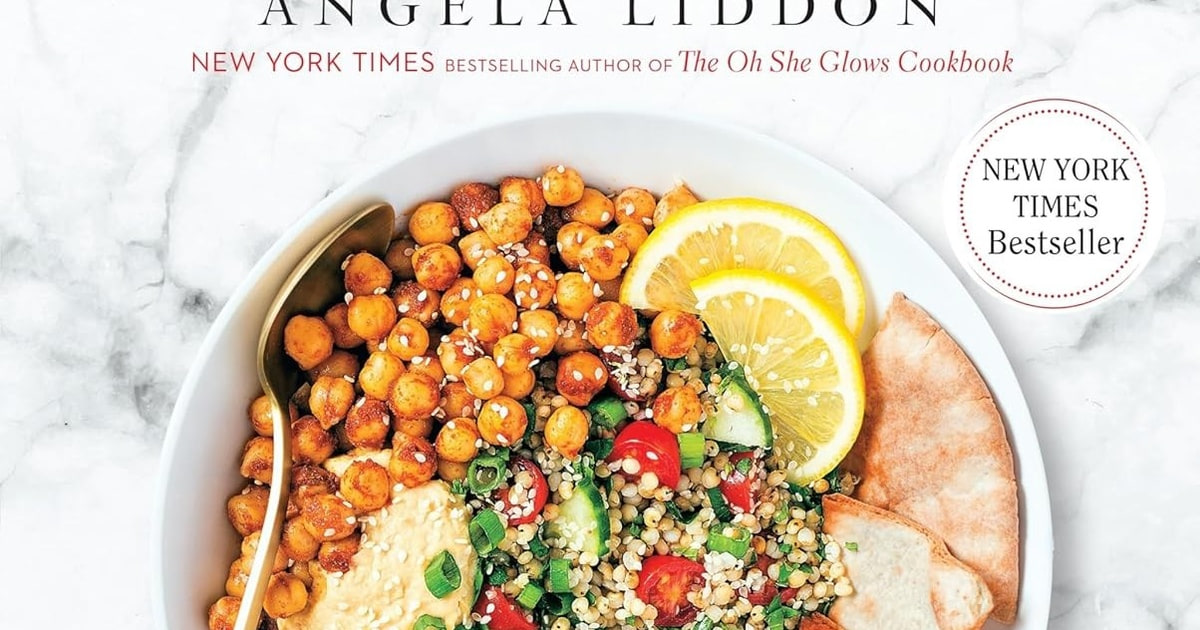
Angela Liddon's book is the most beginner-friendly plant-based title here, built on supermarket ingredients and clear allergen labels. If you're feeding a family that's skeptical about meat-free dinners, start here.
$12.44fromAmazonList priceEvery recipe tells you what's in it before you're halfway through cooking. Allergen labeling is explicit throughout, with gluten-free and soy-free options marked clearly. If someone in your house reacts to gluten or nuts, this is the only book in the guide that spares you the recipe-by-recipe detective work. That alone justifies it for a lot of families.
The recipes were pressure-tested by an enormous number of home cooks before they ever hit print. Liddon's blog has drawn well over 100 million lifetime pageviews, which means the recipes were cooked, complained about and revised in real kitchens long before publication. You feel it in the timings — the prep estimates are honest, which is rarer than it should be.
It explains the why, so beginners actually learn something. Why you soak cashews. Why aquafaba stands in for eggs in some applications and not others. Why nutritional yeast makes a cream sauce taste savory. If you've never cooked without dairy, those small explanations are what stop you from producing bland food and giving up.
It's the book most likely to win over a skeptical household. Lentil bolognese, creamy mushroom pasta, chickpea tikka masala — these read as dinner, not as health food. Families with picky eaters report unusually good acceptance rates for the comfort-food adaptations, which matters more than culinary ambition when you're trying to make the change stick.
Flaws but not dealbreakers
You'll outgrow it. This is a confidence-builder, not a culinary education. Six months of regular plant-based cooking and the instruction level starts feeling like being told things you already know. That's fine — it did its job — but don't expect it to be your permanent reference.
The flavors stay close to North American comfort food. Global cuisine coverage is thin next to Sodha, Molinaro or Che. If you want to learn a tradition rather than a set of weeknight dinners, this isn't the book.
It's a big, wide hardcover that doesn't want to lie flat. Not a dealbreaker, but you'll be weighing it down with a jar while you cook.
Upgrade pickOn sale
Deep technique and history, once you've got the basics down
The Vegan Chinese Kitchen: Recipes and Modern
Hannah Che's James Beard Award finalist traces Chinese Buddhist temple cooking through more than 100 fully vegan recipes. It's the most rigorous book here, and the one that assumes you already know your way around a wok.
$16.34fromAmazonList priceA James Beard finalist nod is about the most reliable outside signal a cookbook can carry. It's not a marketing claim or a bestseller ranking — it's a judgment from people who cook for a living. In a category flooded with trend-chasing titles, that credential does real work when you're deciding which book deserves your money.
The plant-based tradition here predates Western veganism by roughly a thousand years. Chinese Buddhist temple cuisine developed an entire flavor system without animal products, so nothing in this book is a substitution. Dim sum, noodles, braises, fermented preparations — all of it arrives fully formed, drawing on Cantonese, Sichuan and Shanghainese regional cooking rather than a flattened idea of 'Chinese vegan.'
Che explains mechanisms, not just steps. Why braised tofu skin takes on sauce differently than silken tofu. Why mushroom soaking liquid beats fresh mushroom liquid as a flavor base. How fermented black beans amplify flavor the way anchovy paste does in Italian cooking. Read three chapters and you'll cook better in general, not just better Chinese food.
It's the book that rewards the cook you're becoming. If you already have a plant-based practice and you're bored, this is the one that gives you somewhere to go. The fermentation and specialty-preparation chapters are the kind of thing you work through over months, and the payoff is a genuinely bigger repertoire.
Flaws but not dealbreakers
This is the wrong first plant-based cookbook. The depth that makes it great also assumes you're comfortable with high heat, wok work and reading ahead. Come to it without a working plant-based practice and you'll bounce off it.
Plan days ahead, sometimes weeks. Fermentation projects and specialty ingredient prep aren't weeknight moves. Dried mushrooms, fermented black beans, tofu skin and lotus root also mean an Asian grocery run or an online order that arrives when it arrives.
It's a heavy, substantial hardcover. Great on a shelf, awkward on a small counter next to a hot wok.
Who this is for
This guide is for anyone buying a vegetarian or vegan cookbook to actually cook from — whether you're going fully plant-based, cooking one meat-free night a week, or feeding a household with mixed diets. If you're new, start with one focused title and get a few months of cooking behind you before you buy a multi-book set. If you've already got a practice going and you're bored, skip straight to the deeper single-cuisine books. And if someone in your house has a gluten or nut sensitivity, let the allergen labeling drive the decision.
We don't cover meal-plan books, weight-loss programs, or athletic nutrition guides here — none of these titles organizes itself around macronutrient targets, and you shouldn't expect a cookbook to. We're also only looking at the specific listings in this lineup, which means a book you love may be missing simply because it wasn't in the set we researched. One more scope note: cookbook editions matter. A celebrated book can appear under a scarce printing that costs far more than the current edition of the same text, so it's always worth checking what edition you're actually buying.
How we picked
We weighed five things. Vegan or vegetarian: whether the book excludes eggs and dairy outright or just meat, since that decides whether you're adapting every recipe. Ingredient accessibility: how much of the pantry you can buy at a normal supermarket versus what needs a specialty run or an online order. Teaching quality: whether the book explains why a technique works, which published reviewers and owners alike tie to better results for newer cooks. Outside credentials: James Beard recognition, major bestseller standing and food-media awards, all of which come from people with nothing to gain from your purchase. Edition and listing quality: whether the listing is a current in-print edition or a scarce printing that doesn't reflect how the book normally sells.
Other vegetarian and plant-based cookbooks worth considering
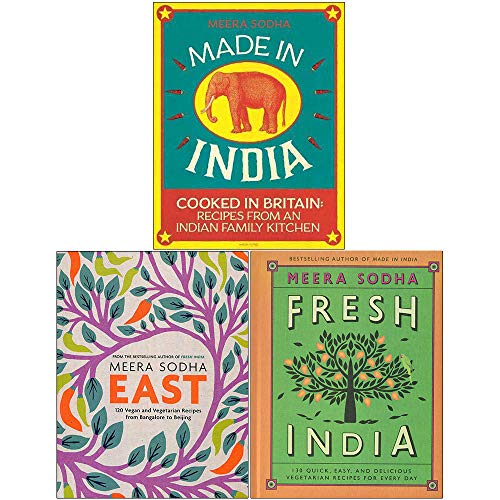
If you want authentic Indian and pan-Asian cooking from one voice: The Meera Sodha 3 Books Collection Set ($61.99) — Meera Sodha's three-book set is the strongest choice for spice-forward cooking. East, the fully vegan volume, spans Japanese, Chinese, Korean, Vietnamese and South Asian traditions, and it charted longer on UK bestseller lists than any other fully vegan cookbook. Made in India and Fresh India teach North Indian home cooking — dals, chutneys, rice dishes — with the kind of spice instruction Western cookbooks rarely manage. The catch is that two of the three volumes are vegetarian rather than vegan, with dairy throughout, and the set rewards reading chapter introductions rather than flipping straight to page 45. Weeknight speed also isn't its strength. But if Indian or East Asian food is what you actually want to cook, this beats every pick above at that specific job.
The competition
Here's what our research surfaced from this lineup — not a survey of every plant-based cookbook in print. Plenty of excellent titles aren't here simply because they weren't in the set we looked at. The book below is a genuine classic; the reason it didn't make the picks has more to do with the listing than the writing.
The Veganomicon: The Ultimate Vegan Cookbook by Moskowitz ($166.11) — Veganomicon is the book that taught a generation how to cook vegan food that tastes like food. More than 250 recipes cover breakfast, baking, seitan, tempeh, soups, sides and mains, all built on ordinary supermarket ingredients — no specialty pantry, no ordering ahead. The technique chapters on seitan, cashew cream and legume cooking give you skills that transfer to every other book in this guide. It's the most-gifted beginner vegan cookbook for a reason. The problem is this particular listing: it's a scarce 2010 paperback printing, priced well above what the book normally sells for in current editions, which undercuts the accessibility that made it famous. The formatting and photography also show their age next to newer releases, and the large format is built for reference rather than propping open on a counter. Check whether a current in-print edition is available from a major bookseller before buying this one. If you find it at normal retail, it's still an outstanding first vegan cookbook.
Getting the most from a new cookbook
Read the pantry chapter before you cook anything. It's the section everyone skips and the one that determines whether your first dish works, especially with the Korean and Chinese titles where gochujang, doenjang and fermented black beans aren't substitutable. Then pick three recipes for your first two weeks rather than browsing endlessly — cooking a book is a habit, not a decision. Sticky-tab the ones that land so you can find them again in a hurry. For kitchen survival, keep the book out of direct splatter range; most of these are large hardcovers that won't lie flat, so a cheap acrylic stand or a heavy jar on the corner saves the spine. And if a recipe flops, cook it once more before writing it off. Oven and pan differences account for more failures than the recipe does.
Questions we get
What's the best vegetarian cookbook for a complete beginner?
Oh She Glows Every Day. The recipes use ordinary supermarket ingredients, every one is labeled for allergens, and Angela Liddon assumes you know nothing about plant-based cooking. She explains the reasoning behind each step, which is what makes the skills stick rather than just producing one dinner.
What's the difference between a vegan and a vegetarian cookbook?
A vegan cookbook excludes all animal products — meat, fish, eggs, dairy and honey. A vegetarian one drops meat and fish but usually keeps eggs and dairy throughout. In this guide, The Korean Vegan Cookbook, The Vegan Chinese Kitchen, Oh She Glows Every Day, Veganomicon and the East volume in the Sodha set are fully vegan. The Ottolenghi set and the two India volumes are vegetarian, and they lean on yogurt, feta and eggs constantly.
Which of these has the most quick weeknight recipes?
Ottolenghi SIMPLE, part of the three-book Ottolenghi set, is built specifically around recipes with ten ingredients or fewer. Oh She Glows Every Day is the other strong weeknight option, with realistic prep timings and plenty of 30-minute meals. The Korean Vegan Cookbook and The Vegan Chinese Kitchen both include some fast dishes but aren't organized around speed.
I'm going vegan but I still want comfort food. What should I buy?
Veganomicon is the classic answer — mac and cheese, pot pies, hearty braises, all systematically covered across 250-plus recipes. Just check for a current in-print edition rather than the scarce printing in this lineup. Oh She Glows Every Day is the easier alternative, with comfort adaptations that tend to go over well with skeptical family members.
Which books work for a gluten-free household?
Oh She Glows Every Day is the clear pick — it labels every recipe for gluten and gives substitution guidance throughout. The Korean and Chinese titles use soy sauce often, though swapping in tamari is usually straightforward and many recipes note it. The Ottolenghi set has plenty of naturally gluten-free recipes but doesn't label them, so you'd be checking each one yourself.
Are any of these available as e-books?
The Korean Vegan Cookbook is listed as an immediate digital download. For the rest, digital availability varies by retailer and edition. The two multi-book collection sets are physical bundles with no direct digital equivalent, though individual titles inside them may be sold separately as e-books. Most cooks still prefer print in the kitchen, mainly because a tablet screen sleeps at the worst possible moment.
Why you should trust us
For this guide:
- We read publisher descriptions, listing details and published editorial coverage for all six titles, including James Beard finalist recognition and major bestseller standing.
- We compared what each book demands of your pantry and skill level against the recurring themes in owner feedback, especially complaints about specialty ingredients and instruction depth.
- We checked each listing against what we could learn about its edition, and flagged the one case where a scarce printing doesn't reflect how the book normally sells.
- We read owner reviews on every listing, weighted toward the critical ones, because that is where the recurring failures show up.
- We have a systematic way of automatically fetching the latest prices, so the numbers on this page stay current.
- This is a research-focused guide, so the team may not own every product listed — though we often do own the top winners, which gives us extra context for the recommendations.
- We don't accept free products, and the retailer commission never changes which product we recommend.
Sources
The Best Vegan and Vegetarian Cookbooks — Serious Eats recipe testers on technique-first vs. substitute-first approach, Serious Eats
James Beard Foundation Awards — Book, Beverage, and Journalism Category, James Beard Foundation
New York Times Bestseller Lists — Food and Diet Category, The New York Times
Observer Food Monthly Awards — Best Cookbook Category, Observer Food Monthly
Amazon product listings and owner reviews for all 6 products
Manufacturer specification pages for each product
Some passages in this guide may be paraphrased with AI help. Prices are refreshed automatically.
More like this.
Continue exploring lifestyle reviews and recommendations.

The Best Gifts for Vegans and Plant-Based Cooks
Plant-based cooking asks a lot of a kitchen. Almonds have to become milk, chickpeas have to become hummus, and tofu has to come out of something crisp…

The Best Garden Tools for Spring Planting
Spring gardening lives or dies on a handful of tools. You need something to break ground, something to loosen it, something to cut, and something small…

The Best Children's Cookbooks for Ages 9 to 12
A kid at this age can do real cooking. Nine- to twelve-year-olds can handle a knife with supervision, read a recipe start to finish, and use a stovetop…

The Best Cookbooks for Home Chefs
A cookbook earns its place on your counter, or it doesn't earn anything. The good ones get splattered, dog-eared and reopened every week. The bad ones…

The Best Cookbooks for Beginner Home Cooks
A first cookbook has one job: get you cooking dinner without panic. That sounds simple, but most cookbooks aren't built for someone who has never sweated…

The Best Cookbooks for Kids and Beginner Cooks
A kids' cookbook has one job: get a child cooking something they're proud of, without you hovering over every step. The good ones explain why you fold…