The Best Ergonomic Snow Shovels
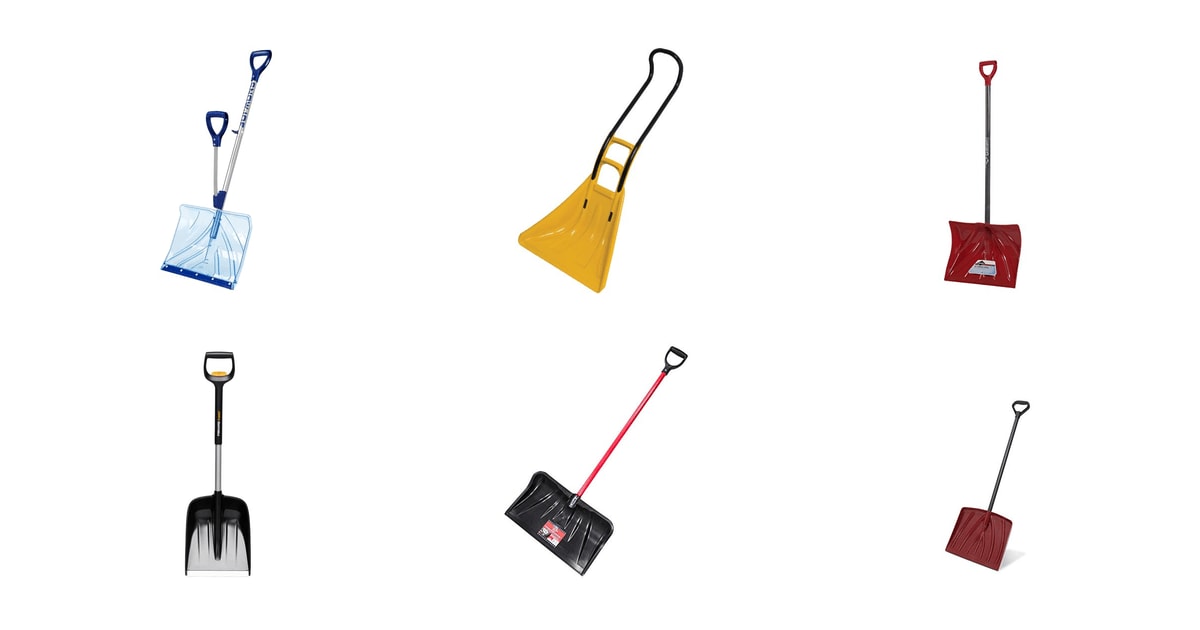
Shoveling is one of the few chores where the tool you grab decides how your back feels the next morning. A driveway after a six-inch storm means dozens of lifts, and every one of them loads your lower spine. Ergonomic shovels try to fix that with bent shafts, second grips, and spring-loaded levers that keep you closer to upright. The differences sound small on a spec sheet. Over an hour of clearing, they're the difference between sore arms and a strained back.
Here's the honest part: no shovel makes shoveling safe. A bent handle cuts how far you fold forward, but it doesn't stop you from overfilling the blade with wet snow, twisting to toss it, or working too fast in cold air. Wide blades help you finish sooner and tempt you to lift more per scoop. Poly blades protect your pavers and skate right over packed ice. Every design here trades one problem for another, and technique still does most of the work.
Snow type matters as much as your back. Dry powder rewards a wide pusher; heavy Great Lakes slush rewards a narrow, deep blade you can't overload. Car clearing and stairs want something short you can steer. We think that the TRUE TEMPER SnoBoss is the best ergonomic snow shovel for most people, and that the Snow Joe Shovelution is the one to buy if you're managing chronic back pain and want mechanical help on every lift.
Everything we recommend

The most versatile shape, if you manage your scoop size

Spring-loaded help on every lift, in a narrower blade

A deep dish for wet snow, at the lowest full-size price

Steel that cuts packed snow, with a plainer handle
At a glance
| Product | Blade Width | Weight | Price | |
|---|---|---|---|---|
| Snow Joe Snow ShovelAlso great | 18 in | 3.6 lbs | $59.97 |
| TRUE TEMPER 1625300 SnoBoss Poly Snow Shovel/Pusher/ScraperTop pick | 20 in | 5.6 lbs | $66.24 |
| Garant NPM18KD Nordic 18-Inch Poly Blade SnowBudget pick | 18 in | 3 lbs | $45.26 |
 | Fiskars Auto Snow ShovelAlso consider | 29 cm | 2.4 lbs | $35.10 |
| Bully Tools Snow Shovel with Fiberglass D-GripUpgrade pick | 22 in | 3.65 lbs | $41.99 |
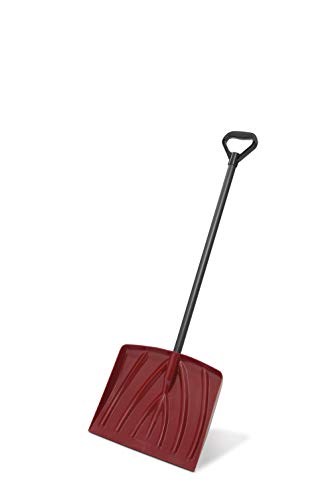 | Suncast 12-Inch Kids Snow Shovel with DurableAlso in lineup | 12 in | 0.9 lbs | $25.45 |
How we picked
Handle geometry. We prioritized bent shafts, secondary grips, and spring assists, since published ergonomics research points to handle shape as the single biggest factor in how far you bend forward during a lift. Straight-shaft models had to earn their place on other strengths.
Blade width and depth. We looked for blades in the 18-to-22-inch range that published guidance treats as the sweet spot, and we flagged anything wider as a load-management risk. Deep-dish shapes got credit specifically for wet, heavy snow.
Weight. We compared manufacturer weights and gave preference to shovels under four pounds, the threshold commonly recommended for older users and anyone with shoulder trouble. Every ounce is lifted on every scoop.
Blade material and edge. We read spec sheets for blade material and wear-strip design, because steel edges cut refrozen crust while smooth poly protects pavers and decking. We treated the two as different jobs, not as better and worse.
Durability signals. We read owner feedback for the failure modes that show up after a season or two — splintered shafts, worn blade edges, springs losing tension — and weighted those over first-impression complaints.
Top pick
The most versatile shape, if you manage your scoop size
TRUE TEMPER 1625300 SnoBoss Poly Snow Shovel/Pusher/Scraper
The SnoBoss pushes, scoops, and scrapes with one 26-inch poly blade, and its long aluminum handle gives you several places to put your hands. For an average-height adult clearing a normal driveway, it's the shovel that ends the job soonest.
$66.24fromAmazonThe multi-grip handle is the reason to buy this one. Most shovels give you a shaft and a top grip, and that's it. The SnoBoss adds room for both hands across a wider aluminum handle plus an end grip, so you can slide your lower hand down when you lift. That turns the handle into a lever. Your arms and hips take load that would otherwise land on your lower back, and you stay closer to upright through the whole motion.
You'll also make fewer trips. At 26 inches, the blade is wider than anything else here, so a two-car driveway takes noticeably fewer passes. Fewer passes means fewer lifts, and lifts are where backs get hurt. The blade doubles as a pusher on flat concrete, which is the safest way to move snow because it skips the lift entirely. Reversing it lets you work tight steps and stairs.
The wear strip along the leading edge matters more than it sounds. Poly blades wear down fast when you drag them across rough concrete and asphalt, and a rounded-off edge stops biting cleanly. Owners of long-handled poly shovels commonly report edge wear as the thing that eventually retires the tool. The strip pushes that out by seasons. There's also a foot step, useful when you need to break a crust and don't want to swing the blade.
Skip the marketing and this is a well-shaped general-purpose shovel with a genuinely useful handle. It's the pick if one shovel has to cover pushing powder, scooping a berm at the end of the driveway, and scraping a slush layer before it freezes overnight.
Flaws but not dealbreakers
That 26-inch blade cuts both ways. Occupational health guidance puts the ergonomic sweet spot closer to 18 to 22 inches, because a wide blade invites you to fill it edge to edge. In wet snow, a full 26-inch scoop is a lot of weight to swing. Treat the width as a pushing advantage and only fill about two-thirds of the blade when you have to lift, or you'll undo the point of the handle.
The 56-inch shaft doesn't adjust. It fits roughly 5'7" to 6'2" well. If you're shorter, you'll tend to lean forward to get the blade flat, which puts the flexion right back into your lumbar spine. It's also the heaviest shovel here at over five pounds, which you'll feel by the end of a long storm. And the poly edge skates on hard-packed ice — you'll want a metal-edged tool for that.
Also great
Spring-loaded help on every lift, in a narrower blade
Snow Joe Snow Shovel
The Shovelution's spring-loaded second handle gives your lower hand real leverage as you lift, not just a better grip angle. If you have a bad back, arthritic shoulders, or a surgery you're still careful about, that mechanical assist is the whole point.
$59.97fromAmazonThis is the only shovel here that actively helps you lift. Everything else improves your posture and leaves the work to you. The Shovelution's spring-loaded lower handle stores energy as you load the blade and gives it back as you raise it, spreading effort across both arms. Published comparisons of spring-assist designs point to meaningfully lower per-lift effort against fixed handles. For anyone with a disc issue or a rotator cuff that complains, that's not a gimmick.
The 18-inch blade looks small next to the SnoBoss, and that's deliberate. A narrower blade caps how much snow you can pick up at once, which is itself a back-protection strategy. Pair that with the assist handle and you get a tool that's hard to hurt yourself with. It's also the second-lightest full-size shovel here at well under four pounds, so the shovel itself isn't adding to your fatigue.
Both handles are D-rings, which give you something to hold onto through thick winter gloves. The blade is impact-resistant poly, so it won't gouge brick or composite decking the way a steel edge can. Snow Joe pitches it for year-round use in the garden too, which is a stretch, but the shape does work for moving mulch or gravel in small amounts.
Flaws but not dealbreakers
The spring assembly is the one part that can fail. It's a moving mechanism on a tool that lives outside in freezing weather and gets slammed into concrete, and owner feedback on spring-assist shovels generally centers on the handle loosening or the spring losing snap after a few seasons. Nothing else here has a part that can wear out that way.
You'll work longer. An 18-inch blade means roughly a third more passes than the SnoBoss across the same driveway, and the shovel costs about the same. If your back is fine and you just want the driveway cleared, the extra passes are a real cost for an assist you don't need.
Budget pick
A deep dish for wet snow, at the lowest full-size price
Garant NPM18KD Nordic 18-Inch Poly Blade Snow
The Garant Nordic pairs an 18-inch deep-dish poly blade with a hardwood shaft, and it's built for the dense, water-heavy snow that falls around the Great Lakes and the Northeast. At three pounds, it's the lightest adult shovel here.
$45.26fromAmazonWet snow is a different problem from powder. Water-saturated snow can run three times the weight of fresh dry snow per cubic foot, and it sticks to flat blades. The Nordic's deep-dish poly blade cups that load instead of letting it slide off the sides, and the smooth polyethylene surface releases better than rough plastic. Fewer sudden releases means fewer of the jolts that wrench a wrist or shoulder mid-toss.
At three pounds, this is the shovel to hand a smaller or older user. Weight you carry is weight you lift on every single scoop, and the standard advice for seniors is to stay under four pounds. The Nordic clears that with room to spare. The 18-inch blade also sits right in the range physical therapists point to, so you're less likely to talk yourself into an unmanageable scoop.
Garant is a Canadian brand that sells into markets getting several times the snowfall of an average U.S. winter, and the Nordic reads like a tool designed by people who shovel a lot. The poly blade also won't scratch pavers, brick, or composite decking the way steel will, which matters if your walkway is anything but plain concrete.
It's the least expensive full-size shovel here, and the trade is straightforward: no spring, no telescoping, no wear strip. You get good blade geometry and a light tool. For a lot of households that's the right set of priorities.
Flaws but not dealbreakers
The hardwood shaft is the weak spot. Wood absorbs shock nicely, but it also absorbs water, and repeated freeze-thaw cycles are hard on it — owners of wood-handled shovels routinely report splintering or a snapped shaft after a few winters, usually right where the handle meets the blade. Store it inside and dry, not leaning against the garage wall in a puddle.
The smooth poly edge is nearly useless on hard-packed ice. It skips instead of biting. And the deep dish that makes it good in wet snow will happily hold thirty pounds of slush if you fill it, so the light weight only pays off if you're disciplined about scoop size.
Upgrade pick
Steel that cuts packed snow, with a plainer handle
Bully Tools Snow Shovel with Fiberglass D-Grip
The Bully Tools shovel puts a high-strength steel scoop on a coated fiberglass shaft with a wide D-grip. If your driveway freezes into a crust between storms, this is the one that breaks through instead of skating over the top.
$41.99fromAmazonSteel is what you want when snow has been driven over and refrozen. Poly blades bounce off that crust; a sharpened steel edge slices in and lifts a slab. Bully Tools does this without a bolt-on metal wear strip, which is a small but real advantage on concrete — there's no separate strip to loosen, rattle, or catch. The 22-inch head is wide enough to clear quickly and still inside the range that keeps scoop weight sane.
The fiberglass shaft is the other reason to pick this over a cheaper shovel. It's coated against splintering, and unlike wood it doesn't drink water and split through freeze-thaw cycles. Fiberglass also flexes slightly under load rather than snapping, which is what you want when you wedge the blade under a frozen berm and lean on it.
The D-grip is sized for gloves, and it's wide enough to actually get a hand into with a bulky winter mitt. Two hands on a stable grip is the setup that gives you the most control through the lift, which is the highest-risk part of shoveling. If you're clearing a long driveway and a sidewalk with a mix of powder and refrozen slush, this handles both without complaint.
Flaws but not dealbreakers
The shaft is straight. That's the honest limitation here: without a bend or a second grip, you fold forward more on every lift, and forward flexion is the thing ergonomic shovels exist to reduce. If you're buying a shovel because your back hurts, buy the SnoBoss or the Shovelution instead. This one is for people whose backs are fine and whose driveways aren't.
Steel also means weight and consequences. It's heavier than a poly blade of the same size, and a sharp steel edge will chip pavers, scrape decorative stone, and gouge composite decking if you get aggressive. Keep it on concrete and asphalt.
Who this is for
This guide is for anyone who clears their own driveway, walkway, or steps by hand and wants to finish without a sore lower back. It's especially aimed at people with a history of back trouble, arthritis, or shoulder injuries, where the shape of the tool genuinely changes the risk. If you already own a snow blower and only shovel your steps, a compact tool is plenty and you can skip the full-size picks entirely.
We're covering manual shovels only — no blowers, no electric throwers, no roof rakes. And no shovel replaces good technique. Push instead of lift whenever the surface lets you, keep scoops small in wet snow, bend at the knees and hips rather than the waist, and don't twist your spine to throw. If you have diagnosed heart disease or high blood pressure, talk to your doctor before shoveling at all; the cold-air exertion risk is real and no handle design fixes it.
How we picked
Handle geometry: We favored bent shafts, second grips, and spring assists, because published ergonomics work identifies forward flexion as the main injury driver. Blade width: We treated 18 to 22 inches as the target and flagged wider blades as an overloading risk you have to manage. Weight: We compared manufacturer specs and preferred anything under four pounds, the usual recommendation for seniors and users with shoulder problems. Blade material: We separated steel edges, which cut refrozen crust, from smooth poly, which protects pavers and decking. Durability: We read owner feedback for the things that break in year two — splintering shafts, rounded edges, tired springs — rather than out-of-the-box impressions.
Other ergonomic snow shovels worth considering
If you want a shovel that lives in your car: The Fiskars Auto Snow Shovel ($35.10) — The Fiskars Auto X-series is a compact telescoping tool, not a driveway shovel. The shaft extends from about 31 to 39 inches, so a tall adult and a shorter one can share it, and it collapses small enough to sit behind a seat. The reinforced metal blade is rated cold-resistant to -30°C, which matters if you park outside in a genuinely cold climate. What you give up is scale: at 29 cm the blade is far narrower than anything else here, and the short shaft has you bending well forward. Great for digging out a car or clearing a set of steps. Miserable for a driveway.
The competition
This is what our research surfaced across the ergonomic shovel category, not a survey of everything sold. One product in the lineup isn't an adult tool at all, and it's worth explaining why rather than pretending it competes.
The Suncast 12-Inch Kids Snow Shovel with Durable ($25.45) — The Suncast 12-Inch Kids Snow Shovel is a well-made children's tool that shouldn't be compared to the adult picks. Its 12-inch non-stick graphite blade and 34-inch shaft are scaled for a young helper, and the galvanized steel wear strip is a nicer durability touch than most kids' shovels get. The small blade is the ergonomic feature: a child's spine is still developing, and an adult-size scoop would encourage exactly the overloading you want to prevent. The D-grip also teaches the two-hand technique adults should use. Buy it if you want your kid clearing the walk alongside you. Don't buy it expecting to use it yourself — it's under a pound and far too short for an adult.
Care and technique
Rinse and dry your shovel after each storm, especially if you've been working on salted pavement. Salt corrodes steel edges and eats at the hardware where a blade meets its shaft. Store it inside, hanging or standing on the handle end rather than the blade, and never leave a wood-shafted shovel in standing meltwater — that's how shafts split. Before the first storm, check that the blade bolts are snug and that any spring assist still has real tension. On the technique side, push before you lift whenever the surface is flat enough. When you do lift, keep the scoop small, bend at the knees and hips, step in the direction you're throwing rather than twisting your spine, and swap your lower hand every few minutes. Five minutes of light movement beforehand goes a long way; cold muscles tear more easily than warm ones.
Questions we get
What's the best snow shovel if I have a bad back?
Start with the TRUE TEMPER SnoBoss — the multi-grip aluminum handle lets you slide your lower hand down and lift with your arms instead of your lumbar spine. If your back problem is chronic, or you're working around a disc injury or a past surgery, go with the Snow Joe Shovelution instead. Its spring-loaded lower handle gives you actual mechanical help on every lift, which no amount of handle shaping can match.
Are bent-handle shovels really better than straight ones?
Yes, and it's the single most important thing about a shovel's design. Published ergonomics research puts the reduction in lumbar forward flexion at roughly 35 degrees versus a straight shaft, which directly lowers the compressive load on your discs during a lift. Straight-handle shovels force a hunched posture right at the moment you're carrying the most weight. That's why both the SnoBoss and the Shovelution use bent geometry.
What should a senior look for in a snow shovel?
Three things: a shovel under four pounds, a bent handle, and a blade no wider than about 18 to 20 inches. The Garant Nordic hits all three at three pounds with an 18-inch deep-dish blade. If grip strength or a bad shoulder is the bigger issue, the Snow Joe Shovelution's spring assist reduces the force needed at the shoulder and wrist, which is where arthritis usually bites hardest.
Is a wider blade always better?
No, and it's a common trap. Blades over about 22 inches tempt you to fill the whole surface, which piles on per-scoop weight and spinal compression — you gain speed and lose the ergonomic benefit. The 18-to-22-inch range is the sweet spot for most people. The SnoBoss's 26-inch blade works well if you push with it and only fill about two-thirds when you lift.
Which blade material should I use on pavers versus concrete?
On plain concrete or asphalt, a steel edge like the Bully Tools scoop cuts through packed snow and ice cleanly. On pavers, brick, flagstone, or composite decking, use smooth poly — the Garant Nordic or the Snow Joe Shovelution — because steel will scratch stone, chip brick, and dislodge sand-set pavers. It's worth owning both if your property has a mix.
Should I push snow or lift it?
Push whenever the surface is flat enough to let you. Pushing skips the lift entirely, and the lift is the movement that hurts backs. Save the lifting for piling snow at the edge of the driveway, clearing steps, and working tight spots where a pusher can't go. The SnoBoss handles both jobs, which is a big part of why it's our top pick.
Why you should trust us
For this guide:
- We compared manufacturer specifications across the lineup for blade width, blade material, shaft length and total weight, and checked those against how each shovel is described in published reviews.
- We read owner feedback for recurring durability complaints — splintering wood shafts, worn poly edges, spring assists losing tension — and used those themes to shape the flaws in each pick.
- We drew on published ergonomics and occupational health research on shoveling injuries to set our thresholds for handle geometry, blade width and shovel weight.
- We read owner reviews on every listing, weighted toward the critical ones, because that is where the recurring failures show up.
- We have a systematic way of automatically fetching the latest prices, so the numbers on this page stay current.
- This is a research-focused guide, so the team may not own every product listed — though we often do own the top winners, which gives us extra context for the recommendations.
- We don't accept free products, and the retailer commission never changes which product we recommend.
Sources
Snow Shoveling-Related Injuries and Fatalities — American Journal of Emergency Medicine, American Journal of Emergency Medicine
Best Ergonomic Snow Shovels — Bob Vila, Bob Vila
Best Snow Shovels of 2026 — Popular Mechanics, Popular Mechanics
Best Snow Shovels Reviewed — This Old House, This Old House
Best Snow Shovels — Wirecutter (NYT), Wirecutter
Best Snow Shovels Tested — Good Housekeeping Institute, Good Housekeeping
Shoveling Snow Safely — Harvard Health Publishing, Harvard Health Publishing
Biomechanical Analysis of Shoveling Postures and Lumbar Spine Loading — Ergonomics Research, Bob Vila
Canadian Snowfall Statistics and Commercial Snow Removal Practices — Environment and Climate Change Canada, Environment and Climate Change Canada
Amazon product listings and owner reviews for all 6 products
Manufacturer specification pages for each product
Some passages in this guide may be paraphrased with AI help. Prices are refreshed automatically.
More like this.
Continue exploring lifestyle reviews and recommendations.

The Best Electric Snow Shovels
An electric snow shovel isn't a snow blower, and that's the whole point. You carry it out one-handed, walk it down the sidewalk, and a spinning paddle…

The Best Ergonomic Laptop Stands
A laptop puts your screen about a foot below where your eyes want it. You lean in, your chin drops, and after a few hours your neck lets you know. A stand…

The Best Ergonomic Office Chairs for Back Pain
Your chair decides how your lower back feels at 4 p.m. If you sit six to ten hours a day, that's not a small thing. The spine has a natural inward curve…

The Best Windshield Snow Covers
Scraping ice off a windshield is the worst five minutes of a winter morning. Your hands go numb, your coffee gets cold in the cup holder, and you're late…

The Best Cordless Electric Snow Blowers
Snow clearing is a chore with a narrow window. You want the driveway open before work, in the dark, in the cold, without a trip to the gas station the…

The Best Winter Car Accessories for Snow and Ice Removal
Winter mornings punish the unprepared. You walk out to a windshield glazed in a quarter inch of ice, and whatever you grab from the trunk decides whether…