The Best Infrared Heaters

Infrared heaters warm you the way sunlight does. Instead of heating the air and hoping it stays put, they aim radiant heat at the objects and people in front of them. The U.S. Department of Energy notes that this direct approach can be more efficient than convection heating when you're warming a single occupied room. That's why they make sense in a drafty bedroom, a home office above the garage, or a den your furnace never quite reaches. You feel warmer within a couple of minutes, even while the room's air is still cold.
But none of these heaters warms a whole house, and none of them beats physics. A 1,500-watt heater is a 1,500-watt heater, whether it uses quartz tubes, ceramic elements or a flat panel. Your savings come from turning the thermostat down and heating one room instead of eight. The technology itself isn't magic. Radiant heat also stops the instant something blocks it, so step behind the sofa and you'll feel the drop. And most portable models still run a small fan, so a silent room is rare.
So the right pick depends on where the heat has to go and how much floor space you're willing to give up. A cabinet-style console moves from room to room and heats a big open space. A wall panel disappears above the baseboard and never gets kicked over by a dog. A stove-style unit gives you a flame effect that earns its spot in the living room year-round. We think that the Dr. Infrared Heater DR-968H is the best infrared heater for most people, and that the Heat Storm HS-1500-PHX-WIFI is the one to buy if you can't spare the floor space.
Everything we recommend

Fast, room-filling heat plus a humidifier for dry winter air

Wall-mounted heat you can start from your phone

Straightforward cabinet heat with a remote and a timer
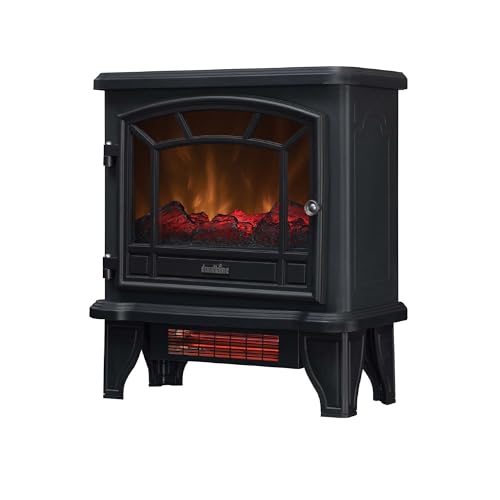
Real warmth plus a flame effect you can run all summer
Prices as of Oct 24, 6:27 AM PT · Details
At a glance
| Product | Wattage | Rated coverage | Price | |
|---|---|---|---|---|
| Dr. Infrared Heater DR-968H Indoor Portable SpaceTop pick | 1,500 W | — | $135.02 |
| Heat Storm HS-1500-PHX-WIFI Infrared HeaterRunner-up | 1,500 W | — | $149.99 |
 | Lifesmart 4-Element Quartz Infrared Electric Large RoomAlso in lineup | 1,000–1,500 W | About 150 sq ft | $599.20 |
| duraflame® Infrared Quartz Electric Fireplace Stove HeaterAlso great | — | Up to 1,000 sq ft | $219.99 |
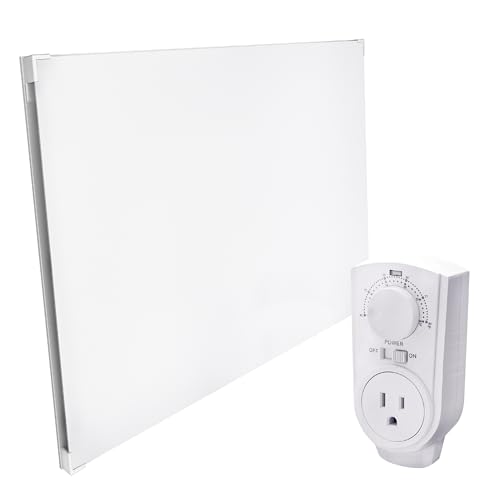 | EconoHome Wall Mount Space Heater Panel -Also consider | 400 W | 120 sq ft | $159 |
| Comfort Zone Indoor Space HeaterBudget pick | 750–1,500 W | — | $117.73 |
 | CAI - SOLAIRA 1500 Watt Radiant InfraredAlso consider | 1,500 W | — | $478 |
Prices as of Oct 24, 6:27 AM PT · Details
How we picked
Heat you feel fast. We compared published reviews and manufacturer output ratings to find models that warm people quickly rather than slowly warming air. This Old House reports that quartz infrared units hit noticeable warmth in two to three minutes, and we treated that as the bar.
Realistic coverage. We read manufacturer square-footage claims against wattage and BTU figures, because a 1,500-watt heater can only do so much. Claims that outran the listed output got discounted rather than taken at face value.
Safety hardware. We required tip-over shutoff and overheat protection, and we favored cool-touch housings and automatic timers. The National Fire Protection Association ties heating equipment to roughly one in seven home fires, which makes these features non-negotiable.
Noise and air quality. The Good Housekeeping Institute rated far-infrared panels as the quietest heaters it tested, since they contain no fan. We noted which models use fans and flagged them for bedrooms and nurseries.
Controls that help. We looked for thermostats with a usable range, timers, and remote or app control that owners report actually working. Popular Mechanics measured WiFi infrared thermostats holding within one to two degrees of target, and we treated that as the useful threshold.
Top pick
Fast, room-filling heat plus a humidifier for dry winter air
Dr. Infrared Heater DR-968H Indoor Portable Space
The DR-968H pairs an infrared quartz tube with a PTC ceramic element, so it warms a large room quickly and then holds the temperature you set. A built-in humidifier adds cool mist, which helps if winter heat leaves your throat scratchy every morning.
$135.02fromAmazonPrices as of Oct 24, 6:27 AM PT · Details
The dual heating system is the reason to buy this one. Quartz infrared warms you directly, almost immediately, while the PTC ceramic side pushes warm air out to fill the rest of the room. This Old House reviewers note that quartz infrared heaters reach noticeable warmth in two to three minutes, far quicker than oil-filled radiators. You get that quick hit here, plus the steadier background warmth a single quartz tube can't manage on its own.
The thermostat covers 50 to 85 degrees, with high and low settings, so you can park it at 68 and let it cycle. Dr. Infrared rates the unit at 1,500 watts and 5,200 BTU on a standard 120-volt outlet. The 72-inch cord matters more than it sounds. In older rooms with one awkward outlet, that extra length is often the difference between good placement and a heater stuck in a corner.
Then there's the humidifier, which is the part owners tend to mention first. Real Simple points out that infrared heaters don't blow air the way forced-air ceramic models do, so they circulate less dust and dry you out less. The cool mist here goes a step further. If you wake up with a raw throat every January, this is the feature that makes the DR-968H worth choosing over a plain quartz console.
Safety is handled the way it should be. You get tip-over protection, overheat protection and a 12-hour automatic shutoff. That combination matters more than any spec on the box. The National Fire Protection Association reports that heating equipment plays a role in roughly one in seven home fires, with space heaters a leading contributor. A heater that shuts itself off when a kid knocks it over is doing the single most useful thing a heater can do.
Flaws but not dealbreakers
It's heavy. At 23 pounds it moves between rooms, but you'll carry it with both hands, and it isn't something you'll shuffle around casually. The cherry-finish cabinet also reads as furniture from about 2009. In a modern room it stands out, and not in the way you want.
The PTC side means a fan, and a fan means noise. It's a low hum rather than a whine, and most people sleep through it, but this isn't the heater to buy if you want a silent nursery. A far-infrared wall panel is the quieter answer there.
The humidifier is a second appliance bolted onto the first. You have to refill it, and you have to clean it, or it turns into a problem instead of a feature. Dr. Infrared also lists this as indoor use only, so don't plan on it for an unheated garage or a covered porch.
Runner-up
Wall-mounted heat you can start from your phone
Heat Storm HS-1500-PHX-WIFI Infrared Heater
The HS-1500-PHX-WIFI hangs on the wall and gives back the floor space a console eats. It's 1,500 watts with a touchscreen thermostat, a remote and app control, so you can warm the bedroom before you're actually in it.
$149.99fromAmazonPrices as of Oct 24, 6:27 AM PT · Details
Picture a small bedroom where the dresser, the nightstand and the closet door already fight for space. A 22-pound cabinet on the floor isn't happening. This unit is 4 inches deep and 9 pounds, and it mounts over an outlet so the cord hides inside the housing. Nothing dangles, nothing gets kicked, and the room looks like it did before you bought a heater.
The app control is genuinely useful, not a gimmick. You can turn the office heater on from bed and walk into a warm room. Popular Mechanics lab testing found WiFi-enabled infrared heaters, including this Heat Storm model, held their thermostat within roughly one to two degrees of the set target. That's tight enough that you can pick a number and stop fiddling with it.
Heat Storm says the grill stays safe to the touch and the wall behind it stays cool, which is the reassurance parents ask for first. Tip-over shutoff is included even though a mounted heater has little to tip. You also get a physical remote, so the heater still works normally on the day your router doesn't.
Flaws but not dealbreakers
This version ships without feet, so it's a wall unit or nothing. You're drilling into drywall, which some landlords care about and some don't. Check your lease before you check the studs.
Owner feedback on the WiFi setup runs hot and cold. Pairing goes smoothly for plenty of people and turns into a long evening for others, usually on crowded 2.4 GHz networks. Budget an hour and don't do it at bedtime.
At 1,500 watts it's still one room's worth of heat, and mounted high on a wall it warms what's in front of it. If your goal is an open-plan living and dining space, a console on the floor spreads heat more evenly.
Budget pick
Straightforward cabinet heat with a remote and a timer
Comfort Zone Indoor Space Heater
The Comfort Zone CZ2062C is a 20-inch quartz infrared cabinet heater that costs noticeably less than our top pick. You get three heat settings, a digital thermostat, a 12-hour timer and a remote, which covers what most people actually use.
$117.73fromAmazonPrices as of Oct 24, 6:27 AM PT · Details
Most of what you want from an infrared console is here for a lot less money. The thermostat runs from 59 to 86 degrees and holds your setting, high mode uses the full 1,500 watts, low mode drops to 750, and an ECO setting sits between them. Add the 12-hour timer and the remote and you've got the same daily routine as pricier cabinets, minus the humidifier and the dual-element system.
The timer is the part worth planning around. Each press adds an hour, up to twelve, so you can set two hours at bedtime and let the room coast. That's a better habit than leaving any heater running all night, and it saves you the electricity you'd otherwise burn while asleep under a duvet.
Safety covers the basics properly. Tip-over shutoff cuts power the moment the cabinet goes over, and it resets once you stand it back up, though you'll have to switch it on again by hand or with the remote. Overheat protection is built in too. There are dual USB charging ports on the housing, which is odd on a heater but handy on a nightstand.
Flaws but not dealbreakers
Owner feedback is more mixed than it is for our top pick, mostly around long-term durability and the occasional thermostat that reads a couple of degrees off. It's the trade-off you make going cheaper, and it's worth keeping the receipt and the return window in mind.
It weighs about 22 pounds and has no dual heating element, so it warms a room more slowly than the DR-968H and doesn't push heat as far. Comfort Zone doesn't publish a square-footage rating, which tells you something about how it performs in a big open space.
Also great
Real warmth plus a flame effect you can run all summer
duraflame® Infrared Quartz Electric Fireplace Stove Heater
The Duraflame stove heater puts 5,200 BTU of infrared quartz heat behind a lifelike flame with glowing logs and an ember bed. Duraflame rates it for supplemental zone heating up to 1,000 square feet, and the flame runs with or without heat.
$219.99fromAmazonPrices as of Oct 24, 6:27 AM PT · Details
A space heater is usually the ugliest thing in a nice room. This one isn't. The cast-iron-stove silhouette, arched frame and operational door look deliberate next to a bookshelf, and the dancing flame over the ember bed does the job a fireplace does in a living room you can't put a fireplace in.
The flame effect works without the heat, which is the feature that keeps it in the room year-round. Run the heat in February, run just the glow in June. That matters because a heater you have to haul to the basement every spring is a heater you'll eventually stop bothering with. This one earns floor space in a den or a bedroom twelve months a year.
The heating side is honest infrared quartz. Duraflame notes that it adds warmth without making the room feel excessively dry, which lines up with the broader point that radiant heaters don't blast air across your skin the way forced-air models do. If your family fights over a too-dry living room every winter, this is a gentler way to warm it.
Flaws but not dealbreakers
Take the 1,000-square-foot claim as a ceiling, not a promise. 5,200 BTU is a normal 1,500-watt output, and in a drafty, high-ceilinged great room it'll take the edge off rather than heat the space. Treat it as zone heat for the chairs near it.
It's 19 pounds and 23 inches tall, so it's furniture rather than something you carry upstairs. There's no wall-mount option and no WiFi, and the controls are simpler than what you get on our top pick. You're paying partly for the look, and that's a fair trade only if you want the look.
Who this is for
Buy an infrared heater if you're heating one room you actually use and you'd rather not pay to warm the whole house. That's renters in a cold apartment corner, homeowners with a bonus room the ductwork forgot, and anyone whose home office is over an unheated garage. They're also a good fit if forced air bothers your sinuses or stirs up dust, since these don't blow air across the room. If someone in the house has allergies, that difference is noticeable within a day.
Don't buy one as a replacement for a broken furnace, and don't expect it to cut your bill unless you also turn the central thermostat down. This guide covers plug-in infrared heaters for home use: portable consoles, wall-mounted panels, stove-style units and one outdoor-rated mounted heater. It doesn't cover hardwired baseboard heat, gas patio heaters, whole-home systems, or infrared saunas.
How we picked
We started from what a heater has to do in a real room and worked backward. Speed: it should feel warm within a few minutes, the way published reviews describe quartz infrared behaving. Coverage: manufacturer square-footage claims had to make sense next to the listed wattage and BTU, not float free of them. Safety: tip-over shutoff and overheat protection were required, with cool-touch surfaces and auto-shutoff timers counting in a model's favor. Noise: fanless panels win bedrooms, and we said plainly which models run a fan. Controls: a thermostat with a usable range, a timer you'll actually set, and remote or app control that owner feedback says holds up over a season.
Other infrared heaters worth considering
If you want a silent, flat panel for a small room: The EconoHome Wall Mount Space Heater Panel - — The EconoHome panel is a 24-inch square that hangs flat on the wall, draws just 400 watts and has no fan at all. That makes it the quiet option here, and a good one for a nursery, a bathroom or a small office where a roaring console would be overkill. It ships with a plug-in thermostat and a heat guard cover, and EconoHome rates it for a 120-square-foot room. Two honest caveats. The company describes it as a convection panel that sets up warm air currents behind the plate, so it's not the same radiant technology as a quartz tube. And at 400 watts it takes real patience in a cold room.
If you want to heat a covered patio or a garage bay: The CAI - SOLAIRA 1500 Watt Radiant Infrared — The Solaira Cosy is a 1,500-watt mounted radiant heater built for the places an indoor console can't go. It's a slim white 16-inch fixture on 120 volts, which means it runs off standard patio wiring rather than a dedicated circuit. Family Handyman notes that outdoor-rated infrared heaters like these usually go seven to nine feet up to cover the space below while keeping safe clearance, so plan the mounting height before you buy. What you give up is flexibility. There's no carrying it to the guest room, and Solaira publishes little detail about controls, so expect to pair it with your own switch or timer.
The competition
Here's what else our research turned up. This isn't every infrared heater sold, just the ones that came up often enough to look at closely and then didn't beat a pick.
The Lifesmart 4-Element Quartz Infrared Electric Large Room — The Lifesmart 4-Element Quartz heater is sold here as a four-pack, which is the first thing to know about it. On its own each unit is a reasonable console: four quartz elements, three settings at 1,000 watts, 1,500 watts and an ECO mode that holds 68 degrees, plus a 12-hour programmable timer and 5,118 BTU. But Lifesmart rates each one for roughly 150 square feet, a fraction of what our top pick handles, and this listing has almost no owner history behind it. Buying four heaters at once makes sense for a landlord outfitting several units or a shop with separate work bays. For one cold bedroom, it's the wrong package.
Placement and safety
Give any of these heaters three feet of clear space in every direction, and keep curtains, bedding and laundry piles well outside that circle. Plug it straight into a wall outlet, never a power strip or an extension cord, because a 1,500-watt load will cook a thin cord. Point a console at where people sit rather than at the middle of the room, since radiant heat only warms what it can see. Vacuum the grill every few weeks so dust doesn't bake onto the element and smell like it. Use the timer instead of running the heater overnight, and if yours has a humidifier tank, empty and dry it whenever you'll be away for more than a couple of days.
Questions we get
Are infrared heaters actually worth it for cutting heating bills?
They can be, but only if you change how you heat. The savings come from turning your central thermostat down and warming the one room you're in, which the Department of Energy describes as where radiant heaters have the edge over convection. Run an infrared heater on top of a normal furnace setting and your bill goes up, not down.
What's the difference between an infrared and a ceramic space heater?
A ceramic heater warms the air and a fan pushes it around the room. An infrared heater sends radiant energy straight to the objects and people in front of it, so you feel warm before the air does. Real Simple notes that because infrared models don't blow air, they stir up less dust and dry your skin and sinuses out less. Ceramic heats an empty room more evenly, infrared heats you faster.
Can I leave an infrared heater on overnight?
We'd rather you didn't. Use the automatic shutoff timer instead, which is standard on our picks and usually runs up to 12 hours. The National Fire Protection Association ties heating equipment to about one in seven home fires, with space heaters a leading contributor. If you do run one while sleeping, keep it on a hard floor, well clear of bedding, plugged directly into the wall.
How many square feet will a 1,500-watt infrared heater really cover?
Treat manufacturer claims as a ceiling. A 1,500-watt unit puts out around 5,100 to 5,200 BTU regardless of the badge on the front, which is comfortable zone heat for a bedroom or a small living room. Claims of 1,000 square feet and up assume decent insulation, normal ceilings and a closed door. In a drafty, high-ceilinged room, expect to feel warm near the heater and not much beyond it.
Are infrared heaters safe around kids and pets?
The safest choice is a wall-mounted panel, because there's nothing on the floor to knock over and nothing hot within reach. Heat Storm says its mounted unit stays safe to the touch, and a fanless panel like the EconoHome runs cooler still. If you want a floor console, insist on tip-over and overheat protection, both of which our picks include, and keep it out of the path where a toddler runs.
What's the quietest infrared heater for a bedroom or nursery?
A fanless wall panel. The Good Housekeeping Institute rated far-infrared panels the quietest category it tested, since they have no moving parts to hum. The EconoHome panel fits that description and draws only 400 watts. Any console with a PTC ceramic element, including our top pick, runs a small fan you'll hear in a silent room.
Why you should trust us
For this guide:
- We read manufacturer specification sheets and full Amazon listings for every heater here, comparing stated wattage, BTU and coverage claims against each other.
- We reviewed published coverage from the Good Housekeeping Institute, Popular Mechanics, This Old House, Consumer Reports and Real Simple, plus safety guidance from the U.S. Department of Energy and the National Fire Protection Association.
- We looked for recurring themes in owner feedback, particularly around noise, thermostat accuracy, WiFi setup and long-term durability, and used them to shape the flaws sections rather than the ratings.
- We read owner reviews on every listing, weighted toward the critical ones, because that is where the recurring failures show up.
- We have a systematic way of automatically fetching the latest prices, so the numbers on this page stay current.
- This is a research-focused guide, so the team may not own every product listed — though we often do own the top winners, which gives us extra context for the recommendations.
- We don't accept free products, and the retailer commission never changes which product we recommend.
Sources
The Best Space Heaters of 2026, Wirecutter (NYT)
Space Heater Buying Guide, Consumer Reports
Best Infrared Heaters, Tested by Editors, Good Housekeeping Institute
The Best Infrared Heaters for Your Home, The Spruce
How Infrared Heaters Work and Whether They're Worth It, Bob Vila
Space Heater Safety Tips, National Fire Protection Association (NFPA)
Portable Heaters, U.S. Department of Energy
Best Space Heaters for Every Room, Family Handyman
This Old House Reviews: Best Infrared Heaters, This Old House
Herschel Select XLS Infrared Panel Specifications, Herschel Infrared (Manufacturer)
Best Space Heaters of 2026, Tested in Our Lab, Popular Mechanics
Infrared vs. Ceramic Heaters: What's the Difference?, Real Simple
Amazon product listings and owner reviews for all 7 products
Manufacturer specification pages for each product
Some passages in this guide may be paraphrased with AI help.
Product prices and availability are accurate as of the date/time indicated and are subject to change. Any price and availability information displayed on Amazon.com at the time of purchase will apply to the purchase of this product.
More like this.
Continue exploring home reviews and recommendations.

The Best Infrared Sauna Blankets
A sauna blanket is basically a heated sleeping bag you climb into on the floor. You set a temperature, set a timer, and lie there while far-infrared heat…

The Best Electric Garage Heaters
A cold garage isn't just unpleasant. It's the reason your winter projects keep getting postponed, the reason your fingers stop working on a socket wrench…

The Best Driveway Heating Mats
The worst part of a snowstorm isn't the snow. It's the twenty feet between your door and your car, refrozen into a gray slab by morning. A heating mat…

The Best Portable Propane Heaters
A propane heater earns its keep in the places your furnace never reaches. The garage where you're changing oil with the door cracked. An ice shanty at…

The Best Heat Cables for Gutters and Roofs
An ice dam starts quietly. Snow melts on the warm part of your roof, runs down to the cold overhang, and freezes into a ridge at the eave. Water then…

The Best Oil-Filled Radiator Heaters
An oil-filled radiator is the space heater you forget is running. There's no fan, no glowing coil, and no rush of hot air across the room. Instead,…