The Best Portable Propane Heaters
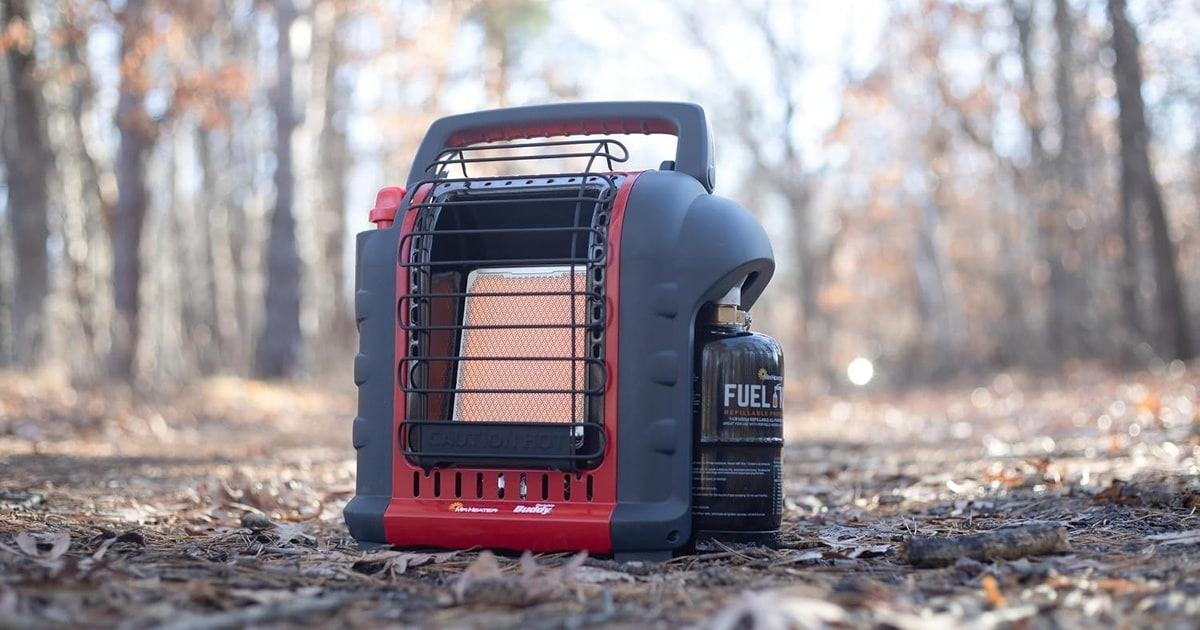
A propane heater earns its keep in the places your furnace never reaches. The garage where you're changing oil with the door cracked. An ice shanty at first light. A tent, a hunting blind, a house with no power and a long night ahead of you. What you want from one is simple: heat that starts with a button, fuel you can buy at any hardware store, and a unit that shuts itself off when something goes wrong. Everything else is a question of how much heat, for how long, and how safely.
No propane heater is set-and-forget indoors. Even models with an oxygen depletion sensor still burn oxygen and still produce some carbon monoxide, and the National Fire Protection Association recommends cracking a window regardless of what the certification says. The Consumer Product Safety Commission is blunter about sleeping areas: don't run an unvented fuel-burning heater in one without real ventilation. So add a battery carbon monoxide alarm to whatever you buy. Run times on small disposable cylinders are short, too, so plan on swapping fuel.
Radiant models warm what's in front of them, the way a campfire does. Forced-air models blow hot air across a room and bring the whole space up faster, but they're loud and need an outlet. Matching output to your space matters more than which badge is on the front: a small tent needs a few thousand BTU, while a two-car garage needs tens of thousands. We think that the Mr. Heater 9,000 BTU Portable Buddy is the best portable propane heater for most people, and that the Mr. Heater Little Buddy is the one to buy if you're heating a one-person space and counting every ounce.
Everything we recommend
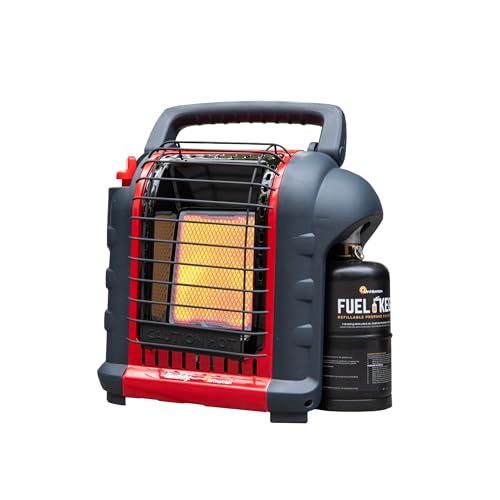
Enough heat for a tent or a small shop, and light enough to carry

Less heat and less weight, for one person in a small space

Garage-warming output, if you can live with the roar
Prices as of Oct 25, 6:48 AM PT · Details
At a glance
| Product | BTU output | Weight | Price | |
|---|---|---|---|---|
 | Mr. Heater MH9BX Portable Buddy HeaterAlso in lineup | — | 19 lb | $217.17 |
| Mr. Heater 3Budget pick | 3,800 BTU per hour | 5.6 lb | $69.99 |
| Dyna-Glo Delux RMC-FA60DGD 30Upgrade pick | 30,000 - 60,000 BTUs | 13.77 lb | $159.99 |
| Mr. Heater 9Top pick | 4,000 or 9,000 BTU/hr | 7.1 lb | $89.97 |
 | Mr. Heater Original 540-Degree 45Also consider | 30,000-45,000 BTUs | 5.62 lb | $77.99 |
Prices as of Oct 25, 6:48 AM PT · Details
How we picked
Indoor safety. We treated an oxygen depletion sensor as the price of entry for anything meant to run in a tent, a shanty or a closed garage. We checked listings and manufacturer spec sheets for tip-over shutoff as well.
Output versus space. We matched each heater's rated BTU against the coverage its maker claims, using the rough guidance that a small insulated space needs a few thousand BTU while a two-car garage needs tens of thousands.
Fuel and run time. We compared manufacturer run-time figures on 1-pound cylinders against the option of running a hose to a 20-pound tank, which changes the cost per hour dramatically.
Weight and setup. We compared listed weights and dimensions, since a heater you carry into a blind is a different purchase from one that lives on a shop floor.
How heat moves. We separated radiant models, which warm whatever they point at, from forced-air models, which bring a room up faster but need an outlet and make real noise.
Top pick
Enough heat for a tent or a small shop, and light enough to carry
Mr. Heater 9
This is the heater most people should buy. It puts out 4,000 or 9,000 BTU of radiant heat, covers roughly 225 square feet, weighs about 7 pounds, and shuts itself off if oxygen in the room drops or the unit tips over.
$89.97fromAmazonPrices as of Oct 25, 6:48 AM PT · Details
It hits the sweet spot between heat and hassle. Nine thousand BTU is enough to make a two-person tent uncomfortably warm and enough to take the bite out of a single garage bay. Mr. Heater rates it for about 225 square feet. Drop to the low setting at 4,000 BTU and one 1-pound cylinder stretches to roughly 5.4 hours. On high, expect closer to 2.4 hours.
Pick it up and the appeal gets obvious. At about 7 pounds with a fold-down handle, it rides in the same tote as your decoys or your sockets. The cylinder threads onto the side, so nothing dangles off it. There's no cord, no fan and no outlet to hunt for. In a shanty or a blind, that silence is the whole point. You can still hear the flag pop.
The safety hardware is why we'd bring this one inside. Mr. Heater's Buddy series uses an oxygen depletion sensor that kills the flame when oxygen in the room falls too low, and this model is approved for indoor and outdoor use. There's a tip-over shutoff as well. None of that replaces ventilation, though. Crack a window, and put a battery carbon monoxide alarm in the same room as the heater.
You're not stuck feeding it disposable bottles. Add a hose and an inline filter and it'll run off a 20-pound tank, which costs far less per hour and saves you from swapping cylinders at midnight. People who use theirs all winter tend to end up there. The hose isn't in the box, so plan on buying it as part of the setup, and don't skip the filter.
Flaws but not dealbreakers
Run time on a 1-pound cylinder is short. On high you'll get through a morning, not a day, and disposable bottles add up fast if this is your everyday heat. The hose-and-tank setup fixes the economics, but it adds parts to carry and a tank that won't fit in a pack.
It's radiant, so it heats what it's pointed at. Stand behind it and you're still cold. In a garage, aim it at where you're actually working instead of expecting the room to even out. And it won't do much for a space bigger than one bay.
Budget pick
Less heat and less weight, for one person in a small space
Mr. Heater 3
The Little Buddy puts out 3,800 BTU and covers about 95 square feet, which is one person in a blind, a small tent, or a truck cap. It weighs 5.6 pounds, sits on a round 8-inch base, and lights with a single button.
$69.99fromAmazonPrices as of Oct 25, 6:48 AM PT · Details
Some spaces just don't need much. A pop-up blind, a two-person tent, the corner of a shed you're working in for an hour. At 3,800 BTU this is plenty of heat for any of those, and the listed coverage is about 95 square feet. Push past that number and you'll be disappointed. Stay inside it and you'll be shedding a layer within a few minutes.
The one-button ignition matters more than it sounds like it should. You're often lighting this thing with numb fingers before sunrise. Press, catch, done. There's no fumbling with a match or holding a knob down while you count. The 8-inch round stand keeps it upright on uneven ground and takes up almost no floor space, so it tucks under a seat when you move.
Fuel is the trade-off you're accepting here. It threads straight onto a 1-pound cylinder, and at this output Mr. Heater puts run time at roughly 5 to 6 hours on low or about 3 hours on high. For a morning sit, that's one bottle. For a long weekend, bring a handful, and remember that the heater plus a pile of cylinders isn't as tidy as it first looks.
It has the safety pieces you'd want, including an accidental tip-over shutoff, and the Buddy family's oxygen depletion sensor is the reason these heaters get used indoors at all. The same caveats still apply. Vent the space, keep it clear of sleeping bags and tent walls, and bring a carbon monoxide alarm. Small size makes it easy to forget there's a live flame in a fabric room.
Flaws but not dealbreakers
Ninety-five square feet is a hard ceiling, not a suggestion. In a garage, a shed or anything larger than a small tent, this takes the edge off and nothing more. If two people are moving around the space, buy up to the 9,000 BTU model.
There's no fan, so heat goes where the burner points and nowhere else. Sit sideways to it and one side of you stays cold. The cylinder also mounts directly to the heater, which makes the assembly a little top-heavy on soft ground. The wide base helps, but set it on something flat.
Upgrade pick
Garage-warming output, if you can live with the roar
Dyna-Glo Delux RMC-FA60DGD 30
This forced-air heater runs from 30,000 to 60,000 BTU and is rated for spaces up to 1,350 square feet. Buy it when you want a whole two-car garage or a small shop genuinely warm, not just the three feet in front of you.
$159.99fromAmazonPrices as of Oct 25, 6:48 AM PT · Details
This is a different class of machine, not a bigger Buddy. A radiant tabletop unit warms your hands. A 60,000 BTU torpedo warms the building. Dyna-Glo rates this one for up to 1,350 square feet, which covers most two-car garages and plenty of small shops. Output is continuously variable from 30,000 BTU up, so you can dial it back once the space comes up instead of cycling it on and off.
The build reflects the job. It weighs about 14 pounds, the heat angle adjusts so you can aim it at the floor or straight down a bay, and the ignition runs continuously, which is what prevents the delayed-ignition thump that makes lesser torpedo heaters unnerving to be around. There's an overheat auto shutoff too. None of it is elegant, and none of it needs to be.
Expect noise and expect to need power. This is a fan blowing burning propane down a tube, so conversation happens between passes, and you'll need an outlet or a generator to run it at all. It also wants a 20-pound tank. Disposable 1-pound cylinders aren't a realistic fuel source at this output, so factor a full tank into your setup.
Where it doesn't belong is anywhere you're sealed in or sleeping. Think of it as a garage-with-the-door-cracked heater: run it while you're awake and working, then shut it off. If what you actually want is heat you can leave going in a small enclosed room, this isn't it. A low-output radiant unit with an oxygen depletion sensor is the right tool for that.
Flaws but not dealbreakers
Noise is the real cost of this much heat. Forced-air units roar, and turning it down doesn't make it quiet, it just makes it a smaller jet in the corner. If your garage shares a wall with a bedroom, or you like working early, that's worth thinking about.
It needs electricity, which undercuts one of the main reasons people buy propane in the first place. During an outage you're running it off a generator or not at all. It also burns through fuel quickly at full output, so keep a second tank around if you're heating for a whole afternoon.
Who this is for
Buy one of these if you need heat somewhere your furnace doesn't reach: a garage, a workshop, a tent, an ice shanty, a hunting blind, an RV, or a house with the power out. Propane costs more per unit of heat than electric resistance heating, according to the Department of Energy, but it doesn't care whether the grid is up. That's the whole trade, and for most people who buy one of these, it's an easy trade to make.
This guide covers portable heaters that burn propane, whether from 1-pound cylinders or a 20-pound tank with a hose. It doesn't cover kerosene heaters, electric space heaters, wood stoves, built-in RV furnaces, or patio heaters that live on a deck. And if what you're trying to do is heat a bedroom overnight, none of these is the right answer. Look at a vented furnace or an electric heater instead.
How we picked
Safety: we required an oxygen depletion sensor on anything rated for indoor use, plus a tip-over shutoff where the maker states one. Output: we matched claimed BTU against claimed coverage, and we're skeptical of both at the edges of their range. Fuel: we compared manufacturer run times on 1-pound cylinders and noted which units accept a 20-pound tank instead. Portability: we went by listed weights and dimensions, because a heater you carry is a different animal from one you drag out once a season. Heat delivery: we split radiant from forced-air, since one warms you and the other warms the room, and you almost certainly want one or the other.
Other portable propane heaters worth considering
If you want a lot of heat outdoors with no cord: The Mr. Heater Original 540-Degree 45 — This one screws straight onto the top of a 20-pound tank and throws radiant heat in a wide arc, with a regulator that steps between 30,000, 36,000 and 45,000 BTU. Mr. Heater puts run time at about 9.5 hours on high from a full tank. For a job site, a driveway, a barn with the doors open, or a deck when the air turns, it's a lot of warmth for very little hardware, and there's a tip-over shutoff. But the catch is printed on the box: outdoor use only. There's no oxygen depletion sensor and no enclosed-space rating, so it's not a substitute for the Portable Buddy in a tent or a closed garage.
The competition
What follows is what our research surfaced, not a survey of everything on the market. Plenty of propane heaters exist that we didn't have listings for, including larger dual-cylinder units and several catalytic models built for RVs, and their absence here says nothing about them.
The Mr. Heater MH9BX Portable Buddy Heater — This is the same 9,000 BTU Portable Buddy we picked, sold two to a box. If you already know you want a pair, one for the shanty and one for the garage, or one in each truck, buying them together is simpler than buying twice. There's no functional difference between these and the single unit, so the only question is whether you genuinely need two. Most people don't. A single heater plus a hose and a 20-pound tank solves more problems than a second heater does, and it costs less to feed.
Safe use and maintenance
Treat every one of these as an open flame in a closed box, because that's exactly what it is. Put a battery carbon monoxide alarm in the same space and test it before the season starts. Crack a window or a vent even with an oxygen depletion sensor. The National Fire Protection Association is clear that ODS-equipped heaters still consume oxygen and still produce some carbon monoxide. Keep a few feet of clear space at the front and top, and keep tent fabric, sleeping bags and tarps well away from both. Never run one where someone's sleeping. When you're on a 20-pound tank, use the inline fuel filter, because the oil in propane will gum up a regulator otherwise. Store cylinders outside and upright, never in a hot vehicle.
Questions we get
Are portable propane heaters safe to use indoors?
The ones rated for it are, used the way the manufacturer says. Look for an oxygen depletion sensor, which shuts the heater off when oxygen in the room drops too low. Even then, ventilate the space, because the National Fire Protection Association notes that ODS-equipped heaters still burn oxygen and still make some carbon monoxide. Add a battery carbon monoxide alarm, and don't run one while you sleep.
How many BTUs do I need for my space?
For a well-insulated small space like a tent or an ice shanty, plan on roughly 3,000 to 4,000 BTU per 100 to 200 square feet. A 9,000 BTU radiant heater is rated for about 225 square feet, which covers most tents and one corner of a garage. A two-car garage is a different problem entirely. There you want 30,000 BTU or more, which in practice means a forced-air unit.
Can you use a propane heater in a tent safely?
You can, with an indoor-rated heater, real ventilation and some discipline about clearance. Set it on flat ground away from fabric, leave a vent open low and high, and keep a carbon monoxide alarm inside with you. The Consumer Product Safety Commission warns against unvented fuel-burning heaters in sleeping areas without adequate ventilation, so the safest routine is to warm the tent before bed and then shut the heater off.
Can you run a propane heater off a 20-pound tank instead of small cylinders?
On most Buddy-style heaters, yes, using a hose and an inline fuel filter. It costs far less per hour than feeding disposable 1-pound bottles, and you're not swapping cylinders in the dark. Don't skip the filter, because propane carries oil that fouls the regulator over time. Tank-top heaters mount right onto the tank instead, but those are outdoor-only.
How long does a 1-pound propane cylinder last?
It comes down to output. A 3,800 BTU heater like the Little Buddy runs roughly 5 to 6 hours on low and about 3 hours on high, according to Mr. Heater. The 9,000 BTU Portable Buddy runs about 5.4 hours on low and 2.4 hours on high. Roughly speaking, double the BTU and you halve the run time.
Do portable propane heaters produce carbon monoxide?
Yes, all of them, in some amount. Clean combustion mostly makes water vapor and carbon dioxide, but no burner is perfect, and a starved or dirty flame produces more CO. That's exactly why the oxygen depletion sensor exists and why an alarm isn't optional. Ventilate the space no matter what the certification on the box says.
Why you should trust us
For this guide:
- We read manufacturer spec sheets from Mr. Heater and Dyna-Glo for BTU ratings, coverage claims and run times, then compared them against what each listing itself states.
- We leaned on published safety guidance from the Consumer Product Safety Commission and the National Fire Protection Association for the ventilation and carbon monoxide advice in this guide.
- We looked at recurring themes in owner feedback across these listings to separate drawbacks that come up again and again from one-off complaints.
- We read owner reviews on every listing, weighted toward the critical ones, because that is where the recurring failures show up.
- We have a systematic way of automatically fetching the latest prices, so the numbers on this page stay current.
- This is a research-focused guide, so the team may not own every product listed — though we often do own the top winners, which gives us extra context for the recommendations.
- We don't accept free products, and the retailer commission never changes which product we recommend.
Sources
Mr. Heater MH18B Big Buddy Product Specifications, Mr. Heater (Manufacturer)
Best Propane Heaters - Tested, Popular Mechanics
Best Portable Heaters for Camping and Emergencies, Outdoor Life
CPSC Guidance on Portable Propane Heater Safety and Carbon Monoxide Risk, U.S. Consumer Product Safety Commission (CPSC)
Propane Heater Buying Guide: BTUs, Safety, and Ventilation, The Spruce
Dyna-Glo RMC-FA60DGD 60,000 BTU Forced Air Heater Specs, Dyna-Glo (Manufacturer)
Camco Olympian Wave-3 Catalytic Safety Heater Specifications, Camco (Manufacturer)
How We Test Space Heaters, Consumer Reports
Best Camping Heaters Reviewed and Tested, Switchback Travel
Understanding Oxygen Depletion Sensors (ODS) in Gas Appliances, National Fire Protection Association (NFPA)
Best Ice Fishing Heaters Tested in the Field, Field & Stream
Propane vs Electric Heaters: Cost and Efficiency Comparison, U.S. Department of Energy
Amazon product listings and owner reviews for all 5 products
Manufacturer specification pages for each product
Some passages in this guide may be paraphrased with AI help.
Product prices and availability are accurate as of the date/time indicated and are subject to change. Any price and availability information displayed on Amazon.com at the time of purchase will apply to the purchase of this product.
More like this.
Continue exploring home reviews and recommendations.

The Best Portable Car Heaters
A cold car is a visibility problem before it's a comfort problem. You get in, breathe twice, and the windshield fogs over. The factory defroster works,…

The Best Smart Propane Tank Level Monitors
Propane always runs out at the worst moment. The burgers are half done, or the camper's furnace quits overnight, or the water heater goes cold on a…

The Best Oil-Filled Radiator Heaters
An oil-filled radiator is the space heater you forget is running. There's no fan, no glowing coil, and no rush of hot air across the room. Instead,…

The Best Pipe Heating Cables
A frozen pipe rarely announces itself. You turn the tap in the guest bathroom on a January morning, nothing comes out, and by afternoon there's water…

The Best Space Heaters for Large Rooms
A space heater earns its keep when it lets you leave the rest of the house cold. You warm the room you're actually sitting in, drop the central…

The Best Water Heater Insulation Blankets
Your water heater sits there all day keeping 40 or 50 gallons hot, whether you're home or not. If the tank is old, a lot of that heat leaks straight into…