The Best Portable Car Heaters
A cold car is a visibility problem before it's a comfort problem. You get in, breathe twice, and the windshield fogs over. The factory defroster works, but it's blowing cold air until the engine warms up, and on a short commute it may never fully get there. That's the gap a portable heater fills. It's a small fan with a ceramic element that you aim at the glass or at your hands, and for a few cold minutes it earns its space in the car.
Here's the honest part: none of these will heat your car. A wall outlet gives a home space heater far more power than a cigarette lighter can. Car and Driver found that budget 12V ceramic units warm the air right at the vent by 15 to 20 degrees and do very little to the cabin as a whole. Anything that genuinely heats a parked vehicle either burns fuel or carries its own battery, and that's a different, pricier kind of product with its own safety rules.
So buy for the job you actually have. If you need clear glass on a frosty commute, a plug-in ceramic fan is enough, and it asks nothing of you but a free socket. If you're worried about sitting on a shoulder in the cold with an engine that won't turn over, you need something that doesn't depend on the car at all. We think that the Mr. Heater Buddy is the best portable car heater for most people, and that the RoadPro RPSL-681 is the one to buy if you'd rather wire a stronger 12V unit straight to your battery.
Everything we recommend
Real heat with the engine off, if you crack a window

Twice the wattage of a lighter-socket heater, with a wiring job

A quiet 150-watt defogger that just plugs in
Prices as of Oct 25, 6:48 AM PT · Details
At a glance
| Product | Power source | Heat output | Price | |
|---|---|---|---|---|
| Roadpro 12v RPSL-681 12-volt Ceramic Heater/fanRunner-up | — | 300 watts | Check price |
 | 2026 New Upgraded Car HeaterAlso in lineup | 12V cigarette lighter | 200 watts | $22.98 |
| Car HeaterBudget pick | 12V cigarette lighter | 150 watts | $17.99 |
 | 12V 150W Portable Car Heater for VehicleAlso consider | 12V cigarette lighter | 150 watts | Check price |
| Mr. Heater 9Top pick | 1-lb propane cylinder | 4,000 or 9,000 BTU/hr | $89.97 |
Prices as of Oct 25, 6:48 AM PT · Details
How we picked
Real heat output. We compared manufacturer wattage and BTU ratings against what published reviews report from actual cars. Car and Driver's findings set a low bar for 12V units, so how a heater is powered mattered more to us than how it's shaped.
Electrical draw. We checked each unit's amperage against the 15-amp fuse in a typical accessory outlet, following Popular Mechanics' guidance, and gave credit for an inline fuse in the plug.
Works engine off. A heater that needs the engine running is useless in the emergency many people buy it for. We weighted fuel-burning options heavily for stranded-motorist and car-camping use.
Mounting and aim. A defroster is only as good as where you can point it. We looked at swivel range, suction mounts, dash stands and cord length in the listing specifications.
Reported durability. We read owner feedback for recurring patterns of early failure, and treated listings with almost no history as unproven rather than as good news.
Top pick
Real heat with the engine off, if you crack a window
Mr. Heater 9
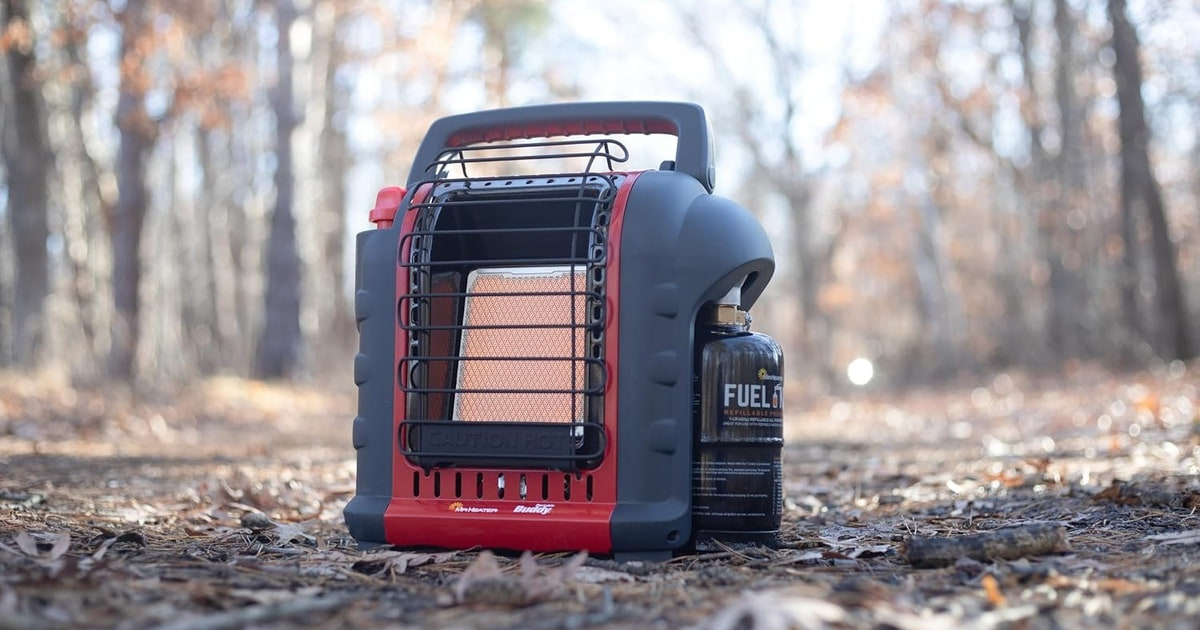
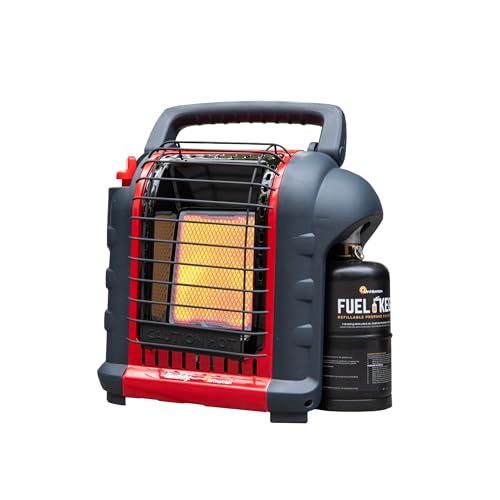
This propane heater puts out up to 9,000 BTU an hour, so it's the only thing here that can warm you up when your car is dead and the weather isn't. It needs a cracked window and a 1-pound cylinder, but it doesn't care whether your battery still works.
$89.97fromAmazonPrices as of Oct 25, 6:48 AM PT · Details
Nothing else in this guide actually heats a car. This does. Mr. Heater rates the Buddy at 4,000 or 9,000 BTU an hour, enough for roughly 225 square feet. A car cabin is a fraction of that. Plug-in 12V units move warm air past your hands; this one raises the temperature of the space you're sitting in, and it does it with the key out of the ignition.
That independence is the whole point. If you slide into a ditch on a rural road and the engine won't restart, every 12V heater in this guide is dead weight. The Buddy runs on a 1-pound propane cylinder you can keep in the trunk. Outdoor Life ranks it first for winter car camping for exactly this reason, and it's the one we'd want riding along through a cold winter.
Runtime is honest rather than generous. Mr. Heater lists 5.4 hours on low and 2.4 hours on high from a single 1-pound cylinder. On a cold night that means the low setting, a spare cylinder or two, and a window cracked the whole time. You're managing a fuel supply instead of a battery. That's a better problem to have, but it's still a problem.
Safety is where propane earns its reputation, in both directions. The Buddy has a low-oxygen shutoff that kills the flame if oxygen drops, plus two heat settings so you don't have to run it wide open. But the Consumer Product Safety Commission still says fuel-burning heaters belong in a vehicle only with real ventilation, like a cracked window, because of carbon monoxide. Treat the shutoff as a backup, not as permission.
Flaws but not dealbreakers
It's big and heavy for what it does. At about 15 inches tall and just over 7 pounds, the Buddy takes up real trunk space, and you'll want somewhere flat and clear to set it down, not a footwell full of loose floor mats. Add cylinders and it gets bulkier still.
You also have to stay awake with it. Good Housekeeping warns against leaving any heater, fuel-burning or 12V, running unattended in a parked vehicle. That rules out what a lot of people want most, which is falling asleep warm in the back of an SUV. Use it to get warm, then shut it off.
Runner-up
Twice the wattage of a lighter-socket heater, with a wiring job
Roadpro 12v RPSL-681 12-volt Ceramic Heater/fan
This one skips the cigarette lighter and clamps straight to your battery through 15 feet of 12-gauge wire, which is how it gets to 300 watts. That's roughly double what a plug-in heater can pull, and about as much heat as a car's electrical system will hand you.
Check priceatAmazonPrices as of Oct 25, 6:48 AM PT · Details
The math is what sold us here. An accessory socket is usually fused around 15 amps, and Popular Mechanics warns that anything drawing past that will pop it. That caps a plug-in heater near 150 or 170 watts. By running its own 15-foot, 12-gauge leads to the battery terminals, the RoadPro sidesteps the socket fuse entirely and gets to 300 watts of supplemental heat.
Buy this one if your factory heater has given up. Older trucks, work vans and RVs with a tired heater core need warmth for the whole drive, not a two-minute defog. Twice the wattage means you feel it on your legs and hands instead of only in the airstream. A switch flips between heat and fan, so it stays useful once the weather turns and you just want moving air.
The install is the price of admission. You're routing 15 feet of cable from the engine bay into the cabin, securing it where a door or a seat rail can't pinch it, and connecting to the battery terminals. It's an afternoon with zip ties, not a plug. If that sounds like a chore, buy a lighter-socket model and expect less heat.
Owner feedback here is more mixed than we'd like, and it clusters around longevity rather than output. Some units run for years and some quit early. That pattern is common across cheap 12V heating gear, but it's worth knowing before you spend an afternoon wiring one in. The upside is that a direct-to-battery unit has no socket to melt or wiggle loose.
Flaws but not dealbreakers
Three hundred watts still isn't a space heater. Car and Driver found that budget 12V ceramic units raise the air right at the vent by roughly 15 to 20 degrees within a few minutes while barely moving overall cabin temperature. More wattage helps, but you're supplementing the car's heater, not replacing it.
Pulling 300 watts is about 25 amps off your battery, so this is a drive-time accessory. AAA warns that running 12V accessories for more than an hour or two with the engine off can leave you unable to restart. Wire it in, use it while you're moving, and switch it off when you park.
Budget pick
A quiet 150-watt defogger that just plugs in
Car Heater
It plugs into the cigarette lighter, pushes 150 watts through a ceramic element, and swivels a full 360 degrees so you can aim it at the windshield or at your hands. There's a fuse in the plug and a handle on the housing, which is more than most cheap units bother with.
$17.99fromAmazonPrices as of Oct 25, 6:48 AM PT · Details
Most mornings you don't need to heat a car. You need to see out of it. Frost on the inside of the glass, condensation that comes back every time you breathe, a side mirror you can't check before you merge. That's the real problem, and a 150-watt ceramic fan aimed at the windshield handles it. Plug it in, point it, drive.
The fuse in the plug matters more than the marketing does. Popular Mechanics recommends checking your accessory outlet's fuse rating before you plug in any 12V heater, because units pulling more than 15 amps will trip it. At 150 watts this one sits around 12.5 amps, comfortably under the line, and the built-in fuse gives you a cheap part to swap instead of a hunt through the fuse box.
The listing also claims quiet operation, and the low wattage makes that believable, since there's only so much fan you can spin on 12 amps. Owner history on this particular unit is thin, so we'd treat build quality as unproven rather than good. What you're getting is the standard formula done carefully, with a handle and a fuse, not a step up in heat.
Flaws but not dealbreakers
It won't warm a cold cabin, and no 150-watt unit will. Car and Driver's numbers put budget 12V ceramic heaters at roughly a 15-to-20-degree bump in the air near the vent, with little effect on the space as a whole. If you want your feet warm on a long drive, this isn't the tool for it.
There's also very little owner history behind it. A new listing with a handful of reviews tells you almost nothing about whether the element survives a second winter. Cheap 12V heaters fail often enough that we'd buy this expecting a couple of seasons, not a decade.
Who this is for
Buy one of these if your car's heater takes too long, your windshield fogs on every commute, or you want something in the trunk for the drive that goes wrong. They're most useful in older cars and trucks with a weak heater core, in RVs, and in any vehicle that sits outside overnight. If your factory heat and defrost already work well, a portable unit will mostly disappoint you, because the car's own system is far more powerful.
We're covering portable heaters you can move between vehicles: 12V ceramic fans that plug into an accessory outlet or wire to the battery, plus small propane radiant heaters. We're not covering engine block heaters, coolant-based auxiliary heaters, heated seat covers or remote start, all of which attack the cold-car problem differently and often better. If you drive an EV, remember that a 12V heater still draws from the same pack that moves the car, so you're trading range for warmth.
How we picked
Heat output: we compared rated wattage and BTU figures against what published reviews say these units actually do inside a cabin. Electrical draw: we checked amperage against the 15-amp fuse most accessory outlets use, and favored plugs with a fuse built in. Engine-off use: we gave real weight to heaters that keep working when the car doesn't. Mounting and aim: swivel range, suction cups, dash stands and cord length decide whether you can point heat where the fog is. Reported durability: we looked for patterns of early failure in owner feedback, and counted a thin review history as unknown rather than good.
Other portable car heaters worth considering
If you want a heater that sticks to the windshield: The 12V 150W Portable Car Heater for Vehicle — This is the same 150-watt, heat-or-cool formula as our budget pick, but it ships with a detachable suction mount instead of a dash stand. That's genuinely handy if your dashboard is steeply raked and nothing will sit flat on it. You stick the heater to the glass, angle it down at the fog, and get on with your morning. You give up the carry handle, and the suction cup is the part most likely to let go on a cold day. Heat output is identical, which is to say modest.
The competition
This is what our research surfaced, not a census of everything on the market. New 12V heater listings appear constantly under unfamiliar brand names, often built around the same ceramic element and the same molded plug as a dozen others.
The 2026 New Upgraded Car Heater — The Qidoe advertises 200 watts through a cigarette-lighter plug, the most heat anyone here claims from a socket. That's also our hesitation. Two hundred watts works out to roughly 16.7 amps, and Popular Mechanics notes that outlets fused at 15 amps will trip above that. Some cars will run it fine and others will blow a fuse on the first cold morning. Owner feedback so far is sparse and unenthusiastic. If you've confirmed your outlet is fused higher and you want the extra output, it's a defensible gamble.
Installation and safety notes
Before you buy any 12V heater, find your accessory outlet's fuse rating in the owner's manual. Most sit at 15 amps, which caps you near 150 or 170 watts. Anything stronger wants a direct connection to the battery, with an inline fuse and cable routed where a door or seat rail can't pinch it. Then treat all of these as drive-time accessories. AAA warns that 12V accessories left running with the engine off can drain a standard battery past restarting within an hour or two. With propane, add ventilation: crack a window, set the heater on a flat clear surface well away from upholstery, and shut it off before you sleep.
Questions we get
Are portable 12V car heaters actually worth it?
For clearing fog and frost off glass, yes. For heating a cabin, not really. Car and Driver found that budget 12V ceramic units raise the air near the vent by about 15 to 20 degrees while barely changing overall cabin temperature. Think of one as a targeted defogger, not a space heater.
Can a 12V car heater drain my car battery?
Yes, and quickly. AAA warns that running 12V accessories with the engine off for more than an hour or two can leave a standard battery too weak to restart the car. A heater is one of the hungriest things you can plug into that socket. Use it while you're driving or idling, not while you're parked.
Is it safe to run a propane heater inside a parked car?
Only with ventilation. The Consumer Product Safety Commission says even heaters with low-oxygen shutoff sensors need adequate airflow in a vehicle, such as a cracked window, because of carbon monoxide. The Mr. Heater Buddy's shutoff is a backstop, not a substitute for fresh air. Good Housekeeping also recommends never leaving one running unattended.
How many watts does a 12V car heater use?
Most draw 120 to 170 watts, or roughly 10 to 14 amps, per manufacturer specifications. That ceiling is set by the fuse in your accessory outlet, which is usually rated at 15 amps. Popular Mechanics recommends checking that rating before you plug anything in. Getting meaningfully more heat means wiring to the battery instead.
What's the best car heater for a breakdown or emergency?
A propane unit like the Mr. Heater Buddy, because it doesn't need the engine or the battery. It puts out up to 9,000 BTU an hour and runs about 5.4 hours on low from a 1-pound cylinder. Keep a spare cylinder with it, and crack a window any time it's lit.
Will one of these defrost my windshield faster than the car's defroster?
No. Your car's defrost system moves far more heated air than any portable unit can. These are best for spot-clearing: a patch of fog on the side glass, condensation on the rear window, or a stripe of ice on the inside of the windshield while the engine warms up. Use one alongside the built-in system rather than instead of it.
Why you should trust us
For this guide:
- We read manufacturer specifications for every heater here, alongside published reporting from Car and Driver, Popular Mechanics, Outdoor Life and Good Housekeeping on how these units perform and where they fall short.
- We compared each unit's rated electrical draw against safety guidance from AAA and the Consumer Product Safety Commission on battery drain and carbon monoxide risk.
- We also looked at recurring themes in owner feedback, especially reports of early failure in inexpensive 12V ceramic heaters.
- We read owner reviews on every listing, weighted toward the critical ones, because that is where the recurring failures show up.
- We have a systematic way of automatically fetching the latest prices, so the numbers on this page stay current.
- This is a research-focused guide, so the team may not own every product listed — though we often do own the top winners, which gives us extra context for the recommendations.
- We don't accept free products, and the retailer commission never changes which product we recommend.
Sources
Best Portable Car Heaters for Winter - The Drive, The Drive
The Best 12-Volt Car Heaters, Tested - Car and Driver, Car and Driver
Best Emergency Car Kits and Winter Gear - Consumer Reports, Consumer Reports
Mr. Heater Buddy Portable Propane Heater - Product Specifications, Mr. Heater (Manufacturer)
EcoFlow Wave 2 Portable Air Conditioner - Specs & Heat Mode, EcoFlow (Manufacturer)
How to Safely Use a Space Heater in Your Car - Popular Mechanics, Popular Mechanics
Best Car Heaters for Winter Driving - Good Housekeeping, Good Housekeeping
Carbon Monoxide Safety with Portable Propane Heaters - CPSC, U.S. Consumer Product Safety Commission
How Long Can You Run a 12V Accessory Before Draining Your Battery - AAA, AAA
Best Car Camping Gear for Winter - Outdoor Life, Outdoor Life
Amazon product listings and owner reviews for all 5 products
Manufacturer specification pages for each product
Some passages in this guide may be paraphrased with AI help.
Product prices and availability are accurate as of the date/time indicated and are subject to change. Any price and availability information displayed on Amazon.com at the time of purchase will apply to the purchase of this product.
More like this.
Continue exploring electronics reviews and recommendations.

The Best Portable Propane Heaters
A propane heater earns its keep in the places your furnace never reaches. The garage where you're changing oil with the door cracked. An ice shanty at…

The Best Portable Car Vacuums
Cleaning a car is mostly a reaching problem. The crumbs live in the seat track, the sand settles into the carpet pile, and the dog hair works its way into…

The Best Portable Car Refrigerators
A 12V compressor fridge changes how you travel. There's no ice to buy, no meltwater sloshing around your sandwiches, no soggy cardboard at the bottom of…

The Best Infrared Heaters
Infrared heaters warm you the way sunlight does. Instead of heating the air and hoping it stays put, they aim radiant heat at the objects and people in…

The Best Pipe Heating Cables
A frozen pipe rarely announces itself. You turn the tap in the guest bathroom on a January morning, nothing comes out, and by afternoon there's water…

The Best Space Heaters for Large Rooms
A space heater earns its keep when it lets you leave the rest of the house cold. You warm the room you're actually sitting in, drop the central…