The Best Portable Car Vacuums
Cleaning a car is mostly a reaching problem. The crumbs live in the seat track, the sand settles into the carpet pile, and the dog hair works its way into the fabric weave where a nozzle alone can't grab it. A good portable vacuum solves the geometry first and the suction second. You want something light enough to hold overhead against a headliner, with a crevice tool that actually fits the gap beside your center console. If it's awkward to grab, you'll skip the job.
Here's the honest part: no handheld does everything. Cordless models run out of battery halfway through a three-row SUV, and the runtime numbers on the box assume light work in a warm garage. Corded 12V models never die but tether you to the vehicle. Wet spills defeat almost all of them. And the suction specs are close to meaningless — Pascal ratings measure pressure with the inlet blocked, which is not how anyone vacuums. Air watts and CFM tell you more, and most brands don't publish either.
So the right pick depends on how you clean, not on which number is biggest. If you tidy up weekly, you want grab-and-go. If you do one serious detail a season, runtime matters less than capacity. We think that the Dyson Car+Boat is the best portable car vacuum for most people, and that the THISWORX Car Vacuum Cleaner is the one to buy if you'd rather spend a little and plug into the 12V outlet.
Everything we recommend

The strongest clean here, if you can justify the cost
Endless runtime and real reach, as long as you don't mind a cord

The pet-hair answer that doesn't require Dyson money

Tiny, charges off your phone cable, lives in the glove box

Handles wet messes and mud that defeat every handheld here
At a glance
| Product | Price | |
|---|---|---|
| Dyson Car+Boat Handheld VacuumTop pick | $229.99On sale |
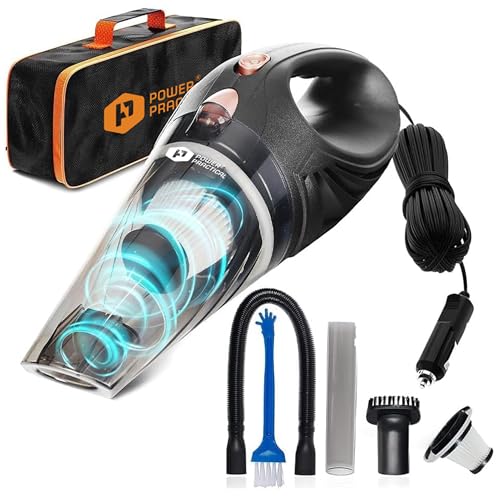
| THISWORX Car Vacuum Cleaner - PortableBudget pick | $20.99 |
 | BLACK+DECKER BDH2000PL MAX Lithium Pivot VacuumAlso in lineup | $82.99On sale |
 | Bissell Pet Hair Eraser Cordless Hand VacuumAlso consider | $84.57 |
| Shark UltraCyclone Pet Pro Plus Cordless HandAlso great | $69.99On sale |
 | XHJTWOPY AC/DC Power Adapter 12.6V for VacLifeAlso in lineup | $12.99 |
| HAUSMEISTER Airflex Pro Car Vacuum Portable CordlessRunner-up | $19.99On sale |
 | CRAFTSMAN V20 Cordless Hand VacuumAlso consider | $49.98 |
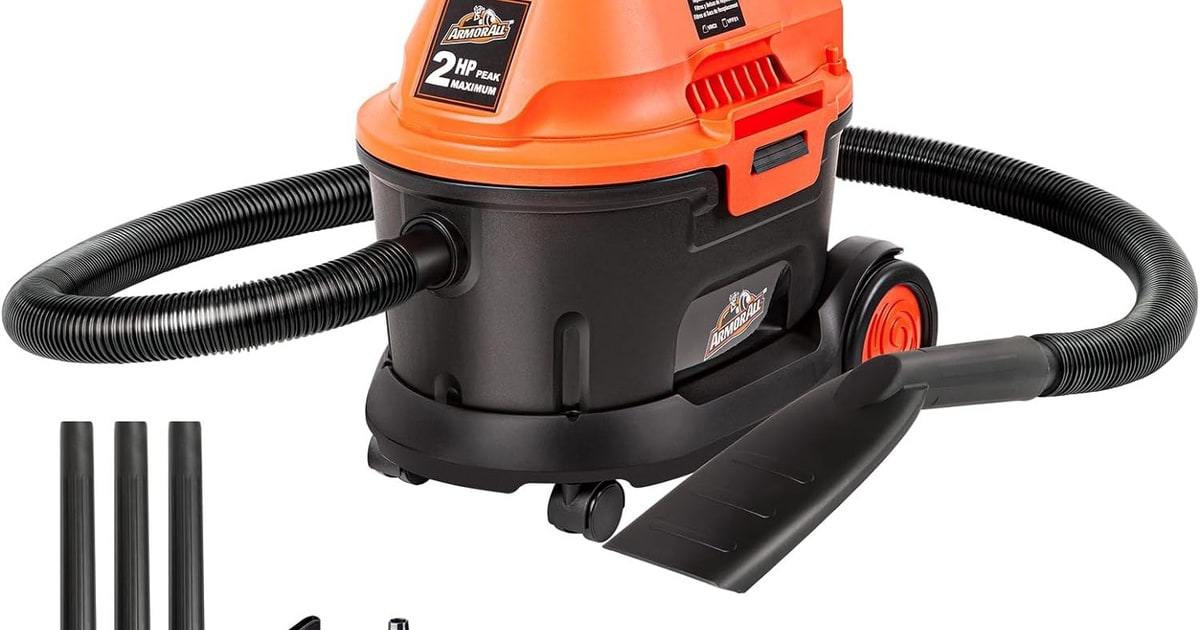
| Armor AllUpgrade pick | $72.40 |
How we picked
Honest suction specs. We favored vacuums that publish air watts or CFM over ones advertising only Pascal ratings, since sealed-inlet pressure says little about real cleaning. Where only PA was available, we treated it as directional and leaned on owner feedback about actual pickup instead.
Reach and geometry. Car interiors are a maze of seat tracks, console gaps, and footwells, so we looked at cord length, crevice tool dimensions, and nozzle articulation in the spec sheets. A 16-foot cord was our floor for corded models, since anything shorter can't reach a trunk from the dash outlet.
Sustained suction. Published reviews and owner reports agree that cheap handhelds fade within a minute once the filter loads with hair or fine dust. We gave weight to multi-stage or dual-cyclone designs that are engineered to hold airflow as the bin fills.
Filtration quality. A car cabin is a small sealed space, so a filter that passes fine dust back through the exhaust defeats the purpose. We looked for washable HEPA or equivalent whole-machine filtration rather than plain foam.
Weight and storage. Owner complaints about arm fatigue show up consistently on heavier units, so we preferred models under about three pounds for handheld use. We also considered whether a vacuum is compact enough to live in the car, since one that's stored in the garage gets used far less.
Top pickOn sale
The strongest clean here, if you can justify the cost
Dyson Car+Boat Handheld Vacuum
This is the handheld that pulls embedded pet hair out of fabric seats instead of skating over it. The Mini Motorized Tool does the agitating, 115 air watts does the lifting, and the suction holds steady as the bin fills — which is where cheaper cyclonic vacuums fall apart.
$229.99fromAmazonList priceIt's the only vacuum here that publishes an honest suction number. Dyson rates the Car+Boat at 115 air watts, a measure of actual airflow through the tool rather than sealed pressure at a blocked inlet. That's why it compares favorably against machines advertising five-digit Pascal figures. Air watts account for both pressure and volume, so the number reflects what the vacuum can lift off carpet. Nothing else in this group gives you that.
The Mini Motorized Tool is what you're really paying for. It's a small powered head with a spinning brush, built from the same cleaner head technology as Dyson's full-size vacuums. On fabric seats, agitation beats suction alone every time — a brush lifts hair out of the weave so airflow can carry it away. If you drive a shedding dog around, this is the difference between two passes and five. Owners with pets consistently point to this tool as the reason they upgraded.
Suction doesn't fade as you fill the bin. Most cyclonic handhelds lose noticeable airflow within a minute on a hair-heavy seat because the filter chokes. Dyson designs around that, and the spec is fade-free suction for the full run. Practically, that means the last seat you clean gets the same treatment as the first. You'll notice it most on the cargo area, which usually gets vacuumed last and worst.
Two power modes let you spend the battery deliberately. Standard mode is rated up to 50 minutes and covers dashboards, seats, and door pockets fine. Boost is for the problem spots — ground-in grit on floor mats, the driver's seat bolster — and it drains the pack much faster. The smart pattern is standard for everything, boost for the two or three areas that need it. Treat boost as a tool, not a setting you leave on.
The filtration and the emptying are both better than they need to be. Whole-machine filtration captures 99.99% of particles down to 0.3 microns, so fine dust and dander leave the car rather than getting sprayed back through the exhaust. That matters in a cabin, which is a small sealed box you breathe in. The bin release is one-handed and keeps your fingers off the debris — a small thing you appreciate every single time.
Flaws but not dealbreakers
It costs more than several of these vacuums combined. There's no way around it. If your cleaning is mostly crumbs and dashboard dust, you're buying capability you won't use, and a 12V corded model will keep your car just as tidy. The Dyson earns its price on pet hair and embedded grit specifically.
Boost mode burns the battery fast. The 50-minute figure applies to standard mode. Lean on boost and you'll see a fraction of that, so a full SUV detail in boost isn't realistic on one charge. Plan your passes, or keep it plugged in between sessions.
There's very little long-term owner history on this model. It's new enough that battery degradation over years isn't documented the way it is for older handhelds. Dyson's track record is reasonable, but you're buying somewhat on reputation here rather than on a pile of three-year-old owner reports.
Budget pick
Endless runtime and real reach, as long as you don't mind a cord
THISWORX Car Vacuum Cleaner - Portable
This plugs into your 12V outlet and never runs out of power, which quietly solves the biggest problem with cheap cordless vacuums. The 16-foot cord reaches the trunk from the dash, and the washable HEPA filter is unusually good for something this inexpensive.
$20.99fromAmazonNo battery means no planning. Every cordless vacuum here asks you to remember to charge it. This one doesn't. You plug into the 12V socket, clean until you're done, and the suction on minute twenty matches minute one. If your cleaning happens on impulse — you notice the crumbs, you deal with them — that reliability beats a spec sheet.
The 16-foot cord is longer than it sounds like it needs to be. Run it under the door seal and you can work the rear cargo area from the front outlet without unplugging and repositioning. Shorter cords force you to move the car or find a second outlet, which is exactly the friction that makes people give up halfway. Measure from your rearmost seat to your 12V socket before you buy anything corded; 16 feet clears most sedans and crossovers.
A washable HEPA filter at this price is genuinely unusual. Most inexpensive car vacuums use foam that catches the big stuff and puffs the fine dust back at you. This one traps fine particulates and rinses clean under cool water. If someone who rides in your car has allergies or asthma, that's not a marketing detail — it's the whole point of vacuuming an enclosed cabin.
At under two pounds, you can use it one-handed for as long as the job takes. Weight is what actually causes you to stop early. Reaching under the second row with a three-pound vacuum gets old fast; this one doesn't. The three attachments — flathead, extendable crevice, brush — cover the flat surfaces, the seat track gaps, and the vents, which is most of a car interior.
Flaws but not dealbreakers
You need the car running, or at least the accessory circuit live. Some vehicles cut the 12V outlet with the ignition, so you may end up idling to vacuum. That's fine in a driveway and annoying in a garage. Check how your car handles accessory power before you commit.
Cord management is its own small chore. Sixteen feet of cable tangles in the bag if you're careless, and untangling it in a parking lot is a mood-killer. Owners who love this vacuum tend to be the ones who coil it deliberately every time.
The 106-watt motor won't dig debris out of fabric. It handles crumbs, ash, dust, and loose sand well. Hair woven into upholstery needs agitation, and there's no motorized brush here — the soft bristle attachment isn't the same thing.
Also greatOn sale
The pet-hair answer that doesn't require Dyson money
Shark UltraCyclone Pet Pro Plus Cordless Hand
Two cyclonic air streams keep the airflow up as hair loads the filter, which is exactly when other handhelds start to wheeze. The XL dust cup means one emptying per car instead of three, and the Pet Power Brush handles fabric seats without much argument.
$69.99fromAmazonList priceDual cyclones are aimed at the specific way pet-hair cleaning fails. Hair mats across the filter surface in seconds and strangles airflow, so a vacuum that starts strong finishes weak. The second cyclone is there to keep the air moving through a loading filter. Owners who vacuum after every dog trip report that it stays consistent through a full seat rather than dying after the first stretch.
The XL dust cup changes how the job feels. With a heavy shedder, a small bin means stopping to empty three times, and each stop is a chance to quit. This one holds enough for a whole car in most cases. The CleanTouch ejector drops the load out without you touching it, which matters more than it sounds when the load is matted fur.
Four configurations cover the whole interior. You get the Pet Power Brush for upholstery, a crevice tool for seat tracks and console gaps, a scrubbing brush for mats, and the bare nozzle for quick spot work. That's the full set most people need, with nothing important missing. It also does duty on the couch, which is usually where the hair came from anyway.
At 2.8 pounds it stays in the trunk without complaint. It's compact enough to live in a cargo well permanently, so it's there when you need it rather than in the garage. Grab-and-go is the whole appeal of a cordless handheld; a vacuum you have to fetch is one you use less.
Flaws but not dealbreakers
Shark doesn't publish a runtime figure. Handhelds in this class typically give you roughly 20 to 25 minutes under moderate load, which covers a sedan and may not cover a three-row SUV in one go. Charge it before a big session rather than partway through.
The brush roll collects wrapped hair. Long hair — human or feline — winds around the bristles and needs to be cut free periodically. Every motorized brush does this. It's a five-minute chore with scissors every month or so, not a defect.
It's dry only. A spilled drink on fabric is not this vacuum's problem to solve, and trying will damage it.
Runner-upOn sale
Tiny, charges off your phone cable, lives in the glove box
HAUSMEISTER Airflex Pro Car Vacuum Portable Cordless
This one weighs under a pound and charges over USB-C, so it can live in a door pocket and top up from any power bank. It's not a heavy-debris machine, but for dust, crumbs, and the mess a kid leaves behind, it's genuinely handy.
$19.99fromAmazonList priceUSB-C charging removes the main reason small vacuums get abandoned. Proprietary wall warts get lost in a drawer, and then the vacuum sits dead for a year. This charges from the same cable as your phone, from a power bank, or from the car's USB-C port. That's the difference between a tool you keep alive and a paperweight.
It's small enough to actually stay in the car. Under a pound and just under ten inches long, it fits a glove box or a door pocket. A vacuum that's already in the vehicle gets used for the two-minute cleanups that keep an interior from ever getting bad. The built-in LED helps in footwells and under seats, which are dark even at noon.
The 6000mAh pack is rated for about 35 minutes, which is a lot for this size. Most compact handhelds in this class run shorter. That's enough for a full compact-car interior with margin, assuming light-to-moderate debris. Expect real-world runtime to land under the claim, especially in cold weather — that's true of every battery here.
The blow and inflate modes are more useful than they sound. Blowing clears dust out of vents and dashboard seams where no nozzle fits, which is a genuinely annoying problem otherwise. Inflation handles travel pillows and pool floats. You'll use suction the vast majority of the time, but the extra modes don't cost you anything in daily use.
Flaws but not dealbreakers
The 20000PA headline number is static pressure, not airflow. It's measured with the inlet sealed, which tells you almost nothing about lifting sand out of carpet. Treat this as a light-to-moderate debris vacuum and you'll be happy. Expect it to struggle with heavy loads and you won't be surprised.
It's a newer brand without much history. There's limited long-term owner data on how the battery and brushless motor hold up after a couple of years. If a long service life is your priority, the established brands here are the safer bet.
Four modes mean more parts to keep track of. If you just want to vacuum, the inflation nozzles and mode switching are clutter. Some owners find the extra pieces end up in a drawer.
Upgrade pick
Handles wet messes and mud that defeat every handheld here
Armor All
This is a compact shop vacuum, not a handheld, and that's the point. The 2.5-gallon wet/dry tank swallows a spilled drink, a muddy floor mat, or a beach day's worth of sand without stopping, as long as you have a wall outlet nearby.
$72.40fromAmazonWet pickup is a capability nothing else here has. A toddler's sippy cup goes over, a soda spills on the carpet, or you come back from a rainy campsite with soaked mats. Every handheld in this guide is dry-only, and using one on liquid ruins it. The AA255 sucks it up and keeps going. If that scenario is part of your life, the decision is basically made.
The 2.5-gallon tank means you clean without interruption. You can do a full three-row interior — carpets, mats, cargo area — without emptying once. Handheld bins fill in a minute on a serious mess. That volume is what makes this the right tool for a quarterly deep clean instead of a weekly tidy.
The 2 Peak HP motor moves debris that lighter vacuums just push around. Dried mud, gravel from a jobsite, coarse beach sand, matted carpet grit. Handhelds nudge that material; this lifts it. The included hose gives you six feet of reach from the unit, and the deluxe car nozzle and crevice tool handle the tight geometry.
Blower mode solves the vents-and-jambs problem. Flip the hose and you can blast debris out of HVAC vents, door jambs, and the trim seams where no attachment fits. Then vacuum up what you dislodged. It's a two-step approach that gets a car cleaner than suction alone ever will.
Onboard storage keeps the accessories together. The hose and tools mount on the unit, and the 10-foot cord has a wrap. That sounds trivial until you've spent ten minutes hunting for a crevice tool that walked off in the garage.
Flaws but not dealbreakers
It needs a 120V wall outlet. No 12V socket, no battery. That means a garage, a driveway with an exterior outlet, or an extension cord. Parking lot cleanups and roadside emergencies are off the table entirely.
It's the biggest and heaviest thing in this guide. At seven pounds plus a hose and a tank, this isn't something you carry to the car casually. You bring the car to it. For most people that means it comes out a few times a year, not weekly.
It's loud and it's a shop vacuum. The build is utilitarian and the noise matches. Nobody is quietly detailing a back seat at 7 AM with this without waking the house.
Who this is for
This guide is for anyone who cleans their own car and is tired of dragging a household vacuum out to the driveway. If you've got kids, pets, a beach habit, or a commute that involves eating in the car, a dedicated portable vacuum will change how often you actually clean — mostly because grabbing one takes ten seconds instead of ten minutes. Pet owners in particular should read the pet-focused picks closely; embedded hair is a fundamentally different problem from crumbs, and only some of these tools solve it.
If you clean your car twice a year at a coin-op bay, you probably don't need any of this. And if your regular mess involves standing water or soaked carpet, skip straight to the wet/dry pick — the handhelds here are all dry-only and using one on a liquid spill will kill it. We cover portable vacuums for vehicle interiors: 12V corded units, cordless handhelds, and one compact wet/dry shop vacuum. We don't cover full-size household vacuums, canister models, or pressure washers, and we don't cover steam cleaners or upholstery extractors, which are a different job entirely.
How we picked
We ranked these on the things that determine whether a car actually gets clean. Suction specs: we trusted air watts and CFM figures over Pascal claims, because sealed-inlet pressure doesn't tell you what a vacuum lifts off carpet. Reach: cord length, crevice tool depth, and nozzle articulation matter more than raw power in a footwell, and we set 16 feet as the minimum useful cord. Sustained airflow: designs built to hold suction as the bin loads beat ones that fade after a minute on pet hair. Filtration: washable HEPA or whole-machine filtration, not foam that recirculates fine dust into a sealed cabin. Weight and storage: under about three pounds for handhelds, and compact enough to live in the vehicle rather than the garage.
Other portable car vacuums worth considering
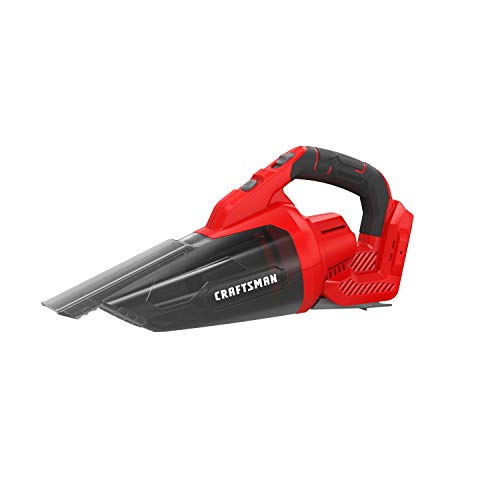
If you already own CRAFTSMAN V20 tools: The CRAFTSMAN V20 Cordless Hand Vacuum ($49.98) — This shares batteries with more than 60 tools on the V20 platform, so if your garage is already CRAFTSMAN, you're buying a vacuum head and nothing else. The 45 CFM rating is honest airflow rather than a pressure claim, and it moves the coarse stuff — sawdust, gravel, dried mud, jobsite grit — that lighter handhelds skate over. Two-stage filtration keeps suction steady as the large bowl fills. The catches: it ships bare, so factor in a battery and charger if you don't have them, and it's bulkier and heavier than the car-specific handhelds here. It's also not tuned for fine dust or pet hair. But for a work truck that sees actual dirt, it's the right shape of tool.
If you have one moderate shedder and want a motorized brush: The Bissell Pet Hair Eraser Cordless Hand Vacuum ($84.57) — The Pet Hair Eraser attacks fabric differently than the Shark does. Instead of leaning on cyclonic airflow, it leads with a motorized brush that physically works hair out of the weave, which gives it an edge on tightly woven seat fabric where suction alone can't grip individual hairs. You get an upholstery tool, brush tool, and crevice tool, plus triple-level filtration and an easy-empty bin. Bissell also routes part of every purchase to its pet rescue foundation. What you give up is headroom: the 14V pack is less powerful than the Dyson, and the smaller bin means more trips to the trash on a heavy double-coat mess. For one medium-shedding dog, that's a fine trade.
The competition
This is what our research surfaced in a category with hundreds of listings, not a map of everything you can buy. The vacuums below are real products that lost to a pick for specific reasons, and one or two of them might still be the right call depending on what your car and your mess look like.
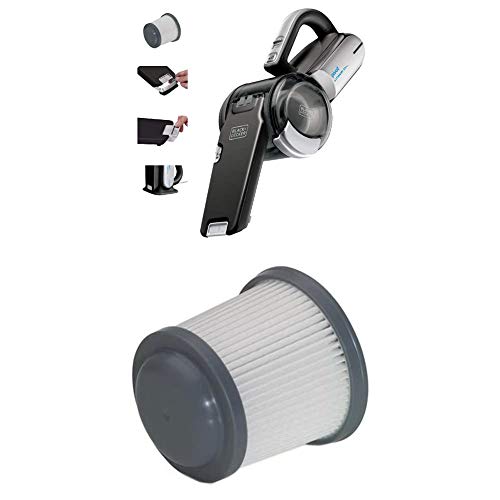
The BLACK+DECKER BDH2000PL MAX Lithium Pivot Vacuum ($82.99) — The BLACK+DECKER BDH2000PL MAX has one trick nobody else here matches: the nozzle pivots independently of the body, so you can keep a natural grip while the head angles into the channel under a front seat. If your car has awkward geometry — deep seat track gaps, a tight third row — that's a real advantage over jabbing a straight crevice tool in at a bad angle. The 20V lithium pack delivers fade-free power, the pleated filter is a step up from foam, and a PVF110 replacement filter comes in the box. It lost on breadth. There's no motorized brush, so pet hair on upholstery isn't its strength, and BLACK+DECKER doesn't publish a runtime figure. Buy it for the reach, not for the raw cleaning.
Care and maintenance
Filter care is what keeps a car vacuum working, and it's the step most people skip. After a session, tap the loose debris out of the filter over a trash can. Every few uses, rinse a washable filter — foam or HEPA — under cool water until it runs clear, then let it dry completely before reassembling. Twenty-four hours is a safe window. Never put a damp filter back in; moisture in the motor housing kills these things permanently. If you're using a motorized brush, check the roll monthly and cut away wrapped hair with scissors, since a bound brush stops agitating and just drags. Empty the bin after each use rather than letting it pack down. When rinsing no longer restores suction, replace the filter — that's usually about once a year with regular use.
Questions we get
Corded 12V, cordless, or plug-in — which type should I get?
It depends on when you clean. A 12V corded model gives you unlimited runtime and never needs charging, which suits thorough sessions and impulse cleanups. Cordless handhelds deploy faster and go anywhere, but you're working within roughly 20 to 50 minutes depending on the model. A 120V plug-in like the Armor All has the most power and the least flexibility, since it needs a wall outlet.
How much suction do I actually need?
For dust and everyday crumbs on hard surfaces, modest suction is plenty. Embedded pet hair and heavy debris like sand or dried mud need real airflow, and more importantly they need agitation from a motorized brush. Ignore Pascal ratings where you can — they measure pressure at a blocked inlet, which isn't how vacuuming works. Air watts and CFM are the more honest numbers, which is why the Dyson's 115AW and the CRAFTSMAN's 45 CFM figures are worth more than a five-digit PA claim.
Can I just use my household vacuum on the car?
You can, with real limits. A canister vacuum with a long hose and a crevice tool does a fine job on floor carpet for a quarterly deep clean. Uprights fight the confined geometry of seat wells and footwells, and the cord rarely reaches deep into a car from a wall outlet. A handheld is far more practical for the angles that define a car interior.
Are HEPA filters worth it in a car vacuum?
Yes, if anyone who rides with you has allergies or asthma. Standard foam filters catch the big stuff but let fine dust, pollen, and dander pass straight through the exhaust and back into a sealed cabin. HEPA media captures 99.97% of particles down to 0.3 microns. The THISWORX includes a washable HEPA filter, and the Dyson uses whole-machine filtration rated at 99.99% at the same particle size.
How long do cordless car vacuum batteries really last per charge?
Entry-level handhelds typically manage 15 to 20 minutes, mid-range models claim around 35, and the Dyson claims up to 50 in standard mode. Real-world runtime generally lands 20 to 30 percent below the claim, and cold weather makes that worse. Budget about 20 minutes of active vacuuming for a mid-size sedan; a three-row SUV may need a recharge partway through.
Which attachments actually matter?
Three cover almost everything. A crevice tool is non-negotiable for seat tracks, cushion gaps, and door pockets. A brush tool handles dashboards, vents, and fabric surfaces without scratching. The third is a motorized brush roll for embedded pet hair — that's the attachment that separates the higher-end models here, like the Dyson's Mini Motorized Tool, the Shark's Pet Power Brush, and the Bissell's motorized brush tool.
Why you should trust us
For this guide:
- We compared published specifications across every model here, prioritizing air watts and CFM figures over Pascal claims because sealed-inlet pressure ratings aren't comparable across brands.
- We read published reviews and owner feedback for each vacuum, paying particular attention to recurring complaints about suction fade, battery life falling short of claims, and brush rolls binding with hair.
- We weighed manufacturer runtime and filtration claims against what owners report over months of use, and flagged specs that brands decline to publish.
- We read owner reviews on every listing, weighted toward the critical ones, because that is where the recurring failures show up.
- We have a systematic way of automatically fetching the latest prices, so the numbers on this page stay current.
- This is a research-focused guide, so the team may not own every product listed — though we often do own the top winners, which gives us extra context for the recommendations.
- We don't accept free products, and the retailer commission never changes which product we recommend.
Sources
Best Car Vacuums — Wirecutter, Wirecutter
Best Car Vacuums of 2026 — Car and Driver, Car and Driver
Best Car Vacuum Cleaners — Popular Mechanics, Popular Mechanics
Best Car Vacuums Tested by Editors — Good Housekeeping, Good Housekeeping
Best Portable Car Vacuums — Forbes Vetted, Forbes
Amazon product listings and owner reviews for all 9 products
Manufacturer specification pages for each product
Some passages in this guide may be paraphrased with AI help. Prices are refreshed automatically.
More like this.
Continue exploring electronics reviews and recommendations.

The Best Car Vacuum Cleaners
A car vacuum spends most of its life doing small, unglamorous jobs. Crushed crackers under the booster seat. Sand in the seat rails after a beach trip.…

The Best Handheld Vacuums for Car and Pet Hair
Pet hair in a car doesn't behave like pet hair on a floor. It works down into the seams of a bench seat, wraps around the fibers of a rubber-backed mat,…

The Best Handheld Vacuums for Car and Pet Hair
Pet hair doesn't sit on car upholstery. It works its way into the weave, and a plain suction nozzle glides right over the top of it. That's the whole…

The Best Portable Car Heaters
A cold car is a visibility problem before it's a comfort problem. You get in, breathe twice, and the windshield fogs over. The factory defroster works,…

The Best Portable Car Refrigerators
A 12V compressor fridge changes how you travel. There's no ice to buy, no meltwater sloshing around your sandwiches, no soggy cardboard at the bottom of…

The Best Robot Vacuums
A robot vacuum earns its keep on the days you'd never vacuum anyway. Tuesday morning, nobody home, crumbs under the kitchen table and a drift of dog hair…