The Best IPL Hair Removal Devices
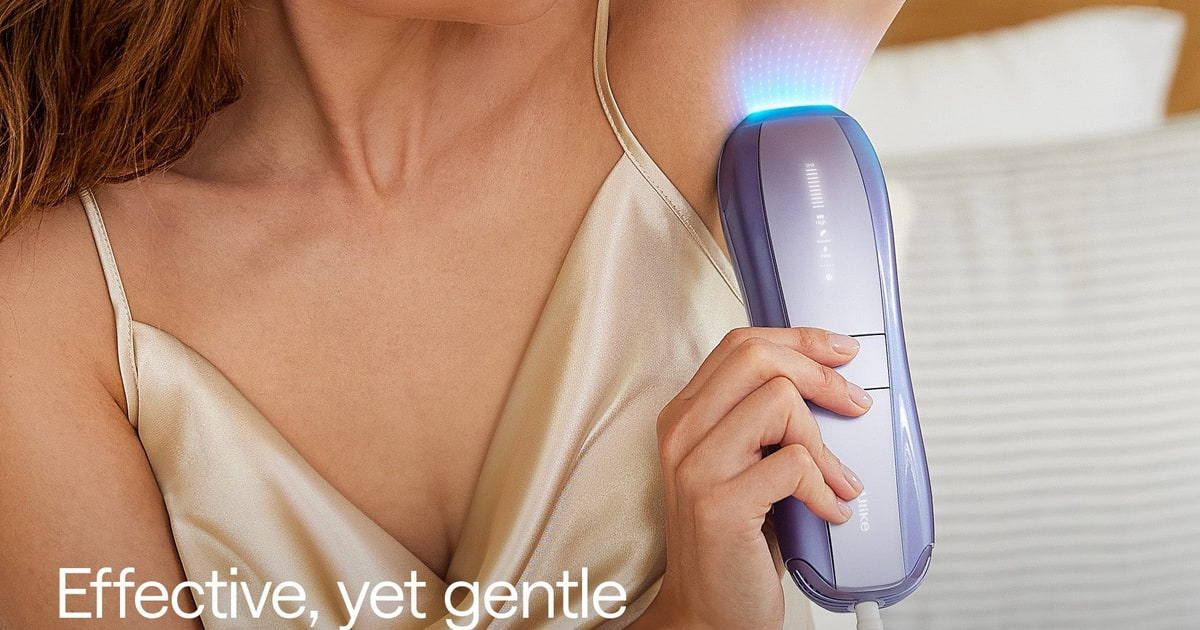
Home IPL is a slow-burn purchase. You shave, you flash, you wait, and a few weeks later you notice you're shaving less. That's the whole experience. What separates a device you'll actually keep using from one that ends up in a drawer is friction: how long a full-leg pass takes, whether it stings enough that you skip a week, and whether you have to think about settings every time. The hardware differences here are real, but they mostly show up as whether you stick with the routine.
But you should know what IPL can't do before you spend anything. It works by heating the pigment in your hair, so it only does something on dark hair against light-to-medium skin, roughly Fitzpatrick types I through IV. Blonde, red, gray and white hair won't respond, no matter how much you spend. And IPL means permanent hair reduction, not removal — most people keep 80 to 95 percent of the results with occasional touch-ups, and some regrowth is normal. Nothing on this list changes that.
Cooling is the other honest caveat. Even the coldest handset here is more comfortable than waxing, not painless, and the bikini line is where everyone notices it. We looked at flash energy, cooling, skin-tone sensing and how much upkeep each device demands over years of use. We think that the Braun IPL Silk·Expert Pro 5 is the best IPL hair removal device for most people, and that the Ulike Air 10 is the one to buy if the pain is what's kept you away from IPL.
Everything we recommend

The least fussy device here, if you don't mind a cord

Stays cold enough that the bikini line stops being the hard part

More energy and colder cooling, from a less proven brand

The simplest way to find out if IPL works for you
At a glance
| Product | Results Timeframe | Session Time | Price | |
|---|---|---|---|---|
| Braun IPLTop pick | 2nd Use | 10 Min Full-Body | $279.99On sale |
 | Philips Lumea 9000 Series IPL Hair RemovalAlso consider | 2 Sessions | — | $398.94On sale |
| Ulike Laser Hair Removal Device Air 10Also great | 2 Weeks | 10 Min | $279On sale |
| JOVS Laser Hair RemovalUpgrade pick | 3 Weeks | 10 Min | $249.99 |
 | 5minskin Hair Laser Removal Handset 2.0 IPLAlso consider | — | — | $189.99 |
| NEW Nood™ Flasher 2.0 + SerumBudget pick | — | — | $169 |
 | Silk'n Infinity Fast Compact IPL Laser HairAlso in lineup | — | — | $419 |
How we picked
Flash energy. We compared stated joule output across every listing, since higher fluence is the variable most directly tied to follicle disruption. Devices at 12J went below those clearing 24J, unless something else compensated.
Cooling. We looked for a stated contact temperature held through a full session rather than a brief chill at the start. Owner feedback consistently points to the bikini line as the zone where cooling decides whether people keep going.
Skin-tone safety. We prioritized devices with automatic tone sensing that cuts power or refuses to fire, because at-home users treat themselves without supervision. FDA 510(k) clearance was a floor, not a bonus.
Long-term cost. We checked flash lifespan and whether a device needs replacement cartridges, which can add a few hundred dollars a year on limited-flash models. Unlimited-flash devices got credit for it.
Session friction. We weighed treatment time, cord versus battery, attachment count and head ergonomics, based on manufacturer specs and recurring owner themes. Anything that makes a session take twice as long is a device people abandon.
Top pickOn sale
The least fussy device here, if you don't mind a cord
Braun IPL
The Silk·Expert Pro 5 reads your skin tone continuously and sets its own intensity, so there's nothing to misconfigure. It's the device we'd hand to someone who has never done this before and doesn't want to study a chart first.
$279.99fromAmazonList priceYou don't have to make any decisions. The SensoAdapt sensor reads your skin tone 80 times a second and adjusts each flash on its own. That sounds like marketing, and partly it is. But the practical effect is that you glide it along your shin without stopping to check a printed tone chart or second-guess whether level four is too high. For a first-timer, that removes the exact step where people get it wrong.
Braun's own numbers are the strongest in the category. The company documents up to 95 percent hair reduction in one month and up to two years free from regrowth after a full course. The protocol is modest: two sessions a month for three months. Braun also says you'll see something by the second use. Take any manufacturer figure with a grain of salt, but Braun publishes more of this data than most brands here do.
A full-body pass takes about ten minutes. That's the number that decides whether you keep going. Ten minutes fits into a weeknight; forty doesn't. The two heads — a wide body head and a precision head — cover legs, arms, underarms, bikini, face, chest and back without swapping in a pile of attachments. Braun lists the device as dermatologically and gynecologically approved, and the UV filter means no goggles.
It's a Procter & Gamble product with the support that implies. That matters more than it sounds for a device you'll own for years. Owners of lesser-known IPL brands routinely run into dead-end support when a handset stops flashing. Braun also throws in a Venus razor and a vanity case, which is a small thing, but shaving 24 hours before each session is mandatory and having the razor in the same box helps.
Flaws but not dealbreakers
There's no cooling, and you'll feel it on the bikini line. The Braun relies on lower intensity rather than a chilled contact plate. On legs and arms that's fine — most people describe it as a warm snap. Around the bikini and underarms, owners commonly report backing the intensity down and working in short bursts. If you already know you're sensitive, the Ulike or the JOVS will make this easier.
The cord is a real limitation, not a nitpick. You're tethered to an outlet for the whole session, which means you're treating wherever the plug is rather than wherever you're comfortable. Reaching the back of your calves or your lower back while managing a cord is genuinely awkward. The Philips Lumea 9000 solves this and nothing else does.
It's one of the pricier options here and it doesn't do everything. No cooling, no cordless mode, no dedicated bikini attachment. You're paying for the sensor and the clinical data, not for a longer feature list. If neither of those is what you care about, you can spend less elsewhere.
Braun does not state a warranty term in its listing information.
Also greatOn sale
Stays cold enough that the bikini line stops being the hard part
Ulike Laser Hair Removal Device Air 10
The Air 10 holds its contact surface below 65°F even after half an hour of continuous use, which changes how the bikini line feels. If discomfort is the reason you've never tried IPL, start here instead of with the Braun.
$279fromAmazonList priceThe cooling is the whole point, and it holds up over a long session. Sapphire ice-cooling keeps the contact plate below 65°F through a full 30 minutes. That's not a burst of cold that fades after the first minute — it's the temperature you get on your last pass too. Neither the Braun nor the Philips has any active cooling at all, and that gap is the clearest functional difference on this list.
Two lamps instead of one means fewer passes. The dual-light head covers about 18 percent more area per flash and fires double flashes, so a full-body session lands around ten minutes. Fewer passes over the same skin also means less cumulative heat, which compounds with the cooling. If you're treating both legs plus underarms in one sitting, you'll notice it.
Ulike's protocol asks for more upfront and gives results sooner. The company documents 96.52 percent reduction in the bikini area using it every two days for the first two weeks. That's a demanding start compared with Braun's twice-a-month schedule. But if you want to see something in a fortnight rather than a month, the trade is worth considering — and the cooling is what makes a session every other day tolerable.
SkinSensor stops the device rather than warning you. It reads your skin tone, adjusts power automatically, and refuses to flash if the area is too dark to treat safely. That's a meaningful guardrail on a device you'll use on your own bikini line without supervision. The SHR mode, at 26J across a four-pulse burst, is aimed at coarse hair on chests and legs.
Flaws but not dealbreakers
The cooling and dual-light hardware make it a chunky handset. At just under a pound in a 8.2-inch body, it's not heavy, but the head is bulkier than a slim device like the Silk'n. On the underside of your arm or the back of your thigh, that bulk makes it harder to keep full skin contact — and a flash without full contact is a wasted flash.
There's no corded fallback if the battery dies mid-session. You stop and charge. On a two-days-on schedule for the first fortnight, that's an interruption you'll hit at least once. The Braun never has this problem.
It costs meaningfully more than the entry-level options. If standard IPL doesn't bother you — and for a lot of people treating legs and arms only, it genuinely doesn't — you're paying for a comfort feature you don't need. The Nood gets you into the category for far less.
Upgrade pick
More energy and colder cooling, from a less proven brand
JOVS Laser Hair Removal
JOVS pairs 24J output with a 37°F sapphire cooling plate, so it hits harder and feels colder than almost anything else here. The catch is a shorter track record and a bulky handset.
$249.99fromAmazon24J is double what most budget devices put out. Higher fluence means more energy reaching the follicle per flash, and that's the variable that most directly drives results. JOVS reports a 90 percent-plus reduction rate after two months. Common budget handsets sit at 12J. If you have coarse, stubborn hair on a chest or back that hasn't responded well to gentler devices, this is the one built for it.
37°F cooling is colder than anything else on this list. The sapphire plate chills the light exit window instantly, which is what makes 24J tolerable in the first place. High energy and no cooling is a bad combination; high energy with a plate near freezing is the reason this device works on the bikini line and upper lip without making you dread it.
Six modes and six intensity levels let you actually tune it. There are dedicated energy levels for arms, legs, armpits, face, bikini and skin rejuvenation. That's more control than the auto-sensing devices give you, which cuts both ways — but if you know your skin and want the face set gentler than your shins, you can do that here. The 2-in-1 skin rejuvenation mode is a genuine extra, not a rebadged low setting.
The 330-degree rotating head fixes a problem nobody else addresses. Treating the back of your underarm or reaching your own lower back means contorting your wrist. A head that pivots almost all the way around lets the device follow the curve instead of forcing your arm to. Over a ten-minute full-body pass, that's the difference between finishing and quitting halfway.
Flaws but not dealbreakers
JOVS has less independent validation than Braun or Philips. The energy and cooling numbers come from the manufacturer, and there's no long editorial record behind them the way there is with the established brands. The specs are strong on paper. You're trusting a newer name that they hold up over three years of use.
It's the heaviest handset here at over two pounds. The integrated cooling hardware has to go somewhere. For a ten-minute session that's manageable, but your wrist will notice on longer full-body passes, and it's noticeably more device than the Ulike.
It needs goggles, unlike the sensor-driven devices. JOVS instructs you to wear protective eyewear during treatment. Braun and Philips both filter UV and detect skin contact well enough to skip goggles entirely. One more step before every session is one more reason to skip a week.
Budget pick
The simplest way to find out if IPL works for you
NEW Nood™ Flasher 2.0 + Serum
The Flasher 2.0 is FDA-cleared, has no cartridges to replace, and comes with a serum that targets the ingrown hairs you get transitioning off shaving. It skips cooling and auto-sensing, but it's the lowest-risk way into the category.
$169fromAmazonFDA clearance is not a given in this category. Roughly 40 percent of IPL devices on major marketplaces have no verified clearance, which means their energy output and safety claims haven't been checked by anyone. The Nood has it. For the least expensive device on this list, that's the single most important thing about it — you're not trading safety for a lower price.
There's nothing to buy again, ever. No cartridges, no subscription, no refills. A lot of cheap IPL devices make their money on the back end through replacement lamps that run a few hundred dollars a year. If you're testing whether IPL is worth your time, a device with no ongoing commitment is the right shape of bet.
The serum bundle solves a problem you'll actually have. Switching from waxing to IPL means shaving 24 hours before every session, and that produces ingrown hairs and razor bumps for a lot of people. Nood includes an after-shave serum built for exactly that. It's a small thing, but it addresses the most common complaint from people in their first two months of IPL.
It covers everywhere you'd want to treat. Legs, arms, bikini line, underarms and more sensitive spots are all listed as safe areas. There's no artificial restriction to large body zones the way some entry-level devices have. Operation is straightforward enough that there's very little to learn before your first session.
Flaws but not dealbreakers
No cooling and no automatic skin-tone sensing. You set the intensity yourself against the chart and live with the heat. On legs that's fine. On the bikini line, expect the standard IPL snap with nothing taking the edge off, and be conservative with your setting until you know how your skin reacts.
It's the least adjustable device here. No mode selection, no per-zone energy levels, no rotating head. Simplicity is the point, but if you have coarse hair that needs more energy, or fine hair on a face that needs less, you don't have the controls to dial it in.
Nood doesn't publish a flash count. Devices like the Silk'n and the 5minskin state unlimited or near-unlimited flashes, so you know what you're getting over five years. Here you don't. For a device you hope to keep using for maintenance sessions indefinitely, that's a real unknown.
Who this is for
Buy an IPL device if you have dark hair on light-to-medium skin — Fitzpatrick types I through IV — and you're tired of shaving every two or three days. The math works out in your favor: a home device is a one-time purchase against a professional laser course billed per session, and most people break even inside a year. You'll need to commit to a schedule, though. Every device here asks for consistent sessions over three to four months before you see the full effect, and skipping weeks is the most common reason people conclude IPL doesn't work.
Don't buy one if your hair is blonde, red, gray or white. There isn't enough melanin for the light to grab, and no amount of energy fixes that — Nd:YAG laser at a clinic is the only validated route. If you're Fitzpatrick type V or VI, talk to a board-certified dermatologist first, because standard IPL on darker skin carries a documented risk of burns and hyperpigmentation. This guide covers at-home IPL handsets only. It doesn't cover professional laser, epilators, or the tone-limited devices that can't safely serve most of the people reading this.
How we picked
We built this guide from manufacturer spec sheets, published reviews and recurring themes in owner feedback, and we weighed five things. Flash energy: stated joule output, since fluence is what disrupts the follicle — 24J devices cleared the bar that 12J devices didn't. Cooling: a contact temperature held through a full session, not a brief chill, because the bikini line is where people quit. Skin-tone safety: automatic sensing that cuts power or refuses to fire, with FDA 510(k) clearance as a floor rather than a selling point. Long-term cost: flash lifespan and whether you'll be buying cartridges for years. Session friction: treatment time, cord versus battery, and head ergonomics, because a device that takes forty minutes is a device you stop using.
Other ipl hair removal devices worth considering
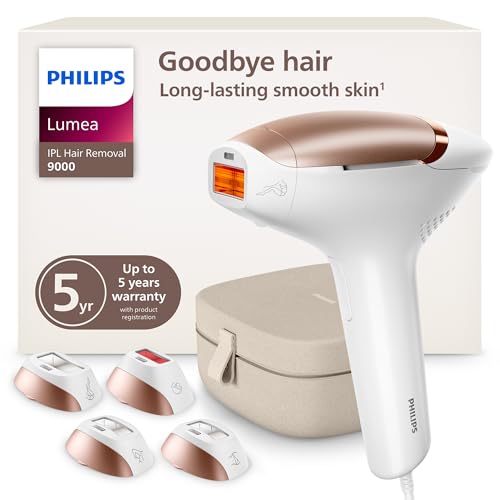
If you want to treat anywhere in the house without a cord: The Philips Lumea 9000 Series IPL Hair Removal ($398.94) — The Philips Lumea 9000 Series BRI984/03 is the only fully cordless device here, and that's the reason to choose it over the Braun. Four curved attachments — body, face, bikini and underarms — fit each zone properly, and the bikini head's shape makes it easier to keep full contact where misflashes are most likely. SenseIQ uses three sensors to read your tone and detect skin contact, so no goggles. Philips documents visible results in two sessions and more than 90 percent reduction in three treatments, and it's the largest IPL brand globally. What you give up: it's the most expensive device on this list, and there's no cooling, so the bikini line will feel the same as it does on the Braun. If a power cord isn't a real inconvenience for you, the Braun gets you comparable results for less.
If your main target is facial hair: The 5minskin Hair Laser Removal Handset 2.0 IPL ($189.99) — The 5minskin Handset 2.0 has a narrower precision window than the wide-head body devices, which makes upper lip, chin and cheek work more accurate. Its smart sensor fires only on confirmed full skin contact — a genuine safety feature near the eye area, not a marketing line. At 999,999 flashes it will outlast any realistic treatment schedule, so there's no cartridge math to do. The trade-offs are narrower compatibility (light-to-medium skin, dark hair only, and 5minskin is explicit that tanned skin is out) and no cooling at all. It also asks for two to three sessions a week, which is more upkeep than the Braun's twice-monthly protocol. As a face-focused second device or a first device for someone whose priority is the upper lip, it makes sense.
The competition
This is what our research surfaced in the at-home IPL category, not a survey of everything on the market. The device below didn't win an award, but it isn't a bad product — it just loses to a pick for most people. If its particular strength is the thing you care about, it's worth a look.
The Silk'n Infinity Fast Compact IPL Laser Hair ($419) — The Silk'n Infinity Fast Compact is the only dual-energy device here, pairing conventional IPL with eHPL galvanic energy. The idea is to reach coarser terminal hair that light alone under-treats, and Silk'n says the tone sensor covers a wider range than standard IPL. It's also genuinely compact — under five inches tall — with unlimited flashes and a travel case, so there's no cartridge cost and it packs well. It lost to the Braun on evidence: the eHPL claims have much less independent validation behind them than Braun's or Philips's clinical data, and it costs about the same as the Braun. The small treatment window also slows you down on large areas like a back or a pair of legs. Choose it if you have coarse hair, you travel often, or a wider tone range is what's kept you out of the category — but confirm your own skin tone against Silk'n's chart before ordering.
Getting good results
Shave 24 hours before every session, and only shave. IPL targets pigment in the follicle below the surface, so surface hair just absorbs the energy and wastes the flash. Never wax, epilate or thread beforehand — those pull the root out, which removes the target entirely. Skip sessions on tanned or recently sun-exposed skin: the extra melanin in your skin soaks up energy meant for the follicle, and burns and hyperpigmentation are the documented result. Wait two weeks after real sun exposure, and use SPF 30 or higher on treated areas for two weeks afterward. Start at the lowest effective setting for your tone, especially on the bikini line, and never flash over broken skin or mucous membranes. Consistency beats intensity — the people who get results are the ones who don't skip weeks.
Questions we get
Does at-home IPL actually work?
For the right candidate, yes. Published reviews and manufacturer clinical data both point to 80 to 95 percent hair reduction after a complete course, provided you have dark hair on Fitzpatrick skin types I through IV. It does nothing on blonde, red, gray or white hair. The two things that separate satisfied owners from disappointed ones are sticking to the session schedule and shaving properly beforehand.
How many sessions before I see results?
Most people notice a visible difference after four to six sessions spaced about two weeks apart. Full results generally take three to four months of consistent use. Braun reports 95 percent reduction in one month on its twice-monthly protocol, and Philips documents more than 90 percent within three treatments — both under their own conditions. After the initial course, monthly or quarterly touch-ups hold the results.
Is it permanent?
It's permanent hair reduction, not permanent removal, and the FDA draws that line deliberately. You get a stable long-term drop in how many hairs grow back, typically 80 to 95 percent. Without periodic maintenance, expect some regrowth over six to 24 months as follicles cycle. Every device here is built for ongoing maintenance use, so this isn't a flaw so much as how the technology works.
How much does it hurt compared with waxing?
Less than waxing, more than threading. Most people describe a warm snapping sensation that varies a lot by body zone — legs and arms are generally easy at medium intensity, and the bikini line is where nearly everyone flinches. Devices with active cooling, like the Ulike Air 10 and the JOVS, take a lot of the edge off in sensitive areas. If pain is your main worry, that's the feature to pay for.
Can men use these on chest and back hair?
Yes, and coarse male terminal hair is actually a good target because its high melanin content is exactly what the light responds to. All the devices here are marketed for both women and men. Larger areas like a chest or back take longer, but the wide-window devices handle them well. The JOVS and the Silk'n both include modes calibrated for coarser hair.
Which device is right for darker skin tones?
Standard IPL is safest on Fitzpatrick types I through IV, and that limit applies to most of this list. The Silk'n Infinity Fast is the one built for a broader range, using eHPL dual-energy and an automatic tone sensor. If you're type V or VI, see a board-certified dermatologist before using any at-home device — burns and hyperpigmentation on darker skin are a documented risk, not a hypothetical one.
Why you should trust us
For this guide:
- We read manufacturer spec sheets and clinical claims for all seven devices, comparing stated flash energy, contact-cooling temperatures, flash lifespan and treatment times side by side.
- We reviewed published editorial coverage of the at-home IPL category and cross-checked brand efficacy claims against the safety limits of the technology.
- We looked at recurring themes in owner feedback, particularly around bikini-line discomfort, cord management and how often people abandon a device partway through the initial course.
- We read owner reviews on every listing, weighted toward the critical ones, because that is where the recurring failures show up.
- We have a systematic way of automatically fetching the latest prices, so the numbers on this page stay current.
- This is a research-focused guide, so the team may not own every product listed — though we often do own the top winners, which gives us extra context for the recommendations.
- We don't accept free products, and the retailer commission never changes which product we recommend.
Sources
Best At-Home Laser Hair Removal Devices, Tested — Good Housekeeping Institute, Good Housekeeping
The Best At-Home Laser Hair Removal Devices — Wirecutter (NYT), Wirecutter
Best At-Home IPL and Laser Hair Removal Devices — Byrdie, Byrdie
The Best At-Home Laser Hair Removal Devices, According to Editors and Dermatologists — Allure, Allure
At-Home Laser Hair Removal: Does It Really Work? — Healthline, Healthline
Amazon product listings and owner reviews for all 7 products
Manufacturer specification pages for each product
Some passages in this guide may be paraphrased with AI help. Prices are refreshed automatically.
More like this.
Continue exploring beauty reviews and recommendations.

The Best Roof Rakes for Snow Removal
A foot of wet snow on your roof isn't a cosmetic problem. Fresh powder weighs about 3 pounds per cubic foot, but dense, water-logged snow can hit 20…

The Best Stump Removal Gear
A stump doesn't just sit there looking bad. It sprouts suckers, it hides in the grass and eats mower blades, and the roots keep feeding fungus into your…

The Best Winter Car Accessories for Snow and Ice Removal
Winter mornings punish the unprepared. You walk out to a windshield glazed in a quarter inch of ice, and whatever you grab from the trunk decides whether…

The Best LED Face Masks and Red Light Therapy Devices
Red light therapy asks very little of you and gives back slowly. You put on a mask, sit still for a few minutes, and repeat that several times a week for…

The Best At-Home Skincare Devices
A good at-home skincare device does one thing for your evening: it makes five minutes at the bathroom mirror feel worth it. Microcurrent wands nudge…

The Best Microcurrent Facial Devices
Microcurrent devices send a low-level electrical current through your skin to stimulate the facial muscles underneath. In practice that means five minutes…