The Best Bassinets for Newborns
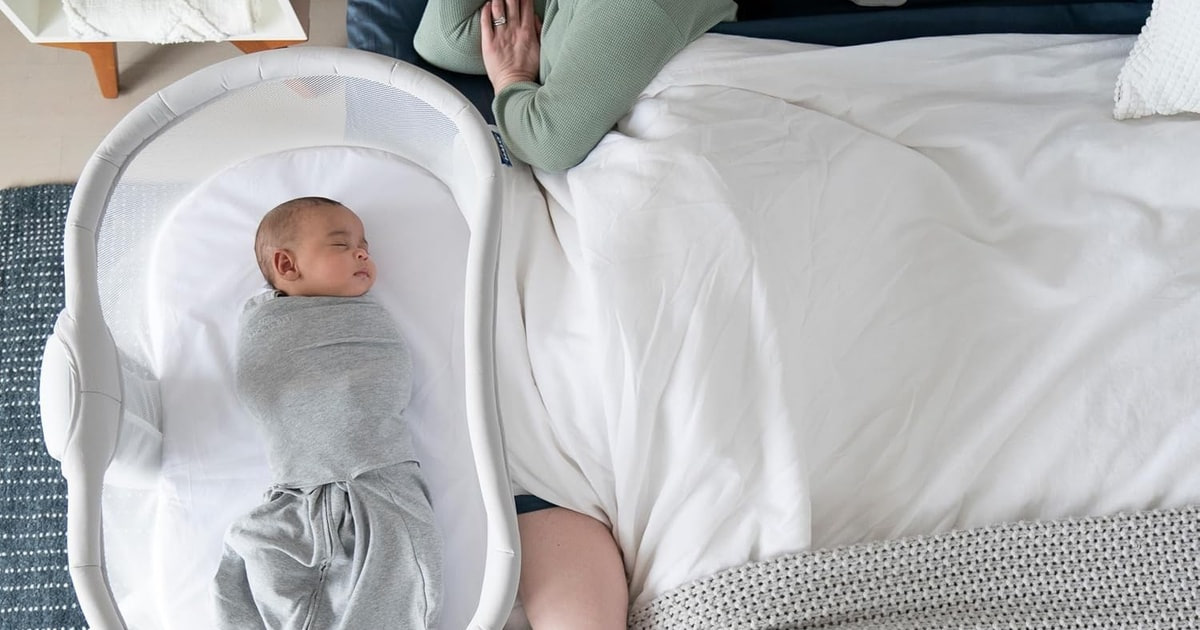
Newborns sleep in short bursts, and for the first few months you're the one getting up. A bassinet keeps your baby within arm's reach, which is the whole point of it. The American Academy of Pediatrics recommends room-sharing without bed-sharing for at least six months, and notes the practice can lower SIDS risk by as much as half. A bassinet is how most families pull that off. It takes a corner of the bedroom instead of a whole nursery, and you can roll it wherever you need it.
Here's the honest part. No bassinet makes a baby sleep. Most get outgrown fast, since manufacturer limits usually end the run somewhere around fifteen to twenty pounds, or the day your baby pushes up on hands and knees. That's often four to six months. So you're buying furniture with a short shelf life, and you should plan the budget around that. Soothing features settle some babies and do nothing for others. No amount of vibration fixes a growth spurt at three in the morning.
What separates a good bassinet from a mediocre one is mundane stuff. A firm flat mattress that fits tight. Mesh you can see and breathe through. A height that lines up with your bed. Fabric you can strip off and throw in the wash. We read the safety standards, compared what each listing claims, and looked at the themes that keep coming up in owner feedback. We think that the HALO BassiNest Soothing Swivel Sleeper 3.0S is the best bassinet for newborns for most people, and that the Chicco LullaGo Anywhere is the one to buy if you're short on space or travel often.
Everything we recommend

Swivels over your bed so you barely have to get up

Fewer soothing features, but it packs into a bag

Plainer materials, but the safety basics are all there
Mesh on every side and rocking that runs on nothing
Prices as of Oct 25, 6:48 AM PT · Details
At a glance
| Product | Max baby weight | Mesh sides | Price | |
|---|---|---|---|---|
| HALO BassiNest Soothing Swivel Sleeper 3.0STop pick | — | Mesh walls | $299.95 |
| BabyBjörn Cradle - WhiteAlso great | 8–17 lb | — | $282.99 |
 | Fisher-Price Baby Bedside Sleeper Soothing Motions BassinetAlso in lineup | Up to 20 lb | — | $179.99 |
| Chicco LullaGo Anywhere Portable BassinetRunner-up | — | Mesh side panels | $109.99 |
| Delta Children Portable Baby BassinetBudget pick | Up to 30 lb | Mesh lining | $79 |
Prices as of Oct 25, 6:48 AM PT · Details
How we picked
Certification first. Every bassinet sold here has to meet the CPSC's mandatory standard, 16 CFR Part 1218, which sets firmness, stability, and hardware requirements. We gave extra weight to listings that state JPMA certification, since that means third-party testing against the ASTM F2194 bassinet standard.
Mattress and fit. The federal standard allows no more than an inch of padding, and the mattress has to sit flat with no gaps at the sides. We looked for listings that describe a firm, flat, tight-fitting sleep surface and ship the sheet sized for it.
Airflow and sightlines. Mesh sides let air move and let you see your baby without getting up. Wirecutter's reviewers flag solid-walled bassinets as harder to monitor overnight, so we favored models with mesh on as many sides as possible.
Bedside access. Room-sharing only helps if you can reach your baby easily. We looked at swivel range, lowering walls, and stated height compatibility, since a base that won't clear your bed frame makes the whole feature useless.
Cleanup and lifespan. Removable, machine-washable fabrics matter more than any soothing mode. We also compared stated weight limits and age guidance, because most of these are done somewhere around four to six months.
Top pick
Swivels over your bed so you barely have to get up
HALO BassiNest Soothing Swivel Sleeper 3.0S
This is the bassinet built around the three-in-the-morning feed. It swivels a full circle over your mattress, the side wall drops so you can lift your baby out without twisting a sore abdomen, and mesh walls let you check on them without sitting up.
$299.95fromAmazonPrices as of Oct 25, 6:48 AM PT · Details
The swivel is the feature you'll actually use. The arm rotates a full 360 degrees, so you can bring the sleeping surface over your bed and then push it back out of the way. If you've had a C-section, that matters more than any sound setting. You reach sideways instead of standing up, twisting, and leaning over a rail. Recovering parents bring this up constantly in owner feedback.
The wall lowers, too. Press it down with your forearm and it drops out of the way, which is the difference between a one-handed lift and a two-handed maneuver while you're half asleep. HALO says its BassiNest line is the bassinet most often provided in U.S. hospital maternity wards, largely because of this combination. If you used one in the hospital, this will feel familiar the first night home.
Height adjustment covers beds up to 30 inches tall, and the base needs at least 4.5 inches of clearance under your frame. Measure before you order. Platform beds with solid bases and storage drawers are the usual problem, and there's no workaround when the legs won't slide under. Mesh walls run all the way around, so airflow and sightlines are good from any angle in the room.
The soothing extras are a bonus, not the reason to buy. You get two vibration levels, four calming sounds, and a nightlight that shuts itself off. They're pleasant. Some babies settle to them, and plenty ignore them entirely. Treat them the way you'd treat a decent stereo in a car you bought for other reasons. Nice, but not what you're paying for.
Flaws but not dealbreakers
It's the bulkiest option here, around 23 pounds with a wide footprint, and it doesn't fold. This lives in one bedroom for a few months and then goes in a closet. Moving it between floors is a two-person job, or an awkward one-person job.
The bigger catch is bed compatibility. If your frame sits too low, too high, or has drawers underneath, the swivel base simply won't work, and that's the complaint owners raise most. Check the clearance under your bed before anything else. Assembly also gets mixed reactions, since the arm and base take some fiddling to get square.
Runner-up
Fewer soothing features, but it packs into a bag
Chicco LullaGo Anywhere Portable Bassinet
At 12 pounds it's the one bassinet here you can carry upstairs in one hand. The legs snap on in seconds, the fabrics zip off for the wash, and the whole thing folds flat into an included carry bag when the grandparents want a turn.
$109.99fromAmazonPrices as of Oct 25, 6:48 AM PT · Details
Picture a one-bedroom apartment where the bassinet has to sit beside the bed at night and stay out of the walkway by morning. That's this one. The footprint is small, the fold is flat, and the carry bag means it goes in a trunk without a fight. For travel, or for a second sleep space at a grandparent's house, nothing else here comes close.
The basics are done right. You get a firm, flat waterproof mattress with a fitted sheet, mesh side panels for airflow and visibility, and zip-off fabrics that go in the washing machine. That last one sounds boring until the first blowout. It's also GREENGUARD Gold certified for low chemical emissions, which is worth something if off-gassing is on your mind.
What you give up is motion. There's no vibration, no sound, no rocking, and no app. If your baby only settles to movement, you'll be supplying it with your own arms. For a lot of families that's fine. Some parents actively prefer a sleep space with nothing electronic in it, and this is the cleanest version of that idea in the lineup.
Setup is genuinely fast. Sturdy metal legs snap into the frame, no tools involved, and owners are unusually consistent about how quickly it goes together. A mesh storage pocket on the side holds a pacifier and a burp cloth. It's a simple product that does the few things it promises, which is why it keeps getting recommended for travel.
Flaws but not dealbreakers
It doesn't sit at bed height or drop a wall, so this isn't a bedside sleeper the way the HALO is. You'll be standing up and leaning over. Reaching in from a seated position on a tall mattress isn't comfortable, and that adds up over a few dozen night feeds.
The listing doesn't state a weight limit, so check the manual in the box before you plan around it. The lightweight frame also feels less planted than the heavier options, which is worth knowing if you have a curious toddler or a dog that leans on furniture.
Budget pick
Plainer materials, but the safety basics are all there
Delta Children Portable Baby Bassinet
This is the no-frills bedside bassinet: JPMA certified, mesh lined, with a vibration pod, lullabies, and a nightlight built in. Four lockable wheels and a large storage basket underneath make it easy to roll from bedroom to living room and park it.
$79fromAmazonPrices as of Oct 25, 6:48 AM PT · Details
A budget bassinet can be a fully certified one. This is JPMA certified to meet or exceed applicable CPSC and ASTM standards, the same framework the expensive models answer to. Product reviewers at What to Expect make exactly this point about inexpensive Delta bassinets: price isn't a reliable proxy for safety compliance. Buy down on fabric and features if you need to. Don't buy down on certification.
The wheels are the underrated part. All four lock, so you can push it out to the couch for a nap, park it, and roll it back at bedtime without carrying anything. The storage basket underneath holds a night's worth of diapers, wipes, and a spare sleeper. In a small home, that's one less pile on the floor.
It ships with a 1-inch waterproof mattress pad and a machine-washable fitted sheet, which is exactly the padding depth the federal standard allows and no more. Mesh lines the interior for airflow, and the canopy comes off if your bedroom gets bright early. Two plush stars hang overhead for the awake stretches, which you'll have more of than you expect.
Delta lists a 30-pound surface rating but also tells you to stop at five months, or the first time your baby pushes up on hands and knees, whichever comes first. Follow the second instruction. That's the same real-world window every bassinet here gives you, and it's a good argument for spending less on one.
Flaws but not dealbreakers
The materials feel like what they are. Fabric, hardware, and the soothing pod are noticeably plainer than the HALO's, and the vibration reads more as a buzz than a rock. It's also new enough on Amazon that there isn't much long-term owner feedback to lean on yet.
It doesn't swivel or lower a wall, so bedside access means reaching over a fixed rail. And on any bassinet in this price range, the electronics are the part most likely to give out before the frame does.
Also great
Mesh on every side and rocking that runs on nothing
BabyBjörn Cradle - White
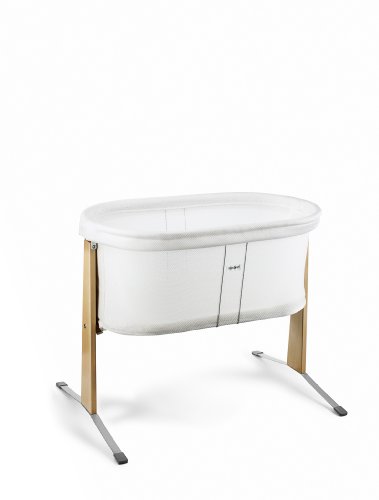
The Cradle is mesh all the way around, sits low, and rocks from your baby's own movements or a light push from you. There's no motor, no sound, and no app, just a JPMA-certified sleep surface you can see straight through from the doorway.
$282.99fromAmazonPrices as of Oct 25, 6:48 AM PT · Details
You'll be checking on your newborn constantly the first few weeks. Mesh on every side means you can do it from across the room instead of leaning over the edge and waking them. Wirecutter's reviewers make the same argument, flagging solid-walled bassinets as harder to monitor through overnight. BabyBjörn markets the all-mesh design for air circulation, and it's why pediatricians tend to like this one.
The rocking here is the honest kind. No motor, no batteries, nothing to charge. Your baby's own movements set it going, and a hand on the rail restarts it. That means nothing to break, but it also means you're the motor at three in the morning. If you want hands-off motion, look at the picks with a vibration setting instead.
BabyBjörn rates it from 8 pounds at birth to roughly 17 pounds around six months. The low height and open sides keep it visually light in a small bedroom, and there are no bars or loose parts for tiny hands and feet to catch on. The frame is wood and steel, and the fabrics and padding are polyester, so nothing about it is fussy.
It's easy to move room to room, which matters more than it sounds when naps happen in the living room and nights happen in your bedroom. But it isn't a bedside sleeper. The Cradle stands on its own legs, doesn't align with your mattress, and doesn't swivel toward you. You'll be getting out of bed.
Flaws but not dealbreakers
You're paying for design, materials, and airflow rather than features. There's no vibration, no sound, no nightlight, and no bedside alignment. If a built-in soother is on your list, this isn't the one, and you'll feel that on the nights nothing else works.
The weight range also ends on the early side, around 17 pounds, and a big newborn can get there quickly. The mattress and fabrics are thin by design, which is correct for safe sleep but makes the whole thing look sparse next to a padded bedside sleeper.
Who this is for
Buy a bassinet if you want your newborn sleeping in your room without sharing your bed. That's the AAP's recommendation for at least six months, and ideally twelve. A bassinet is the simplest way to do it in a bedroom with no space for a crib. It's also the right call if you're recovering from a C-section, since reaching sideways beats standing up and bending over a rail a dozen times a night.
Skip it if you already have room for a full-size crib beside your bed, or if you'd rather put the money toward one crib that lasts three years. This guide covers standalone and bedside bassinets for newborns through roughly six months. It doesn't cover cribs, mini cribs, playards with bassinet inserts, in-bed sleepers, or app-driven responsive bassinets, none of which are in this lineup.
How we picked
Certification: every pick has to be built to the federal bassinet standard, and JPMA certification counts for more than a marketing bullet. Mattress: firm, flat, and tight-fitting, with no more than an inch of padding, exactly as it ships. Airflow: mesh you can see and breathe through, on as many sides as the design allows. Access: a height and shape that works from your side of the bed, since that's where you'll be at three in the morning. Cleanup: removable, washable fabrics, because you'll need them sooner than you think. Lifespan: a clear weight limit and an honest sense of how few months you actually get.
The competition
This is what our research surfaced on Amazon, not everything on the market. A few well-known bassinets, including responsive smart models, weren't part of this lineup, so their absence here isn't a judgment on them.
The Fisher-Price Baby Bedside Sleeper Soothing Motions Bassinet — The Fisher-Price Baby Bedside Sleeper Soothing Motions Bassinet piles on the extras: a sway motion you or your baby can start, 30 minutes of vibration, music and sounds, a projection nightlight, and an overhead mobile. It's rated to 20 pounds and has a flat sleep surface, so the fundamentals are sound. It lost to our picks on two counts. The listing doesn't describe mesh sides, which costs you airflow and the ability to see in without leaning over, and it's the tallest and heaviest thing here at over 27 pounds. Consider it if you like the idea of a projector that keeps working as a tabletop soother long after the bassinet is packed away.
Safe sleep and setup
Skip the extras. Consumer Reports advises against adding aftermarket padding, positioners, or bumpers, since those are among the top contributing factors in infant sleep incidents reported to the CPSC. The mattress that came in the box is the one you use, and it should sit flat with no gap you can wedge more than a couple of fingers into. A fitted sheet made for that model is the only bedding it needs. Wash the sheet often, and run the zip-off fabrics through when you get the chance. Check the hardware every few weeks, because screws on a rocking or swiveling frame work loose over time. Then put the whole thing away the day your baby starts pushing up on hands and knees.
Questions we get
How long can a baby sleep in a bassinet before moving to a crib?
Most bassinets are rated to roughly 15 to 20 pounds, which usually lands somewhere around four to six months. The weight limit isn't the only trigger, though. Stop using it the first time your baby rolls, pushes up on hands and knees, or sits unassisted, whichever comes first. Delta, for example, tells you to stop at five months regardless of weight.
Do bassinets have to meet federal safety standards?
Yes. The CPSC's mandatory bassinet and cradle standard, 16 CFR Part 1218, applies to everything sold in the U.S. It covers a firm, flat, tight-fitting mattress with no more than an inch of padding, plus stability and hardware tests. JPMA certification goes a step further with third-party testing against the ASTM F2194 standard, which is why we weight it in a pick's favor.
What's the difference between a bassinet, a cradle, and a co-sleeper?
A bassinet is a small, freestanding sleep space on legs or a stand. A cradle is a bassinet that rocks, like the BabyBjörn. A co-sleeper or bedside sleeper is designed to sit at your mattress height so you can reach your baby without getting up, which is what the HALO's swivel arm and lowering wall are for. All three fall under the same federal safety standard.
Is it safe to add a mattress pad or blanket?
No. Consumer Reports is direct about this: aftermarket padding, positioners, and bumpers are among the top contributing factors in reported infant sleep incidents. Use the mattress that came with the bassinet and one fitted sheet sized for it. If you're worried about warmth, dress your baby in a sleep sack rather than adding anything to the sleep surface.
What's the best bassinet for a small apartment or a shared bedroom?
The Chicco LullaGo Anywhere, without much debate. It weighs 12 pounds, has a small footprint, and folds flat into a carry bag so it can disappear during the day. The BabyBjörn Cradle is the other good answer, since its low height and open mesh sides keep it from visually crowding a room. Skip the HALO if floor space is tight, because it's wide and doesn't fold.
How firm should a bassinet mattress be?
Firm enough that it doesn't conform to your baby at all. The federal standard caps padding at one inch and requires a flat surface, and BabyGearLab evaluates mattress firmness with a compression test for exactly this reason. Press down with your palm. If it leaves an impression that lingers, it's too soft, and you shouldn't be using it.
Why you should trust us
For this guide:
- We read the CPSC's mandatory bassinet standard and the JPMA and ASTM certification requirements, then checked each listing's stated certifications against them.
- We compared manufacturer specifications for mattress construction, mesh coverage, weight limits, and height compatibility across every product in this lineup.
- We reviewed published guidance from the American Academy of Pediatrics, Consumer Reports, Wirecutter, and BabyGearLab, along with recurring themes in owner feedback.
- We read owner reviews on every listing, weighted toward the critical ones, because that is where the recurring failures show up.
- We have a systematic way of automatically fetching the latest prices, so the numbers on this page stay current.
- This is a research-focused guide, so the team may not own every product listed — though we often do own the top winners, which gives us extra context for the recommendations.
- We don't accept free products, and the retailer commission never changes which product we recommend.
Sources
Safe Sleep for Babies - AAP Recommendations, American Academy of Pediatrics
AAP Policy Statement: Room-sharing without bed-sharing recommended for at least 6, ideally 12 months, American Academy of Pediatrics
Safety Standard for Bassinets and Cradles (16 CFR Part 1218), U.S. Consumer Product Safety Commission
CPSC Nursery Product-Related Deaths and Injuries Reports, U.S. Consumer Product Safety Commission
SNOO Smart Sleeper Product & Safety Information, Happiest Baby
Best Bassinets, Tested by Editors and Parents, Wirecutter (NYT)
Best Bassinets of 2026, Lab and Field Tested, BabyGearLab
Bassinet Buying Guide and Safety Checklist, Consumer Reports
Best Bassinets, According to Pediatricians and Parents, What to Expect
HALO BassiNest Product Specifications, HALO
BabyBjörn Cradle Ventilation and Design Details, BabyBjörn
JPMA Certification Program for Juvenile Products, Juvenile Products Manufacturers Association
Amazon product listings and owner reviews for all 5 products
Manufacturer specification pages for each product
Some passages in this guide may be paraphrased with AI help.
Product prices and availability are accurate as of the date/time indicated and are subject to change. Any price and availability information displayed on Amazon.com at the time of purchase will apply to the purchase of this product.
More like this.
Continue exploring home reviews and recommendations.

The Best Cordless Brad Nailers for Trim Carpentry
A brad nailer is the tool that turns a weekend of trim work from a chore into something close to fun. You hold the molding tight to the wall, press the…

The Best Concrete Crack Repair Kits for Driveways
A crack in your driveway isn't just ugly. It's an open door for water, and water is what turns a hairline into a trench. Rain seeps in, freezes, expands,…

The Best Hurricane Preparedness Kits
A hurricane doesn't take everything at once. The power goes first, then water pressure, then the roads. What's left is you, your house, and whatever you…

The Best White Noise Machines
A white noise machine earns its spot on your nightstand by doing one thing well: covering the sounds that wake you up. That's the garbage truck at 5 a.m.,…

The Best Door Threshold Seals and Weatherstripping of 2026
You can feel a bad door seal before you can see it. Stand near the front door on a cold morning and there's a cool ribbon of air across your ankles. In…

The Best Can Openers
A can opener is one of those tools you don't think about until it fails you. Then you're standing over a half-open can of tomatoes, working the wheel back…