The Best Cordless Brad Nailers for Trim Carpentry
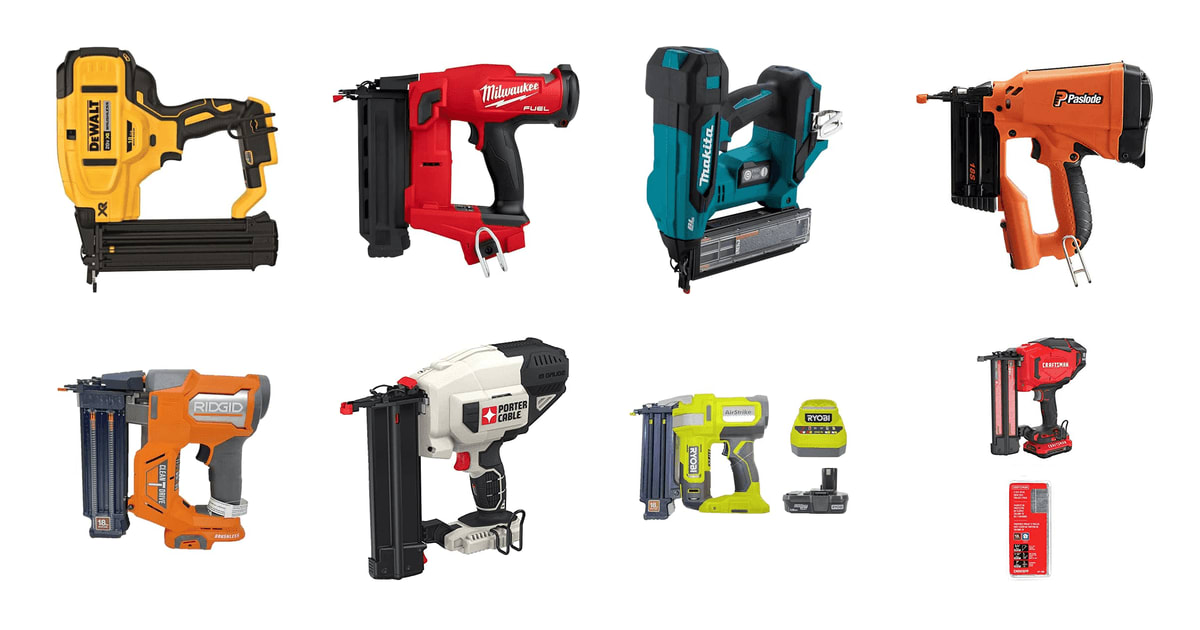
A brad nailer is the tool that turns a weekend of trim work from a chore into something close to fun. You hold the molding tight to the wall, press the nose, pull the trigger, and it's done. No compressor humming in the basement. No hose to drag around a corner or snag on a doorway. An 18-gauge brad leaves a hole about 1.2mm across, small enough to disappear under a dab of filler and a coat of paint, and that's why it's the standard for baseboard, door casing, and window trim.
Cordless isn't free, though. Every one of these tools is heavier than the pneumatic gun it replaces, usually somewhere between 4.5 and 7.5 pounds with a battery, and you feel that within an hour of holding one over your head for crown molding. Fine Homebuilding's editors put cordless brad nailers at about 95% of interior trim work, with pneumatic still winning on dense hardwood trim thicker than 3/4 inch. And nearly every model here has owners reporting the same quirk: the last handful of nails in a strip can misfeed.
The good news is that the gap has mostly closed, and what's left to decide is which battery you already own. If you have a drill from one of these brands sitting in the garage, that's a strong reason to stay in the family. We think that the DEWALT DCN680B is the best cordless brad nailer for most people, and that the Milwaukee M18 FUEL 2746-20 is the one to buy if you're already on M18 batteries or you're driving nails all day for a living.
Everything we recommend

Consistent depth, few jams, and batteries you can find anywhere

The one to buy if you're already on M18 or you nail all day

The lightest gun here, and it needs no battery platform at all

Fast, compact, and the runtime champion — if you own Makita LXT

Cheap entry to trim work if you already own Ryobi ONE+
At a glance
| Product | Voltage | Weight | Price | |
|---|---|---|---|---|
| DEWALT DCN680B 20V MAX* XR® 18 GATop pick | 20V MAX | 6.15 lbs | $301.99On sale |
| Milwaukee Electric - M18 Fuel 18 GaugeRunner-up | 18V (M18) | 6.53 lbs | $327.02 |
| Makita XNB04Z 18V LXT® Lithium‑Ion Brushless CordlessUpgrade pick | 18V LXT | 6.1 lbs | $331.27On sale |
| Paslode Cordless Brad Nailer 918100Also great | 7.4V Li-ion | 4.5 lbs | $229.99 |
 | RIDGID R09891B 18V Brushless Cordless 18-Gauge 2-1/8Also in lineup | 18V | 6.5 lbs | $188.99 |
| RYOBI 18V ONE+ AirStrike 18GA Brad NailerBudget pick | 18V ONE+ | 7.76 lbs | $194.99 |
 | CRAFTSMAN V20 Cordless Finish Nailer KitAlso consider | 20V MAX | — | $269.98 |
How we picked
Drive consistency. We looked for brushless or nitrogen-spring mechanisms, because published testing shows they hold drive depth within about ±0.3mm on MDF versus ±0.8mm for brushed designs. On painted trim, that variance is the difference between one pass of filler and three.
Weight with battery. We compared manufacturer weights across the field, since anything over roughly six pounds becomes a fatigue factor during overhead crown molding. The spread here runs from about 4.5 to 7.8 pounds.
Jam behavior. We weighted published jam-rate testing and recurring themes in owner feedback, including the end-of-strip misfeed that shows up on several models. Tool-free jam release was a requirement, not a bonus.
Finish-work features. We required tool-free depth adjustment and looked for dry-fire lockout and a no-mar tip, since those are what keep a nailer from denting the trim you just cut.
Battery platform. We favored tools on major platforms — DEWALT 20V MAX, Milwaukee M18, Makita LXT, Ryobi ONE+ — because reusing batteries you own is the single biggest cost and convenience factor in this category.
Top pickOn sale
Consistent depth, few jams, and batteries you can find anywhere
DEWALT DCN680B 20V MAX* XR® 18 GA
The DCN680B has a brushless motor, tool-free depth adjustment, and a micro nose that lets you see where the nail lands. It jams less than almost anything else in the category, and DEWALT's 20V MAX batteries are the easiest to borrow, replace, or add to.
$301.99fromAmazonList priceThe depth stays put, and that's the whole job. On painted trim, a nail that sits proud shows and a nail that blows through the face has to be filled twice. Pro Tool Reviews recorded a jam rate under one per 500 nails across pine, poplar, and MDF — among the lowest of any cordless 18-gauge gun. This Old House ranked it first overall, with depth holding steady across 200 straight shots into pine and MDF.
The micro nose matters more than it sounds. When you're setting a return on a door casing and you need the brad an eighth of an inch from an edge, you have to see the tip. DEWALT slimmed the nose down compared to its older DC608, and you can put nails where you mean to instead of where the tool lets you. The LED does double duty as a work light and a diagnostic readout.
Depth adjustment and jam release are both tool-free, which sounds like a small thing until you're on a ladder. You turn a dial to go from soft pine to a hardwood casing. If a brad does hang up, you flip the nose open, pull it, and get back to work without hunting for an Allen key in your pocket.
One caution worth knowing before you buy: this is the bare tool. If you don't already own DEWALT 20V MAX batteries, you'll need to add a pack and a charger, and that changes the math against a kit like the Craftsman or the Ryobi. If you do own them, you're done — grab any 20V pack off the shelf and go.
Flaws but not dealbreakers
Owners report a recurring annoyance with the last ten or so nails on a strip. The gun sometimes won't fire them, and if you load a fresh strip behind those stragglers, they can double-stack and jam. It's a design quirk rather than a defect, and the workaround is simply to reload before the strip runs low.
At about 6.15 pounds bare, it's not light. For baseboard you'll never notice. For a ceiling's worth of crown molding, your shoulder will start keeping score, and the Paslode or Makita will feel better by the end of the day.
DEWALT covers this nailer under its standard three-year limited warranty.
Runner-up
The one to buy if you're already on M18 or you nail all day
Milwaukee Electric - M18 Fuel 18 Gauge
Milwaukee's M18 FUEL nailer uses a nitrogen air spring and a POWERSTATE brushless motor to fire with no ramp-up delay. It sinks brads flush in hardwood and softwood alike, and it's the pick for trim carpenters running M18 batteries across a whole truck of tools.
$327.02fromAmazonZero ramp-up is the headline, and it's real. Some cordless nailers spin up a flywheel before each shot, so you learn to wait a beat. This one fires when you pull. If you're running a hundred feet of base and moving fast, that half-second per nail adds up over an afternoon, and owners who've used other brands consistently call out how much quicker it feels.
Runtime is the other reason pros pick it. Milwaukee markets 1,000 nails per charge on a 5.0Ah pack; ToolGuyd's extended testing got 1,100. Practically, a 100-nail magazine covers roughly 8 to 10 linear feet of baseboard, so a single battery gets you through most of a room's worth of trim without a swap. You get both sequential and contact actuation, so you can slow down for precision or bump-fire a long run.
The nitrogen spring drives nails to consistent depth in dense material, which is where cheaper guns start to struggle. Popular Mechanics found brushless models hold drive depth within about ±0.3mm on MDF, versus ±0.8mm for brushed designs — the difference between filler you skim once and filler you sand twice.
So why isn't this the top pick? Mostly ecosystem and heft. At about 6.5 pounds it's the heaviest of the premium guns here, roughly a pound more than the Makita, and it costs more than the DEWALT. If you're not already on M18, the DCN680B does the same job for less commitment.
Flaws but not dealbreakers
It's bulky. Several owners wish it were smaller, and in a tight corner or an inside cabinet, the body gets in the way before the nose does.
Buying this one, pay attention to the seller. Owner feedback includes fulfillment problems — wrong item shipped, slow resolution — which says nothing about the tool but a lot about where you order it from.
Also great
The lightest gun here, and it needs no battery platform at all
Paslode Cordless Brad Nailer 918100
Paslode's cordless brad nailer runs on fuel cells plus a small 7.4-volt lithium battery, so it doesn't tie you to any tool brand. At about 4.5 pounds it's the lightest option in this guide, which you'll feel most on overhead crown molding.
$229.99fromAmazonWeight is the reason to choose this one. At roughly 4.5 pounds, it's nearly two pounds lighter than the DEWALT and about two pounds lighter than the Milwaukee. Hold a nailer above your head for an hour of crown molding and two pounds stops being a spec and starts being your shoulder. The narrow body also reaches into tight spots — inside corners, stair skirts, cabinet backs — where the battery-platform guns bump the wall first.
It's the only tool here that doesn't care what brand is in your garage. Fuel cells and a small onboard battery do the work, so there's no charger to match, no adapter, no ecosystem to buy into. If you're a trim carpenter who bounces between job sites, or you're the one person in a crew running a different brand, that independence is genuinely useful.
Runtime is unusual too. Paslode rates the 7.4-volt lithium battery at up to 12,000 nails per charge, with a full charge in an hour and a half and a two-minute top-up worth about 200 more shots. Fuel cells run roughly 1,200 nails each per Tools in Action, so a cell is the thing you'll actually track — not the battery.
The trade-off is that fuel is a consumable. Battery guns cost you nothing per nail after the purchase; this one has an ongoing per-nail fuel cost, small but real, and you have to remember to keep spares. It's the classic razor-and-blades arrangement, and whether it bothers you depends on how you like to buy things.
Flaws but not dealbreakers
Owners describe the same end-of-strip trouble found on other guns here — the last few nails often won't feed. On a fuel-cell tool that's more irritating, since each misfire still burns fuel.
Reliability feedback is mixed. Some owners report years of trouble-free work; others got units that jammed constantly out of the box, and at least one complained about receiving an older model than expected. Buy from a seller with a clean return policy.
Cold weather affects fuel-cell tools more than battery tools. If you do exterior trim in winter, keep a spare cell warm in a jacket pocket.
Upgrade pickOn sale
Fast, compact, and the runtime champion — if you own Makita LXT
Makita XNB04Z 18V LXT® Lithium‑Ion Brushless Cordless
The Makita XNB04Z is a brushless 18-gauge nailer built around speed and runtime, rated at up to 4,250 nails on a single 5.0Ah LXT battery. Its slim nose and compact body make it easier to work in tight spots than the Milwaukee or DEWALT.
$331.27fromAmazonList priceRuntime here is in a different league. Makita rates the XNB04Z at up to 4,250 nails with a 5.0Ah LXT battery and 1,700 with a 2.0Ah pack. At roughly 8 to 10 linear feet of baseboard per 100 nails, that's a whole floor of a house without touching the charger. If you hate mid-job battery swaps more than you hate anything else about cordless tools, this is your gun.
The compact body earns its keep in tight work. At about 6.1 pounds with a battery — Makita claims up to 17% lighter than comparable models — and with a slim nose designed for confined access, it gets into places where a bigger gun makes you angle the shot. Cabinet interiors, stair stringers, closet shelving, inside miters on window stool. You spend less time contorting.
Owners who've used the Milwaukee alongside it describe the Makita as feeling as good or better in hand, and several note it's a marked improvement over Makita's earlier cordless nailers. Makita advertises nailing speeds up to twice as fast as its previous generation, and the tool sinks brads sub-flush in both hardwood and softwood.
This is a bare tool, and it only makes sense if you're already on 18V LXT — batteries and chargers for that platform aren't cheap to buy from scratch. If Makita is what's in your van, this is the one to get.
Flaws but not dealbreakers
It's a newer listing with thin owner feedback, so long-term reliability is less established than the DEWALT's. At least one owner reports a unit that jammed on nearly every shot, which is the kind of thing that shows up more clearly once thousands of people have used a tool for a couple of years.
The nose is slim, but the overall package isn't small, and no-mar protection is something you'll want to confirm is in place before touching finished surfaces.
Budget pick
Cheap entry to trim work if you already own Ryobi ONE+
RYOBI 18V ONE+ AirStrike 18GA Brad Nailer
The Ryobi P321K is an AirStrike 18-gauge nailer bundled with a 1.5Ah battery, so it works out of the box. It has tool-free depth adjustment and jam release, and it plugs into the largest budget battery ecosystem out there.
$194.99fromAmazonFor a homeowner doing one accent wall or a floor of baseboard, this is enough gun. It has the two features that actually matter for finish work — tool-free depth of drive so you can dial in countersink, and tool-free jam release so a hang-up doesn't end your afternoon. There's also an adjustment dial for drive speed, which helps when you move between soft pine and denser stock.
The Ryobi ONE+ platform is the real argument here. More than 175 tools share the same 18V battery, and if you already own a Ryobi drill or a string trimmer, the pack in your garage runs this nailer today. That ecosystem breadth is why so many DIYers end up green, and it's a reasonable place to start if you're building a tool collection from nothing.
Owners doing exactly this kind of work — accent walls, stair treads and risers, quarter round, cabinet builds — report it handles the job without drama. Several first-time nailer buyers call it easy to hold and easy to learn, which matters if you've never used one.
Where it falls short is duty cycle. Feedback includes units that fired a few times and quit, and the included 1.5Ah battery is small enough that you'll be charging often on a long run. This is a weekend tool, not a job-site tool.
Flaws but not dealbreakers
It's the heaviest gun in this guide at about 7.8 pounds as packaged, which is a strange place for a budget tool to land. Overhead work with it is genuinely tiring.
Owners report dry-firing once the magazine drops below about ten nails, and there's no dependable low-nail indicator to warn you. Dry-firing into finished trim is exactly what a dry-fire lockout is supposed to prevent.
This is bulk packaging, so it arrives in a plain box. Nothing wrong with the tool, but don't expect a case.
Who this is for
Buy a cordless brad nailer if you're installing baseboard, door casing, window trim, shoe molding, or crown molding and you don't want to own or drag a compressor. That covers most homeowners and a large share of remodelers and finish carpenters. 18-gauge is the right gauge for this work: 16-gauge finish nails leave roughly 1.6mm holes that are harder to hide, and 23-gauge pins don't hold most trim. If you're already invested in a battery platform, start with that brand's tool — the savings on batteries and chargers usually outweigh small differences between the guns.
Skip cordless if your work is mostly dense hardwood trim thicker than 3/4 inch, where pneumatic still drives more reliably, or if you're doing high-volume production trim where a compressor is already on site and hose weight beats tool weight. This guide covers 18-gauge brad nailers only. We don't cover 16-gauge finish nailers, 23-gauge pin nailers, framing nailers, staplers, or the compressors and hoses that go with pneumatic tools.
How we picked
Drive consistency: we favored brushless motors and nitrogen-spring mechanisms, since published testing puts their depth variance around ±0.3mm on MDF against ±0.8mm for brushed designs. Weight: anything past roughly six pounds with a battery starts to hurt during overhead crown work, so lighter guns earned credit. Jam behavior: we weighed published jam-rate results and repeated owner complaints, and required tool-free jam release. Finish features: tool-free depth adjustment was mandatory, with dry-fire lockout and a no-mar tip strongly preferred. Battery platform: we leaned toward tools on DEWALT 20V MAX, Milwaukee M18, Makita LXT, and Ryobi ONE+, because a pack you already own beats buying into a second ecosystem.
Other cordless brad nailers for trim carpentry worth considering
If you want a complete kit and you're new to nailers: The CRAFTSMAN V20 Cordless Finish Nailer Kit ($269.98) — The Craftsman CMCN618C1 arrives with a V20 battery, a charger, and a pack of brad nails, so you can open the box and start on shoe molding the same afternoon. It's sequential-fire only, which is slower but harder to misuse — a reasonable trade if you've never held a nailer. Owners installing trim and building cabinets are happy with it, and more than one compared it favorably to the DEWALT while paying much less. What you give up is the brushless drive consistency of our picks and the depth of a pro battery lineup. It's also indoor-use only, so don't plan on exterior work with it.
The competition
This is what our research surfaced across published reviews, manufacturer specifications, and owner feedback — not a census of every cordless brad nailer for sale. Tools come and go from this category constantly, and a model missing from this list isn't necessarily a bad one. Here's the remaining gun we looked at and why it didn't make the picks.
The RIDGID R09891B 18V Brushless Cordless 18-Gauge 2-1/8 ($188.99) — The RIDGID R09891B is a brushless 18-gauge nailer that drives up to 2-1/8-inch brads, and Ridgid's Lifetime Service Agreement — free parts and service for life on a registered tool, per Bob Vila — is the most generous coverage in this segment. That's a real argument for it. The problem is this specific listing: it's a renewed unit, and owner feedback on renewed Ridgid nailers is uneven, with reports of tools that drove one brad and hung up, or that needed a battery pull to fire again. Some owners are delighted with theirs and use it to trim a whole house. If you want the LSA and you're comfortable with return-policy risk, it's worth a look; otherwise, buy the DEWALT.
Installation notes and care
Cordless brad nailers are oil-free, so don't add pneumatic tool oil — it'll gum up the drive. Keep the no-mar tip on whenever you're near finished wood, because even a small recoil can leave a ding that shows through paint. For 3/4-inch baseboard into drywall and studs, 2-inch brads give you solid bite; drop to 1-1/4 inch for shoe molding and thin casing. Always test depth on a scrap of the same material before you touch the real trim, and re-check after switching stock, since MDF and poplar take very different settings. Reload before the magazine runs low rather than after — most of the jamming and dry-firing complaints across these tools trace back to those last few nails in a strip. Blow dust out of the magazine channel now and then, and store the tool with the battery removed.
Questions we get
What's the difference between a brad nailer and a finish nailer for trim work?
Brad nailers shoot 18-gauge nails that leave holes about 1.2mm across; finish nailers shoot heavier 16-gauge nails leaving roughly 1.6mm holes. The brad hole all but vanishes under filler and paint, which is why it's the standard for casing, base, and shoe molding. Finish nails hold better in thick or heavy stock. For most interior trim, 18-gauge is what you want.
Can a cordless brad nailer replace a pneumatic one for interior trim?
For most jobs, yes. Fine Homebuilding's tool editors found cordless suitable for about 95% of interior trim tasks, with pneumatic preferred mainly for dense hardwood trim thicker than 3/4 inch. You give up some weight advantage and gain freedom from the hose and compressor. If you're doing occasional work in a finished house, cordless is the easier call.
What nail length should I use for 3/4-inch baseboard?
Two-inch brads are the usual choice for 3/4-inch base going through drywall into studs — long enough to bite the framing without punching out the back. For thinner stock like shoe molding or 1/2-inch casing, 1-1/4 inch is plenty. 18-gauge guns generally take 5/8 inch through 2-1/8 inch, which covers the whole range of interior trim.
How many nails will I get per battery charge?
It varies a lot by tool. ToolGuyd got 1,100 nails from the Milwaukee on a 5.0Ah pack, while Makita rates the XNB04Z at up to 4,250 on the same size battery. Since a 100-nail magazine covers roughly 8 to 10 linear feet of baseboard, even the lower figure gets you through several rooms. Runtime is rarely the limiting factor — reloading nails is.
Which is better for a professional trim carpenter, DEWALT or Milwaukee?
Both are excellent, and the honest answer is to buy whichever battery you already own. The DEWALT DCN680B posted the lowest jam rate in Pro Tool Reviews testing and ranked first in This Old House's roundup. The Milwaukee fires with no ramp-up delay and is faster on long runs. If you're starting fresh, DEWALT costs less; if you're on M18, stay on M18.
Do I need a separate battery if I already own DEWALT or Milwaukee tools?
No. Bare tools like the DCN680B, the Milwaukee 2746-20, and the Makita XNB04Z use the same batteries as the rest of their brand's lineup, so a pack from your drill runs the nailer. That's the main reason to stay in one ecosystem. If you don't own any of them yet, a kit like the Craftsman or the Ryobi that includes a battery and charger makes more sense.
Why you should trust us
For this guide:
- We read published testing and reviews from Pro Tool Reviews, This Old House, ToolGuyd, Fine Homebuilding, Popular Mechanics, Family Handyman, Wood Magazine, Bob Vila, and Tools in Action.
- We compared manufacturer specifications for weight, nail capacity, runtime claims, drive mechanism, and adjustment features across every tool in this guide.
- We read owner feedback for recurring themes — end-of-strip misfeeds, jamming, recoil, and reliability of renewed units — and used those patterns to inform the flaws sections.
- We read owner reviews on every listing, weighted toward the critical ones, because that is where the recurring failures show up.
- We have a systematic way of automatically fetching the latest prices, so the numbers on this page stay current.
- This is a research-focused guide, so the team may not own every product listed — though we often do own the top winners, which gives us extra context for the recommendations.
- We don't accept free products, and the retailer commission never changes which product we recommend.
Sources
Best Brad Nailers 2026 — This Old House Reviews, This Old House
Best Cordless Brad Nailers — ToolGuyd, ToolGuyd
Cordless Brad Nailer Reviews — Pro Tool Reviews, Pro Tool Reviews
Brad Nailer Buying Guide — Family Handyman, Family Handyman
Best Nail Guns — Bob Vila, Bob Vila
Cordless vs. Pneumatic Nailers — Fine Homebuilding, Fine Homebuilding
Tool Comparison: 18-Gauge Brad Nailers — Popular Mechanics, Popular Mechanics
Paslode Cordless XP 905600 Review — Tools in Action, Tools in Action
DEWALT DCN680B Review — Pro Tool Reviews, Pro Tool Reviews
Cordless Brad Nailer Shootout 2025 — Wood Magazine, Wood Magazine
Amazon product listings and owner reviews for all 7 products
Manufacturer specification pages for each product
Some passages in this guide may be paraphrased with AI help. Prices are refreshed automatically.
More like this.
Continue exploring home reviews and recommendations.

The Best Mattress Toppers for Back Pain
Back pain rarely announces itself at bedtime. It shows up at 6 a.m., when you roll over and your lower back feels like it's been clenched for hours. A lot…

The Best Blackout Curtains for Bedrooms
A dark room is one of the simplest sleep upgrades you can make. Streetlights, headlights sweeping across the ceiling, the sun hitting an east-facing…

The Best Smart RGB LED Strip Lights for Bedrooms
Bedroom light gets used in a specific way. You want a soft glow behind the headboard at night, something bright enough to find a charging cable, and a…

The Best Shower Drain Hair Catchers
Hair is what clogs a shower drain. Not soap, not hard water, not old pipes - hair. It slips through the drain cover, tangles around whatever's already…

The Best Spray Foam Insulation Cans
A can of foam is a small fix for one of the biggest problems in your house. Air leakage accounts for 25 to 40 percent of heating and cooling losses in a…

The Best Fireproof Home Safes
A home safe is something you buy once and then mostly ignore. It sits in a closet holding passports, the deed, birth certificates, a will, maybe a backup…