The Best Brake Pads
Brake pads are the one part of your car that has to work perfectly on the worst day you'll ever have behind the wheel. They're also a consumable, so most people replace them with whatever the shop has on the shelf. That's a missed opportunity. The friction compound decides how hard the car bites on a cold morning, how much black grit ends up on your wheels, how quiet the stop is, and how long your rotors last. Same car, same calipers, different pads, genuinely different experience.
No pad is good at everything, and anyone who tells you otherwise is selling something. Compounds that grab hard when hot tend to feel wooden until they warm up. Compounds that keep your wheels clean give up some bite. Softer pads are kind to rotors and wear out sooner. There's a second catch, too: pads are vehicle-specific. The best compound in the world doesn't help you if it isn't made for your car, so every recommendation here starts with checking fitment for your exact model.
So the right answer depends less on which brand sounds fanciest and more on how you actually drive. If your commute is stop-and-go and you care about clean wheels, you want one thing. If you take a mountain road hard on weekends or tow a trailer down a grade, you want another. We think that the Hawk Performance HPS 5.0 is the best brake pad for most people, and that the Akebono ProACT is the one to buy if you want factory-quiet, nearly dust-free braking above all else.
Everything we recommend

Stronger bite than stock, without the dust or the squeal
Near-silent and nearly dust-free, if you'll trade some bite
Clean wheels and easy rotors, aimed at trucks and SUVs

The whole brake job in one box, rotors and all
At a glance
| Product | Material | Weight | Price | |
|---|---|---|---|---|
| Hawk Performance HB453B.585 HPS 5.0 Street BrakeTop pick | HPS 5.0 Compound | 5 lbs | $123.06 |
| Power Stop K7609 Front and Rear Z23Also great | Carbon-Fiber Ceramic | 62.74 lbs | $360.99On sale |
| EBC Brakes DP61657 6000 Series Greenstuff TruckBudget pick | Greenstuff | 4.5 lbs | $99.01 |
| Akebono ACT1118 Proact Ultra Premium Ceramic DiscRunner-up | Ceramic | 0.000625 lbs | $64.78 |
 | Brembo 09.C420.13 Composite two piece UV CoatedAlso in lineup | High Carbon Content | 22.91 lbs | $264.05 |
How we picked
Cold bite. We looked at each compound's published low-end operating temperature, because a pad that needs heat to work is a liability on a daily driver. Anything that felt wooden until warm was ruled out as a general recommendation.
Fade resistance. We compared manufacturer temperature ranges and published reviews describing behavior on long descents and repeated hard stops. A street pad should hold up to a mountain road without the pedal going soft.
Dust and noise. We weighed compound type against reported dust output and squeal, since these are the complaints owners raise most often. Chamfers, shims and anti-squeal layers mattered more than any spec on the box.
Rotor wear and fit. We favored compounds that don't chew through rotor faces, and checked how broadly each part number covers real vehicles. Included hardware, like fresh clips and caliper grease, broke ties.
Top pick
Stronger bite than stock, without the dust or the squeal
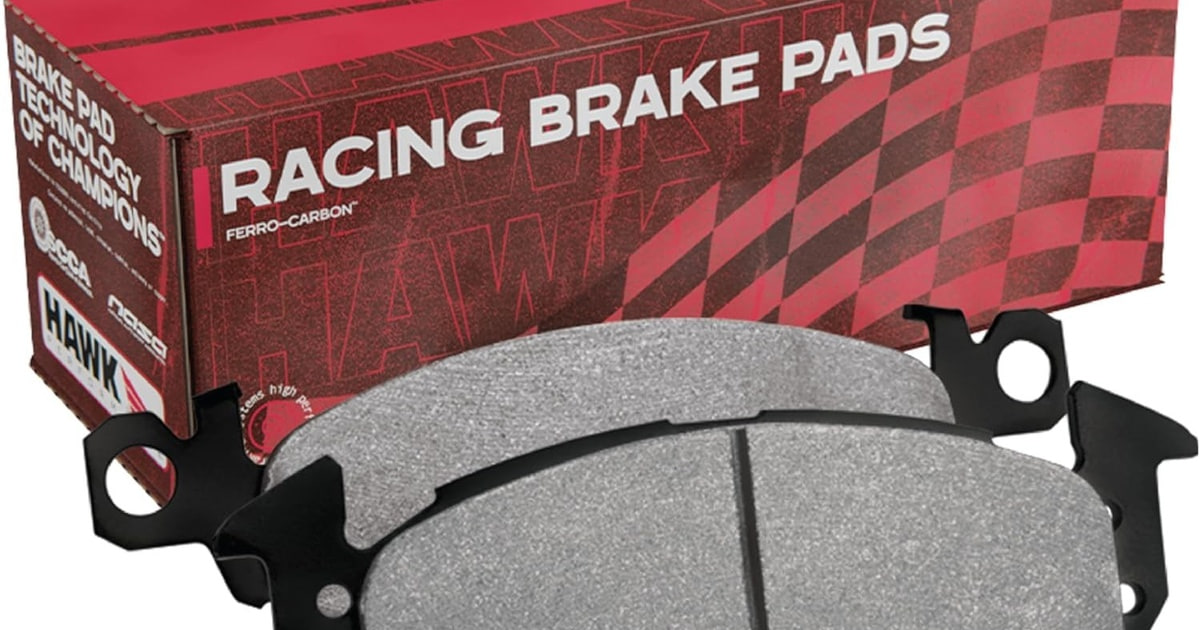
Hawk Performance HB453B.585 HPS 5.0 Street Brake
The HPS 5.0 uses a ferro-carbon compound Hawk borrowed from its racing program and detuned for the street. It bites hard from cold, holds together on a long downhill, keeps dust and squeal down, and fits a huge list of cars.
$123.06fromAmazonIt grabs from cold, which is when most emergencies happen. Plenty of performance compounds need heat before they do anything useful, which makes them a bad match for a car you drive to work. Hawk rates this one from 100 to 750 degrees, so it's working on the first stop out of your driveway and still working at the bottom of a long descent. That low-end confidence matters more day to day than a headline number at the top of the range.
The extra stopping power is the kind you'd actually notice. Published comparison tests have credited Hawk-equipped cars with shorter stops from highway speed than the same cars on OEM-replacement pads. We're talking about a car length or less, but it's the right direction, and it shows up in exactly the panic stop you'd want it in. Hawk designs the compound for high deceleration without upsetting ABS, so the system still modulates normally when you stand on the pedal.
You won't be scrubbing your wheels every weekend. Ferro-carbon isn't as clean as a pure ceramic, but it's far tidier than the semi-metallic pads that compete with it on bite. Chamfered edges and a factory-style shim layer keep squeal down without a fussy break-in. Reviewers consistently describe the release as smooth rather than grabby, meaning the pedal comes back progressively instead of snapping off as you ease out of a stop.
It probably fits your car, and the small parts come in the box. Hawk lists the HPS 5.0 across thousands of applications, from muscle cars to European sedans to compact tuners, which is why it turns up as the default upgrade recommendation so often. Vehicle-specific sets typically ship with stainless anti-rattle clips and a packet of caliper grease. That sounds minor until you're halfway through the job on a Sunday with corroded clips and nowhere open.
Flaws but not dealbreakers
It costs more than the parts-store special. This is a premium street pad, and you'll pay a real premium over a basic OEM-replacement set. If you're selling the car soon, or you drive a few thousand miles a year, that money is hard to justify. The upgrade earns its keep for people who drive a lot, or drive with intent.
It's a street pad, not a track pad. Above roughly 750 degrees, which is what sustained lapping or repeated hard stops from high speed will produce, it'll fade. Hawk doesn't pretend otherwise. If you run real track days, you want a dedicated compound and ideally a second set of wheels to swap in.
It asks a little more of your rotors than a soft organic pad does. Over very high mileage, the harder compound wears rotor faces faster than a Kevlar-organic alternative. It isn't dramatic, and you'd probably be replacing rotors on that schedule anyway. But if you're the type who stretches rotors as far as they'll legally go, it's worth knowing.
Runner-up
Near-silent and nearly dust-free, if you'll trade some bite
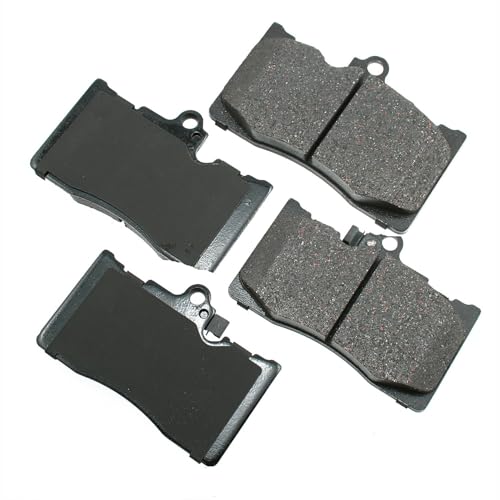
Akebono ACT1118 Proact Ultra Premium Ceramic Disc
Akebono supplies factory pads to Toyota, Honda and Subaru, and the ProACT ceramic line is built to the same tolerances. It's the pad to buy when you want your wheels to stay clean, your cold mornings quiet, and your brakes to feel the way they did new.
$64.78fromAmazonIt's essentially an OEM pad in an aftermarket box. Akebono builds friction material for Toyota, Honda and Subaru assembly lines, so exact-fit caliper geometry and properly engineered shims aren't marketing here. They're the day job. If you drive a Japanese car, there's a fair chance the worn pads you're pulling out came from the same company, which means the replacement should feel familiar rather than like a modification.
Your wheels stay clean for weeks instead of days. The ceramic formula produces very little visible dust, and what it does produce is light-colored rather than the iron-black film that bakes onto hot wheel faces and refuses to come off. Drivers switching from semi-metallic factory pads routinely report going from washing wheels weekly to barely thinking about it. If your car has intricate wheels, that alone can make the decision.
It's quiet in the situations that make other pads talk. Multi-layer shims and chamfered edges break up the resonance that causes squeal inside the caliper bracket. That includes a freezing morning, when many ceramic pads let out a short groan on the first few stops before they settle. Published reviews single the ProACT out as the quietest option in its class, and that's the whole reason it exists.
The friction stays predictable across normal street temperatures. The compound is tuned for roughly 50 to 700 degrees, which is the range a commuter car actually lives in. The pedal feels the same on a cold start as it does after an hour of highway driving, so you're never recalibrating your foot. That consistency also suits hybrids and EVs, where regenerative braking means the friction brakes only get called on now and then.
Flaws but not dealbreakers
The pedal is soft and progressive, and some drivers read that as vague. If you're used to semi-metallic pads that grab the instant you touch them, the ProACT will feel like it's easing into the stop rather than committing. It isn't weaker in a panic stop. It's just less immediate, and that takes a week to get used to.
Push it hard and it runs out of room. This is a street compound, full stop. Repeated hard braking down a mountain pass, or anything resembling track use, takes it past its comfortable range and the pedal goes long. Buy it for commuting, errands and highway miles, not for weekend heroics on a back road.
It's one of the pricier pads here, and you're not paying for stopping power. Premium ceramics cost what they cost, and the money buys quiet and cleanliness. The listing is also thin on detail, and Akebono's part numbers are strictly vehicle-specific, so confirm the application against your car rather than trusting a title that looks close enough.
Budget pick
Clean wheels and easy rotors, aimed at trucks and SUVs
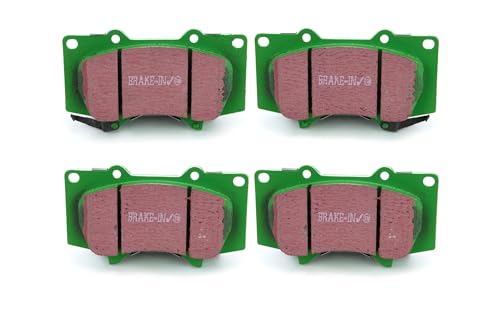
EBC Brakes DP61657 6000 Series Greenstuff Truck
EBC's Greenstuff 6000 series is a Kevlar-reinforced organic pad built for the weight of a truck or SUV. It runs clean, treats rotors gently, stays quiet without extra shims, and works from the first stop with no bedding-in ritual.
$99.01fromAmazonIt's the gentlest option here on your rotors. Kevlar fiber gives the pad structure without the heavy metallic content that scores rotor faces over time. If you'd rather replace pads twice than replace pads and rotors together, an organic compound like this stretches rotor life further than a ceramic or semi-metallic pad will. On a truck with expensive rotors, that math adds up fast.
Dust is close to nonexistent. Truck and SUV wheels are big, often polished, and miserable to clean. Greenstuff produces very little of the dark grit that bonds itself to hot wheel faces, and that's most of the reason people buy it. EBC also builds anti-squeal behavior into the compound itself, so you get quiet braking without stacking on external shims or chasing noise after the job.
It works from the first stop, with no break-in required. EBC pre-applies a friction coating to the pad face, so you skip the deliberate heat-cycling procedure most performance compounds want before they feel right. For a work truck that can't spend a couple hundred careful miles bedding in, that's genuinely useful. Fresh pads that bite properly on day one are worth more than a few points of peak performance.
It's rated for the load, not just for the size of the vehicle. The 6000 series is formulated for truck and SUV weights, including vehicles that tow occasionally, and EBC's published temperature guide puts the working range from around 0 degrees up to 750. A car-spec pad on a heavy vehicle fades early because it never had the thermal headroom. This one is built for the heat a heavier vehicle makes.
Flaws but not dealbreakers
Initial bite is soft, and you'll feel it. Organic compounds don't grab the way ferro-carbon or semi-metallic pads do, and published comparisons put stopping distances from highway speed behind the Hawk and Power Stop compounds. For normal driving that's a non-issue. For the first week after you install them, it's the only thing you'll notice.
It fades earlier than the performance compounds here. A long downhill run with a loaded trailer heats these past their happy range sooner than a ceramic or ferro-carbon pad would. If you tow a boat a couple of times a year, that's fine. If you're regularly hauling weight over mountain grades, the Power Stop kit handles heat better.
The listing tells you almost nothing. EBC's page runs to three short bullet points, with no meaningful spec table and no explanation of which vehicles the part number actually covers. You're relying entirely on EBC's own catalog to confirm fitment, so cross-check the part number against your make, model and axle before ordering rather than assuming a close title match will do.
Also greatOn sale
The whole brake job in one box, rotors and all
Power Stop K7609 Front and Rear Z23
This kit pairs Power Stop's carbon-fiber ceramic Z23 pads with drilled and slotted rotors for both the front and rear of one specific vehicle. If your rotors are due anyway, buying both together removes the guesswork of matching a pad compound to an unfamiliar rotor surface.
$360.99fromAmazonList priceBuying pads and rotors together solves a problem most people don't know they have. How hard a pad bites depends partly on the surface it's mating to. Order pads from one company and rotors from another, and you're quietly hoping the pairing works out. This kit ships matched components for both axles, so you do the entire job once, in one order, and stop thinking about it.
The carbon-fiber ceramic compound handles heat better than plain ceramic. Power Stop mixes carbon fiber into the ceramic matrix, which moves heat out of the pad material faster and pushes back the point where fade sets in. On a long descent, or with the car loaded and a couple of bikes on the back, that's the difference between a firm pedal at the bottom of the hill and a soft one.
The rotors are doing real work, not just looking the part. The slots sweep glazing and trapped gas off the pad face during hard stops, which keeps the friction behavior consistent instead of drifting as things heat up. The cross-drilling helps the rotor shed heat between stops. On the pad side, dual-layer rubberized shims handle the noise that a more aggressive compound would otherwise transmit into the cabin.
It's built around daily driving, and Power Stop says so plainly. The Z23 line targets everyday braking rather than lap times, and the company points to third-party on-vehicle testing behind its low-dust claim. If you want a clear improvement over tired factory pads, need rotors anyway, and have no interest in shopping for a track compound, this is a sensible place to land.
Flaws but not dealbreakers
This kit fits one vehicle, and only one. The K7609 is built for a particular generation of the Mazda CX-5, front and rear. Power Stop sells equivalent kits for plenty of other cars, but this listing isn't a universal product, and a search result that looks right isn't the same as a confirmed fit. Check the application before you order.
Drilled and slotted rotors make noise. At parking-lot speeds, slots and holes passing under the pad can chirp or hum, and new owners often think something's wrong. It's normal, it's harmless, and it mostly disappears as you pick up speed. But if silence is what you're after, a smooth rotor with a ceramic pad is the quieter combination.
The dust is darker than a pure ceramic's. Z23 runs cleaner than any semi-metallic pad, but it doesn't match the Akebono, and on light-colored alloy wheels you'll see the difference between washes. The kit is also big and heavy, which is worth planning around if you're doing the job alone in a driveway with a floor jack.
Who this is for
This guide is for anyone replacing worn pads on a street-driven car, truck or SUV, and specifically for people who want to do better than the default part. If your pads are squealing from the wear indicator, if you feel a pulse in the pedal, or if the friction material looks thinner than about 3mm through the wheel spokes, you're due. Buying now also makes sense if you're unhappy with something specific about your current pads, like black wheels every week or a mushy pedal on a hill.
It isn't for track drivers. Dedicated race compounds have almost no friction below 400 degrees, which makes them genuinely dangerous on a cold street car, and they're out of scope here. We also don't cover the deeper end of the brake system: calipers, lines, master cylinders and fluid upgrades are separate jobs. And if your pedal sinks toward the floor, or you hear metal grinding on metal, stop reading and get the car inspected. That's not a pad swap.
How we picked
We started from the specifications and worked outward. Cold bite: we ruled out anything that needs heat before it stops the car, since most emergency braking happens on a cold pad in the first mile of a drive. Fade resistance: we compared published operating ranges and reviewer accounts of long descents, looking for a firm pedal at the bottom rather than a soft one. Dust and noise: compound type, chamfered edges and shim design decided this, because grubby wheels and morning squeal are what owners complain about most. Rotor friendliness: softer organic compounds are kindest, semi-metallics roughest, and we weighed that against how much bite you're giving up. Fitment and hardware: a great compound is useless in the wrong part number, so we favored broad, well-documented applications and sets that include fresh anti-rattle clips and caliper grease.
The competition
This lineup is what our research surfaced for street-driven cars, trucks and SUVs, not a survey of everything sold. The brake pad market is enormous, largely because every compound gets sold in dozens of vehicle-specific part numbers, and plenty of good pads never make a shortlist simply because they don't fit many cars. Every product we looked at closely for this guide ended up as a pick, with one exception noted below, which is unusual and mostly reflects how tight the field was.
Installation notes
Always replace pads a full axle at a time, never one side. Different friction levels left and right create a braking imbalance that pulls the car under hard stops, and that's a real hazard rather than a theoretical one. Before you reinstall, measure the rotors against the minimum thickness stamped on the rotor hat. If they're under, replace them with the pads, because thin rotors can't shed heat and can crack. Use the new anti-rattle clips in the box rather than reusing corroded ones, since old clips are a leading cause of squeal and uneven wear. Then bed the pads in with a series of moderate stops from highway speed, letting them cool between, unless the manufacturer says no break-in is needed.
Questions we get
What are the best brake pads for daily driving?
For most people, the Hawk Performance HPS 5.0 is the best all-around choice. It bites harder than a factory pad from cold, keeps dust and noise low, and fits a huge range of cars. If you'd rather have silence and clean wheels than extra stopping power, the Akebono ProACT is the better pick, especially on a hybrid or a Japanese car where Akebono likely supplied the originals.
Are ceramic pads better than semi-metallic for street use?
For most street driving, yes. Ceramics make far less dust, run quieter, and are easier on rotors than semi-metallic compounds. Semi-metallics bite harder and resist fade better once things get hot, which is why they suit aggressive driving and occasional track use. If your car is a commuter, ceramic gives you the better daily experience by a wide margin.
How do I know when my brake pads need replacing?
Most pads have a small metal tab that touches the rotor when the material gets low, producing a high-pitched squeal when you brake. You can also look through the wheel spokes: if the friction material is thinner than about 3mm, replace them now. Grinding means the pad is gone and you're on the backing plate, and a pulsing pedal usually points to warped rotors rather than pads.
What's best for a truck or heavy SUV?
The EBC Greenstuff 6000 Truck and SUV pad is our pick if you care most about clean wheels and long rotor life, since its Kevlar-organic compound is formulated for heavier vehicle weights. If you tow regularly and need stronger bite and better heat management on grades, the Power Stop Z23 kit is the tougher option. Either way, avoid car-spec pads on a heavy vehicle, because they fade early.
Do performance pads wear out faster than OEM pads?
Somewhat, depending on the compound. Ferro-carbon and semi-metallic pads like the Hawk typically wear a bit faster than the softest factory organic pads, on the order of 15 to 25 percent, while stopping considerably better the whole time. Premium ceramics like the Akebono often match or beat OEM pad life. Track compounds are the exception and can disappear in a few thousand street miles.
Can I run track pads on my daily driver?
We'd advise against it. Dedicated track compounds are built for 800 to 1,400 degrees and have almost no friction below 400, so the pedal feels wooden for the first several minutes of every drive. That's a genuine safety problem in an emergency stop. Track pads also dust heavily, wear quickly on the street, and need re-bedding after sessions.
Why you should trust us
For this guide:
- We read published comparison tests and reviews from major automotive outlets alongside each manufacturer's own friction, temperature and fitment specifications.
- We compared compound types, stated operating ranges, included hardware and application breadth across every listing in this lineup.
- We did not install, drive on or measure any of these pads; every claim here comes from published sources and manufacturer data.
- We read owner reviews on every listing, weighted toward the critical ones, because that is where the recurring failures show up.
- We have a systematic way of automatically fetching the latest prices, so the numbers on this page stay current.
- This is a research-focused guide, so the team may not own every product listed — though we often do own the top winners, which gives us extra context for the recommendations.
- We don't accept free products, and the retailer commission never changes which product we recommend.
Sources
Best Brake Pads — The Drive, The Drive
Best Brake Pads: Tested & Reviewed — Car and Driver, Car and Driver
Best Brake Pads — Motor Trend, Motor Trend
Best Brake Pads — Popular Mechanics, Popular Mechanics
Vehicle Brake Safety Data — NHTSA, NHTSA
Brake Pad Compound Temperature Guide — EBC Brakes, EBC Brakes
HPS 5.0 Friction Technology — Hawk Performance, Hawk Performance
Ceramic Brake Pad NVH Technology — Akebono, Akebono
Amazon product listings and owner reviews for all 5 products
Manufacturer specification pages for each product
Some passages in this guide may be paraphrased with AI help. Prices are refreshed automatically.
More like this.
Continue exploring electronics reviews and recommendations.

The Best Wireless Charging Pads and Stands
Wireless charging isn't about speed. It's about the small friction you stop noticing: no fumbling for a cable in the dark, no worn-out port on a…

The Best Washable Puppy Training Pads
A puppy in the middle of housebreaking goes through pads fast - five, six, eight a day is normal. Washable pads change that math. You buy a handful, run…

The Best Dual-Zone Heated Mattress Pads
Most bedroom fights about temperature are really fights about one thermostat and two bodies. A dual-zone heated mattress pad settles that at the mattress…

The Best Heating Pads for Back Pain
A heating pad is the rare pain remedy that asks almost nothing of you. You plug it in, you lie down, and 20 minutes later the knot between your shoulder…

The Best Furniture Sliders and Mover Pads
Moving a loaded dresser across a room is one of those jobs that seems trivial until you're halfway through it. Bare furniture legs catch on carpet pile…

The Best Mechanic Tool Sets for Your Home Garage
The first time a socket doesn't fit, you learn what a tool set is really for. Most home garage work is unglamorous - an oil change, a set of brake pads, a…