The Best Car Stereo Head Units
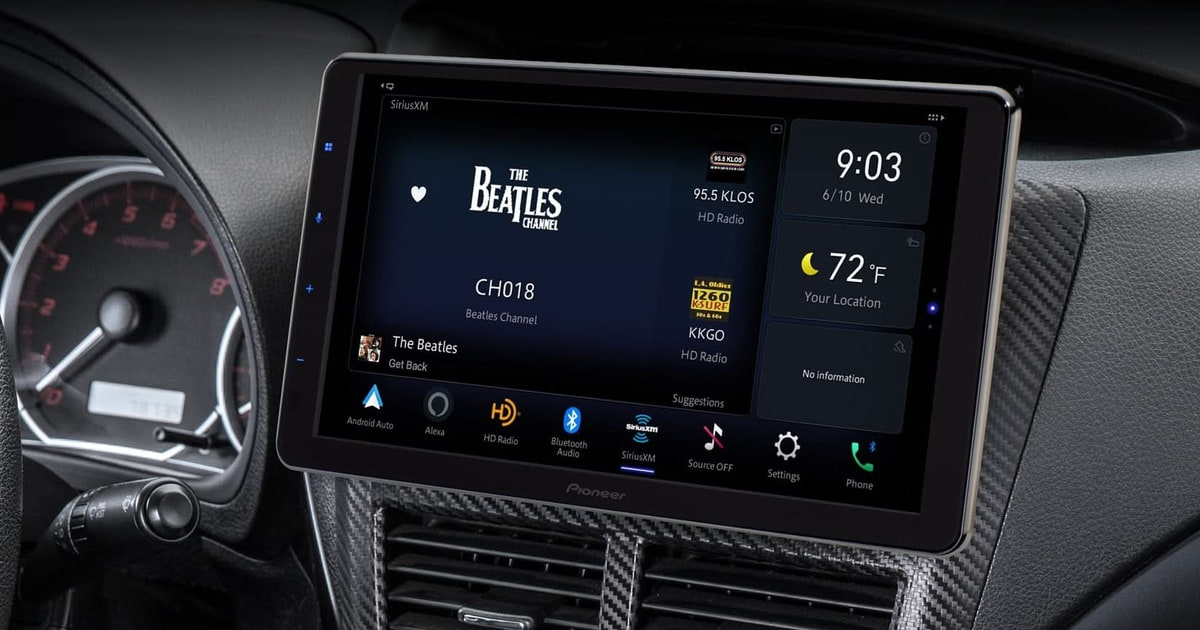
Your factory stereo is probably the oldest piece of technology you touch every day. Replace it and you get wireless Apple CarPlay or Android Auto, a backup camera feed, and hands-free calls people can actually hear on the other end. The screen becomes the thing you glance at every stoplight, so its size and sharpness matter far more than any wattage number printed on the box. A good head unit disappears into your routine. You start the car, your maps come up, and you drive.
Here's the honest part: none of these is a drop-in. Every one needs a vehicle-specific dash kit and a wiring harness, and plenty of cars need an extra interface module just to keep the buttons on your steering wheel working. None of them has real built-in navigation either, so your phone does the map work whether you like it or not. Wireless connections also hiccup now and then. It's rare on good hardware, but no brand here is immune. Budget for the parts and the labor, not just the receiver.
We looked at five double-DIN receivers that all run wireless CarPlay and wireless Android Auto, because that's the feature most people are shopping for. They range from a big floating screen with an HDMI port to a value unit that ships with its own camera. What really separates them is screen size, tuning depth, and how far the chassis sticks out behind your dash. We think that the Pioneer DMH-WT8600NEX is the best car stereo head unit for most people, and that the Kenwood DMX809S is the one to buy if you'd rather spend on sound tuning than on screen size.
Everything we recommend

The biggest, sharpest screen, if your dash has the room

Deeper sound tuning and a longer warranty, on a smaller screen

Wireless phone mirroring and a camera in the box, for much less
At a glance
| Product | Screen Size | CarPlay Type | Price | |
|---|---|---|---|---|
| Pioneer DMH-WT8600NEX 10.1" Capacitive HD ScreenTop pick | 10.1" | Wireless & Wired | $1,499.99 |
| KENWOOD DMX809S eXcelon 6.95-Inch Capacitive Touch ScreenRunner-up | 6.95-Inch | Wireless and Wired | $599 |
 | JVC KW-Z900W 9-Inch HD Touchscreen Floating DisplayAlso consider | 9-Inch | Wireless | $549 |
 | Alpine iLX-507 7-Inch Digital Media ReceiverAlso in lineup | 7-Inch | — | $899.95 |
| ATOTO A5L 7-Inch Android Double DIN CarBudget pick | 7-Inch | Wired & Wireless | $159.90 |
How we picked
Screen and touch. We treated seven inches as the floor, since CarPlay lane guidance gets hard to read below that at speed. We favored 1280x720 capacitive panels over lower-resolution screens because map text and exit symbols stay sharp.
Wireless that sticks. Every unit here had to run both Apple CarPlay and Android Auto wirelessly, per its specifications. Published reviews and buyer reports about reconnection reliability broke the ties.
Sound tuning. We looked for a real EQ and, ideally, time alignment, so you can correct a car's lopsided acoustics without buying a separate processor. Preamp outputs for an external amp were a requirement.
Fit and depth. We compared chassis dimensions against the two to two-and-a-half inches of clearance common in trucks and compacts. Floating-display designs that keep the electronics shallow scored higher.
Factory integration. Keeping your steering wheel buttons, factory amplifier and existing camera working is often the difference between a clean swap and a mess. iDataLink Maestro compatibility counted for a lot.
Top pick
The biggest, sharpest screen, if your dash has the room
Pioneer DMH-WT8600NEX 10.1" Capacitive HD Screen
This is the most complete receiver here: a 10.1-inch HD screen on a floating arm, wireless CarPlay and Android Auto, an HDMI input, and tuning controls deep enough for a full system. It's also the most expensive unit in this guide and the hardest one to fit.
$1,499.99fromAmazonThe screen is the reason to buy this one. At 10.1 inches it's the largest panel here, and the 1280x720 resolution keeps map text and exit numbers crisp instead of smeared. It's a capacitive panel, so it takes the same light swipes and pinch-to-zoom you already use on your phone. At highway speed that difference shows up as a quick glance instead of a stare. If you live in CarPlay maps, you'll feel this upgrade daily.
Split-screen mode makes the extra size pay off. You can run CarPlay or Android Auto on one half and the receiver's own source on the other, at the same time. So your next turn stays on screen while you scroll to a different station or playlist. It sounds like a small thing on a spec sheet. In stop-and-go traffic, it's the difference between one tap and four.
The HDMI input is rare at this level. Plug in a streaming stick, a rear-seat entertainment box, or a kid's handheld console while you're parked, and it shows up on that big panel. Only the JVC in this guide offers the same port. Amazon Alexa is built in too, so you can ask for music, weather, directions, or a smart-home command without reaching for the screen at all.
The tuning goes deeper than most people need, and that's the point. You get a 13-band parametric EQ, time alignment, and 24 dB per octave crossover slopes. If you later add an amplifier and a subwoofer, you won't outgrow the head unit or need a separate processor to make the system sound right. It also handles FLAC and WAV files over USB and pulls in HD Radio broadcasts.
It keeps your car's factory features alive. The Pioneer works with iDataLink Maestro, which means steering wheel controls, factory amplifier retention, and vehicle data on screen in supported vehicles. There's a rear camera input as well, so you can add a backup camera or route an existing one. For anyone replacing a stereo that's woven into the rest of the car, that integration matters more than any single feature.
Flaws but not dealbreakers
It's deep, and depth is what wrecks installs. The chassis runs roughly four inches behind the face, and plenty of trucks, hatchbacks and crossovers leave only two to two and a half inches of clearance before you hit ducting or wiring. Measure from the face panel to the nearest obstruction before you order. A double-DIN opening alone doesn't tell you this will fit.
The floating arm has to be tightened correctly. The display hangs on an adjustable arm rather than sitting flush, and if that arm isn't torqued down properly it can buzz when you turn the volume up. It's fixable, not a dealbreaker, but it's one more reason this is a job many people hand to a professional installer.
There's no built-in navigation. Every map here comes from your phone through CarPlay or Android Auto. That's fine for most drivers most of the time. But if you regularly drive where cell service drops out, or your phone dies, that beautiful screen won't get you home on its own.
Pioneer covers the DMH-WT8600NEX with a one-year warranty.
Runner-up
Deeper sound tuning and a longer warranty, on a smaller screen
KENWOOD DMX809S eXcelon 6.95-Inch Capacitive Touch Screen
The Kenwood is the one installers reach for when a customer cares about sound first. Its 13-band EQ and time alignment let you tune each speaker for the seat you actually sit in, and it takes three cameras. The 6.95-inch screen is the trade.
$599fromAmazonBuy this one if you care how the car sounds, not how big the screen is. The 13-band graphic EQ lets you correct specific problem frequencies instead of nudging bass and treble. Time alignment goes further: it delays each channel so sound from the far door reaches you at the same moment as the near one. Car interiors are acoustically lopsided by design. This is the tool that fixes that.
Three camera inputs is unusual on a receiver like this. You can wire a rear backup camera, a front camera, and a trailer camera without an external switcher box. The parking guidelines overlay is adjustable, so you can match it to how your vehicle actually turns rather than a generic set of lines. If you tow or park a long truck in tight spots, that's real money saved on extra hardware.
Both platforms work wired and wireless. CarPlay and Android Auto each run either way on the same unit, which sounds redundant until a passenger with an older phone hands you a cable. Instead of dropping to plain Bluetooth streaming, they get the full interface. Wireless pairing sticks after the first setup, so your own phone connects on its own when you start the car.
It still does radio properly. You get AM/FM with HD Radio and a SiriusXM-ready tuner, so satellite is a subscription away rather than a hardware swap. The USB port plays high-resolution FLAC as well as ordinary compressed files, and it handles video. The capacitive panel is high contrast, so text stays readable even when sun is hitting the dash.
Flaws but not dealbreakers
The screen is the compromise. At 6.95 inches it's the smallest display among our picks, and next to a 9- or 10-inch floating panel it looks modest. CarPlay maps and album art are perfectly legible, but you see less of the route ahead. You're paying here for tuning and build quality, not glass.
No HDMI input. External video is limited to USB and the AV auxiliary, so a streaming stick or a game console for the back seat isn't happening. If rear-seat entertainment is on your list, the Pioneer or the JVC is the better fit.
Touch response can feel a little slow in the cold. On a freezing morning the panel isn't quite as immediate as the Pioneer's. It warms up with the cabin and it's a minor annoyance rather than a fault. Worth knowing if you park outside all winter.
Kenwood backs the DMX809S with a two-year warranty, the longest term in this guide.
Budget pick
Wireless phone mirroring and a camera in the box, for much less
ATOTO A5L 7-Inch Android Double DIN Car
The ATOTO A5L costs a fraction of what the Pioneer does and still gives you wireless CarPlay, wireless Android Auto, a 24-band EQ and a backup camera in the box. It runs full Android, which is both its best feature and its steepest learning curve.
$159.90fromAmazonThe camera is included, and it's a decent one. The bundled AC-HD01LR shoots a 720p image with a 140-degree view and holds up at night. You can also pull the feed up any time, not just in reverse, which is genuinely useful when you're watching a trailer, a bike rack, or traffic creeping up behind you. On every other unit here, that camera is a separate purchase and a separate wiring job.
On paper, the amplifier and EQ beat everything else here. The built-in amp is rated at 24 watts RMS per channel across four channels, with peaks up to 45. That's the highest continuous rating in this guide, and continuous power is what you actually hear. The 24-band EQ with nine presets gives you finer control than most receivers offer without adding an outboard processor.
It's essentially an Android tablet in your dash. You get the Play Store and thousands of apps, including navigation and dash-cam tools that CarPlay and Android Auto won't let you run. It connects to the internet three ways: a Wi-Fi hotspot, Bluetooth tethering, or USB tethering while your phone charges. Over-the-air updates arrive on their own, so the software doesn't freeze in time.
Wireless works both ways, plus mirroring. CarPlay and Android Auto run wired or wireless through ATOTO's ZLink, and after the first Bluetooth and Wi-Fi setup it reconnects on its own. Phone mirroring covers some apps that neither platform supports. For a driver pulling out a stereo with a cassette slot, this is a leap, not a step.
Flaws but not dealbreakers
The Android interface asks more of you. Pioneer, Kenwood and JVC ship purpose-built menus that do a handful of things predictably. This is a general-purpose operating system, with settings menus to match. Most people get comfortable in a week. If you want to plug it in and never think about it again, pay more for the simpler firmware.
The hardware inside is modest. Two gigabytes of memory and 32 gigabytes of storage are fine for CarPlay, maps and a few apps. Load it up with heavy third-party software and you'll feel it. Treat the app store as a nice extra rather than the main reason to buy.
There's no time alignment, and the brand is newer here. The 24-band EQ is generous, but you can't delay individual channels the way you can on the Kenwood or JVC, so the soundstage stays where the speakers put it. ATOTO also has a shorter track record in the U.S. than the legacy audio brands, which matters for long-term firmware support.
Who this is for
This guide is for you if your car's stereo predates smartphone integration, or if it's simply died. The payoff is biggest in a vehicle you drive every day: wireless maps that come up on their own, calls that don't sound like a drive-through speaker, and a camera view when you back out. It's also the right upgrade if you've added speakers or an amplifier and your factory head unit can't tune them. If your current stereo already does wireless CarPlay well, skip this. You'd be spending real money for a slightly bigger screen.
We stuck to double-DIN receivers with wireless CarPlay and Android Auto on both platforms. That leaves out single-DIN units, dedicated audiophile decks with no screen at all, and the vehicle-specific replacement systems built for one model of truck. It also leaves out anything with built-in navigation, since none of these have it. One warning before you shop: if your factory stereo also controls climate, driver-assist displays or a factory amplifier, you'll need an interface kit beyond a basic dash adapter, and in a few vehicles the swap isn't worth doing at all.
How we picked
Screen: we set seven inches as the minimum and preferred 1280x720 capacitive panels, because that's what keeps lane guidance readable at a glance. Wireless: both CarPlay and Android Auto had to work without a cable, with reliable reconnection at key-on. Tuning: we wanted a real multi-band EQ, preamp outputs, and ideally time alignment, so you're not forced to buy a separate processor later. Fit: we compared chassis depth against the shallow dash cavities common in trucks and compacts, and gave credit to floating designs that keep the body slim. Integration: iDataLink Maestro support, camera inputs and adjustable parking guidelines decided the close calls, since those are what keep your existing car features working after the swap.
Other car stereo head units worth considering
If you want a big screen in a shallow dash: The JVC KW-Z900W 9-Inch HD Touchscreen Floating Display ($549) — The JVC KW-Z900W solves the problem that stops a lot of truck and SUV owners cold. Its electronics live in a compact core chassis while the 9-inch 1280x720 display mounts out front on an arm, so the screen floats ahead of the dash instead of the whole unit burying itself behind it. You still get wireless CarPlay and Android Auto, an HDMI input for the back seat, a 13-band EQ with time alignment, 3-volt preouts, and iDataLink Maestro compatibility. Because the panel sits proud, you can angle it away from glare on a steeply raked center stack. The give-backs are small but real: crossover slope adjustment isn't spelled out in the specifications, Bluetooth codec support beyond basic calling and streaming isn't listed, the arm won't clear deeply recessed or sharply angled dashes, and the blue accent trim doesn't blend into every interior the way plain black does.
The competition
This is what our research turned up, not a survey of everything for sale. The head unit market churns constantly, and plenty of capable receivers didn't make the list. Here's the remaining unit we looked at and why it didn't take a spot.
The Alpine iLX-507 7-Inch Digital Media Receiver ($899.95) — The Alpine iLX-507 is the sound-first choice in a plain double-DIN box. Its 7-inch WXGA display runs at the same 1280x720 as the far larger panels here, so graphics stay sharp even though there's less of them. Wireless CarPlay and wireless Android Auto both work, there are front and rear camera inputs, and the built-in amp puts out 16 watts RMS with FLAC, MP3, WMA and AAC playback over USB. Alpine's acoustic engineering is the draw, and published reviews single out its midrange clarity and soundstage. It lost to our picks on flexibility: the screen is the smallest of the group, there's no HDMI input, and it doesn't support iDataLink Maestro, so retaining steering wheel controls means a T-harness adapter instead. Firmware updates have also historically arrived more slowly than Pioneer's or Kenwood's. Choose it anyway if you want a standard-depth chassis that drops into almost any vehicle without drama, and you'd rather have clean sound than a bigger screen.
Installation notes
Order your dash kit and wiring harness before the receiver, not after. Metra, Scosche and American International build vehicle-specific kits for most cars and trucks, but there are gaps, and the newest model years are often the ones still waiting. Use a fit guide from Metra or Crutchfield to confirm both parts exist for your exact year, make and model. Then measure twice: the opening height and width, and the depth from the face panel to whatever sits behind it, since ducts, brackets and wiring clusters eat clearance fast. If your factory stereo also runs climate control, shares a screen with driver-assist features, or feeds a factory amplifier, you'll need an interface module on top of the dash kit. That's common in Mazdas, Subarus, some GM trucks and many European cars.
Questions we get
Do I need a single-DIN or double-DIN head unit?
DIN just describes the size of the hole in your dash. Single-DIN openings are about seven inches wide and two tall; double-DIN is the same width and roughly four inches tall. Every unit in this guide is double-DIN. Measure your cutout or use an online fit tool from Crutchfield or Metra, and know that a conversion kit can fit a double-DIN unit into some single-DIN cars, though the finished look varies a lot by vehicle.
What's the difference between wired and wireless Apple CarPlay?
Wired CarPlay needs a cable from your iPhone to the receiver's USB port. Wireless uses Bluetooth and Wi-Fi to connect on its own within seconds of starting the car. Audio quality, navigation responsiveness and app access are the same either way, so the difference is purely convenience. Wireless CarPlay needs an iPhone XR or newer running iOS 14 or later.
Can I keep my steering wheel controls?
Yes, with the right interface module. iDataLink Maestro modules, and alternatives like PAC Audio's SWI-RC, translate your car's control signals into something the aftermarket unit understands. The Pioneer DMH-WT8600NEX and JVC KW-Z900W have the deepest Maestro integration here, and in many vehicles Maestro also restores the factory camera, the factory amplifier and vehicle data on screen. Check iDataLink's compatibility tool first, because the required module is specific to your year, make and model.
Why does RMS wattage matter more than peak power?
RMS is the continuous, clean power a channel can hold at normal listening levels. Peak is the maximum a unit can hit for a few milliseconds before the signal clips. Manufacturers advertise peak because the number looks bigger, but what you hear over a whole song is RMS. The ATOTO A5L's 24 watts RMS per channel is the highest here. For serious volume or big door speakers, use the preamp RCA outputs and add an external amplifier.
Can I add a backup camera to one of these?
Yes. Every unit here has an RCA composite video input that switches on automatically when you shift into reverse, and any standard aftermarket camera with an RCA output will work. The ATOTO includes one in the box. If your car already has a factory camera, a Maestro module or a camera interface adapter from Metra, PAC Audio or Scosche can route that signal to the new head unit, which keeps the original guidelines and saves you from drilling holes and running new wire through the tailgate.
Is wireless Android Auto worth paying for?
If you're replacing the stereo anyway, yes. The convenience of maps and music launching before you're out of the driveway adds up fast on a commute you drive twice a day. Your phone needs Android 11 or later. All the units in this guide support it, including the Alpine, so it's not the deciding factor between them.
Why you should trust us
For this guide:
- We compared the manufacturer specifications and listing details for every receiver here, feature by feature, with an eye on screen resolution, chassis depth, EQ depth and camera inputs.
- We read published reviews and installer-focused buying research for this category to understand which specification differences actually change how a unit behaves in a car.
- We read owner reviews on every listing, weighted toward the critical ones, because that is where the recurring failures show up.
- We have a systematic way of automatically fetching the latest prices, so the numbers on this page stay current.
- This is a research-focused guide, so the team may not own every product listed — though we often do own the top winners, which gives us extra context for the recommendations.
- We don't accept free products, and the retailer commission never changes which product we recommend.
Sources
Best Car Stereos of 2026 — Car and Driver, Car and Driver
Best Double DIN Car Stereos 2026 — Crutchfield, Crutchfield
Pioneer DMH-WT8600NEX Review — The Drive, The Drive
Best Car Stereos 2026 — Popular Mechanics, Popular Mechanics
Kenwood eXcelon DMX-Series Review — Android Authority, Android Authority
Car Stereo Buying Guide 2026 — Consumer Reports, Consumer Reports
JVC Floating-Display Car Stereo Hands-On — Sound & Vision, Sound & Vision
Alpine iLX-507 Review — Mobile Electronics Magazine, Mobile Electronics Magazine
Amazon product listings and owner reviews for all 5 products
Manufacturer specification pages for each product
Some passages in this guide may be paraphrased with AI help. Prices are refreshed automatically.
More like this.
Continue exploring electronics reviews and recommendations.

The Best Car Speakers and Stereo Systems
A car stereo is the one piece of gear in your car you touch every single day. You reach for it before you've backed out of the driveway, and you're still…

The Best TENS Units
A TENS unit sends mild electrical pulses through sticky pads on your skin, and the point is simple: it gives your nerves something else to pay attention…

The Best Filtered Shower Heads
Your shower water carries whatever your city put in it to keep the pipes safe. That's usually chlorine or chloramine, plus whatever the pipes themselves…

The Best High-Pressure Shower Heads
A shower head is the fixture you touch every single morning, and a bad one sets the tone for the whole day. Weak pressure means standing under a lukewarm…

The Best Extendable Snow Brushes and Ice Scrapers
Clearing a car after a storm is a small chore that turns miserable fast. The wrong tool means you're leaning across a cold hood, stretching for the middle…

The Best Budget Noise Canceling Headphones
Noise canceling headphones earn their keep in the boring parts of your day. The bus that idles for ten minutes. The open-plan office where someone always…