The Best Humidifiers for a Baby Nursery
Dry indoor air is one of those problems you notice through your baby, not through a gauge on the wall. The heat kicks on in November, and by December your baby wakes up stuffy, with chapped cheeks and a cough that sounds worse at 3 a.m. than it does at noon. A humidifier won't cure a cold. But keeping a nursery somewhere in the 40 to 60 percent range makes congested nights easier, and it keeps skin from cracking. The American Academy of Pediatrics recommends cool-mist models for homes with young kids, since steam vaporizers can scald a curious toddler.
Here's the part nobody puts on the box: every one of these needs cleaning, and most of them need it more often than you'll want to do it. The CDC recommends cleaning a portable humidifier every three days, because a warm, wet tank is a good home for mold and bacteria that then get blown into the air your baby breathes. Ultrasonic models add a second chore. Consumer Reports found that filling them with tap water left visible white mineral dust on nearby surfaces within two days. Evaporative units skip the dust but charge you in filters instead.
So the real choice is which maintenance you'd rather sign up for, and how quiet the thing is while it does its job. We looked at tank size, noise, safety shutoffs, and how easy each one is to scrub. We think that the Honeywell Ultra Comfort Cool Mist Humidifier is the best humidifier for a baby nursery for most people, and that the Levoit Classic300S is the one to buy if you want to check and adjust the humidity from your phone instead of tiptoeing into the room.
Everything we recommend

Quiet, filterless, and simple enough to actually clean

Check the humidity from your phone without opening the door
Barely audible, nearly weightless, and cheap to replace

Dishwasher-safe parts and real mold defense, at a price

A star projector and a filter that traps minerals
Prices as of Oct 25, 6:48 AM PT · Details
At a glance
| Product | Tank capacity | Rated runtime | Price | |
|---|---|---|---|---|
 | Crane Adorables Ultrasonic Humidifiers for Bedroom andAlso consider | 1 gallon | 24 hours | $59.99 |
| Levoit Classic300S Ultrasonic Smart Top Fill HumidifierRunner-up | 6 L | Up to 60 hours | $79.99 |
| Honeywell Ultra Comfort Cool Mist HumidifierTop pick | 1 gallon | Up to 36 hours | $49.99On sale |
| Vicks Starry Night Filtered Cool Mist HumidifierAlso great | 1 gallon | — | $58.99 |
| Canopy Bedside Humidifier 2.0Upgrade pick | 2.5 L | 36 hours | $159 |
| Pure Enrichment MistAire Ultrasonic Cool Mist HumidifierBudget pick | 1.7 L | Up to 25 hours | $39.99 |
 | Afloia Humidifier and Air Purifier in OneAlso in lineup | — | 8-hour timer | $119.99 |
Prices as of Oct 25, 6:48 AM PT · Details
How we picked
Cool mist only. The AAP advises against warm-mist and steam vaporizers in homes with young children because of the burn risk. We only considered cool-mist units.
Overnight quiet. We weighted noise heavily, using published parent-panel comparisons and owner feedback themes. BabyGearLab's panel put the quietest nursery models under 30 dB on low.
Cleaning access. The CDC wants portable humidifiers cleaned every three days, so we favored wide tank openings, few parts, and dishwasher-safe components over clever shapes.
Runtime per fill. A nursery humidifier should clear a full night without a refill. We looked for manufacturer-rated runtimes of at least a full night on a low setting.
Safety shutoffs. Auto shut-off when the tank empties is non-negotiable. A built-in humidistat that stops at a set level is better, since EPA guidance ties sustained humidity above 60 percent to mold and dust mites.
Top pickOn sale
Quiet, filterless, and simple enough to actually clean
Honeywell Ultra Comfort Cool Mist Humidifier
The Honeywell Ultra Comfort runs up to 36 hours on a gallon, shuts itself off when the tank empties, and has no filter to buy. The wide tank opening means you can get a hand and a brush inside, which is the difference between cleaning it and meaning to.
$49.99fromAmazonTypical pricePrices as of Oct 25, 6:48 AM PT · Details
The best humidifier is the one you'll actually clean, and this one makes it easy. The tank opening is wide enough to fit your hand and a bottle brush, so a vinegar rinse takes a couple of minutes instead of a frustrating session with a chopstick and a paper towel. Given that the CDC wants you doing this every three days, a design that fights you is a design you'll skip. Nothing here disassembles into a puzzle.
A gallon of water and up to 36 hours of runtime covers a full night with room to spare, so you're refilling every other day rather than at bedtime. The auto shut-off kicks in when the water runs out, which matters mostly because it means the unit isn't buzzing away dry at 5 a.m. Honeywell rates it for small to medium rooms, and a typical nursery falls comfortably inside that.
There's no filter, and that's a real cost difference over a couple of years. Wicking-filter models want a new filter every month or two, and those add up quietly. The tradeoff is that this is an ultrasonic unit, so you're on the hook for the white-dust problem if your water is hard. Distilled water solves it. Buying jugs is annoying, but it's cheaper than filters and you can skip it entirely if your tap water is soft.
The mist outlet points in two directions, so you can aim moisture away from the crib and away from the wall. That sounds like a small thing until you've watched a fixed nozzle dampen a patch of drywall for three months. Honeywell also includes an essential oil tray, which we'd suggest you ignore for an infant's room. The AAP has no use case for essential oils around babies.
Flaws but not dealbreakers
Ultra-quiet is Honeywell's word, not a measurement anyone published for this model. Owner feedback is broadly positive on noise, but it's an ultrasonic unit with a fan, and you'll hear something. If your baby wakes at the sound of a door latch, look at the Pure Enrichment MistAire instead.
It's a small-to-medium room unit. In a large or open nursery, or in a genuinely dry high-altitude house, you'll want more output than a gallon over 36 hours provides. And like every ultrasonic model, it will over-humidify a closed room if you leave it on high and go to sleep, since there's no humidistat to stop it at a set level.
Runner-up
Check the humidity from your phone without opening the door
Levoit Classic300S Ultrasonic Smart Top Fill Humidifier
The Levoit Classic300S holds six liters, runs up to 60 hours, and has an auto mode that targets a humidity level and holds it. The app lets you dial the mist down from the couch, which is the whole point when the baby has finally gone down.
$79.99fromAmazonPrices as of Oct 25, 6:48 AM PT · Details
Opening a nursery door to fiddle with a dial is how you undo forty minutes of work. The Classic300S solves that with app control and voice control, so you can drop the output, change the schedule, or shut it off entirely without touching the door handle. Levoit's auto mode uses onboard sensors to hold a target humidity, which is the feature that keeps you from waking up to a swampy room and condensation on the window.
Six liters is a lot of water for a nursery. Levoit rates it for up to 60 hours and 505 square feet, and on a low setting in a small room you're realistically refilling twice a week. The top-fill design means you pour from a pitcher instead of hauling a sloshing tank to the sink and back. That's a genuine quality-of-life difference at 11 p.m.
Auto mode is the reason this earns a spot over cheaper smart plugs and dumber humidifiers. EPA guidance ties sustained humidity above 60 percent to more dust mites and mold, and a unit that self-limits at a set point protects you from your own good intentions. Set it to 45 percent and it stops there whether or not you remember to check.
Cleaning is decent but not the best here. The tank opening is generous and the top-fill design means fewer parts to wrestle with, though the base and the mist chamber still need regular attention. Compared with the Honeywell, you're trading a little simplicity for a lot of control.
Flaws but not dealbreakers
It's still ultrasonic, so hard tap water means white dust on the dresser and the crib rail. With a six-liter tank, keeping it filled with distilled water gets expensive and heavy in a way a one-gallon unit doesn't.
App-controlled appliances mean an account, a Wi-Fi connection, and firmware that occasionally needs attention. If you don't want another device on your network or another app on your phone, most of what you're paying for here goes unused. Buy the Honeywell instead.
At 13 inches tall with a six-liter tank on board, it's a big object in a small room, and it needs to sit at least three feet from the crib. In a tight nursery, finding that spot takes some furniture rearranging.
Budget pick
Barely audible, nearly weightless, and cheap to replace
Pure Enrichment MistAire Ultrasonic Cool Mist Humidifier
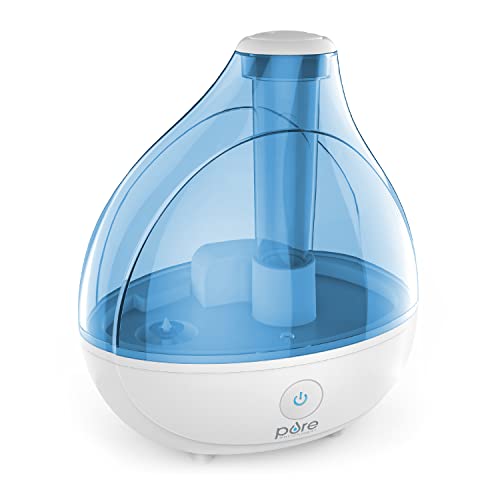
The MistAire is a 1.7-liter ultrasonic unit that runs up to 25 hours and weighs less than a bag of sugar. It's the quietest option here by reputation, and the five-year warranty is unusually long for something this inexpensive.
$39.99fromAmazonPrices as of Oct 25, 6:48 AM PT · Details
At 1.35 pounds and about nine inches tall, this thing disappears on a nightstand. You can move it from the nursery to a guest room to a hotel without thinking about it. The tank lifts straight off for filling, so there's no disassembly at all, and Pure Enrichment includes a small brush for cleaning the mist disk.
Whisper-quiet is the whole reason to buy this one. Pure Enrichment builds the pitch around overnight use, and owner feedback lines up with that. If you've got a baby who stirs at the click of a thermostat, a nearly silent ultrasonic unit is worth more than a bigger tank. There's an optional night light that's dim enough to leave on during feeds.
The five-year manufacturer warranty is the surprise. Most budget humidifiers give you a year and a shrug. Five years on a unit that costs a fraction of the premium picks changes the math on whether it's disposable, and it suggests Pure Enrichment expects the disk and fan to hold up.
Coverage is rated to 250 square feet, which is a real nursery. Auto shut-off handles the empty tank and also triggers if you lift the tank off, so a curious toddler bumping it won't leave the base running dry.
Flaws but not dealbreakers
The 1.7-liter tank is the smallest here. Twenty-five hours is the high-end claim on the low setting. On high, in a genuinely dry room, expect to refill daily. That's fine if the humidifier lives next to the sink, less fine if the nursery is upstairs.
It's ultrasonic with no humidistat and no filter, so white dust is a live concern with hard water and there's nothing to stop it from pushing a small closed room past 60 percent. Watch it for the first few nights and settle on a setting.
The MistAire comes with a five-year manufacturer's warranty.
Upgrade pick
Dishwasher-safe parts and real mold defense, at a price
Canopy Bedside Humidifier 2.0
Canopy's Bedside Humidifier 2.0 uses a filter plus smart airflow that keeps running until the unit dries out, which is the most serious attempt at mold prevention on this list. The tank, tray, grill, spacer, and cap all go in the dishwasher.
$159fromAmazonPrices as of Oct 25, 6:48 AM PT · Details
Dishwasher-safe parts change the cleaning problem from a chore to a habit. Every other humidifier here needs you to stand at a sink with vinegar and a brush every few days. This one lets you pull the tank, tray, grill, spacer, and cap and run them through a normal load. When the alternative is skipping it for a week, that's worth paying for.
Canopy's other angle is a persistent airflow system that keeps air moving through the unit until it's completely dry, so there's no standing water sitting warm overnight. The proprietary filter includes a pre-filter for airborne contaminants and an antimicrobial core. It's a filter, so it's an ongoing cost, but it's the mechanism that keeps this from becoming a mold farm between cleanings.
The 2.0 adds a larger, quieter fan, a white noise setting, and separate sleep and reading lights. In a nursery, the white noise and the dim sleep light replace two other gadgets on the dresser. Canopy developed the line with board-certified dermatologists, and the pitch leans hard toward skin, which is relevant if your baby's eczema flares every winter.
Runtime is 36 hours on a 2.5-liter tank, so it's not the marathon runner the Levoit is. But it's more than a full night, and the top of the tank opens wide enough that refilling is genuinely quick.
Flaws but not dealbreakers
It's the most expensive unit here and it takes filters, so the cost keeps going after you buy it. If your main problem is a stuffy baby in February, the Honeywell does that job for a fraction of the outlay.
A 2.5-liter tank in a large or very dry room will struggle relative to the six-liter Levoit. Canopy is designed as a bedside unit, and it behaves like one.
Canopy backs the humidifier with a 60-day guarantee.
Also great
A star projector and a filter that traps minerals
Vicks Starry Night Filtered Cool Mist Humidifier
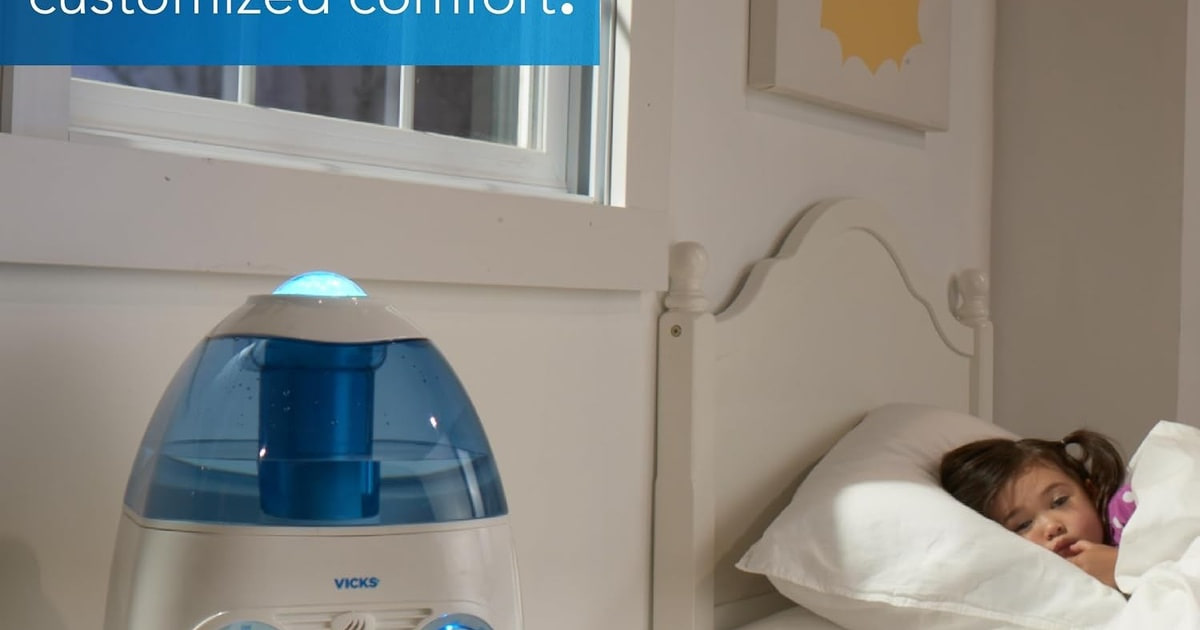
The Vicks Starry Night projects stars on the ceiling and runs a filter that pulls minerals out of the water, so you get no white dust without buying distilled. It holds a gallon and works with VapoPads if your pediatrician is fine with them.
$58.99fromAmazonPrices as of Oct 25, 6:48 AM PT · Details
The filter is the underrated feature. Because this unit wicks water through a mineral-trapping filter instead of vibrating it into a fine mist, you don't get the white dust that ultrasonic models leave on the dresser. That means ordinary tap water is fine, which saves you from hauling distilled jugs home every week.
The star projector is a genuine sleep aid, not a gimmick. It throws a soft field of stars on the ceiling, and owners consistently describe it as the thing that turned a humidifier into part of the bedtime routine. The tank glow doubles as a night light bright enough to change a diaper by and dim enough to leave on.
A one-gallon tank gets you through the night with margin, and the tank opening is wide, so cleaning is manageable. VapoPads slot in if you want menthol vapor, though we'd check with a pediatrician before using scented pads around an infant.
This is the largest footprint of the picks at over 13 inches wide, and it weighs the most when empty. In exchange you get a stable base that a toddler won't tip with a shove, which matters more than compactness once your baby is crawling.
Flaws but not dealbreakers
Owner feedback flags two consistent problems. The projector cycles through colors, and some kids find that more stimulating than soothing. And there's a drain hole under the removable water tray, so an overfill or a spill during a refill can put water on the dresser rather than in the base.
The filter is a recurring purchase, and it's the part that determines whether the unit keeps working well. Skip replacements and output drops. Between filters and a light that not every child likes, this is the pick with the most caveats attached.
Who this is for
Buy one of these if your nursery gets dry enough that your baby wakes up congested, if the forced-air heat runs all winter, or if you live somewhere high and arid where indoor humidity sits in the teens. Parents of babies with eczema or frequent stuffy noses see the clearest benefit. If your home already sits between 40 and 60 percent, you don't need a humidifier, and adding one is more likely to cause a mold problem than solve a breathing one. Get a cheap hygrometer and check before you buy anything.
This guide covers portable cool-mist humidifiers sized for a single nursery. We're not covering warm-mist vaporizers, since the AAP recommends against them around young children, and we're not covering whole-house systems that tie into your ductwork. A humidifier also isn't medicine. It can make a cough more bearable at night, but a baby with a fever, labored breathing, or a cough that isn't improving needs a pediatrician, not a bigger tank.
How we picked
We built the list around a few things that actually matter at 2 a.m. Mist type: cool mist only, following AAP guidance against steam vaporizers in homes with young kids. Noise: quiet enough to run three feet from a crib without waking a light sleeper, judged from parent-panel comparisons and owner feedback rather than our own measurements. Cleaning: wide openings, few parts, and dishwasher-safe components, because the CDC recommends a scrub every three days and a fussy design guarantees you'll skip it. Runtime: a full night on one fill at a low setting. Safety: auto shut-off at minimum, and ideally a humidistat that holds the room in the 40 to 60 percent range on its own. Ongoing cost: filters and distilled water are real expenses, and we counted them.
Other humidifiers for a baby nursery worth considering
If you want the animal your kid will actually like: The Crane Adorables Ultrasonic Humidifiers for Bedroom and — The Crane Adorables is the nursery humidifier most parents have seen, and the character design is not nothing when you're trying to make a room feel like a room. It holds a gallon, covers up to 500 square feet for 24 hours, and has auto shut-off. It's filter-free by default, with an optional demineralization filter you can screw on if your water is hard. What you give up is refinement: the bottom-fill tank means carrying water, there's no humidistat, and without the add-on filter, tap water leaves white dust. If the monkey is what gets your toddler excited about bedtime, that's a legitimate reason to pick it.
The competition
This is what our research surfaced, not a survey of everything on the market. A few units we looked at didn't earn a pick, but one of them might still fit your situation better than ours do.
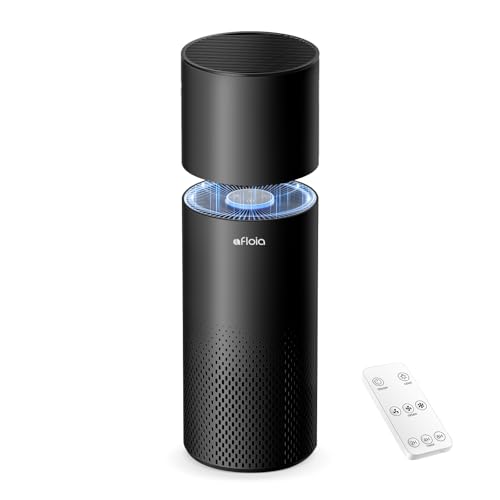
The Afloia Humidifier and Air Purifier in One — The Afloia Kilo Pro combines an evaporative humidifier with a three-stage air purifier in one tower, and it's rated to cover up to 1,076 square feet per hour. Evaporative humidification means no white dust and no puddles, which is a real advantage over every ultrasonic pick here. Two things kept it out. The humidifier function can't run on its own, so you're always running the purifier too, and the timer maxes out at eight hours rather than running until the tank empties. It also has far less owner feedback behind it than the established picks. If you want one appliance doing both jobs in a larger room, it's worth a look.
Cleaning and placement
Clean it every three days, which is what the CDC recommends and roughly nobody does. Empty the tank, wipe the base, and scrub anything the water touches with diluted white vinegar or hydrogen peroxide, then rinse well and let the parts air-dry before you reassemble. Never top off standing water. Dump what's left and start fresh. If your tap water is hard and the unit is ultrasonic, distilled water stops the white dust and slows the scale buildup that eventually kills the mist disk. Put the humidifier at least three feet from the crib, out of reach and off the floor if you can, and point the mist away from the wall so you're not soaking drywall. Buy a cheap hygrometer and aim for 40 to 50 percent.
Questions we get
Are humidifiers safe in a baby's nursery?
Yes, with two conditions. Use a cool-mist model, since the AAP warns that steam vaporizers can scald a child who gets too close, and clean it on a real schedule. An uncleaned tank grows mold and bacteria that then get blown into the air your baby breathes, which is worse than dry air.
Cool mist or warm mist for a baby?
Cool mist. The AAP specifically advises against warm-mist and steam vaporizers in homes with young children because of the burn risk. There's no meaningful congestion benefit to warm mist that would justify putting a pot of near-boiling water in a toddler's room.
What humidity level should a nursery be?
Somewhere between 40 and 60 percent, and What to Expect's parent-editor panel suggests aiming for the lower half of that, around 40 to 50 percent. Below 40 percent you get dry skin and congestion. Above 60 percent, EPA guidance links the humidity to more dust mites and mold growth. A five-dollar hygrometer takes the guesswork out.
How often do I need to clean it?
The CDC recommends every three days for portable humidifiers. Empty it, scrub the tank and base with diluted vinegar or hydrogen peroxide, rinse, and air-dry. If that sounds like too much, buy a model with dishwasher-safe parts, because the cleaning schedule is the part of humidifier ownership people quietly abandon.
Do I have to use distilled water?
Only with ultrasonic models, and only if your water is hard. Consumer Reports found that ultrasonic units filled with tap water left visible white mineral dust on nearby surfaces within two days. Evaporative and filtered models like the Vicks Starry Night trap minerals in the filter instead, so tap water is fine.
How far from the crib should it go?
At least three feet, and out of your baby's reach. That keeps a curious toddler from tipping it and keeps the mist from settling directly on the crib and bedding. Damp sheets and a damp mattress are exactly the conditions mold likes.
Why you should trust us
For this guide:
- We read manufacturer specifications and listing details for every humidifier here, and compared the claimed runtimes, tank sizes, and coverage areas against each other.
- We reviewed published guidance from the American Academy of Pediatrics, the CDC, and the EPA on mist type, cleaning frequency, and target humidity ranges.
- We looked at owner feedback themes and published parent-panel comparisons to understand recurring complaints about noise, leaks, and lights.
- We read owner reviews on every listing, weighted toward the critical ones, because that is where the recurring failures show up.
- We have a systematic way of automatically fetching the latest prices, so the numbers on this page stay current.
- This is a research-focused guide, so the team may not own every product listed — though we often do own the top winners, which gives us extra context for the recommendations.
- We don't accept free products, and the retailer commission never changes which product we recommend.
Sources
Best Humidifiers of 2026 - Wirecutter, Wirecutter
Best Humidifiers of 2026, Tested by Editors - Good Housekeeping, Good Housekeeping Institute
Humidifiers: Which type is best for you? - AAP HealthyChildren.org, American Academy of Pediatrics
Keeping Humidifiers Clean - Prevention of Harmful Germs, CDC
Best Baby Humidifiers, Tested by Our Panel of Parents - BabyGearLab, BabyGearLab
Best Humidifiers of 2026 - Consumer Reports, Consumer Reports
Dyson AM10 Humidifier Review, Dyson (manufacturer)
How to Choose the Right Nursery Humidifier - What to Expect, What to Expect
Levoit Classic 300S Smart Humidifier Review, Levoit (manufacturer)
Best Cool Mist Humidifiers for Babies - Parents Magazine, Parents Magazine
Honeywell HCM350 Cool Moisture Console Humidifier Specs, Honeywell (manufacturer)
Canopy Humidifier Design and Safety Overview, Canopy (manufacturer)
Amazon product listings and owner reviews for all 7 products
Manufacturer specification pages for each product
Some passages in this guide may be paraphrased with AI help.
Product prices and availability are accurate as of the date/time indicated and are subject to change. Any price and availability information displayed on Amazon.com at the time of purchase will apply to the purchase of this product.
More like this.
Continue exploring appliances reviews and recommendations.

The Best Whole-House Humidifiers
Winter air inside a heated house gets dry fast. Once it's below about 20°F outside, indoor humidity can slide into the teens, and you feel it everywhere:…

The Best Humidifiers for Large Rooms and Bedrooms
Dry indoor air is a problem you feel before you name it. You wake up with a scratchy throat, your lips crack, static shocks you every time you touch a…

The Best Nursery Night Lights
Most nursery night lights get used at the worst possible hour. It's 3 a.m., the baby is crying, and you need just enough light to find a diaper, a bottle,…

The Best Nursery Dressers
A nursery dresser does more work than anything else in the room. It holds the sleepers, the swaddles, the burp cloths and the backup crib sheets. For most…

The Best Nursery Gliders and Rocking Chairs
You'll spend more hours in this chair than you expect. Newborn feeds come every two or three hours, day and night, and a slow one can run 40 minutes.…

The Best Smart Humidifiers
Dry indoor air shows up in small ways first. Your lips crack, the hardwood gaps open, and you shock yourself on the doorknob every time you reach for it.…