The Best Blackout Curtains for Bedrooms
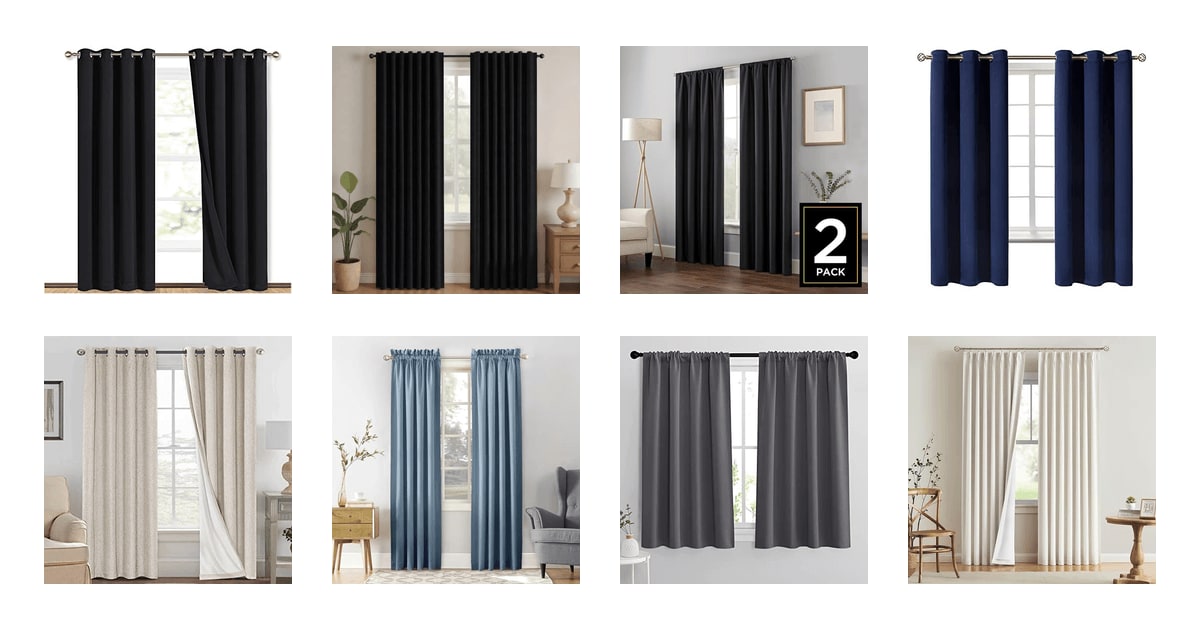
A dark bedroom is one of the simplest sleep upgrades you can make. Research published in the Journal of Clinical Sleep Medicine found that even dim light during sleep suppresses melatonin and cuts into REM quality, and Sleep Foundation analysis links true blackout conditions to falling asleep about 20 minutes sooner. The National Sleep Foundation's polling says roughly three-quarters of Americans think a dark room matters for good sleep, but only about 40% actually hang anything to get one. A pair of panels closes that gap in an afternoon.
Here's the part the packaging won't tell you. Almost no curtain blocks all the light, because the fabric isn't usually the problem — the gap around it is. Good Housekeeping Institute testing found panels labeled blackout ranged anywhere from 85% to 99.9%, and Bob Vila's light-meter work showed panels reading near zero at the center while still leaking at the top and sides. You can buy the densest fabric made and still wake up to a glowing halo around your window frame if the rod sits flush to the trim.
So think of these as one half of a system: the fabric does its job, and your mounting does the rest. We looked at construction, panel width, hanging style, care requirements and certifications, and we leaned on published testing and the patterns in owner feedback rather than marketing claims. We think that the NICETOWN Full Blackout Curtains are the best blackout curtains for most bedrooms, and that the Vision Home Pinch Pleat Blackout Curtains are the ones to buy if you want the room to look finished, not just dark.
Everything we recommend
Dense, washable, and available in nearly any size you need

Tailored pleats and a linen look, if you want the room to look designed

OEKO-TEX certified and genuinely dark, for less than the top pick

A real linen texture with a true blackout lining behind it
Prices as of Oct 22, 7:36 AM PT · Details
At a glance
| Product | Light Blocking | Panel Size | Price | |
|---|---|---|---|---|
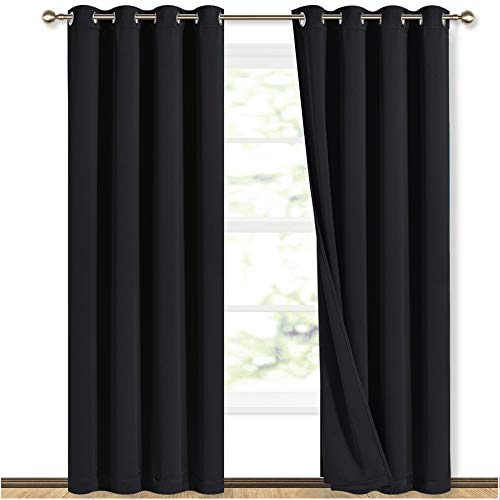
| NICETOWN Black Full Blackout Curtains for DiningTop pick | Full Blackout | 52"W x 84"L | $31.44 |
| Deconovo Blackout Curtains for BedroomBudget pick | 99% | 52"W x 84"L | $14.38On sale |
 | Eclipse Kendall Thermaback Blackout Curtain SetAlso in lineup | 98-99.9% | 42"W x 84"L | $22.04 |
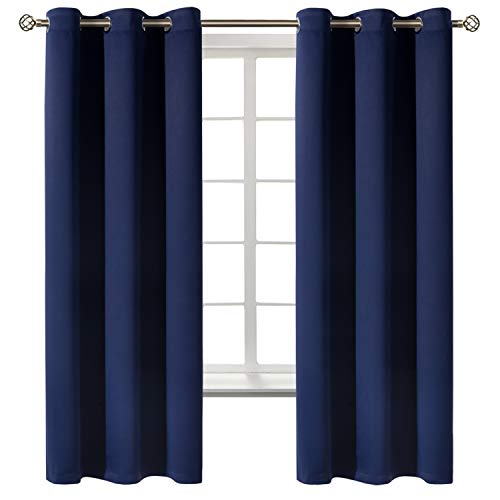 | BGment Navy Blue Blackout Curtains for BedroomAlso consider | 85% | 42"W x 63"L | $12.59On sale |
| H.VERSAILTEX 100% Blackout Linen Curtains 84" LAlso great | 100% | 52"W x 84"L | $27.95 |
 | Sun Zero Barrow Energy Efficient Rod PocketAlso in lineup | — | 54"W x 84"L | $20.98 |
 | RYB HOME Grey Blackout Curtains for KitchenAlso in lineup | 85-99% | 42"W x 45"L | $13.95 |
| Vision Home Natural Full Blackout Curtains LinenUpgrade pick | Virtually All | 40"W x 84"L | $68.88 |
Prices as of Oct 22, 7:36 AM PT · Details
How we picked
Real light blocking. We prioritized triple-weave and lined construction over foam backing, since Good Housekeeping Institute testing found blackout labels covering everything from 85% to 99.9%. Panels that named a construction type, not just a percentage, ranked higher.
Width and coverage. Panels need to total 2 to 2.5 times your window width to hang with enough fullness to seal the edges. We noted total pair width for every option, because a narrow pair undoes even the densest fabric.
Durability over years. Wirecutter's long-term look found foam backing cracks or peels within two to three years while quality triple-weave polyester holds past five. We favored washable woven fabrics over coated ones.
Safety certification. OEKO-TEX Standard 100 screens for more than 100 potentially harmful substances, and fewer than 30% of budget panels carry it. For nursery picks we treated it as close to a requirement.
Hanging and care. We looked at grommet, rod-pocket, back-tab and pleated options, and gave weight to panels you can machine wash without destroying the lining.
Top pick
Dense, washable, and available in nearly any size you need
NICETOWN Black Full Blackout Curtains for Dining
A two-layer triple-weave panel that gets a bedroom genuinely dark and holds up in the washing machine. It comes in a huge range of widths, lengths and colors, so you can usually get the size your window actually needs instead of the closest guess.
$31.44fromAmazonPrices as of Oct 22, 7:36 AM PT · Details
This is the panel we'd hang in most bedrooms. The two-layer triple-weave construction is the type Good Housekeeping's testing found does the real work, and it's the construction Wirecutter's long-term look found still intact past five years — unlike foam backing, which cracks and flakes. Owners in desert climates report the room staying noticeably cooler, and parents report a genuinely dark room for naps. It's a boring recommendation. It's also the right one.
Size range is the underrated reason to start here. NICETOWN sells these in hundreds of width and length combinations, which matters more than most people realize. Your panels need to total 2 to 2.5 times your window width to hang with enough fullness to seal the edges. A 52-inch-wide pair gives you 104 inches total, which covers a standard 36- to 48-inch window properly. Buying the exact size beats buying the popular size.
The grommets are the other quiet advantage. Eight silver grommets per panel slide easily on a standard rod, so you can whip them shut one-handed at 7 a.m. without wrestling fabric. If you're a shift worker opening and closing these twice a day, that friction adds up. Rod-pocket panels look tidier but they bunch and drag.
You can throw these in the washing machine — cold, tumble dry low — which sounds minor until you've lived with curtains for a few years. Dust, pet hair and cooking film build up on anything hanging near a window. Foam-backed panels can't take that treatment repeatedly. These can, and owners who've cycled through several sets say these are the ones they keep coming back to.
Flaws but not dealbreakers
They're not literally 100% blackout, and some owners say so plainly. A little light finds its way through at the seams and, more often, around the edges. If your window faces due east and you sleep past sunrise, plan on a ceiling-mounted track or a wide rod with returns rather than expecting fabric alone to solve it.
The black panels are dark on both sides, which is what makes them work — but it also means the outside of your house looks like you hung black fabric in the window. Some HOAs care about that. And a few owners note the panels aren't quite wide enough for their window, which is a sizing mistake more than a product flaw. Measure first, then buy up a size.
The listing doesn't state a warranty term, so treat Amazon's standard return window as your safety net.
Upgrade pick
Tailored pleats and a linen look, if you want the room to look designed
Vision Home Natural Full Blackout Curtains Linen
Pinch-pleated linen-blend panels with a full blackout lining and a weighted hem, so they hang like drapery instead of hardware-store curtains. Owners who've bought from high-end home retailers say these hold their own on appearance.
$68.88fromAmazonPrices as of Oct 22, 7:36 AM PT · Details
Most blackout curtains look like what they are: a flat rectangle of dark polyester. These don't. Seven permanent pinch pleats per panel and a weighted bottom hem give them the structure that makes drapery read as finished rather than functional. The linen-blend fabric has visible texture in a soft beige, which reads warm in a bedroom instead of clinical. If you've been putting off blackout curtains because you didn't want your bedroom to feel like a hotel conference room, start here.
The blackout performance isn't a compromise for the looks. The premium lining blocks essentially all sunlight and UV, and owners describe the rooms as genuinely dark, not just dim. The panels are heavy — about six pounds for the pair — and that weight is doing double duty: it drapes better and it insulates better. Owners consistently mention rooms feeling cooler after hanging them.
You get two ways to hang them, which matters more than it sounds. The 4-inch back tabs conceal a standard rod for a clean look, or the 18 included hooks let you mount them on a track system. A track is the single best thing you can do for true darkness, because it lets the panels wrap toward the wall instead of stopping at the rod's end. If you're chasing the last few percent of light, this is the pick that's built for it.
The listing notes these were independently tested with no detectable formaldehyde. That's not the same as an OEKO-TEX certification, but it's more disclosure than most panels offer, and it's worth something if you're hanging these in a kid's room.
Flaws but not dealbreakers
Each panel is only 40 inches wide, which is narrow. Pinch pleats eat width — the pleating gathers fabric permanently, so your usable coverage is well under 40 inches per panel. For anything wider than a standard single window, you'll need two pairs, and that changes the math on what this costs you.
These are heavy, and heavy fabric plus a track or a sturdy rod means real hardware. A tension rod won't do it. Budget for proper mounting into studs or anchors, especially if you're going ceiling-mounted.
Budget pickOn sale
OEKO-TEX certified and genuinely dark, for less than the top pick
Deconovo Blackout Curtains for Bedroom
A dense back-tab and rod-pocket panel that blocks up to 99% of light and carries OEKO-TEX Standard 100 certification. It's the one to buy for a nursery or a kid's room where you care what's in the fabric.
$14.38fromAmazonList pricePrices as of Oct 22, 7:36 AM PT · Details
The certification is the reason this beats other budget panels. Fewer than 30% of budget-tier blackout curtains carry OEKO-TEX Standard 100, which screens for over 100 potentially harmful substances. Deconovo's do. If you're hanging curtains a foot from a crib, that's not a nice-to-have. It's the whole decision, and it's rare at this end of the market.
The hanging is flexible in a useful way. Back tabs give you a tailored pleated look with the rod hidden; the rod pocket gives you a softer, more relaxed drape. Same panel, two looks. For a nursery you probably want the back tabs, since they pull the fabric closer to the wall and cut the light that sneaks over the top of a rod.
Owners with east-facing rooms report these knock out the morning sun almost completely, which is the hardest test a bedroom curtain faces. A night-shift worker's take is worth borrowing: the fabric does its part, but getting a room fully black takes attention to the mounting. That's true of every curtain here, and it's especially true of the less expensive ones.
Machine washable, cold, tumble dry low, hang promptly. Nursery curtains get spit-up on them. Plan on washing these more than you'd wash a living room panel, and know that they'll survive it.
Flaws but not dealbreakers
The fabric looks like what it costs. A few owners describe it as cheap-looking up close, and that's fair — this is a flat, dense polyester, not a textured weave. From across the room in a dark bedroom, nobody notices. In a room you actually look at during the day, you might.
It blocks up to 99%, not 100%, and the color you pick changes that number. Black and other dark shades darken best; lighter colors give up real performance. If you want a pale nursery, expect more light than the listing's headline number suggests.
The listing doesn't state a warranty term beyond Amazon's standard return policy.
Also great
A real linen texture with a true blackout lining behind it
H.VERSAILTEX 100% Blackout Linen Curtains 84" L
Faux-linen panels with a white flocked blackout backing that blocks light without the plastic sheen most blackout curtains have. It's the choice when you want the window to look good from inside and outside.
$27.95fromAmazonPrices as of Oct 22, 7:36 AM PT · Details
The backing is the detail worth knowing about here. Most blackout linings are a dull gray, which is what makes cheap panels look cheap from the street. These use a white flocked backing instead, so the outside of your house shows white curtains rather than a gray plastic-looking film. If you live somewhere with neighbors close by, or an HOA with opinions, that's a genuinely practical difference.
The linen texture holds up to daylight scrutiny. Owners repeatedly describe these as looking more expensive than they are, and several bought a second set for other rooms after living with the first. The fabric is 100% polyester woven to look and drape like linen, and it's stiff enough to hold its shape rather than collapsing into limp folds. It works in a living room as easily as a bedroom.
Eight anti-rust grommets per panel fit rods up to 1.5 inches, and the pair covers 104 inches — the same total width as our top pick. That's enough for a standard bedroom window with the fullness you need to seal the sides. The listing also notes the fabric is vinyl-free, which some shoppers care about and few competitors mention.
Flaws but not dealbreakers
The blackout claim is stronger than the reality for some owners. A few report these are room-darkening rather than fully black, particularly in lighter colorways. The natural and cream shades will always let more through than a dark panel — that's physics, not a defect, but it's worth knowing before you order the light color you actually want.
They arrive wrinkled and they need help. Owners consistently mention ironing or steaming them before hanging. Once pressed they drape beautifully, but factor in an hour of setup rather than pulling them out of the bag and hooking them up.
Who this is for
Buy blackout curtains if light wakes you up, if you sleep during the day, or if you're trying to keep a toddler asleep past 5:30 a.m. They're also worth it in hot climates for reasons that have nothing to do with sleep — the Department of Energy estimates medium-colored drapes with white plastic backings cut summer heat gain by 33%, and that properly installed insulating curtains can reduce annual heating and cooling costs by as much as 25%. Windows account for a quarter to a third of home heating and cooling energy use, so this is one of the higher-return passive upgrades you can make in an afternoon.
Skip them if your bedroom already has good shades and you just want a decorative layer, or if you're renting somewhere you can't mount hardware wide enough to matter. This guide covers ready-made fabric panels sold in standard bedroom sizes. It doesn't cover cellular shades, roller blinds, custom drapery or portable travel blackout kits, all of which solve overlapping problems differently. And if total darkness is the goal, know going in that no ready-made panel gets you there alone — you'll be pairing it with a track, a wraparound rod or a valance.
How we picked
We weighed five things. Construction: triple-weave and sewn-in linings over foam backing, since Good Housekeeping's testing showed blackout labels spanning 85% to 99.9% and foam is the layer that fails first. Coverage: total pair width relative to your window, because panels need to run 2 to 2.5 times the opening to seal the sides. Durability: Wirecutter's long-term look put foam backing at two to three years and quality triple-weave past five, so washability and woven fabric mattered. Safety: OEKO-TEX Standard 100 certification, which fewer than 30% of budget panels carry and which we treat as near-mandatory for nurseries. Hanging: grommets, back tabs, rod pockets and pleats each behave differently, and the ones that pull fabric close to the wall block more light.
Other blackout curtains for bedrooms worth considering
If you want a solid, dark-both-sides panel for a kid's room: The BGment Navy Blue Blackout Curtains for Bedroom — BGment's triple-layer polyester is the same color on both sides, which keeps the view from the street looking intentional. The listing is honest in a way we appreciate — it says up to 85% light blocking, not 100%, and owners generally describe it as plenty dark rather than pitch black. Six grommets per panel hang easily, the fabric is soft, and it's machine washable. The catch is size: the 42-by-63-inch pair is short and narrow, so it fits small or standard windows and nothing bigger. For a nursery with a modest window, that's fine. For a wide bedroom window, look at the top pick instead.
The competition
This is what our research surfaced, not a survey of everything sold. Blackout curtains are a crowded category with hundreds of near-identical listings, and the panels below all have real buyers who like them — they just lost to a pick on light blocking, coverage or construction.
The Eclipse Kendall Thermaback Blackout Curtain Set — The Eclipse Kendall Thermaback is the one you can grab off a shelf at Walmart or Target without waiting for shipping, and its Thermaback foam backing does block a lot of sun and heat. Owners in Florida report it holding up against summer light, and one kept a set going six years. But foam is the construction that Wirecutter's long-term look found cracks or peels within two to three years, the panels are only 42 inches wide each, and a meaningful share of owners say it darkens the room without fully blacking it out. The care instructions call for line drying, which is a real chore. Buy it if you need curtains today and a drive to the store beats a delivery window.
The Sun Zero Barrow Energy Efficient Rod Pocket — Sun Zero's Barrow panel is a rod-pocket curtain in nice colors at 54 inches wide each, which is generously wide for the category. Owners like the vintage blue and sage colorways and the price, and several use it in bathrooms and entryways where a little filtered light is welcome. That's the tell: owners describe this as room-darkening, not blackout, and note that light-colored versions can glow when the sun hits. The Amazon listing gives almost no construction detail — no fabric weight, no lining description. If you want good-looking drapes that take the edge off bright sun, this works. If you're trying to sleep at noon, it isn't the one.
The RYB HOME Grey Blackout Curtains for Kitchen — RYB HOME's grey panel is a triple-weave fabric with a 3-inch rod pocket, and it's genuinely useful for the windows most curtain guides ignore — bathrooms, kitchens, basements, RVs. At 42 by 45 inches it's a short panel by design. Owners praise the thickness and the privacy, and it does cut heat well. But the light blocking lands in the 85% to 99% range depending on color, and several owners specifically say it isn't blackout even though the listing says so. It also supports clip rings, which aren't included. For a small utility window, it's a smart buy. For a bedroom where you need dark, our picks do more.
Installation and fit
Mounting matters more than fabric, and it's where most people lose. Hang your rod 6 to 12 inches above the window and extend it 4 to 6 inches past the frame on each side — Apartment Therapy's reader trials found that this alone measurably cut perceived morning light for day sleepers, versus mounting flush to the trim. Buy enough width that the closed panels total 2 to 2.5 times your window opening, so the fabric hangs in folds instead of stretching flat. For the last stubborn slivers of light, a wraparound rod that returns to the wall, a ceiling-mounted track, or a simple valance across the top will seal the gaps fabric can't. Wash on cold, gentle, and tumble dry low, then hang the panels immediately — creases set fast, and a hot dryer is what kills a lining.
Questions we get
Do blackout curtains really block 100% of light?
Rarely, and the fabric usually isn't the reason. Good Housekeeping Institute testing found panels labeled blackout ranging from 85% to 99.9%, and Bob Vila's light-meter readings showed panels hitting near zero at the center while leaking at the top and sides. Triple-weave and foam-backed fabric with sealed mounting is what gets closest to true elimination. Treat the curtain as one part of the setup and the mounting as the other.
What's the difference between blackout and room-darkening curtains?
Blackout describes a panel built to eliminate light, usually with a dense triple-weave or a sewn-in lining. Room-darkening is a softer claim — it means noticeably dimmer, often in the 85% to 95% range. The labels aren't regulated, so a curtain can say blackout and still perform like room-darkening. Check the construction described in the listing rather than trusting the word on the package.
What should I hang in a nursery?
Look for OEKO-TEX Standard 100 certification first, since it screens for more than 100 potentially harmful substances and fewer than 30% of budget-tier panels carry it. The Deconovo panels have it, which is why they're our budget pick. Beyond the fabric, mount the rod high and wide so nap light doesn't leak around the edges, and keep cords and hardware well out of reach of the crib.
Can blackout curtains actually lower my energy bills?
Yes, measurably. The Department of Energy estimates that medium-colored drapes with white plastic backings reduce summer heat gain by 33%, and that properly installed insulating curtains can cut annual heating and cooling costs by up to 25%. Windows are responsible for 25% to 30% of residential heating and cooling energy use. Close the curtains during peak afternoon sun on west- and south-facing windows for most of the benefit.
Do they help with street noise?
Somewhat. Forbes Home's testing found heavy thermal blackout curtains reduce ambient noise by roughly 15% to 25%, which takes the edge off traffic and hallway sound without making the room quiet. Heavier fabric with more fullness does more, so wide panels help here too. Don't buy curtains expecting soundproofing — buy them for darkness and treat the noise reduction as a bonus.
How long do they last, and how do I wash them?
Construction decides it. Wirecutter's long-term look found foam-backed panels start cracking or peeling within two to three years of regular use, while quality triple-weave polyester holds past five. Wash on a cold gentle cycle, tumble dry low, and hang them right away so creases don't set. Skip bleach and high heat entirely — heat is what delaminates a lining.
Why you should trust us
For this guide:
- We compared manufacturer specifications for every panel here, including fabric construction, total pair width, hanging style and care instructions.
- We read published testing and reporting from the Good Housekeeping Institute, Bob Vila, Forbes Home, Wirecutter and Apartment Therapy, along with Department of Energy and sleep-research findings on light and insulation.
- We reviewed recurring themes in owner feedback, particularly the common gap between blackout claims and how dark rooms actually get.
- We read owner reviews on every listing, weighted toward the critical ones, because that is where the recurring failures show up.
- We have a systematic way of automatically fetching the latest prices, so the numbers on this page stay current.
- This is a research-focused guide, so the team may not own every product listed — though we often do own the top winners, which gives us extra context for the recommendations.
- We don't accept free products, and the retailer commission never changes which product we recommend.
Sources
Best Blackout Curtains — Wirecutter, Wirecutter
Best Blackout Curtains of 2026 — Good Housekeeping, Good Housekeeping Institute
Best Blackout Curtains — Forbes Home, Forbes Home
Best Blackout Curtains Tested by Bob Vila, Bob Vila
Best Blackout Curtains for Better Sleep — Sleep Foundation, Sleep Foundation
Best Blackout Curtains — Apartment Therapy, Apartment Therapy
Energy-Efficient Window Coverings — U.S. Department of Energy, U.S. Department of Energy
Windows and Skylights Energy Loss — U.S. Department of Energy, U.S. Department of Energy
OEKO-TEX Standard 100 Certification, OEKO-TEX Association
Sleep in America Poll — National Sleep Foundation, National Sleep Foundation
Light at Night and Sleep Quality — Journal of Clinical Sleep Medicine, Journal of Clinical Sleep Medicine (AASM)
Global Window Covering Market Report — Grand View Research, Grand View Research
Amazon product listings and owner reviews for all 8 products
Manufacturer specification pages for each product
Some passages in this guide may be paraphrased with AI help.
Product prices and availability are accurate as of the date/time indicated and are subject to change. Any price and availability information displayed on Amazon.com at the time of purchase will apply to the purchase of this product.
More like this.
Continue exploring home reviews and recommendations.

The Best Blackout Curtains for Bedrooms
A dark room is one of the simplest sleep upgrades you can make. Streetlights, headlights sweeping across the ceiling, the sun hitting an east-facing…

The Best Blackout Roller Shades for Bedrooms
Light is the loudest thing in a bedroom, and most people don't notice it. Northwestern University researchers, writing in PNAS, found that a single night…

The Best Shower Curtain Liners
A liner has one job: keep water in the tub and stay clean while it does. Most people don't think about it until the bottom edge turns pink and speckled.…

The Best Smart RGB LED Strip Lights for Bedrooms
Bedroom light gets used in a specific way. You want a soft glow behind the headboard at night, something bright enough to find a charging cable, and a…

The Best Humidifiers for Large Rooms and Bedrooms
Dry indoor air is a problem you feel before you name it. You wake up with a scratchy throat, your lips crack, static shocks you every time you touch a…

The Best Blackout Silk Sleep Masks
A good sleep mask does one job: it keeps light off your eyelids. That matters more than it sounds. In a Northwestern University study published in PNAS,…