The Best Blind Spot Mirrors for Cars
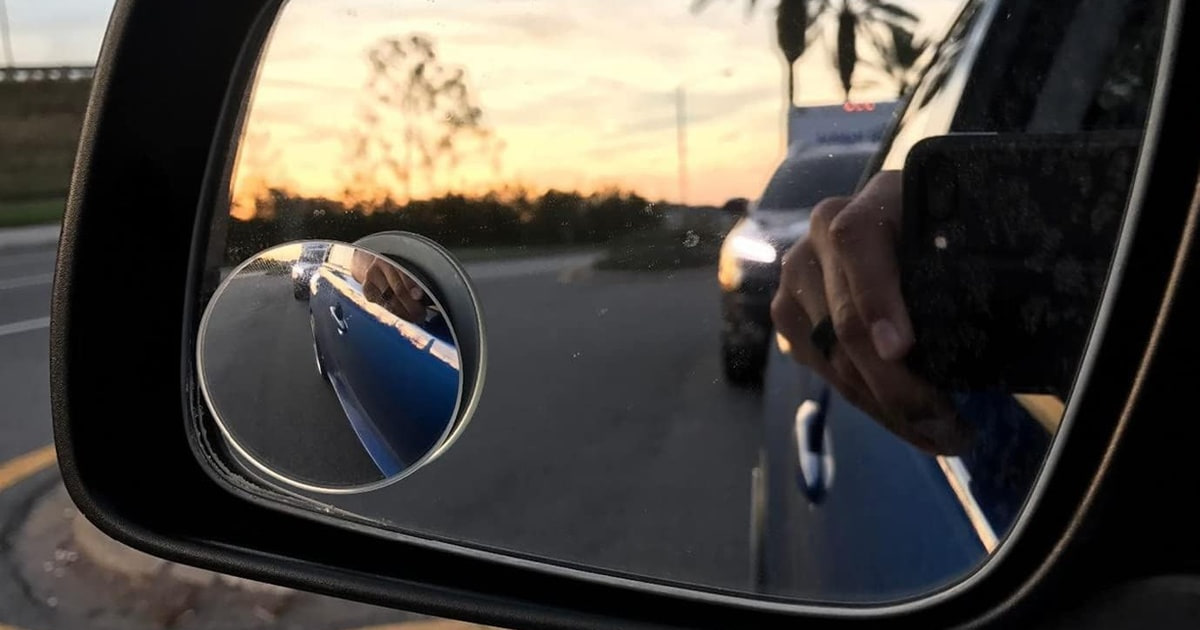
Your side mirrors lie to you. There's a wedge of road beside your rear bumper that they simply don't cover, and that's where the car you didn't see is sitting. A small convex mirror stuck to the outer corner of your side mirror fills in most of that wedge for less than the cost of a tank of gas. If you drive an older car with no blind spot warning lights, or you merge onto a crowded highway twice a day, it's one of the simplest safety upgrades you can make.
None of these are perfect, and the reason is physics. A convex mirror squeezes a wide view into a small piece of glass, so everything in it looks farther away and smaller than it really is. That truck in your add-on mirror is closer than it appears. Adhesive is the other weak point — owners across nearly every brand report mirrors that peel off in summer heat or after a trip through an automatic car wash. You'll still want to shoulder-check, at least until the new view becomes second nature.
So treat these as a supplement, not a substitute. Set your factory mirrors correctly first, add the small mirror second, and keep turning your head. We think that the Ampper Slender Blind Spot Mirrors are the best blind spot mirrors for most people, and that the Utopicar Long Blind Spot Mirror is the one to buy if you want a cleaner look on a sedan or coupe.
Everything we recommend

A long, thin view with a base that actually swivels

Longer glass and a tidier look, but it only tilts

Plain round glass that sticks on and works

Radar and LED alerts, for drivers who want warnings not mirrors
At a glance
| Product | Glass size | Adjustment | Price | |
|---|---|---|---|---|
| Ampper Slender Blind Spot MirrorsTop pick | 3.6" x 1.3" | 360° swivel + sway | $13.74 |
 | CIPA 49402 Oblong 4” X 5.5” Stick-OnAlso consider | 4" x 5.5" oblong | — | $4.29On sale |
| Utopicar Long Blind Spot Mirror 5.3” xRunner-up | 5.3" x 1.3" | — | $13.27On sale |
| Xiqaler 2 PCS Blind Spot MirrorsBudget pick | 3" round | — | $7.99 |
 | Kitbest Rear View Mirror - Interior ClipAlso consider | 12" x 3" flat | — | $9.99 |
| PrecoRADAR Wireless Rear Radar Blind Spot DetectionUpgrade pick | — | — | $1,619.97 |
 | 2 Pieces Round Stick-On Convex Blind SpotAlso in lineup | Round, — | — | $0.99 |
How we picked
Shape and coverage. We compared stated glass dimensions across every listing, favoring long or wide convex shapes that put glass where adjacent-lane traffic actually sits. Anything under about 3 inches in its longest dimension covers too little road to be worth the mirror space.
Adjustability. We read spec sheets for a swivel or pivot base, because mirror housings rake at different angles from car to car. A mirror that only tilts, or doesn't move at all, makes placement permanent.
Adhesive and removal. Owner feedback across this category keeps circling back to tape that fails in heat or at the car wash. We weighted listings whose adhesive is specified for outdoor temperature swings and whose instructions tell you to clean with alcohol and press hard.
Factory mirror clearance. We looked at footprint relative to a typical side mirror. A mirror that covers a meaningful chunk of your factory glass trades one blind zone for another, and in some states it raises a legal question.
Vehicle fit range. We checked whether listings state fit for sedans, SUVs, trucks and vans, since a 5-inch strip that looks right on a pickup mirror may not sit flush on a compact car.
Top pick
A long, thin view with a base that actually swivels
Ampper Slender Blind Spot Mirrors
These frameless mirrors measure 3.6 by 1.3 inches, so they cover the lane beside you without eating into your factory glass. The pivot base rotates a full 360 degrees and tilts, which means you can aim them at the lane instead of the sky.
$13.74fromAmazonThe long, slim shape is the right shape for this job. A round fisheye wastes half its glass on sky and pavement. At 3.6 inches wide and only 1.3 inches tall, these put the glass where the cars are — low and out to the side. On a sedan's side mirror that leaves plenty of factory view untouched, which matters both for safety and, in some states, for staying legal.
The swivel base is the part people underrate. Mirror housings sit at different angles on a Civic, an F-150 and a Sprinter van, so a fixed-angle stick-on is a gamble. Here the mirror pops onto a black pivot that turns 360 degrees and rocks about 30 degrees, so you can mount the base wherever the adhesive will hold and then aim the glass separately. You adjust it once in the driveway and forget it.
You get four, not two. That sounds like filler, but it's genuinely useful: you can try one placement, peel it off if the angle is wrong, and still have spares. Some drivers put the extras on a second car or on the back of a van. The listing also notes they're not meant for motorcycles, which is worth knowing before you order.
Owner feedback is more mixed here than the price suggests. A meaningful share of buyers report trouble, and most of the complaints trace back to mounting rather than the glass. The listing itself tells you to clean the mirror with alcohol and press down hard — that instruction exists because people skip it. Follow it, give the adhesive a warm day and a few hours before a car wash, and you'll likely avoid the common failure.
Flaws but not dealbreakers
The adhesive is the weak link. Enough owners report mirrors that let go — or pop off the pivot base — that you should treat installation as a real step, not a two-second job. Clean with alcohol, press firmly, and park in the sun for a bit before you expect the tape to hold.
Frameless glass has a thin exposed edge. It's fine in normal use, but if you catch it with an ice scraper or a pressure washer wand, it can chip. Mount it where a brush won't rake across it.
The slim profile that makes these look good on a sedan also limits how much vertical road you see. If you want to spot a curb while parallel parking, a round mirror gives you more of that.
Runner-upOn sale
Longer glass and a tidier look, but it only tilts
Utopicar Long Blind Spot Mirror 5.3” x
At 5.3 inches long and 1.3 inches tall, this is the widest horizontal view in our picks, and the low-profile shape blends into a sports car or coupe mirror. Adjustment is up-and-down only, so the mounting spot has to be right.
$13.27fromAmazonList priceThe extra length is the reason to pick this one. A 5.3-inch strip of convex glass sweeps further across the adjacent lane than a 3-inch round mirror, so a car coming up beside you appears sooner and stays in view longer. On a wide SUV or truck mirror, that horizontal reach is the thing you actually want. It's also the shape that looks least like an accessory bolted onto your car.
You trade adjustability for that length. The design tilts up and down, not side to side. So the horizontal aim comes from where you place the sticker — get it slightly crooked and you can't twist it back. Measure, hold it in place, sit in the driver's seat and check the view before you peel the backing. Our top pick forgives a sloppy mount; this one doesn't.
Utopicar leans on its adhesive, which is rated for heat, cold, rain and car washes. Owner feedback on this listing is broadly positive across a very large number of buyers, and it's one of the most widely purchased blind spot mirrors sold. That volume is the closest thing to reassurance you get in a category with no independent lab testing.
The company calls the glass engineered for reduced distortion compared with a basic fisheye, and the geometry supports that claim: a gentler curve over a longer piece of glass bends the image less than a tight curve over a small one. You still get compression — closer than it appears applies here too — just less of it than with a 2-inch dome.
Flaws but not dealbreakers
No side-to-side adjustment means placement is permanent in practice. If you mount it a few degrees off, your options are living with it or peeling it off and burning the adhesive.
The long strip needs a long, flat stretch of mirror. On a small compact car mirror or a heavily curved housing, 5.3 inches may not sit flush, and a mirror that doesn't sit flush is a mirror that peels.
It comes as a 2-pack with no spares. There's no room for a failed first attempt.
Budget pick
Plain round glass that sticks on and works
Xiqaler 2 PCS Blind Spot Mirrors
Two 3-inch round convex mirrors with HD glass and an adhesive back, and nothing else. There's no swivel and no frame, but the round shape covers more vertical road than a slim strip, which helps when you're backing into a space.
$7.99fromAmazonSometimes you just want glass that works. These are 3-inch round convex mirrors with adhesive on the back, no pivot, no pretense. The round shape gives you more up-and-down coverage than the long slim designs, which is why owners mention them for backing up and parking as much as for lane changes. On a big truck mirror, that extra vertical view earns its keep.
The simplicity cuts both ways, and mostly in your favor. Fewer parts means fewer things to fail — no pivot joint to loosen, no base to separate from the glass. The flip side is that the only aim you get is the angle at which you stick it. Hold it against the mirror, check the view from the driver's seat, then commit.
Xiqaler is a small brand with a short review history, so there's less feedback to go on than with the big sellers. What's there is positive, and the themes are consistent: easy to stick on, stays on, clear view. Several owners mention mounting them on full-size pickups, where the wide factory mirror leaves plenty of room.
The listing claims the compact size avoids blocking your original mirror, and at 3 inches that's believable on most vehicles. On a small compact car mirror it's a tighter call. Measure your own glass and plan to mount in the outer lower corner — that's the placement most often recommended, and it keeps the center of your factory view clear.
Flaws but not dealbreakers
No swivel at all. If your mirror housing sits at an awkward rake, you can't correct for it after the fact.
Very little owner feedback exists for this listing, so there's no long-term track record on how the adhesive holds through a few summers.
Round convex glass distorts more aggressively than a long, gently curved strip. Expect cars to look smaller and farther away than they are, and give yourself a few days to recalibrate.
Upgrade pick
Radar and LED alerts, for drivers who want warnings not mirrors
PrecoRADAR Wireless Rear Radar Blind Spot Detection
This is a radar kit, not a mirror. A wireless sensor watches a zone roughly 10 feet wide and 15 feet deep behind you and lights a five-LED in-cab display when something's there. It costs many times what a stick-on mirror does.
$1,619.97fromAmazonThis is the only pick here that tells you something is there instead of showing you. A mirror still needs a glance; radar lights up whether you look or not. That difference matters. IIHS found that blind spot detection systems cut lane-change crash rates by 14 percent and lane-change injury crashes by 23 percent — a real effect, measured across real crash data, which is more than any stick-on mirror can claim.
The hardware is built for working vehicles, not just commuters. The Sentry79 sensor is rated IP67 and IP69K, so it's sealed against dust, submersion and pressure washing, and the listing calls it out for low light, extreme weather and high-vibration use. If you drive a van for a living or run a small fleet, that durability spec is the reason to look here rather than at a cheaper consumer kit.
Wireless is the installation story. The PRECOlink devices skip the long cable runs that make most retrofit radar kits a dashboard-disassembly job, and mounting hardware and a bracket are included. It's still more involved than peeling a sticker — you're mounting a sensor to the vehicle and placing a display in the cab. Plenty of people will want a shop to do it.
Know what you're buying: the detection zone is roughly 10 feet wide by 15 feet deep behind the vehicle, and alerts come through a five-LED in-cab display. That's a rear-zone system aimed at backing and maneuvering as much as highway lane changes. If what you want is a left-and-right mirror-mounted warning light like a new car's, read the zone spec carefully before you commit.
Flaws but not dealbreakers
The price gap is enormous. This costs many times what any mirror here does, and that's before you pay someone to install it.
There's essentially no owner feedback on this listing yet, so you're trusting the spec sheet and the brand rather than a track record of buyers.
The detection zone is behind the vehicle, not a pair of side blind zones. It's genuinely useful, but it isn't a drop-in replacement for the factory blind spot monitoring in a new car.
Installation is a project. Wireless removes the cable runs, but you still need to mount a sensor, place a display and aim the zone correctly.
Who this is for
Buy one of these if your car has no factory blind spot monitoring and you merge in traffic regularly — highway commuters, delivery and rideshare drivers, anyone teaching a new driver. They're also an easy fix for a van or truck where the factory mirrors leave a wide gap beside the rear wheels. Before you order anything, though, reset your side mirrors: angle them outward until your own flank is just barely out of view. That alone shrinks the blind zone, and it costs nothing.
This guide covers add-on mirrors you stick or clip onto your existing mirrors, plus one radar retrofit kit for drivers who want warning lights instead of glass. It doesn't cover replacement factory mirrors, towing mirrors or full camera systems. Skip the stick-ons if your car already has blind spot warning — you'd be covering good glass for no gain — and skip them if you're not willing to keep shoulder-checking, because a convex mirror flattens distance and will fool you at first.
How we picked
We built this guide from manufacturer spec sheets, published safety research and recurring themes in owner feedback, weighing five things. Shape and coverage: long or wide convex glass that aims at the adjacent lane rather than at sky and pavement, with at least about 3 inches in the longest dimension. Adjustability: a swivel or pivot base, since mirror housings rake differently on every vehicle and a fixed mirror makes placement permanent. Adhesive and removal: tape specified for heat, cold and car washes, because peeling mirrors are the single most common complaint in this category. Factory mirror clearance: a footprint small enough that it doesn't block the view you already have. Vehicle fit range: stated compatibility across sedans, SUVs, trucks and vans, because a strip that suits a pickup may not sit flush on a compact.
Other blind spot mirrors for cars worth considering
If you want to fix the rear blind zone instead of the side ones: The Kitbest Rear View Mirror - Interior Clip ($9.99) — This Kitbest mirror clips over your interior rearview mirror and widens the view behind you to about 12 inches across. It's a different problem than the side mirrors solve — useful if your rear window is small, your headrests are tall, or you've got a full back seat. Installation takes seconds and needs no tools, and it ships with two frameless stick-on blind spot mirrors as a bonus, so you can cover both blind zones in one order. What you give up is depth perception: it's flat glass in this variant, which keeps distances honest but widens the view less than a convex panoramic would. Owner feedback on this listing is thin, so lean on the spec sheet.
If you want a big, old-school convex mirror for a truck or RV: The CIPA 49402 Oblong 4” X 5.5” Stick-On ($4.29) — CIPA has been making automotive mirrors for decades, and this oblong HotSpot measures 4 by 5.5 inches — far bigger than anything else here. On a large truck, van or RV mirror, that size gives you a genuinely wide view, and the glass quality draws consistent praise from owners. The catch shows up repeatedly in feedback: the included double-sided tape is weak, and several owners report it letting go within days. Buy a strip of good automotive mounting tape at the same time and plan to replace what's in the box. It's also too large for most sedan mirrors, so check your glass first.
The competition
Here's what our research turned up beyond the picks. This isn't every blind spot mirror sold — the category is full of near-identical generic listings that appear and vanish — but these are the options that came up often enough to be worth a word.
The 2 Pieces Round Stick-On Convex Blind Spot ($0.99) — This generic 2-pack of round stick-on convex mirrors is the kind of listing that fills search results in this category: no brand behind it, almost no owner feedback, and a spec sheet that's hard to trust. The listed dimensions describe a cube rather than a mirror, and the one detailed piece of owner feedback reports that the glass arrived more than twice the advertised size, made of plastic rather than glass, with a floppy mounting base and tape that fits either the base or the lens but not both. If you want a plain round stick-on, the Xiqaler pick does the same job with a clearer spec and better feedback. There's no real reason to choose this one.
Installation notes
Do this on a warm, dry day — adhesive hates cold glass. Wipe the mounting spot with isopropyl alcohol and let it dry completely; skipping this is the single most common reason mirrors fall off. Before you peel the backing, hold the mirror in place, sit in the driver's seat and check what you actually see. Aim for the outer lower corner of your side mirror, which is the placement most often recommended, and keep the center of your factory view clear. Press hard for a good 30 seconds, then give the tape several hours before you drive and a day or two before a car wash. If you ever need to remove one, warm it with a hair dryer and peel slowly; clean up leftover residue with an adhesive remover rather than a blade.
Questions we get
Do blind spot mirrors actually work?
Yes, within limits. A convex mirror in the right spot shows you a chunk of the lane your factory mirror misses, which is exactly where the car you'd otherwise hit is sitting. The limit is that it's a passive aid — it only helps if you look at it. Radar-based blind spot detection, which warns you whether you look or not, has measurable crash-reduction data behind it: IIHS found a 14 percent drop in lane-change crash rates.
Where should I place a blind spot mirror on my side mirror?
The outer lower corner is the standard recommendation. That's the part of your factory mirror showing the least useful information, so you lose almost nothing by covering it. Before you commit, hold the mirror in place and check the view from the driver's seat — the right angle varies with how your mirror housing is raked and how tall you sit.
Do blind spot mirrors distort distance?
Yes, and this is the thing to internalize. Convex glass compresses a wide view into a small area, so cars look smaller and farther away than they really are. Give yourself a week of deliberate shoulder-checking to calibrate. A longer, gently curved mirror distorts less than a small round dome, which is part of why we favor the slim shapes.
How do I properly adjust my side mirrors to eliminate blind spots?
Angle each side mirror outward until your own car's flank is just barely out of view. Most drivers aim them too far inward and end up looking at their own door, duplicating what the interior mirror already shows. This adjustment costs nothing and shrinks the blind zone meaningfully — do it before you add any accessory.
Do blind spot mirrors fall off in hot or cold weather?
Sometimes, and it's the most common complaint in the category. Heat softens adhesive and cold makes it brittle, so mounting on a warm, dry day gives the tape its best shot. Clean the glass with alcohol first, press hard, and wait several hours before driving and a couple of days before a car wash. If a mirror does let go, good automotive double-sided tape usually solves it for good.
Can I add blind spot detection to an older car without factory BSM?
You can, with a radar retrofit kit like the PrecoRADAR Sentry79 here. It mounts a sensor to the vehicle and puts an LED display in the cab, and it alerts you rather than waiting for you to glance. Expect to pay many times what a mirror costs, and expect a real installation — wireless kits skip the long cable runs but you're still mounting hardware and aiming a detection zone.
Why you should trust us
For this guide:
- We compared manufacturer spec sheets for every mirror here, focusing on stated glass dimensions, adjustment range and adhesive claims.
- We read published safety research on blind spot detection, including IIHS crash-rate findings, to understand what passive mirrors can and can't deliver.
- We reviewed recurring themes in owner feedback across these listings, where adhesive failure and distance distortion come up far more often than glass quality.
- We read owner reviews on every listing, weighted toward the critical ones, because that is where the recurring failures show up.
- We have a systematic way of automatically fetching the latest prices, so the numbers on this page stay current.
- This is a research-focused guide, so the team may not own every product listed — though we often do own the top winners, which gives us extra context for the recommendations.
- We don't accept free products, and the retailer commission never changes which product we recommend.
Sources
IIHS: Blind spot detection systems reduce lane-change crashes, IIHS
Consumer Reports: How to adjust your mirrors to eliminate blind spots, Consumer Reports
NHTSA: Rearview/side visibility and lane-change crash data, NHTSA
AAA: Blind spot monitoring system evaluations, AAA
Wirecutter: car accessories coverage, Wirecutter
Car and Driver: blind spot monitoring explained, Car and Driver
Manufacturer spec pages (Ampper, CIPA, Utopicar, Steelmate), Manufacturers
SAE paper on mirror adjustment (Platzer, 1995), SAE International
Amazon product listings and owner reviews for all 7 products
Manufacturer specification pages for each product
Some passages in this guide may be paraphrased with AI help. Prices are refreshed automatically.
More like this.
Continue exploring electronics reviews and recommendations.

The Best Truck Towing Mirrors
The first time you pull a trailer that's wider than your truck, you notice the problem immediately. Your factory mirrors show you the side of the trailer…

The Best Backup Camera Rearview Mirrors
Most of your driving happens facing forward. But the two minutes a day you spend in reverse are where the dents and the tragedies happen. Federal safety…

The Best Smart Blinds and Shades
You touch your window shades more than almost anything else in the house, and you never think about it. Up in the morning, down at dusk, halfway when the…

The Best Ground Blinds for Deer Hunting
A ground blind does one job: it hides you at eye level with the deer. That's harder than it sounds. You're sitting where a whitetail's nose, ears and eyes…

The Best Lighted Makeup Mirrors
Bad bathroom lighting has ruined more eyeliner than shaky hands ever did. You lean toward the sink, the overhead bulb drops a shadow straight down your…

A Beginner's Guide to POP MART: Everything You Need to Know About Blind Box Toys (2026)
Discover the captivating world of POP MART blind box collectibles. From understanding the thrill of the chase to choosing your first series, this complete guide helps newcomers navigate the exciting hobby of art toy collecting.