The Best Car Seat Covers
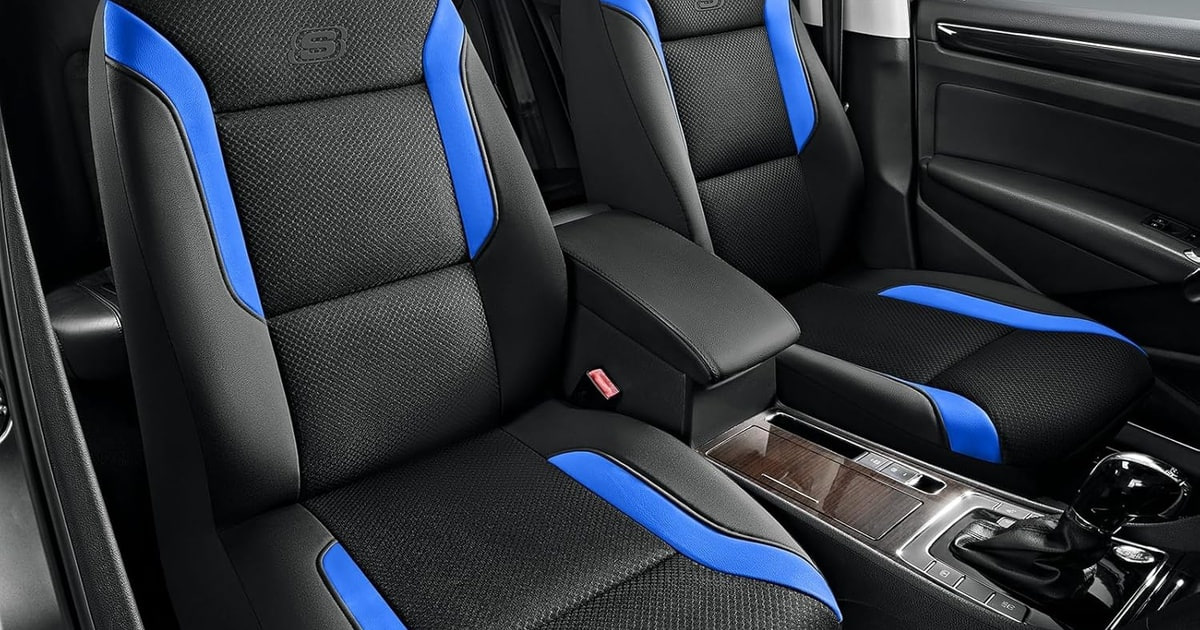
Your car's seats take more abuse than any other surface inside it. Muddy paws, juice boxes, gym bags, work boots, sunscreen, coffee — it all lands on the same two square feet you sit on every day. A good seat cover takes that beating instead of your upholstery, and it comes off when you sell the car. That's the whole pitch. You keep the factory fabric underneath close to new, and you stop flinching every time someone climbs in with a wet dog.
No cover does everything, though. Fit is the whole game, and even custom-cut sets can pull tight or gape a little depending on your seat bolsters and hardware. Tough, thick fabrics blunt heated and cooled seats. Thin, breathable ones wear faster and feel less padded. Every cover here claims airbag-compatible breakaway seams, but compatibility can vary by trim, so you still have to check your exact vehicle. And nothing that slips over a seat looks quite like factory leather.
So think about the mess you're actually managing, and buy for that. Dogs and toddlers want a wipeable surface. A work truck wants canvas. A commuter car with heated seats wants something thin. We think that the Covercraft SeatSaver Custom Seat Covers are the best car seat covers for most people, and that the Clazzio Car Seat Covers are the ones to buy if you care more about how your interior looks than how fast it wipes clean.
Everything we recommend

Broad vehicle coverage and real protection, in a workaday look

Looks re-upholstered rather than covered, if you can take the heat

Thin enough to keep heated seats working, thin on padding too
Wipe-clean coverage for real messes, at the cost of plushness
At a glance
| Product | Price | |
|---|---|---|
| Covercraft SeatSaver Custom Seat CoversTop pick | $361.92 |
 | Katzkin Leather Seat CoversAlso in lineup | $123.49 |
| WeatherTech Seat ProtectorAlso great | $73.95 |
| Clazzio Car Seat CoversRunner-up | $39.99On sale |
| CalTrend I Care Seat CoversBudget pick | $302.82 |
How we picked
Fit and coverage. We compared manufacturer fit databases and published evaluations to see which brands cut patterns per vehicle rather than by rough seat shape. Full coverage of the seat-back hinge and clean routing around belt hardware were the thresholds that mattered.
Airbag-safe seams. We only considered covers with explicit breakaway seam construction for seat-mounted side airbags, verified in manufacturer documentation or independent reviews. Anything relying on a vague general safety claim was out.
Cleanup and materials. We looked at how each fabric handles the messes people actually report: liquids, pet hair, mud and food. Wipeable or machine-washable construction counted heavily for family and dog use.
Heated and cooled seats. We checked stated fabric thickness against published heat-transfer findings, since covers in the 4 to 8mm range cut thermal seat performance sharply. Covers that keep those systems usable earned a place on their own.
Install and upkeep. We weighed owner-reported installation times, whether tools or a shop are required, and how each material holds up to washing or conditioning over years of daily use.
Top pick
Broad vehicle coverage and real protection, in a workaday look
Covercraft SeatSaver Custom Seat Covers
The SeatSaver is cut from vehicle-specific patterns, with breakaway seams designed to let a seat-mounted airbag deploy. It fits more vehicles than anything else here, in more fabrics, and it pulls off for a wash when your kid's smoothie loses a fight with a speed bump.
$361.92fromAmazonThe fit is the reason to buy it. Covercraft cuts patterns from a database covering more than 4,000 vehicle models, so the cover follows your seat instead of fighting it. It wraps integrated headrests, threads through the belt slots, and tucks against the door trim without the bunching you get from an elastic-hem universal cover. Published reviews keep pointing at that database accuracy as the thing competing brands can't match.
The airbag seams are engineered, not just claimed. Every SeatSaver uses breakaway stitching meant to tear at a set force so a side airbag fires at full strength. That matters more than it sounds. Nearly every car built in the last two decades has an airbag tucked into the outboard seat bolster, and a cover that pins it shut is a documented hazard, not a hypothetical one.
You pick the fabric to match the mess. There are more than 20 material options, and the differences are practical rather than decorative. Waterproof polycotton is the sensible default for a family car. Ducks Weave canvas is what you want in a work truck, since it shrugs off tool edges and claws. Neoprene handles wet gear. Leatherette gets you a dressier look without leather's upkeep.
Installing it is a weekend-morning job, not a project. Owners generally describe 45 to 60 minutes for a pair of front seats with no tools, and Covercraft publishes vehicle-specific videos for nearly every application. Do the fronts first so you learn how the fabric behaves on your seats. Rear benches take longer, especially split-folding ones with a center armrest, but nothing here needs a shop.
Flaws but not dealbreakers
The polycotton is stiff at first. Out of the box it's close to board-like, and it takes a few weeks of sitting on it before the fabric relaxes and stops looking a little puffy at the corners. That's normal for the material and it isn't a dealbreaker. But if you want something that feels soft on day one, leatherette or a thin polyester set will make you happier.
It costs more than a bargain universal cover, and it looks like a cover. SeatSaver sits mid-pack in this group, and the result is tidy and protective rather than luxurious. Color and pattern choices also swing hard by fabric, so the exact combination you have in mind may not exist for your vehicle.
It's not the answer for heated or cooled seats. Standard-thickness fabric puts an insulating layer between the seat and you, and that's exactly what a thermal system can't work through. If your car warms or vents its seats, a thinner cover is the better call.
Runner-upOn sale
Looks re-upholstered rather than covered, if you can take the heat
Clazzio Car Seat Covers
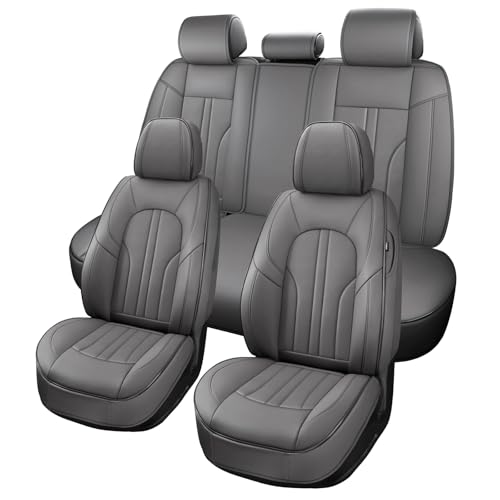
Clazzio's synthetic leather is cut to your vehicle's own panel lines, so the stitched seams land roughly where the factory seams do. From a few feet away it reads as an upholstery job instead of an accessory, and it costs a fraction of genuine hide.
$39.99fromAmazonList priceThe pattern work is what you're actually paying for. Instead of a generic shape pulled tight with straps, Clazzio draws a unique cutting pattern per vehicle application so the seams follow the original panel lines. That's the difference between a seat that looks covered and one that looks redone. Reviewers have repeatedly called out the seam finish as the closest thing to real leather without real leather money.
The material is better than most fake leather. It's built in three layers: a polyurethane surface for scratch and wear resistance, a polyester foam backing for give, and a woven base fabric that keeps the panel stable while you stretch it on. That backing is why it holds its shape instead of wrinkling into the seat over a year of getting in and out.
The seams are built to break away for side airbags. Multiple automotive publications have verified Clazzio's airbag-safe seam construction. Seam tension is calibrated per application, though, so confirm compatibility for your exact year and trim before you order. That's five minutes of checking against a system that only has to work once.
It's the pick when you want the interior to feel nicer, not just cleaner. A cloth-seat trim level with Clazzio installed feels like a different car from the driver's seat. If you're keeping the vehicle a while and the plain gray fabric bothers you every morning, this fixes that in an afternoon.
Flaws but not dealbreakers
Synthetic leather bakes. Park in the sun in July, come back in shorts, and you'll notice. It holds heat longer than polyester or canvas, and it doesn't breathe the way perforated fabric does. In a hot climate without ventilated seats, that's a daily annoyance rather than an occasional one.
The rear bench can be a fight. Owners report the back seat taking far longer than the fronts on some models, particularly with split folds, LATCH anchors and a drop-down armrest in the mix. Budget an afternoon and don't start at 9 p.m.
Check what you're actually buying. Color and finish options are narrower than Covercraft's catalog, and it won't outlast genuine leather under hard daily use. Listings for this style also vary in how they're branded and described, so verify that the set matches your exact vehicle before you commit.
Budget pick
Thin enough to keep heated seats working, thin on padding too
CalTrend I Care Seat Covers
CalTrend caps the I Care line at 2mm of fabric, thin enough that your heated and cooled seats keep doing their job through it. It's the budget option among the custom-fit sets here, and the trade-off shows up the second you sit down: real protection, not much cushion.
$302.82fromAmazonIt fixes a problem most brands ignore. Standard covers run 4 to 8mm thick, and that insulation is exactly what kills a thermal seat. Independent testing has put heat retention through typical 6mm covers at 40 to 60 percent of the uncovered seat, versus 87 to 94 percent through the 2mm I Care. If you paid extra for heated and cooled seats, that gap is the whole decision.
The fit is vehicle-specific, not one-shape-fits-most. CalTrend cuts patterns for more than 500 models, so you get proper headrest openings, belt slots and cushion wrap instead of elastic and hope. The covers sit flat enough that you don't feel a ridge under your thigh on a long drive, which is where cheap semi-custom sets give themselves away.
It breathes, which matters more than people expect. Polyester blends move air in a way neoprene and coated leatherette simply don't. In a hot climate, or on any car without ventilated seats, that's the difference between a sticky back and a normal one in August traffic. It's also the reason this fabric works year-round rather than seasonally.
The airbag-compatible construction is standard across the line. Breakaway seams are built in rather than offered as an upgrade, so you're not choosing between the thin cover and the safe one. As always, confirm the fit listing for your specific trim, since airbag hardware can differ between versions of the same model.
Flaws but not dealbreakers
The vehicle list is the real limit. Roughly 500 models is a fraction of what Covercraft covers. Work trucks, older domestic vehicles and less common imports frequently have no I Care fit at all. Check availability for your vehicle first, because everything good about this cover is irrelevant if the pattern doesn't exist.
Thin means thin. You give up cushion and a bit of plushness, and the surface wears faster than a heavy canvas or a thick leatherette under daily commuting. It also feels less substantial than the other covers here when you run a hand across it. That's the price of letting heat through.
Also great
Wipe-clean coverage for real messes, at the cost of plushness
WeatherTech Seat Protector
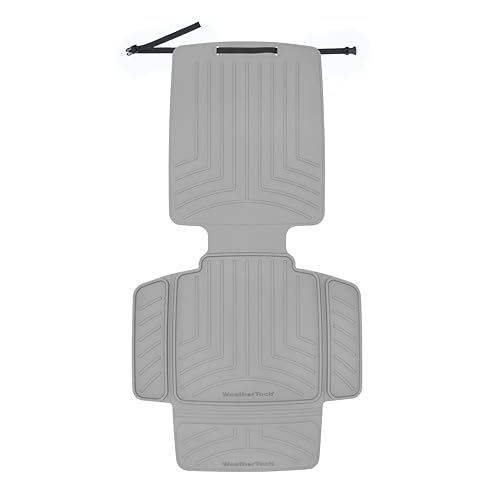
WeatherTech laser-measures this protector for edge-to-edge coverage, including the hinge gap where the seat back meets the cushion. Liquids bead up and come off with a dry cloth, which is what you want when the back seat hauls a wet retriever and a leaking sippy cup.
$73.95fromAmazonIt covers the gap other covers miss. An independent evaluation of eight custom-fit brands singled out WeatherTech's coverage of the seat-back-to-cushion hinge as the most complete in the group. That crease is where spills and hair actually end up. A cover that stops short of it protects everything except the spot that gets ruined.
Liquids sit on top instead of soaking in. The coated surface is built for containment, so a knocked-over drink stays on the cover and wipes off rather than wicking into the foam underneath. If you've ever tried to get sour milk out of a seat cushion, you already understand why this is worth paying for.
The materials carry OEKO-TEX Standard 100 certification. That's independent verification that the dyes, coatings and adhesives meet international limits for harmful substances. It's a small thing until you have a toddler face-down on the back seat or a dog that licks everything, and then it isn't small at all.
The fit comes from the same process behind the floor liners. WeatherTech built its reputation on laser-measured mats that land exactly on the contours of a specific vehicle, and the seat protector uses that same measurement approach. The result is a cover with very little slack, which is what keeps it from creeping and bunching under you.
Flaws but not dealbreakers
It feels like protection, not upholstery. The material is thicker and firmer than polycotton or leatherette, so the seat loses some of its softness. Most people stop noticing after a week. But if comfort is the point, this isn't the cover for you.
You pay more for a narrower catalog. It's priced above covers that protect nearly as well, and there are far fewer fabrics and colors than Covercraft offers. The design is unapologetically function-first, so it won't transform how your interior looks.
It's the wrong choice over thermal seats. The same thickness that stops a spill also blocks the heat transfer that heated and cooled seats depend on. If your car has them, look at a thin polyester cover instead.
Who this is for
Buy a seat cover if something in your life is regularly attacking your upholstery: a dog, a kid, a job site, a surfboard, a long commute in light-colored cloth. It's also worth it if you're planning to sell the car eventually, because pulling a cover off to reveal untouched factory fabric is one of the few interior upgrades that pays you back. If your seats are already worn through or torn, a cover hides the damage but won't fix it, and a re-upholstery job is the honest answer.
This guide covers custom-fit covers you order for a specific year, make and model, plus one professional leather conversion for comparison. We're not covering universal slip-on covers, and you shouldn't buy one for a modern car with seat-mounted side airbags — they bunch, they hide belt hardware and they can interfere with deployment. Hammock-style rear protectors for dogs are a different product that solves a different problem, and they pair fine with anything here.
How we picked
We built the shortlist around five things. Fit: covers cut from vehicle-specific patterns, not generic shapes stretched over your seats with elastic and straps. Airbags: documented breakaway seam construction for seat-mounted side airbags, confirmed in manufacturer materials or independent reviews rather than implied. Cleanup: how each fabric handles the messes owners actually report — liquids, hair, mud, food — and whether you can wipe it or wash it. Thermal seats: stated fabric thickness measured against published heat-transfer findings, because a thick cover quietly cancels a feature you paid for. Install: whether you can do it yourself in a morning, and what it takes to keep the material looking right afterward.
The competition
This is what our research surfaced, not a full census of a very crowded category. Plenty of covers exist that we couldn't evaluate, and new listings appear constantly. Here's the one product we looked at closely that didn't earn a pick, and who might still want it.
The Katzkin Leather Seat Covers ($123.49) — Katzkin isn't really a seat cover. It's a leather re-upholstery kit: precision-cut panels that a trained installer stretches and bonds over your existing seat foam, at one of a thousand-plus authorized shops, over four to six hours. The finish is the best-looking option in this guide by a wide margin, and reviewers comparing it against factory hide have struggled to tell which seat was which. It lost to our picks because it's a different kind of purchase — the most expensive thing here, professionally installed only, permanent, and it needs conditioning to keep from cracking. It makes sense if you're keeping a cloth-seat car for many years and want a true leather interior. Just note that listings for this style are sold under various brand names, so confirm exactly what's included and who installs it before you order.
Installation and care
Do the front seats first. They teach you how the fabric behaves on your particular seats, and the rear bench goes faster once you've learned. In cold weather, warm the material with a hair dryer for about a minute so it stretches instead of fighting you. Thread the headrest posts through their openings first, work the cover down over the seat back, then handle the cushion. Route belt hardware through the marked slots before you tighten any straps or Velcro. On a bench, work from the center seam outward. Follow the numbered steps in order rather than improvising. For neoprene, remove the cover and hand-wash it with mild soap and lukewarm water, then air-dry flat in the shade — never bleach, solvents or hot machine cycles, which delaminate the foam core.
Questions we get
What are the best car seat covers for dogs and pet hair?
The WeatherTech Seat Protector is the one we'd point dog owners to first, because its edge-to-edge coverage closes the hinge gap where claws usually find bare upholstery, and the surface wipes clean. If your dog is big and rides in back, add a dedicated hammock protector that covers the footwells too. For pure puncture resistance on a smaller outlay, the Covercraft SeatSaver in Ducks Weave canvas is the tougher fabric.
Do car seat covers work with heated and cooled seats?
Most of them don't, really. Typical covers run 4 to 8mm thick, and independent testing has found that much insulation cuts thermal seat performance to roughly 40 to 60 percent of an uncovered seat. The CalTrend I Care line is built for this specifically, capped at 2mm, with published testing showing 87 to 94 percent retention. If you have factory thermal seats, skip neoprene, canvas and thick leatherette entirely.
Are universal seat covers or custom-fit covers better?
Custom-fit wins on every axis that matters: airbag-compatible seams engineered for your seat, no bunching or exposed elastic, full coverage with no gaps, and no stress fatigue from constant stretching. Universal covers make sense for a temporary situation or an older vehicle without seat-mounted airbags. For any modern car with side airbags in the seat, we'd only buy custom-fit. The extra outlay is small next to the difference in safety and fit.
Can car seat covers interfere with side-impact airbags?
Yes. A poorly designed cover can block, redirect or delay a side airbag, and federal regulators have documented incidents involving aftermarket seat accessories that impeded deployment. Airbag-compatible covers use breakaway stitching that tears open at a specific force so the bag inflates normally. Every cover in this guide uses that design, but compatibility can differ between trim levels of the same model, so check the manufacturer's fit list for your exact vehicle.
How long does it take to install seat covers?
Plan on 45 to 90 minutes for a pair of front seats and 30 to 60 for the rear, with no tools needed. First-timers land at the long end. The fiddly parts are threading panels around integrated headrest posts and belt mounting hardware, so watch the vehicle-specific video before you start — every major brand publishes them, and it saves you from doing a seat twice.
Why you should trust us
For this guide:
- We read published evaluations from automotive outlets that compare custom-fit seat cover brands on fit accuracy, coverage and seam design.
- We compared manufacturer specifications for vehicle fit databases, fabric thickness, material construction and airbag-compatible stitching across every product here.
- We reviewed owner feedback themes for each line to see which complaints — heat retention, stiff fabric, difficult rear-bench installs — come up repeatedly rather than once.
- We read owner reviews on every listing, weighted toward the critical ones, because that is where the recurring failures show up.
- We have a systematic way of automatically fetching the latest prices, so the numbers on this page stay current.
- This is a research-focused guide, so the team may not own every product listed — though we often do own the top winners, which gives us extra context for the recommendations.
- We don't accept free products, and the retailer commission never changes which product we recommend.
Sources
Best Car Seat Covers — Car and Driver, Car and Driver
Best Car Seat Covers — Popular Mechanics, Popular Mechanics
Best Car Seat Covers Reviewed — The Drive, The Drive
Best Car Seat Covers — Bob Vila, Bob Vila
Best Car Seat Covers — Forbes Wheels, Forbes Wheels
NHTSA Airbag Safety Guidelines — Aftermarket Accessories, National Highway Traffic Safety Administration
Covercraft SeatSaver Product Specifications and Material Testing Standards, Covercraft
Katzkin Leather — Installer Network and Vehicle Compatibility Database, Katzkin
Amazon product listings and owner reviews for all 5 products
Manufacturer specification pages for each product
Some passages in this guide may be paraphrased with AI help. Prices are refreshed automatically.
More like this.
Continue exploring electronics reviews and recommendations.

The Best Child Car Seats
A car seat is one of the few things you buy for your kid that has to work perfectly on a day you hope never comes. The rest of the time, it's just awkward…

The Best Car Seat Organizers
A back seat gets messy fast. Tablets slide under the seat, water bottles roll on every turn, and snack wrappers work their way into places you won't find…

The Best Heated Car Seat Cushions
A cold car seat in January is its own kind of misery. Your factory seat heaters, if you have them, take a few minutes to do anything useful - and plenty…

The Best Car Seat Gap Fillers
The gap between your seat and the center console is where phones go to die. You drop one at a red light, and now you're either driving distracted or…

The Best Dog Car Harnesses and Seat Belts
Most of us drive with our dogs loose. An AAA survey found that 84% of dog owners bring their dogs along, but only 16% use any restraint at all. That's a…

The Best Car Covers for Outdoor Protection
A car that sleeps outside takes a beating you don't really see day to day. Sun bleaches the clear coat, sap drips from whatever tree you parked under, and…