The Best Car Covers for Outdoor Protection
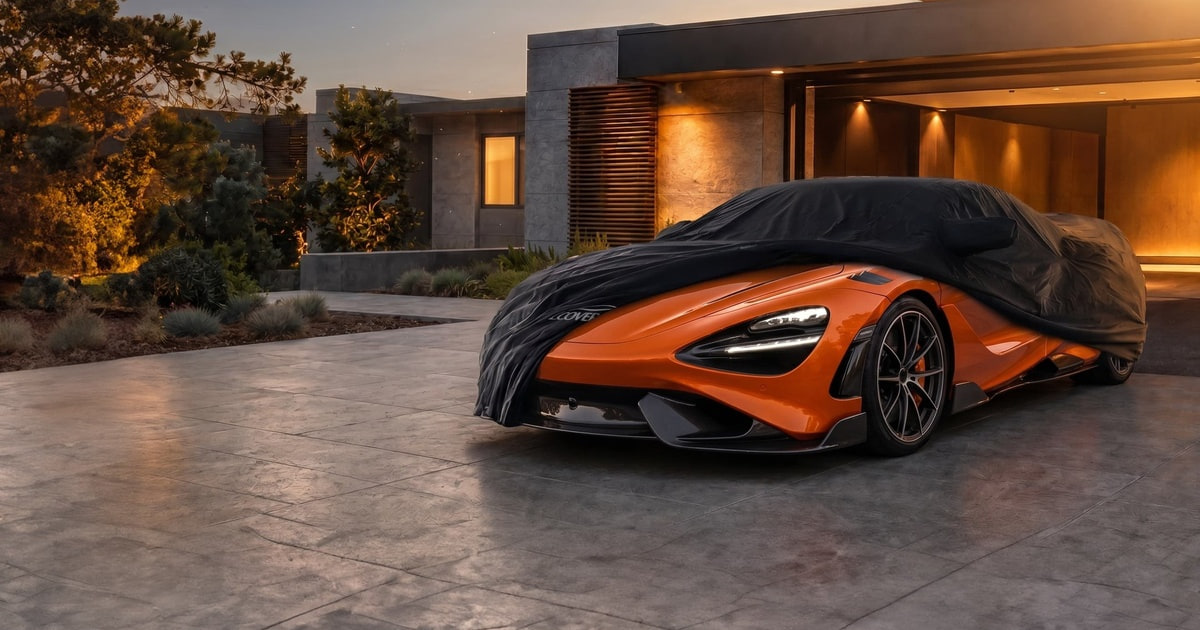
A car that sleeps outside takes a beating you don't really see day to day. Sun bleaches the clear coat, sap drips from whatever tree you parked under, and bird droppings can etch into paint in a day or two once the temperature climbs past the mid-80s. Paint researchers at PPG blame UV for as much as 90% of the fading and oxidation on unprotected cars. A cover is the simplest thing standing between your paint and all of that, and it takes about a minute to throw on.
No cover is a garage, though. Every one of them traps some grit against the paint, so if you cover a dusty car and let the wind work at it, you'll end up with fine swirl marks. Sizing is a guessing game unless you buy custom — Consumer Reports found that 74% of universal-fit buyers ran into wind and fit problems within their first year. And on a wet, windy morning, wrestling a soaked cover back into its bag is nobody's favorite chore.
So the goal is a cover that fits closely, breathes, and stays put. Fit matters most, because a tight cover barely moves, and less movement means less rubbing. Breathability matters nearly as much, since Motor Trend reports that a sealed cover can drive overnight humidity underneath up by 30 to 50%, which is how you get bubbled paint and surface rust. We think that the Covercraft WeatherShield HP is the best car cover for most people, and that the EzyShade Car Cover is the one to buy if you'd rather pick a size off a chart than order a pattern cut for your exact model.
Everything we recommend

Custom-cut, breathable protection for a car that lives outside

Near-custom fit from a size chart, with straps that hold
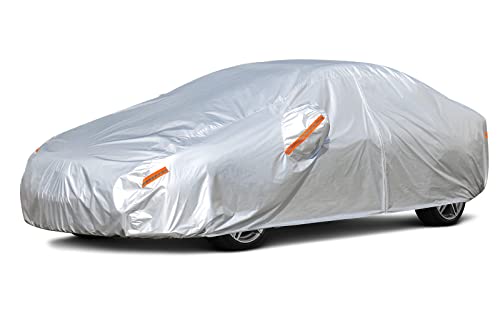
Light and quick, best for sun, dust and the odd rainstorm

Thick, fleece-lined and fully waterproof, if you can lift it
At a glance
| Product | Fits Length | Layers | Price | |
|---|---|---|---|---|
| Covercraft WeatherShield HP Custom Car CoverTop pick | — | — | $532.99 |
 | QUYDDC Full Car Cover Universal 6 LayersAlso consider | 181-190 in | 6 Layers | $38.11On sale |
| EzyShade Car Cover Waterproof All Weather. SeeRunner-up | — | — | $59.41On sale |
 | Leader Accessories Sedan Car Covers All-Weather ProtectionAlso in lineup | 206-228 in | — | $39.99 |
| Kayme Sedan Car Cover Waterproof All WeatherBudget pick | 186-193 in | — | $39.96 |
| Budge Protector V Premium Car CoverAlso great | Up to 228 in | 5 Layers | $134.99 |
How we picked
Fit and sizing. We favored covers cut to a body shape rather than a length range, since survey data shows most universal-fit buyers hit wind and fit problems in the first year. Mirror pockets, elastic hems and graded size charts all counted toward a tighter fit.
Weather and UV. We read spec sheets for UV-block ratings and water-column figures, and gave weight to layered constructions over single-ply nonwoven fabric. Anything meant for full-time outdoor duty had to handle sustained rain, not just a passing shower.
Breathability. A cover that traps moisture can do more harm than no cover at all, so we looked for fabrics that dry quickly or vent. Published reporting on under-cover humidity guided how heavily we weighted this.
Wind security. We looked for under-car straps with buckles, reinforced grommets, and welded or double-stitched seams, since seam blowout is the common failure mode in budget covers above about 25 mph. Cable-lock grommets earned extra credit for street parking.
Everyday handling. Weight, fold size and the presence of a storage bag decide whether a cover gets used nightly or left in the trunk. We treated anything over about ten pounds as a storage cover rather than a daily one.
Top pick
Custom-cut, breathable protection for a car that lives outside
Covercraft WeatherShield HP Custom Car Cover
This is a custom-cut cover, made for one body shape rather than a length range, so it hugs the mirrors and bumpers instead of ballooning. The fabric sheds rain, dries fast, and blocks more than 99% of UV-A and UV-B, which is the part that saves your clear coat.
$532.99fromAmazonFit is what separates this cover from everything else here. Covercraft cuts the pattern for your specific year, make and model, so there's no slack at the roof or trunk lid for wind to grab. That's not just tidier. Published reviews report custom-cut covers staying put in sustained 35 mph winds, while universal covers needed re-securing after gusts. Less flapping also means less fabric dragging back and forth across your paint.
The fabric is the other half of the story. WeatherShield HP is solution-dyed, meaning the color goes into the fiber rather than onto it, so the cover doesn't turn chalky and gray after a couple of summers. Covercraft rates it above 99% for UV-A and UV-B block using AATCC spectroscopy, the highest figure in its lineup. If your car parks in Phoenix or Miami, that's the number to care about.
It also breathes, which sounds like marketing until you've peeled a plastic tarp off a damp hood. Water beads and runs off the top, and the fabric dries quickly instead of holding moisture against metal. Non-breathable covers can raise humidity underneath by 30 to 50% overnight, and that's the mechanism behind surface rust on stone chips and bubbling on older paint.
It's also the easiest one here to live with. The cover weighs about ten pounds, folds down small enough for a trunk well, and goes on in one pass because there's only one way it fits. Compare that to a universal cover, where you're tugging corners and guessing at the front end. If you cover the car most nights, that difference decides whether you keep doing it.
Flaws but not dealbreakers
It costs more than everything else here, and you have to order it for one specific vehicle — no handing it down to the next car unless the body is identical. Owners of unusual or heavily modified vehicles report gaps around aftermarket spoilers and roof racks, since the pattern doesn't know those parts exist.
The fabric is thin by design. That's good for weight and drying, but it isn't padding. This won't do anything for hail, and a stray shopping cart will find your sheet metal right through it.
The WeatherShield HP is backed by a four-year warranty.
Runner-upOn sale
Near-custom fit from a size chart, with straps that hold
EzyShade Car Cover Waterproof All Weather. See
EzyShade sells this in graded sizes with a chart that points you to your exact model, so it lands closer to custom than a generic large. Multi-layer fabric handles rain and sun, and three buckled straps plus mirror pockets keep it from shifting on a breezy night.
$59.41fromAmazonList priceSizing is where most universal covers fall apart, and EzyShade takes it seriously. You look your car up in the chart and get a size cut for that shape, not just that length. Mirror pockets on the car sizes pull the fabric taut across the doors. That tension is what stops the slow flapping that dulls paint over a season of windy nights.
The strap system is the reason we'd trust this one outdoors. Three adjustable straps run under the car with click buckles, so you can snug everything down after the cover is on rather than fighting it into place. Reflective strips help if you park on a street where someone might back into a silver lump at night. A side-door zipper lets you get in without stripping the whole thing off.
The fabric is layered rather than a single sheet, which is what you want if rain is your main problem. Layered covers shed sustained water far better than the single-ply nonwoven sheets sold in the same sizes, and this one dries and folds instead of turning into a wet log. It's light enough that packing it up on a cold morning doesn't become a project.
Cable-lock compatibility matters more than it sounds. If you park on a street or in an open apartment lot, a cover is a nice-looking thing sitting loose on top of a car. Running a cable through the grommets takes ten seconds and removes the temptation. It keeps the cover from leaving on its own during a storm, too.
Flaws but not dealbreakers
It's a graded fit, not a custom one, so you'll see some looseness — usually at the front bumper or around a squared-off rear. That's the trade you're making. Owners also note that mirror pockets come only on the car and small sizes, so SUV buyers lose that anchor point.
The straps do the heavy lifting here, which means the cover is only as secure as your habit of buckling all three. Skip the middle one before a windy night and you'll find out.
Budget pick
Light and quick, best for sun, dust and the odd rainstorm
Kayme Sedan Car Cover Waterproof All Weather
This is a thin 190T polyester cover that weighs under three pounds, so putting it on and pulling it off every day isn't a chore. It handles sun, dust, pollen and light rain well, and the reflective strips, mirror pockets and door zipper are real touches at this level.
$39.96fromAmazonThe best argument for a light cover is that you'll actually use it. At under three pounds, this one shakes out and drapes in well under a minute, and it stuffs back into its bag without a wrestling match. A heavy five-layer cover protects more on paper. It protects nothing on the nights you decide it's too much trouble.
For sun, this is enough. Polyester with a reflective silver face turns away the UV that does most of the damage. AutoTrader has reported measurable oxidation and chalking on uncovered cars in sunny climates inside a year and a half, with none on covered cars parked alongside them. If your problem is a driveway in Tucson rather than a driveway in Buffalo, that's the whole job.
The details are better than the weight suggests. Kayme rates the fabric to 1,200mm of water pressure, which is real rain resistance and not just a repellent finish. Front and rear straps keep it from sailing off, the driver-door zipper lets you get in, and mirror pockets stop the sides from bunching. A storage bag comes with it.
Flaws but not dealbreakers
Thin fabric is thin fabric. There's no fleece lining and not much cushion, so grit that lands under this cover sits close to your paint. Rinse the car, or at least blow the dust off, before it goes on. It also won't do much against hail or a heavy snow load.
Sizing runs by length alone, so if your sedan is long but low, expect slack. Owners of hatchbacks and wagons report the tail end flapping in wind.
Also great
Thick, fleece-lined and fully waterproof, if you can lift it
Budge Protector V Premium Car Cover
Five layers with a HyperDry membrane and ultrasonically welded seams make this the one to pick when rain and snow are constant rather than occasional. A fleece inner lining sits against your paint, and an elastic hem, grommets and straps hold it through the weather that follows.
$134.99fromAmazonIf it rains for days where you live, buy the layers. Popular Mechanics found that five-layer covers cut water penetration by 97% compared with single-layer covers over a 72-hour simulated rainstorm. The Budge stacks a HyperDry membrane inside those layers and welds the seams ultrasonically instead of stitching them, so there's no line of needle holes down the roof for water to find.
The inside is the other reason to consider it. A fleece lining sits between the layers and your clear coat, which is what you want on a car you care about, because hard fabric plus trapped dust is exactly how covers scratch. That lining also makes this a sensible dust cover if the car goes into a shed or carport for the winter.
Security is straightforward. The elastic hem pulls the cover under the body, grommets take a cable lock, and adjustable straps run underneath. That's the setup you want if the car sits in an unfenced lot or on a public street. It's sized generously too, up to 228 inches, so long sedans and older full-size cars are covered.
Waterproof is a double-edged feature, and you should know that going in. A membrane that keeps rain out also slows moisture from getting back out. Motor Trend reports that non-breathable covers push overnight humidity underneath up by 30 to 50%. Put this on a wet car and you're building a terrarium. Cover a dry car, and air it out on clear days, and it's fine.
Flaws but not dealbreakers
It's heavy and bulky. At nearly ten pounds of stacked fabric, folding it into a neat bundle takes both arms, and it eats a real chunk of trunk space. If you cover and uncover daily, that gets old quickly.
The fit is generous rather than tailored, since it's sized by length range. You'll get drape at the corners no matter how carefully you set the straps, and it moves more in wind than a custom-cut cover does.
Who this is for
Buy a cover if your car sleeps outside and you plan to keep it — a driveway, a street spot, an uncovered apartment lot. It's the simplest way to slow the fading, etching and grime that make a five-year-old car look ten. Kelley Blue Book puts the resale gap between excellent and merely good exterior condition at 8 to 12%, and years of uncovered sun is how cars slide from one to the other. Classic and collector owners get the most out of a custom cut; everyone else can do fine with a good graded size.
Skip it if you park in a garage and only want dust control, since a light indoor cover does that with less hassle. Skip it too if you're hoping for hail protection — none of these are padded, and a hail-rated cover is a different product. This guide covers full-body covers for ordinary passenger cars and SUVs, sold in graded or custom sizes. Windshield-only shades, truck bed covers and RV covers are out of scope.
How we picked
We started from spec sheets, published lab evaluations and recurring themes in owner feedback, and judged every cover on five things. Fit: custom or closely graded sizing beat one-size-large, because a tight cover barely moves and a loose one sands your paint. Weather and UV: we looked for published UV-block ratings and layered construction rather than single-ply fabric. Breathability: the cover has to let moisture out, or it becomes the thing causing rust. Wind security: under-car straps, real grommets, and welded or double-stitched seams, since seams are where budget covers fail first. Handling: weight and fold size, because the cover you dread using is the cover you stop using.
Other car covers for outdoor protection worth considering
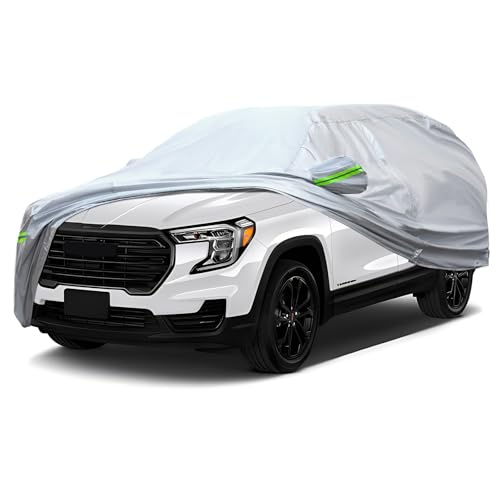
If you want six layers over a big SUV: The QUYDDC Full Car Cover Universal 6 Layers ($38.11) — The QUYDDC is cut for SUVs in the 181-to-190-inch range and stacks six layers, including a reflective aluminum face and a soft cotton layer against the paint. That's more cover than the Kayme in every direction — better under snow, better against falling branches, kinder to a clear coat. It's also the only one here that ships with a separate windproof rope and buckle, which helps on an exposed lot. The trade is bulk and setup time. It's several pounds heavier than a light polyester cover, and it's still a universal fit, so you'll be fussing with straps rather than enjoying a tailored shape.
The competition
This is what our research surfaced, not a census of everything on the market. We stuck to full-body covers for ordinary passenger vehicles that are widely available in multiple sizes, so a handful of well-regarded made-to-order fabrics from smaller shops aren't represented here.
The Leader Accessories Sedan Car Covers All-Weather Protection ($39.99) — The Leader Accessories Basic Guard is a single-layer nonwoven cover with an elastic hem and one middle strap, sized for long sedans up to 228 inches. It's genuinely soft against paint and packs down to almost nothing, and for a car sitting under a carport collecting dust it's plenty. Outdoors it's outmatched. One layer of nonwoven fabric doesn't shed sustained rain the way a layered cover does, and there's no door zipper, no mirror pockets and no grommets for a cable lock. Buy it as a dust cover, not as weather protection.
Care and fit
Two habits decide whether a cover protects your paint or polishes it dull. First, never cover a dirty car. Grit under fabric is an abrasive, and wind turns the cover into a very slow sanding block, so rinse the car or at least blow the dust off before it goes on. Second, don't cover a soaking car and walk away for a week. Moisture that can't escape is what bubbles paint and rusts stone chips. Wash the cover itself a couple of times a season on a gentle cycle with no fabric softener, and let it air-dry. And check the hem and straps for fraying now and then — that's where covers fail first, not in the middle of the roof.
Questions we get
Are car covers worth it if I park outside every day?
Yes, if you plan to keep the car. UV is responsible for as much as 90% of exterior fading and clear coat breakdown, and bird droppings can etch through clear coat in a day or two in hot weather. The catch is that a daily cover only works if it's light enough that you keep using it. A thin polyester cover you put on every night beats a five-layer cover that stays in the trunk.
Can a car cover scratch my paint?
It can, but almost always because of what's underneath it rather than the fabric itself. Dust and grit trapped between the cover and the paint get dragged back and forth by wind, which is how swirl marks appear. Cover a clean, dry car and make sure the cover fits tightly enough that it doesn't billow. A soft inner lining, like the fleece in the Budge, adds a margin of safety.
Is a custom-fit cover really better than a universal one?
For outdoor use, yes. A custom cut has no slack for wind to grab, and published reviews report custom covers staying secure in sustained 35 mph winds while universal covers needed re-securing after gusts. Consumer Reports found 74% of universal-fit buyers reported wind-related fit problems in their first year. A well-chosen graded size like the EzyShade closes much of that gap, but not all of it.
What material should I look for in an outdoor cover?
Solution-dyed polyester and acrylic hold color and UV resistance longest, which is why the Covercraft's fabric doesn't go chalky after a few summers. Multi-layer polypropylene is the value approach and handles rain and snow well, at the cost of weight. Single-layer nonwoven fabric is fine indoors and disappointing outdoors. Whatever you choose, make sure it breathes.
How do I keep the cover from blowing off?
Use every strap the cover came with, not just the easy one. Under-car straps with buckles do more than an elastic hem alone, and a cable run through the grommets both locks the cover down and anchors it. If your cover has a windproof rope, use that too. And get the size right — a cover that's too big flaps, and flapping is what tears seams.
How long does an outdoor cover last?
It depends far more on sun and wind than on how often you use it. Cheaper single- and double-layer covers tend to fail at the seams or go brittle after a couple of hard seasons in strong sun. Better fabrics with welded or double-stitched seams last several years, and the Covercraft carries a four-year warranty. Storing the cover dry and clean adds meaningfully to its life.
Why you should trust us
For this guide:
- We read manufacturer spec sheets and fabric documentation for every cover here, including published UV-block figures and water-column ratings where brands disclose them.
- We compared published lab evaluations of multi-layer versus single-layer covers, along with survey data on how universal-fit covers hold up in wind.
- We read through owner feedback looking for recurring themes — wind slippage, seam failure, sizing that runs long — rather than one-off complaints.
- We read owner reviews on every listing, weighted toward the critical ones, because that is where the recurring failures show up.
- We have a systematic way of automatically fetching the latest prices, so the numbers on this page stay current.
- This is a research-focused guide, so the team may not own every product listed — though we often do own the top winners, which gives us extra context for the recommendations.
- We don't accept free products, and the retailer commission never changes which product we recommend.
Sources
Best Car Covers of 2026 — Wirecutter, Wirecutter
Best Car Covers Tested by Editors — Car and Driver, Car and Driver
Best Car Covers — Popular Mechanics, Popular Mechanics
Car Cover Ratings and Reviews — Consumer Reports, Consumer Reports
Best Car Covers for Every Budget — Road and Track, Road & Track
Covercraft Weathershield HP Official Product Specifications, Covercraft
Best Outdoor Car Covers — Motor Trend, Motor Trend
How to Choose a Car Cover — AutoTrader, AutoTrader
Hail Claims Statistics and Costs — Insurance Information Institute, Insurance Information Institute
How Bird Droppings Damage Car Paint — Chemical Analysis, Popular Mechanics
Kelley Blue Book: Paint Condition and Resale Value, Kelley Blue Book
Classic Accessories OverDrive PolyPro 3 Product Page, Classic Accessories
Amazon product listings and owner reviews for all 6 products
Manufacturer specification pages for each product
Some passages in this guide may be paraphrased with AI help. Prices are refreshed automatically.
More like this.
Continue exploring electronics reviews and recommendations.

The Best Car Paint Protection Film Kits
Paint damage on a car almost never arrives all at once. It shows up as a rash of tiny chips on the leading edge of the hood, a scuff where your kid swings…

The Best Outdoor Faucet Covers
An outdoor faucet cover is one of the smallest purchases you'll ever make that can save you thousands. When a spigot freezes, the ice expands inside the…

The Best Car Seat Covers
Your car's seats take more abuse than any other surface inside it. Muddy paws, juice boxes, gym bags, work boots, sunscreen, coffee - it all lands on the…

The Best Steering Wheel Covers
You touch your steering wheel more than anything else in your car. And most factory wheels are built to a price, not to your hands: hard plastic on the…

The Best Windshield Snow Covers
Scraping ice off a windshield is the worst five minutes of a winter morning. Your hands go numb, your coffee gets cold in the cup holder, and you're late…

The Best Outdoor Smart Plugs for Christmas Lights
Stringing lights is the fun part. Remembering to unplug them at 11 p.m. in the freezing cold, night after night, is not. An outdoor smart plug fixes that:…