The Best Derma Rollers
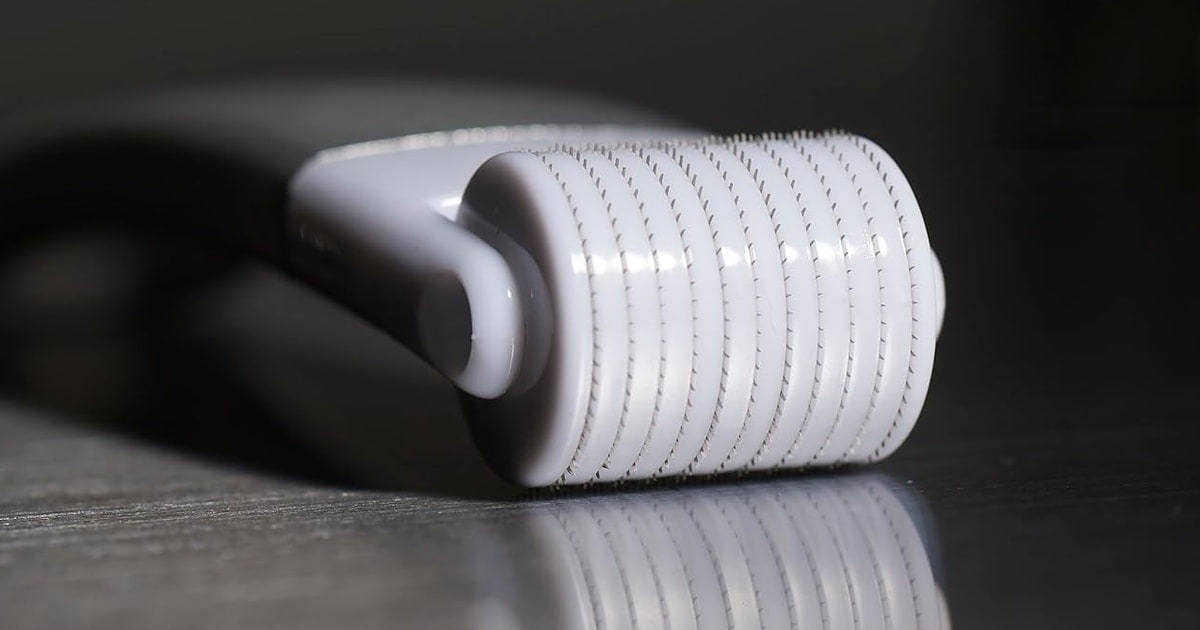
A derma roller is a small wheel covered in short needles that you press over your skin. The idea is simple. Those tiny punctures open temporary channels, so the serum you put on afterward sinks in instead of sitting on top. Over weeks, your skin responds by laying down a little more collagen. It's a slow, unglamorous routine, not a face-lift in a tube. What you're really shopping for is a tool that stays sharp, stays clean, and doesn't scratch you when your hand wobbles.
No derma roller you can buy for home use does serious resurfacing. The American Academy of Dermatology notes that at-home devices typically use needles of 0.25mm or shorter, while clinics work up to 2.5mm under professional supervision. That gap is the whole story. A systematic review in the Journal of Cutaneous and Aesthetic Surgery found real improvement in acne scars from microneedling, but usually after three to six sessions. At home, expect softer texture and better absorption. Anyone promising scar erasure from a handheld wheel is overselling it.
So the choice comes down to build quality and hygiene, not marketing. You want needles that hold their point, a head you can swap out every few months, and a handle you can steer around your cheekbones without leaning on it. Your skin matters too. If you've got active breakouts, eczema or rosacea, talk to a dermatologist before you roll anything. We think that the StackedSkincare Microneedling Tool is the best derma roller for most people, and that the Dr. Pen Microneedle Roller Pen is the one to buy if you're nervous about needles and want the gentlest start.
Everything we recommend
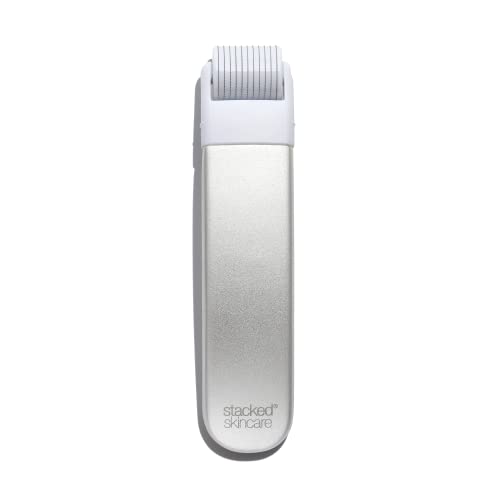
Shorter needles than most, and a head you replace instead of toss

Rounded tips and an easy grip, for anyone nervous about needles

Titanium heads for face and body, if you can live with less polish
Prices as of Oct 25, 6:48 AM PT · Details
At a glance
| Product | Needle length | Needle material | Price | |
|---|---|---|---|---|
| Dr. Pen Microneedle Roller Pen for HomeRunner-up | 0.25mm | — | Check price |
| StackedSkincare Microneedling Tool with Replaceable 0.2mm RollerTop pick | 0.2mm | — | $79 |
| Angel Kiss 4 in 1 Titanium MicroneedlingBudget pick | — | Titanium | $19.99 |
Prices as of Oct 25, 6:48 AM PT · Details
How we picked
Needle length. Our cutoff came from the American Academy of Dermatology's guidance that at-home devices run 0.25mm or shorter, plus the FDA's line at 0.3mm. Anything a manufacturer positions above that belongs in a clinic, not your bathroom.
Needle material. We favored titanium after published reviews from Byrdie found it holds a sharper point through repeated use than lower-cost stainless steel. Bent or dulled needles are the main cause of micro-tearing.
Hygiene and heads. We looked for a replaceable head or, failing that, a design you can soak in alcohol without ruining it. Good Housekeeping Institute testers ranked ease of cleaning among the biggest differentiators between cheap and premium rollers.
Handle and control. We read listing specs and owner feedback for grip shape and handle length, because a roller you have to angle awkwardly drags instead of rolls. Dimensions and stated ergonomics both counted.
Skin-type fit. We noted whether manufacturers state clearly who shouldn't use the tool, since dermatologists interviewed by SELF warn against rolling over active breakouts. Vague safety language was a mark against a product.
Top pick
Shorter needles than most, and a head you replace instead of toss
StackedSkincare Microneedling Tool with Replaceable 0.2mm Roller
The StackedSkincare tool pairs a 0.2mm roller head with a slim handle that's easy to steer along your jawline and around your nose. When the head dulls, you swap it instead of buying a whole new roller, which is the single most useful hygiene feature a derma roller can have.
$79fromAmazonPrices as of Oct 25, 6:48 AM PT · Details
The replaceable head is the reason this one wins. Dermstore's buying guide recommends swapping an at-home roller head every three to six months, or right away if the needles look bent or dull. Most rollers make you throw out the handle too, so people put it off. Here you pull the old head off and click a fresh one on, which makes it far more likely you'll actually stick to the schedule.
At 0.2mm, the needles are shorter than almost anything else sold for home use. That sounds like a downside until you try to keep steady pressure along your cheekbone. Shorter needles forgive an uneven hand, and the American Academy of Dermatology puts at-home devices at 0.25mm or shorter anyway. You're not giving up anything that a home roller was going to do for you.
The handle runs about seven inches and stays slim. That length lets you roll straight passes across your forehead without your knuckles bumping your brow bone. Stubby grips force you to angle your wrist, and an angled roller drags instead of rolling. Dragging is what tears skin. Good Housekeeping Institute testers pointed to needle uniformity and ease of cleaning as the main things separating budget rollers from better ones.
It's a cosmetic tool, and it behaves like one. StackedSkincare positions this for texture-focused routines rather than medical treatment, and that framing is worth trusting. The FDA treats devices that penetrate below 0.3mm as medical devices needing clearance, so a 0.2mm cosmetic roller sits comfortably inside the at-home lane. If you want deeper needling for scarring, book it with a professional instead of chasing it with a wheel.
Flaws but not dealbreakers
Owner feedback here is more mixed than on the cheaper rollers, and durability is the recurring theme. Some people find the head dulls sooner than they hoped, which turns the replaceable head from a feature into a recurring errand you have to remember.
Replacement heads are a commitment in their own right. You have to keep buying them, and if the brand ever stops making them, your handle becomes a paperweight. At 0.2mm this is also strictly a face tool. It won't do anything meaningful for stretch marks or rough skin on your arms.
Runner-up
Rounded tips and an easy grip, for anyone nervous about needles
Dr. Pen Microneedle Roller Pen for Home
Dr. Pen's roller pen uses 0.25mm micro-tips that are short and rounded rather than sharp, so it stays firmly in cosmetic territory. The ergonomic handle gives you real control, which is exactly what you want the first few times you roll anything across your own face.
Check priceatAmazonPrices as of Oct 25, 6:48 AM PT · Details
The first time you run a needle wheel over your own cheek, your instinct is to press. Don't. This pen is built for people fighting that instinct, with a grip that sits in your hand at a natural angle so the tool's weight does the work. Beginners almost always overdo pressure rather than length, and pressure is where the irritation comes from.
Rounded tips are the safety net here. Dr. Pen states that the micro-tips don't penetrate the living layers of skin, which keeps this a cosmetic tool rather than a medical one. You'll get less of the collagen response that sharper needles produce. You'll also get far less chance of a session going wrong, with no pinpoint bleeding and no two days of looking windburned before something you care about.
Compare it to our top pick and the difference is mostly philosophy. StackedSkincare gives you a sharper, shorter head that you replace on a schedule. Dr. Pen gives you slightly longer tips that are blunter by design. If your real goal is helping a hyaluronic acid serum sink in, both do that. Healthline reports that microneedling opens temporary channels in the outer skin layer, which is what boosts absorption.
Flaws but not dealbreakers
The listing doesn't mention a replaceable head, so when the tips dull you're replacing the whole tool. That guidance about swapping heads every three to six months quietly becomes a repurchase at the same interval.
It's also the least proven roller here. There's simply not much owner feedback to draw on yet, so you're partly taking the brand's word on how the tips hold up. And because those tips are deliberately blunt, don't expect it to do anything for deep acne scarring.
Budget pick
Titanium heads for face and body, if you can live with less polish
Angel Kiss 4 in 1 Titanium Microneedling
This four-piece set uses titanium needles and covers your face plus the body areas a single small roller can't reach efficiently. It's the budget option in this guide, and the trade-off is a kit that feels rougher in the hand than tools built around one refined head.
$19.99fromAmazonPrices as of Oct 25, 6:48 AM PT · Details
Titanium is the headline here, and it's the right call. Angel Kiss says the needles are titanium and resist bending and rust. Byrdie's derma roller coverage found titanium held a sharper point through repeated use than lower-cost stainless steel, which lowers the risk of micro-tearing. That matters more than it sounds. A bent needle doesn't just stop working, it drags a tiny hook across your skin on every pass.
The four-head set is the practical reason to choose this over a face-only roller. Stretch marks on your hips, rough skin on the backs of your arms, a dry patch on your thigh: a small face roller takes forever on any of those. Angel Kiss sizes heads for larger areas and includes a storage case, so the kit lives in one drawer instead of rattling around loose in a bathroom cabinet.
This is by far the most-bought roller in our lineup, and the owner feedback skews positive on the things you'd hope for. Needles that stay straight. A handle that doesn't slip mid-pass. That volume of feedback counts for something in a category full of near-identical white-label wheels where you often have nothing but a listing photo to go on.
Flaws but not dealbreakers
The listing doesn't state needle lengths for the four heads, which is a real problem when length is the entire safety conversation. Anything past 0.3mm puts you in a different regulatory class per the FDA, and dermatologists treat that as a professional procedure. Check what actually arrives, and set aside any head longer than 0.3mm rather than using it on yourself.
Fit and finish are where this one gives ground. Owners describe the handles as lighter and more plasticky than better-built tools. Hygiene gets harder too, since you now have four heads to sanitize, dry and store instead of one.
Who this is for
Buy one if you want smoother texture and better serum absorption, and you'll actually keep at it for a couple of months. That's the realistic payoff, and it's a decent one. Skip it entirely if you've got active acne, eczema or rosacea, or if you're on a retinoid or isotretinoin. Dermatologists interviewed by SELF warn that rolling over inflamed breakouts spreads bacteria and can make scarring worse. Ask your dermatologist before you start.
This guide covers handheld rollers meant for unsupervised home use at 0.3mm or shorter. It doesn't cover derma pens with adjustable depth, professional needling done in a clinic, or the cooling and LED tools that get shelved next to rollers but do something completely different to your skin.
How we picked
Needle length: we ruled out anything positioned above 0.3mm for unsupervised home use, since both FDA classification and dermatology guidance treat that as a different category of treatment. Needle material: titanium got preference over stainless steel, because published reviews find it keeps its point through repeated use. Hygiene: we wanted a replaceable head, or at minimum a build you can soak in alcohol without wrecking. Handle: enough length and grip to roll in straight passes instead of dragging at an angle. Skin fit: clear manufacturer language about who shouldn't use the tool, since the wrong skin condition turns a cosmetic routine into a dermatology appointment.
The competition
This is what our research surfaced on Amazon, not a survey of everything on the market. Derma rollers are a white-label category, so hundreds of nearly identical wheels ship under different brand names with the same stated specs and the same stock photos. We stuck to rollers whose listing details we could verify, and all three that qualified earned a spot above. One product our search turned up is a cooling tool rather than a microneedling roller, so we left it out of the comparison.
Care and cleaning
Clean the roller before and after every session, not just after. Rinse it under hot water, let it sit in isopropyl alcohol for about ten minutes, then stand it needles-up on a clean towel to air-dry. Never towel-dry it, because fibers catch the tips and bend them. Give your skin at least 24 to 48 hours between sessions on the same area, which is what Cleveland Clinic dermatologists advise, so your barrier can recover. Never share a roller with anyone, including your partner. WebMD warns about bloodborne pathogen transmission even when a tool looks perfectly clean. And replace the head every three to six months, or the moment a needle looks bent.
Questions we get
What needle length is safe for at-home derma rolling?
Stay at 0.25mm or shorter. That's the range the American Academy of Dermatology describes for at-home devices, and the FDA treats anything penetrating below 0.3mm as a medical device needing clearance. Clinics go up to 2.5mm, but that's with professional supervision, numbing and sterile conditions you can't replicate at your sink.
How often should you use a derma roller?
Once or twice a week is plenty for most people at these needle lengths. Cleveland Clinic dermatologists recommend waiting at least 24 to 48 hours before rolling the same area again, so your skin barrier can recover. Rolling more often doesn't speed anything up. It just leaves you red and irritated.
Can derma rollers help with acne scars?
Microneedling does have evidence behind it. A systematic review in the Journal of Cutaneous and Aesthetic Surgery found statistically significant improvement in acne scar appearance, with the best results after three to six sessions. But those studies used deeper professional needling. At 0.2mm to 0.25mm, expect gradual texture improvement rather than scar removal.
Titanium or stainless steel needles: which is better?
Titanium, if you have the choice. Byrdie's derma roller coverage found titanium needles held sharper points through repeated use than lower-cost stainless steel, which cuts the risk of micro-tearing. Stainless steel is easier to sterilize in theory, but a dulled or bent steel needle does more harm than a slightly less sterile titanium one.
Can you use a derma roller with retinol or vitamin C serum?
Not right after rolling. Both are active enough to sting badly on freshly needled skin, and you've just made your skin far more absorbent. Healthline reports that microneedling opens temporary channels in the outer skin layer, which is exactly why a gentle hyaluronic acid serum is the safer thing to apply. Save your actives for the following night.
How do you clean a derma roller between uses?
Rinse it under hot running water to clear off serum and skin, then soak the head in isopropyl alcohol for about ten minutes. Let it air-dry needles-up on a clean surface rather than patting it with a towel, since fibers bend the tips. Do this before and after every session, and never share the tool.
Why you should trust us
For this guide:
- We read manufacturer specifications and full listing details for every roller here, alongside published guidance from the American Academy of Dermatology, Cleveland Clinic and the FDA on safe needle lengths for home use.
- We compared published reviews from Byrdie, Good Housekeeping Institute and Real Simple on needle material, head density and how easily each type of roller cleans up.
- We looked for recurring themes in owner feedback, particularly complaints about bent needles, heads that loosen and handles that slip mid-pass.
- We read owner reviews on every listing, weighted toward the critical ones, because that is where the recurring failures show up.
- We have a systematic way of automatically fetching the latest prices, so the numbers on this page stay current.
- This is a research-focused guide, so the team may not own every product listed — though we often do own the top winners, which gives us extra context for the recommendations.
- We don't accept free products, and the retailer commission never changes which product we recommend.
Sources
Microneedling FAQs - American Academy of Dermatology, American Academy of Dermatology
Microneedling: What You Need to Know, Healthline
FDA Guidance on Microneedling Devices Regulatory Status, U.S. Food & Drug Administration
The Best Derma Rollers, According to Dermatologists, Byrdie
Microneedling for Skin: Benefits and Risks, Cleveland Clinic
We Tested the Best Derma Rollers for At-Home Use, Allure
Efficacy of Microneedling on Acne Scars and Facial Rejuvenation: A Systematic Review, Journal of Cutaneous and Aesthetic Surgery (NCBI)
Are At-Home Derma Rollers Safe? What Dermatologists Say, SELF
The Best Derma Rollers for Every Budget, Real Simple
GH Beauty Lab Tests: Best Microneedling Tools, Good Housekeeping Institute
Derma Roller Shopping Guide, Dermstore
How to Use a Derma Roller Safely at Home, WebMD
Amazon product listings and owner reviews for all 3 products
Manufacturer specification pages for each product
Some passages in this guide may be paraphrased with AI help.
Product prices and availability are accurate as of the date/time indicated and are subject to change. Any price and availability information displayed on Amazon.com at the time of purchase will apply to the purchase of this product.
More like this.
Continue exploring beauty reviews and recommendations.

The Best Rolling Tool Chests
A rolling tool chest earns its keep in the boring moments. You reach for a 10 mm socket with greasy hands, pull the drawer, and it either glides or it…

The Best Blackout Roller Shades for Bedrooms
Light is the loudest thing in a bedroom, and most people don't notice it. Northwestern University researchers, writing in PNAS, found that a single night…

The Best Foam Rollers for Muscle Recovery
Foam rolling is the rare recovery habit that actually fits into a normal week. You don't need a table, a therapist, or an appointment. You need ten…

The Best Ab Rollers
An ab roller is about as simple as fitness gear gets: two grips, a wheel, and a movement that humbles almost everyone the first time. What you're really…

The Best Rolling Backpacks for Students and Commuters
A bag loaded with textbooks, a laptop and a water bottle can easily hit twenty pounds, and your shoulders feel every one of them by the third block.…

The Best Anti-Aging Face Serums
A serum is the step in a routine where the actual chemistry happens. Cleanser, moisturizer and sunscreen mostly support the work a serum does. A good one…