The Best Rolling Backpacks for Students and Commuters
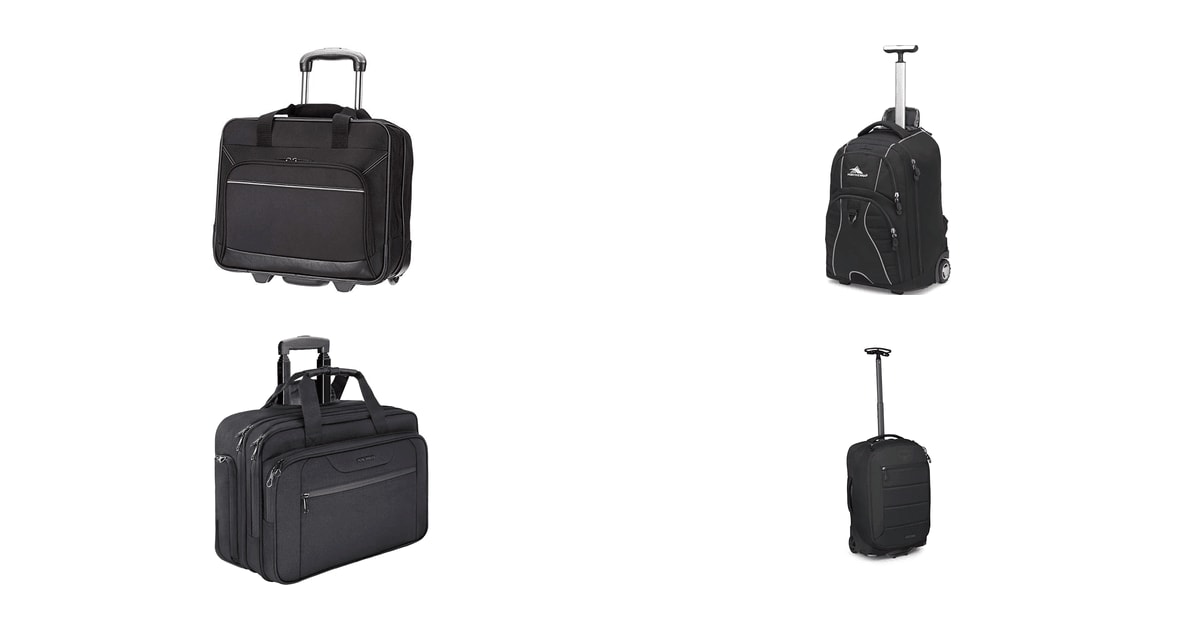
A bag loaded with textbooks, a laptop and a water bottle can easily hit twenty pounds, and your shoulders feel every one of them by the third block. That's the whole case for wheels. Roll the weight across a campus quad, down a subway platform or through an office lobby, and your back stays out of it. The best rolling bags manage this without turning into luggage. They still hold a laptop safely, still slide under a desk, and still open like something you use daily rather than something you pack for a trip.
No rolling bag is good at everything. Wheels and a telescoping handle add a couple of pounds of hardware before you put anything inside, and that weight gets real the moment you hit stairs, an escalator or a packed bus. Small wheels rattle on brick and gravel. Handles pick up wobble over time. And the bags that roll best tend to be shaped like suitcases, which means you give up the pocket layout you want for pens, chargers and a charger brick. You're always trading something.
So we read the spec sheets, compared outside dimensions against airline carry-on limits, and dug through published reviews and owner feedback for the parts that fail after a year of daily use — wheels, handles and zippers. We think that the High Sierra Freewheel is the best rolling backpack for most people, and that the KROSER 17.3 Inch Rolling Laptop Bag is the one to buy if you carry a 17-inch laptop and never need to wear your bag.
Everything we recommend

Wheels when you want them, straps when you need them

Room for a 17.3-inch laptop, if you never wear your bag

Basic wheels and a 15-inch sleeve for occasional rolling

Bigger wheels, a lighter frame, and a lifetime guarantee
At a glance
| Product | Laptop Fit | Weight | Price | |
|---|---|---|---|---|
| Amazon Basics 15.6" Rolling Laptop Bag forBudget pick | 15.6 in | 5.09 lbs | $68.46 |
| High Sierra Freewheel Wheeled Laptop BackpackTop pick | 15 in | 4.65 lbs | $84.34On sale |
| KROSER 17.3 Inch Rolling Laptop Computer BagRunner-up | 17.3 in | 6.33 lbs | $87.99 |
| Osprey Ozone 2-Wheel Carry-OnUpgrade pick | — | — | $299.95 |
 | Travelpro Crew Classic Softside Carry-On LuggageAlso in lineup | — | 7 lbs | $255 |
How we picked
Wheels and terrain. We compared wheel size, mounting style and ground clearance from spec sheets against what published gear reviews report about broken sidewalks, gravel and cobblestone. Bigger wheels that track in a straight line beat spinners once the ground stops being smooth.
Handle stability. We looked at maximum handle height, locking increments and whether the handle stows out of the way. Anything that tops out much below about 40 inches will have taller commuters walking hunched over.
Laptop protection. We checked the stated sleeve size and padding for every bag, since a 17.3-inch machine simply won't fit a 15-inch compartment. We treated a genuinely padded, separate compartment as the minimum.
Empty weight. We compared listed weight before anything goes inside, because that's the number you carry on every staircase and escalator. A pound of extra hardware is a pound you never get back.
Carry-on fit. We checked each bag's listed outside dimensions against the 22-by-14-by-9-inch limit TSA and most major U.S. airlines use. A school bag that also flies is worth far more than one that doesn't.
Top pickOn sale
Wheels when you want them, straps when you need them
High Sierra Freewheel Wheeled Laptop Backpack
The Freewheel is a real backpack with a real set of wheels underneath. Its shoulder straps tuck behind a zippered back panel, the handle hides away, and a padded sleeve holds most 15-inch laptops — so one bag covers the quad, the stairs and the bus.
$84.34fromAmazonList priceThis is the only bag here that's genuinely both a backpack and a roller. The padded shoulder straps stow behind a zippered back panel, so they're out of the way while you roll and ready the second you need them. That matters more than it sounds. Curbs, stairwells and a crowded platform can all show up in the same ten-minute walk, and you switch modes without repacking a thing.
Most of your day happens between rooms, not in airports, and the Freewheel is laid out for that. There's a padded sleeve for most 15-inch laptops, a media pocket with a headphone port, a side pocket for a bottle, and a grab handle with mesh padding for the short hops where wheeling is more trouble than it's worth. Nothing here is clever. It's just organized the way students actually load a bag.
Small parts are what keep a rolling bag alive. Corner guards and a kick plate take the abuse when you drag the bag up a curb or set it down on wet pavement, and those are exactly the spots that fray first on cheaper wheeled bags. A reflective strip helps if you walk home after dark. The Freewheel line has been around long enough that owner feedback keeps circling back to how well the fabric holds up.
At about 4.65 pounds empty, it's the lightest of our rolling picks, and empty weight is the number that bites you on stairs. At 20.5 by 13.5 by 8 inches it also sits comfortably inside the standard 22-by-14-by-9-inch carry-on limit that TSA and most U.S. airlines use. The bag you haul to class all semester can come on a weekend flight without a second thought.
Flaws but not dealbreakers
The sleeve is sized for most 15-inch laptops. If you carry a 17.3-inch machine, or a 16-inch MacBook Pro in a thick case, you'll want the KROSER instead. The main compartment swallows books happily but gets tight once you add clothes, so treat the carry-on fit as a bonus rather than a reason to skip a suitcase.
The wheels are corner-mounted and small, which is fine on sidewalks and hallways but rough on gravel and cobblestone — reviewers who compare wheel styles consistently rank low-clearance wheels last for broken pavement. And remember that a rolling backpack weighs more empty than a plain backpack the same size. If you never actually roll it, you're carrying the hardware for nothing.
The listing marks it for ages 13 and up, so it's not the answer for a fourth grader with a heavy book load.
Runner-up
Room for a 17.3-inch laptop, if you never wear your bag
KROSER 17.3 Inch Rolling Laptop Computer Bag
The KROSER holds a 17.3-inch laptop in a padded compartment, plus files, a tablet and a change of clothes. It rolls quietly, locks its zippers and slides onto a suitcase handle — but it has no shoulder straps at all.
$87.99fromAmazonOnce your laptop crosses 17 inches, your options collapse fast. Most rolling backpacks stop at 15 or 15.6 inches, and forcing a bigger machine into a short sleeve is how screens get cracked. The KROSER is built around a padded 17.3-inch compartment, with separate space for a tablet, files and a wallet, so a large gaming laptop or a big-screen work machine goes in flat and stays put.
This is a briefcase on wheels, not a backpack. There's no harness, no straps, no way to wear it. On flat ground that's irrelevant, and the quiet wheels and low profile are genuinely nicer in a lecture hall aisle than a fat backpack. On a stairwell it's a two-handed lift. Be honest with yourself about how many stairs your day contains before you buy this one.
The rest of it is thoughtful in ways you notice weekly. The telescoping handle retracts into its own zippered compartment, so it doesn't snag on seat backs. The zipper pulls are metal and lockable. A pass-through strap slides over a suitcase handle, which turns two bags into one thing to steer through a terminal. At 18.1 by 14.2 by 8.7 inches it clears the usual carry-on box too.
Flaws but not dealbreakers
At 6.33 pounds empty it's the heaviest thing here that you'd take to class, and that's before a single textbook goes in. Combined with the lack of straps, that makes any staircase a chore.
The handle tops out at 21.7 inches. If you're tall, you'll be walking with a slight stoop or swinging the bag alongside you, which gets old on a long platform.
Budget pick
Basic wheels and a 15-inch sleeve for occasional rolling
Amazon Basics 15.6" Rolling Laptop Bag for
If you want wheels under a laptop without spending much, this Amazon Basics roller covers the fundamentals: a padded space for a 15.6-inch machine, a push-button locking handle and a front pocket for pens and cards. That's about the extent of it.
$68.46fromAmazonSometimes you just need wheels and a working handle. This one has both, plus a compartment for laptops up to 15.6 inches and a front pocket with slots for pens, a notepad and cards. If you're a first-year student who isn't sure the rolling thing will stick, or you only need the wheels a few times a term, there's no reason to spend more to find out.
It's slim enough to slide under an airplane seat, which is the main reason to consider it for travel over a proper carry-on. Around campus it does the same job as any wheeled case: it keeps the load off your shoulders on flat ground, and it stands upright next to your chair instead of slumping into the aisle.
What you're giving up is everything past the basics. There's no harness, no dedicated tablet pocket, no bottle sleeve, and the organization amounts to one front pocket. For a light day — laptop, charger, a notebook and a folder — that's genuinely enough. For a full textbook load it isn't.
Flaws but not dealbreakers
At roughly 5.1 pounds empty it weighs more than the High Sierra while holding less and doing less, which is the usual cost of building to a budget. The wheels and handle hardware are where that weight goes.
There are no shoulder straps, so stairs mean carrying it by the top handle. And the laptop compartment stops at 15.6 inches, so anyone with a big-screen machine should skip it.
Upgrade pick
Bigger wheels, a lighter frame, and a lifetime guarantee
Osprey Ozone 2-Wheel Carry-On
The Ozone is a carry-on first and a commuter bag second. Its 90 mm wheels and high-clearance frame handle broken sidewalks and curbs far better than the small wheels on cheaper bags, and it weighs about 4.6 pounds empty.
$299.95fromAmazonWheel size is the single biggest predictor of how a bag feels on bad pavement. The Ozone rides on 90 mm wheels with a high-clearance ultralight frame, and that combination is why it rolls over expansion joints and curb cuts that make small-wheeled bags stutter. Published gear reviews make the same point again and again: larger wheels with real ground clearance are what separate a bag that tracks straight from one that fights you.
The warranty is the reason this one makes sense for a four-year run. Osprey's All Mighty Guarantee covers its products for the lifetime of the product against defects in materials and workmanship, at no charge and without proof of purchase. If you're buying a bag you'll drag across concrete every weekday for four years, a repair promise like that changes the math on the higher upfront cost.
The build backs it up. The main body fabric is carbonate-coated, bluesign approved and made from 100% recycled material, the trolley handle is push-button aluminum, and the whole thing comes in at about 4.63 pounds — light for a carry-on with wheels this size. Inside there are compression straps and see-through mesh pockets, so you can find a charger without unpacking the whole bag.
It's sized to meet most airline carry-on requirements, which makes it the pick for the reader whose commute and travel are the same bag. Weekday it holds books and a laptop; Friday it holds three days of clothes and goes in the overhead bin without a gate agent looking twice.
Flaws but not dealbreakers
There's no dedicated padded laptop panel and no shoulder harness. You're buying luggage that happens to work as a commuter bag, not a backpack, so plan on a laptop sleeve of your own and on carrying it by the handles when you hit stairs.
Suitcase-style organization means fewer grab-and-go pockets than any true backpack here. Nothing sits where you can reach it while the bag is on the floor beside you, which is a small daily annoyance in a lecture hall.
It's the most expensive bag in this guide by a wide margin, and if you rarely fly, most of what you're paying for goes unused.
Osprey's All Mighty Guarantee covers its products for the lifetime of the product against defects in materials and workmanship, with no proof of purchase required.
Who this is for
Buy a rolling bag if your daily load is heavy and your route is mostly flat: a campus with paved paths, an office with elevators, a transit stop close to your door. Students carrying textbooks plus a laptop benefit most, and so does anyone with a back or shoulder problem that makes a loaded backpack a bad idea. Parents have a medical reason to consider one too — the American Academy of Pediatrics recommends that a loaded backpack stay under 10 to 15% of a child's body weight, and the typical middle schooler's 18 to 20 pounds of books blows past that.
Skip it if your day is full of stairs, escalators and standing-room buses, or if you walk on cobblestone and gravel more than pavement. Wheels are dead weight there. This guide covers wheeled bags you'd carry to class or to work, including a couple that are briefcases on wheels rather than true backpacks — we say clearly which is which. It doesn't cover checked luggage, hard-shell spinners or kids' character-print rollers.
How we picked
We started from the parts that decide whether you'll still like a bag a year in. Wheels: we favored larger wheels with real ground clearance, since published reviews consistently rank small, low-mounted wheels last on broken pavement. Handle: we looked for a telescoping handle that locks firmly, stows out of the way and extends far enough that a tall person isn't stooping. Laptop protection: a separate, padded compartment sized honestly for the screen it claims. Weight: the empty number matters most, because it's what you lift on every staircase. Carry-on fit: anything inside 22 by 14 by 9 inches doubles as travel luggage. Warranty: a long repair promise is worth real money on a bag you'll drag across concrete daily.
The competition
This is what our research surfaced, not a survey of everything for sale. The wheeled-bag category turns over constantly, and plenty of what sells well is unbranded or quietly changes suppliers between production runs, which makes long-term reliability hard to judge from the outside.
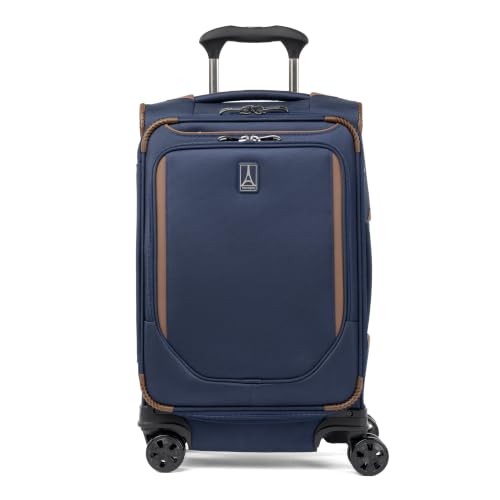
The Travelpro Crew Classic Softside Carry-On Luggage ($255) — The Travelpro Crew Classic is the most serious piece of luggage here, and that's exactly why it lost. Eight MagnaTrac spinner wheels, a PowerScope aluminum handle that locks at 36, 38, 40 and 42.5 inches, a removable compression organizer, 47 liters of space and limited lifetime coverage plus three years of airline damage repair with registration — it's built to the standard flight crews demand. But it weighs about 7 pounds empty, it has no laptop compartment, and spinner wheels are happiest on smooth terminal floors, not campus paths. If you fly most weeks and want one bag that survives the belt, buy it. For getting books to class, it's the wrong tool.
Care and maintenance
Wheels are the part that dies first. Published long-term reviews find measurable wear after roughly 12 to 18 months of daily outdoor rolling on asphalt and concrete, with premium urethane wheels lasting two to three times longer than cheap plastic ones. You can stretch that: pick up the bag over gravel and curbs instead of dragging it, and pull grit and hair out of the axles every few weeks with tweezers. Pack heavy items low and against the wheel end so the bag doesn't tip and torque the handle. Retract the handle before you set the bag down hard — bent handle tubes rarely go back to normal. If your bag came with a warranty that requires registration, do it the week you buy it, not the week it breaks.
Questions we get
Are rolling backpacks allowed as carry-on luggage?
Yes, as long as the bag fits the size limit. TSA and most major U.S. airlines cap carry-ons at 22 by 14 by 9 inches, and the wheels and handle count toward that. The High Sierra Freewheel at 20.5 by 13.5 by 8 inches and the KROSER at 18.1 by 14.2 by 8.7 inches both clear it comfortably. Check your specific airline before a budget-carrier flight, since a few enforce smaller limits.
What's the difference between inline skate wheels and spinner wheels?
Inline wheels are mounted in-line under the back of the bag and only roll forward and back, so the bag tips toward you and tracks straight. Spinner wheels rotate 360 degrees, so the bag stands upright and glides sideways. Reviewers who compare the two agree that inline wheels win on cracked sidewalks, gravel and cobblestone, while spinners are better on smooth airport and office floors. Pick based on where you walk, not which looks nicer.
Is a rolling backpack better than a regular backpack for commuting?
It depends almost entirely on stairs. If your route is flat and paved, rolling is easier on your body and lets you carry more without thinking about it. If you're hauling the bag up subway steps twice a day, the extra pound or two of wheels and handle works against you the whole trip. A convertible like the High Sierra Freewheel is the hedge, since you can wear it when rolling doesn't work.
Which of these fits a 17-inch laptop?
The KROSER is the one built for it, with a padded compartment rated for laptops up to 17.3 inches. Our top pick tops out at most 15-inch machines, and the Amazon Basics bag stops at 15.6 inches. If you carry a large gaming laptop or a 16-inch MacBook Pro in a bulky case, measure your machine with the case on before you order anything.
Are rolling backpacks a good idea for middle and high school students?
For heavy book loads, yes. The American Academy of Pediatrics recommends a loaded backpack stay under 10 to 15% of a child's body weight, and the average middle schooler carries 18 to 20 pounds of books and gear — well past that for most kids. Wheels move that weight off the spine. Check your school's policy first, since some restrict rollers in narrow hallways, and note that the High Sierra Freewheel is marked for ages 13 and up.
How long do the wheels last with daily use?
Most rolling bag wheels show real wear after about 12 to 18 months of daily outdoor rolling on asphalt and concrete, according to long-term reviews. Premium urethane wheels, like the oversized ones on the Osprey, tend to last two to three times as long as basic plastic ones. Carrying the bag over gravel and curbs rather than dragging it makes a noticeable difference.
Why you should trust us
For this guide:
- We read the manufacturer spec sheets for every bag here and compared empty weight, laptop sleeve size and outside dimensions against the 22-by-14-by-9-inch carry-on limit.
- We reviewed published gear coverage on how wheel size and mounting style hold up on rough ground, along with guidance from the American Academy of Pediatrics on safe carrying weight for kids.
- We looked for recurring themes in owner feedback — wheel wear, handle wobble and zipper failure — rather than individual complaints.
- We read owner reviews on every listing, weighted toward the critical ones, because that is where the recurring failures show up.
- We have a systematic way of automatically fetching the latest prices, so the numbers on this page stay current.
- This is a research-focused guide, so the team may not own every product listed — though we often do own the top winners, which gives us extra context for the recommendations.
- We don't accept free products, and the retailer commission never changes which product we recommend.
Sources
Best Rolling Backpacks — Wirecutter / NYT, Wirecutter
Best Carry-On Luggage — Consumer Reports, Consumer Reports
Thule Crossover 2 Convertible Carry-On 41L Review — Pack Hacker, Pack Hacker
Best Rolling Backpacks — Travel + Leisure, Travel + Leisure
Best Rolling Backpacks for Kids and Students — Good Housekeeping, Good Housekeeping
Best Rolling Backpacks — The Strategist (NY Mag), The Strategist
Best Rolling Laptop Bags — Reviewed / USA Today, Reviewed / USA Today
Backpack Safety — American Academy of Pediatrics, American Academy of Pediatrics
Carry-On Baggage Size Requirements — TSA, TSA.gov
Osprey All Mighty Guarantee — Osprey Packs, Osprey Packs
Travelpro Crew Series — Official Product Page, Travelpro
Amazon Best Sellers: Rolling Backpacks, Amazon
Amazon product listings and owner reviews for all 5 products
Manufacturer specification pages for each product
Some passages in this guide may be paraphrased with AI help. Prices are refreshed automatically.
More like this.
Continue exploring lifestyle reviews and recommendations.

The Best Laptop Backpacks for Commuters
A commuter backpack has one job that matters more than the rest: get your laptop to the office and home again without a scratch. But you feel the other…

The Best Dictionaries and Thesauruses for Students
A good dictionary sits open on your desk and settles arguments. You're mid-sentence, unsure whether a word means what you think it means, and you need an…

The 11 Best Electric Commuter Bikes for City Riding in 2026: Tested & Reviewed
Expert-tested guide to the best electric commuter bikes of 2026, featuring top picks from Specialized, Trek, Rad Power Bikes, Aventon, and Giant.

The Best Commuter E-Bike Accessories
A commuter e-bike gets you to work. The gear bolted to it decides whether the ride is pleasant or grim. You're out in traffic at speeds a regular bike…

The Best Hiking Backpacks
A backpack is the one piece of gear you never put down. Everything else - tent, stove, sleeping bag - gets used and stowed away. The pack rides on you for…

The Best Backpacking Water Filters
Clean water is the one thing you can't carry enough of. A liter weighs about two pounds, so on any trip longer than an afternoon you're going to be…