The Best Dr. Brown's Baby Bottles
A bottle looks like a simple object until you're holding one at 3 a.m. with a screaming baby. Then the details matter a lot. How fast the milk comes out, whether your baby will actually latch onto the nipple, how many pieces you have to scrub before the next feed — those things shape your whole day. Dr. Brown's built its reputation on one idea: an internal vent that routes air out the back of the bottle instead of through the milk. The company says that means less swallowed air, and less gas and spit-up as a result.
Here's the honest tradeoff. That vent is two extra pieces — an insert and a reservoir — and you wash them at every single feeding. Review outlets consistently name the part count as the most common complaint parents have with these bottles. Owners also report occasional leaks, usually when the collar isn't screwed on straight or the bottle gets tipped upside down. No Dr. Brown's bottle escapes this. You're trading convenience for the vent, and that's a real trade, not a marketing quibble.
The good news is that the vent comes out. Once your baby outgrows the gassy stage, you pull the insert and you've got a normal two-piece bottle — no need to buy a whole new system. We think that the Options+ Narrow 6-pack is the best Dr. Brown's bottle for most people, and that the Options+ Wide-Neck 4-pack is the one to buy if your baby goes back and forth between breast and bottle.
Everything we recommend
The classic vented bottle, in the size you'll use longest
Easier to fill and closer to the breast, if you're nursing too
Glass, if you'd rather not put milk in plastic at all

Two slower nipple levels for a baby who can't keep up
How we picked
Vent system design. Every bottle we considered uses the two-piece internal vent that routes air behind the milk instead of through it. Dr. Brown's describes it as clinically proven to reduce colic, and it's the reason to buy this brand at all.
Neck width and fit. We separated narrow from wide-neck because they suit different families. Review outlets note narrow bottles fit more third-party nipples and pump kits, while lactation consultants favor wide necks for babies who also nurse.
Flow levels available. The AAP advises matching nipple flow to a baby's age and cues, so we looked at which nipple ships in each set. Preemie and Level 1 matter most for newborns.
Parts and cleaning. Published reviews flag the higher piece count as the single most common complaint about these bottles. We weighed how easy each body is to fill and scrub, and whether the vent can be removed later.
Material and durability. We compared plastic against borosilicate glass on staining, odor and drop risk, using owner feedback about how each holds up through months of daily sterilizing.
Top pick
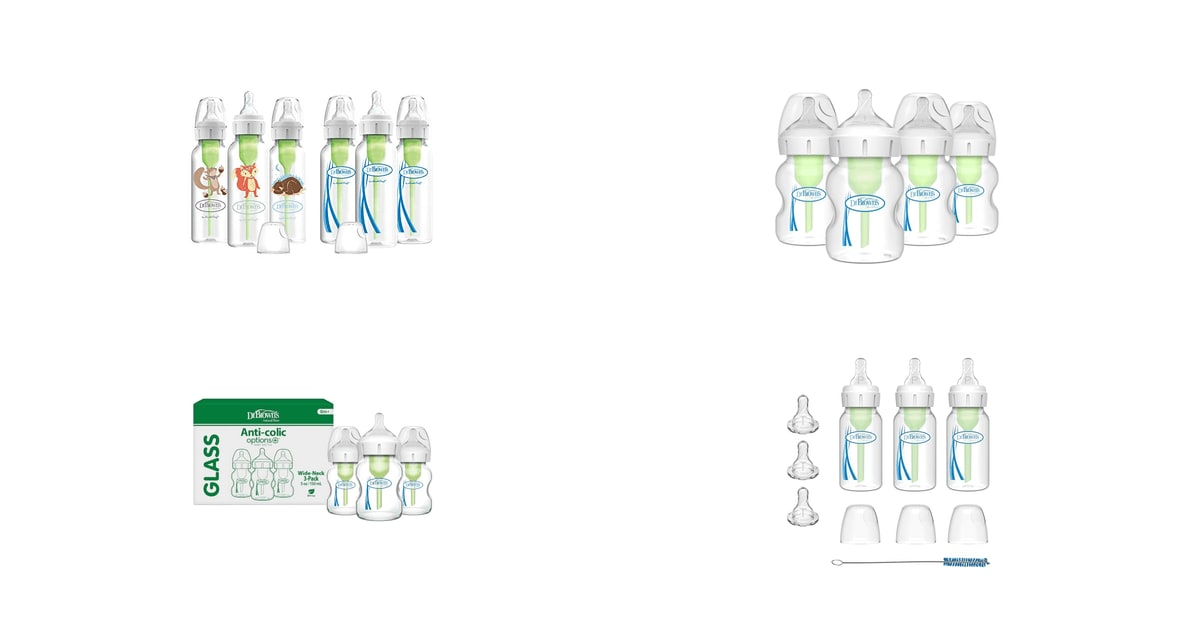
The classic vented bottle, in the size you'll use longest
Dr. Brown’s Natural Flow® Anti-Colic Options+™ Narrow
This is the original narrow Dr. Brown's bottle, and it's the one most parents mean when they say "Dr. Brown's." The 8-ounce size carries you from the newborn weeks well past six months, and the narrow neck fits a wider range of third-party nipples and pump collection kits.
$34.99fromAmazonThe narrow neck is the flexible one. Parenting review outlets note that narrow-neck Dr. Brown's bottles work with a broader range of third-party nipples and pump parts than the wide version does. If you're pumping with a kit you already own, or you inherited a drawer of mismatched nipples, that flexibility saves you money and hassle. It also means you're not locked into one accessory ecosystem for the next year.
The 8-ounce size is the practical choice if you're only buying one set. A newborn drinks a couple of ounces at a time, so you'll have a lot of empty bottle at first. But you won't outgrow it. Smaller 4- and 5-ounce bottles look right for the first month and then sit in a cabinet. Six bottles is also roughly a full day of feeds, which means one dishwasher run instead of two.
The vent system works the same here as it does across the line. An insert and a reservoir carry air to the back of the bottle, so it bubbles up behind the milk rather than through it. Dr. Brown's says this is clinically proven to reduce colic and cuts down on spit-up, burping and gas. Owners of these bottles — including parents of preemies and reflux babies — consistently report calmer feeds.
You can strip it down later. The Options+ design lets you pull the vent insert once your baby's feeding settles, usually after the first few months. What's left is a plain two-piece bottle you can wash in seconds. That matters more than it sounds like it does. You get the anti-colic help when you need it, then you get your evenings back without shopping for a whole new bottle system.
Flaws but not dealbreakers
Leaks are the recurring complaint. If the collar isn't screwed on evenly, or the bottle sits upside down in a bag, milk finds its way out. Several owners describe this as user error they learned to avoid, but it's a learning curve you'll go through with a full bottle at least once.
You're washing five pieces per feed: bottle, nipple, collar, vent insert and reservoir. Multiply that by eight feeds a day and six bottles, and the sink math gets ugly fast. A bottle brush set that reaches the narrow neck is close to mandatory here.
The narrow opening is harder to fill than a wide-neck bottle. Pouring pumped milk in without a funnel takes a steady hand, and scrubbing the inside means a brush that actually fits.
Runner-up
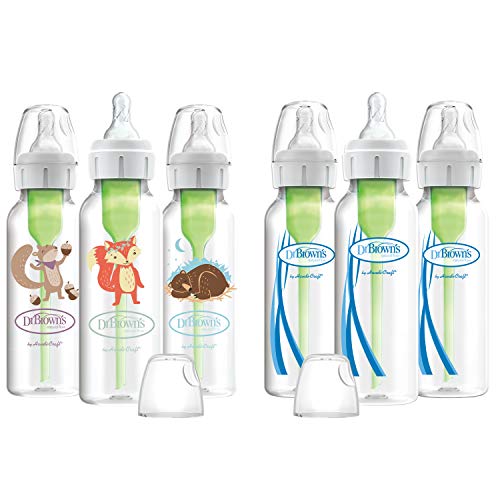
Easier to fill and closer to the breast, if you're nursing too
Dr. Brown's Anti-Colic Options+ Wide-Neck Baby Bottles
The wide-neck version has the same vent system in a shorter, fatter body with a broader nipple base. Lactation consultants generally recommend wide-neck shapes for breastfed babies, because the opening mirrors the breast and makes going back and forth less confusing.
$25.98fromAmazonIf you're nursing and bottle-feeding, this is the shape to start with. Wide-neck designs are recommended by lactation consultants because the broader nipple base more closely mirrors the breast, which eases the transition in both directions. Owners who breastfeed and bottle-feed describe babies moving between the two without complaint. Some report a baby who refused every narrow nipple taking this one.
Filling and cleaning are genuinely easier. The wide mouth means you can pour pumped milk straight in without a funnel, and a bottle brush fits without a fight. That's a small thing at noon and a large thing at midnight. If the part count is what worries you about Dr. Brown's, the wide neck at least makes each of those parts faster to scrub.
The 9-ounce body handles the whole first year. It looks comically large next to a two-week-old, but you fill it to whatever line you need, and you don't replace it in four months. Four bottles covers a typical day if you're washing once, or half a day if you're also sending bottles to a caregiver.
Flaws but not dealbreakers
The nipple is big. Some owners find that once they stop breastfeeding, they'd rather use a narrower nipple, and this shape doesn't give them that option without switching bottles.
Wide-neck bottles are compatible with fewer third-party nipples and pump collection kits than the narrow version. If you're already committed to a pump from another brand, check fit before you buy a stack of these.
Leaking shows up in owner feedback here too, usually when the collar isn't tightened evenly or the bottle is stored on its side. It's a known quirk of the vented design, not a defect in this model.
Upgrade pick
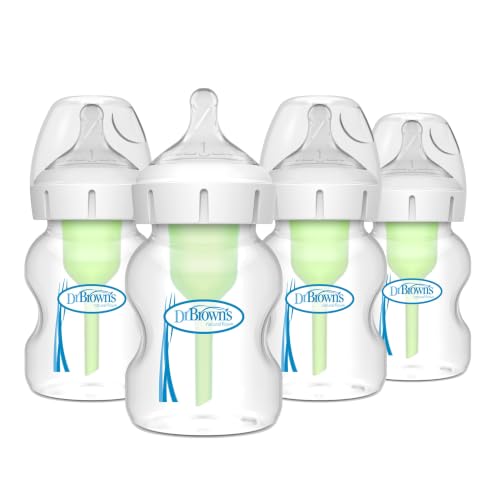
Glass, if you'd rather not put milk in plastic at all
Dr. Brown's Anti-Colic Options+ Wide-Neck Glass Baby
This is the same wide-neck Options+ bottle in borosilicate glass. You get the identical vent system and nipple shape, in a material that won't stain, hold odors or cloud up after a hundred trips through the sterilizer.
$19.49fromAmazonGlass is the answer if plastic bothers you. All Dr. Brown's bottles are BPA-free, but some parents simply don't want hot milk sitting in plastic, and glass settles that question. Reviewers note that borosilicate glass paired with a silicone sleeve balances chemical peace of mind against the drop risk of bare glass. Owners consistently describe these bottles surviving falls onto hard floors intact.
It also ages better than plastic does. Plastic bottles cloud, scratch and pick up the smell of whatever formula you've been using. Glass comes out of the dishwasher looking the way it did the day you opened it. If you're planning to use these bottles for a second baby, that durability changes the math on what they actually cost you.
The 5-ounce size is aimed squarely at the newborn months. A three-pack won't cover a full day of feeds by itself, so most owners pair these with plastic bottles — glass at home, plastic in the diaper bag. That's a reasonable way to use them, and it's what a lot of parents end up doing anyway.
Flaws but not dealbreakers
Glass is heavy, and it does break. Owners report drops that the bottles survived and drops that they didn't. Once your baby starts holding the bottle, the weight and the risk both go up.
This is the most expensive way to buy a Dr. Brown's bottle, and you get three of them instead of four or six. Outfitting a full day of feeds in glass costs considerably more than the plastic equivalent.
At 5 ounces, you'll want larger bottles by the time your baby is taking bigger feeds, so plan on this being a starter set rather than the only bottles you own.
Also great
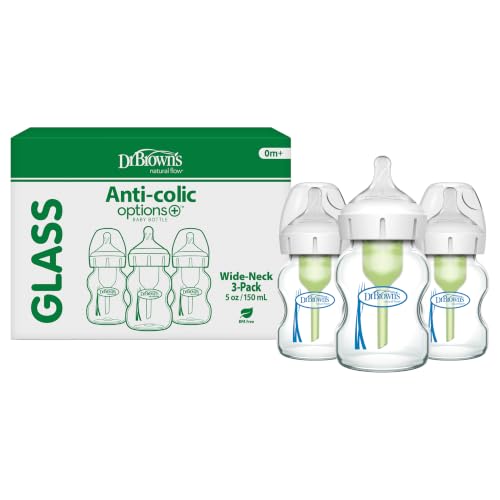
Two slower nipple levels for a baby who can't keep up
Dr. Brown's Preemie Flow Bottle Set
This set pairs 4-ounce Options+ bottles with Preemie Flow nipples and Level T nipples, so you have both the slowest flow in the lineup and the step just above it. It's built for premature babies, NICU graduates and any newborn who chokes and sputters on a standard nipple.
$22.99fromAmazonFlow rate is the thing most people underestimate. The American Academy of Pediatrics recommends matching nipple flow to your baby's age and feeding cues rather than reaching for a faster nipple to speed things up, because too much flow leads to overfeeding and choking. If your baby gulps, coughs or pulls off the bottle mid-feed, a slower nipple usually fixes it faster than anything else you'll try.
Getting both nipple levels in one box is the real value here. Preemie Flow is the slowest Dr. Brown's makes, and Level T sits just above it as a deliberate half-step. Buying nipples separately means guessing at which level to order and waiting for shipping while your baby struggles. Owners who've been through the NICU describe this set as the one they don't have to think about.
The 4-ounce body is right-sized for the babies this set is meant for. A preemie takes an ounce or two at a time, and a smaller bottle is easier to angle and hold through a slow feed. Multiple owners describe NICU feeding teams pointing them toward Dr. Brown's vented bottles for exactly this stage.
Flaws but not dealbreakers
This is a stage, not a system. Most babies move up from Preemie and Level T within a few months, and then you're buying faster nipples or bigger bottles anyway. Three 4-ounce bottles won't cover a day of feeds for long.
Some owners report these bottles developing leaks with heavy use over time, which is worth knowing if you're planning to run the same three bottles through eight feeds a day for months.
Who this is for
Buy these if your baby is gassy, spitty or refluxy, or if you just want the bottle most pediatricians hand you a coupon for. They're also a sensible default if you're pregnant with your first and have no idea what your baby will take — the vent helps if you need it, and it comes out if you don't. Parents of preemies and NICU graduates should look hardest at the slower flow levels, since pacing is the whole problem at that stage.
Skip them if you're firmly in the fewer-parts camp. If washing five pieces at every feed sounds like the thing that will break you, a simple two-piece bottle will make you happier, and plenty of babies do fine on one. This guide covers Dr. Brown's bottles and the accessories that fit them — it doesn't compare the brand against Comotomo, Philips Avent, MAM or anyone else, and it doesn't cover pumps, sterilizers or formula.
How we picked
We looked at the whole Dr. Brown's lineup against a handful of things that actually change how a feed goes. Vent system: every pick uses the two-piece internal vent that carries air out the back of the bottle rather than through the milk, which is the brand's entire premise. Neck width: narrow bottles fit more third-party nipples and pump kits, while wide-neck shapes are what lactation consultants recommend for babies who also nurse. Flow level: the AAP says to match nipple flow to your baby's age and cues, so we noted which nipple comes in each box. Cleaning: we weighed part count, how easy the body is to fill, and whether the vent comes out later. Material: we compared plastic against borosilicate glass on staining, odor and how they survive a drop.
Other dr. brown's baby bottles worth considering
If you want to skip buying sippy cups entirely: The Dr. Brown's Milestones Options+ Wide-Neck Sippy Spouts ($5.99) — These silicone spouts screw onto the wide-neck Options+ bottles you already own, in place of the nipple and vent. Your toddler keeps the bottle they recognize and just learns a new top, which owners describe as a much smoother handoff than introducing a whole new cup. They're rated for six months and up, and they fit the 5-ounce and 9-ounce wide-neck bottles. Two caveats: they don't fit the narrow bottles, and some owners report a spout that seals well on one bottle and drips on another. An older toddler can also push the spout down into the bottle, which ends about how you'd expect.
More from Dr. Brown's
Dr. Brown's makes more bottles than we could put on this page — compact bodies, silicone bodies, more sizes and multipack counts than anyone needs to compare. What follows is the rest of what our research surfaced, sorted by who each one actually suits.
Is Dr. Brown's worth it?
Dr. Brown's is the brand most American parents encounter first, and the company markets itself as the number one pediatrician-recommended bottle in the U.S. That reputation rests almost entirely on one feature: the patented internal vent, which routes air out the back of the bottle instead of through the milk. It's the brand's whole argument, and owner feedback broadly supports it — parents of reflux babies, gassy babies and NICU graduates describe these as the bottles that finally worked. The flip side is equally consistent. Review outlets identify the part count as the single most common complaint, and leaking comes up often enough in owner feedback to count as a known quirk rather than a fluke. Against simpler rivals, Dr. Brown's asks more of you at the sink in exchange for a feature those bottles don't have. If your baby doesn't need the vent, you're doing extra dishes for nothing. If your baby does need it, that's a trade most parents make happily and don't look back on.
Not set on Dr. Brown's?
Frida Baby covers the messier end of newborn care — nasal aspirators, bath tools, gas relief — which pairs with bottles more than it competes with them. our Frida Baby guide →
If you're weighing whether to stay in one ecosystem, Munchkin makes bottles, sippy cups and feeding gear at a broader range of price points. our Munchkin guide →
Cleaning the vent pieces
The vent insert and reservoir are the parts people get wrong. Pull them apart at every wash — milk dries in the joint between them, and a rinse won't reach it. The narrow tube inside the insert needs the skinny brush that comes in most Dr. Brown's cleaning sets; a regular bottle brush won't fit. All the pieces are dishwasher-safe on the top rack, and a basket keeps the small parts from ending up in the heating element. If you sterilize, let everything dry fully before reassembling, because trapped water in the reservoir is what clogs the vent and causes drips. And when you screw the collar on, keep it straight and stop at snug. Overtightening a crooked collar is behind most of the leaks owners describe.
Questions we get
Do Dr. Brown's bottles actually help with colic and gas, or is that marketing?
The mechanism is real: the vent routes air out the back of the bottle so your baby swallows less of it, and Dr. Brown's says the system is clinically proven to reduce colic. Owner feedback skews strongly positive on gas and spit-up, and NICU feeding teams point parents toward these bottles often enough that it shows up repeatedly in reviews. That said, colic has causes a bottle can't fix. If your baby is still miserable after a couple of weeks, talk to your pediatrician rather than buying a third bottle brand.
What's the difference between the narrow and wide-neck bottles?
Narrow bottles are the original tall, skinny shape, and they fit a broader range of third-party nipples and pump collection kits. Wide-neck bottles are shorter and fatter with a broad nipple base that more closely mirrors the breast, which is why lactation consultants tend to recommend them for babies who also nurse. Wide necks are easier to fill and scrub. Both use the identical vent system, so the anti-colic performance is the same either way.
What is the Options+ system?
Options+ means the vent is removable. You use the insert and reservoir while your baby is gassy or refluxy, then pull them out once feeding settles down — usually after the first few months. What's left is an ordinary two-piece bottle with a lot less to wash. The point is that you don't have to buy a different bottle when your baby outgrows the vent.
Are these bottles worth the extra cleaning?
If your baby is gassy or spitty, most parents say yes without much hesitation. If your baby feeds fine on anything, the five pieces per feed are hard to justify. The middle path is buying Options+ bottles, using the vent through the newborn months, then pulling it out — you get the help when it matters and simple cleaning after.
What flow nipple should I use for a newborn?
Start with Level 1 for a typical full-term newborn, and Preemie Flow if your baby was premature or struggles to pace themselves. The AAP recommends matching flow to your baby's age and feeding cues rather than moving up to speed feeds along, since too much flow risks overfeeding and choking. Watch for gulping, coughing or milk running out the corner of the mouth — those mean the flow is too fast.
Can they go in the dishwasher and a sterilizer?
Yes. All the pieces are dishwasher-safe on the top rack and sterilizer-safe, including the silicone parts. Use a closed basket so the vent insert and reservoir don't fall through. Take the vent apart before washing, since milk collects where the two pieces meet and a rinse won't get it out.
Why you should trust us
For this guide:
- We read Dr. Brown's own product documentation and learning-center material on the vent system, the Options+ design and the Preemie Flow nipple.
- We compared published reviews and buying guidance from parenting outlets, along with AAP guidance on matching nipple flow to a baby's age.
- We reviewed recurring themes in owner feedback across the lineup, particularly around leaking, part count and how each bottle holds up to daily sterilizing.
- We read owner reviews on every listing, weighted toward the critical ones, because that is where the recurring failures show up.
- We have a systematic way of automatically fetching the latest prices, so the numbers on this page stay current.
- This is a research-focused guide, so the team may not own every product listed — though we often do own the top winners, which gives us extra context for the recommendations.
- We don't accept free products, and the retailer commission never changes which product we recommend.
Sources
Dr. Brown's Official Product & Vent System Overview, Dr. Brown's (manufacturer)
Best Baby Bottles of 2026, Tested by Parents, The Bump
The Best Baby Bottles for Breastfed and Formula-Fed Babies, What to Expect
Dr. Brown's Bottles Review: Do They Really Reduce Colic?, Healthline
Best Baby Bottles, According to Pediatric Experts, Parents.com
Glass vs. Plastic vs. Silicone Baby Bottles: What's Safest?, Verywell Family
Best Baby Bottles Tested by Our Editors, Good Housekeeping
Wide-Neck vs. Narrow-Neck Baby Bottles: Which Should You Choose?, Babylist
How to Choose Bottle Nipple Flow Levels by Age, American Academy of Pediatrics (HealthyChildren.org)
Best Bottles for Colic and Reflux, Reviewed, Romper
Best Baby Bottles for Combo Feeding (Breast and Bottle), NYT Wirecutter
Dr. Brown's Preemie and Newborn Feeding Guidance, Dr. Brown's Learning Center
Amazon product listings and owner reviews for all 5 products
Manufacturer specification pages for each product
Some passages in this guide may be paraphrased with AI help. Prices are refreshed automatically.
More like this.
Continue exploring lifestyle reviews and recommendations.

The Best Hiking Backpacks
A backpack is the one piece of gear you can't set down. Your tent gets pitched, your stove gets stowed, but the pack rides with you every step. That's why…

The Best Gifts for LEGO-Loving Adults
A good LEGO gift buys someone hours away from a screen. That's the real present here - a quiet evening at the kitchen table, a podcast on, a pile of…

The Best Pumpkin Carving Kits
Carving a pumpkin is the most popular Halloween activity in the country. A National Retail Federation survey found that roughly 72% of celebrating…

The Best Robotic and Cordless Electric Lawn Mowers
Mowing is the one chore you can't skip, and for most of us it eats a Saturday morning every week from April through October. Electric mowers change that…

The Best Health and Longevity Books
Most health books tell you to eat better and move more. The useful ones tell you what to eat, how to move, and how to know it's working. That's the…

The Best Gifts for Whiskey and Bourbon Lovers
Whiskey people are easy to shop for and easy to get wrong. The person on your list already has a bottle they love, so the gift almost never is the…