The Best Hiking Backpacks
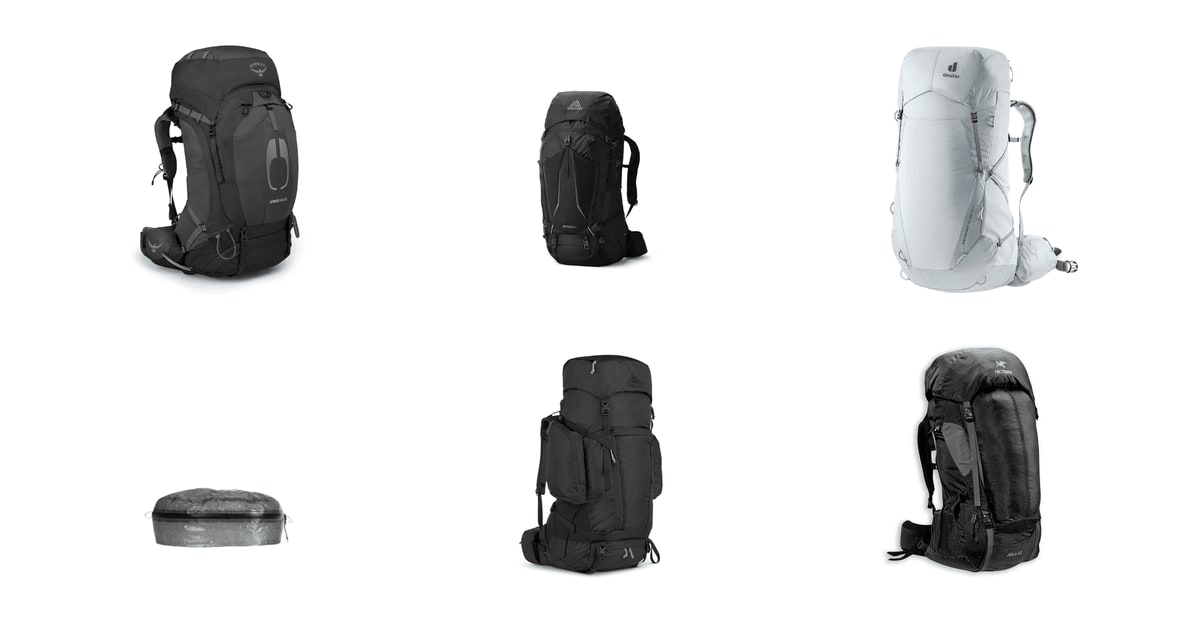
A backpack is the one piece of gear you can't set down. Your tent gets pitched, your stove gets stowed, but the pack rides with you every step. That's why fit beats features every time. A pack that sits wrong will rub a raw spot into your shoulder by mile four, and no amount of clever pocket design fixes that. The good news is that a well-fitted pack moves most of its weight onto your hips, where your legs can carry it. REI's fit guidance puts that transfer at 70 to 80 percent of the total load.
Here's the honest part: no pack does everything. Ultralight models shave pounds by dropping padding, frames and organization, so they get uncomfortable fast once you load them heavy. Traditional packs carry big loads beautifully but weigh four or five pounds empty. And almost every nylon pack relies on a DWR coating that wears off over a season or two, so you'll want a liner or a rain cover regardless of what the marketing says. Torso length also matters more than your height, which means online sizing charts are a starting point, not an answer.
We looked at how each pack handles the trips people actually take — a couple of nights in the woods, a week in the mountains, a long-haul thru-hike. We weighed published reviews, manufacturer specs and the themes that come up again and again in owner feedback. We think that the Osprey Atmos AG 65 is the best hiking backpack for most people, and that the Gregory Baltoro 65 is the one to buy if you regularly carry heavy loads over long stretches.
Everything we recommend

The most comfortable carry for two nights to a week out

Better under heavy loads, if you'll trade some airflow

Fully featured and adjustable, at the cost of some weight

Lighter than a traditional frame, with a hipbelt that pivots

A women's-specific fit that works for fast, light trips
At a glance
| Product | Capacity | Weight | Price | |
|---|---|---|---|---|
| Osprey Atmos AG 65L Men's Backpacking BackpackTop pick | 65L | 4.61 lb | $320.44On sale |
| Gregory Baltoro 65L Backpacking PackRunner-up | 65L | — | $277.46 |
| Deuter Aircontact Ultra 50+5 Trekking BackpackUpgrade pick | 50+5L | — | $221.25 |
 | Organizational Backpack Pods by Hyperlite Mountain GearAlso in lineup | 16L | — | $84.40 |
| Kelty Coyote 60-105 Liter Internal Frame BackpackBudget pick | 65L | 4 lb | $159.95 |
 | Arc'teryx Arcteryx Altra 62 Backpack - Women'sAlso consider | 62L | — | $200 |
| Osprey Tempest Pro 40L Women's Hiking BackpackAlso great | 40L | 3.01 lb | $273.44 |
How we picked
Load transfer and fit. We prioritized packs with substantial hipbelts and frames capable of moving 70 to 80 percent of the load onto the hips, the threshold REI's fit guidance treats as correct. Packs with adjustable or multi-size torso options ranked higher, since torso length predicts comfort better than height.
Ventilation. We compared suspension designs across published reviews, weighting suspended trampoline mesh over foam backpanels for hot-weather use. Backpacker Magazine's hot-weather evaluation of Osprey's Anti-Gravity system gave us a concrete benchmark for what a real gap between pack and back is worth.
Weight versus features. We treated weight as a trade-off, not a score. Packs under three pounds had to keep a real frame and hipbelt to earn a spot, and packs over four pounds had to justify the penalty with comfort at heavy loads.
Capacity for real trips. Following REI's capacity guidance, we focused on 50 to 65 liters for two-to-four-night three-season trips, with smaller packs considered only for overnights and fast-and-light use. Anything that encouraged overpacking for its stated use case got marked down.
Durability and warranty. We read spec sheets for fabric denier and reinforcement, and looked for repeated owner themes about zippers, buckles and strap wear. Lifetime warranties from Osprey and Gregory carried real weight given how long a good pack lasts.
Top pickOn sale
The most comfortable carry for two nights to a week out
Osprey Atmos AG 65L Men's Backpacking Backpack
The Atmos AG 65 suspends a mesh panel about two inches off your back, so air moves where other packs trap sweat. It carries a moderate load as well as anything here, and it comes with a rain cover in the box.
$320.44fromAmazonList priceThe Anti-Gravity suspension is the reason to buy this pack. A tensioned mesh panel wraps from your shoulders to your hipbelt and holds the pack body roughly 5 cm off your back. Backpacker Magazine's hot-weather evaluation credited that gap with cutting tester-reported back sweat by more than 30 percent. If you hike in humid summer air, or you're one of those people who soaks a shirt on a flat trail, this is a real difference and not a spec-sheet flourish.
Owners who come to this pack from older gear describe the same thing over and over: the load feels lighter than the scale says. That's the suspension doing its job, pulling weight off your shoulders and seating it on your hips. Osprey's Fit-on-the-Fly harness and hipbelt let you adjust both without tools, which matters when you shed layers midday or hand the pack to a hiking partner for a stretch.
Wirecutter's editors covered more than 200 miles across several climates before landing on this pack as the best all-around choice for trips of two to seven nights. That maps neatly onto what most people actually do. Sixty-five liters is enough for a long weekend with room to spare, and it stretches to a week if you pack with any discipline at all.
You get real organization without a scavenger hunt. Curved side zips open the main compartment from either side, so you can pull a jacket from the middle without unpacking the top. There's a zippered sleeping bag compartment with a removable divider, a hydration sleeve with a center exit port, and an integrated rain cover — which sounds minor until you compare it against packs that make you buy one separately.
Osprey backs this with the All Mighty Guarantee, a lifetime warranty on defects and workmanship. For a piece of gear you'll drag through granite and hawthorn for a decade, that changes the math. Owners report sending packs in years after purchase and getting them repaired or replaced. It's the kind of policy that quietly justifies a higher upfront cost.
Flaws but not dealbreakers
At roughly 4 lbs 10 oz empty, this is not a light pack. If you're chasing a low base weight, you'll give up two and a half pounds to the frame and suspension before you put anything inside it. That's the trade for the comfort, but it's a real trade.
The trampoline mesh curves the pack body away from your spine, which eats a little usable volume and can make bulky items awkward to wedge in. A bear canister in particular takes some fussing. And several owners note the hipbelt padding starts to feel thin above about 35 pounds — this pack is happiest in the moderate-load range, not hauling a week of winter gear.
Osprey covers the Atmos AG 65 with its All Mighty Guarantee, a lifetime warranty against defects in materials and workmanship.
Runner-up
Better under heavy loads, if you'll trade some airflow
Gregory Baltoro 65L Backpacking Pack
The Baltoro 65 is built for the trips where your pack is genuinely heavy — long resupply carries, shoulder-season gear, a bear canister and three days of water. Its suspension rotates with your stride instead of fighting it.
$277.46fromAmazonOutdoorGearLab scored the Baltoro 65 a 9.2 out of 10 for comfort with a 45-pound load, the highest mark in the traditional suspension category. That's the whole story of this pack in one number. Where the Atmos starts to feel its limits in the mid-thirties, the Baltoro is still settled and stable. If your loaded weight regularly crosses 40 pounds, this is the pack to get.
The FreeFloat A3 suspension moves with you rather than resisting you. Dynamic flex panels and auto-rotating shoulder straps pivot as you walk, so the pack tracks your torso through a stride instead of torquing against it. On a long, monotonous day the difference shows up as less shoulder fatigue and fewer hot spots. Gregory's 3D shoulder harness and hipbelt construction also avoids the fabric wrinkling that causes rub points on cheaper packs.
Organization is where thru-hikers gravitate to this pack. The interior is genuinely well laid out, with an AirCushion mesh backpanel that breathes better than a solid foam panel — not as freely as Osprey's suspended mesh, but enough that you're not walking around with a soaked back on a cool day. The sternum strap carries a safety whistle and a hydration clip.
It comes in three sizes tuned to torso length and body shape, not just height. That's more granular than it sounds. Two people who are both six feet tall can need different frames, and Gregory's sizing gives you a better shot at landing on the right one without a shop visit.
Flaws but not dealbreakers
There's no rain cover included, and this trips people up regularly. Gregory has confirmed to buyers that it's a design decision, not a packaging error, but if you're expecting one you'll be annoyed on the first wet morning. Budget for a cover or a pack liner.
At about 4 lbs 14 oz it's the heaviest pack among our picks, and it's a few ounces heavier than the Atmos for the same 65 liters. The backpanel also can't match a suspended trampoline mesh for airflow. In August heat you'll notice.
Gregory backs the Baltoro 65 with a lifetime warranty covering defects and workmanship.
Budget pick
Fully featured and adjustable, at the cost of some weight
Kelty Coyote 60-105 Liter Internal Frame Backpack
The Coyote 65 gives first-time backpackers an adjustable torso, a real internal frame and a sleeping bag compartment — the stuff that usually comes only on much pricier packs. It's heavier and less refined, and it's built like a tank.
$159.95fromAmazonTorso adjustment is the feature that makes this pack worth recommending to beginners. Kelty's Fit Pro system lets you slide the harness to your measurement and re-tune it on the trail, which matters enormously when you're new and still learning what a correct fit feels like. Switchback Travel named the Coyote its top budget pick largely on this point. Most packs at this level lock you into a fixed torso length and hope for the best.
The suspension is not a token effort. An advanced perimeter frame with an aluminum stay keeps the load stable, and Kelty rates the pack for an optimal carry of 30 to 55 pounds. Owners who use it for hunting and wildland fire training — people who load a pack hard and hate it publicly when it fails — consistently describe it as rugged and stable. The Amp Flow ventilated back panel handles heat better than you'd expect at this price.
Storage is generous and sensibly laid out: wing pockets on the hipbelt, two front zip pockets, a J-zip that opens the main compartment wide, water bottle pockets, daisy chains and a dedicated sleeping bag compartment. Nothing here is clever. All of it is useful, which is the right priority for someone still figuring out a packing system.
It also comes in a range from 60 to 105 liters. If you already know you'll be hauling extra — winter gear, shared group equipment, a kid's sleeping bag on family trips — you can size up without changing brands or relearning a harness.
Flaws but not dealbreakers
The shoulder straps are the weak link. Owners who've carried pricier packs alongside it consistently single out the harness padding as the place Kelty saved money, and on long days that shows up as pressure on the tops of your shoulders. The hipbelt does most of the work well, which softens the problem but doesn't erase it.
At around 4 lbs 10 oz empty it's as heavy as the premium packs while being less refined, and the fabrics feel thicker and stiffer out of the box. That durability is a genuine plus if you bushwhack. It's a minus if you count ounces.
Upgrade pick
Lighter than a traditional frame, with a hipbelt that pivots
Deuter Aircontact Ultra 50+5 Trekking Backpack
The Aircontact Ultra 50+5 weighs under three pounds but keeps a real frame and a load-transferring hipbelt. It's the pack for rocky, uneven ground where you want stability without hauling five pounds of suspension.
$221.25fromAmazonMost packs make you choose: light and floppy, or heavy and stable. This one splits the difference. At about 2 lbs 12 oz it's roughly two pounds lighter than the Atmos or the Baltoro, yet it keeps a spring steel perimeter frame and the Aircontact back system that pulls the load close to your center of gravity. For fast multi-day trips, that combination is hard to find.
The VariFlex hipbelt is what you're paying for. It pivots up to 15 degrees in each direction, so the belt follows your hips through a step-up or a side-hill traverse instead of dragging the whole pack with it. Outdoor Life's testers found this cut perceived load weight by roughly 15 percent on rocky, uneven terrain compared with static hipbelts. On scree and talus, that's the difference between a pack that helps you balance and one that throws you.
The fabric is 157D to 175D polyamide ripstop, chosen for abrasion resistance and elasticity rather than raw thickness. Deuter aims this squarely at thru-hikers, and the material choice reflects that: it should survive being set down on granite a few hundred times. The ventilated padded hip fins also help with heat buildup at the belt, which is where a lot of packs get clammy.
The extra five liters is more useful than it sounds. Fifty liters is a tight but workable three-season load for two to four nights, per REI's capacity guidance. The expandable collar gives you somewhere to put a resupply haul or a bulky midlayer without lashing things to the outside.
Flaws but not dealbreakers
Fifty liters is genuinely tight if you're new to packing or you carry a bulky sleep system. Add a bear canister or winter gear and you'll want 65 liters or more. This pack rewards people who've already trimmed their kit.
Organization is sparse compared with the Baltoro or the Coyote — a lid pocket, attachment loops, a hydration sleeve, and not much else. And the hydration reservoir isn't included, which is worth knowing before the box arrives.
Also great
A women's-specific fit that works for fast, light trips
Osprey Tempest Pro 40L Women's Hiking Backpack
The Tempest Pro 40L is cut for a shorter torso with inward-angled shoulder straps, and it's tough enough for scrambling and ski touring. Forty liters covers a weekend, not a week.
$273.44fromAmazonWomen's-specific packs aren't a color swap. Women's Running reported that packs built this way reduce shoulder strap pressure by around 20 percent for female testers versus unisex packs, thanks to inward-angled straps and a shorter, contoured torso. If a unisex pack has ever dug into your collarbone or ridden too high, that's the geometry you're fighting, and the Tempest is designed around it.
Osprey built this version to take abuse, not just to be light. The NanoFly fabric uses a triple-grid UHMWPE ripstop reinforcement, and the stretch pockets are heavier-duty than the ones on the standard Tempest. Owners use it for backcountry skiing, mountaineering and winter camping — conditions that shred lesser 40-liter packs. At about 3 pounds, it's the lightest full-featured pack among our picks.
The framesheet and torso adjustment do a lot of quiet work. An injection-molded framesheet gives the pack enough structure to carry a real load without turning it into a duffel, and the adjustment range covers a wider span of torso lengths than most packs this size. That's useful if you're between sizes, which is where a lot of women get stuck.
This is a versatile pack rather than a specialist one. It's a big day pack for long summer routes, a light overnight pack for a summit push, and a ski-touring pack in winter. If you own one pack and do several sports, that flexibility is worth more than an extra twenty liters you'd only use twice a year.
Flaws but not dealbreakers
It's a top-loader with a drawcord closure and no front panel zip, so getting to something at the bottom means pulling out what's on top. Owners flag this as the main annoyance. Pack in stuff sacks and plan your layers before you cinch it.
Forty liters is not a multi-day capacity for most people. One or two nights in mild conditions, sure. A four-night trip with a bear canister isn't happening. And the fabric is water-resistant, not waterproof, so you'll still want a liner.
Who this is for
This guide is for people carrying a pack overnight or longer — weekend backpackers, first-timers building a kit, thru-hikers and anyone heading out for a week in the mountains. If you're doing day hikes and coming home for dinner, you don't need any of this; a 20-to-30-liter daypack will serve you better and cost far less. And if you already own a pack that fits well and hasn't failed you, the honest advice is to keep it. New suspension technology is nice, but it won't transform a trip the way a lighter tent or better boots will.
One caveat that outranks everything else here: fit is personal, and no guide can measure your torso. Get your torso length measured, or order from a retailer with a generous return window and load the pack with real weight at home before you commit. We cover internal-frame backpacking packs in the 40-to-65-liter range plus one ultralight-adjacent option. We don't cover external-frame packs, expedition packs above 70 liters, hydration vests, or travel luggage that happens to have shoulder straps.
How we picked
We weighed each pack against five things. Load transfer: whether the frame and hipbelt can move 70 to 80 percent of the weight to your hips, which is the threshold REI treats as a correct carry. Ventilation: how much air actually reaches your back, with suspended mesh panels rated above foam for summer heat. Weight versus features: light packs had to keep a functional frame, and heavy packs had to earn their pounds with comfort under load. Capacity: 50 to 65 liters for the two-to-four-night trips most people take, sized to discourage overpacking. Durability and warranty: fabric specs, recurring owner complaints about zippers and straps, and whether the brand stands behind the pack for the long haul.
Other hiking backpacks worth considering
If you want a women's pack with real multi-day capacity: The Arc'teryx Arcteryx Altra 62 Backpack - Women's ($200) — The Arc'teryx Altra 62 is the women's-fit answer to the Tempest's biggest limitation. Sixty-two liters is enough for a genuine multi-night trip, where forty liters isn't, and Arc'teryx builds packs for technical terrain where load stability matters more than feature count. The company's RotoGlide hipbelt design, which pivots independently from the frame, cut load shift by an estimated 40 percent on uneven scrambling ground in Climbing Magazine's field evaluation of the related Bora 65. What you give up is refinement in the details and current availability — this is an older model, so sizing and color options are limited to what's still in stock. Owner feedback also flags that the tall size runs genuinely tall, so measure your torso before ordering rather than going by height.
The competition
This is what our research surfaced, not a survey of every pack sold. The backpacking market is enormous, and plenty of good packs from smaller makers never turn up in the major review roundups we drew on. Here's the remaining product we looked at and where it landed.
The Organizational Backpack Pods by Hyperlite Mountain Gear ($84.40) — Hyperlite Mountain Gear's Organizational Backpack Pods are stackable Dyneema cubes with water-resistant zippers, sized to fit packs up to 70 liters. They're a well-made way to keep your kit sorted inside a top-loading pack, and they're nearly weightless at about an ounce and a half. But they're an accessory, not a pack — they go inside one of the picks above rather than replacing it. If you buy the Tempest Pro or the Aircontact Ultra, both of which are top-loaders with limited internal organization, something like this solves the dig-to-the-bottom problem.
Fit and sizing
Torso length, not height, determines your size. Measure from the bony bump at the base of your neck down to the level of the top of your hip bones, and use that number against the maker's chart. When you load the pack, aim for the bulk of the weight high and close to your spine. Then buckle the hipbelt first, centered on your hip bones rather than your waist, and cinch it before you touch the shoulder straps. Snug the straps, then pull the load lifters until they run at roughly a 45-degree angle. Almost every nylon pack here uses a DWR finish that wears off, so carry a pack liner or rain cover even if the pack came with one — covers blow off in wind, and a liner never does.
Questions we get
What size hiking backpack do I need for a 3-day trip?
REI's capacity guidance puts most two-to-four-night three-season trips in the 50-to-65-liter range. Go to the top of that range if you're new to packing, since experience is what lets you get gear smaller. If you're adding a bear canister or a winter sleep system, plan on 65 to 75 liters minimum.
What's the best hiking backpack for beginners?
The Kelty Coyote 65 is our budget pick largely because it's forgiving for beginners. Its Fit Pro torso adjustment lets you dial in the fit as you learn what correct feels like, and it has a full internal frame rather than a token one. If you can stretch further, the Osprey Atmos AG 65 is more comfortable and comes with a lifetime warranty.
How do I properly fit a backpacking pack to my torso?
Measure from the C7 vertebra — the bump at the base of your neck when you tilt your head forward — to the imaginary line across the top of your hip bones. That measurement, not your height, determines your pack size. Load the pack with real weight, buckle the hipbelt on your hip bones first, then tighten the shoulder straps and load lifters. If the shoulder straps carry most of the weight, the pack is the wrong size or badly adjusted.
Are Dyneema backpacks worth it?
Dyneema Composite Fabric is fully waterproof with no DWR coating needed, and it has a tensile strength of 375 kN/m — stronger by weight than steel. That gets you a pack that can weigh under two pounds and never needs a rain cover. The trade-offs are abrasion resistance, minimal padding and a much higher cost, so it makes sense for thru-hikers chasing a low base weight and much less sense for weekend trips.
Gregory Baltoro or Osprey Atmos for heavy loads?
The Baltoro. OutdoorGearLab scored it 9.2 out of 10 for comfort at a 45-pound load, the best in the traditional suspension category, and its FreeFloat A3 suspension rotates with your stride under weight. The Atmos is more comfortable in heat and a few ounces lighter, but owners report its hipbelt padding starts feeling thin above about 35 pounds.
Can I take a 65-liter backpack as carry-on luggage?
Almost never. A loaded 65-liter pack exceeds most airlines' carry-on dimensions, and the external straps and hipbelt are prone to snagging on baggage systems anyway. If you're flying to a trailhead, check the pack inside a duffel or use the maker's own travel cover to protect the straps. A 40-liter pack like the Tempest Pro is a much better bet for the overhead bin.
Why you should trust us
For this guide:
- We read published evaluations from Backpacker Magazine, OutdoorGearLab, Switchback Travel, Outdoor Life, Climbing Magazine, Gear Junkie and Wirecutter, along with REI's fit and capacity guidance.
- We compared manufacturer spec sheets for each pack's weight, capacity, frame type, fabric and suspension design.
- We read through owner feedback for recurring themes about hipbelt comfort, strap padding, rain cover inclusion and long-term durability.
- We read owner reviews on every listing, weighted toward the critical ones, because that is where the recurring failures show up.
- We have a systematic way of automatically fetching the latest prices, so the numbers on this page stay current.
- This is a research-focused guide, so the team may not own every product listed — though we often do own the top winners, which gives us extra context for the recommendations.
- We don't accept free products, and the retailer commission never changes which product we recommend.
Sources
Best Backpacking Packs of 2026 — Backpacker Magazine, Backpacker Magazine
Best Backpacking Packs — REI Expert Advice, REI Co-op
Best Backpacking Packs of 2026 — OutdoorGearLab, OutdoorGearLab
Best Hiking Backpacks — Wirecutter (NY Times), Wirecutter
Best Backpacking Packs 2026 — Switchback Travel, Switchback Travel
Best Ultralight Backpacking Packs — The Trek, The Trek
Hyperlite Mountain Gear 3400 Southwest Review — Gear Junkie, Gear Junkie
Arc'teryx Bora 65 Review — Climbing Magazine, Climbing Magazine
How to Choose a Backpacking Pack — REI Expert Advice, REI Co-op
Deuter Aircontact Ultra 50+5 Review — Outdoor Life, Outdoor Life
Best Women's Backpacking Packs — Women's Running, Women's Running
Osprey Atmos AG 65 vs Gregory Baltoro 65 — 50campfires, 50 Campfires
Amazon product listings and owner reviews for all 7 products
Manufacturer specification pages for each product
Some passages in this guide may be paraphrased with AI help. Prices are refreshed automatically.
More like this.
Continue exploring lifestyle reviews and recommendations.

The Best Hiking Backpacks
A backpacking pack is the one piece of gear you never put down. It's on your body for eight hours a day, and every flaw in it gets amplified mile after…

The Best Hiking Backpacks
A backpack is the one piece of gear you never put down. Everything else - tent, stove, sleeping bag - gets used and stowed away. The pack rides on you for…

The Best Hiking Backpacks
A backpack is the one piece of gear you never put down. Boots come off at camp, the stove goes back in the sack, but the pack rides on your hips for every…

The Best Hiking Boots and Trail Shoes
Your feet do all the work on a hike, and the wrong shoe makes that obvious fast. A boot that pinches at mile two becomes a blister at mile five and a limp…

The Best Hiking Boots and Trail Running Shoes
Footwear is the one piece of hiking gear you feel with every single step. A boot that rubs at mile two can ruin a whole weekend, and a sole that slides…

The Best Hiking Boots
A hiking boot has one job: get you back to the car with your feet intact. That sounds simple, but it's mostly about fit and friction. A boot that's a hair…