The Best Gifts for Boaters
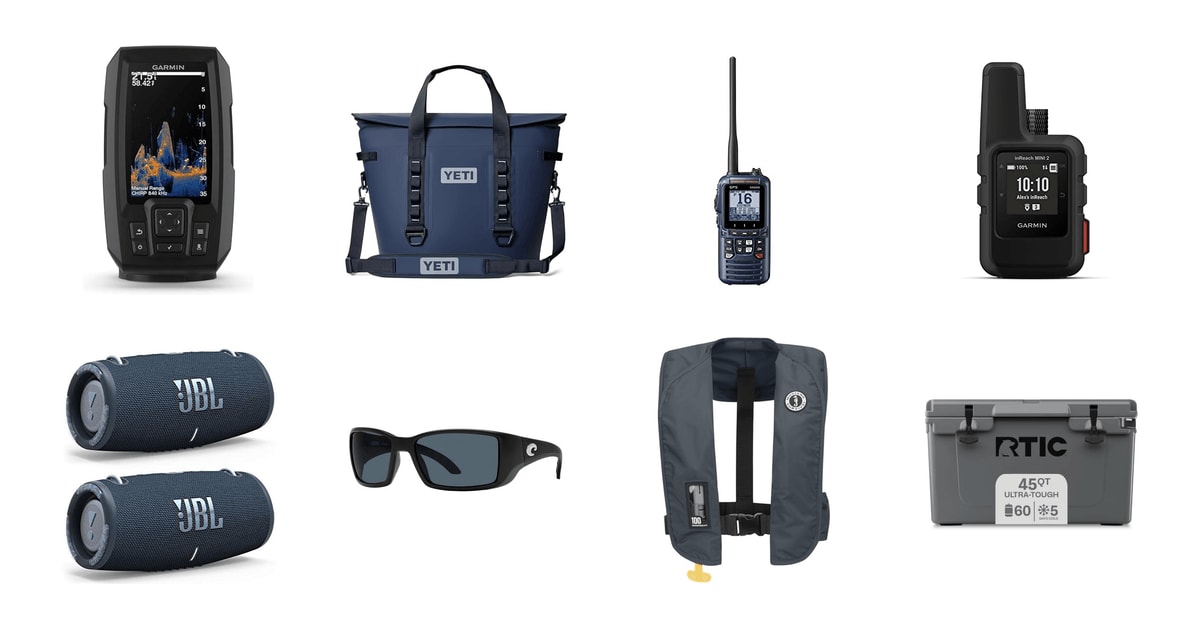
Boating gear takes a beating most gifts never see. Salt spray, hard sun, a wet deck, a drop onto fiberglass — a lot of nice things die fast on a boat. So the presents that land are the ones built for it. Around 100 million Americans go boating each year, and most of them own some piece of gear they quietly wish worked better: a cooler that gives up by lunch, a phone that can't call for help, a cheap pair of shades. That's the gap you're shopping for.
Here's the honest part. Nothing on this list fits every boat or every boater. A fish finder needs a transducer mounted somewhere, a satellite communicator needs a paid plan, and an inflatable life jacket needs a rearm kit eventually. Sizing and taste matter too — sunglasses are personal, and a 45-quart hard cooler is a lot of cooler for a small runabout. If you don't know what they already own, lean toward the gear almost nobody owns in duplicate.
We'd rather give a boater something that fixes a real problem than something with an anchor printed on it. Safety gear does that best, because most people won't buy it for themselves until they've had a scare. Gear that gets used every single trip is a close second. Our favorite gift here is the Standard Horizon HX890 handheld VHF, and the RTIC 45 Hard Cooler is the safe choice when you're less sure of their taste.
Everything we recommend
A floating radio that calls for help when a phone can't
For the boater who still trusts a phone to call for help
$269.99 from Amazon
Global two-way texting, subscription and all
For the offshore angler who runs past the last cell tower
$338.55 from Amazon
Rotomolded ice retention without the aspirational logo
For the boater who packs a cooler for every single trip
$239 from Amazon
A life jacket they'll actually keep on all day
For the friend who leaves the foam vest under the seat
$139.97 from Amazon
Simple sonar for a boat that has no electronics yet
For the new boat owner still guessing at the depth
$199.99 from Amazon
For the boater with more dock walk than deck space
$350 from Amazon
For the sight fisherman squinting through surface glare
$212 from Amazon
For the pontoon host whose phone speaker isn't cutting it
$399.98 from AmazonHow we picked
Water survivability. We started from published IP ratings and manufacturer spec sheets, and treated submersion-rated or floating as the bar for anything electronic. Gear that dies from one dunking or a season of hard sun isn't a boat gift.
Real on-water use. We favored gear that fixes something boaters actually complain about — glare, warm drinks, no signal — over themed merchandise. Owner feedback themes were the tiebreaker when two products looked similar on paper.
Safety payoff. We weighted gifts that change the odds in an emergency, using Coast Guard recreational boating statistics and BoatUS research on life jacket wear rates. A gift that makes someone measurably safer beats a gift that's merely fun.
Easy to start using. We read owner feedback for setup and learning-curve complaints. A present that needs a manual and a free weekend often ends up in a locker.
Fits their boat. We noted where a gift depends on boat type or size, so you can match a pontoon host to a speaker and an offshore angler to a satellite communicator.
Our favorite gift
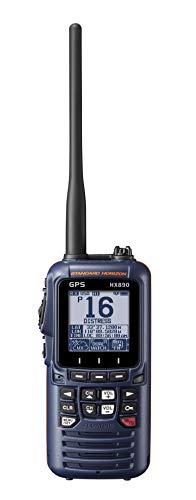
A floating radio that calls for help when a phone can't
Standard Horizon HX890 Handheld VHF Navy Blue
For the boater who still trusts a phone to call for help
The HX890 is a floating handheld VHF with built-in GPS and one-button distress calling, so a mayday goes out with coordinates attached. It's the backup radio most boaters know they should own and still haven't bought, which makes it a genuinely useful thing to unwrap.
$269.99fromAmazonA handheld VHF is the one piece of gear that keeps working when everything else quits. If the boat loses power, the phone goes overboard, or they drift out of cell range, the radio in their pocket still reaches the Coast Guard and every other boat within line of sight. That's a different kind of help than a phone call to one person who isn't on the water.
The HX890 is rated IPX8, which means it's built to survive a dunk to 1.5 meters, and it floats. Drop it off the gunwale and it bobs. A water-activated white strobe fires as well, so it's findable in the dark — which is exactly when someone is most likely to fumble something over the side.
The built-in GPS is what turns it from a walkie-talkie into a rescue tool. Register for an MMSI number, press the distress button, and the radio broadcasts who they are and where they are. Owners consistently point out that the registration step matters. An unregistered radio still transmits, but nobody on the other end gets the identity with it.
It's loaded without being fussy about it. You get 6 watts of transmit power, dual and triple watch scanning, NOAA weather channels with alerts, an FM receiver for the ride home, and a rated 11 hours on the lithium battery. The box includes an alkaline tray, a wall charger, a 12-volt charger and a charging cradle, so there's nothing else to buy before it works.
Flaws but not dealbreakers
The menu system takes some learning. Owners routinely say the manual covers the what but not the why, and that a few videos help more than the printed guide. Plan on your recipient spending an evening with it before it feels familiar.
A handheld is still line-of-sight. Range depends on antenna height, so from a low deck they're talking a few miles to another small boat, farther to a tall commercial vessel or a shore station. This backs up a fixed-mount radio with a masthead antenna. It doesn't replace one.
Best splurgeOn sale
Global two-way texting, subscription and all
Garmin inReach® Mini 2
For the offshore angler who runs past the last cell tower
The inReach Mini 2 sends and receives real text messages over the Iridium satellite network, which covers the entire planet — open ocean included. For someone who runs offshore or anchors somewhere remote, it's the difference between being out of touch and being reachable.
$338.55fromAmazonList priceCell coverage on most U.S. coasts gets shaky somewhere between 10 and 20 miles out, then disappears. That's a normal run for plenty of offshore fishermen. The inReach doesn't care — it talks to Iridium, the one constellation with true pole-to-pole coverage, so a message goes out from a canyon edge or a quiet anchorage the same way it goes out from the driveway.
Two-way messaging is what separates this from a plain emergency beacon. A beacon shouts for help and that's the end of the conversation. With the inReach, your recipient can text home that they're running late, and in an SOS they can trade messages with the coordination center about what's wrong, who's aboard and how bad it is. Responders arrive knowing the situation.
It weighs about three and a half ounces and clips to a PFD lash tab, which is the whole point. A safety device buried in a dry box under the seat isn't a safety device. It also handles TracBack routing to retrace a path, a digital compass that reads correctly while they're standing still, and location sharing through a MapShare page for whoever's waiting at home.
It pairs with the Garmin Explore app, so your recipient types on a phone keyboard instead of the device itself. That matters more than it sounds. Thumbing out a message on the Mini 2 alone is slow going, and nobody wants to do that with one hand on the wheel and a following sea behind them.
Flaws but not dealbreakers
The subscription is the catch, and you should say so on the card. The device does nothing without an active satellite plan, and that's a recurring bill your recipient inherits along with the gift. If they only run a lake in a pontoon, this is overkill — buy them something else on this list.
It's also slower than a phone. Messages can take minutes to go out under heavy tree cover or between canyon walls, and some owners find the initial setup and pairing fussier than expected. On open water with a clear view of the sky, it behaves much better.
Safest bet
Rotomolded ice retention without the aspirational logo
RTIC 45 QT Ultra-Tough Hard Cooler
For the boater who packs a cooler for every single trip
The RTIC 45 is a rotomolded hard cooler with up to 2.8 inches of closed-cell foam, and owners regularly report ice lasting four to five days. It holds up to 60 cans, and it costs far less than the obvious name-brand equivalent.
$239fromAmazonA good cooler is the gift nobody quietly returns. Every boater uses one, every trip, and most people are still hauling a thin-walled box that turns to slush by lunch. Move them up to a rotomolded cooler and they notice the first weekend. RTIC publishes up to five days of ice retention, and owner reports line up with that claim closely enough to trust it.
RTIC's whole pitch is matching the aspirational brand for a lot less, and buyers who own both say the gap is mostly cosmetic. You may see a small blemish in the molding. The insulation, the latches and the gasket decide ice retention, and those are the parts RTIC didn't skimp on.
The details are boat-friendly. There's a bottle opener molded into the body, a silicone cargo net in the lid for keys and phones, and a top flat and sturdy enough to sit on — which on a small center console counts as extra seating. Sixty cans covers a long day out with friends without a second run to the dock.
Flaws but not dealbreakers
It's heavy. Twenty-one pounds empty, and once it's loaded with ice and drinks, one person isn't sliding it around a wet deck gracefully. If your recipient boats alone or has a bad back, the soft cooler below is the kinder gift.
It's also a big box to wrap and a big box to store. Think about their cockpit before you commit, because a 45-quart hard cooler eats a real share of a small boat's floor.
Best budget gift
A life jacket they'll actually keep on all day
MUSTANG SURVIVAL MIT 100 Convertible A/M Inflatable
For the friend who leaves the foam vest under the seat
The MIT 100 is a USCG-approved inflatable PFD that converts between automatic water-contact inflation and a manual pull. It's low-profile enough that your recipient will actually keep it on, which is the entire argument for buying one.
$139.97fromAmazonThe best life jacket is the one they're wearing. Coast Guard boating statistics are blunt about this: three out of four drowning victims in recreational boating accidents weren't wearing one. Almost nobody plans to end up in the water. They just don't have the vest on when it happens, because a foam vest on a hot afternoon is miserable.
This one solves that. It wears like a pair of suspenders, weighs a fraction of a foam Type II, and dries fast. Owners who spent years leaving a vest stuffed under a seat describe wearing this all day without thinking about it. That behavior change is what you're actually buying.
The convertible part is smart. Set it to automatic and it inflates on water contact, which is what you want if your recipient could go in unconscious. Switch it to manual for kayak fishing or a wet delivery, where an unwanted inflation is just an expensive nuisance. The listed buoyancy is 28 pounds, well clear of a standard foam vest.
The shell is 500D Cordura, the same fabric that survives on gear bags and hard-use outerwear. It's one size and adjustable, with an optional belt extender sold separately if they need more range. Nothing about the fit is precious, which makes it a lower-risk apparel gift than most things you'd buy someone.
Flaws but not dealbreakers
Inflatables need upkeep, and that's a real string attached. Your recipient has to check the CO2 cylinder and the auto-inflation bobbin regularly, and rearm the thing after any inflation, accidental or otherwise. A foam vest just hangs on a hook and works forever.
It's also not for everyone. Inflatable PFDs aren't approved for kids or weak swimmers, and they're a poor choice for watersports where someone hits the water hard. For a tow rope or a rough inlet, foam is still the right answer.
Best for beginners
Simple sonar for a boat that has no electronics yet
Garmin Striker Vivid 4cv Fishfinder with Transducer
For the new boat owner still guessing at the depth
The STRIKER Vivid 4cv is a 4-inch sonar unit with a CHIRP transducer, GPS waypoints and Quickdraw contour mapping. It's simple enough to figure out at the ramp, and it's a huge step up for a boat with nothing on the dash.
$199.99fromAmazonPicture a jon boat or an aluminum tiller with nothing on the console but a throttle. That's who this is for. The 4cv gives them depth, water temperature, structure and fish arches on a bright 4-inch color screen, plus GPS to mark a productive spot and find it again next weekend.
The vivid color palettes are the reason a beginner can read this thing. Traditional sonar returns look like static until somebody teaches you what to look for. The high-contrast palettes push fish and structure visually away from the bottom, and new owners consistently say they could tell what they were seeing right away.
The included GT20 transducer runs Garmin's CHIRP traditional sonar plus ClearVü scanning sonar, which gives a near-photographic view of what's under the hull. Quickdraw Contours builds a depth map of their own lake as they drive, at one-foot intervals, stored right on the unit. On a small local water that's genuinely useful, not a checkbox.
It's small, and here that's a feature. The unit weighs about 11 ounces and mounts on an included tilt-and-swivel bracket, so it works on a rental, a borrowed boat or a clamp-on transducer pole for a fly-in trip. Owners who fish from different boats like that they can move it in a minute.
Flaws but not dealbreakers
Four inches is a small screen. If your recipient already runs a chartplotter or fishes serious structure offshore, they'll want something bigger and this'll feel like a sideways move. It's an entry unit and it doesn't pretend otherwise.
Installation isn't wrap-it-and-done. Someone has to mount the transducer and run power, which on a small boat is an afternoon. If your recipient isn't handy, plan on calling in a favor from someone who is.
Who this is for
This guide shops for people who spend real time on the water: weekend lake boaters, pontoon hosts, freshwater and saltwater anglers, and the offshore crowd who run past the last cell tower. It works best when you know roughly what they're running. A cooler and a speaker suit a pontoon. A floating VHF and a satellite communicator suit someone who fishes 30 miles out and comes back after dark.
It fits close-friend and family gifting more than an office swap — most of what's here is a real purchase, not a gag. We've stuck to gear, so you won't find charts, apparel, decor or anything that needs a marine installer. And if your recipient is brand new to boating, start with the safety gear. They don't know yet what they're missing, and they'll think of you the first time the weather turns.
How we picked
Water survivability: we started from published IP ratings and spec sheets, and treated submersion or floating as the bar for anything with a battery in it. Real on-water use: we favored gear that fixes something boaters actually gripe about, using owner feedback themes to separate genuine utility from novelty. Safety payoff: we weighted gifts that change the odds in an emergency, leaning on Coast Guard boating statistics and BoatUS research on life jacket wear rates. Easy to start using: recurring setup complaints counted against a product. Fits their boat: we flagged where a gift depends on boat type, so you can match the person to the present.
Other gifts for boaters worth considering
If you want a cooler that squeezes into a small boat: The YETI Hopper M30 Portable Soft Cooler with ($350) — The Hopper M30 is the soft-sided answer to the RTIC. Magnets seal the top instead of a zipper, so grabbing a drink one-handed is easy and it still stays shut when it's tipped. The DryHide shell shrugs off punctures and UV, and there's a HitchPoint grid on the outside for a bottle opener or a dry gear case. It packs into a cockpit locker or a back seat where a hard cooler simply won't fit, and the strap makes the walk down the dock painless. You give up multi-day ice — this is an all-day cooler, not a weekend one. But it unwraps beautifully, and YETI is the brand most boaters aspire to own.
If you want something they'll wear every single trip: The Costa Del Mar Sunglasses For Men-Blackfin Mens ($212) — Costa has near-cult status among anglers and offshore captains, and the 580P lens is why. It kills reflected glare off the water more aggressively than standard polarized lenses and boosts reds, greens and blues, so structure and fish come out of the chop instead of hiding in it. The Blackfin is a big wrap frame with a C-Wall coating that resists water, oil and sweat, and it comes with a case and cloth. The catch is fit. At 62 millimeters these are large glasses, and on a smaller face they'll swallow. Buy them for someone whose current pair you've actually seen on their face.
More good gifts
Here's what our research surfaced rather than everything on the market. Nothing below fell short — it just suits a narrower person on your list.
The JBL Xtreme 3 Portable Bluetooth Waterproof Speakers ($399.98) — The Xtreme 3 is the speaker most people land on for a boat, and this listing is a pair of them in blue. It's IP67 rated, so a full dunking for half an hour won't kill it, and it runs up to 15 hours on a charge — enough for a long day on a sandbar and the ride back. Two of them pair together, which is the argument for the pair: one at the bow, one at the stern, and a pontoon deck actually gets covered. It's an entertainment gift rather than a safety gift, and that's fine. For someone who hosts on the water, it's the thing that gets used most.
Setup and care notes
A few of these need a little work before they're useful, and it's kind to mention that on the card. The VHF needs a free MMSI registration before the distress button can identify the boat — ten minutes at a laptop and it's done. The satellite communicator needs an active plan, so either prepay a term as part of the gift or warn them. The inflatable PFD needs its CO2 cylinder and auto bobbin checked at the start of each season, and a rearm kit after any inflation. Coolers want a rinse and an open lid to dry, or they turn musty in a hot garage. And the sonar needs a transducer mounted and power run, which is an afternoon for someone handy.
Questions we get
What's the best gift for someone who just bought their first boat?
Start with safety gear, because new owners don't yet know what they're missing. A floating handheld VHF like the HX890 is the single highest-impact thing you can give, and an inflatable PFD is close behind. If they've already got both, a good hard cooler never goes unused.
Do boaters really need a VHF radio if they have a cell phone?
Yes. A phone calls one person who isn't on the water, and it stops working when the signal drops or it goes in the drink. A VHF reaches the Coast Guard and every nearby vessel at once, and with a registered MMSI the distress call carries their identity and position automatically.
Is a satellite communicator worth it for a weekend lake boater?
Probably not. On a lake with cell coverage, the inReach Mini 2 solves a problem they don't have, and the ongoing subscription becomes a bill they didn't ask for. It earns its keep offshore, in remote anchorages, or for someone who also hikes and hunts where there's no service.
Soft cooler or hard cooler — which makes the better gift?
A hard cooler like the RTIC 45 wins on ice retention and doubles as a seat, but it's heavy and it eats deck space. A soft cooler like the Hopper M30 packs into a locker, carries on a shoulder and opens one-handed, at the cost of multi-day cold. Match it to the size of their boat.
What sunglasses do offshore captains and pro anglers actually prefer?
Costa comes up more than any other brand among fishermen. The 580P lens filters surface glare more aggressively than standard polarized lenses and lifts contrast so structure and fish stand out. Fit is the only real risk with sunglasses as a gift, so check what shape they wear now.
What are the best safety gifts for boaters?
A floating handheld VHF with GPS and DSC, an inflatable PFD they'll actually keep on, and — for anyone running offshore — a satellite communicator. All three cover the same failure: nobody knows where you are and you can't tell them. Most boaters own none of the three.
Why you should trust us
For this guide:
- We read manufacturer spec sheets for every product here, including IP ratings, buoyancy figures, sonar frequencies and battery claims.
- We compared published review coverage of floating handheld VHF radios and reviewed Coast Guard recreational boating statistics along with BoatUS research on life jacket wear rates.
- We read owner feedback across all eight listings for recurring themes about setup difficulty, durability and what buyers wish they'd known first.
- We read owner reviews on every listing, weighted toward the critical ones, because that is where the recurring failures show up.
- We have a systematic way of automatically fetching the latest prices, so the numbers on this page stay current.
- This is a research-focused guide, so the team may not own every product listed — though we often do own the top winners, which gives us extra context for the recommendations.
- We don't accept free products, and the retailer commission never changes which product we recommend.
Sources
Best Gifts for Boaters 2025 — Boating Magazine, Boating Magazine
VHF Radio Buyer's Guide and Product Reviews — Practical Sailor, Practical Sailor
BoatUS Foundation Recreational Boating Safety Statistics and PFD Research, BoatUS Foundation
USCG Recreational Boating Statistics 2023 Annual Report, U.S. Coast Guard
Best Waterproof Bluetooth Speakers — Wirecutter, Wirecutter / New York Times
Best Coolers: YETI vs. RTIC vs. Pelican Tested — Outdoor Life, Outdoor Life
Best Polarized Fishing and Boating Sunglasses — Field & Stream, Field & Stream
2024 Recreational Boating Industry Statistical Abstract — NMMA, National Marine Manufacturers Association
Best Satellite Communicators for Offshore and Remote Travel — Gear Patrol, Gear Patrol
West Marine Advisor: Choosing an Inflatable PFD, West Marine Advisor
Garmin STRIKER Vivid Fish Finder Full Review — Wired2Fish, Wired2Fish
Best Gifts for Boaters and Fishermen — Men's Journal, Men's Journal
Amazon product listings and owner reviews for all 8 products
Manufacturer specification pages for each product
Some passages in this guide may be paraphrased with AI help. Prices are refreshed automatically.
More like this.
Continue exploring lifestyle reviews and recommendations.

The Best Cordless Ice Fishing Augers
Drilling a hole through 20 inches of ice used to mean yanking a starter cord in the dark with cold hands, then breathing two-stroke exhaust for the rest…

The Best Display Cases for Pop Mart Figures
A Pop Mart collection sneaks up on you. One blind box becomes a shelf, and a shelf becomes a corner of your desk where Molly, Skullpanda and Labubu jostle…

The Best Gifts for Boyfriends
The gifts that land aren't the clever ones. They're the ones he picks up every single morning without thinking about it - the mug on his desk, the earbuds…

The Best Book Subscription Box Editions
A subscription box book isn't just a book. It's the copy that shows up on your porch in a cover you can't get at the bookstore. Some of these editions are…

The Best Hose-End Sprayers for Lawn Fertilizer
Liquid fertilizer is the fastest way to green up a lawn, and a hose-end sprayer is what makes it practical. You screw it onto the hose, pour concentrate…

The Best Gifts for Travelers and Frequent Flyers
A frequent flyer's gear gets used harder than almost anything else you could buy someone. A carry-on gets heaved into an overhead bin a few hundred times…