The Best Igloo Coolers
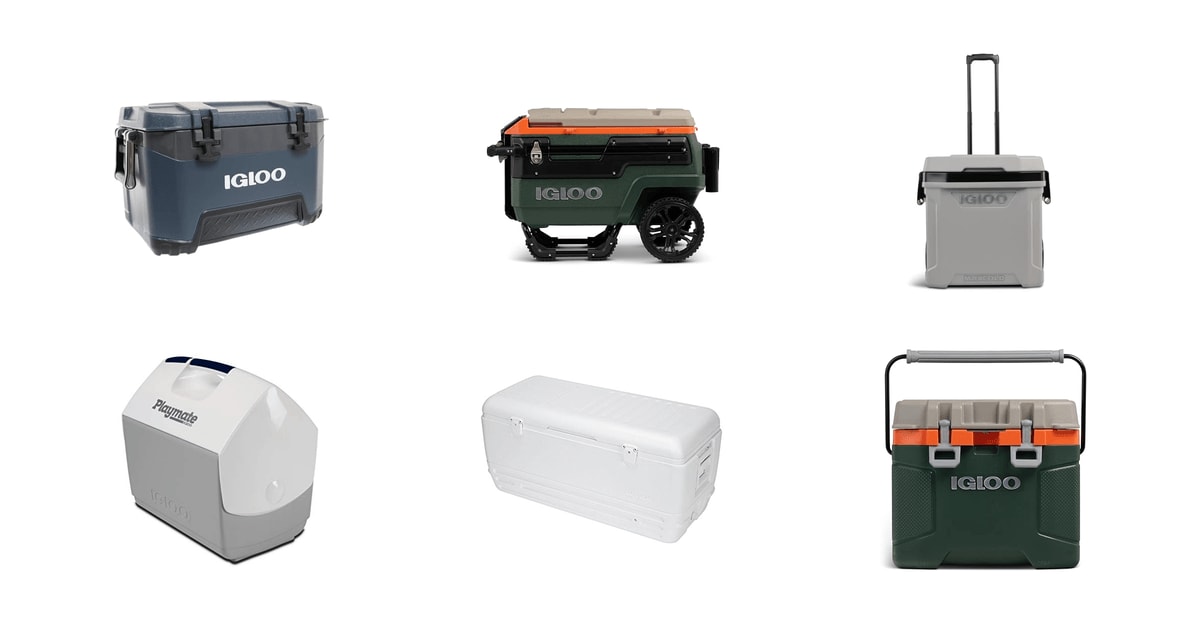
A cooler earns its keep on the worst day of the year, not the easy ones. That's the parking lot in July, the boat deck at noon, the campsite where the nearest ice machine is forty minutes away. What you actually care about is simple: how long the ice lasts, whether you can move the thing once it's loaded, and whether the latches still work after a season of abuse. Igloo has been making coolers for decades, and the lineup now runs from a lunchbox-sized personal chest to a wheeled beast that holds over a hundred cans.
Here's the honest part. No cooler in this range keeps ice the way the marketing suggests, because the ratings come from labs that pre-chill the box, pack it full, and leave the lid shut. You'll open yours a dozen times a day. Blow-molded coolers, which is most of what Igloo sells, generally give you two to four days in real heat — not the five on the box. Rotomolded models do better, but they cost more and weigh more. And every cooler gets heavy fast: a loaded 70-quart runs past 55 pounds with ice, which is why wheels stop being a luxury above about 40 quarts.
The good news is that Igloo's mid-range coolers punch well above their price, and owners who've compared them with premium brands consistently say the gap is narrower than the price difference suggests. We think that the Igloo BMX 52 QT is the best Igloo cooler for most people, and that the Igloo Trailmate Journey 70 Qt Roller is the one to buy if you're hauling a full load across sand, gravel, or a long parking lot.
Everything we recommend
Tough enough to stand on, light enough to carry

Wheels that handle sand, at the cost of bulk

One person, one day, almost no weight to carry
Serious insulation in a size that fits the back seat
At a glance
| Product | Capacity | Ice Retention | Price | |
|---|---|---|---|---|
| Igloo BMX 52 QT Rugged BlueTop pick | 52 QT | 5 Days | $149.99 |
| Igloo Trailmate Journey 70 Qt Roller CoolerRunner-up | 70 Qt | — | $269.99On sale |
 | Igloo MaxCold Ultra Latitude 58 LitreAlso consider | 62 US QT | 5 Days | $103.97 |
| Igloo Playmate Elite 16 Qt CoolerBudget pick | 16 Qt | — | $37.06 |
 | Igloo 150Qt. CoolerAlso in lineup | 150 Qt | — | $210 |
| Igloo Trailmate 25 Qt CoolerAlso great | 25 Qt | — | $99.99 |
 | Igloo Trailmate 36 Can Soft CoolerAlso consider | 36 Can | — | $71.99 |
How we picked
Real ice retention. We compared manufacturer ratings against published field results and owner reports, and weighted the field results far more heavily. Anything that only hit its claim in ideal lab conditions got marked down.
Moving it loaded. We looked at empty weight, wheel size, and handle design, since a full 70-quart cooler tops 55 pounds. Above roughly 40 quarts, we treated wheels as close to mandatory.
Latches and seals. Owner feedback flags latch failure and lid gaskets more than any other durability problem. We read complaint patterns across each model and noted where stiff or wearing latches came up repeatedly.
Capacity that matches use. We matched can counts and quart ratings against realistic trips, and discounted the advertised can counts because they assume no ice at all.
Cost per quart. Consumer Reports found premium rotomolded coolers can run three to four times more per quart than value lines. We favored models that hold their ice without jumping into that tier.
Top pick
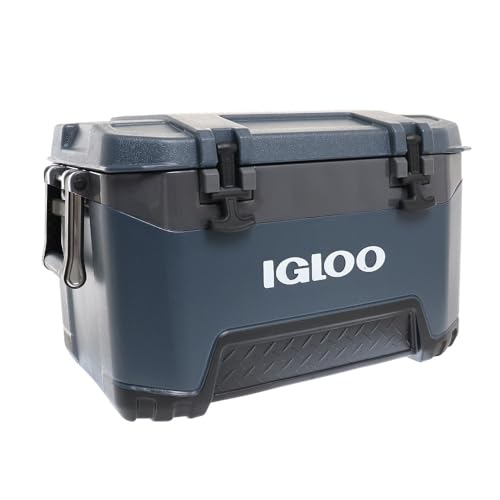
Tough enough to stand on, light enough to carry
Igloo BMX 52 QT Rugged Blue
The BMX 52 QT is the Igloo that does the most jobs well. Its extra-thick foam walls hold ice for around three to four days in real summer heat, the rubberized T-latches actually seal, and at under 16 pounds empty you can still carry it with one hand.
$149.99fromAmazonThe BMX hits the sweet spot between a cheap picnic cooler and a rotomolded tank. It's blow-molded, so it's light — 15.6 pounds empty. But the foam is thick, the lid is insulated, and the shell is stiff enough that you can sit on it around a fire. GearJunkie's field testers got 3.5 days of ice from a BMX 52 in 85-degree conditions, which lines up with what owners report on multi-day trips.
Fifty-two quarts is a lot of cooler for how it feels. It fits a weekend of food for four, or drinks for a tailgate, and it still slides into a trunk at 26 inches long. Owners who run these hard — construction crews, mobile food vendors, people who leave a cooler baking in a truck bed all day — keep coming back to this one. That's the kind of feedback that matters more than a lab number.
The details are where cheaper coolers fall down. The T-latches are rubberized and pull the lid down against the gasket instead of just sitting there. The grab handle has a stainless steel core, so it won't snap the first time you overload it. And the drain plug is threaded for a garden hose, which sounds trivial until you're trying to empty 40 pounds of ice water without soaking your shoes.
It won't match a rotomolded cooler, and Igloo's five-day claim is optimistic. Consumer Reports has noted that premium rotomolded coolers cost three to four times as much per quart, and Outdoor Life's lab work found rotomolded models averaged 22% less ice melt over 72 hours. If you need a solid five days, look higher up the line. For a long weekend, the BMX gets you there for far less.
Flaws but not dealbreakers
The five-day rating on the box assumes a pre-chilled cooler, a full load of ice, and a lid you barely open. Plan on three days in real heat, four if you're careful. Add a frozen jug or two and keep it in the shade and you'll do better.
There are no wheels, and 52 quarts full of ice and drinks is heavy — well past what most people want to carry across a beach. If your cooler routinely travels more than fifty yards from the car, get one of the wheeled models instead.
Runner-upOn sale
Wheels that handle sand, at the cost of bulk
Igloo Trailmate Journey 70 Qt Roller Cooler
The Trailmate Journey rolls on 10-inch never-flat wheels and holds up to 112 cans, so a full load moves with one hand instead of two people. It's big and heavy empty, but it's the Igloo to buy if the walk from the car is the hard part.
$269.99fromAmazonList priceSand is what separates real cooler wheels from decorations. The Trailmate's 10-inch never-flat wheels and raised body give it enough clearance to roll over soft ground instead of plowing a trench. Treeline Review's long-term look at the Trailmate Journey found the wheels showed no punctures after six months on gravel and rocky trails, which is the failure mode that kills most wheeled coolers.
The telescoping steel handle is the part that makes it work. It locks, it pulls horizontally rather than dragging at an angle, and Igloo rates the setup at half the pulling effort of a standard drag handle. The removable butler tray clips onto that handle so you have a surface to serve from, then stores under the lid. If you host at the beach or the campsite, that's genuinely useful.
Seventy quarts covers a family trip or a group weekend without a second cooler. Owners describe packing cold cuts in the padded dry-storage compartment above the ice line, which keeps sandwiches from turning into soup. Cool Riser Technology lifts the body off hot pavement and sand, and that matters more than it sounds — a cooler sitting directly on sun-baked asphalt loses ice noticeably faster.
This one asks for space. It's 35.8 pounds empty and stands nearly 24 inches tall, so it won't fit under a low truck bed cover, and it takes up real estate in a small trunk. Measure before you order. But if you have the room, one person can move a fully loaded weekend's worth of food and drinks without help.
Flaws but not dealbreakers
Big wheels help on sand, but they aren't magic. Some owners have found it harder to pull across deep, soft sand than they expected, especially fully loaded. On packed sand, gravel, and grass it's excellent; in dry dune sand, expect to work.
A few owners have reported the axle cap working loose over time. It's a simple fix, but it's worth checking after the first few trips.
At 35.8 pounds empty, this is the heaviest cooler here before you put anything in it. Lifting it into a truck bed or an SUV is a two-person job when it's loaded.
Budget pick
One person, one day, almost no weight to carry
Igloo Playmate Elite 16 Qt Cooler
The Playmate Elite 16 Qt is the classic tent-top lunchbox cooler, and it still works. It holds 30 cans, weighs about four pounds empty, and the lid swings open from either side so you can grab a drink without setting it down.
$37.06fromAmazonThis is the cooler you keep in the truck. Sixteen quarts holds lunch, a few drinks, and enough ice to get through a shift — owners describe eight- and nine-hour workdays in 80-degree heat with ice still in the box at the end. Field & Stream rates the Playmate Elite at roughly 24 hours of ice retention, which is exactly right for a day trip and wrong for an overnight.
The tent-top design is the reason this shape has survived for decades. The lid swings open to either side and latches shut with a single button, so you can open it one-handed while holding something else. It's easy to clean — soap and water in a kitchen sink — and it fits in the footwell of a car, which the bigger coolers don't.
Igloo makes this one in the USA with USA and imported parts, and the build reflects it. Owners report dropping these repeatedly with nothing to show for it. Realistically, the latch button is the wear point, and when one finally gives out after years of daily use, people just buy another one.
Set your expectations at the size. Thirty cans is the rating with no ice; add ice and you're closer to fifteen. It's a personal cooler, not a family one. But it's the least expensive thing here by a wide margin and the easiest to carry.
Flaws but not dealbreakers
Twenty-four hours of ice is the ceiling, not the floor, and that assumes a full load and a lid you don't keep opening. It's a day-trip cooler. For anything overnight, step up.
Once you add ice, usable space shrinks fast. Plan on a sandwich and a handful of cans, not a family's lunch.
Also great
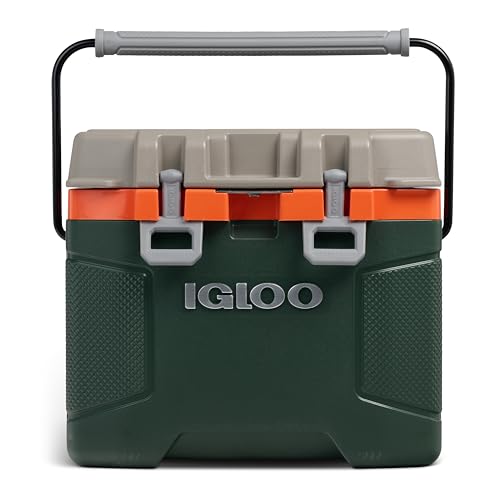
Serious insulation in a size that fits the back seat
Igloo Trailmate 25 Qt Cooler
The Trailmate 25 Qt packs 1.5-inch foam walls into a cooler small enough to sit on a back seat. It holds 38 cans, keeps ice well for its size, and owners repeatedly compare its cold retention to coolers costing several times more.
$99.99fromAmazonSmall coolers usually cut insulation first, and this one doesn't. The walls are 1.5 inches of foam and the lid is insulated too, which is why owners keep reporting ice that's still solid — sometimes frozen into a block — after a long drive. It's the cooler for someone who wants real performance without hauling a 52-quart box everywhere.
The size is the whole point. At about 14 by 20 by 17 inches and under 11 pounds empty, it fits on a truck's back seat or in a compact trunk without swallowing the space. Igloo makes it in the USA with USA and imported parts. Cool Riser Technology raises it off hot surfaces, which helps when it's riding in a bed liner in the sun.
The lid has a locking plate and gasket, so it seals properly and can take a padlock if you're leaving it in a campsite or a truck bed. The lock isn't included. The drain works cleanly and owners consistently say it doesn't seep, which is more than you can say for a lot of coolers in this size class.
If you already own a big cooler, this is the useful second one — drinks at the campsite while the food cooler stays shut, or a work cooler that doesn't need wheels. Keeping the main cooler closed is the single best thing you can do for ice retention, and a small companion cooler is how you actually manage it.
Flaws but not dealbreakers
The latches are the weak spot. Several owners describe them as stiff and awkward to work, with the rubbery material starting to wear early from the effort. A few have simply removed them and rely on the lid's weight and gasket instead.
Thirty-eight cans is the no-ice figure. With a real load of ice you're down to a day or two of drinks for two people.
Who this is for
This guide is for anyone shopping the Igloo lineup specifically — because you've owned one before, because you want something made in the USA, or because you've looked at premium rotomolded prices and decided the gap isn't worth it. Igloo's strength is mid-range coolers that hold ice well enough for a long weekend without costing what a rotomolded box does. If you camp for a week in desert heat, need certified bear resistance for backcountry storage, or want ice that's still solid on day six, you should be shopping rotomolded coolers, and we'd point you outside this lineup or toward Igloo's IMX and Sportsman rotomolded lines, which aren't represented here.
Match the cooler to how far it travels and how long it stays shut. Day trips and work lunches want something small and light. Weekend camping and tailgates want 25 to 52 quarts with good foam. Beach days, long walks from parking, and group events want wheels — the weight math stops being negotiable above about 40 quarts. And if you mostly need drinks kept cold for an afternoon, a soft cooler saves you a lot of bulk for a real cost in ice retention.
How we picked
We built the shortlist around five things. Ice retention: we compared Igloo's own ratings against published field results and owner reports, and trusted the field numbers over the box. Portability: empty weight, wheel diameter, and handle design mattered most, since a loaded 70-quart cooler runs past 55 pounds. Latches and seals: these are where coolers fail first, so we looked hard at repeated owner complaints about stiff latches and leaking lids. Capacity: we treated advertised can counts as no-ice figures and cut them roughly in half for real packing. Cost per quart: we favored coolers that hold ice well without climbing into premium rotomolded pricing.
Other igloo coolers worth considering
If you want the most capacity on wheels: The Igloo MaxCold Ultra Latitude 58 Litre ($103.97) — The MaxCold Ultra Latitude Roller holds up to 90 cans and rides on oversize wheels with a locking telescopic handle, and it does it at under 14 pounds empty — dramatically lighter than the Trailmate Journey. Igloo rates its THERMECOOL foam at up to five days of ice, and Cool Riser Technology lifts it off hot pavement. The catch is the wheels: they're smaller and smoother than the Trailmate's 10-inch all-terrain set, so this is a pavement and packed-surface cooler, not a sand cooler. It's also a much newer listing with thin owner feedback, so there's less real-world evidence behind it than the models we picked. For road trips, RV sites, and parking-lot-to-campsite hauls, it's a lot of cooler for the weight.
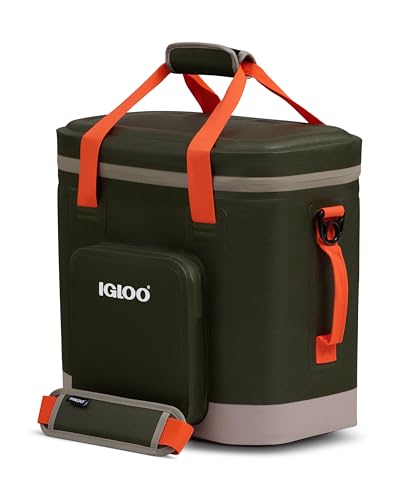
If you want something you can carry over your shoulder: The Igloo Trailmate 36 Can Soft Cooler ($71.99) — The Trailmate 36 Can Soft Cooler uses 20mm MaxCold Ultra foam in a zippered bag with a padded shoulder strap. It's the right tool for a hike to the swimming hole, a stadium day, or a weekend trip where you don't want to lug a hard cooler. Wirecutter has found that soft-sided coolers typically hold ice for 24 to 48 hours, roughly half as long as similar hard-sided coolers, and that's about what owners report here — a few hours of solid ice in real heat, then cold water for a while after. Some owners have also reported leaking, so don't lay it on a car seat without a towel. Fully loaded it gets heavy on one shoulder, and the thick insulation means it doesn't pack down small when empty.
More from Igloo
These are the other Igloo coolers our research turned up on Amazon. This isn't Igloo's whole catalog — the rotomolded IMX and Sportsman lines and several sizes within each family aren't represented here. Each of the models below suits a specific shopper, so it's worth reading who they're for rather than assuming they fell short.
The Igloo 150Qt. Cooler ($210) — The Igloo 150 Qt is the one to look at if your problem is sheer volume: hauling a butchered hog and a quarter of beef home from the processor, stocking a church youth group event, or icing down a company picnic. Owners buy it for exactly those jobs and it does them. Just know what you're getting — it's a basic, no-frills box with no latches and modest lid suction, and some owners have reported the dimensions and lid design not matching the listing images. At 150 quarts it's not something one person moves once it's loaded, and there are no wheels. If capacity per dollar is the only thing you care about and you have help lifting, it's hard to beat.
Is Igloo worth it?
Igloo's reputation rests on making coolers that do 80% of what a premium cooler does for a fraction of the outlay, and the evidence supports that. Consumer Reports has found premium rotomolded coolers can cost three to four times more per quart than value lines like Igloo's, while Outdoor Life's lab work puts the actual ice-melt gap at around 22% over 72 hours. That's the trade in one sentence: you give up a chunk of ice retention and save a lot more than that chunk is worth to most people. Owner feedback across the lineup echoes it constantly, with people comparing their Igloo favorably to coolers costing several times more. Igloo also still builds several models — including the Playmate Elite and the Trailmate 25 — in the USA with USA and imported parts, which matters to some buyers. Where Igloo is weakest is hardware: latches and lid gaskets draw the most consistent complaints, and that's where a premium cooler's build quality shows. If you need a cooler for a week in the backcountry, look at rotomolded options. For everything else, Igloo is the sensible choice.
Care and maintenance
Two habits do most of the work. First, pre-chill the cooler the night before with a sacrificial bag of ice or a few frozen jugs, then dump the meltwater and load it cold — a warm cooler spends its first several hours cooling its own plastic instead of your food. Second, keep it shut and keep it out of the sun; Cool Riser feet help, but a shady spot helps more. Pack it full, since empty air space melts ice fast, and don't drain the cold water until you need the room. For cleaning, warm soapy water and a good rinse handle most of it. If mold shows up in the gasket or corners, a diluted bleach solution or a baking soda paste with a soft brush clears it. Then leave the lid propped open until it's bone dry — closed and damp is how mold starts.
Questions we get
How long do Igloo coolers actually keep ice?
Plan on two to four days for the blow-molded models like the BMX and Trailmate, and about 24 hours for a small personal cooler like the Playmate Elite. GearJunkie's field testing got 3.5 days from a BMX 52 in 85-degree heat. Manufacturer ratings run higher because they assume a pre-chilled, fully packed cooler with the lid shut, which isn't how anyone uses one.
Are Igloo coolers as good as Yeti?
Not in a straight ice-retention contest — rotomolded premium coolers hold cold longer, and Outdoor Life's lab work found rotomolded models averaged 22% less ice melt over 72 hours. But Consumer Reports has found premium rotomolded coolers can cost three to four times more per quart, and Igloo owners routinely say the performance gap is much smaller than the price gap. For weekend trips, an Igloo BMX gets you most of the way there.
What's the difference between MaxCold and regular Igloo coolers?
MaxCold is Igloo's thicker-insulation spec, adding up to two inches of foam in the wall compared to the brand's standard lines. In practice that's up to about 25% more insulation for a modest step up in price. If you're choosing between a standard model and a MaxCold version of a similar size, the MaxCold is usually worth it.
Which Igloo cooler is best for tailgating?
The BMX 52 QT for most people — it holds enough for a group, the shell is stiff enough to sit on, and it's light enough to carry from the car. If your spot is a long walk from parking, go wheeled with the Trailmate Journey, which holds up to 112 cans and pulls with one hand. For a huge crowd where you have help lifting, the 150 Qt handles the volume.
Can you sit or stand on an Igloo cooler?
On the heavy-duty blow-molded models like the BMX, generally yes — the shell is reinforced and owners routinely use them as seats around a fire. Don't do it with a soft cooler or the small Playmate. And go easy on the lid hinges and latches, which are the parts that give out first regardless of how strong the body is.
Do I need a bear-resistant cooler?
Only if you're storing food in backcountry zones that require it. Many national parks mandate IGBC-certified containers, and Igloo's rotomolded Sportsman line carries that certification. Backpacker Magazine notes bear-resistant models typically add 15 to 20% to the price over comparable non-certified rotomolded coolers. Car campers, tailgaters, and beachgoers don't need it.
Why you should trust us
For this guide:
- We read Igloo's published specifications and listing details for every cooler here, then compared them against field results from GearJunkie, Outdoor Life, Treeline Review, Switchback Travel, Field & Stream, Popular Mechanics, and Consumer Reports.
- We reviewed owner feedback across each model for recurring themes — real-world ice retention, latch durability, wheel performance on sand, and leaking — and weighted those patterns against the manufacturer's claims.
- We did not use, pack, or measure any of these coolers ourselves; every performance figure here comes from a published source or a manufacturer specification.
- We read owner reviews on every listing, weighted toward the critical ones, because that is where the recurring failures show up.
- We have a systematic way of automatically fetching the latest prices, so the numbers on this page stay current.
- This is a research-focused guide, so the team may not own every product listed — though we often do own the top winners, which gives us extra context for the recommendations.
- We don't accept free products, and the retailer commission never changes which product we recommend.
Sources
The Best Coolers of 2026, Tested, Outdoor Life
We Tested the Best Coolers for Camping and Tailgating, GearJunkie
Best Cooler for Camping, Beach, and Overland Trips, Switchback Travel
Igloo BMX 52 Qt Cooler Review, Field & Stream
How We Test Coolers: Ice Retention Lab Methodology, Consumer Reports
Best Rolling Coolers for Road Trips and Beach Days, Popular Mechanics
Igloo IMX vs. Yeti Tundra: Rotomolded Cooler Comparison, RTINGS.com
Igloo Official Product Specifications and Ice Retention Charts, Igloo (Manufacturer)
Best Bear-Resistant Coolers for Backcountry Camping, Backpacker Magazine
The Best Soft Coolers for Beach and Boat Trips, Wirecutter
Igloo Trailmate Journey Long-Term Test, Treeline Review
IGBC Certified Bear-Resistant Products List, Interagency Grizzly Bear Committee
Amazon product listings and owner reviews for all 7 products
Manufacturer specification pages for each product
Some passages in this guide may be paraphrased with AI help. Prices are refreshed automatically.
More like this.
Continue exploring lifestyle reviews and recommendations.

The Best Cooling Tents and Hot-Weather Camping Gear
Heat is the one camping problem you can't sleep through. A tent sitting in afternoon sun turns into an oven fast - Wirecutter's summer tent research found…

The Best RTIC Coolers and Drinkware
A cooler earns its keep on the days you'd rather not think about it. You load it Friday night, drive four hours, and open it Sunday morning hoping the ice…

The Best Yeti Tumblers, Coolers, and Drinkware
An insulated cup earns its keep in small ways. Your coffee's still hot at ten. The ice in your water hasn't turned into sad, lukewarm sipping by lunch. A…

The Best Coolers for Ice Retention
A cooler's whole job is to hold a temperature you can't see. You pack it in the driveway, drive four hours, and don't really learn how good it is until…

The Best Football Tailgate Coolers
A tailgate cooler has one job: keep everything cold from the moment you back into your spot until the fourth quarter. That sounds simple. But a stadium…

The Best Cooling Pet Beds
Dogs don't sweat the way you do. They pant, and they hunt for the coolest surface in the house - tile by the back door, the gap under your bed, the shady…