The Best Coolers for Ice Retention
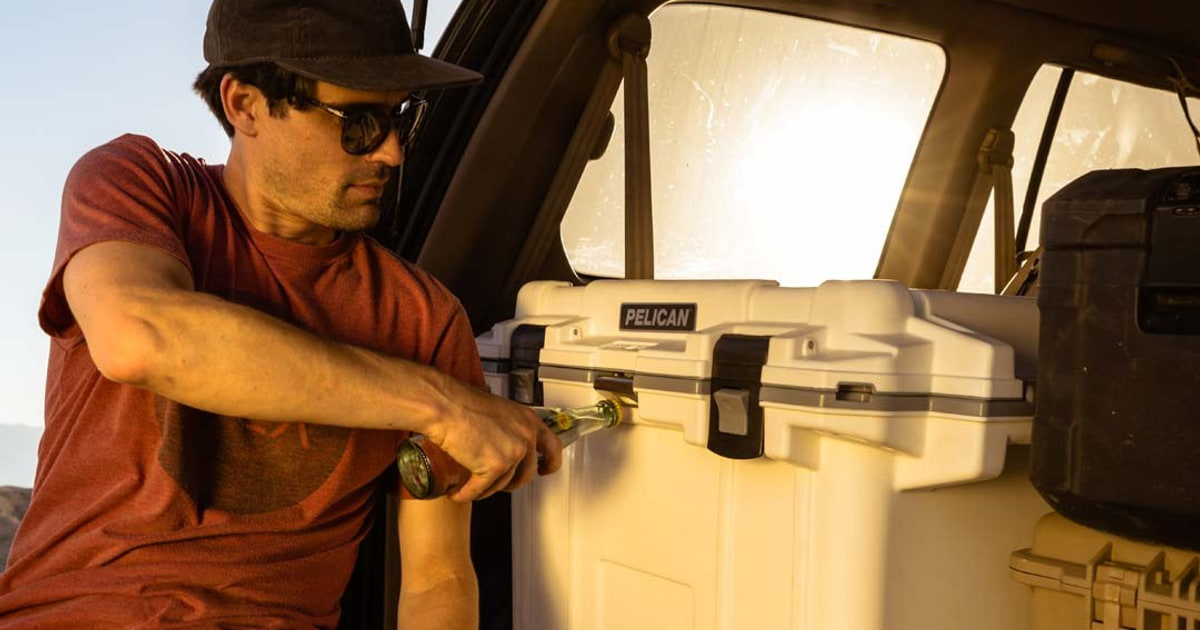
A cooler's whole job is to hold a temperature you can't see. You pack it in the driveway, drive four hours, and don't really learn how good it is until day three, when you open the lid and find either solid ice or a bucket of lukewarm water. That's why wall thickness, shell construction and the lid seal matter far more than the color or the badge on the front. Thick closed-cell foam and a tight gasket buy you real days of cold food. Everything else is convenience.
Here's the honest part: no cooler hits its advertised number in the conditions you'll actually use it. Those figures come from a sealed box, pre-chilled, packed full, sitting in a mild room and never opened. Your cooler rides in a hot trunk and gets cracked open every twenty minutes for a drink. In real summer heat, expect to lose a third to half of the claimed retention. Pre-chilling and packing heavy on ice narrows that gap. It never closes it.
Weight is the other thing spec sheets undersell. A loaded 65-quart rotomolded cooler is a two-person lift, and most of the premium models skip wheels entirely. So think about how far you'll carry it before you get excited about days of ice. We think that the Pelican 50 Quart Elite Cooler is the best cooler for ice retention for most people, and that the RTIC 45 QT Ultra-Tough Cooler is the one to buy if you want nearly the same cold in a smaller box for a lot less money.
Everything we recommend

Serious multi-day cold, if you can handle the weight

Nearly the same cold for a lot less, in a smaller box

Plenty of room and wheels, as long as it's not brutally hot
The most proven hardware, and 65 quarts of room

The soft cooler to carry when a hard one won't fit
At a glance
| Product | Capacity | Ice Retention | Price | |
|---|---|---|---|---|
| Pelican 50 Quart Elite CoolerTop pick | 50 Quart | — | $310.95 |
| YETI Tundra 65 CoolerUpgrade pick | 65 | — | $395 |
| RTIC 45 QT Ultra-Tough Cooler Hard InsulatedRunner-up | 45 Quart | — | $239 |
 | RTIC Ultra-Light 32 Quart Hard Cooler InsulatedAlso consider | 32 Quart | — | $159 |
 | PRO 65Qt CoolerAlso in lineup | 65 Quart | — | $449.99 |
 | Engel HD30 High-Performance Soft Sided Tote CoolerAlso consider | 32 Quarts | Up To 3 Days | $199.99 |
 | Grizzly Scout Rolling 40 Quart CoolerAlso consider | 40 Quart | — | $399.99 |
| Coleman Xtreme 50qt Rolling Cooler with WheelsBudget pick | 50qt | Up To 5 Days | $74.99 |
| YETI Hopper M30 Portable Soft Cooler withAlso great | — | — | $280On sale |
How we picked
Insulation and seal. We compared published wall thickness and gasket design across every model, since those two things drive retention more than anything else. Anything claiming five-plus days needed at least 2 inches of closed-cell foam and a sealing lid, not just a lid that closes.
Realistic retention. We weighted independent review-site rankings over manufacturer claims, because manufacturer figures assume a pre-chilled, full, unopened cooler. We looked for models whose real-world reported performance stayed close to the number on the box.
Capacity for the trip. We checked interior dimensions and can counts rather than the quart number on the label, since thick walls can cost several quarts of usable space. We wanted at least one strong option at each of 30, 45 and 65 quarts.
Moving it when full. We compared empty weight, handles and whether wheels are included, because a loaded cooler is often the heaviest thing on a trip. Owner feedback about hauling coolers over sand and gravel shaped where wheels became a deciding factor.
Latches, hinges and backing. We looked at the parts owners report failing first — hinges, latches, drain plugs and soft-cooler closures — and at what the manufacturer promises to do about it. Lifetime coverage moved a cooler up when performance was otherwise close.
Top pick
Serious multi-day cold, if you can handle the weight
Pelican 50 Quart Elite Cooler
This is a true 50-quart rotomolded box with 2 inches of polyurethane foam and a freezer-grade gasket that runs the full perimeter of the lid. If you camp for a week, hunt, or fish in heat, it's the one we'd load first.
$310.95fromAmazonInsulation depth and seal quality decide a cooler, and Pelican gets both right. You get 2 inches of polyurethane foam poured into a seamless rotomolded shell, closed by a 360-degree freezer-grade gasket. That gasket is the part cheaper coolers skimp on, and it's where warm air creeps in. Published comparisons put the Elite line at the front of the pack for multi-day retention, with numbers reaching into the double digits under ideal conditions.
In heat, with the lid opening all day, you should still plan on five to seven days. That's the practical figure, not the lab one, and it's the number that matters when you're four days from a store. For a long weekend you'll barely dent the ice. For a week-long trip you'll top off once instead of hunting for a gas station bag every other morning.
Bear certification is a legal question, not a bragging point. The Elite is IGBC certified, which many national parks and wilderness areas require for food storage. If your trip list includes a park with container rules, that certification decides your purchase before anything else does. Most coolers here, including some that cost about as much, don't carry it.
The hardware is built for a truck bed, not a patio. Three-inch locking latches and a reinforced lockable hasp clamp the lid hard against the gasket, and the anti-shear hinge is designed to survive being dropped and dragged. Molded-in tie-down slots let you strap it into a raft or a pickup. Non-skid feet keep it from sliding around when the road gets rough.
The small stuff means you won't be buying add-ons. There's an overmolded carry handle, four self-draining cup holders in the lid, and a stainless bottle opener built into the body. None of it is exciting. All of it is the kind of thing you'd otherwise buy separately and then lose.
Flaws but not dealbreakers
There are no wheels, and it's heavy before you put anything in it. Empty, it's over 30 pounds. Add ice and food and it's a two-person carry across a parking lot, and a genuine chore across sand. If you're regularly moving a loaded cooler more than a hundred feet by yourself, buy something with wheels instead.
Fifty quarts holds less than fifty quarts sounds like. Thick walls eat interior space, so the usable box is about 17.5 by 11 by 13.7 inches — roughly 38 cans with no food. A family of four on a three-day trip will be playing Tetris. If you need real volume, step up to a 65-quart model.
Pelican backs the Elite line with a lifetime guarantee: break it and they replace it.
Runner-up
Nearly the same cold for a lot less, in a smaller box
RTIC 45 QT Ultra-Tough Cooler Hard Insulated
RTIC packs up to 2.8 inches of closed-cell foam into a rotomolded shell, which is thicker on paper than what Pelican or YETI publish. You give up capacity and bear certification, and you keep almost all of the ice.
$239fromAmazonOn paper it out-insulates coolers that cost considerably more. Up to 2.8 inches of closed-cell foam beats the roughly 2 inches in our top pick and in the YETI Tundra. Published side-by-side comparisons land its retention within about a day of the Tundra 65 in hot conditions. For most trips, one day of margin isn't worth what the gap in price buys you elsewhere.
It's the easiest rotomolded cooler here to actually pick up. At around 21 pounds empty it's roughly ten pounds lighter than the Pelican, which you'll notice every time it goes in and out of a trunk. Forty-five quarts fits about 60 cans, which covers a couple over a long weekend or a family for two or three days.
The shell is rated to be furniture. RTIC builds it to double as a bench, a step stool or a tabletop, and that's genuinely useful at a crowded campsite where flat surfaces are scarce. The seamless rotomolded body has no seams to split when someone stands on it to reach a roof rack.
Two details save you from digging. There's a silicone cargo net in the lid for the things that always sink — keys, lighters, a phone in a bag — and a bottle opener molded into the body. Small, but they're the difference between reaching in once and rummaging through meltwater.
Flaws but not dealbreakers
Forty-five quarts is the ceiling, and there are no wheels. If you're feeding four people for four days, you'll run out of room before you run out of ice. Loaded, it still wants two hands and a short walk.
It isn't bear certified. If your destination requires an IGBC-approved container for food storage, this one is off the table no matter how well it holds ice. Check the park's rules before you decide.
Budget pick
Plenty of room and wheels, as long as it's not brutally hot
Coleman Xtreme 50qt Rolling Cooler with Wheels
Fifty quarts, room for 84 cans, a telescoping handle and real wheels, for a small fraction of what the rotomolded coolers cost. It's injection molded, so the walls are thin, and serious heat cuts its rated five days down hard.
$74.99fromAmazonFor car camping, tailgates and backyard parties, this is all the cooler you need. Fifty quarts holds up to 84 cans, which is more drink capacity than anything else here. You're parked twenty feet from the cooler and reloading it from a store every couple of days. Multi-day wilderness retention isn't the problem you're solving.
It's by far the easiest cooler here to move. It weighs under 13 pounds empty, and the telescoping handle plus heavy-duty wheels mean you drag it instead of carrying it. Every premium cooler in this guide asks you to lift 30-plus pounds of shell before you add ice. This one doesn't.
Coleman's five-day rating is reachable, just not automatic. Pre-chill the shell overnight, use block ice, pack it two parts ice to one part contents, and keep it shaded, and you'll get close in mild weather. In a July heat wave, plan on two to three days instead. Treat the rating as a ceiling, not a promise.
The lid does more than close. It's rated to sit on, there are cup holders molded in, the top wipes clean, and the drain is leak-resistant so you can empty meltwater without tipping 40 pounds over your foot. For a cooler that lives in the garage between weekends, that's the right set of priorities.
Flaws but not dealbreakers
Thin walls are thin walls. Injection-molded construction joins separate pieces at seams, and those seams are thermal shortcuts. Against a rotomolded cooler in equivalent conditions, published comparisons put it two to four days behind. That's the whole trade.
The lid isn't a thermal seal. There's no freezer-grade gasket clamping it down, so every opening exchanges more air than it does on the sealed models. It's fine when you're grabbing drinks from a shaded patio. It's costly on day three in a hot campsite.
Upgrade pick
The most proven hardware, and 65 quarts of room
YETI Tundra 65 Cooler
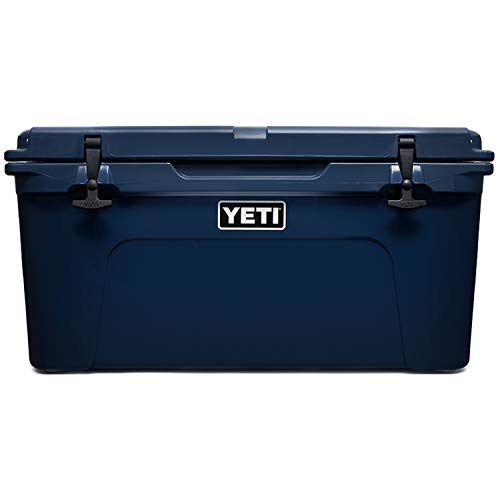
The Tundra 65 is the cooler guides and outfitters reach for by default, with an interlocking hinge, a form-fitting lid and enough volume for a family of four over a long trip. You're paying for a track record more than a spec advantage.
$395fromAmazonSixty-five quarts is the size that actually works for a group. Our top pick runs out of room before it runs out of ice on a four-person trip. This one leaves you space for ice around the food instead of on top of it, which is also how you get the retention numbers in the first place.
The hinge is what breaks on other coolers, and YETI over-built it. The NeverFail hinge uses an interlocking two-pin design instead of a single pivot, so there's no one point that snaps when the cooler gets dropped tailgate-first. Owners of older Tundras routinely report the hinge outlasting everything else they own.
The lid and the feet are quietly the best parts. The InterLock lid seats into the body to form a shape-conforming barrier, which limits how much warm air rushes in each time somebody grabs a drink. BearFoot non-slip feet keep it planted on a wet boat deck or a truck bed, which sounds trivial until a full cooler slides into your shins.
Reviewers keep ranking it near the top, and that consistency is the point. Published comparisons put it in the seven-to-nine-day range for hard-cooler retention, trip after trip and revision after revision. The Vortex drain empties it without tipping. And the shell is thick enough to stand on for casting or reaching a roof rack.
Flaws but not dealbreakers
You're paying a brand premium for performance others match. Our top pick reaches the same territory for less, and the RTIC gets within about a day for a lot less. Buy the Tundra for the hinge, the capacity and the resale value — not because it holds ice better than everything else.
It's heavy and there are no wheels. Around 29 pounds empty, and a full 65 quarts is a genuine two-person lift. If you're moving it across sand or gravel by yourself, you'll want a wheeled model instead.
Also greatOn sale
The soft cooler to carry when a hard one won't fit
YETI Hopper M30 Portable Soft Cooler with
When you need something you can sling over a shoulder and drop into a kayak hatch, the Hopper M30 holds cold better than the soft coolers around it. The magnetic opening seals with a push and stays open when your hands are full.
$280fromAmazonList priceClosed-cell foam is the entire reason it outlasts cheap soft coolers. YETI's ColdCell insulation doesn't absorb water. Open-cell foam, which is what most inexpensive soft coolers use, slowly waterlogs and loses insulating ability over a season or two — so the cooler you bought gets worse every year. This one doesn't degrade that way.
MagShield fixes the most annoying thing about soft coolers. The wide mouth on the 2.0 version stays propped open on its own, so you're not wrestling it with one hand while loading with the other. Powerful magnets seal it closed with a gentle push, and it's leak-resistant enough to ride in a truck cab. You can open it one-handed while passing drinks to the back seat.
The shell takes real abuse. The DryHide fabric is high-density and resists punctures and UV, which matters if it spends a summer in the sun on a boat deck rather than in a closet. Soft coolers usually fail at the fabric or the zipper. This one has no zipper and tough fabric.
The HitchPoint grid keeps your gear on the outside. You can clip a dry-gear case, a bottle opener, nippers or a multitool straight to the body instead of burying them in the cold, wet interior. For fishing and paddling, that's the difference between reaching and digging.
Flaws but not dealbreakers
A soft cooler is still a soft cooler. Expect a day or two less than a comparable hard cooler, no matter how good the foam is. It's for day trips and overnights, not a week in the desert.
Loaded, it's an awkward carry. There are no wheels and no rigid lid to sit on, so a full M30 becomes a shoulder strap digging into you across a long parking lot. Hard coolers are heavier, but they distribute better between two people.
Who this is for
This guide is for anyone who's been burned by opening a cooler on day two and finding slush. If you camp for more than a weekend, fish or hunt in heat, or drive somewhere remote with food you can't replace, a thick-walled rotomolded cooler pays for itself the first time it saves a trip's worth of groceries. If your cooler mostly holds drinks in the backyard and rides in a car with air conditioning, you don't need one, and you'll resent the weight.
We cover hard coolers from roughly 30 to 65 quarts plus two soft-sided options, all of them sized for a person or a family rather than a fishing charter. We aren't covering powered 12-volt fridges, backpack coolers, or the giant marine boxes that get bolted to a deck. And if your destination has bear-container rules, start with IGBC certification and choose from what's left — it's a legal requirement in many parks, not a preference.
How we picked
Insulation and seal: we compared published foam thickness and gasket design first, since a freezer-grade seal and 2-plus inches of closed-cell foam do more for retention than any other feature. Realistic retention: we leaned on independent review rankings over manufacturer numbers, because those numbers assume a pre-chilled, full, unopened box. Capacity: we read interior dimensions and can counts instead of the quart label, since thick walls quietly eat usable space. Portability: we weighed empty weight, handle design and whether wheels come included, because the cooler you dread moving is the one you leave home. Durability and backing: we looked at hinges, latches and drains — the parts owners report failing — and at how long the manufacturer stands behind them.
Other coolers for ice retention worth considering
If you want serious insulation you can carry alone: The RTIC Ultra-Light 32 Quart Hard Cooler Insulated ($159) — The RTIC Ultra-Light 32 Quart puts 2.5 inches of closed-cell foam in a shell RTIC says is more than 30% lighter than a rotomolded cooler of the same size. At under 15 pounds empty, it's the one you can lift into a kayak, strap to a bike trailer, or carry a half-mile to a beach without regretting it. You give up capacity — 32 quarts and about 48 cans is one or two people for two days — and it isn't bear certified. But for solo and small-group weekends, the weight savings are worth more than the extra volume.
If you fish or hunt and need a leak-proof tote: The Engel HD30 High-Performance Soft Sided Tote Cooler ($199.99) — The Engel HD30 is built for the places where a hard cooler simply doesn't fit — a kayak hatch, a canoe, the floor of a truck cab. The TPU shell and 100% welded seams mean no zipper to fail and no drips onto your upholstery or electronics, which is the single most common soft-cooler complaint. Engel rates it for up to three days of cold, and at just over 5 pounds it carries on a shoulder strap all day. It holds less than a hard cooler of similar cost, and you can't sit on it, but as field gear it's hard to beat.
If you want premium cold on wheels: The Grizzly Scout Rolling 40 Quart Cooler ($399.99) — The Grizzly Scout Rolling 40 solves the thing everyone complains about with rotomolded coolers: they're miserable to move when loaded. The all-terrain wheels roll over grass, gravel and beach sand where luggage wheels bog down, and the telescoping handle is built for repeated hauling. The stay-open lid frees both hands while you pack, and there are lock-down latches with padlock holes plus a fast drain. Forty quarts is modest for the money, and the wheel housing adds bulk. If you park far from where you camp, that's a trade worth making.
The competition
This is what our research surfaced, not a survey of everything on the market. Coolers get released and rebranded constantly, and plenty of good ones never make it into a comparison test. What follows is the model we looked at closely that didn't earn a spot above, along with who might still want it.
The PRO 65Qt Cooler ($449.99) — The Canyon Coolers PRO 65Qt is a legitimate rotomolded 65-quart cooler with thick walls, a secure latch system and manufacturer claims in the seven-to-nine-day range — genuinely competitive with the YETI Tundra 65 on volume and on cold. It lost out mostly on visibility: it appears far less often in independent head-to-head comparisons, so there's less outside evidence backing the claims, and the lower brand recognition means weaker resale if you ever move it on. It's also the heaviest cooler here at around 35 pounds empty, with no wheels. Still, if you want a true 65-quart rotomolded box and you don't care what the logo says, this one deserves a look before you default to the obvious brands.
Packing and care
Pre-chilling costs you nothing and does more for your ice than any feature on the box. A warm shell starts eating your ice the second you close the lid, so fill the box with sacrificial ice or frozen jugs 12 to 24 hours before you leave, then dump it and pack for real. Use block ice on the bottom and cubes on top — blocks melt far more slowly. Aim for roughly two parts ice to one part food and drinks by weight, keep it in shade, and throw a towel or blanket over the lid in the sun. Don't drain the meltwater until you're about to add ice; cold water still helps. Afterward, rinse it and let it air-dry with the lid propped open so the gasket doesn't go musty.
Questions we get
Which cooler holds ice the longest?
Among the coolers here, the Pelican 50 Quart Elite leads for multi-day retention, thanks to 2 inches of polyurethane foam and a 360-degree freezer-grade gasket. Manufacturer and published figures reach into the double digits under ideal conditions, but plan on five to seven days once you're opening it regularly in real heat. The YETI Tundra 65 is close behind and gives you more room.
Is a YETI worth it compared with RTIC?
For most people, no. The RTIC 45 QT lands within about a day of the Tundra 65 in published comparisons and has thicker published insulation, for a lot less. Buy the YETI if you specifically want the NeverFail hinge, the 65-quart capacity, or the resale value the brand holds.
What's the best cooler for a week-long camping trip?
Go with the Pelican 50 Quart Elite or the YETI Tundra 65. Both reach seven days or more when you pre-chill the shell and pack roughly two parts ice to one part contents by weight. If you're feeding four people, choose the Tundra for the extra volume — you need room for ice around the food, not just under it.
How much better is rotomolded than a regular cooler?
Published comparisons put rotomolded coolers two to four days ahead of injection-molded ones at similar stated capacity. A rotomolded shell is one seamless piece with no seams to leak heat, and the foam walls run 2 to 3 inches instead of the 1 to 1.5 inches typical of budget models. For a mild weekend, a good injection-molded cooler is fine. For four-plus days in heat, rotomolded is the standard.
How long does a budget cooler really keep ice in hot weather?
The Coleman Xtreme is rated for five days, and that figure assumes a pre-chilled shell, a full load and moderate ambient temperatures. Once you're above 90 degrees with the lid opening all day, two to three days is the realistic number. Pre-chilling and using block ice will get you closer to the rating, but the thin walls set a hard ceiling.
Which coolers work for bear-country camping?
Of the coolers here, the Pelican 50 Quart Elite is the one listed as IGBC bear certified, which many national parks and wilderness areas require for food storage. The RTIC models and the soft coolers aren't certified. Always check the current approved-container list for your specific park before you go, since the rules change and rangers do enforce them.
Why you should trust us
For this guide:
- We read published cooler comparisons from outdoor review outlets and lined their retention rankings up against each manufacturer's own claims.
- We compared spec sheets across all nine coolers for insulation thickness, gasket design, interior dimensions and empty weight.
- We tracked the failure modes owners report after a season or two — stretched latches, cracked hinges, leaking soft-cooler closures and waterlogged foam — and let those shape the flaws we call out.
- We read owner reviews on every listing, weighted toward the critical ones, because that is where the recurring failures show up.
- We have a systematic way of automatically fetching the latest prices, so the numbers on this page stay current.
- This is a research-focused guide, so the team may not own every product listed — though we often do own the top winners, which gives us extra context for the recommendations.
- We don't accept free products, and the retailer commission never changes which product we recommend.
Sources
Best Coolers of 2026 — OutdoorGearLab, OutdoorGearLab
The Best Coolers — Wirecutter (NYT), Wirecutter
Cooler Ratings & Reviews — Consumer Reports, Consumer Reports
Best Coolers of 2026 — GearJunkie, GearJunkie
Best Rotomolded Coolers, Tested and Reviewed — Outdoor Life, Outdoor Life
Amazon product listings and owner reviews for all 9 products
Manufacturer specification pages for each product
Some passages in this guide may be paraphrased with AI help. Prices are refreshed automatically.
More like this.
Continue exploring lifestyle reviews and recommendations.

The Best Igloo Coolers
A cooler earns its keep on the worst day of the year, not the easy ones. That's the parking lot in July, the boat deck at noon, the campsite where the…

The Best Cooling Tents and Hot-Weather Camping Gear
Heat is the one camping problem you can't sleep through. A tent sitting in afternoon sun turns into an oven fast - Wirecutter's summer tent research found…

The Best Football Tailgate Coolers
A tailgate cooler has one job: keep everything cold from the moment you back into your spot until the fourth quarter. That sounds simple. But a stadium…

The Best RTIC Coolers and Drinkware
A cooler earns its keep on the days you'd rather not think about it. You load it Friday night, drive four hours, and open it Sunday morning hoping the ice…

The Best Yeti Tumblers, Coolers, and Drinkware
An insulated cup earns its keep in small ways. Your coffee's still hot at ten. The ice in your water hasn't turned into sad, lukewarm sipping by lunch. A…

The Best Crampons For Ice Climbing And Mountaineering
Crampons are one of the few pieces of gear where the wrong choice isn't just annoying - it's dangerous. A good pair bites into hard blue ice, stays put on…