The Best Crampons For Ice Climbing And Mountaineering
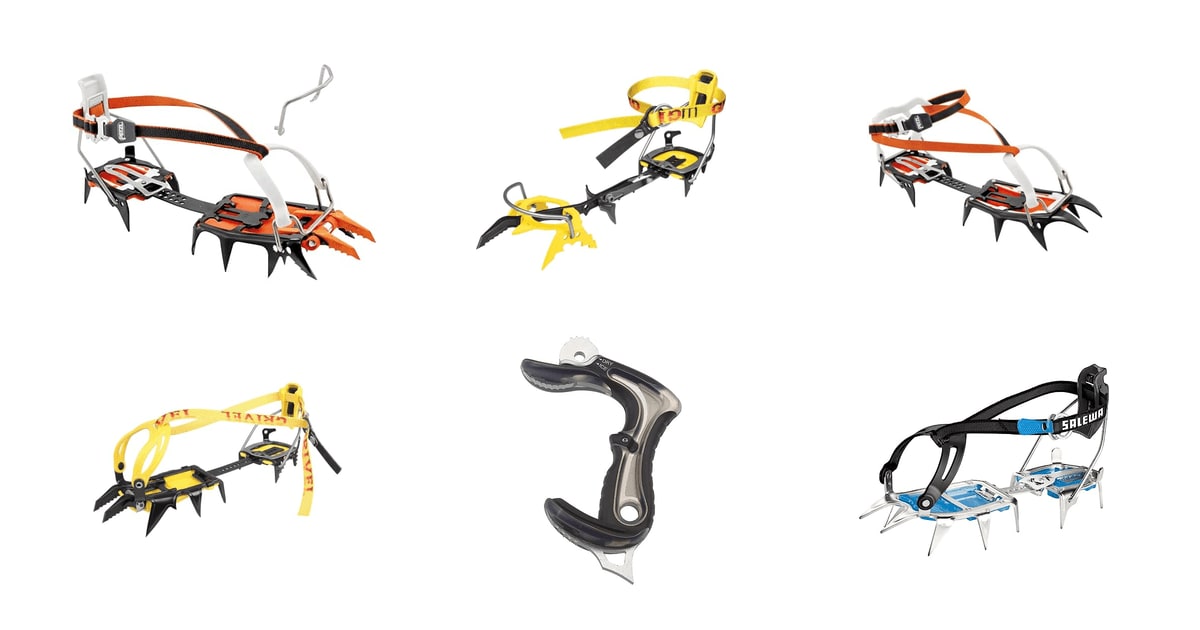
Crampons are one of the few pieces of gear where the wrong choice isn't just annoying — it's dangerous. A good pair bites into hard blue ice, stays put on a 50-degree snow slope, and doesn't shift under your boot when you're standing on two front points with a long drop below. The catch is that crampons don't work on their own. They're half of a system, and the other half is your boot. Get that pairing wrong and even the best crampon on the market becomes useless metal strapped to your feet.
No crampon does everything well. Aggressive vertical front points that sink into a frozen waterfall feel awkward and tippy when you're walking a glacier. Featherweight aluminum saves your legs on a long approach, then dulls fast the moment it meets real ice. Modular designs let you swap front points, but you're carrying extra hardware and a hex key, and you still have to stop and change them. Every crampon here trades something away. The honest question isn't which one is best — it's which trade-off matches the days you actually climb.
Before anything else, check your boot's rating: C1 is flexible and takes strap crampons only, C2 is semi-stiff and works with hybrids, and C3 is fully rigid with a welt front and back for step-in bails. That single check prevents the most expensive mistake in this category. We think that the PETZL Lynx is the best crampon for most people, and that the Petzl Vasak FL is the one to buy if your boots aren't fully rigid or your routes top out around WI3.
Everything we recommend
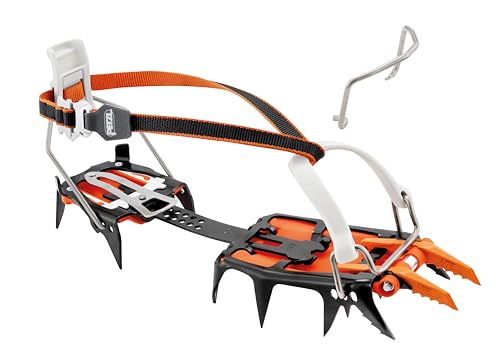
One crampon that reconfigures for ice, mixed and alpine
The sensible all-rounder if your boots aren't fully rigid

The least you can spend and still get real alpine hardware

Feather-light mono-points for people already climbing hard

Aluminum and anti-balling plates for ski days and easy alpine
At a glance
| Product | Price | |
|---|---|---|
| PETZL Lynx Crampons - LightweightTop pick | $304.95 |
| GRIVEL G20 Plus Cramp-O-Matic EVOUpgrade pick | $270.88 |
| PetzlRunner-up | $209.95 |
 | Grivel G14 NEW-Matic EVOAlso consider | $286 |
| CASSIN Camp X-Dream Alpine Grip HandleBudget pick | $109.95 |
| Salewa Alpinist Alu CombiAlso great | $155.85 |
How we picked
Boot compatibility. We treated binding type as the first filter, not a footnote, because a step-in bail on a flexible boot can detach mid-route. Every pick here has a clearly stated binding system so you can match it to your boot's C1, C2 or C3 rating.
Front-point geometry. We compared spec sheets and published reviews on how each crampon's front points are shaped and angled, since that's what separates a snow crampon from an ice crampon. Vertical mono and dual points earned credit for steep ice; wide horizontal points earned it for hard snow.
Steel versus aluminum. We weighed edge retention against weight savings, using manufacturer material specs and owner reports on how quickly points dull. Steel got the nod for anything at WI3 and above; aluminum only for snow-focused use.
Anti-balling. We gave real weight to whether anti-balling plates come included, because snow packing under the frame is a common and genuinely hazardous failure on spring snow. Crampons without them need an aftermarket set for glacier work.
Points and durability. We favored 12-point designs for ice and technical terrain, and looked for replaceable or hot-forged front points that extend a crampon's useful life. Owner feedback themes about wear and binding retention helped separate marketing claims from field behavior.
Top pick
One crampon that reconfigures for ice, mixed and alpine
PETZL Lynx Crampons - Lightweight
The Lynx swaps between long mono-point, short mono-point, dual-point and asymmetric dual-point front configurations, so one pair covers steep water ice, technical mixed moves and general alpine terrain. It needs a stiff boot with a heel welt, and it's the priciest thing here.
$304.95fromAmazonThe modularity isn't a gimmick — it's the reason to buy this crampon. Petzl designed the Lynx so the front points come off and go back on in a different geometry. Long mono for maximum penetration on steep ice. Short mono for precise, fiddly mixed moves. Dual points when you want stability on a fat ice column. Asymmetric dual for general alpine ground. That's four crampons' worth of behavior in one pair, and you carry one pair.
Think about how climbing progresses. You start on WI3 and glacier ground, and a couple of seasons later you're on steeper stuff with rock in the middle of it. Most people solve that by buying a second, more aggressive pair and letting the first set gather dust. The Lynx pushes that purchase years down the road, which is a real argument for spending more up front. You reconfigure it instead of replacing it.
The LEVERLOCK UNIVERSEL binding fits most boots with a heel welt, and a step-in bail matters more than people expect. Strap systems allow tiny amounts of flex between boot and frame, and on vertical ice that micro-movement is exactly what erodes your confidence in a front point. A properly seated bail doesn't rattle. You place the point, weight it, and it stays where you put it.
It's steel, which is the right call for anything hard. Steel front points hold their edge far longer than aluminum under repeated ice placements, so you're sharpening on a scale of weeks of climbing rather than days. Petzl rates the whole package at a hair under three pounds, which is heavier than the Grivel G20 Plus but perfectly normal for a full technical crampon.
Flaws but not dealbreakers
You need the right boot. The Lynx wants a stiff sole and a proper heel welt, and if you're climbing in semi-stiff C2 boots or anything softer, this isn't your crampon — the bail won't engage the way it needs to. That's not a flaw in the design so much as a hard prerequisite, but it rules out a lot of buyers who'd otherwise be well served here.
It's the most expensive option in this guide, and the modularity only pays off if you actually use it. If your climbing is all glacier travel and moderate snow, you're carrying complexity you'll never touch. The swap hardware is also one more small thing to lose in a gear bin. Owner feedback on this listing is thin, so there isn't much long-term field reporting to lean on beyond Petzl's own specs and the model's long reputation.
Runner-up
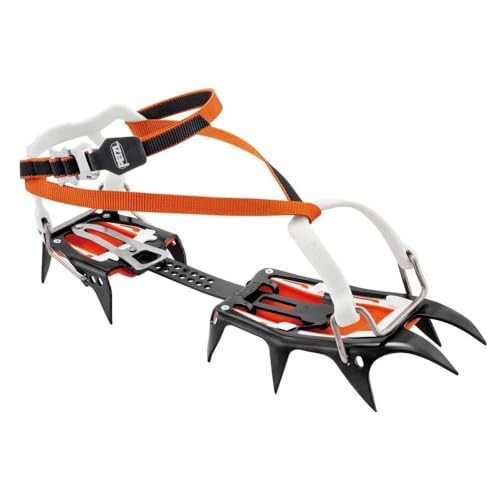
The sensible all-rounder if your boots aren't fully rigid
Petzl
The Vasak FL is a 12-point classic mountaineering crampon with two long, wide front points and a binding that works across a range of boots. It handles glacier travel, steep snow and moderate ice well, and it won't hold you back until you get onto genuinely vertical terrain.
$209.95fromAmazonThis is the crampon most people should actually be looking at. Twelve points give you real purchase on hard snow and moderate ice, well beyond what a 10-point setup manages. The two front points are long and wide rather than needle-sharp, which is the right shape for kicking into a 50-degree snow slope or moving up WI2 and WI3 ground. It's not a steep-ice specialist, and it isn't trying to be.
The binding flexibility is what makes this a smart first serious crampon. The FLEXLOCK system works with boots that don't have full toe and heel welts, so you're not locked into buying rigid technical footwear before you can buy crampons. If your boot quiver is still growing, that matters a lot — the Vasak adapts to what you own now and to the stiffer boots you'll likely own later.
Petzl includes its ANTISNOW system, which is more useful than it sounds. Wet spring snow packs under a bare crampon frame and hardens into a platform that lifts you clear off your points. You end up skating on a block of ice you're carrying under your own foot. The anti-balling plates keep that from building up, and on variable snow they're the difference between a routine descent and a nervous one.
Compared with the Lynx, you give up the front-point swaps and some vertical precision, and you save a meaningful chunk of money. For a climber whose season is mostly glaciers, couloirs and the occasional moderate ice pitch, that's an easy trade. Owner feedback on this listing is mostly positive, with the occasional dissatisfied buyer — worth a careful fit check when yours arrives.
Flaws but not dealbreakers
Push past WI3 and you'll feel the limits. The wide horizontal-style front points that work so well on snow don't penetrate steep, brittle ice the way a dedicated mono or vertical dual point does, and you'll be kicking harder for less purchase. If you know you're heading into WI4 territory, buy the Lynx and skip the intermediate step.
It's also more crampon than some people need. If you only need traction for a guided glacier walk-up, an aluminum pair does that job for less weight and less money.
Budget pick
The least you can spend and still get real alpine hardware
CASSIN Camp X-Dream Alpine Grip Handle
The CASSIN X-Dream Alpine is the most accessible entry here, from a brand with decades of technical alpine credibility behind it. The listing gives up very little detail, so confirm the binding type and boot compatibility with a specialist retailer before you commit.
$109.95fromAmazonCASSIN, part of the Camp family, has been making ice and alpine hardware for a long time, and that heritage is the main reason this belongs in the conversation rather than the generic clamp-on traction devices that flood the same search results. You're getting gear from a company that outfits serious alpinists, at the lowest price in this guide.
For a first pair, aimed at snow slopes, straightforward glacier ground and moderate alpine routes, that's often enough. Plenty of people spend a season or two figuring out whether they even like being on ice at dawn. Buying at this level lets you find out without sinking money into a technical setup you may never need.
Go in with your eyes open about what you can verify. The Amazon listing carries almost no specification detail — no feature bullets, no weight, no stated binding system — and there's no owner feedback to fill the gaps. We'd treat this as a product to research directly with a gear shop that can confirm the binding type and put it on your actual boot before you pay.
Flaws but not dealbreakers
The information gap is the real problem. Without confirmed binding type and boot compatibility, you can't be confident this pair works with your footwear, and boot compatibility is the one thing you can't guess at with crampons. Sort that out before ordering, not after.
Aluminum construction, where it's used in this line, keeps weight down but dulls much faster than steel on hard ice — think days of use rather than weeks between sharpenings. And don't plan on WI3 or steeper with this pair. Nothing in the available information supports taking it onto technical ice.
Upgrade pick
Feather-light mono-points for people already climbing hard
GRIVEL G20 Plus Cramp-O-Matic EVO
Grivel calls the G20 Plus the lightest technical mono-point crampon in the world, at a claimed 30.4 ounces. It's built narrowly for steep ice and technical mixed routes, with two center points that add sideways stability where mono-points usually feel sketchy.
$270.88fromAmazonWeight is the whole argument here. Grivel's claimed 30.4 ounces makes this the lightest full-featured technical mono-point crampon it manufactures, and on a long alpine route that difference compounds. Every step you take with less mass on your feet is energy you're not spending, and on a multi-day objective with thousands of meters of gain, that adds up in a way spec sheets undersell.
Mono-points have a well-known weakness: one point in front means very little lateral support. Walk downhill or stand on a bulging cauliflower formation and the crampon wants to roll. Grivel's answer is two center points that add perpendicular holding power without adding much forward weight. Owners who ice climb regularly report the design performs like high-end gear should, and several note the front point is unusually long compared with other brands.
The front point is hot-forged and removable. Hot-forging aligns the steel grain, which makes the point tougher under the repeated hammering it takes on hard ice, and removability means the point wears out instead of the crampon. Over several seasons of regular ice days, that's the difference between replacing a component and replacing a pair.
The Cramp-O-Matic EVO bail is an update to a binding Grivel has refined over years, and it gives you clear feedback when it's fully seated. That's more useful than it sounds at four in the morning with a headlamp and cold fingers, when you want to know the bail is locked without taking your gloves off to check by feel.
Flaws but not dealbreakers
This is a specialist's tool, and the specialization cuts both ways. Mono-point geometry that shines on a vertical pitch feels twitchy and unnecessary on a snow plod, and if a meaningful share of your days are glacier travel or moderate couloirs, the Lynx or the Vasak FL will serve you better across the whole season.
It needs stiff boots with a proper welt for the step-in bail, same as the Lynx. And owners mention that it balls up with snow in the wrong conditions, so budget for anti-balling plates if you'll be on wet spring snow.
Also great
Aluminum and anti-balling plates for ski days and easy alpine
Salewa Alpinist Alu Combi
The Salewa Alpinist Alu Combi is a lightweight aluminum crampon with anti-balling plates included and a semi-automatic binding for C2 boots. It's built for snow and easy ice, and it's the pair to strap to your pack for a ski tour or a guided glacier peak.
$155.85fromAmazonIf you ski tour, weight on your feet is weight you feel with every stride. Salewa's aluminum frame is the lightest thing in this guide by a wide margin, and it's the difference between carrying crampons on the off chance and leaving them at home. That's the practical case for aluminum: you actually bring it.
The included anti-balling plates are the most underrated feature in this whole guide. Wet spring snow compacts under a bare crampon into a hard, slick platform that raises your boot clear of the points. You're suddenly sliding on a chunk of ice you built yourself, on terrain where sliding is a serious problem. Salewa includes the plates as standard rather than selling them separately, which is exactly right for a crampon aimed at spring conditions.
The semi-automatic binding — rubber front cage, rear bail into a heel notch — fits a wider range of boots than a full step-in system. That's genuinely useful for ski mountaineering boots, which often have a rear notch but not a front welt. It's the setup that lets one pair of crampons follow you from a spring ski descent to a summer glacier walk-up.
This is also, by a distance, the most-reviewed product here, and owners land solidly positive on it. The reported complaints cluster where you'd expect from an aluminum crampon: durability on rock and hard ice, not performance on the snow it's designed for.
Flaws but not dealbreakers
Salewa is upfront that this is for snow and not-too-demanding ice, and you should take that at face value. On WI3 or harder, the less aggressive front points and the softer metal are a genuine safety issue, not a mild performance compromise. Dull points need more force to place, and more force on steep ice is how people come off.
Aluminum wears fast. Under regular hard-ice use expect to be filing points every handful of days, and expect rock contact to chew them up. If your season involves any real mixed ground, buy steel.
Who this is for
This guide is for people who already climb, or are about to start, on snow and ice that demands real crampons — glaciated peaks, spring couloirs, frozen waterfalls, alpine routes with rock in the middle. If that's you, buy based on the hardest thing you'll do in the next two seasons, not the average day. It's also for anyone about to book a guided ascent of something like Rainier or Kilimanjaro and needs traction that a guide will actually approve.
It's not for winter hiking or icy sidewalks. If you want something to pull over trail runners for a slick trail, you want a traction device, not a mountaineering crampon, and none of these belong on flexible footwear. We've also stayed out of ski-specific ski crampons, which are a different tool entirely. And we cover only what this lineup surfaced — plenty of good crampons from other brands aren't here.
How we picked
We built the shortlist from manufacturer specifications, published reviews and owner feedback themes, weighted this way. Boot compatibility: binding type comes first, because a step-in bail on a soft boot is a safety failure, not an inconvenience. Front-point geometry: vertical mono and dual points for steep ice, wide horizontal points for hard snow and glacier ground. Material: steel for edge retention on anything at WI3 and above, aluminum only where saving weight on snow matters more. Anti-balling: included plates score well, since snow packing under the frame is a real hazard on spring routes. Durability: we favored 12-point layouts and replaceable, hot-forged front points that let the frame outlive its points.
Other crampons for ice climbing and mountaineering worth considering
If you want replaceable points and a bit of front-point flexibility: The Grivel G14 NEW-Matic EVO ($286) — The Grivel G14 NEW-Matic EVO is a 12-point technical mountaineering crampon whose two front points are hot-forged, replaceable, and mountable in either bi-point or mono-point configuration. That's a genuinely useful middle ground — you get to pick your front-point geometry without carrying the Lynx's full swap kit, and when the points wear you replace the points instead of the crampon. It's heavier than the G20 Plus, it needs a stiff welted boot, and it costs nearly what the Lynx does while offering less configurability. Owner feedback is sparse but positive. Choose it if the replaceable hot-forged points and Grivel's binding are what you specifically want.
The competition
This is what our research turned up in this lineup, not a survey of every crampon sold. Petzl, Grivel, Salewa, Black Diamond, CAMP and others all make models we didn't have listings for, and any decent mountain shop will show you options that never appear on Amazon. Treat the list below as a starting point, and treat your boot's compatibility rating as the filter that narrows it fastest.
Fit, sharpening and care
Fit your crampons at home, in a warm room, before the trip. Loosen the adjusters, set the center bar to roughly your boot length, then seat the toe first and lever the heel bail down until it locks. Shake the boot hard in every direction — any play at all means it isn't set right. Practice putting them on and taking them off until it's automatic, because you'll eventually be doing it in the dark with cold hands. For maintenance, use a flat mill file and hand pressure only; a bench grinder overheats the steel and ruins the temper. Sharpen along the original bevel, and check your points before every climbing day. Rinse off salt and grit, dry them fully, and store them somewhere that isn't damp so the frames don't rust.
Questions we get
What's the difference between ice climbing crampons and general mountaineering crampons?
Ice crampons use aggressive vertical front points — one or two — that punch into hard blue ice, and they usually need a stiff boot with a full welt for their step-in bail. Mountaineering crampons use wider, more horizontal front points tuned for snow, glacier travel and lower-angle ice, and they often accept more boot types. The Lynx and the G20 Plus sit on the ice side. The Vasak FL and the Salewa Alpinist cover general mountaineering.
What do C1, C2 and C3 boot ratings mean?
They describe how stiff your boot is and therefore which bindings can work on it. C1 boots are flexible — soft hikers, trail runners — and take strap crampons only. C2 boots are semi-stiff and work with hybrid or semi-automatic systems like the Salewa's. C3 boots are fully rigid with a welt at both toe and heel, and they're the only ones you should put a full step-in bail on.
Do I need 12 points, or will 10 do?
For anything at WI3 and above, go with 12. The extra points, and specifically the two dedicated front points, give you the toe-in purchase you need on ice steep enough that you can't kick a step. Ten-point crampons are built for glacier travel, snow slopes and easy alpine ground, and they lack the front-point geometry for technical ice.
Can I use aluminum crampons on technical ice?
You shouldn't. Aluminum is fine on snow and easy ice, but it dulls dramatically faster than steel under repeated hard placements, and dull points take more force to set. On steep ground, that extra force is exactly where slips happen. Salewa rates the Alpinist Alu Combi for snow and not-too-demanding ice, and we'd take that literally.
Mono-point or dual point?
Mono-points give you precision — a single point fits a narrow hold or a small ice feature that two parallel points can't. Dual points give you stability on wider ice and columns, where feeling secure matters more than being surgical. The G20 Plus is a mono-point that adds two center points to claw back some lateral stability. The Lynx does both, since you can reconfigure it.
How do I stop snow balling up under my crampons?
Anti-balling plates, full stop. They keep wet snow from compacting under the frame into a hard platform that lifts your boot off the points and turns a snow slope into a slide. The Salewa Alpinist Alu Combi includes them and the Vasak FL has Petzl's ANTISNOW system. For anything sold without them, buy an aftermarket set before any glacier or spring objective.
Why you should trust us
For this guide:
- We read manufacturer specifications and listing details for every crampon here, focusing on binding type, point count, front-point geometry and frame material.
- We compared published reviews and owner feedback themes across these models, paying particular attention to reports of snow balling, point wear and binding retention.
- We did not climb on any of these crampons, and nothing in this guide describes first-hand use.
- We read owner reviews on every listing, weighted toward the critical ones, because that is where the recurring failures show up.
- We have a systematic way of automatically fetching the latest prices, so the numbers on this page stay current.
- This is a research-focused guide, so the team may not own every product listed — though we often do own the top winners, which gives us extra context for the recommendations.
- We don't accept free products, and the retailer commission never changes which product we recommend.
Sources
Best Crampons of 2026 — Outdoor Gear Lab, Outdoor Gear Lab
How to Choose Crampons — REI Expert Advice, REI
Best Crampons 2026: Reviews and Buyer's Guide — Switchback Travel, Switchback Travel
Best Ice Climbing Crampons Reviewed — Gear Junkie, Gear Junkie
Ice Climbing Gear Guide — Climbing Magazine, Climbing Magazine
Amazon product listings and owner reviews for all 6 products
Manufacturer specification pages for each product
Some passages in this guide may be paraphrased with AI help. Prices are refreshed automatically.
More like this.
Continue exploring lifestyle reviews and recommendations.

The Best Rock Climbing Harnesses
A harness is the piece of gear you notice least when it's right and constantly when it's wrong. You hang in it at the anchor. You sit in it while your…

The Best Climbing Shoes for Beginner Boulderers
Climbing shoes are the one piece of gear a new boulderer really has to buy, and the pair you choose shapes how the first year goes. A good beginner shoe…

The Best Stair Climbers for Home Gyms
Stair climbing is brutally efficient, and your legs figure that out inside of two minutes. You're lifting your own body weight over and over, with no…

The Best Ice Fishing Tip-Ups and Hard-Water Gear
Tip-up fishing is a waiting game you play with your feet up. You set a baited line under the ice, walk away, and watch for a flag. When one pops across…

The Best Cordless Ice Fishing Augers
Drilling a hole through 20 inches of ice used to mean yanking a starter cord in the dark with cold hands, then breathing two-stroke exhaust for the rest…

The Best Coolers for Ice Retention
A cooler's whole job is to hold a temperature you can't see. You pack it in the driveway, drive four hours, and don't really learn how good it is until…