The Best Graphite Pickleball Paddles
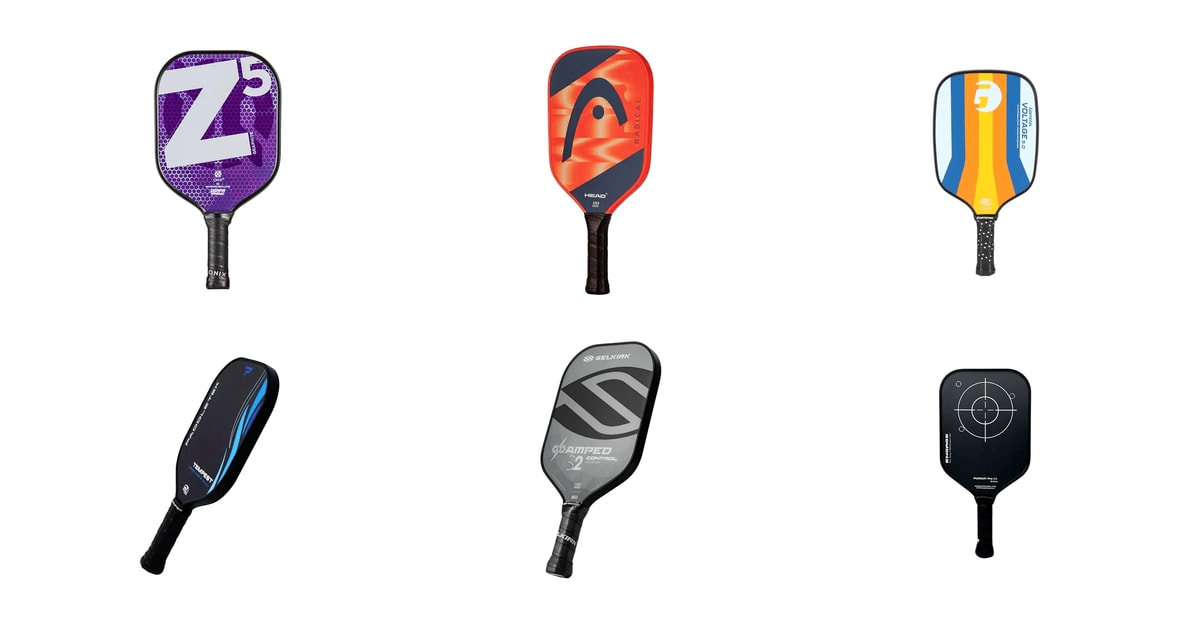
Pickleball is mostly a soft game. You dink, you reset, and you wait for the one ball you can actually attack. The face material on your paddle decides how much of that feel you get. Graphite faces are thin and stiff, and they tend to give you a quiet, controlled pop that's easy to place. For most rec players that matters more than power, because points at the kitchen line go to whoever keeps the ball low — not to whoever swings hardest.
Here's the honest part. No paddle in this category does everything, and the labels don't help. Brands use "graphite" and "carbon fiber" loosely, and some paddles sold as graphite turn out to have a fiberglass or glass-composite face once you read the spec sheet. Texture wears down, too. The gritty surface that grabs the ball when a paddle is new gets smoother over a season of outdoor play, and nothing stops that. Control paddles also give up drive power. You can't have both.
So think about how you actually play. If you spend your time at the net trading dinks, a thicker core and a forgiving face will save you more points than a livelier paddle will win you. If you like to drive from the baseline, you want some weight behind the swing. And grip size matters as much as anything happening on the face. We think that the Onix Graphite Z5 is the best graphite pickleball paddle for most people, and that the Gamma Voltage 5.0 is the one to buy if you want more spin bite from a textured face.
Everything we recommend

Big sweet spot and easy control, at the cost of raw power

More spin off the face, with a handle that runs short
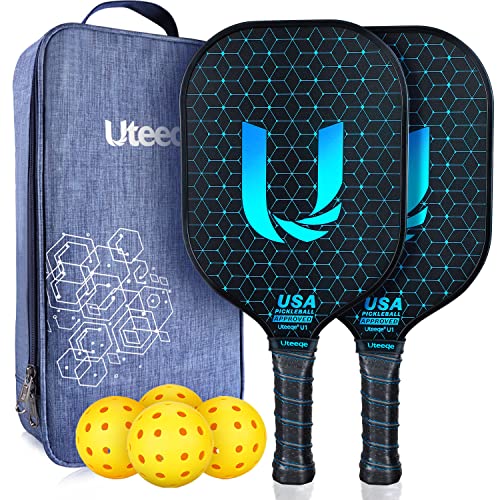
Two paddles and a bag, if you're outfitting a household

The most refined touch here, if you can pay for it
At a glance
| Product | Weight | Core Thickness | Price | |
|---|---|---|---|---|
| ONIX Graphite Z5 Graphite Carbon Fiber PickleballTop pick | 0.49 lbs | — | $66.93On sale |
 | HEAD Radical Elite Pickleball PaddleAlso in lineup | 8.1 oz | 15 mm | $43.05On sale |
| Gamma Sports 5.0 Pickleball PaddleRunner-up | 7.8 oz | 14 mm | $37.99 |
| Paddletek Tempest Wave PRO-C 14.3mm - USAPAUpgrade pick | 0.5 lbs | 14.3 mm | $149.99 |
 | Selkirk Sport Amped Control Pickleball PaddlesAlso consider | 0.7 lbs | 16 mm | $99.99 |
 | Engage Pursuit Pro EX 15.2 Pickleball PaddleAlso consider | 0.53 lbs | 16 mm | $129.99On sale |
| 2026 Upgraded Uteeqe Pickleball Paddles Set ofBudget pick | ~7.8 oz | 14 mm | $39.99 |
How we picked
Face material and texture. We compared each spec sheet to confirm what the face actually is, since "graphite" gets applied loosely to woven graphite, raw carbon and glass composites. We favored faces with a real surface texture, because that's what generates spin within the USA Pickleball roughness limit.
Core thickness. Published guidance and player reports agree that 16mm polymer cores give a larger, more forgiving sweet spot while 13mm to 14mm cores hit livelier and punish mis-hits. We wanted both kinds represented, and we noted which one each paddle is.
Weight and balance. Anything under about 7.5 ounces reacts faster at the kitchen line; 7.5 to 8.5 ounces drives better from the baseline. Listed weights and owner feedback about hand speed separate the quick paddles from the stable ones.
Grip size and length. We looked at circumference and handle length for every paddle, because a grip that's too big cuts your wrist snap and is associated with tennis elbow. Short handles rule out a comfortable two-handed backhand, so we flagged those.
Tournament approval. We checked whether each manufacturer lists the paddle as USA Pickleball approved. If you play leagues, ladders or sanctioned events, an unapproved paddle is a non-starter no matter how good it feels.
Top pickOn sale
Big sweet spot and easy control, at the cost of raw power
ONIX Graphite Z5 Graphite Carbon Fiber Pickleball
The Z5 is a wide-body graphite paddle with a forgiving face and a tennis-style handle, and it's been a fixture on rec courts for years. It won't out-hit a modern power paddle, but it's easy to control from your first session and it's approved for sanctioned play.
$66.93fromAmazonList priceThe wide-body shape is the friendliest thing you can hand a new player. At about 8.3 inches across, the face gives you room to miss. Off-center hits still go roughly where you aimed, and that's the difference between a rally that keeps going and a ball in the net. If you're still learning where the sweet spot lives, a wider paddle teaches you faster than a narrow one does.
The graphite face is why this paddle feels the way it does. It's thin and stiff, so the ball sits on it for a beat before it leaves. That extra dwell is what lets you drop a third shot short instead of floating it long. Owners moving up from a bundled starter paddle describe the same change again and again: more control, not more power.
It's approved for sanctioned play, which matters more than people expect. Onix lists the Z5 as USA Pickleball approved, so you can take it to league night, an open-play ladder or a sanctioned tournament without anyone squinting at it. Plenty of nice-feeling paddles never make the approved list. If there's any chance you'll enter an event, start with one that's already on it.
The handle is shaped like a tennis grip, which is why so many converts get along with it immediately. It's a medium-weight paddle, quick enough at the net without getting shoved around by a hard drive. And the edge guard wraps the whole face, so you can scrape it on the court chasing a ball without ruining anything.
Flaws but not dealbreakers
The core is Nomex honeycomb, not the polymer most current paddles use. It's firmer and it's louder. Play indoors in a gym and you'll hear the crack of it. If your elbow is already sore, a softer polymer core will treat your arm better.
The stock grip draws the most complaints. It's thin, and it slicks up once your hands sweat. The handle is also short enough that a two-handed backhand feels cramped. An overgrip fixes most of that, and it's the first thing we'd add. The face texture is mild too, so you won't get the spin a raw carbon paddle produces.
Runner-up
More spin off the face, with a handle that runs short
Gamma Sports 5.0 Pickleball Paddle
Gamma's Voltage 5.0 pairs a graphite face with a microbead texture that grabs the ball, so your topspin drives dip instead of sailing long. It's light and balanced, and it asks far less of your wallet than the premium control paddles do.
$37.99fromAmazonSpin is the fastest way to start winning points once you're past the beginner stage. The Voltage's face uses a microbead texture that bites the ball, and players who like rolling topspin dinks and dipping drives notice it quickly. You don't need a perfect swing for it to work. You just need to brush up the back of the ball.
At 7.8 ounces it sits right in the middle, and the middle is the safe place to be. It's light enough to get up at the net when someone speeds up the ball at your shoulder, and heavy enough that a hard drive doesn't twist it in your hand. If you have no idea what weight you want, midweight is where most players land anyway.
The core is 14 millimeters of polypropylene honeycomb, which makes this livelier than the thicker control paddles here. Balls come off it faster. That's a gift when you're driving from the baseline and a nuisance when you're trying to take pace off a reset, so it suits players who'd rather push the point than absorb it.
The cushioned honeycomb grip is tacky and soaks up sweat, and the 4 1/4-inch circumference fits most adult hands without an overgrip. At 16 inches long with a broad face, you still get a decent margin for error even though the core is on the thin side.
Flaws but not dealbreakers
The handle is short. Owners with larger hands say two-handed backhands feel awkward on it, and if that shot is part of your game, you'll want a paddle with an extended handle instead.
The other recurring complaint is that the grit wears off. Every textured face dulls eventually, but several owners say this one loses its bite sooner than they'd like — especially if you play on rough outdoor courts.
Budget pick
Two paddles and a bag, if you're outfitting a household
2026 Upgraded Uteeqe Pickleball Paddles Set of
This is a two-paddle set with textured graphite faces, a 14mm thermoformed core, a carry bag and four balls. It's the sensible way to get a couple or a family playing on real paddles instead of the flimsy ones bundled into a big-box starter kit.
$39.99fromAmazonMost people's first paddle arrives with a net or as a birthday gift, and it's usually a smooth-faced slab that plays like a cutting board. This set replaces two of those at once. You get graphite faces with actual texture, polymer honeycomb cores, reinforced edge guards, and a bag to carry the whole thing to the park.
The thermoformed, one-mold build is why we'd take this over a typical bundled starter set. Cold-pressed paddles are glued up in layers, and the layers are where they fail — first a rattle, then a hollow sound where the face has come loose. Pressing the paddle as a single mold is a meaningfully sturdier way to assemble the same parts.
It's listed as USA Pickleball approved, which matters if either of you starts taking the game seriously. Most bundled paddles aren't. You can show up to a league night or a rec ladder with this one and nobody's going to ask you to swap it out for something legal.
At roughly 7.8 ounces with a 4 1/4-inch grip, it won't fight you while you're learning. The face is semi-textured, so you'll get some spin — not the bite of a raw carbon paddle, but enough that you can feel the difference when you brush up the back of a serve.
Flaws but not dealbreakers
You're buying two identical paddles, so you can't match grip size to two different hands. If one of you has small hands and the other has large ones, that's a real compromise, and an overgrip only moves the size in one direction.
The 14mm core is thinner than the 16mm control paddles here, so the sweet spot is smaller and mis-hits feel dead in your hand. Some owners say exactly that — they'd happily trade a little pop for more forgiveness. It's a fine paddle to learn on, and one you'll probably outgrow around the 3.5 level.
Upgrade pick
The most refined touch here, if you can pay for it
Paddletek Tempest Wave PRO-C 14.3mm - USAPA
Paddletek's Tempest Wave PRO-C wraps a 14.3mm polymer honeycomb core in a unidirectional carbon face, and the result is a paddle you can genuinely place the ball with. It's built for players who already know what a good reset feels like and want more of them.
$149.99fromAmazonThe jump from a rec paddle to this one isn't about power. It's about knowing where the ball is going before it gets there. The PT-700 face plays consistently across the hitting surface, so a dink struck a little high behaves about the same as one struck clean. At 3.5 and up, that predictability is what stops you from donating points.
Paddletek rates its Smart Response core for more than 100,000 impact cycles without delamination, one of the stronger durability claims anyone makes in this segment. That's worth paying attention to, because cores usually die long before faces wear out. A soft core is what makes an old paddle feel mushy and unpredictable.
The oval face shape buys you a bigger effective sweet spot than the dimensions suggest. Paddletek stretches the hitting surface toward where players actually make contact, then adds torsional weighting so the head resists twisting on off-center balls. When your contact point starts wandering late in a long session, that stability shows up directly as points.
The handle is an ergonomic tennis-style shape with a high-tack grip, so it stays put in a sweaty hand through a third game. There's a full edge guard for the scrape you'll eventually put on it going after a low ball.
Flaws but not dealbreakers
It feels heavier in the hand than the spec implies. Owners describe it as a touch slow in hand battles at the net — excellent for driving and resetting, less nimble when someone rips one at your chest. If quick hands are your strength, the lighter picks here suit you better.
The face is unidirectional carbon fiber, not a woven graphite sheet. That's a good face, arguably a better one, but if you're specifically chasing the classic graphite feel you should know what you're getting.
A few owners report units showing up scuffed. That's a fulfillment problem rather than a design flaw, but give the face and edge guard a look before you take it to the court.
Who this is for
This guide is for anyone buying their first real paddle, or replacing the one that came in a starter kit. It's also for intermediate players around 3.0 to 3.5 who've figured out that touch at the kitchen line wins more games than power does — that's the exact reason most players switch to a graphite face. Tennis and racquetball converts will find the handle shapes here familiar. And if you're managing tennis elbow or a sore shoulder, pay close attention to weight and core thickness, since a lighter paddle with a thicker polymer core is much gentler on your arm.
Skip the upgrade if you already own a paddle you like and it doesn't rattle or sound hollow. A new paddle won't fix your third shot. Hard-hitting singles players who want maximum pop are better served by a thin-core fiberglass power paddle than by anything in this guide. We're covering single graphite-face paddles and graphite two-paddle sets — not wood starter kits, nets, balls or accessories. And because face-material labels are inconsistent across brands, we've noted where a listing describes a face differently than the marketing does.
How we picked
We worked from spec sheets, published reviews and recurring themes in owner feedback. Face material: we confirmed what each face actually is, since woven graphite, raw carbon and glass composite all get sold under the same word, and we favored faces with real texture for spin. Core thickness: 16mm cores give a bigger, more forgiving sweet spot, while 13mm to 14mm cores hit livelier and punish off-center contact. Weight: under about 7.5 ounces for hand speed at the net, 7.5 to 8.5 ounces for stability and drive power. Grip: circumference between 4.0 and 4.5 inches, erring smaller, plus handle length long enough for a two-handed backhand if you use one. Approval: the paddle has to be listed as USA Pickleball approved to be usable in organized play.
Other graphite pickleball paddles worth considering
If you want the biggest sweet spot for a dink-heavy game: The Selkirk Sport Amped Control Pickleball Paddles ($99.99) — The Selkirk Amped Control S2 is built around a 16mm X5 polymer honeycomb core, and that thickness does what thickness does — it soaks up vibration and widens the forgiving zone on the face. Owners describe a huge, stable hitting area that makes dinking noticeably easier. The grooved Ultra Durable coating is meant to hold its spin texture longer than a plain face, and the octagonal grip helps you find your hand position without looking. Two caveats. Selkirk's own listing describes this face as FiberFlex+ fiberglass rather than graphite, so confirm the material before you buy if that's what you're after. And a handful of owners report the handle cracking where it meets the paddle body.
If you want as much spin as the rules allow: The Engage Pursuit Pro EX 15.2 Pickleball Paddle ($129.99) — The Engage Pursuit Pro EX 15.2 uses a raw T700 carbon face, and raw carbon grabs the ball harder than any woven graphite sheet here. Pair that with a 16mm control core and a wide-body shape and you get a paddle that can both roll heavy topspin and absorb pace at the net; Engage's Vortex Barrier edge is designed to keep vibration down as well. It's the most expensive paddle in this guide, and that's a problem given the feedback. Multiple owners report graphics rubbing off and handles failing within months, which is a rough return on a premium paddle. Buy it if you want the spin and you're willing to lean on the warranty.
The competition
This is what our research surfaced, not a survey of everything on the market. Paddle lines turn over constantly, and manufacturers keep selling last-generation models alongside new ones. Here's the paddle we looked at closely and didn't recommend.
The HEAD Radical Elite Pickleball Paddle ($43.05) — The HEAD Radical Elite is a comfortable, well-made paddle that isn't really a graphite one. HEAD's spec sheet lists the face as a polypropylene-and-glass-fiber composite hitting surface, which plays softer and quieter than graphite but doesn't grip the ball as well, so spin is limited. It's also on the heavy side at 8.1 ounces with a narrow 4 1/8-inch grip. Owners moving up from a bundled starter paddle like it a lot, and the foam ErgoGrip handle is genuinely kind to a sore hand. If comfort and a big forgiving pop matter more to you than spin, it's a fair choice — just don't buy it expecting graphite feel.
Care and maintenance
Graphite faces don't wear out the way strings do, but the texture that gives you spin absolutely does. Wipe the face with a damp cloth after outdoor sessions, because court dust packs into the grit and dulls it fast, and let it dry before it goes back in the bag. Keep the paddle out of a hot car. Heat is what loosens edge-guard adhesive and weakens the bond between face and core, and a delaminated paddle is finished. Check the edge guard every few weeks for lifting and press it back down with edge tape before dirt works underneath. If the paddle starts to rattle or sounds hollow in one spot, the core has failed there, and no repair brings it back.
Questions we get
What's the difference between graphite and carbon fiber paddles?
Manufacturers use the two words almost interchangeably, which is why this is confusing. A woven graphite sheet tends to feel a little softer and quieter, while raw unidirectional carbon is stiffer and usually grips the ball harder for spin. Both are stiff, thin faces built for control rather than pop. Read the spec sheet instead of the product name, because a paddle marketed as graphite sometimes has a fiberglass or glass-composite face.
Are graphite paddles better for control or power?
Control. A stiff, thin face lets the ball sit on the paddle a beat longer, which is what makes drop shots and resets land where you want them. You give up some power on drives compared with a fiberglass face over a thin core. If you play the soft game at the kitchen line — and most of pickleball is that game — the trade is worth it.
What weight paddle should I buy?
Lightweight paddles run about 6.5 to 7.4 ounces and get up faster at the net, which is why they're popular with players who want quicker hands and less arm strain. Midweight paddles run about 7.5 to 8.5 ounces and put more mass behind drives without getting knocked around. If you're unsure, start midweight. You can always add lead tape later, but you can't take weight out.
What grip size should I get?
Grips run from about 4.0 to 4.5 inches in circumference, and the standard advice is to err smaller. A grip that's too large cuts down your wrist snap, costs you control, and is associated with a higher risk of tennis elbow. You can always build a small grip up with an overgrip, which adds roughly an eighth of an inch. You can't shrink one that's too big.
Are all graphite paddles approved for tournament play?
No. USA Pickleball caps surface roughness at 30 micrometers Ra, measured by profilometer, and a paddle that exceeds it is out of sanctioned play regardless of brand. More than 1,800 models are on the approved equipment registry, so there's no shortage of legal options. Check the registry before you buy if you plan to play leagues or tournaments.
How do I know when my paddle is dead?
Listen first. A rattle, or a hollow sound in one area of the face, usually means the core has separated from the face and the paddle is finished. You'll also notice balls coming off dull and short even on clean contact. A worn-smooth face is a separate, less serious problem — you'll lose spin, but the paddle is still playable.
Why you should trust us
For this guide:
- We read the manufacturer spec sheets for every paddle here and compared face material, core thickness, listed weight, length and grip dimensions side by side.
- We checked each model's stated USA Pickleball approval against the association's published equipment standards, including the 30-micrometer surface roughness limit.
- We read through owner feedback looking for recurring themes — grip complaints, texture wear, handle durability — rather than one-off reactions.
- We read owner reviews on every listing, weighted toward the critical ones, because that is where the recurring failures show up.
- We have a systematic way of automatically fetching the latest prices, so the numbers on this page stay current.
- This is a research-focused guide, so the team may not own every product listed — though we often do own the top winners, which gives us extra context for the recommendations.
- We don't accept free products, and the retailer commission never changes which product we recommend.
Sources
Best Pickleball Paddles 2026 — The Pickler, The Pickler
Pickleball Paddle Buying Guide — Pickleball Central, Pickleball Central
USAPA Approved Paddle & Equipment List, USA Pickleball Association
Best Graphite Pickleball Paddles — The Kitchen Pickleball, The Kitchen Pickleball
Pickleball Paddle Core Thickness Guide — The Kitchen Pickleball, The Kitchen Pickleball
Paddletek Tempest Wave Pro Review — The Pickler, The Pickler
ProKennex Kinetic System Technology, ProKennex
Selkirk FiberFlex & Amped Series Technology, Selkirk Sport
2025 Pickleball Participation Report, Sports & Fitness Industry Association (SFIA)
How to Choose a Pickleball Paddle — USA Pickleball, USA Pickleball Association
Amazon product listings and owner reviews for all 7 products
Manufacturer specification pages for each product
Some passages in this guide may be paraphrased with AI help. Prices are refreshed automatically.
More like this.
Continue exploring lifestyle reviews and recommendations.

The Best Adjustable Carbon SUP Paddles
A paddle is the piece of gear you actually hold for the entire session, and its weight is the thing you feel first. Every stroke means lifting the blade…

The Best Gifts for Kayakers and Paddlers
Paddling gear gets soaked, dropped, and left in a hot car. That's the job. So the gifts that land well for a kayaker are the ones that survive all three…

The Best Gifts for Pickleball Players
Pickleball is the fastest-growing sport in America, which means someone in your life has probably gone from curious to obsessed in about six months.…

The Best Portable Pickleball Nets
A portable pickleball net turns a driveway, a flat patch of grass, or a tennis court with faded lines into a place to play. That's the appeal. But the net…

The Best Pickleball Gear for Beginners
Pickleball is easy to start and hard to shop for. You show up at a public court, borrow somebody's spare paddle, have a great time, and then discover…

The Best Pickleball Shoes for Court Support
Pickleball punishes your feet in a way running never does. You're not going forward - you're shuffling sideways, stopping hard at the kitchen line, and…