The Best Attic Ladders
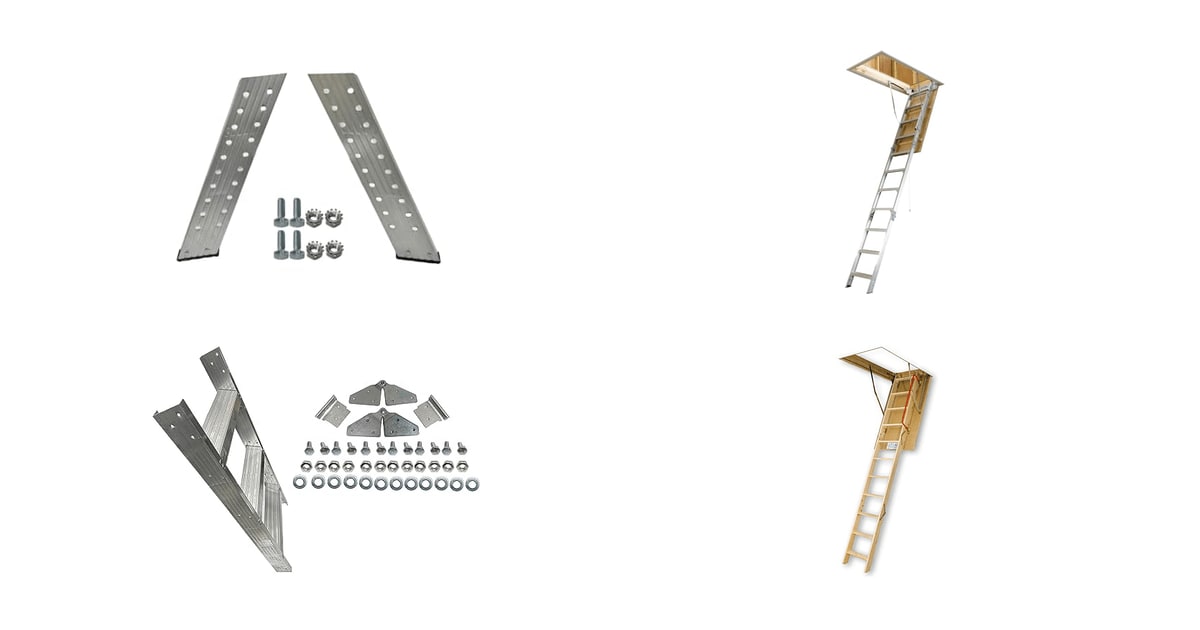
Most people climb into the attic maybe three times a year — bins up, bins down, and one trip to chase a noise. That's exactly why the ladder matters. You're carrying something bulky, you can't see your feet, and the whole assembly is hanging out of a hole in your ceiling. A good attic ladder feels boring: the door drops smoothly, the treads are wide enough for a work boot, and nothing flexes when you reach the top. A bad one makes you dread the trip.
Here's the honest part: no attic ladder is a nice piece of furniture. They all cut a hole in your insulated ceiling, so some conditioned air escapes even on the sealed ones. They all arrive heavy and awkward in a long cardboard box, and shipping damage is a recurring complaint across brands. And none of them forgive a bad measurement. Get the rough opening or the ceiling height wrong and you're either trimming the bottom section or starting over with a return label.
So shop by fit first, then by the things you'll notice later — insulation, tread width, how the door feels on the way up. Both ladders cover the common 54-inch-long opening and adjust for ordinary ceilings. If your ladder is mostly sound and just sagging, we cover the fix too. The rest comes down to whether you'd rather have an insulated wood door or a lighter aluminum frame in a wider hole. We think that the FAKRO LWS-PL is the best attic ladder for most people, and that the Werner AH2510C is the one to buy if your opening is 25 inches wide or you want aluminum instead of wood.
Everything we recommend

An insulated door and a wide ceiling range, for a bit more weight
Lighter aluminum in a wider opening, with no insulation

The fix when the door sags but the ladder is otherwise fine
At a glance
| Product | Rough opening | Ceiling height | Price | |
|---|---|---|---|---|
 | Louisville Attic Ladder Replacement Feet PK1055Also in lineup | — | — | $47.99 |
| Aluminum Folding Attic Ladder 25in W xRunner-up | 25 x 54 in. | 8 ft to 10 ft | $383.88 |
 | Louisville Attic Ladder Bottom Section PK803Also in lineup | — | — | $174.99 |
| FAKRO LWS-PL 66853 Insulated Attic Ladder forTop pick | 22 x 54 in. | 7'11" to 10'9" | $489 |
| Century Attic Ladder Replacement SpringsAlso great | — | — | $17 |
How we picked
Fit before brand. We pulled the rough opening size and the finished ceiling range off each spec sheet first. A ladder that doesn't fit your joist spacing or your ceiling height is a return, no matter how well it's built.
Load rating. We wanted a stated maximum user weight of at least 300 pounds, read as your weight plus whatever you're carrying. Where a listing doesn't publish a number, we say so rather than guessing one.
Insulation and sealing. We gave real weight to an insulated, gasketed door with a published R-value, because the Department of Energy flags the attic access as a known source of conditioned-air loss.
Treads and operation. Published specs and owner feedback both point to the same things that matter underfoot: wide slip-resistant steps, a handrail, and a balanced door that doesn't drop at your face.
Install burden. We favored assemblies that arrive mostly built and weigh less, since every pound is a pound you're holding overhead. Weight and pre-assembly came from manufacturer listings.
Top pick
An insulated door and a wide ceiling range, for a bit more weight
FAKRO LWS-PL 66853 Insulated Attic Ladder for
The LWS-PL is an insulated wood attic ladder for a 22-by-54-inch opening, and it adjusts to ceilings from 7 feet 11 inches to 10 feet 9 inches. You get an R-5.2 door, a 300-pound user rating, a handrail, and a pole that drops it from the floor.
$489fromAmazonThe insulated door is the real reason to buy this one. FAKRO lists an R-value of 5.2 for the panel, which is a long way from the bare plywood hatch it's probably replacing. The Department of Energy calls the attic access a known escape route for conditioned air and recommends insulating and weatherstripping it. If you've ever felt a draft off your hallway hatch during a cold snap, that's the problem this ladder is built around.
The adjustable range is generous. FAKRO rates it for finished ceilings from 7 feet 11 inches up to 10 feet 9 inches, which covers nearly every house with a standard 8-foot ceiling and most with 9-footers. You trim the bottom section to length during install, and owners with ceilings near the low end report cutting off a good chunk of it. Measure before you order, not after the box lands in your driveway.
Maximum user weight is 300 pounds. Read that as you plus whatever's in your arms, not just you. A 200-pound adult carrying a 40-pound tub of winter coats is still comfortably inside the margin. For context, 300 pounds lines up with the Type IA step on the American Ladder Institute's scale, though attic ladders aren't always rated under that same scheme — so treat the manufacturer's number as the one that counts.
Installation is the part people worry about, and the design helps here. The door is balanced, so it opens and closes without snapping down at you, and a pole latches and releases it from floor level. Owner feedback describes it as largely pre-assembled out of the carton, with the handrail included. It's still a two-person job to lift 65 pounds into a ceiling, and cutting a brand-new opening is carpenter work.
Flaws but not dealbreakers
The wood frame is the compromise you accept for the insulation. Wood is heavier than aluminum, it can swell a little in a humid attic, and at 65 pounds this is the heavier of our two ladders to wrestle overhead. The 22-inch width is also tight if you routinely haul wide boxes up and down.
Shipping is the recurring sore spot. Owner feedback repeatedly mentions sections arriving dented or cracked, because the carton is thin for something this long and heavy. Inspect every piece before your helper goes home. And the two-year warranty is short for a fixture you expect to outlast the roof.
FAKRO backs the LWS-PL with a two-year warranty.
Runner-up
Lighter aluminum in a wider opening, with no insulation
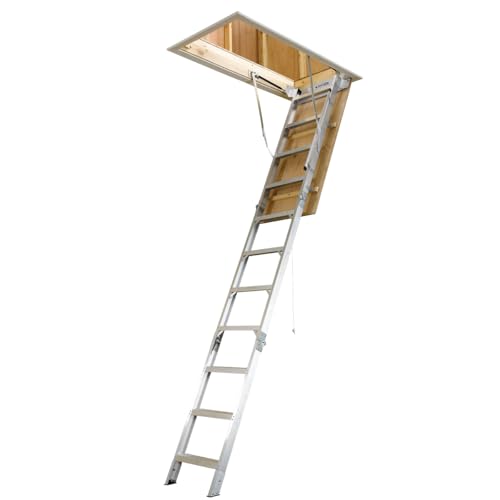
Aluminum Folding Attic Ladder 25in W x
The AH2510C is a folding aluminum ladder for a 25-by-54-inch opening and ceilings between 8 and 10 feet. At 52 pounds it's lighter than our top pick, it won't warp in attic heat, and the extra width makes carrying a storage tub up noticeably easier.
$383.88fromAmazonThis one fits a 25-inch-wide by 54-inch-long opening, roughly two and a half inches wider than our top pick. That sounds trivial until you're going up with a plastic tub in both hands. Your elbows clear, your shoulders clear, and you stop turning every box sideways at the hole. If your existing hatch is already 25 inches, this is the straightforward swap.
Aluminum is the better material for something that lives in an attic. It doesn't swell, warp or split the way a wood rail can after a few summers at 130 degrees. It's lighter, too — 52 pounds against 65 for the FAKRO — which matters a lot on install day. Werner lists slip-resistant treads with extra width, plus feet that won't scuff up your hallway floor on the way down.
The ceiling range runs 8 to 10 feet, so this is aimed squarely at ordinary houses rather than tall entryways. Werner describes the opening and closing action as smooth and the entry as wide. There are sibling models, the AH2510 and AH2510B, if a retailer stocks one of those instead. Check which suffix you're actually buying, since those variants usually track small hardware or finish differences.
Flaws but not dealbreakers
There's no insulated door here, and that's the real trade against our top pick. If you deal with hard winters or brutal summers, plan on adding rigid foam and weatherstripping to the panel yourself — the Department of Energy recommends exactly that for any attic hatch. Budget an afternoon and a utility knife.
Werner doesn't publish a load rating or a warranty term in this listing, which is frustrating for something you stand on at ceiling height. The 8-foot floor of the ceiling range also makes it a poor match for a very low ceiling, where you'd be cutting into the bottom section more than the design wants.
Also great
The fix when the door sags but the ladder is otherwise fine
Century Attic Ladder Replacement Springs
These are replacement springs for an existing attic ladder, sold as a pair. If your door drops hard, hangs open, or takes two hands to close, a tired spring is usually the culprit — and swapping it is a far smaller job than cutting a new opening.
$17fromAmazonMost attic ladders die at the springs, not the rails. The wood and the hinges usually outlast the tension. What goes is the spring: the door starts sagging open, or it slams the last few inches, or you have to shove it up with a broom handle. If that's your ladder, you don't need a new one. You need a pair of springs and an hour.
You replace them in pairs, and that's how they're sold here. Even if only one side feels weak, the other is the same age and has done the same number of cycles. Matching springs also keeps the door pulling evenly, so it doesn't rack in the frame or rub on one corner of the trim.
Fit is everything with a part like this. Attic ladder springs aren't universal — length, hook style and tension vary by brand and model, and the wrong pair will either not reach or fight the door. Find the model number stamped on the frame or the inside of the panel before you order, and match it against the listing.
Treat the install with respect. A ladder spring stores real force, and it can get away from you if you unhook it with the door in the wrong position. Follow the manufacturer's sequence, keep your face out of the arc, and have a helper hold the door. It's a twenty-minute job done carefully, and a much worse afternoon done fast.
Flaws but not dealbreakers
The obvious limit: this fixes a door, not a ladder. If your rails are cracked, the hinges are loose, or the bottom section is bent, new springs just make a worn assembly feel tight for a while.
The listing is also thin on detail — no stated tension, no published compatibility chart — so you're leaning on your own model number and whatever the retailer can confirm about fitment. That's real return risk if you guess.
Who this is for
This guide is for homeowners replacing a tired pull-down hatch, or finally adding real access to an attic they currently reach with a step stool and some optimism. If you store anything up there — bins, luggage, the fake tree — a proper ladder changes how often you're willing to make the trip. It's also for anyone in a cold or hot climate who's noticed their hallway hatch drafting or sweating. Both ladders adjust to standard ceilings and drop into a 54-inch-long opening.
It's not for everyone. If your attic has less than about 30 inches of headroom, or your ceiling runs taller than roughly 10 feet 9 inches, you're into extended or custom territory and neither ladder will reach. We also cover a few of the repair parts that turn a sagging door back into a working ladder. We're not covering plain scuttle hatches with no ladder, exterior roof access, or full attic staircases. And if you can't safely hold 60-odd pounds overhead with a helper steadying it, hire the install out instead — this is one job where a shortcut outlasts you in all the wrong ways.
How we picked
Fit: We started with the rough opening and the finished ceiling height on each spec sheet, because the wrong dimensions make everything else moot. Load rating: We looked for a stated maximum user weight of at least 300 pounds, counting you plus your cargo. Insulation: We gave credit to a gasketed, insulated door with a published R-value, since the Department of Energy treats the attic hatch as a known leak point. Treads and operation: We wanted wide, slip-resistant steps, a handrail, and a counterbalanced door you can control from the floor. Install burden: Lighter assemblies that ship mostly built are far kinder to a two-person afternoon, so weight and pre-assembly counted.
The competition
This is what our research surfaced, not a map of everything on the market. Attic ladders are a category where availability moves around constantly, and several widely cited aluminum and wood models from the big ladder brands didn't come through as listings we could confirm and point you to. The rest of what we found were repair parts rather than complete ladders, and two of those are below. If your opening is 30 inches wide, or your ceiling is taller than about 10 feet 9 inches, you'll need to shop beyond this short list.
The Louisville Attic Ladder Replacement Feet PK1055 ($47.99) — These are replacement feet for Louisville attic ladders, sold as a pair. Cracked or missing feet are a genuine problem — they're what keeps the bottom of the ladder from skating on a hardwood hallway — so it's a sensible part to keep on hand. It lost to our spring pick only because a worn foot is a nuisance, while a failed spring is the thing that makes you stop using the attic altogether. Buy it if you've got a Louisville ladder and your floor is collecting scuffs.
The Louisville Attic Ladder Bottom Section PK803 ($174.99) — This replacement three-step bottom section fits specific Louisville Elite ladders — the piece that takes the abuse when someone steps off the last tread sideways. If yours is bent or a step has split, it's the repair that saves an otherwise fine ladder. It's also the narrowest fit of anything here, matched to particular models, so check your model number twice before you order. For anyone outside that list, a full replacement ladder is the realistic path.
Installation notes
Measure twice before you order. You need the rough opening between joists — 22.5, 25.5 and 30 inches wide by 54 inches long are the common sizes — and the finished floor-to-ceiling height, which determines how much you'll trim off the bottom section. Clear the attic side of boxes and loose insulation first so the door has room to swing. Both ladders ship in one long, heavy carton, so line up a second person and a sturdy platform before delivery day. If you're cutting a new opening instead of swapping into an existing one, the header framing is structural, and that's the moment to call a carpenter. Code sets a minimum attic access of 22 by 30 inches where there's 30 inches or more of headroom, but confirm against your adopted local code.
Questions we get
What size rough opening do I need for an attic ladder?
The common framed openings are 22.5, 25.5 and 30 inches wide by 54 inches long, which line up with typical joist spacing. Our top pick takes a 22-by-54-inch opening and the Werner takes 25 by 54. Measure your existing hole between the framing members, not the trim, and buy to that number.
How do I measure for an attic ladder?
You need two numbers. First, the rough opening width and length between the framing in your ceiling. Second, the finished floor-to-ceiling height, which tells you whether a ladder's adjustable range covers your house and how much of the bottom section you'll cut off. Write both down before you shop.
Aluminum or wood — which is better?
Aluminum is lighter, won't warp or split after years of attic heat, and usually carries a higher published capacity. Wood is the material you'll find on most insulated doors, including our top pick, and it feels more solid underfoot to some people. If energy loss is your concern, go insulated; if weight and longevity are, go aluminum.
Can I install an attic ladder myself?
If you're swapping into an existing opening of the right size, two competent DIYers can usually handle it in an afternoon. These units weigh 50 to 65 pounds and have to be held in a ceiling while you fasten them, so this isn't a solo job. Cutting a new opening means altering framing, and that part belongs to a carpenter.
How much weight can an attic ladder hold?
Our top pick lists a 300-pound maximum user weight. That figure includes everything you're carrying, not just your body weight, so subtract for the tub of books in your arms. The Werner listing doesn't publish a rating, which is worth asking the retailer about if you're near the limit.
Do attic ladders leak air, and can I stop it?
Yes, every one of them leaks to some degree, because the door interrupts your ceiling insulation. The Department of Energy recommends insulating and weatherstripping attic access as a basic fix. An insulated, gasketed door like the LWS-PL's R-5.2 panel gets you most of the way there; on an uninsulated panel you can add rigid foam and a weatherstrip gasket yourself.
Why you should trust us
For this guide:
- We read manufacturer spec sheets and listing details for rough opening sizes, adjustable ceiling ranges, stated load ratings, R-values and assembly weights, and we flag where a listing doesn't publish a number.
- We reviewed owner feedback themes for our picks, watching for repeated complaints about fit at low ceilings, shipping damage and door hardware.
- We checked attic access requirements in the International Residential Code and the Department of Energy's guidance on insulating and weatherstripping attic hatches.
- We read owner reviews on every listing, weighted toward the critical ones, because that is where the recurring failures show up.
- We have a systematic way of automatically fetching the latest prices, so the numbers on this page stay current.
- This is a research-focused guide, so the team may not own every product listed — though we often do own the top winners, which gives us extra context for the recommendations.
- We don't accept free products, and the retailer commission never changes which product we recommend.
Sources
Best Attic Ladders - Family Handyman / Popular Mechanics / This Old House style roundups, To be located during verification
Louisville Ladder Attic Ladder Product Specs, Louisville Ladder (manufacturer)
Werner Attic Ladders, Werner Co. (manufacturer)
Fakro Attic Ladders (Insulated / Thermo), Fakro USA (manufacturer)
2021 International Residential Code, Section R807 Attic Access, International Code Council
ENERGY STAR / DOE guidance on sealing and insulating attic access, U.S. Department of Energy
OSHA / ANSI A14 ladder safety guidance, OSHA
American Ladder Institute: ladder duty ratings and safety, American Ladder Institute
Amazon product listings and owner reviews for all 5 products
Manufacturer specification pages for each product
Some passages in this guide may be paraphrased with AI help. Prices are refreshed automatically.
More like this.
Continue exploring home reviews and recommendations.
The Best Agility Ladders, Cones, and Speed Training Gear
Footwork gear is cheap, portable, and easy to overthink. A ladder, a stack of cones, and a few low hurdles cover almost everything a youth coach, a high…

The Best Attic Stair Insulation Covers
A pull-down attic stair is a hole in your ceiling with a thin piece of plywood over it. That panel does almost nothing thermally - think single-pane…

The Best Solar Attic Fans
Your attic is the hottest room in the house, and nobody lives in it. On a clear summer afternoon the air up there can push past 150°F, and that heat…

The Best Cooling Pillows for Hot Sleepers
If you wake up at 3 a.m. flipping your pillow to find the cool side, you already know the problem. Your head and neck sit against the same patch of fabric…

The Best Leaf Blowers
Leaf blowers get judged on two numbers, and only one of them matters most days. CFM is air volume - how much leaf litter you can push across a lawn in one…

The Best Stainless Steel Mixing Bowl Sets
A mixing bowl is the thing you grab before you've decided what you're making. You crack eggs in it, toss a salad in it, let dough rise in it, then wash it…