The Best Bluetooth Trackers for Luggage and Keys
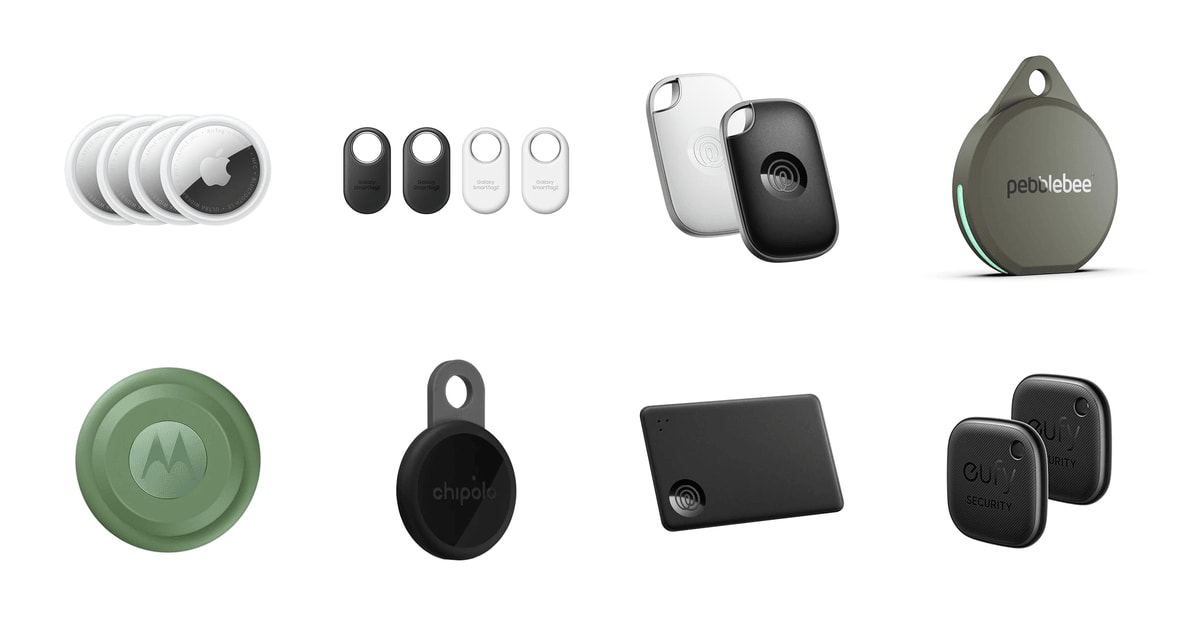
A Bluetooth tracker earns its keep in about four seconds — the moment you tap your phone, hear a chirp from under the couch cushion, and stop tearing the house apart. For luggage, the payoff is different but bigger. You're standing at a carousel watching identical black bags go by, and your phone tells you whether yours actually made the flight. That's the whole pitch. The hardware is nearly disposable, so what you're really buying is the network of strangers' phones that quietly report your bag's position back to you.
Here's the part every box downplays: none of these are GPS devices. Not one. Each tracker sits silently until some passerby's phone wanders close enough to relay a location to the cloud. In a busy airport that happens constantly and invisibly. On a rural highway, in a freight terminal at 3 a.m., or in a country where almost nobody carries your phone's brand, the last update can be hours stale — or never arrive. If you need live location on a remote road, you want a cellular GPS tracker instead.
So the decision comes down to which phone is in your pocket, not which tracker has the nicest spec sheet. An Apple tracker in an Android household is a plastic coin. We think that the Apple AirTag (2nd Generation) 4-Pack is the best Bluetooth tracker for most people, and that the Motorola Moto tag is the one to buy if you carry an Android phone.
Everything we recommend
The most reliable network, if you carry an iPhone
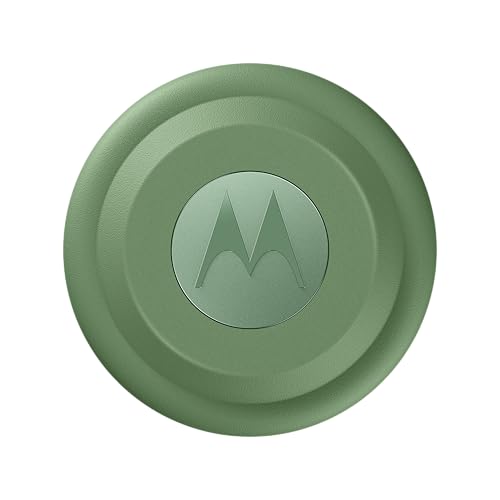
The Android answer, with the same precision arrow

Full Apple network coverage for a fraction of the cost

A very loud siren and a charger instead of coin cells
At a glance
| Product | Network | Battery Life | Price | |
|---|---|---|---|---|
| Apple AirTagTop pick | Find My | 1+ Year | $89On sale |
 | Samsung Galaxy SmartTag2Also consider | SmartThings Find | Up to 500 Days | $84.99On sale |
 | Life360 Tile Pro - Powerful Bluetooth TrackerAlso consider | — | — | $42.99On sale |
| Pebblebee Clip 5 Bluetooth Tracker Tag forAlso great | — | Up to 12 Months | $34.99 |
| Motorola Moto tagRunner-up | Find My Device | 1 Year | $20.74 |
 | Chipolo Loop - Rechargeable Bluetooth Tracker forAlso consider | — | Up to 1 Year | $39 |
 | Life360 Tile Slim - Wallet FinderAlso consider | — | — | $24.99 |
| eufy Security by Anker SmartTrack LinkBudget pick | Find My | — | $19.99On sale |
How we picked
Network reach. We compared the published size and geography of each finding network, since a tracker with a thin network in your region will report stale locations no matter how good the hardware is. Apple's is the densest globally, with Google's expanding and Tile's the thinnest internationally.
Precision Finding. We separated trackers with ultra-wideband chips from Bluetooth-only models, because the difference between a directional arrow and a map pin is the difference between one minute and ten at a baggage carousel. Manufacturer specs and published reviews agree the gap is real.
Water and dust rating. We treated IP67 as the floor for anything going into checked luggage, based on the tarmac rain and conveyor handling a bag actually sees. Anything advertised only as splash resistant didn't qualify for a pick.
Battery and power. We looked at rated runtime and whether the cell is user-replaceable, since a sealed battery means replacing the whole unit. Owner feedback about tags going quiet after a year weighed here too.
Attachment and fit. We checked whether each tracker attaches to a keyring or slides into a luggage tag without buying an accessory, and whether owners found the form factor practical for the place they wanted it.
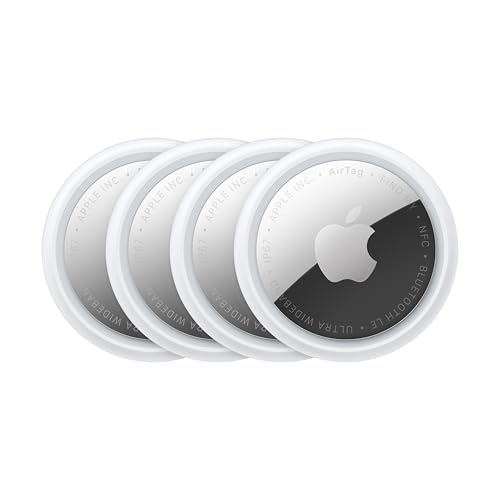
Top pickOn sale
The most reliable network, if you carry an iPhone
Apple AirTag
Apple's second-generation AirTag pairs ultra-wideband Precision Finding with the largest passive finding network in the world. If you own an iPhone, nothing else gets you closer to your bag faster — and the four-pack covers a whole family's luggage.
$89fromAmazonList priceIf you have an iPhone, the network settles this. Apple's Find My draws on billions of Apple devices worldwide, which means your bag gets reported more often, from more places, than it would on any competing network. That gap isn't marketing. It's why owners who run an AirTag and a rival tag in the same suitcase so often report the AirTag pinging first.
Precision Finding is the other half. Once you're within range, the AirTag's ultra-wideband chip turns your screen into an arrow with a distance readout, walking you to within a foot or two of the bag. Standard Bluetooth trackers just drop a pin and wish you luck. In a crowded baggage claim, that's the difference between spotting your bag and circling the carousel twice.
Apple says the second-generation speaker is 50 percent louder than the original, with a new chime, and owners back that up — it carries through a zipped suitcase from across a hotel room. Precision Finding now works from an Apple Watch too, which matters more than it sounds when your hands are full of boarding passes and a coffee.
Setup is genuinely 30 seconds. You hold the tag near your iPhone, tap once, name it, done. The battery is a standard CR2032 you can buy at any pharmacy, it runs for more than a year, and your phone tells you when it's getting low. No charging cable to remember, no subscription, no second app.
Flaws but not dealbreakers
The disc shape is the daily annoyance. There's no hole, no loop, no way to attach it to anything without buying a keyring holder or luggage tag sleeve separately. Budget for that accessory, because the tag alone just rattles loose in a pocket.
Android users get nothing at all here — not partial support, not a stripped-down app. Nothing. And a few owners note that when the tag is out of Bluetooth range, updates can lag behind reality by a while, which is a network limitation rather than a defect but still worth expecting.
Apple covers the AirTag with its standard one-year limited hardware warranty.
Runner-up
The Android answer, with the same precision arrow
Motorola Moto tag
The Moto tag runs on Google's Find My Device network and works with any Android phone, not just Motorola's. On a UWB-capable handset it gives you the same step-by-step directional guidance that makes the AirTag so good at baggage claim.
$20.74fromAmazonThis is the closest thing Android has to an AirTag. It plugs straight into Google's Find My Device network, so there's no extra app and no third-party account. Attach it, open the app already on your phone, and it's tracked. Owners with recent Pixels consistently call it the best Find Hub tag they've used.
The ultra-wideband chip is the reason to pick this over a cheaper Bluetooth-only tag. Pair it with a UWB-capable Android phone and you get the same arrow-and-distance guidance instead of a map pin, which is exactly what you want when you're standing in a hall full of black roller bags.
It's rated IP67 for water and dust, so tarmac rain and a wet conveyor belt aren't a problem. The battery is a user-replaceable one-year cell. And at roughly the footprint of an AirTag, it fits the same enormous catalog of third-party keyrings and luggage sleeves.
Here's the honest comparison: on routes through Western Europe, Japan and Australia, where iPhones are everywhere, Apple's network still updates more often. Some Moto tag owners in mid-sized cities report going long stretches between pings. If you're on Android, this is still your best option — just calibrate your expectations for how fresh the location will be.
Flaws but not dealbreakers
Google's network density is the weak link, and owner feedback reflects it more than the hardware does. A few report frustratingly infrequent updates, and a handful describe software bugs in the Find Hub pairing flow. The tag itself gets good marks; the plumbing behind it is less consistent than Apple's.
It's sold as a single unit, so covering three bags means buying three. And the step-by-step guidance only appears on UWB-equipped Android phones — on an older handset you're back to a map pin.
Motorola provides a one-year limited warranty on the Moto tag.
Budget pickOn sale
Full Apple network coverage for a fraction of the cost
eufy Security by Anker SmartTrack Link
The eufy SmartTrack Link taps the same Apple Find My network as an AirTag and adds free left-behind alerts, all at a small share of Apple's per-tag cost. You give up the precision arrow, but for tagging several bags at once that's an easy trade.
$19.99fromAmazonList priceIf you're covering four bags for a family trip, the math here is hard to argue with. Each SmartTrack Link costs a fraction of an AirTag and reaches the identical Find My network — the same billions of Apple devices, the same map, the same app you already have. For breadth of coverage per dollar, nothing else in this roundup is close.
The trade-off is precision, not coverage. There's no ultra-wideband chip, so the app navigates you to a pin on a map rather than an arrow pointing at your bag. Within Bluetooth range you ring it and follow the sound. In a quiet hallway that's fine; in a loud baggage hall it means more hunting.
Two small extras punch above their weight. The free left-behind alert pings you when you walk away from a tagged item, no subscription attached — a feature that would cost money elsewhere. And a double-tap on the tag rings your iPhone even in silent mode, which is the feature you'll actually use most at home.
It's IP67-rated, so it handles rain on the tarmac and a wet cargo hold. There's also a QR code on the back: whoever finds your bag can scan it and see only the contact details you chose to share, which is a nicer recovery path than hoping someone knows what a tracker is.
Flaws but not dealbreakers
Reliability is the soft spot. Some owners report a unit going quiet after a year or so, and a few describe tags alarming on their own or simply failing to be detected while an AirTag in the same suitcase reported normally. Buying a two-pack softens that risk, but it's a real pattern worth knowing.
There's no keyring hole, so you'll need an accessory to attach it to anything. And it's iOS-only in the strictest sense — an Android phone can't set it up or see it at all.
Also great
A very loud siren and a charger instead of coin cells
Pebblebee Clip 5 Bluetooth Tracker Tag for
The Pebblebee Clip 5 works with either Apple Find My or Google Find Hub, recharges over USB-C instead of eating coin cells, and packs a 130-decibel siren. It's the flexible pick for a household split between iPhones and Android phones.
$34.99fromAmazonPick this if your household runs on both platforms. You choose Apple Find My or Google Find Hub when you pair each tag, so one order can cover an iPhone user's keys and an Android user's backpack. No other tracker here gives you that choice at setup.
The siren is the party trick, and it works. At 130 decibels with a strobing LED, it cuts through an airport concourse in a way the polite chirp of most tags doesn't. Owners consistently single out the volume and the flashing light as the reason they kept it over quieter tags.
USB-C charging solves the failure mode nobody plans for: a coin cell that dies silently between trips. One charge is rated for up to a year, and you top it off next to your earbuds instead of hunting down a CR2032 in an unfamiliar airport. The packaging is recyclable and there's no battery to throw away, if that matters to you.
Alert Safety Mode is the unusual addition — rapid presses fire the siren, flash the LED, and share your location with a circle of contacts you've chosen. There's a free tier, with real-time sharing behind a paid upgrade. It's a genuine safety feature rather than a checkbox.
Flaws but not dealbreakers
Owner feedback on this one is more divided than on the bigger brands. Some report reliable pings on the Android network; others describe location updates that never arrived without the paid subscription, and several report getting no response at all from customer support. That's the risk of a smaller company — fewer places to turn when something goes wrong.
The network choice is locked per tag, not per use, so a tag paired to Find My can't be handed to an Android user later without re-pairing. It's rated IP66 rather than IP67, a notch below most of this group. And the clip shape is bulkier than a flat card if you wanted it in a wallet.
Who this is for
Buy a tracker if you check bags, misplace keys, or want to know whether your suitcase made the connection before you've left the airport. The reason to buy is peace of mind and speed of recovery, not theft prevention — a tag tells you where something was recently, which helps you and the airline far more than it helps you confront anyone. Get one per bag you'd hate to lose, and put one on your keys while you're at it.
Skip these entirely if you need live location in remote places: shipping high-value freight, tracking equipment on a job site off the grid, or following a vehicle across empty country. Passive Bluetooth tracking needs other people's phones nearby, and that's exactly what those situations lack. Buy a cellular GPS tracker with a data plan instead. This guide also sticks to small item trackers for luggage, keys and wallets — not pet collars with cellular radios, not vehicle trackers, and not the accessories and holders that attach them.
How we picked
We ranked these on five things. Network reach: how many phones are quietly relaying your tag's position, and where in the world they are, since that governs how fresh your location is. Precision Finding: whether an ultra-wideband chip can hand you a directional arrow instead of a pin on a map, which is what actually matters in a crowded baggage hall. Water and dust: IP67 as the minimum for anything riding in a checked bag through tarmac rain. Battery: rated runtime, and whether you can swap the cell yourself or have to replace the whole tag. Attachment: whether it clips to your keys or slides into a luggage tag out of the box, or whether you'll be buying an accessory to make it useful.
Other bluetooth trackers for luggage and keys worth considering
If you carry a Samsung Galaxy flagship: The Samsung Galaxy SmartTag2 ($84.99) — The Galaxy SmartTag2 is built around the longest rated battery life here — up to 500 days on a coin cell, and up to 40 percent longer in Power Saving Mode. On a recent Galaxy flagship you get UWB precision and Compass View directions, and the tag is IP67-rated for checked luggage. It works on any Android 11 or later device, but the precision features are reserved for Samsung's own flagships, so on a Pixel you're paying for a chip you can't fully use. Owners also report that SmartThings Find updates thin out fast once a tag leaves the house, which is the network gap in action.
If you search big open spaces: The Life360 Tile Pro - Powerful Bluetooth Tracker ($42.99) — The Tile Pro's direct Bluetooth range runs to 400 feet in open air, roughly four times what a standard tag manages, which genuinely helps in a parking garage, a warehouse, or a golf course. It works across iOS and Android, the speaker is loud, and it adds an SOS button that quietly alerts your Life360 contacts. The catches: the Tile network is the thinnest of the major three once your tag is out of direct range, location history and smarter alerts sit behind a Life360 subscription, and it's bulkier than everything else here.
If you want it invisible in a wallet or luggage tag: The Life360 Tile Slim - Wallet Finder ($24.99) — At about a tenth of an inch thick, the Tile Slim is the only tracker here that disappears into a passport holder, a luggage tag window, or a slim bifold without a bulge. That's its whole reason to exist, and owners who bought it for a wallet are overwhelmingly happy. But the battery is sealed, so in roughly three years you replace the entire unit rather than a cell. There's no UWB, direct range is shorter than the Pro's, and real-world range drops hard through walls.
If you never want to buy another coin cell: The Chipolo Loop - Rechargeable Bluetooth Tracker for ($39) — The Chipolo Loop charges over USB-C and runs about a year per charge, and its built-in silicone loop attaches to keys or a zipper pull without any accessory. It works with either Apple Find My or Google Find Hub, picked at setup, and the 125-decibel alarm is loud enough to find keys two rooms away. It's Bluetooth-only, though — no arrow, just a pin — and it's the priciest single tag in this group. Some owners report inconsistent ringing even from a few feet away, and a few flag the rubber loop as a weak point over time.
The competition
Every tracker in this guide made it here because it surfaced repeatedly in published reviews, spec comparisons and owner discussion of luggage and key finding. That's a slice of the market, not the whole of it — plenty of no-name tags and regional brands never came up, and we didn't write about what we couldn't research. The four products above are the ones worth a look if the picks don't fit, and each lost out for a specific reason rather than being bad.
Living with a tracker
Put the tag where a handler won't find it and where water won't sit on it — an inside pocket of the suitcase lining works better than the outside tag sleeve. Before you check the bag, ring the tracker once to confirm it's awake and paired. When you land, note the last-known location before you leave the terminal, because that's the pin the airline will actually work from if the bag went astray. Change coin cells on a schedule rather than waiting for the low-battery alert, and top up rechargeable tags the night before a trip. If you loan a bag out, share the tag's location temporarily rather than handing over your account. Airlines increasingly accept a tracker's location directly in a lost-bag claim, so keep a screenshot.
Questions we get
Do airlines allow Bluetooth trackers in checked bags?
Yes. Every tracker here is permitted in carry-on and checked baggage by major airlines, including US carriers. Bluetooth tags are low-power radio devices and aren't treated as active transmitters under aviation rules. Cellular GPS trackers are a different category with different rules, so check with your airline before flying with one.
What's the difference between a Bluetooth tracker and a GPS tracker?
A Bluetooth tracker is passive — it waits for a stranger's phone to walk by and relay its position, and it costs nothing to run. A GPS tracker has its own cellular radio, reports directly from anywhere with signal, and needs a monthly data plan. For airport-to-airport travel, Bluetooth is plenty. For freight, remote equipment or anything you need to watch in real time, buy GPS.
Will a tracker find my bag if no phones are nearby?
No, and this is the limitation to understand before you buy. Every tracker in this guide depends on a nearby phone running the right app to push a location to the cloud. In rural areas, quiet freight terminals or regions where almost nobody carries your phone's brand, the location you see may be many hours old or missing entirely. That's how the technology works, not a defect in any one brand.
Is there a tracker that works with iPhone and Android at once?
Not on a single tag. The Pebblebee Clip 5 and Chipolo Loop are the most flexible — you choose Apple Find My or Google Find Hub when you pair each one — but neither runs both networks simultaneously. The Tile Pro and Tile Slim work across both phone platforms through Tile's own network without asking you to pick an ecosystem, though that network is the thinnest of the three.
Can someone use a tracker to follow me without my knowing?
Every major brand now implements the cross-platform unwanted-tracking alerts that Apple and Google specified together. If an unfamiliar tag of any supported brand travels with you for a while, your iPhone or Android phone warns you. You can then make the tag play a sound to find and remove it. It isn't perfect, but the floor is much higher than it used to be.
How do I replace an AirTag battery?
Press down on the stainless steel back and rotate it counter-clockwise, lift the cover off, and drop in a fresh CR2032 with the positive side facing up. Put the cover back and twist it clockwise until it seats. Apple rates the cell for more than a year, and your iPhone will nudge you when it's running low.
Do these work overseas?
Yes, with real variation by region. Apple's network is densest across Western Europe, Japan, South Korea and major Asian cities, so an AirTag tends to report more often on those routes. In places where Android dominates, Google's network can be the more responsive one. Tile's international coverage is the thinnest of the three. Wherever you're headed, note your bag's last-known location before you leave a familiar region.
Why you should trust us
For this guide:
- We read manufacturer specifications and published reviews for all eight trackers, comparing network coverage, ultra-wideband support, water resistance ratings and rated battery life.
- We reviewed owner feedback across each listing to identify recurring failure modes — silent battery death, stale location updates, weak attachment points — rather than relying on spec sheets alone.
- We did not use, install or measure any of these trackers ourselves.
- We read owner reviews on every listing, weighted toward the critical ones, because that is where the recurring failures show up.
- We have a systematic way of automatically fetching the latest prices, so the numbers on this page stay current.
- This is a research-focused guide, so the team may not own every product listed — though we often do own the top winners, which gives us extra context for the recommendations.
- We don't accept free products, and the retailer commission never changes which product we recommend.
Sources
Amazon product listings and owner reviews for all 8 products
Manufacturer specification pages for each product
Some passages in this guide may be paraphrased with AI help. Prices are refreshed automatically.
More like this.
Continue exploring electronics reviews and recommendations.

The 7 Best Portable Bluetooth Keyboards for Travel in 2026: Lightweight, Multi-Device Picks
Expert-tested portable Bluetooth keyboards for travel in 2026. Compare weight, battery life, and multi-device pairing across 7 top picks from Logitech, Keychron, nuphy, and more.

The Best Car Bluetooth and Aux Adapters
Most cars on the road still have a stereo that can't talk to your phone. If yours has an aux jack, a small receiver bridges that gap without touching your…

The Best Bluetooth Label Makers
Most of us buy a label maker for one project - the pantry, the craft bin, the cable spaghetti behind the TV - and then keep using it for years. That's why…

The Best Bluetooth Multi-Device Keyboards
A multi-device keyboard earns its keep in the small moments. You're typing an email on your work laptop, a Slack message pops up on your personal desktop,…

The Best Motorcycle Bluetooth Intercoms
A good intercom changes what a ride feels like. Instead of pulling over at every fork to shout through a raised visor, you just talk. You hear…

The Best Carry-On Luggage
A carry-on is the one bag you actually live with. You lift it into a bin, drag it over cobblestones, and shove it under the seat when the flight fills up.…