The Best Motorcycle Bluetooth Intercoms
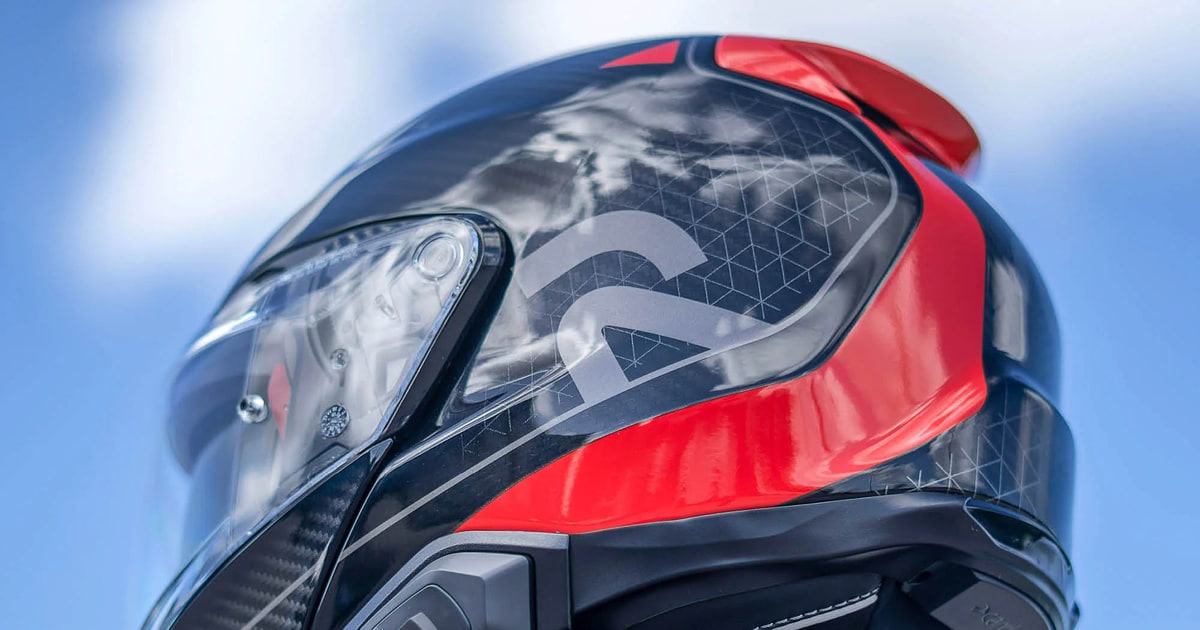
A good intercom changes what a ride feels like. Instead of pulling over at every fork to shout through a raised visor, you just talk. You hear turn-by-turn directions in your ear, take a call from home at a gas stop, and warn the rider behind you about gravel before they hit it. For two-up riding it's even simpler — your passenger can finally say something without tapping your shoulder. The good ones fade into the background, which is exactly what you want at 70 mph.
Here's the honest part: none of these fully beat wind. Above roughly 70 mph, air noise becomes the dominant sound in any helmet, and every unit here degrades to some degree. Noise-suppression algorithms help, but they don't erase physics. Voice commands get less reliable the faster you go, so you'll still reach for a button or dial. And cross-brand mixing is a real headache — Sena and Cardo talk to each other only through basic Bluetooth, two riders at a time, with mesh switched off.
Range claims deserve the same skepticism. Manufacturer numbers assume flat, open terrain with nothing in the way, and real riding gives you hills, trees, and riders drifting apart. Plan on a good bit less than the box promises. Mesh systems soften this by relaying through other riders, which is why a big group often stays connected further than any single unit's spec suggests. We think that the Sena 50S is the best motorcycle Bluetooth intercom for most people, and that the Cardo PACKTALK Edge is the one to buy if you'd rather talk to your intercom than poke at it.
Everything we recommend

Mesh and phone audio at the same time, without compromise

Better voice control and wind handling, less connection flexibility
Real mesh for a big group, for meaningfully less money

Simple, reliable Bluetooth for two-up and small groups
At a glance
| Product | Pack Size | Intercom Type | Price | |
|---|---|---|---|---|
| Sena 50S Motorcycle Jog Dial Communication BluetoothTop pick | Single Pack | Mesh | $319.95On sale |
| Cardo PACKTALK Edge Motorcycle Bluetooth Communication SystemRunner-up | Single Pack | Bluetooth | $395.96On sale |
| Sena 30K Motorcycle Bluetooth Headset Mesh CommunicationBudget pick | Dual Pack | Mesh | $462.72 |
 | Cardo Boom Microphone CradleAlso in lineup | Single Pack | — | $54.95 |
| Sena 20S EVO Motorcycle Bluetooth Headset CommunicationAlso great | Single Pack | Bluetooth | $208.20On sale |
How we picked
Network type. We separated true mesh systems from traditional Bluetooth conference units, because they behave completely differently once a group spreads out. Mesh was a requirement for any unit we'd recommend to riders in groups of five or more.
Wind noise handling. We compared manufacturer noise-suppression claims against what published reviews and owner feedback describe above 65 mph. Units with active algorithmic suppression consistently outrank passive designs in rider accounts.
Gloved operation. We looked at control layout in spec sheets and reviews, favoring jog dials and reliable voice commands over small membrane buttons. Anything requiring memorized press sequences lost ground.
Battery and charging. We prioritized units that quote fast-charge capability, since a lunch stop should meaningfully restore capacity on a touring day. Long talk-time figures alone weren't enough.
Weather sealing. We treated splash resistance as the floor for all-season riding and noted which listings claim sealing across the full assembly, not just the main housing. Riders who cross water or ride sustained rain need more.
Top pickOn sale
Mesh and phone audio at the same time, without compromise
Sena 50S Motorcycle Jog Dial Communication Bluetooth
The Sena 50S runs mesh intercom and a phone Bluetooth connection simultaneously, so group chatter and navigation don't fight each other. Harman Kardon tuning and a jog dial you can work with winter gloves make it the most complete option here.
$319.95fromAmazonList priceYou don't have to choose between your group and your phone. Most intercoms make you pick one. Take a call and the mesh drops for a moment; run mesh and your navigation prompts get awkward. The 50S keeps both live, which sounds like a small thing until you're leading eight people through an unfamiliar city and need directions in your ear while you talk them through the next exit.
The jog dial is the best control scheme on any of these. You spin it for volume and press it to move through menus, all with one gloved thumb. Compare that to memorizing double-taps and long-presses on a small button while wearing winter gauntlets. Less fumbling means less time with your eyes off the road, and that's worth more than any spec on the box.
Sound quality is genuinely a step up, not marketing. The speakers and mic are tuned by Harman Kardon, and reviewers consistently single out midrange clarity — the frequency band where voices live. That matters more than bass response when you're trying to understand someone over wind roar. Music holds together at highway speed too, which isn't true of every unit here.
Charging fits how people actually ride. Sena says 20 minutes on the cable gets you about two hours of intercom time. So a coffee stop puts real capacity back in the unit. On a long touring day, that's the difference between rationing your talk time and forgetting the battery exists. Bluetooth 5 handles the phone side, and voice assistant access works through Hey Google or Hey Siri.
Flaws but not dealbreakers
It's the most expensive unit in this guide, and you feel it. The dual-chip design is real engineering, but you're paying a clear premium over the 30K for a capability plenty of riders will never use. If you never take calls mid-ride and your group stays under a dozen, the extra money buys you a nicer dial and better speakers — good, but not transformative.
The housing is on the chunky side. Owners with low-profile sport helmets report tight clearance and occasional fitment fiddling. If you ride a race-replica lid with a tight shell, check the mount options before you commit. Full-face touring and adventure helmets swallow it without complaint.
You'll want to sit down with the app first. Custom button mapping, equalizer settings, and firmware updates all live in the Sena Motorcycle app, and the unit isn't showing you its full hand until you've been through it. Not hard, just don't unbox it in the driveway ten minutes before a group ride.
Runner-upOn sale
Better voice control and wind handling, less connection flexibility
Cardo PACKTALK Edge Motorcycle Bluetooth Communication System
Cardo's PACKTALK Edge listens for natural speech instead of rigid commands, so you can leave your hands on the bars. Its noise-suppression handling and slimmer, magnetically mounted body make it the pick for fast highway riders and tight-fitting helmets.
$395.96fromAmazonList priceTalking to it actually works. You say hey Cardo and then just tell it what you want, in normal words. There's no menu tree to memorize and no button to find. For riders who hate fiddling with controls in traffic, this is the single biggest quality-of-life difference between the Edge and everything else here, and published reviews back that up consistently.
Cardo's DMC mesh heals itself. Every unit acts as both a listener and a relay, so there's no central hub to lose. When a rider drops behind a ridge, the network reroutes around them instead of falling apart. If you ride canyons or forest roads where line of sight breaks constantly, that architecture is more forgiving than a structured hub setup.
Wind suppression is the Edge's other headline. Cardo's noise control is widely described in reviews as the strongest in the category, and it's the reason this unit keeps voices intelligible when you're sitting at 75 mph on an interstate. If most of your miles are open highway rather than back roads, weight this heavily.
The magnetic Air Mount is a small joy. You bring the unit near the cradle and it snaps on. No sliding, no clips to line up with cold fingers. The body is also slimmer than the 50S, so it plays better with sport and adventure helmets. And it's rated to shrug off rain, mud, dust, and snow, which is the whole point of an all-weather unit.
Flaws but not dealbreakers
Single-chip means you can't do everything at once. Unlike the 50S, the Edge can't hold mesh and a phone Bluetooth link simultaneously. In practice, taking a call means stepping away from your group briefly. That's fine for most rides. It's frustrating if you're the person navigating for everyone else.
It costs as much as our top pick without matching its flexibility. You're paying flagship money for a unit that trades connection versatility for voice control and wind handling. Whether that's the right trade depends entirely on how you ride, but nobody should assume it's a bargain alternative.
Mixed-brand groups are a dead end. Pairing with a Sena rider works only through standard Bluetooth, two riders at a time, with mesh off. If half your riding buddies run Sena, that limitation is going to bite you on every ride.
Budget pick
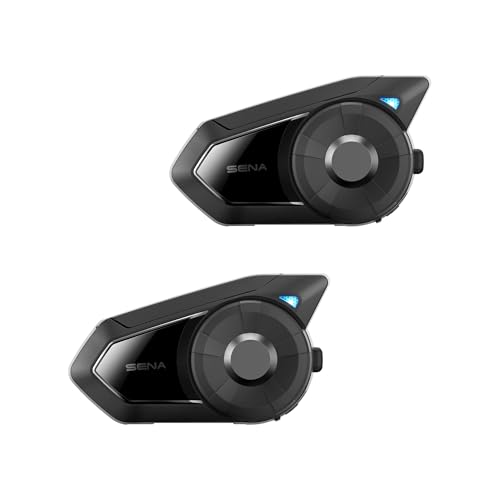
Real mesh for a big group, for meaningfully less money
Sena 30K Motorcycle Bluetooth Headset Mesh Communication
The Sena 30K brings full mesh networking to club rides and charity runs without flagship pricing, and this listing is a dual pack, so two riders get sorted at once. It's the sensible buy when group size matters more than gadget polish.
$462.72fromAmazonGroup Mesh handles up to 24 riders, and Open Mesh goes further. If you organize club rides or charity runs, that headroom is the whole reason to look here. Nobody pre-pairs, nobody gets stranded when they drop back, and riders join or leave without anyone stopping to fix it. Sena also quotes mesh range extending up to five miles once at least six riders are in the network relaying for each other.
It comes as a dual pack. Two units, one purchase — that's an unusual amount of hardware at this tier. If you and a riding partner are buying together, or you want a spare for a passenger who joins occasionally, the math changes sharply in the 30K's favor compared to buying two flagship singles.
The HD speakers are included, not an upsell. Sena's premium HD speakers ship in the box, and owners describe cleaner voice-and-music separation than earlier versions of this platform. You won't mistake it for the Harman-tuned 50S, but it's clearly good enough that most riders stop thinking about audio quality after a ride or two.
Standard Bluetooth still works alongside the mesh. Pair it to your phone and you get calls, music, and GPS navigation the ordinary way, with a quoted 1.2 miles of open-terrain intercom range. So the 30K covers both worlds: mesh for the group, plain Bluetooth for everything else you'd want in your ear.
Flaws but not dealbreakers
You can't run mesh and phone Bluetooth together. Taking a call while the mesh is active interrupts the group connection. This is exactly the limitation the 50S was built to remove, and it's the clearest reason to spend more. If you're regularly on the phone mid-ride, this one will annoy you.
Voice command handling lags the Cardo units. Recognition isn't as forgiving, and you'll fall back on buttons more often. At highway speed with wind buffeting the mic, that gap widens.
The design shows its age. The housing is bulkier and blockier than the 50S or the Edge. It works fine, but it looks like an older generation of hardware, because it is.
Also greatOn sale
Simple, reliable Bluetooth for two-up and small groups
Sena 20S EVO Motorcycle Bluetooth Headset Communication
The Sena 20S EVO skips mesh entirely and does plain Bluetooth conference calling well. For a rider and passenger, or a regular group of three or four, it covers nearly everything the flagships do for noticeably less.
$208.20fromAmazonList priceMost riders don't actually need mesh. If you ride two-up, or with the same two or three friends most weekends, a straightforward Bluetooth conference does the job. There's no network to configure and nothing to explain to a passenger who just wants to hear you. Setup is short, and that simplicity is the point.
The antenna redesign fixed the original 20S's weak spot. Sena replaced the flip-up antenna with a fixed shark-fin design specifically to improve intercom stability, and owners of the EVO report fewer dropouts than the earlier generation. That's an unglamorous change that shows up on every ride.
HD speakers are standard here too. You get Sena's premium HD speakers in the box, not as a paid add-on. Audio separation between voices and music is noticeably better than the original 20S platform, which matters because this is the unit most likely to spend its life handling a passenger's voice and podcast audio.
It's the easiest one to hand to a non-technical rider. No app walkthrough required for basic intercom use. Pair it once, learn the button layout in an afternoon, and it stays out of your way. For couples who ride together and don't want a project, that counts for a lot.
Flaws but not dealbreakers
No mesh, and that's a hard ceiling. Bluetooth conference topology means pre-pairing and a fixed set of connections. If a rider drops out mid-ride, someone re-pairs manually. For groups above four or five, this gets old fast and it's the clear reason to spend up.
Voice control is limited compared to the Cardo units and the 50S. You'll use the multi-function button for most things. It becomes second nature quickly, but it's less intuitive than the 50S jog dial, especially with thick gloves.
It's the oldest platform here. Refinement has its virtues, but you're buying mature hardware rather than current-generation design. If you want your intercom to feel new in three years, look at the 50S or the Edge.
Who this is for
This guide is for anyone who rides with other people, takes calls or navigation through a helmet, or carries a passenger who'd like to be part of the conversation. If you commute solo and only want music, a cheaper single-purpose headset will do — you're paying here for intercom hardware you won't use. If you already own a working unit from either brand and your riding group runs the same platform, there's little reason to switch; the meaningful upgrades are simultaneous phone-and-mesh operation and better voice control, and neither is worth abandoning a group's shared ecosystem.
We're covering complete helmet communication systems from the two brands that dominate this category. We're not covering wired setups, budget no-name units, or accessories and replacement parts, and we're not covering helmets themselves — though a well-sealed full-face lid affects your audio quality nearly as much as which intercom you pick. If your group is mixed between Sena and Cardo, read the cross-brand caveat carefully before buying; standardizing on one platform matters more than which platform you choose.
How we picked
We built this guide around the things riders complain about, not the things that look good on a box. Network type: mesh systems self-organize and heal around dropped riders, while traditional Bluetooth needs pre-pairing and manual recovery, so group size decides which you need. Wind noise: above 65 mph, air becomes the loudest thing in your helmet, and active suppression is the single most rider-impactful spec here. Gloved operation: jog dials and natural voice commands beat small buttons and memorized press sequences, particularly in winter gear. Battery and charging: fast charging matters more than headline talk time, because a coffee stop should give you real capacity back. Weather sealing: splash resistance is the minimum for all-season riding, and heavy-rain riders should confirm the rating covers the speaker and mic assemblies too.
The competition
This is what our research surfaced in this category, not a map of everything for sale. The motorcycle intercom market is effectively a two-brand conversation, and the listings below sit alongside the picks rather than compete directly with them.
Installation notes
Plan on twenty minutes for the first install and take the helmet liner out before you start. Speaker placement matters more than anything else you'll do: get the drivers centered on your ear canals, not just tucked into the recesses, or you'll blame the intercom for a fit problem. Most helmets have foam pockets sized for standard drivers, and thin spacers help if your ears sit deep. Route the mic boom along the cheek pad so the tip lands just off-center from your mouth, roughly a thumb's width away. Modular and open-face helmets need more care here, since there's less shell to hide wiring behind. Use the clamp mount if your helmet's shell edge allows it, and save the adhesive plate for lids where the clamp won't seat. Then check clearance with the visor fully open before you ride.
Questions we get
Can Sena and Cardo intercoms talk to each other?
Yes, but barely. They connect only through the standard Bluetooth intercom protocol, which handles two riders at a time and switches off both brands' mesh features. So a lone Cardo rider in a Sena group can talk to exactly one person, and that Sena rider gives up a mesh seat to make it work. If three or more of you need to hear each other, everyone should be on the same brand.
What's the difference between mesh and regular Bluetooth?
Regular Bluetooth pairs specific units together before the ride and keeps that topology fixed, so a dropped connection needs manual re-pairing. Mesh is self-organizing: riders join and leave on their own, and the network reroutes around anyone who falls out of range. Mesh also relays signals through intermediate riders, so a spread-out group stays connected further than any single unit's point-to-point spec. Under five riders, plain Bluetooth is genuinely fine.
How many riders can the Sena 50S connect to?
It supports mesh groups well beyond what most riders will ever assemble, plus standard Bluetooth conference mode for smaller setups. The more useful number is one: it's the only unit here that holds a mesh connection and a phone connection at the same time. That means group chat, navigation prompts, and an incoming call can all coexist without you dropping out of the conversation.
Do these work above 70 mph?
All of them function at highway speed, but intelligibility drops as wind noise takes over, and it gets noticeably worse past 75 mph. The units with active noise suppression — the Cardo PACKTALK Edge in particular — hold voices together best. Voice commands become less reliable up there on every unit, so plan on using a button or dial. A well-sealed full-face helmet does as much for high-speed audio as the intercom itself.
What's best for two-up riding with a passenger?
The Sena 20S EVO, for most couples. Pairing is simple, there's no mesh setup to explain, and it covers everything a rider-and-passenger pair needs. If you also join large group rides, step up to the 50S instead — its dual-chip design lets a passenger stay on a private channel while you keep a separate connection to the wider group.
How much range should I actually expect?
Less than the box says. Manufacturer figures assume open, flat terrain with clear line of sight, and real riding gives you hills, trees, buildings, and riders drifting apart. Plan on a meaningful haircut off the quoted number at highway speed. Mesh systems partly compensate by relaying through other riders, so group coverage often stretches further than any single unit's spec suggests.
Why you should trust us
For this guide:
- We read manufacturer spec sheets and listing details for every unit here, comparing network architecture, battery claims, charging behavior and weather sealing side by side.
- We reviewed published coverage of both brands' mesh protocols and noise-suppression systems to understand where the architectures genuinely differ.
- We looked at recurring themes in owner feedback — helmet fitment, wind noise above highway speed, and app setup friction — to identify the flaws that show up on real rides.
- We read owner reviews on every listing, weighted toward the critical ones, because that is where the recurring failures show up.
- We have a systematic way of automatically fetching the latest prices, so the numbers on this page stay current.
- This is a research-focused guide, so the team may not own every product listed — though we often do own the top winners, which gives us extra context for the recommendations.
- We don't accept free products, and the retailer commission never changes which product we recommend.
Sources
Best Motorcycle Bluetooth Headsets 2026, RevZilla
Best Motorcycle Intercoms, Cycle World
Sena 50S vs Cardo Packtalk Edge Review, Motorcyclist Magazine
Motorcycle Intercom Reviews and Ratings, Webbikeworld
Cardo Packtalk Edge Review, Rider Magazine
Sena 50S Full Review, Motorcycle.com
Best Motorcycle Intercoms for Group Rides, Adventure Rider
Sena Official Product Specifications, Sena Technologies
Amazon product listings and owner reviews for all 5 products
Manufacturer specification pages for each product
Some passages in this guide may be paraphrased with AI help. Prices are refreshed automatically.
More like this.
Continue exploring electronics reviews and recommendations.

The Best Bluetooth Multi-Device Keyboards
A multi-device keyboard earns its keep in the small moments. You're typing an email on your work laptop, a Slack message pops up on your personal desktop,…

The Best Car Bluetooth and Aux Adapters
Most cars on the road still have a stereo that can't talk to your phone. If yours has an aux jack, a small receiver bridges that gap without touching your…

The Best Bluetooth Trackers for Luggage and Keys
A Bluetooth tracker earns its keep in about four seconds - the moment you tap your phone, hear a chirp from under the couch cushion, and stop tearing the…

The Best Bluetooth Label Makers
A label maker earns its keep in the boring moments. You're staring at four identical white bins in the garage, or a drawer of charging cables that all…

The 7 Best Portable Bluetooth Keyboards for Travel in 2026: Lightweight, Multi-Device Picks
Expert-tested portable Bluetooth keyboards for travel in 2026. Compare weight, battery life, and multi-device pairing across 7 top picks from Logitech, Keychron, nuphy, and more.

The Best Motorcycle Phone Mounts
Your phone is your GPS, your music player, and the thing that tells you where the next gas station is. On a motorcycle, it also sits a few inches from an…