The Best CamelBak Bottles and Hydration Packs
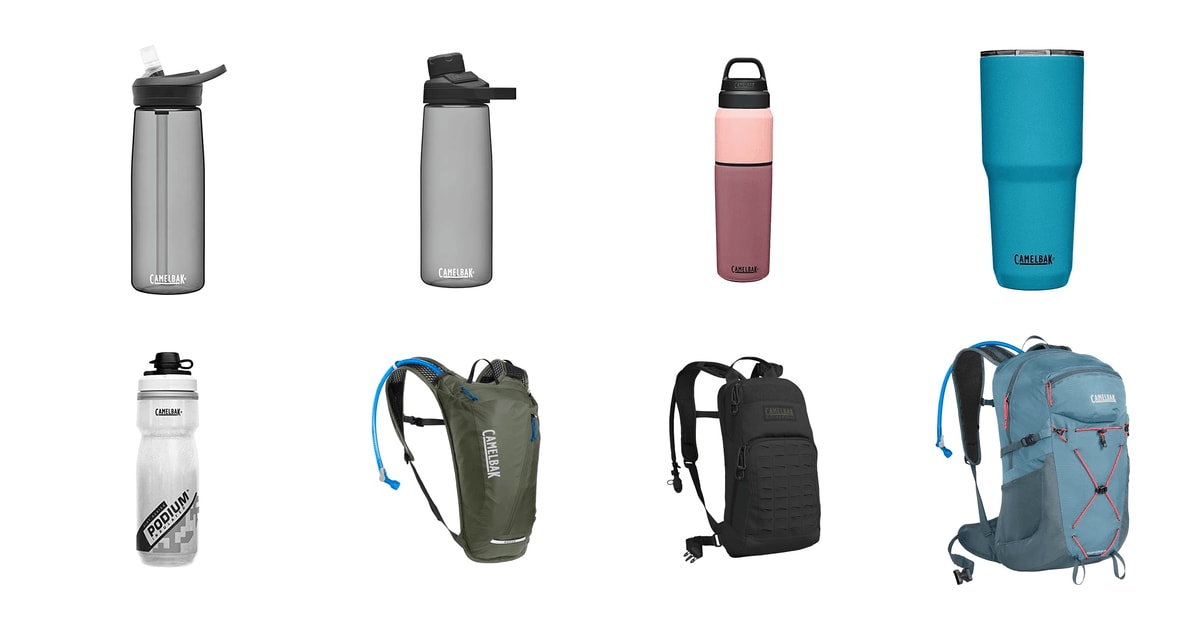
Staying hydrated sounds simple until you're halfway up a hot trail with a bottle buried in your pack. That's the gap CamelBak has spent decades filling. The lineup splits cleanly in two: bottles you refill at a desk or a bike cage, and hydration packs that let you drink through a tube without breaking stride. Which side you need depends less on your budget than on how long you're out. An hour at the gym and a six-hour ridge hike ask for completely different gear.
No single CamelBak does everything, and the brand doesn't pretend otherwise. Bite valves and straws are harder to scrub than a plain screw top, and they can seep if a bottle gets tossed sideways in a hot car. Insulated stainless bottles hold temperature beautifully but weigh noticeably more than plastic. Reservoirs need drying after every use or they get funky. And CamelBak sits at the pricier end of its category, so you're paying for the reservoir system and the guarantee as much as the fabric.
You'll also find CamelBak's packs cost more than generic reservoir backpacks that look similar in photos. What you get for that is the Crux reservoir, which is shared across nearly the whole pack line, so replacement bladders, tubes and cleaning brushes fit whatever you buy next. That interchangeability matters more than any single feature. We think that the CamelBak Chute Mag Water Bottle is the best CamelBak for most people, and that the CamelBak M.U.L.E. Tactical Hydration Backpack is the one to buy if you want hands-free drinking plus room for a day's worth of gear.
Everything we recommend

A wide mouth and a cap that never dangles in your face
Hands-free water plus enough cargo room for a full day out
Bite-and-sip simplicity for a desk, a car or a backpack
The squeeze bottle to grab if you ride on dirt
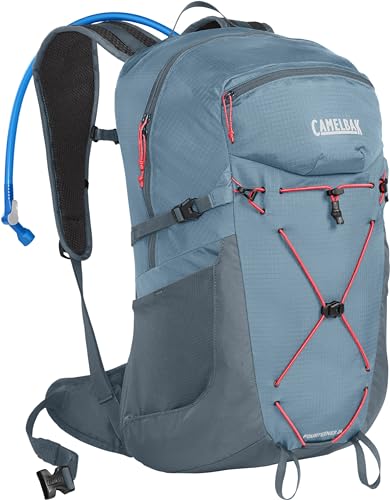
Real load-carrying suspension for all-day and overnight trips
How we picked
Match to activity. We sorted the lineup by how long you're likely to be away from a tap, using CamelBak's own capacity specs and REI's guidance on matching reservoir size to trip length. Anything under an hour is bottle territory; anything past two is pack territory.
Valve and leak design. We compared bite valves, magnetic caps and self-sealing Jet Valves against the leak complaints that show up repeatedly in owner feedback. A bottle that seeps in a bag is disqualifying no matter how good it looks.
Cleaning reality. We favored wide mouths and parts that come fully apart, since published bottle reviews and owner reports agree that narrow straw tops are harder to scrub. Dishwasher-safe components counted for a lot.
Carry comfort. For packs we weighed ventilation, harness padding and whether there's a load-bearing hipbelt, drawing on published hydration pack roundups. Bounce control — specifically the magnetic tube trap — separated the running-friendly packs from the hiking ones.
Parts you can replace. We gave weight to CamelBak's shared Crux reservoir system, since replacement bladders, tubes and brushes carry across most packs. Gear that stays fixable outlasts gear that doesn't.
Top pick
A wide mouth and a cap that never dangles in your face
CamelBak Chute Mag Water Bottle 25oz
The Chute Mag is the CamelBak most people should own. Its cap magnets to the side of the bottle while you drink, the mouth is wide enough for ice cubes and a bottle brush, and the whole thing goes in the dishwasher when you inevitably forget about it for a week.
$11.99fromAmazonThe magnetic cap fixes the one thing everyone hates about screw-top bottles. On most bottles the lid swings loose on its tether and knocks your chin, or it dangles somewhere it can pick up grime. Here the cap snaps flat against the bottle body and stays put while you drink. You'll notice it most on a commute, when you're holding a bag in one hand and tipping the bottle with the other.
The mouth is the other reason to pick this over a straw bottle. Wirecutter's bottle coverage makes the case plainly: wide openings are much easier to hand-wash and to load with ice than narrow straw tops. You can get a brush all the way to the bottom and see whether it's actually clean. Owners who switched from flip-cap bottles mention the same thing — the seal doesn't wear out into a surprise leak in a bag.
It's Tritan Renew, CamelBak's BPA-free plastic made partly from recycled material, so it's light for its size and shrugs off drops on a tile floor. At 25 ounces it holds enough for a workout without becoming a dumbbell. The integrated handle isn't a gimmick either. If you carry your bottle by hand between meetings, you'll use it constantly.
You do give up one-handed drinking. The cap screws on, so getting a sip takes two hands, and that rules it out for riding. But if you drink at a desk, in a car at a stoplight or standing at a trailhead, gulping from an open mouth beats sucking through a straw. It's simply faster.
Flaws but not dealbreakers
It's a two-hand bottle. You unscrew, you drink, you screw it back on. For cycling or anything where one hand stays occupied, that's a real limitation, and you should look at the Podium or a pack instead.
The 25-ounce size is chunky. Some owners report it won't fit a car cup holder, and that varies by vehicle, so measure yours if the commute is the whole reason you're buying.
The threads and the gasket need occasional attention. Grit in the cap seal is the usual culprit when a screw-top bottle starts weeping, and this one is no exception.
Also great
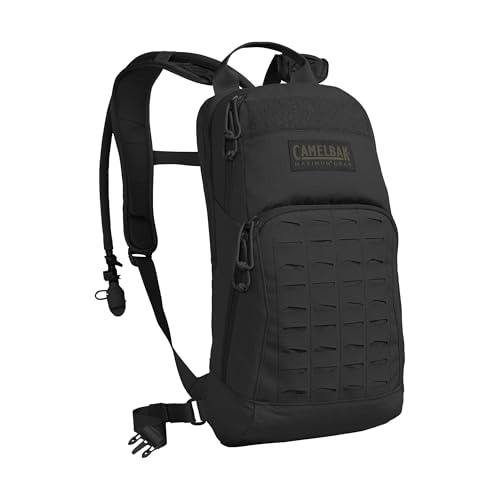
Hands-free water plus enough cargo room for a full day out
CamelBak M.U.L.E. Tactical Hydration Backpack
The M.U.L.E. is the pack to buy if you want to drink without stopping. It carries a 100-ounce Crux reservoir alongside about 8 liters of cargo space, which is enough for snacks, a shell, tools and a phone on a long ride or a hot day hike.
$161fromAmazonThis is the hydration pack that gets recommended more than any other, and the reason is balance. Switchback Travel's hydration pack coverage points to the M.U.L.E. as a long-running category leader precisely because it splits the difference between water capacity and gear storage. You get a full 3-liter reservoir and real pockets. Most packs make you choose.
The reservoir lives in its own zippered sleeve, separate from your stuff, which matters more than it sounds. Refills don't mean unpacking your lunch. And if the bladder ever does seep, your phone isn't swimming in it. Multiple tube exit ports let you route the hose over whichever shoulder you prefer, and the magnetic tube trap clips the bite valve to your strap so it isn't slapping your chest on descents.
Owners use these for far more than mountain biking. Field biologists walking prairie in 100-degree heat, skiers who'd otherwise have to come inside to drink, parents doing long days at theme parks. The pattern in owner feedback is that people buy one, use it hard for years, then replace it with the same thing. The padded harness and removable waist belt keep 100 ounces of water from swinging around.
Eight liters of cargo isn't backpacking capacity, and it isn't meant to be. It's a day's worth: layers, food, a multi-tool, a small tablet. If you're gone longer than a day, look at the Fourteener. If you just want water and nothing else, the Rogue Light is lighter and cheaper.
Flaws but not dealbreakers
The straps run stiff out of the box. Several owners say the harness needs some break-in before it softens up, especially compared with a well-worn pack from another brand.
The MOLLE webbing and tactical styling won't be everyone's taste on a Sunday trail. It's function over looks, and the black colorway reads more range day than rail trail.
Reservoirs need real care. Rinse and dry after every outing, or you'll be buying a cleaning kit and scrubbing mildew out of a tube.
CamelBak reservoirs and bite valves are covered by the company's lifetime Got Your Bak guarantee against manufacturing defects.
Budget pick
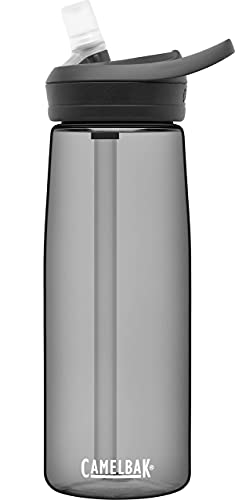
Bite-and-sip simplicity for a desk, a car or a backpack
CamelBak Eddy+ Bite Valve Water Bottle 25oz
The Eddy+ is the least expensive way into CamelBak's lineup and the easiest bottle here to drink from without looking. Flip the spout, bite, sip. It's the one to hand a kid heading to school or to keep in the cupholder on a long drive.
$10.19fromAmazonThe bite valve is the whole point. You never tip the bottle, so you can drink while driving, while typing, or while walking without watching your feet. Owners specifically call it out for car use — there's no realistic way to spill it if the spout is up. For anyone who forgets to drink water unless it's effortless, that matters more than any spec.
It's the lightest bottle in this guide by a wide margin, and that's not an accident. Tritan plastic at 25 ounces comes in well under half a pound empty. Clip it to a bag or drop it in a side pocket and you barely register it. That's why these end up in school backpacks and gym bags rather than on desks.
The straw system does add cleaning steps. The straw, the valve and the cap all come apart, and they're dishwasher safe, but they're more pieces than a plain screw top. One recurring owner story is a straw falling to the bottom rack and melting. Put the small parts in the top rack and you'll avoid that.
Bite valves also attract chewers. If you're the sort who gnaws on pen caps, you'll wear through the silicone faster than someone who doesn't. Replacements are cheap and easy to find, but it's worth knowing before you commit.
Flaws but not dealbreakers
It's leak-resistant rather than leak-proof. Owners report occasional seeping from the straw area when a full bottle sits sideways or bakes in a hot car, and a loosely screwed lid makes it worse.
Plastic feels like plastic. It's tough and it doesn't hold odors much, but next to a stainless bottle it lacks heft and there's no insulation, so ice water goes lukewarm on a warm day.
Also great
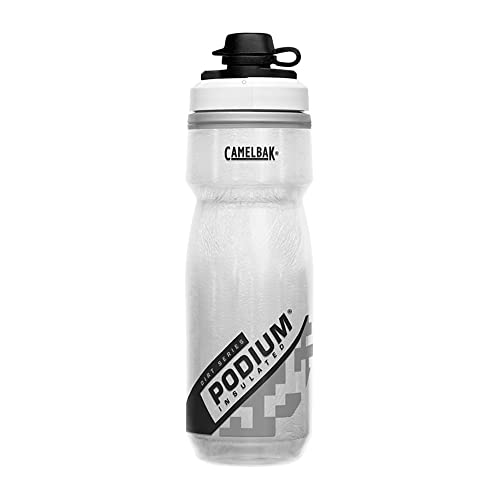
The squeeze bottle to grab if you ride on dirt
CamelBak Podium Dirt Series Chill Insulated Mountain
The Podium Dirt Series Chill is a 21-ounce insulated squeeze bottle with a rubber cap over the nozzle. It fits standard bike cages, works one-handed at speed, and the mud cap keeps trail grit off the part you put in your mouth.
$14.44fromAmazonIf you ride, a squeeze bottle beats a pack for short outings, and this is the squeeze bottle to get. Bicycling Magazine has repeatedly picked CamelBak's Podium line as a top choice for one-handed bottles on road and gravel. The self-sealing Jet Valve stays shut until you bite and squeeze, so vibration on washboard doesn't dribble water down your frame.
The mud cap is the difference between this and the standard Podium. It's a small rubber cover that flips over the nozzle, and on gravel or singletrack it stops a fine layer of dust and spray from settling exactly where your lips go. Owners who ride mixed surfaces call it the real reason to buy the Dirt Series rather than the insulation.
Double-wall insulation keeps water cold roughly twice as long as a plain bike bottle. That's meaningful on a two-hour summer ride, less so beyond that. Several owners are candid that it isn't stainless-grade cold retention and wish it lasted longer. Treat it as a bonus, not the headline.
Everything comes apart for cleaning, which is more important on a bike bottle than most people expect. Sports drink residue in a valve gets nasty fast. Being able to pop the cap into components and rinse it properly is why these last through multiple seasons.
Flaws but not dealbreakers
Twenty-one ounces isn't much water. On a hot ride you'll want two cages filled or a pack, and the insulation eats some interior volume compared with an uninsulated bottle of the same footprint.
It's a squeeze bottle, so it's soft-sided and not something you'd set on a desk all day. Away from the bike it's mostly redundant with anything else here.
Upgrade pickOn sale
Real load-carrying suspension for all-day and overnight trips
CamelBak Women’s Fourteener 24 Hiking Hydration Backpack
The women's Fourteener 24 pairs a 100-ounce reservoir with 24 liters of cargo and a hipbelt that actually transfers weight off your shoulders. It's the pick if your days run long enough that pack comfort stops being optional.
$115.50fromAmazonList priceGearJunkie's hydration pack coverage draws the line clearly: the Fourteener 24's load-bearing hipbelt makes it a better fit for multi-hour trips than a light running vest. Once you're carrying water, food, layers, a first-aid kit and maybe a camera, shoulder straps alone stop being enough. The hipbelt moves that weight onto your hips, where your legs can carry it.
The suspended mesh back panel is the feature you'll appreciate most on a hot climb. It holds the pack body off your spine so air moves between you and the load. Owners consistently mention finishing long hikes without the soaked-shirt back sweat that a flush-mounted pack gives you. On a 90-degree day that's a comfort difference you feel within the first mile.
This version uses a women-specific fit, with shoulder strap shaping and torso length tuned differently from the unisex model. If a standard pack has ever pinched at the collarbone or ridden too long in the torso, that's what this addresses. Trekking pole attachments and a front bungee handle the awkward stuff that won't go inside.
At 24 liters it's genuinely overnight-capable for a light packer, and owners report using it that way. It's also the heaviest thing here empty. If your typical outing is two hours, this is more pack than you need and you'll be happier with the M.U.L.E.
Flaws but not dealbreakers
It's big and it's heavy for casual use. Loaded with 100 ounces of water plus gear, this is a commitment, and it's overkill for a walk around the neighborhood.
The internal frame has set off metal detectors for owners taking it into theme parks and venues. Not a problem on a trail, but worth knowing if you were planning to use it as a travel daypack.
The women-specific fit is a feature for some shoppers and a mismatch for others. Check the torso range against your measurements rather than assuming.
Who this is for
Buy from this guide if you want one bottle you'll actually reach for, or a pack that lets you drink without stopping. The bottles suit commuters, gym-goers, students and anyone who drinks more water when it's within arm's reach. The packs suit hikers, mountain bikers, trail runners and people who work outdoors in heat. If you're shopping for an active kid or teen, the lighter bottles and the smaller pack are the sensible starting points.
Skip this if you already own a bottle you like and it isn't broken. CamelBak's plastic bottles aren't dramatically better than other good plastic bottles, and swapping brands won't change how much water you drink. This guide covers CamelBak only — bottles, one tumbler and reservoir packs — so it doesn't compare across brands or cover filtration bottles, collapsible flasks or full backpacking packs above 24 liters.
How we picked
We built the picks around a handful of things that decide whether a bottle or pack stays in your rotation. Match to activity: capacity should track how long you're out, following REI's guidance of smaller reservoirs for short outings and 2.5 to 3 liters for full days. Valve and leak design: bite valves, magnetic caps and self-sealing Jet Valves each solve a different spill problem, and owner reports flag which ones seep. Cleaning reality: wide mouths and fully separable parts win, because narrow straw tops are harder to scrub. Carry comfort: for packs we looked at ventilation, harness padding, hipbelt load transfer and the magnetic tube trap that keeps the bite valve from bouncing. Parts you can replace: the shared Crux reservoir system means brushes, tubes and bladders carry from one pack to the next.
Other camelbak bottles and hydration packs worth considering
If you want one insulated vessel that covers coffee and water: The CamelBak Products MultiBev Water Bottle & Travel ($21.89) — The MultiBev is a 22-ounce vacuum-insulated stainless bottle whose base unscrews into a 16-ounce travel cup. Treeline Review calls the format one of the more versatile travel bottle designs out there, and owners who used to carry both a mug and a bottle to work tend to love it. It's the heaviest bottle here and the most complicated, with a roll-and-fold silicone lid that some owners find fiddly to seat. But if you want cold water at your desk and hot coffee from a hotel lobby out of the same object, nothing else in the lineup does it.
If you want the lightest possible pack for running: The CamelBak Rogue Light 7 Hydration Backpack with ($74.25) — The Rogue Light 7 pairs a 70-ounce Crux reservoir with a compact, well-ventilated body that weighs under half a pound empty. Runner's World notes that trail runners prefer this vest-style build over bulkier reservoir backpacks specifically because it bounces less. You give up cargo space — there's room for a phone, keys, snacks and a light layer, not a day's gear — and it costs about as much as some larger packs, which a few owners find hard to swallow. For races, fast hikes and hot festival days, the reduced bulk is worth it.
More from CamelBak
Here's the rest of what our research turned up across CamelBak's range. This isn't the brand's full catalog, and CamelBak rotates colors and sizes constantly, so treat these as the models worth knowing about rather than an exhaustive list.
The CamelBak Products Horizon 30oz Tumbler - Insulated ($47.87) — The Horizon 30oz Tumbler is the one to look at if your hydration happens at a desk, in a truck or on a job site rather than on a trail. It's double-wall stainless with a full powder coat, a tri-mode lid for flow control and a non-slip silicone base, and CamelBak rates the Horizon line for up to 24 hours cold and 12 hours hot. Owners consistently say it fits car cup holders well and keeps coffee warm through a long shift. Just know the sliding lid is spill-resistant, not sealed — tip it in a bag and it will leak — and it gets tippy when empty. Choose it if you want a tumbler you sip from all day, not a bottle you throw in a pack.
Is CamelBak worth it?
CamelBak invented the modern hydration pack, and that history still shows in the products. The strongest argument for the brand isn't any single bottle — it's the Crux reservoir system, which is shared across nearly the entire pack line. Buy one pack and the replacement bladders, cleaning brushes and bite valves you pick up will fit whatever you buy next. That's unusual, and it quietly makes the gear cheaper to keep alive. CamelBak also backs its reservoirs and bite valves with a lifetime Got Your Bak guarantee against manufacturing defects, and owner feedback includes people who've had the company make good on it. Against rivals, CamelBak sits at the premium end. You'll find reservoir backpacks that look similar for considerably less, and some owners say the packs are overpriced for what's essentially fabric and a bladder. The bottles compete closely with Hydro Flask, Owala and others rather than beating them outright. What you're paying for is longevity and parts availability, and multi-decade owners are common enough in the feedback that the case holds up.
Not set on CamelBak?
If temperature retention is what you actually care about, that guide compares CamelBak's stainless bottles against Hydro Flask, Yeti and the rest of the field. our insulated stainless steel water bottle guide →
Owala's bottles use a hybrid straw-and-spout lid that some people prefer to a bite valve, and that guide walks through the range. our Owala guide →
If the Podium is going in a cage on a new bike, that guide covers the rest of the kit worth adding before your first real ride. our trail mountain bike accessories guide →
Care and cleaning
Reservoirs are where CamelBak gear goes wrong, and it's almost always a drying problem. Empty the bladder after every outing, rinse it, then prop it open so air moves through — a clean kitchen whisk or a purpose-made hanger works fine. Blow the water back out of the tube so nothing sits in the line. If you use anything but plain water, clean it the same day. For bottles, take the caps fully apart before washing rather than running them whole; grit in a gasket is the usual reason a screw top starts weeping. Put small parts like straws and bite valves in the top dishwasher rack, since owners have melted straws that fell to the bottom. Freezing a reservoir sounds clever but backfires: ice blocks the port and you'll wait hours for a drink.
Questions we get
What's the difference between the Chute Mag and the Eddy+?
The Chute Mag has a wide screw-on mouth with a cap that magnets to the bottle while you drink, so you gulp rather than sip. The Eddy+ uses a flip-up straw and bite valve, so you drink one-handed without tipping it. Chute Mag is easier to clean and fill with ice; Eddy+ is easier to drink from while driving or working. Both are BPA-free Tritan and both go in the dishwasher.
What size CamelBak reservoir do I need for a day hike?
REI's guidance is to match capacity to trip length: roughly 1.5 to 2 liters for short outings, and 2.5 to 3 liters for a full day. The M.U.L.E. and Fourteener both ship with 100-ounce (3-liter) Crux reservoirs, which covers most full-day hikes in warm weather. The Rogue Light's 70-ounce bladder is sized for shorter, faster efforts. If you're unsure, size up — you don't have to fill it all the way.
How do you clean a CamelBak bite valve and reservoir?
Rinse the bladder with warm water after every use, then hang it open so it dries completely inside. Pull the bite valve off the tube and rinse it separately, since that's where residue collects. For anything beyond water, use a cleaning tablet or mild soap with a reservoir brush and a long tube brush. The key habit is drying, not scrubbing — a bladder stored damp is what grows mildew.
Are CamelBak bottles dishwasher safe?
Yes, the bottles and caps in this guide are listed as dishwasher safe, including the stainless MultiBev and Horizon. Put lids, straws and bite valves on the top rack. Owners have reported straws slipping through to the heating element and melting when loaded on the bottom. Take multi-part caps apart before washing so water reaches the gasket.
Do CamelBak bottles contain BPA?
No. CamelBak's plastic bottles use Tritan Renew, a BPA-free plastic made partly from recycled material, and the stainless Horizon is listed as BPA-, BPS- and BPF-free. Any plastic bottle will shed some material over time, especially if it's scratched or repeatedly heated. If that concerns you, the stainless options here sidestep the question entirely.
Can you put a CamelBak reservoir in the freezer?
You can, but it usually backfires. Owners who partly fill a bladder and freeze it overnight report the ice blocks the outlet port, leaving them unable to drink until it thaws — which can take hours even in full sun. If you want cold water on a hot day, add loose ice cubes to a mostly full reservoir instead, or slip an insulated sleeve over the bladder.
Why you should trust us
For this guide:
- We read CamelBak's published specifications for every bottle, tumbler and pack in this guide, including reservoir capacities, materials and stated insulation figures.
- We compared published coverage from Bicycling Magazine, Switchback Travel, GearJunkie, Runner's World, Treeline Review, Wirecutter and REI's buying guidance to see which models reviewers return to and why.
- We read through owner feedback for each listing to find the recurring themes — leak complaints, strap stiffness, cup-holder fit and cleaning headaches — that specs don't capture.
- We read owner reviews on every listing, weighted toward the critical ones, because that is where the recurring failures show up.
- We have a systematic way of automatically fetching the latest prices, so the numbers on this page stay current.
- This is a research-focused guide, so the team may not own every product listed — though we often do own the top winners, which gives us extra context for the recommendations.
- We don't accept free products, and the retailer commission never changes which product we recommend.
Sources
CamelBak Official Product Specs and Care Guide, CamelBak
REI Co-op Expert Advice: How to Choose a Hydration Pack, REI Co-op
REI Co-op Expert Advice: How to Choose Water Bottles and Hydration Reservoirs, REI Co-op
Best Hydration Packs of 2026 - Switchback Travel, Switchback Travel
Best Water Bottles of 2026 - Switchback Travel, Switchback Travel
The Best Water Bottles - Wirecutter, Wirecutter
Best Hydration Packs for Hiking and Mountain Biking - GearJunkie, GearJunkie
Best Water Bottles for Every Adventure - Backpacker Magazine, Backpacker Magazine
Best Hydration Vests and Packs for Trail Running - Runner's World, Runner's World
Best Reusable Water Bottles Reviewed - Treeline Review, Treeline Review
CamelBak M.U.L.E. Long-Term Field Review - Trailspace, Trailspace
Best Cycling Water Bottles and Cages Tested - Bicycling Magazine, Bicycling Magazine
Amazon product listings and owner reviews for all 8 products
Manufacturer specification pages for each product
Some passages in this guide may be paraphrased with AI help. Prices are refreshed automatically.
More like this.
Continue exploring lifestyle reviews and recommendations.

The Best Weber Grill Accessories
A Weber grill is a long-term relationship. The kettle or the Genesis in your yard will probably outlast the car in your driveway, and the accessories you…

The Best Language Learning Workbooks
A language workbook has to survive your actual week, not your idealized one. That means it needs to work in twenty-minute chunks on a couch, with a pen,…

The Best Backpacking Tents for Families
A four-person backpacking tent is a strange piece of gear. It has to be light enough that two adults can split it and still carry food, water and a kid's…

The Best Trail Mountain Bike Accessories
The bike you already own is probably fine. What's holding you back on a wet descent or a ride that runs long is usually smaller and cheaper than a new…

The Best Cold Weather Camping Sleeping Bags
A cold night in a tent isn't dangerous so much as it's miserable. You wake at 2 a.m. with cold feet, pull the drawcord tighter, and then lie there doing…

The Best Gifts for Wives
The hardest part of shopping for your wife isn't finding something nice. It's finding something she'd actually pick out for herself. She probably already…