The Best Car Ramps for Low-Profile Cars
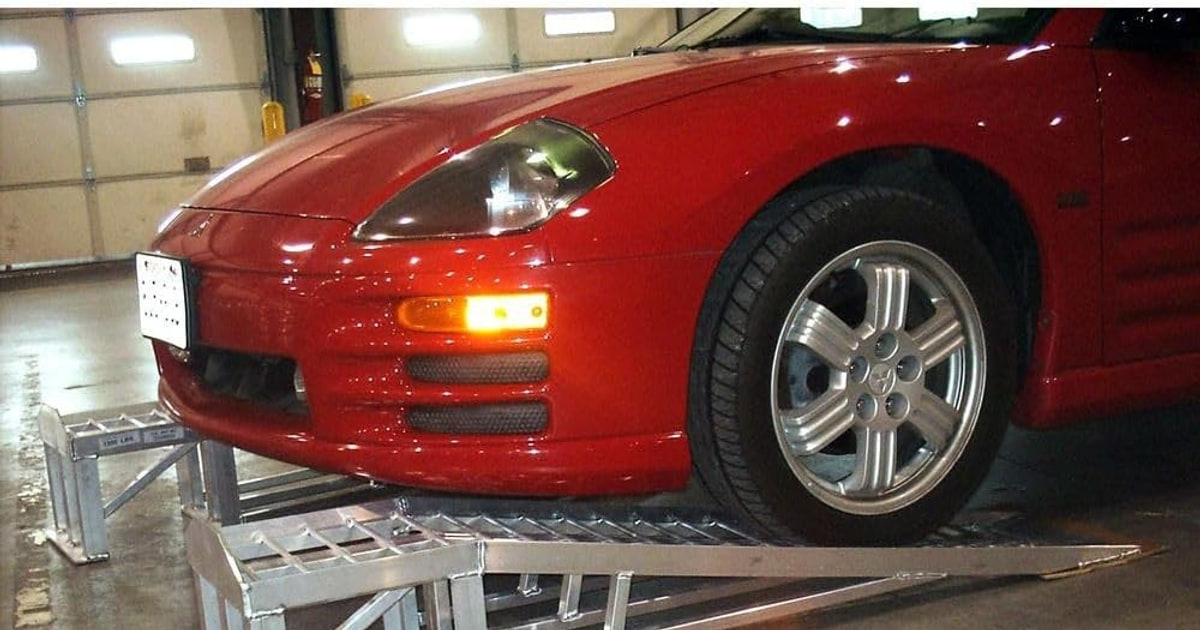
Sliding under your own car for an oil change should take twenty minutes, not an afternoon of worry. The problem with a low car is the first few inches of the driveway. Your splitter or air dam sits closer to the ground than the front axle does, so the bumper hits the ramp before the tire ever touches it. That's why the number that matters isn't lift height. It's approach angle — how gently the ramp rises off the floor — and it's the spec most ramps don't bother to print.
Here's the honest part: no drive-up ramp solves every low car. Geometry sets a floor. If the lowest point of your front fascia sits under roughly three and a half inches, nothing you drive onto is safe, and you need a lift instead. Ramps also raise only one end of the car, so brake work and wheel swaps still need a jack and stands. And a long, gentle ramp eats a lot of garage wall. Storage is a real cost, not a footnote.
So the job is matching a ramp to your actual clearance, measured at the lowest painted edge rather than the number in the brochure. Lowering springs, tired shocks and a full tank all steal clearance the factory spec doesn't know about. Enthusiast forums are full of scraped splitters from ramps that looked fine on paper. We think that the Discount Ramps Low Profile Car Service Ramps are the best car ramps for low-profile cars for most people, and that the Race Ramps 6-inch foam ramps are the ones to buy if you want something light enough to carry in one hand.
Everything we recommend

A long aluminum climb that clears low bumpers and lifts seven inches

Light enough to carry one-handed, long enough to clear a splitter

Barely three inches tall, and just enough to get a jack under
Real lift height for cars no ramp can clear, if you've got the room

The gentlest climb here, built for loading onto a trailer
At a glance
| Product | Lift Height | Capacity | Price | |
|---|---|---|---|---|
| Race Ramps Foam Trailer Loading Ramps forRunner-up | 6 in H | — | $379.05 |
| Race Ramps Foam Trailer Loading Ramps forAlso great | 5 in H | 6,000 lb Total | $472.07 |
 | Race Ramps 10 Inch Wheel Cribs forAlso consider | 10 in | 1,500 lb/Crib | $214.46 |
| QuickJack 8000TL Portable Car Lift with 8Upgrade pick | — | 8,000 lb | $2,248 |
| Low Profile Car Service Ramps for OilTop pick | 10 in Lift | 1,500 GAWR | $349.99 |
| MAXXHAUL 50699 Low Profile Car Ramps forBudget pick | 2-5/8 in Lift | 4,400 lb Total | $27.69On sale |
 | Car Ramps for Oil ChangeAlso in lineup | 3 in Lift | 5,000 GAWR | $47.99 |
How we picked
Approach angle. We worked the geometry from each ramp's published length and rise, because that angle decides whether your bumper clears. Anything much steeper than 12 degrees rules out most low cars.
Real ground clearance. We compared published front clearance figures for cars like the C8 Corvette and the 992 911 against what each ramp demands at its tip. We treated the lowest painted edge as the number that matters, not the factory chassis spec.
Construction and flex. Published testing analysis shows hollow plastic ramps can deflect a quarter to half an inch under a sports car's front axle, which steals clearance mid-climb. We favored solid foam, welded aluminum and solid-top decks.
Width and tire fit. Consumer Reports suggests at least 10.5 inches of ramp width for the wide tires on performance cars. We checked each listing's deck width and flagged the ramps that come up short.
Grip and stability. Owner feedback on epoxy and polished concrete decides this one. We looked for textured surfaces, rubber pads and wheel stops, and we noted where owners say the ramps slide.
Top pick
A long aluminum climb that clears low bumpers and lifts seven inches
Low Profile Car Service Ramps for Oil
These aluminum ramps stretch 66 inches to hold the loading angle at 11.5 degrees, so a lowered coupe can climb them without kissing the splitter. They lift the front wheels seven inches, which is enough room to reach a drain plug and a filter on most cars.
$349.99fromAmazonLength is what buys you clearance, and these are long. At 66 inches with a seven-inch rise, the slope works out to 11.5 degrees. A standard 24-inch steel ramp at a similar rise lands near 15.7 degrees, which is more than twice as steep as what a long ramp can manage. That difference is the whole ballgame for a car with a chin spoiler. Your bumper passes over the ramp tip before the tire starts climbing.
The deck is 14 inches wide with 16-inch wheel platforms and raised side rails. Consumer Reports suggests at least 10.5 inches of width for the wide tires on performance cars, and these clear that with room left over. If you drive up without a spotter, the rails are the reason you stop worrying about walking a tire off the edge. Integrated wheel stops tell you when to quit rolling.
Aluminum is the other reason we like them. The pair weighs about 48 pounds, heavy enough to feel planted and light enough that one person can set them up. Hollow plastic ramps flex under a heavy front axle — a quarter to half an inch of deflection shows up in published testing analysis — and that flex steals clearance at the worst moment. Welded aluminum doesn't sag under a car.
They're rated conservatively, and that's a feature. The listing calls out 1,500 pounds per ramp and a 3,000-pound capacity, so they're sized for sports cars and sedans rather than a loaded three-quarter-ton truck. Check your front axle weight before you order. For a Corvette, a 911 or a lowered Civic, you've got plenty of margin to work with.
Flaws but not dealbreakers
The rubber pads on the underside are the weak point. Owners repeatedly report them peeling off after a handful of uses because the adhesive gives up, and once they're gone the aluminum can skate on smooth epoxy. Chock the rear wheels, and put a rubber mat under the ramp feet if your floor is slick.
They also need a lot of floor. Sixty-six inches per ramp is over five feet per side, plus the run-up, and they don't nest tightly against a wall. In a tight one-car garage, that's a real annoyance.
Fit and finish is inconsistent. Some owners describe rough, uneven welds, and the ramps look more utilitarian than polished. They work fine; they just won't impress anyone.
Runner-up
Light enough to carry one-handed, long enough to clear a splitter
Race Ramps Foam Trailer Loading Ramps for
These solid foam ramps are 45 inches long with a six-inch rise, and the pair weighs about 15 pounds. You can carry both in one hand, toss them behind a seat, and store them on a shelf instead of surrendering a wall to them.
$379.05fromAmazonPick one up and the appeal is obvious. Race Ramps are molded from solid structural foam, not hollow plastic, so there's nothing inside to collapse. They stay rigid under a car and still weigh less than a bag of dog food. Tow operators and track-day drivers keep them in the truck because they don't blow around in the wind and they don't soak up water the way plywood does.
Solid construction is a safety feature, not a gimmick. A hollow ramp deflects under load, and that deflection drops the ramp tip exactly when your bumper is passing over it. Foam doesn't bow. The surface is non-marking too, so you can use these on a finished garage floor or a trailer deck without leaving black scuffs behind.
At 45 inches they're shorter than our top pick, so the climb is a bit steeper for the same rise. That's the trade you make for storage. If your car sits at four inches or more at the front lip — a stock C8 Corvette lands around 4.1 to 4.5 inches, a 992-generation 911 around 4.3 — you've got room to work with. Much lower than that and you want more length.
The 14-inch width is generous, and it matters if you're running a wide front tire on a track car. There's no side rail, though, so you're relying on width and a straight approach rather than a lip to keep you honest. Line the car up before you start climbing, not halfway up. That's true of any foam ramp, but it's worth saying out loud.
Flaws but not dealbreakers
Foam chips. Owners who use them constantly — tow drivers especially — report chunks breaking off the edges after about a year of hard duty, and a few describe a pair that split early. They keep working in that state, but they won't look new for long.
They're also the expensive way to solve this problem. You're paying for the material and the weight savings, not for a taller lift or a longer ramp, and a heavier steel or aluminum ramp will outlast them under daily abuse.
Budget pickOn sale
Barely three inches tall, and just enough to get a jack under
MAXXHAUL 50699 Low Profile Car Ramps for
These small plastic wedges lift a car about two and five-eighths inches. That's not enough for an oil change on most cars, but it's plenty to slide a floor jack under a lowered front crossmember. They're stackable and weigh almost nothing.
$27.69fromAmazonList priceMost lowered-car owners don't actually need seven inches of lift. They need two, so the jack fits. If your Civic or WRX rides on springs and the jack pad is unreachable, you roll the front wheels up these, slide the jack under the crossmember, and take it from there. That's the whole job they do, and they do it for very little money.
The 3.1-inch profile is the point. A taller ramp gets in the way of the jack itself, which is the exact frustration people hit when they try to use full-size ramps on a lowered car. These stay out of the way. Owners with lowered Supras, Mazdaspeeds and older F-bodies report clearing a front lip and then getting a jack underneath with room to spare.
The plastic is honeycombed underneath, which drains grit and water instead of trapping it against a damp garage floor. Rated capacity is 4,400 pounds for the pair, or 2,200 per ramp. That's fine for a coupe or a sedan. Check your front axle weight if you're eyeing a truck, because this is the ramp here with the least headroom on capacity.
Flaws but not dealbreakers
They're narrow. At 9.75 inches they fall under the 10.5 inches Consumer Reports suggests for wide performance tires, and sports car owners say so plainly — you have to aim carefully, and a wide front tire hangs over the edges.
The listing doesn't mention anti-slip pads, and on polished concrete these can scoot when you first touch them. Approach slowly and chock the rear wheels every time. And to be clear about what they aren't: two and five-eighths inches isn't enough clearance to lie under a car. Treat them as a jack helper, not a lift.
Upgrade pick
Real lift height for cars no ramp can clear, if you've got the room
QuickJack 8000TL Portable Car Lift with 8
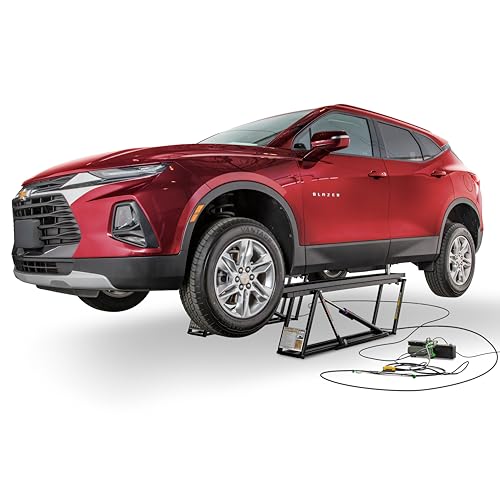
The QuickJack isn't a ramp at all. Two hydraulic frames slide under the car and lift it on the pinch welds, handling up to 8,000 pounds. It stores flat against a wall, and it's the only thing here that gets all four wheels off the ground.
$2,248fromAmazonIf your car is too low for any ramp, this is the answer. Nothing you drive onto is safe below roughly three and a half inches at the front lip. A Huracán EVO sits near 3.9 inches in Sport mode, and a 911 fitted with PASM Sport suspension drops to about 3.7. The QuickJack sidesteps the whole geometry problem by going under the car instead of in front of it.
It's ALI certified, which is the lift industry's third-party safety standard and something no ramp in this guide carries. The frames lock mechanically at height rather than leaning on hydraulic pressure alone. If you're doing brake jobs, exhaust work or wheel swaps — anything a front-only ramp can't help with — that's a different category of access entirely.
The 110-volt power unit means you don't need shop air or a 220 outlet, so an ordinary garage circuit runs it. Quick-connect hydraulic fittings make setup less of a project than the spec sheet suggests. Owners of small fleets and multi-car households tend to be the ones who buy these, and they describe it as the tool that stopped them from putting jobs off.
You still have to get the frames under the car, which on the lowest builds means rolling the front wheels onto something first — a pair of low ramps or a set of cribs. That's not a knock on the QuickJack. It's how every portable lift works, and it's worth planning for before the system shows up on a pallet.
Flaws but not dealbreakers
It's by far the most expensive thing here and the heaviest, at around 280 pounds for the system. Portable means you can wheel it aside and store it flat, not that you'll be carrying it to a friend's driveway.
You also have to do it right. Owners are blunt that the hydraulic fill and bleed procedure has to be followed exactly or you'll fight the lift for months, and correct pinch-weld positioning matters on every car you raise. That's more commitment than a set of ramps asks for, and it should be.
Also great
The gentlest climb here, built for loading onto a trailer
Race Ramps Foam Trailer Loading Ramps for
These 67-inch foam ramps create a 4.3-degree approach, the shallowest angle of anything in this guide. They're built to bridge the gap at a trailer door, with a notch cut into the top end, but they work anywhere you need an extremely gentle climb.
$472.07fromAmazonNo other ramp here climbs this gently. Stretched over 67 inches for a five-inch rise, the approach works out to 4.3 degrees. A standard 24-inch steel ramp sits near 15.7 degrees at a comparable rise. If you've ever heard a splitter drag on a trailer ramp, that gap is the sound you're trying to stop paying for in bodywork.
The notch at the top — five inches wide, two inches tall — hooks onto a trailer door or ramp so there's no lip to hop over. Track-day drivers with tilt trailers reach for these when the trailer's own angle is still too steep for a lowered car. Owners loading an R8, a GT4 and similar cars describe exactly that use, and it's the reason these exist.
Like the rest of the Race Ramps line, they're solid high-density foam, so they don't scratch a trailer deck or a driveway and they don't bow under a car. The pair weighs around 12 pounds. You can carry both plus your tie-downs in one trip, which you'll appreciate loading up in a paddock at the end of a long day.
Capacity is 1,500 pounds per ramp and 6,000 pounds of total vehicle weight. That covers almost any sports car, and owners report loading heavy cars without the foam deforming. Still, work from your front axle weight rather than curb weight, since a good share of the car's mass sits on the front wheels partway up the climb.
Flaws but not dealbreakers
Five inches of rise isn't much if you actually want to work under the car. These are loading ramps first. For an oil change you'd want more height, or a jack and stands after the car is up.
The trailer notch is the whole point on a trailer and dead weight in the garage. A few owners also note the cutout doesn't line up perfectly with every trailer door, so you may end up nudging them into position each time rather than setting them and forgetting them.
Who this is for
Buy a set of these if you own a car that scrapes on things other people drive over without thinking — a Corvette, a 911 or Cayman, a Viper, a lowered Civic or WRX, a bagged truck. If you change your own oil, swap track wheels, or want under the car for a ceramic coating, the right ramp turns a nerve-wracking climb into a boring one. It's also the fix if you've already scraped a splitter once and haven't stopped thinking about it.
Skip all of this if your car sits under about three and a half inches at its lowest front point. No drive-up ramp is safe there, and the honest answer is a portable lift. Skip it too if you only ever need the rear of the car up, or if you're comfortable on a jack and stands and have the clearance to place them. This guide covers ramps and lifts for reaching the underside of a low car at home. It doesn't cover jack stands, floor jacks or permanent two-post lifts, and no ramp here replaces chocks behind the rear tires.
How we picked
We started from geometry and worked outward. Approach angle: we calculated the slope from each ramp's published length and rise, since that's what decides whether your bumper clears the tip. Ground clearance: we checked published front clearance figures for common low cars against what each ramp asks for, measuring from the lowest painted edge rather than the chassis. Construction: solid foam, aluminum and solid-top decks beat hollow plastic, which can deflect a quarter to half an inch under a sports car's front axle and give back clearance mid-climb. Width: Consumer Reports suggests at least 10.5 inches for wide performance tires, so we noted every ramp that misses it. Grip: owner feedback on epoxy and polished concrete told us which ramps stay put and which ones scoot.
Other car ramps for low-profile cars worth considering
If you want the whole car level and higher than a ramp will go: The Race Ramps 10 Inch Wheel Cribs for ($214.46) — Wheel cribs aren't ramps — you jack the car and set the wheels on them — but they solve the part ramps can't. Each crib is a 10-inch molded foam block that holds up to 1,500 pounds and takes tires up to 12 inches wide, and the pair is light enough to slide into position by hand. Owners commonly pair them with ramps so the car sits level front to rear, which makes an oil change less of a guessing game and gives you real room on a creeper. Two catches: you need a low-profile floor jack with enough travel to reach 10 inches, and owners run into that limit often. They also don't scratch a finished floor, which is why detailers like them.
The competition
This is what our research surfaced, not a census of every ramp sold. Plenty of well-regarded ramps aren't stocked where we looked, and the low-clearance corner of this market changes as brands add and drop lengths. Here's the one that didn't make the cut.
The Car Ramps for Oil Change ($47.99) — The Black Widow low-profile ramps are close cousins of our budget pick: same 17.5-inch length, same 9.75-inch width, three inches of lift instead of 3.1. They add anti-slip rubber pads underneath and curved tire stops, both genuinely useful on a slick floor. What sinks them for us is the 17-degree loading angle. That's steeper than a standard steel ramp, which defeats the purpose for a car with a splitter — the short body giveth low height and taketh away gentle approach. They're rated at 5,000 pounds GAWR, so capacity isn't the issue. If your car has decent clearance and you just want a couple of inches to fit a jack on a polished floor, the rubber pads make them worth a look. For anything genuinely low in front, our budget pick's shallower entry is the safer bet.
Safe setup and storage
Measure before you buy, and measure the right thing. Get a tape under the lowest point of your front fascia — the splitter edge, not the crossmember — with the car at normal ride height and a normal fuel load. That number is what has to clear the ramp tip. Then chock both rear wheels. Federal injury data points to jack and ramp failures as a factor in thousands of home-mechanic injuries a year, with the wrong equipment for the job cited as a leading cause, and chocks take about ten seconds to set. Approach slowly and straight, and stop the instant a tire touches the stop. On epoxy or polished concrete, set a rubber mat under the ramp feet. Store foam ramps indoors and off the floor so the edges don't get chewed up.
Questions we get
What's the minimum ground clearance I need to use car ramps safely?
Roughly three and a half inches at the lowest point of your front fascia is the practical floor for a long, gentle ramp. Below that, no drive-up ramp is safe and you want a portable lift like the QuickJack. Measure at the splitter or air dam, not the chassis, and do it with a normal fuel load.
Can I use standard car ramps on a lowered car?
Usually not. A standard 24-inch steel or plastic ramp climbs at roughly 15.7 degrees, and that's steep enough to catch a splitter before the tire ever gets on the ramp. A 66-inch ramp at a similar rise cuts the angle to around 11.5 degrees, and a 67-inch foam ramp gets to 4.3. Length is the fix, not a taller ramp.
Are solid foam ramps really better than cheap plastic ones?
For a low car, yes. Hollow plastic can deflect a quarter to half an inch under a sports car's front axle, and that deflection lowers the ramp tip right as your bumper passes over it. Solid foam and welded aluminum don't bow. On a car with four inches of clearance, half an inch is a large fraction of your margin.
How do I stop ramps from sliding on an epoxy garage floor?
Chock the rear wheels first — that's non-negotiate territory regardless of surface. Then put a rubber mat or a strip of old carpet under the ramp feet, since the factory rubber pads on aluminum ramps are the part owners most often report falling off. Approach slowly and let the tire load the ramp gradually rather than nudging it forward.
What ramps work for a Corvette C8 or a Porsche 911?
A stock C8 sits around 4.1 to 4.5 inches at the front, and a 992-generation 911 around 4.3, so a long ramp with a gentle angle handles both. Our top pick and the 6-inch foam ramps both fit that window. If your 911 has PASM Sport suspension, clearance drops to roughly 3.7 inches, and at that point a lift is the safer call.
Can I do an oil change with ramps on a car with four inches of clearance?
Yes, as long as the ramp's approach angle is gentle enough to get you up there. You need lift as well as clearance — six or seven inches of rise is the usual target for reaching a drain plug and filter comfortably. A three-inch ramp gets a jack under the car but won't give you room to work underneath it.
Why you should trust us
For this guide:
- We read manufacturer specifications for every ramp here and calculated approach angles from published length and rise figures rather than taking marketing claims at face value.
- We compared published front ground clearance data for common low-clearance cars, including the C8 Corvette, the 992 911 and the Huracán EVO, against what each ramp requires at its tip.
- We reviewed owner feedback themes and published product analysis for recurring problems — pads peeling off, foam edges chipping, narrow decks and plastic deflection under load.
- We read owner reviews on every listing, weighted toward the critical ones, because that is where the recurring failures show up.
- We have a systematic way of automatically fetching the latest prices, so the numbers on this page stay current.
- This is a research-focused guide, so the team may not own every product listed — though we often do own the top winners, which gives us extra context for the recommendations.
- We don't accept free products, and the retailer commission never changes which product we recommend.
Sources
Best Car Ramps — Popular Mechanics, Popular Mechanics
Best Car Ramps for Every Vehicle — Car and Driver, Car and Driver
Best Car Ramps — Motor Trend, Motor Trend
Race Ramps RR-56 and RR-43 Product Specifications, Race Ramps (Manufacturer)
QuickJack BL-5000SLX Product Page — Specs and Capacity, QuickJack (Manufacturer)
Car Ramps vs. Jack Stands: Safety Comparison — Consumer Reports, Consumer Reports
Best Car Ramps for Low-Clearance Vehicles — Bob Vila, Bob Vila
Corvette C8 Stingray Specifications — Ground Clearance and Lift Points, Chevrolet (Manufacturer)
Porsche 911 (992) Technical Specifications — Ground Clearance, Porsche (Manufacturer)
Using Ramps on Low Sports Cars — Grassroots Motorsports Community, Grassroots Motorsports
How to Safely Use Car Ramps — 1A Auto Blog, 1A Auto
Consumer Product Safety Alert: Vehicle Maintenance Falls, U.S. Consumer Product Safety Commission (CPSC)
Amazon product listings and owner reviews for all 7 products
Manufacturer specification pages for each product
Some passages in this guide may be paraphrased with AI help. Prices are refreshed automatically.
More like this.
Continue exploring electronics reviews and recommendations.

The Best Dog Car Ramps
Your dog jumps out of the car a hundred times a year, and every landing sends a jolt through hips, shoulders and spine. That's fine for a two-year-old…

The Best Portable External SSDs
A portable SSD is the drive you grab when your laptop is full, when a shoot wraps and the cards need clearing, or when a console runs out of room…

The Best Razer Gaming Gear
Gaming gear is the part of your setup you actually touch. A mouse that fits your hand wrong will nag at you for years, and a headset that pinches will end…

The Best Outdoor Smart Plugs for Christmas Lights
Stringing lights is the fun part. Remembering to unplug them at 11 p.m. in the freezing cold, night after night, is not. An outdoor smart plug fixes that:…

The Best Commuter E-Bike Accessories
A commuter e-bike gets you to work. The gear bolted to it decides whether the ride is pleasant or grim. You're out in traffic at speeds a regular bike…

The Best Digital Calipers
A caliper is the tool you reach for when "close enough" stops being good enough. You're checking whether a 3D-printed bracket will actually seat, whether…