The Best Cat Trees and Condos for Indoor Cats
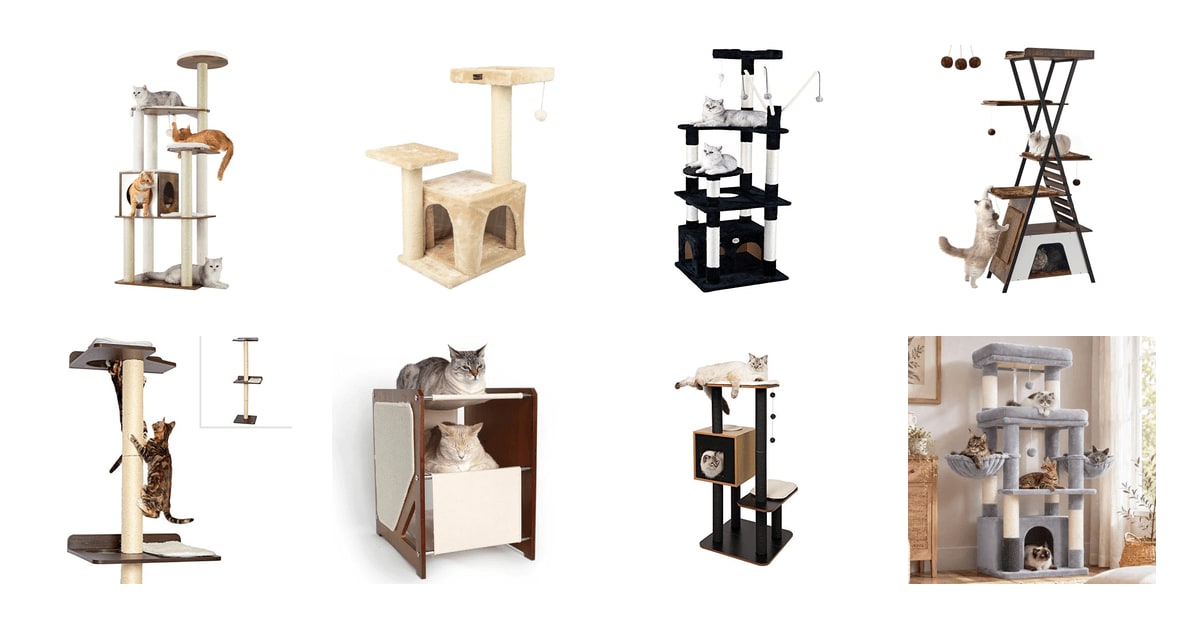
A cat tree isn't decoration. For an indoor cat, it's the closest thing to territory — a high spot to nap, a post to shred instead of your sofa arm, and a hideaway to disappear into when the vacuum comes out. The American Association of Feline Practitioners says indoor cats need at least three distinct vertical levels to move naturally and stay calm. Height also settles households: one peer-reviewed study found that cats with perches above four feet showed 34% fewer inter-cat conflict behaviors than cats stuck at floor level.
Here's the part nobody puts on the box. Almost every freestanding tree wobbles eventually. Wirecutter's long-term reporting found that trees start swaying noticeably after 18 to 24 months of daily use by cats over 12 pounds when they aren't anchored to a wall, and Cats & Kittens Magazine found only 3 of 10 trees stayed stable under large breeds without anchoring. Pressed-wood platforms sag. Sisal unravels. You should plan on using the included anti-tip strap, and you should expect to replace a well-loved tree.
We looked at how these trees are built, how wide the perches actually are, what the sisal is made of, and what owners say after a year of living with them. We think that the Feandrea 64.6-Inch Multi-Level Tower is the best cat tree for most people, and that the FourFurPets 72.4-Inch Modern Cat Tree is the one to buy if you have several cats or a very large one.
Everything we recommend

Washable, wall-anchored, and easy to live with

Taller and roomier, for households with several cats

Big platforms and two hammocks for less money

Real sisal and solid build, for cats that destroy things

Looks like furniture, if you can accept less height
At a glance
| Product | Height | Weight | Price | |
|---|---|---|---|---|
| Feandrea Cat TreeTop pick | 64.6" | 32 lbs | $66.92On sale |
 | Armarkat Classic Real Wood Cat Tree A3207Also in lineup | 32" | 17.2 lbs | $54.99 |
 | Go Pet Club 66" Cat Tree ScratcherAlso consider | 65.5" | 46 lbs | $98.48 |
| FourFurPets 72.4" Modern Cat Tree for IndoorRunner-up | 72.4" | 45.7 lbs | $138.99 |
| PetFusion Ultimate Cat Climbing Tower and ActivityUpgrade pick | 76.8" | 35.9 lbs | $90.22 |
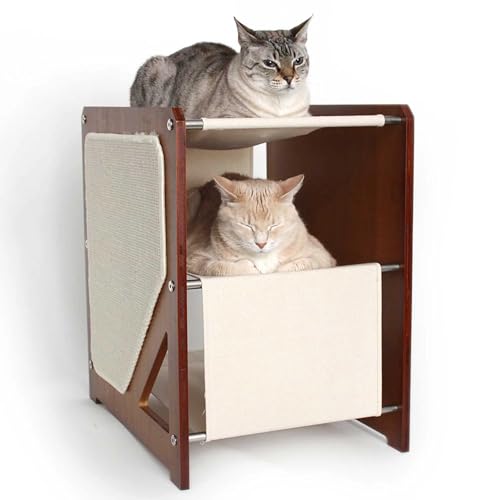 | Catastrophic Creations The Grotto Cat CondoAlso consider | 21" | 18.8 lbs | $220 |
| Vesper Cat TreeAlso great | 47.8" | 40.5 lbs | $159.99 |
| Hey-brother Cat Tree Tower with Extra LargeBudget pick | 51.1" | 31.2 lbs | $71.99On sale |
How we picked
Stability and anti-tip. We looked for a wide base relative to height and an included anti-tip kit, leaning on Forbes Vetted's finding that bases over 24 inches with perches above 60 inches resisted tipping while narrower designs failed. Owner reports of wobble or toppling counted heavily against a tree.
Perch size. Perches narrower than about 12 inches leave a cat's limbs hanging over the edge, which The Spruce Pets links to less use over time. We favored trees whose spec sheets and owner feedback both indicated a cat could stretch out fully.
Sisal quality. Published preference research shows cats use sisal rope 2.4 times more than carpet, so we prioritized rope-wrapped posts over carpet-covered ones. We also weighed owner reports of how fast the wrapping unravels.
Cleaning and covers. Removable, washable cushion covers correlate with higher long-term satisfaction in Chewy's rating data. We looked for washable pads and wipeable hard surfaces, especially for long-haired cats.
Vertical levels. AAFP guidance calls for at least three distinct vertical levels, and a peer-reviewed study tied perches above four feet to fewer inter-cat conflicts. We ruled out anything that couldn't offer real separation between levels.
Top pickOn sale
Washable, wall-anchored, and easy to live with
Feandrea Cat Tree
The Feandrea gives an average cat a 64.6-inch climb, a covered cave, five sisal posts and three cushions you can pull off and throw in the wash. It comes with an anti-tip kit and a weighted base, and it looks like furniture instead of a beige carpet tower.
$66.92fromAmazonList priceThis is the tree that solves the problem most people actually have: cat hair welded into carpet. The three cushions are removable and washable, and the veneered platforms wipe clean with a cloth. If you have a long-haired cat, that difference shows up every week. Chewy's rating data backs it up — models with removable, washable covers score meaningfully higher than otherwise identical models with sewn-in fabric, and the gap comes from long-term hygiene, not first impressions.
Five sisal posts is a lot for a tree this size. That matters because sisal rope beats carpet for scratching: in controlled preference testing published in Applied Animal Behaviour Science, cats went for sisal rope surfaces 2.4 times more often than carpet-covered ones. More posts also means more places to redirect a cat who's currently working on your couch. Coverage spread across the height, not just one post at the bottom, is what actually pulls a cat away from furniture.
At 64.6 inches it clears the 48-inch threshold vets generally point to, and it stacks a top perch, a mid-level cave and a base board into three genuine territory levels. The footprint is modest — under two feet in either direction — so it tucks into an apartment corner. It weighs 32 pounds, and the base has non-slip pads underneath. Use the anti-tip strap anyway. Every tall tree needs one.
Assembly is the quiet win here. Owners routinely finish it in under an hour with clearly numbered parts and picture instructions, which is not a given in this category. The rustic brown and white finish reads as furniture rather than pet gear, and several owners specifically bought it because it doesn't clash with a living room. That's a real consideration when the thing is going to sit in your main room for years.
Flaws but not dealbreakers
The unpadded veneer surfaces are slick. A few owners report that cats slide when they land on the bare wood, and some cats respond by ignoring those levels entirely and only using the posts. If your cat is older, arthritic, or just clumsy, plan on adding a couple of grippy mats or sticky pads to the exposed platforms.
It's built around a standard 9-to-12-pound cat. The top perch and the cave are on the snug side for a Maine Coon or a heavy Ragdoll, and owners of big cats say so. If yours weighs more than about 15 pounds, look at the FourFurPets or the Hey-brother instead.
It costs more than the basic carpeted towers, and you're paying partly for looks. If you don't care what a cat tree looks like and just want maximum climbing surface, you can get more square inches elsewhere.
Runner-up
Taller and roomier, for households with several cats
FourFurPets 72.4" Modern Cat Tree for Indoor
The FourFurPets stands 72.4 inches tall on a metal-frame skeleton with a nearly 30-inch base, and it stacks a big top perch, private condos and sisal boards up its height. It's the one to get when two or three cats need their own levels at the same time.
$138.99fromAmazonThe ASPCA's guidance is one climbing structure per cat plus one spare, which is unrealistic in most apartments. A tall tree with well-separated levels is the practical compromise, and that's what this does. At 72.4 inches with a top perch, enclosed apartments and multiple landings, two or three cats can occupy it at once without crowding each other. Owners with three and four cats — including Maine Coons — consistently say everyone finds a spot.
The metal frame is the reason to pick this over a similarly sized pressed-wood tower. Most tall trees in this price range are MDF and dowels, and MDF is what sags and cracks under a heavy cat over time. A metal skeleton with an oversized base holds its shape better, and owners a year in still describe it as solid. That's a meaningfully different aging curve from the glued-sawdust construction that fails on cheaper towers.
The cushions come off and go in the wash, and the hard surfaces wipe down — the same hygiene advantage as our top pick, on a bigger frame. Several owners switched to this specifically to get away from carpet that traps hair. The modern rustic-brown look also survives being in a living room, which matters when the thing is six feet tall and impossible to hide.
Assembly takes real time. There are a lot of parts, and owners describe it as a project rather than a quick job, though the illustrated instructions get consistent praise. Budget an afternoon and a second pair of hands for standing it up.
Flaws but not dealbreakers
It wobbles if you don't anchor it. Multiple owners are direct about this — at over six feet with a 15.7-inch depth, it needs the included anti-tip kit fastened to a wall, and treating it as freestanding is a genuine safety problem. That's true of most trees this tall, but it's more pronounced here because it's narrow front-to-back.
The footprint is awkward for tight rooms. It's nearly 30 inches wide even though it's shallow, so it wants a long stretch of wall rather than a corner. And at 45.7 pounds assembled, you're not casually sliding it around to vacuum.
Budget pickOn sale
Big platforms and two hammocks for less money
Hey-brother Cat Tree Tower with Extra Large
The Hey-brother MPJ070W is 51 inches tall with two oversized platforms, a roomy condo and two hammocks, plus anti-tip straps and wooden strips reinforcing the base. It gives large cats somewhere to stretch out without the price of a premium tower.
$71.99fromAmazonList pricePerch size is where cheap trees usually cut corners, and this one doesn't. The Spruce Pets notes that perches under 12 inches leave cats dangling their limbs over the edge, which disrupts rest and slowly kills how often they use the tree. The Hey-brother's two enlarged platforms give an adult cat room to actually stretch out. Owners of bonded pairs report both cats sleeping on one platform together, which tells you the surface area is real.
Two hammocks is a smart touch for a two-cat home. Cats fight over the single best spot, and this tree offers several equally good ones — two hammocks, a big condo, two large platforms and a top perch. That spreads a household out instead of concentrating it. It's the same logic behind the ASPCA's more-resources-than-cats guidance, applied to a single piece of furniture.
The base is reinforced with wooden strips and it ships with anti-tip straps, and at 51 inches it's short enough that stability is less fraught than it is on the six-foot towers. Owners describe it as stable with multiple cats climbing, provided you use the strap. It's also the lightest lift in assembly terms among our picks — most people get through it with the printed instructions and no drama.
Flaws but not dealbreakers
The sisal is the weak point. Several owners report the posts unraveling faster than on trees they've owned before, which is what you'd expect at this price. Enthusiastic scratchers will chew through the wrapping within a year, and you'll be looking at replacement rope or a standalone post.
Quality control is inconsistent. Missing screws and slightly tilted assemblies come up in owner feedback often enough to mention. Check the hardware bag against the parts list before you start, and contact the seller rather than improvising if something's short.
At 51 inches it's the shortest of our picks and doesn't reach the four-foot-plus perch height associated with reduced inter-cat conflict by as much of a margin as the taller towers. It clears the bar, but only just.
Upgrade pick
Real sisal and solid build, for cats that destroy things
PetFusion Ultimate Cat Climbing Tower and Activity
The PetFusion Ultimate stands 76.8 inches tall with thick sisal-rope posts instead of carpet wrap and a build that owners describe as still solid years later. It's the pick for a heavy cat, an aggressive scratcher, or a household that has already worn out one tree.
$90.22fromAmazonThis is the tallest tree here at nearly 77 inches, and the height is the point. It gives a cat a genuine top-of-the-room vantage that lower towers can't, which is exactly what the research on elevated perches and reduced conflict is pointing at. In multi-cat homes, owners with as many as six cats describe them racing up it and napping on separate levels without a standoff.
The sisal posts are the reason people buy this instead of something cheaper. They're rope, not carpet wrap, and owners report a 24-pound cat launching himself at the posts without damage. Given that cats prefer sisal rope over carpet by a wide margin in published preference testing, a tree that wraps its posts in real rope is doing the single most useful thing a scratching surface can do. Owners years into ownership still describe theirs as looking intact.
The espresso finish is deliberately plain, which is the whole appeal for people who don't want a beige carpet monolith in the corner. It reads more like a piece of furniture than pet equipment. That's a smaller thing than durability, but it's the reason a lot of design-minded owners land here rather than on a cheaper tower with more platforms.
At 35.9 pounds with a 24-inch-deep base, it's heavy and wide enough at the bottom to feel planted. Forbes Vetted's panel found that trees with bases wider than 24 inches and top platforms above 60 inches passed lateral push testing without tipping, while narrower designs at the same height failed. This sits right at that dimension, and owners who mounted it properly report it not moving even when big cats jump onto the platforms.
Flaws but not dealbreakers
The platforms are slippery. This comes up repeatedly — the wood surfaces need carpet squares or grip pads added, or cats scrabble on landing. It's an easy fix, but it's annoying to have to fix it on the most expensive tree here.
It needs a stud, not a drywall anchor. Owners report pulling it out of drywall anchors more than once with two 12-pound cats before mounting into framing solved it. If you can't hit a stud where you want it, this isn't the right tree for that spot.
The platforms are on the small side for the height, and owners of large cats specifically wish they were bigger. It handles the weight fine; it just doesn't give a Maine Coon much room to sprawl.
Also great
Looks like furniture, if you can accept less height
Vesper Cat Tree
The Vesper V-High Base is a 47.8-inch tower with real wood veneer, memory-foam cushions and a cube with multiple exits. It's the tree to buy when you don't want to look at a carpet tower every day and you're willing to trade some climbing height.
$159.99fromAmazonThis is the only tree here that most people would leave in a living room without apologizing for it. The wood veneer, clean lines and memory-foam pads read as designed furniture rather than pet equipment, and owners say plainly that the styling is why they bought it. If you've been putting off buying a cat tree because they're all hideous, this is the one that ends that stalemate.
The cube with multiple exits does real work for a nervous cat. PetMD's veterinary reviewers note that enclosed spaces lower baseline stress by giving a cat a perceived safe zone, and multiple exits matter because a hideaway with one door can feel like a trap in a multi-cat home. Owners report two medium cats using the nook at once. For a shy cat or a newly adopted one, that enclosed level is often the first place they'll settle.
It's built to hold weight despite the compact size. At 40.5 pounds with a 22-inch square base, it's dense, and owners with cats around 19 pounds report no wobble when a big cat launches at it. That base-to-height ratio is more forgiving than the six-foot towers, which is part of why it stays put.
Assembly gets consistently good marks — under an hour for most people, with wordless instructions and a video available if you need it. That's a low-friction start for a tree that's going to be visible in your main room.
Flaws but not dealbreakers
At 47.8 inches, it's the shortest tree here and it sits right at the height threshold vets generally recommend rather than comfortably above it. If your goal is maximum vertical territory for a busy multi-cat household, the taller towers do more.
The top perch has no lip. Owners note there's nothing stopping a sleeping cat from rolling off the edge, which is worth thinking about if your cat sprawls. Some owners also report a bit of sway despite the wide base.
Photos oversell it. More than one owner mentions the product images not matching the piece that arrived in scale or detail. It's still an attractive tree — just check the listed dimensions against your room rather than trusting the staging.
Who this is for
Buy a cat tree if your cat lives indoors — which describes most of the 45.3 million U.S. cat-owning households counted by the APPA. You want one if your cat is scratching furniture, if you have more than one cat and they're tense with each other, if you have a shy cat with nowhere to hide, or if your current tree has gone gray and wobbly. Kitten owners setting up a first home should get one early, since a young cat that learns to scratch sisal usually doesn't learn to scratch your couch.
Skip it if your cat already has a window perch, a cat shelf and a scratching post and uses all three happily — you may not need a tower. This guide covers freestanding and small mounted trees and condos widely available on Amazon. It doesn't cover full wall-mounted shelving systems, which International Cat Care notes can hold up to 50 pounds per shelf when anchored into studs versus the 10-to-22-pound ratings typical of freestanding platforms. Those save floor space and last longer, but they're a different purchase with a different install.
How we picked
We started from what actually goes wrong with cat trees and worked backward. Stability: a wide base, an included anti-tip strap, and no owner reports of the thing coming down on a cat. Perch size: wide enough that a full-grown cat can stretch instead of dangling a leg off the edge. Sisal: rope-wrapped posts over carpet, since cats prefer rope by a wide margin, and wrapping that holds up past the first year. Cleaning: cushion covers that come off and go in a washing machine, plus hard surfaces you can wipe. Vertical levels: at least three genuinely separate ones, ideally with a top perch above four feet. Assembly: clear instructions and complete hardware, because a tree you can't build straight is a tree that wobbles.
Other cat trees and condos for indoor cats worth considering
If you want the widest base for the money: The Go Pet Club 66" Cat Tree Scratcher ($98.48) — The Go Pet Club 66-inch tower has the biggest footprint here — roughly 29 by 28.5 inches — and at 46 pounds it's the heaviest freestanding tree in this lineup. That squat, wide stance is a real stability advantage, and it packs in a large center condo, high perches and hanging toys. Owners with 13-to-15-pound cats say the platforms fit them well. What you give up is finish quality: the sisal shreds quickly enough that owners have replaced posts more than once, the top perch isn't especially sturdy, and the fabric can peel. A Maine Coon will find its limits. But if you want maximum climbing structure and a planted base, it delivers more of both than anything else here.
If you want something that doesn't look like a cat tree at all: The Catastrophic Creations The Grotto Cat Condo ($220) — The Catastrophic Creations Grotto is a compact three-level bamboo condo with canvas hammocks, shelves and a velcro-attached sisal mat. It's the most attractive object in this lineup by a distance, built from real bamboo laminate with metal tube posts rather than pressed wood and faux fur. At 21 inches tall it isn't a climbing tower — it's a lounging and scratching station, so it can't deliver the four-foot-plus vantage point the conflict research points to. Assembly is also fiddly; the fabric-stretching step confuses people. But if you have a small space and want cat furniture you'd actually leave out when guests come over, this is the one.
The competition
This is what our research surfaced on Amazon, not a survey of everything sold. Cat tree listings turn over constantly, model numbers change between production runs, and a tree that was solid two years ago may ship differently now. Here's the remaining product we looked at and why it didn't make the picks.
The Armarkat Classic Real Wood Cat Tree A3207 ($54.99) — The Armarkat A3207 is a 32-inch beige faux-fur tree with a playhouse, two perches and two sisal posts, aimed at kittens and small cats. Armarkat has a good reputation overall and sells replacement parts, which is genuinely useful. But owner feedback on this specific model is rough: a base made of glued particle board that broke within days, missing tee nuts that made it impossible to bolt the condo down, splinters from the scratching post, and a report of it toppling onto a 20-pound cat. At 32 inches it also falls short of the height most vets suggest. It might still work as a low-stakes perch for a single small kitten in a corner, but we'd anchor it and watch it.
Setup and upkeep
Anchor it. Every tall tree here ships with an anti-tip strap, and the research is clear that freestanding trees start swaying within a couple of years under a heavy cat without one. Find a stud if you can — drywall anchors pull loose. Put the tree where your cat already wants to be: near a window, in a room where you spend time, not shoved into a spare bedroom. Cats use trees that sit in the middle of household life. If yours ignores a new tree, rub a little catnip on the posts and play near the base rather than lifting the cat onto it. For upkeep, run a lint roller over the cushions weekly, pull the covers and wash them every month or two, and wipe hard surfaces with a damp cloth. When sisal starts unraveling, rewrap the post with fresh rope. It's cheaper than a new tree and it's the part that wears out first.
Questions we get
What's the best cat tree for a Maine Coon or other large cat?
Look for wide platforms and a heavy, wide base. The FourFurPets 72.4-inch tower has the height and separated levels for a big cat, and owners with Maine Coons report it holding up. The Hey-brother is the budget option with oversized platforms. Skip anything with perches under 12 inches wide — a big cat will hang off the edge and eventually stop using it.
How tall should a cat tree be?
Aim for at least 48 inches. Most vets recommend that height to satisfy climbing instincts, and a peer-reviewed study found that cats with perches above four feet showed 34% fewer conflict behaviors than cats with only floor-level resources. The AAFP also asks for at least three distinct vertical levels, which most trees over four feet provide.
Is sisal rope or carpet better for scratching?
Rope, clearly. In controlled preference research published in Applied Animal Behaviour Science, cats scratched sisal rope surfaces 2.4 times more often than carpet-covered ones. Rope also holds up better under claws and doesn't shed fibers the way carpet does. If a tree wraps its posts in carpet, expect your cat to keep going back to your couch.
Can a cat tree tip over?
Yes, and it's the main safety issue in this category. Cats & Kittens Magazine found only 3 of 10 standard trees stayed stable under large breeds without wall anchoring, and owner reports include trees falling onto cats. Use the included anti-tip strap and mount it into a stud. A base wider than 24 inches also helps a lot on tall trees.
How do I get my cat to actually use it?
Put it where your cat already hangs out — near a window or in your main living room, not tucked away in a spare room. Rub catnip on the sisal posts and dangle a toy from the upper perches. Don't pick your cat up and place them on it; that usually backfires. If the platforms are slick, add grip mats, since sliding is a common reason cats abandon a new tree.
How long does a cat tree last?
Two to four years is typical for a freestanding tree with daily use. Wirecutter's long-term reporting found unanchored trees start wobbling noticeably after 18 to 24 months under cats over 12 pounds. Sisal usually fails before the frame does, and rewrapping the posts buys you extra years. Removable washable covers also stretch the useful life considerably.
Why you should trust us
For this guide:
- We read manufacturer spec sheets for base dimensions, height, weight ratings and platform sizes across all eight trees, and compared them against published guidance from the AAFP, ASPCA and International Cat Care.
- We reviewed published findings from Applied Animal Behaviour Science, the Journal of Feline Medicine and Surgery, Forbes Vetted, Wirecutter, PetMD and The Spruce Pets on scratching surfaces, perch height and tipping.
- We read through owner feedback for each listing, looking for repeated themes around wobble, sisal wear, missing hardware and platform slipperiness rather than isolated complaints.
- We read owner reviews on every listing, weighted toward the critical ones, because that is where the recurring failures show up.
- We have a systematic way of automatically fetching the latest prices, so the numbers on this page stay current.
- This is a research-focused guide, so the team may not own every product listed — though we often do own the top winners, which gives us extra context for the recommendations.
- We don't accept free products, and the retailer commission never changes which product we recommend.
Sources
Best Cat Trees of 2026 — The Spruce Pets, The Spruce Pets
Best Cat Trees — Wirecutter, The New York Times, Wirecutter
Environmental Enrichment for Indoor Cats — American Association of Feline Practitioners (AAFP), AAFP
Cat Behavior and Vertical Space — Journal of Feline Medicine and Surgery, Journal of Feline Medicine and Surgery
Scratching Behavior in Domestic Cats — Applied Animal Behaviour Science, Applied Animal Behaviour Science
Best Cat Trees & Condos — PetMD Expert Reviews, PetMD
Cat Tree Reviews & Ratings — Chewy, Chewy
Best Cat Trees Tested in 2026 — Forbes Vetted, Forbes Vetted
Indoor Cat Enrichment Guidelines — ASPCA, ASPCA
Large Cat Furniture Testing — Cats & Kittens Magazine, Cats & Kittens Magazine
Wall-Mounted Cat Furniture Safety — International Cat Care, International Cat Care
Amazon product listings and owner reviews for all 8 products
Manufacturer specification pages for each product
Some passages in this guide may be paraphrased with AI help. Prices are refreshed automatically.
More like this.
Continue exploring pet reviews and recommendations.

The Best Cat Trees for Large Breeds
A 20-pound Maine Coon uses a cat tree differently than a 9-pound tabby does. He doesn't hop onto a perch - he launches, lands hard, and then wants to…

The Best Cat Trees And Scratching Posts
A cat tree isn't decoration. Scratching is how cats shed the outer sheath of their claws, stretch their backs, and leave scent marks that tell them the…

The Best Cat Trees For Large Cats
A big cat changes what a cat tree has to do. A 20-pound Maine Coon doesn't step onto a perch - he lands on it, and the whole frame feels it. Platforms…

The Best Indoor Dog Potty Systems for Apartments
Your dog needs to go out every few hours, and in an apartment that means shoes, a leash, a hallway, an elevator and a sidewalk. An indoor potty shrinks…

The Best Artificial Christmas Trees
An artificial tree is something you own for a decade and use for six weeks a year. So the things that matter aren't the ones printed on the box. You care…

The Best Stainless Steel Cat Water Fountains
Cats are terrible drinkers. They evolved in dry places, they get most of their water from prey, and a bowl of still tap water just doesn't register as…