The Best Indoor Dog Potty Systems for Apartments
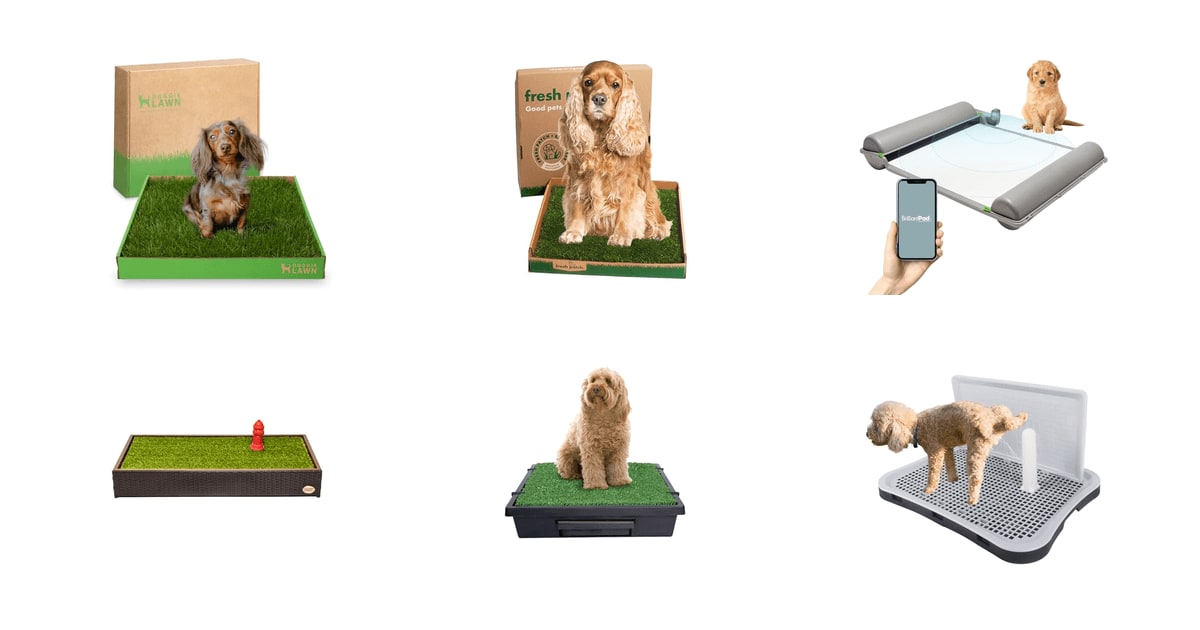
Your dog needs to go out every few hours, and in an apartment that means shoes, a leash, a hallway, an elevator and a sidewalk. An indoor potty shrinks all of that down to ten feet of floor. That's the whole appeal, and it's a real one — for puppies, who the ASPCA says need a bathroom chance every one to two hours under twelve weeks old, for senior dogs who can't do stairs anymore, and for anyone working a twelve-hour shift.
But none of these are odor-free, and you should know that going in. Real grass browns and wilts after a week or two, then has to be swapped. Untreated synthetic turf picks up a sour bacterial smell within two or three days if you skip rinsing it, which Good Housekeeping's pet lab has flagged as a common failure. Sealed pad rolls handle smell better than anything else, but the machine still needs your attention. And no system trains your dog for you.
The other thing worth setting expectations on: switching a dog from outdoor grass to an indoor surface usually takes two to six weeks of consistent work, no matter which product you buy. Some dogs never fully accept plastic turf. That's why our recommendations lean toward surfaces dogs already recognize. We think that the DoggieLawn Real Grass Dog Pee Pad is the best indoor dog potty system for most people, and that the Fresh Patch Real Grass Patch is the one to buy if your dog is on the larger side or needs more room to circle.
Everything we recommend

Real grass most dogs use on the first try, delivered fresh

A bigger square of real grass, if your dog needs the room

A low-sided litter pan for small dogs and stiff old joints

Seals each mess away, if your dog is small and pad-trained

The big, plumbed-in option for a balcony or a bigger dog
At a glance
| Product | Potty Surface | Dimensions | Price | |
|---|---|---|---|---|
| DoggieLawn Real Grass Dog Pee Pads -Top pick | Real Grass | 24x16 In | $34.85 |
| Fresh Patch Real Grass Patch for DogsRunner-up | Real Grass | 24x24 In | $39.95 |
| BrilliantPad Smart Self-Cleaning Indoor Dog PottyUpgrade pick | Self-Cleaning | 25x36 In | $269.99On sale |
| Porch Potty Standard Dog Grass Pad -Also great | Synthetic Grass | 50x26 In | $309.95 |
 | PetSafe Pet Loo Portable Dog PottyAlso consider | Synthetic Grass | 24.8x24.8 In | $79.84On sale |
 | Dmnnlp Indoor Dog Potty Tray with SplashAlso in lineup | Pad Holder | 20x15.5x1.4 In | $28.99 |
| PuppyGoHere Large Dog Indoor Litter Box UpBudget pick | Litter Box | 19.5x23.8 In | $39.95 |
How we picked
Odor control. We weighted this above everything else, because aggregated Chewy review data puts it as the top purchase criterion for this category by a wide margin. We looked for systems that either process urine biologically, seal it away, or drain it out — not ones that just hold it.
Surface a dog accepts. AKC trainers note that dogs trained on outdoor grass switch to real-grass indoor systems faster than to turf or litter. We favored surfaces with a natural scent cue, and flagged the products where owner feedback shows dogs refusing to go.
Size and dog weight. We checked stated weight limits and actual surface dimensions against each other, since listing copy tends to be generous. Anything that couldn't honestly serve the dog size it claims got called out.
Ongoing cost. Dog Food Advisor's analysis puts grass subscriptions at roughly three to five times the annual cost of a reusable synthetic system. We wanted at least one strong pick in each cost structure so you can choose the one that fits.
Cleaning and turnaround. Good Housekeeping's pet lab found untreated synthetic pads develop noticeable bacterial odor within two to three days without rinsing. We looked at how much work each system asks of you daily, and how fast it's usable again.
Top pick
Real grass most dogs use on the first try, delivered fresh
DoggieLawn Real Grass Dog Pee Pads -
DoggieLawn ships a live, hydroponically grown patch of California grass in a disposable tray, so setup is two minutes and cleanup is throwing the whole thing away. It's the surface your dog already knows, which is why training usually goes faster here than on plastic turf.
$34.85fromAmazonMost dogs don't need convincing to use real grass. That's the entire argument for this thing. AKC trainers point out that a dog already trained to go outside on grass takes to an indoor grass patch faster than to synthetic turf or litter, because the scent does the work. If you're bringing home a puppy in a fifth-floor walk-up, or you've just had surgery and can't manage the stairs, that head start matters more than any other spec here.
The tray is built into the pad, which sounds minor until you've dealt with the alternative. There's no plastic base to rinse, no liner to fit, no reservoir to empty into a toilet. You set the box down, peel back the top, and you're done. When the grass gives out, the pad and tray go out together as one unit. For a small apartment, having zero permanent hardware in the corner is a genuine advantage.
The grass doesn't just soak up urine — its roots break it down. DoggieLawn's own research and Forbes Vetted's independent testing both point to the same thing: a living root system processes urine biologically, so surface odor fades faster than it does on synthetic pads that only hold liquid until you rinse them. In a studio where the potty sits fifteen feet from your bed, that difference is the whole ballgame.
Replacement timing scales with your dog, and DoggieLawn is upfront about it: every one to two weeks for a dog over 50 pounds, every two to four weeks for one under 25. You can plan around that. If you've got a Yorkie and you're gone at work all day, you'll settle into a rhythm quickly. Owners with two small dogs or a heavy drinker will land at the short end of that range.
Flaws but not dealbreakers
It runs on a subscription, and the math adds up over a dog's life. Dog Food Advisor's cost analysis puts grass-delivery services at roughly three to five times the annual cost of a one-time reusable synthetic system. If your dog will use turf, turf is cheaper. This is the option you pick when your dog won't, or when you'd rather never scrub anything.
This particular size is 24 by 16 inches, and the listing's claim about large breeds is optimistic. A Lab isn't going to use this comfortably. Bigger sizes exist in the line, but at this footprint, treat it as a small- and medium-dog product.
Shipping is the weak link. A recurring theme in owner feedback is patches showing up dry or already browning, which cuts a short lifespan even shorter. When a delivery arrives green and lush, people are thrilled. When it doesn't, they're annoyed — and they've paid for a week that turned into three days.
Runner-up
A bigger square of real grass, if your dog needs the room
Fresh Patch Real Grass Patch for Dogs
Fresh Patch essentially invented this category, and its 24-by-24-inch square gives a dog more room to circle and pick a spot than our top pick does. It's also fully disposable, with nothing to wash between deliveries.
$39.95fromAmazonThe shape is the real difference. Twenty-four inches square gives a dog room to turn around and sniff out a spot, which is exactly the behavior you want to encourage during training. Our top pick's rectangle is narrower. If your dog paces before going, or if you've got two small dogs sharing one patch, the extra width earns its floor space.
Everything else about the pitch is the same, and that's a compliment. It's hydroponically grown California sod, so you get the same instinctive pull and the same root-level odor processing that makes real grass work indoors. Fresh Patch says its grass is about half the weight of traditional sod, which matters more than you'd think when you're carrying a used one down a hallway to the trash chute.
Owner feedback here skews notably positive, especially from people in high-rises during a bad winter and from families potty-training a puppy around a toddler. That last group has a specific reason to like it: there's no loose pad for a two-year-old to grab. It's also a common pick for senior dogs who've started having accidents overnight and need something familiar within a few steps of where they sleep.
Flaws but not dealbreakers
Lifespan is the persistent complaint, and it's the same one that dogs every real-grass service. Owners with a 25-pound dog frequently report a patch going brown and smelly around day five, not day ten. Sizing up helps, but it doesn't change the underlying math — the more your dog weighs, the faster the root system saturates.
This one is listed for pets in the 15-to-30-pound range at this size, so it's not a large-dog answer either. And like our top pick, quality depends on what the delivery truck hands you. A patch that arrives brown is a patch you paid for and can't really use.
Budget pick
A low-sided litter pan for small dogs and stiff old joints
PuppyGoHere Large Dog Indoor Litter Box Up
The PuppyGoHere is a simple polypropylene pan with a low front entry, sized for dogs up to about 20 pounds. It takes either dog litter pellets or a pad, costs nothing to run beyond the fill, and has the smallest practical footprint of anything here.
$39.95fromAmazonIf your dog is old and creaky, the low entry is the feature that matters. Stepping over a four-inch wall is a real obstacle for a small dog with arthritis, and it's the reason older pets start going next to their box instead of in it. This one has a cut-down front lip and an open top, so there's no lid to duck under and nothing to climb. Puppies get the same benefit from the other direction.
You get to choose your fill, which is more useful than it sounds. Dog-specific litter pellets absorb around three times their weight in liquid according to PuppyGoHere's specs — the highest absorbency per gram of any non-grass format here — so odor stays down between scoops. But if your dog is already pad-trained and you don't want to switch, a pad drops right in. Nothing about the pan forces the decision.
It's reinforced at the base and made of sturdy polypropylene, which shows up in owner feedback as the thing people mention years later. The walls contain scatter, the bottom doesn't warp when it's full, and cleaning is soap and water in a tub. For a studio apartment where the potty has to live in the bathroom and disappear when guests come over, that's the right set of tradeoffs.
Flaws but not dealbreakers
The size ceiling is firm. Twenty pounds is the listed limit, and the pan's roughly 24-by-19-inch interior backs that up. A beagle would be cramped. A Lab is out of the question.
Litter is a training project of its own. Dogs don't have a cat's instinct to dig and bury, so some never take to pellets at all, and you may end up using it as a pad holder instead. Also worth knowing: a large share of the enthusiasm for this box comes from cat owners, whose needs overlap with yours but aren't identical.
Upgrade pickOn sale
Seals each mess away, if your dog is small and pad-trained
BrilliantPad Smart Self-Cleaning Indoor Dog Potty
The BrilliantPad rolls a fresh pad forward after each use and wraps the old one in odor-blocking film, so waste is sealed instead of sitting out. A camera and app let you check in from work, and one roll covers roughly 25 to 30 uses.
$269.99fromAmazonList priceSealing waste beats absorbing it, and that's the case for spending more. Every other system here leaves the mess exposed until you deal with it. This one wraps it. If you're gone for ten hours and your apartment is 600 square feet with one window, coming home to sealed waste instead of a soaked pad is the difference between a livable setup and one you resent. Odor control is the top criterion for buyers in this category by a wide margin, per aggregated Chewy review data.
BrilliantPad's specs put one roll at about 25 to 30 uses — call it two to four weeks for a single small dog — and the pads are five layers thick, so a single use doesn't soak through. The app tracks when your dog goes, which sounds like a gimmick until you're using it to spot that your puppy suddenly went four times in an hour.
The catch is right there in the specs: this is for dogs under 25 pounds. Not a soft suggestion. The machine is about 34 by 24 inches, and a bigger dog will overshoot the roll entirely. It also works best for a dog that's already pad-trained, since the surface is basically a pad that happens to move. Owners transitioning from pads describe an easy handoff; owners starting from scratch describe a fight.
Setup asks for a power outlet and Wi-Fi, and it will occupy a permanent spot on your floor. Think of it as a small appliance, not an accessory. In exchange you stop touching used pads, which for a lot of people — especially anyone with a hand injury, a bad back, or plain squeamishness — is the entire reason to buy it.
Flaws but not dealbreakers
It is not odorless, and owners who expected that are the loudest critics. Solid waste in particular can leave a smell in the machine between full roll changes, especially with an older dog. Sealing helps a lot. It doesn't eliminate.
Rolls are an ongoing purchase, and you're locked into the manufacturer's. There's no generic substitute. Between the machine and the resupply, this is the most expensive way to solve this problem in the lineup.
Some owners report the pad doesn't span the full width of the tray, leaving a strip where a dog can miss. Placement and a bit of retraining usually fix it, but it's a design annoyance on a premium product.
Also great
The big, plumbed-in option for a balcony or a bigger dog
Porch Potty Standard Dog Grass Pad -
At 50 by 26 inches, the Porch Potty Standard is by far the largest surface here, with realistic synthetic grass over an angled draining base and a 14-foot hose that carries runoff away. It's built for a balcony or patio and for dogs too big for everything else on this list.
$309.95fromAmazonSize is the reason to look at this. Nothing else here gives a medium or large dog enough room to use the same spot twice a day without stepping in yesterday's. If you've got a 60-pound dog and a third-floor unit with a balcony, this is realistically your only option in this group — the grass patches and pad trays are all sized for dogs well under that.
The drain hose is what separates it from a turf mat. Urine runs down the angled base and out through 14 feet of flexible hose to a drainpipe, gutter or planter, so it isn't pooling under the grass. Daily upkeep is picking up solids and rinsing the surface for about a minute with a hose or watering can. Owners who set it up on a patio and rinse it consistently tend to stay happy with it for years.
It also ships with a scenting fire hydrant, a training booklet and a manual — which sounds like packaging filler but isn't. The hydrant gives a puppy or an unsure older dog a target, and target-marking is one of the more reliable shortcuts through the two-to-six-week transition. It's a reusable system, so there's no subscription and no consumable beyond water.
Flaws but not dealbreakers
The drainage is the thing that goes wrong. A recurring complaint in owner feedback is that the drain opening and its connection are small and sharply angled, so flow backs up and pools instead of clearing. Several owners describe modifying the setup themselves to get it working the way they expected — fine if you're handy, frustrating if you're not.
Indoors, you need somewhere for the water to go, and in most apartments that means a bathroom or a shower stall. On a balcony it's straightforward. In a living room it's a project.
It's 25 pounds and 50 inches wide. That's a piece of furniture, not a mat you slide under a console table. And the synthetic grass will need replacing periodically as it holds onto smell, even with regular rinsing.
Who this is for
Buy one of these if you don't have a yard and getting outside is genuinely hard — a walk-up with no elevator, a high-rise where the trip takes ten minutes, a city where January means ice on the sidewalk. It's also the right call if you're gone eight to twelve hours, if you've got a puppy who physically can't hold it that long, or if your dog is old enough that stairs have become a problem. Roughly 23 million U.S. households own dogs while living in apartments or condos, per the APPA's national survey, so you're solving a common problem, not a strange one.
Skip it if you have reasonable outdoor access and your dog is already reliable out there. Adding an indoor option can muddy a housetraining routine that's working fine. This guide covers systems meant to live inside an apartment full-time — real grass patches, synthetic turf trays, litter pans and automated pad machines. It doesn't cover plain disposable pee pads, outdoor kennel turf, or artificial lawn you'd install permanently. And it can't cover every product on the market; it covers what we could research and confirm.
How we picked
We judged every system against five things. Odor control: the surface has to process, seal or drain urine rather than just hold it, since that's the criterion apartment buyers rank first. Surface acceptance: real grass gives dogs a scent cue that turf and litter don't, and AKC trainers say that shortens the transition. Honest sizing: we compared stated weight limits against actual surface dimensions, because listing copy about large breeds is often wishful. Ongoing cost: subscriptions run several times the annual cost of a reusable system, so we made sure both structures are represented. Cleaning burden: how much work it asks of you every single day, and how quickly it's ready again.
Other indoor dog potty systems for apartments worth considering
If you want a reusable synthetic system with a sealed waste bin: The PetSafe Pet Loo Portable Dog Potty ($79.84) — The PetSafe Pet Loo uses three layers — a rinseable synthetic grass mat, a perforated tray underneath, and a covered Pee-Pod reservoir — so urine drops out of contact with your dog's paws instead of pooling on the surface, which is the standard failure of cheap single-tray trays. A Wee Sponge powder gels the liquid so you can slide the pod out and toss the contents without sloshing. It's a trusted brand, it comes in three sizes, and there's no subscription. Two things keep it out of the picks: you have to keep buying powder and actually use enough of it, and plenty of owners report their dog simply won't use synthetic grass. If yours already goes on turf, this is a solid, sensible buy.
The competition
Here's what else our research turned up. This isn't the whole market — it's the set of products we could confirm and compare against the picks above.
The Dmnnlp Indoor Dog Potty Tray with Splash ($28.99) — The Dmnnlp Indoor Dog Potty Tray is a 20-by-15.5-inch plastic pad holder with a raised splash guard at the back, a snap-on grate, and a non-slip base. The concept is sound and the backsplash does help with a male puppy who aims high. But owner feedback keeps hitting the same problem: the grate doesn't lock down securely, so a playful puppy knocks it loose and shreds the pad underneath — which defeats the point of a pad holder. Several people report working around it with binder clips or skipping the grate entirely. If you want a bare-bones way to keep a pad flat and your floor dry, and you don't mind a little DIY, it'll do. Most people will be happier with a pan that holds its shape.
Care and cleaning
Whatever you buy, the daily routine is the same: pick up solids right away, every time. That single habit does more for odor than any product claim. Synthetic turf needs rinsing every day or two — Good Housekeeping's pet lab found untreated pads pick up a detectable bacterial smell within two to three days without it — and a monthly soak with an enzyme cleaner keeps it from going permanently sour. Real grass doesn't get cleaned; it gets replaced, roughly weekly for a big dog and every two to four weeks for a little one. For pad machines, change the roll before it runs out rather than after. And keep the potty away from your dog's food and bed, and out of a hot sunny corner, which speeds up everything you don't want.
Questions we get
Is real grass actually better than synthetic for indoor training?
For training, usually yes. AKC trainers note that dogs already used to going outdoors accept real grass faster, because the scent triggers the instinct without any coaching from you. Real grass also has roots that biologically process urine, so odor fades rather than sitting on the surface. The tradeoff is cost and lifespan — you're replacing it every one to four weeks depending on your dog's size.
How long does it take to train a dog to use an indoor potty?
Plan on two to six weeks of consistent reinforcement. That range holds regardless of which system you pick. Take your dog to the potty on a schedule — every one to two hours for a puppy under twelve weeks, per ASPCA guidance — and reward immediately after they go. A scent attractant or a marking post shortens it for some dogs.
How do you keep an indoor dog potty from smelling in a small apartment?
Remove solids immediately and don't let liquid sit. Synthetic turf needs a rinse every day or two and an enzyme soak monthly, since untreated pads develop bacterial odor within about two to three days. Real grass needs replacing on schedule, not when it starts to smell. If odor is your main concern and your dog is small, a sealing pad machine handles it better than anything else here.
What works for a large dog in a small apartment?
Your options narrow fast, because most indoor potties are built for dogs under 25 or 30 pounds. The Porch Potty Standard is the only product in this lineup with the surface area for a bigger dog, at 50 by 26 inches with a drain hose. You'll want somewhere to route that hose — a balcony, patio or shower. Large real-grass patches exist too, but you'll be replacing them about weekly.
How often do you have to replace a real grass pad?
DoggieLawn's guidance is every one to two weeks for dogs over 50 pounds, and every two to four weeks for dogs under 25. The driver is urine saturation of the root system, not calendar time. Owners with a mid-sized dog frequently find a patch browning sooner than the estimate — around day five isn't unusual — so sizing up buys you a few days.
Can you use an indoor dog potty on carpet?
You can, but choose carefully. Any system with a single open tray risks liquid escaping at the edges and wicking into carpet, which is nearly impossible to fully clean. Look for a raised splash guard, a sealed reservoir like the Pet Loo's Pee-Pod, or a self-sealing pad machine. A waterproof mat underneath is cheap insurance either way.
Why you should trust us
For this guide:
- We read manufacturer specifications and documentation for every system here, including stated weight limits, surface dimensions, drainage design and replacement schedules.
- We compared published findings from Forbes Vetted and Good Housekeeping's pet lab, plus training guidance from the AKC and ASPCA, against what each product claims.
- We reviewed recurring themes in owner feedback for each listing — what fails, what holds up over months, and which dogs refuse which surfaces.
- We read owner reviews on every listing, weighted toward the critical ones, because that is where the recurring failures show up.
- We have a systematic way of automatically fetching the latest prices, so the numbers on this page stay current.
- This is a research-focused guide, so the team may not own every product listed — though we often do own the top winners, which gives us extra context for the recommendations.
- We don't accept free products, and the retailer commission never changes which product we recommend.
Sources
Best Indoor Dog Potties — The Spruce Pets, The Spruce Pets
Best Dog Potty Pads — Good Housekeeping, Good Housekeeping
Indoor Potty Training for Adult Dogs — American Kennel Club, American Kennel Club
Housetraining Your Dog — ASPCA, ASPCA
Best Indoor Dog Potties — Dog Food Advisor, Dog Food Advisor
BrilliantPad How It Works — BrilliantPad Official, BrilliantPad
Porch Potty Premium Product Specifications, Porch Potty
DoggieLawn FAQ and Replacement Guide, DoggieLawn
PetSafe Pet Loo Product Documentation, PetSafe
Best Dog Grass Pads — Forbes Vetted, Forbes Vetted
Indoor Dog Potties Reviewed — PetMD, PetMD
APPA 2025–2026 National Pet Owners Survey, American Pet Products Association
Amazon product listings and owner reviews for all 7 products
Manufacturer specification pages for each product
Some passages in this guide may be paraphrased with AI help. Prices are refreshed automatically.
More like this.
Continue exploring pet reviews and recommendations.

The Best Ways to Display Collectibles in a Small Apartment
Collections grow faster than apartments do. The average US apartment has shrunk from 941 square feet in 2015 to about 882, and studios in big cities often…

The Best Portable Washing Machines for Apartments
Laundry day in an apartment without hookups is a logistics problem. You haul a bag down three flights, feed quarters into a machine someone else just left…

The Best Cat Trees and Condos for Indoor Cats
A cat tree isn't decoration. For an indoor cat, it's the closest thing to territory - a high spot to nap, a post to shred instead of your sofa arm, and a…

The Best Cordless Dog Grooming Clippers
A dog clipper earns its keep in the small jobs. The mat forming behind one ear, the fur creeping over the paw pads, the sanitary trim nobody wants to book…

The Best Dog Training Treats
Training treats are less about nutrition than about arithmetic. A ten-minute session can run 80 to 150 rewards, so the size of each one decides whether…

The Best Dog Strollers
Most dogs never need a stroller. But plenty of dogs need one for a stretch of their life - the fourteen-year-old beagle whose back legs quit at the…