The Best Crawl Space Vapor Barriers
A crawl space is the part of your house you never look at, and it's where moisture problems start. Damp soil gives off water vapor around the clock, and that vapor rises into your joists, your insulation and eventually the air you breathe upstairs. A vapor barrier is just a sheet of plastic between the dirt and your floor system. It's low-tech, and it's the single most useful thing you can do down there. Get the thickness and the seams right and it works for decades.
Here's the honest part: none of these listings publish ASTM E1745 Class A test data, and most energy codes want that paperwork before you seal up a conditioned crawl space. Thickness claims aren't independently verified either, and owners occasionally report a roll that measures thinner than the label says. Plastic also can't fix water. If you have standing water or a spring under the house, you need drainage and a sump pump first. A barrier laid over active water just traps it against your foundation.
So the choice comes down to three things you can actually check before you buy: thickness, roll width and whether tape comes in the box. Thicker plastic survives gravel and your own knees. Wider rolls mean fewer seams, and seams are where these installations fail years later. We think that the Crawldryer 20 Mil Vapor Barrier is the best crawl space vapor barrier for most people, and that the Poly-America Husky Contractor's Choice 10 Mil is the one to buy if you have a big crawl space and want to cover it with almost no seams.
Everything we recommend
Thick enough to survive rocks, knees and a long crawl

Wall-to-wall coverage in one pass, if you can drag it in
Code-minimum ground cover for a dry, vented crawl space

Barrier, tape, sealant and fasteners in one box
A 20 mil roll one person can actually wrestle into place
At a glance
| Product | Thickness | Sheet Size | Price | |
|---|---|---|---|---|
| Crawl Space Vapor Barrier - 20 MilTop pick | 20 Mil | 10' x 100' | $386.99On sale |
| Whitecap Crawl Space Vapor Barrier Encapsulation KitUpgrade pick | 12 & 20 Mil | 2,000 Sq Ft | $1,049.99On sale |
 | Farm Plastic Supply - Dura Skrim StringAlso consider | 6 Mil | 13' x 100' | $319.99 |
| Crawl Space Vapor BarrierAlso great | 20 Mil | 10' x 50' | $199.49On sale |
| Poly-AmericaRunner-up | 10 Mil | 20' x 100' | $222.22 |
| Farm Plastic Supply - Crawl Space VaporBudget pick | 6 Mil | 10' x 100' | $89.99 |
 | Grip-Rite Heavy Duty Poly Sheeting for InteriorAlso in lineup | 4 Mil | 10' x 25' | $28.73 |
How we picked
Thickness and tear resistance. We compared stated mil thickness against the IRC's 6 mil minimum and the 10 to 20 mil range building scientists recommend for real installations. Anything at or below the code floor had to earn its place on other grounds, like a reinforced scrim.
Roll width and coverage. Wide rolls cut the number of seams, and seams are the most common long-term failure point in DIY work. We favored rolls that can cover a typical crawl space footprint without a center seam.
Color and light blocking. Black film keeps diffuse daylight from foundation vents off the soil, which prevents growth underneath the barrier. Where a product is white, we looked for whether the visibility payoff justifies it.
What's included. Butyl-backed seam tape and sealant aren't optional in a humid sub-grade space, so we noted which products ship with them and which leave you sourcing accessories separately.
Owner-reported durability. We read through owner feedback for repeated reports of tearing during installation, rolls too heavy to handle, and thickness that didn't match the label. Consistent complaints outweighed listing claims.
Top pickOn sale
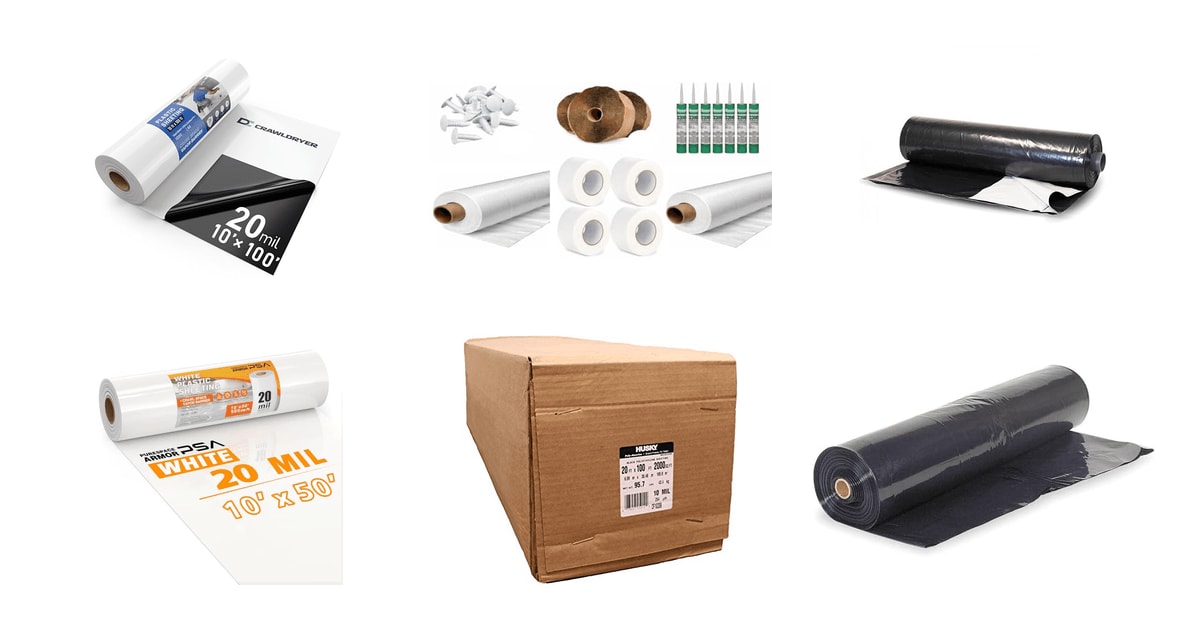
Thick enough to survive rocks, knees and a long crawl
Crawl Space Vapor Barrier - 20 Mil
This is a true 20 mil polyethylene sheet, 10 feet wide and 100 feet long, so one roll covers roughly 1,000 square feet. Owners consistently describe it as thick enough to shrug off gravel and dragged lumber, which is exactly what you want under a house.
$386.99fromAmazonList priceTwenty mil is the thickness that keeps you from doing this job twice. The IRC sets the floor at 6 mil for a vented crawl space with exposed earth, and plenty of products stop right there. Building science guidance has pushed toward 10 to 20 mil for years, for a boring reason: thin poly tears. It tears on gravel, on pipe hangers, and on the installer's elbows during the two hours you spend positioning it.
Installation is where most barriers get wrecked, not year ten. You're on your hands and knees in an 18-inch gap, pulling a heavy sheet past pier blocks and HVAC ducts. Owners of this roll repeatedly describe it as surprisingly tough, including one who dragged boards across a finished layer without opening a hole. That's the failure mode you're buying against, and it's the one thickness actually solves.
The 10-by-100-foot format matters more than it looks. Most residential crawl spaces are under 1,000 square feet, so a single roll usually covers the ground plane with material left for wall runs and overlaps. Fewer rolls means fewer seams, and a taped seam is always weaker than uncut plastic. If your crawl space is narrow in one direction, you can often run strips with only edge overlaps.
The white surface is more useful than it sounds. In a space with no lighting, a work lamp on white plastic gives you enough bounce to see what you're doing, and it makes punctures obvious later when you're checking on things. The polyethylene is odor-free, so nothing off-gasses into a sealed space, and it stays flexible in cold weather instead of cracking on a winter install.
Flaws but not dealbreakers
Nothing else comes in the box. You'll need butyl-backed seam tape and mechanical termination strips before you start, and those aren't small purchases. Budget for them up front so you don't end up taping seams with whatever's in the garage, which is how installations delaminate within a couple of seasons.
The listing doesn't publish an ASTM E1745 classification or a perm rating, and the feature bullets aren't perfectly consistent about thickness. If your jurisdiction wants documentation for a conditioned crawl space, ask the seller for it before ordering. Owners also note that this stuff is stiff rather than floppy, so plan your orientation and cuts before you unroll anything in a tight space.
Runner-up
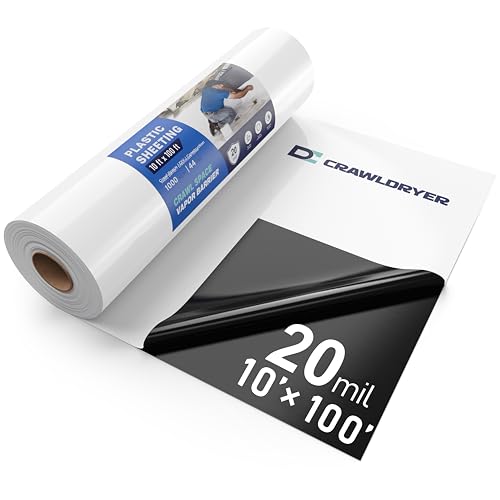
Wall-to-wall coverage in one pass, if you can drag it in
Poly-America
Poly-America's Husky sheeting is 10 mil black polyethylene in a 20-by-100-foot roll, covering about 2,000 square feet. The width is the point: in most crawl spaces you can run it end to end without a single center seam, which is the most common long-term failure point.
$222.22fromAmazonA 20-foot width changes how the job goes. Most residential crawl spaces are narrower than 20 feet in at least one direction, so you lay strips that reach wall to wall with nothing to tape down the middle. Every seam you don't cut is a seam that can't lift, delaminate or wick moisture in five years. For a big footprint, that's worth more than a few extra mils.
Black plastic is the right call under a house. Clear and translucent poly lets diffuse daylight through foundation vents reach the soil underneath, and that's enough to grow algae and mold below the very barrier meant to stop moisture problems. Black pigment blocks it. Poly-America is a long-established American manufacturer, and this sheeting is a jobsite staple for good reason.
Ten mil sits comfortably above the code minimum without the price of a 20 mil sheet. Owners describe it as thick, sturdy and hard to poke through during installation, including people who covered garage slabs and old basements with it. For a vented crawl space with seasonal dampness rather than active water, it's plenty of barrier.
Flaws but not dealbreakers
The roll weighs about 96 pounds. A standard crawl space hatch is around 22 inches, and wrestling a roll that heavy through it alone isn't realistic. Most people cut sections above grade and carry them in, which costs time and adds seams — so measure carefully before you make a single cut.
Ten mil is genuinely less puncture-resistant than 20 mil under repeated foot traffic or on sharp rock. If you'll be under there regularly for plumbing or wiring, or your soil is full of jagged fill, go thicker. There's no tape or sealant included, and no published perm rating or ASTM classification.
Budget pick
Code-minimum ground cover for a dry, vented crawl space
Farm Plastic Supply - Crawl Space Vapor
This is plain 6 mil black polyethylene in a 10-by-100-foot roll, made from virgin material rather than recycled feedstock. It meets the IRC minimum for a vented crawl space with exposed earth, and the black film keeps light off the soil underneath.
$89.99fromAmazonIf your crawl space is vented, dry and just a bit musty, this does the job the code asks for. You get 1,000 square feet of black film that stops soil vapor from rising into the joists and keeps the space from smelling like dirt. It's the same width as our top pick, so it handles like a manageable roll rather than a piece of furniture.
The material quality is better than the thickness suggests. Farm Plastic Supply says this is true 6 mil made from new polyethylene, not recycled content, which is where budget commodity poly usually cuts corners. Recycled film varies in thickness across the roll and tears in unpredictable spots. Consistent stock matters more when you're only working with 6 mil to begin with.
Black is the safer color at any thickness, and it's the reason we'd pick this over the clear sheeting sold next to it. Diffuse light through foundation vents is enough to support growth under a clear sheet, which creates a biological moisture problem exactly where you can't see it. Blocking the light removes the whole issue.
Flaws but not dealbreakers
Six mil is a legal minimum, not a recommendation. Plain unreinforced poly tears on rock, on pipe penetrations and on your own knees, and once a tear starts nothing stops it from running. If you see damp soil, efflorescence on the piers or condensation on ductwork, skip this tier and buy 10 mil or thicker.
Owner feedback on this specific listing is thin, so we'd only put it in a low-risk space where a failure means re-covering the ground rather than replacing a joist. There's no tape, no sealant, and no published perm rating or ASTM classification for anyone whose energy code requires documentation.
Upgrade pickOn sale
Barrier, tape, sealant and fasteners in one box
Whitecap Crawl Space Vapor Barrier Encapsulation Kit
The Whitecap kit bundles 12 and 20 mil woven barrier for up to 2,000 square feet with seam tape, butyl tape, sealant and fasteners. It's the closest thing here to a full encapsulation system, and it removes the guesswork about which tape to buy.
$1,049.99fromAmazonList priceMost DIY encapsulations fail at the seams, not the sheeting. Homeowners buy good plastic and then tape it with whatever's already in the garage, and standard acrylic tape gives up in a humid sub-grade space within a season or two. This kit includes butyl-backed tape, which keeps its grip in exactly those conditions, plus sealant for the gaps around piers and penetrations that tape can't bridge.
The two-thickness approach mirrors how contractors actually work. Heavier 20 mil woven goes on the ground plane, where it takes the abuse, and lighter 12 mil woven handles walls and tight transitions where you need the material to fold and conform. Trying to run 20 mil up a rubble foundation wall is miserable; a lighter woven film cooperates.
Woven construction is the real differentiator over plain poly. Interlaced strands arrest a tear instead of letting it run the length of the sheet, which matters if your crawl space has gravel, irregular pier blocks or anyone crawling through twice a year. Coverage runs to 2,000 square feet, so a large or oddly shaped footprint won't leave you short mid-project.
For a conditioned, unvented crawl space, this is the kit we'd start with. Full encapsulation means the ground and the walls up to the sill plate, sealed as one envelope, and that takes far more tape and sealant than people expect. Having it all arrive together is worth something on a project you'll only do once.
Flaws but not dealbreakers
It's the most expensive option here by a wide margin, and if your crawl space is under about 800 square feet you're paying for material you'll never unroll. A single 20 mil roll plus separately purchased butyl tape covers a small space for considerably less.
Owner feedback on this kit is close to nonexistent, so there's no independent read on how the woven barrier holds up or how well the included sealant performs over time. The listing also doesn't publish a perm rating or ASTM E1745 classification — ask for it if your lender or local energy code wants documentation before you seal the space.
Also greatOn sale
A 20 mil roll one person can actually wrestle into place
Crawl Space Vapor Barrier
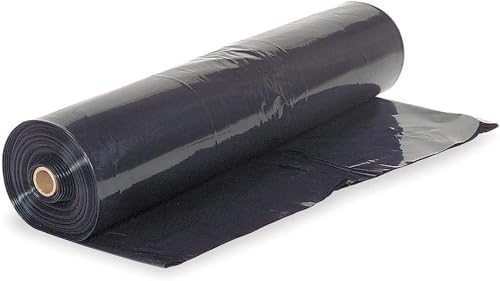
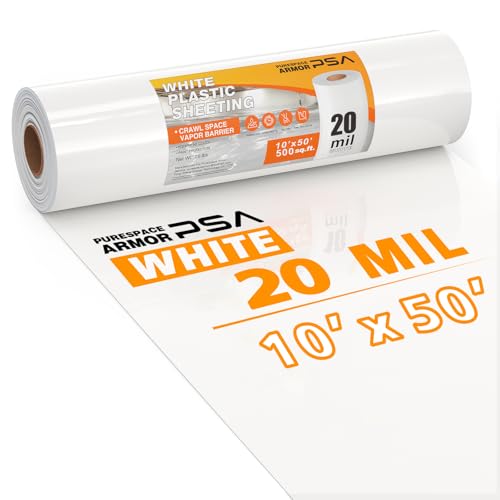
PureSpace Armor sells the same 20 mil white polyethylene in a 10-by-50-foot roll covering about 500 square feet. It's the practical choice for working alone in sections, or for patching a section of barrier that's already failed.
$199.49fromAmazonList priceHalf a roll's worth of material is a real advantage when you're by yourself. You can carry it through a hatch, unroll one bay at a time and cut to fit without fighting a hundred pounds of plastic in the dark. Owners describe it as thick, smooth and easy to work with, and a few mention sliding across it while doing plumbing work afterward.
Sometimes you don't need a whole new barrier. If an existing sheet is intact except where a plumber cut through it, or where a previous owner never covered the far corner, buying 500 square feet of proper 20 mil beats buying 1,000 and stashing the rest. The white surface reflects lamp light, which genuinely helps when you're lining up overlaps in an unlit space.
The thickness does the same work here as in our top pick. At two hundredths of an inch, this resists the gravel, duct hangers and pipe stubs that shred 6 mil, and low-density polyethylene stays pliable when it's cold. It's the same material story, just in a size one person can manage.
Flaws but not dealbreakers
Five hundred square feet doesn't go far. A typical crawl space needs two or three rolls, and every roll boundary is another taped seam to get right — so for a whole-space job, a wider or longer roll is the better buy.
At least one owner reports measuring the film thinner than advertised, which is a fair warning to check a corner with calipers when it arrives. There's no seam tape included, and no published ASTM classification or perm rating.
Who this is for
This guide is for homeowners covering the ground in a crawl space, either as a straightforward moisture fix in a vented space or as the plastic layer of a full encapsulation. If your crawl space smells musty, your hardwood cups in summer, or your HVAC runs harder than it should, laying a barrier is usually the highest-return afternoon you can spend under the house. It's a manageable job for most people with a respirator, kneepads and a helper for the heavy rolls.
It's not for you if you have standing water. Groundwater intrusion needs a French drain, a sump pump and exterior grading fixed first — a barrier laid over active water traps it against the foundation and makes wood rot worse, not better. We also don't cover the rest of the encapsulation system here: dehumidifiers, vent covers, foundation wall insulation and conditioned air supply are separate purchases, and a vapor barrier alone isn't the same thing as an encapsulated crawl space.
How we picked
We looked at five things across every listing. Thickness: the IRC minimum is 6 mil, but 10 to 20 mil is what holds up to gravel, pipe penetrations and installers, so thicker options started ahead. Width and coverage: wide rolls eliminate center seams, and seams are where these installations fail years later. Color: black blocks the diffuse light that grows mold under a clear sheet, and white earns its place only by making a dark space easier to work in. Included accessories: butyl-backed tape and sealant are required, not optional, so kits that bundle them save you a second order. Owner feedback: repeated reports of tearing, unmanageable roll weight or off-spec thickness counted for more than any listing claim.
Other crawl space vapor barriers worth considering
If you want tear resistance more than raw thickness: The Farm Plastic Supply - Dura Skrim String ($319.99) — Farm Plastic Supply's Dura Skrim is 6 mil film laminated to a woven string scrim, and that scrim is the whole story. A puncture in plain poly runs; in reinforced film it stops where it started. The 13-foot width also covers many crawl spaces in a single strip, and the black face blocks light while the white face bounces your work lamp. The catch is that it costs about as much as a true 20 mil sheet while giving you a 6 mil base layer, and there's no published perm rating or ASTM classification. We'd use it as a wall layer in a layered install, or as ground cover in a rough, rocky space where tear-arrest matters more than bulk.
The competition
This is what our research turned up in the crawl space barrier aisle, not a survey of everything sold. Plenty of regional suppliers and contractor-only brands make excellent reinforced barriers with documented ASTM E1745 Class A test data, and if your project needs that paperwork, it's worth calling a local supply house rather than shopping listings.
The Grip-Rite Heavy Duty Poly Sheeting for Interior ($28.73) — Grip-Rite's 4 mil poly sheeting shows up constantly in crawl space searches, and it shouldn't. At 4 mil it falls below the IRC's 6 mil minimum for a vented crawl space with exposed earth, and the product is built for what the listing says it's for: dust containment, painting and short-term jobsite protection. It'll tear on the first sharp rock, and covering 1,000 square feet takes four of the 250-square-foot rolls, which is more material handling than a single proper roll for less protection. The black film is fine and Grip-Rite is a legitimate brand — if you already own some, use it to curtain off the hatch while you clear debris, then lay a compliant barrier underneath.
Installation notes
Clear the sharp debris first — old brick, broken pipe, anything that'll punch through while you're dragging plastic over it. Overlap every seam by at least 12 inches and seal it with butyl-backed vapor barrier tape, pressing from the center outward so you don't leave air pockets. Skip duct tape and packing tape entirely; they let go within a season or two in a damp sub-grade space. At the foundation walls, fasten the barrier mechanically with termination strips or masonry anchors before you tape the transition, so the tape isn't carrying the weight. Wear a respirator, kneepads and long sleeves, bring more light than you think you need, and plan on most of a day for a typical crawl space. Check the barrier once a year for punctures after anyone's been down there.
Questions we get
What mil thickness should I use in a crawl space?
Ten to 20 mil is the practical range for a real installation. The IRC minimum is 6 mil, but thin plain poly tears on rocks, pipes and the installer during the job itself. Use 20 mil if you're fully encapsulating a conditioned crawl space, and 10 mil if you have a vented space with moderate seasonal dampness.
Do I need to cover the walls too, or just the ground?
For a vented crawl space, ground-only coverage satisfies the code and helps a lot. For a conditioned, unvented space, you need to run the barrier up the foundation walls to the sill plate so the whole thing seals as one envelope. Full encapsulation performs meaningfully better either way, and it's what building science guidance recommends when you can manage the extra work.
What is an ASTM E1745 Class A barrier, and do I need one?
ASTM E1745 is the standard for plastic vapor retarders in contact with soil, and Class A is the top tier — it requires water vapor transmission at or below 0.1 perm along with minimum tensile and puncture thresholds. Many energy codes require it for conditioned crawl spaces. Thickness alone doesn't earn the rating, so a 20 mil product isn't automatically Class A; ask the seller for test documentation if your permit depends on it.
Should I use black or clear plastic?
Black, almost always. Even without a light down there, diffuse daylight through foundation vents can support algae and mold growth on the soil under a clear sheet — the exact problem the barrier is supposed to prevent. Black pigment blocks it. White is acceptable when the visibility helps you install and inspect the barrier.
How long will a vapor barrier last?
A well-installed 20 mil reinforced barrier can run 25 to 30 years in normal residential conditions. Code-minimum 6 mil plain poly often degrades much sooner from foot traffic, light exposure and moisture cycling. Installation quality matters more than the material: unsealed seams, unanchored edges and unrepaired punctures shorten the life of any barrier.
What should I do about a crawl space with standing water?
Fix the water before you buy plastic. Standing water or high groundwater calls for a French drain, a sump pump and corrected exterior grading — a barrier can't hold back liquid water and will trap it against your foundation if you try. Once the water is under control, install a 20 mil barrier with taped seams and wall coverage as the permanent moisture layer.
Why you should trust us
For this guide:
- We read the specifications and feature bullets for every roll and kit here, and compared them against the IRC's 6 mil minimum for vented crawl spaces and the ASTM E1745 classifications that energy codes reference.
- We read through owner feedback on each product looking for repeated reports of tearing during installation, rolls too heavy to move through a hatch, and film that didn't match its stated thickness.
- We relied on published building science guidance about crawl space moisture and encapsulation rather than any first-hand work of our own.
- We read owner reviews on every listing, weighted toward the critical ones, because that is where the recurring failures show up.
- We have a systematic way of automatically fetching the latest prices, so the numbers on this page stay current.
- This is a research-focused guide, so the team may not own every product listed — though we often do own the top winners, which gives us extra context for the recommendations.
- We don't accept free products, and the retailer commission never changes which product we recommend.
Sources
Building Science Corporation — Crawl Space Guide: Conditioned vs. Vented Performance Data, Building Science Corporation
DOE Energy Saver — Crawl Space Insulation and Sealing, U.S. Department of Energy
ASTM E1745-17 — Standard Specification for Plastic Water Vapor Retarders Used in Contact with Soil or Granular Fill Under Concrete Slabs, ASTM International
IRC Section R408 — Under-Floor Space (2021 International Residential Code), International Code Council (ICC)
ENERGY STAR Version 3.2 — Sealed Crawl Space Requirements, ENERGY STAR (U.S. EPA)
Amazon product listings and owner reviews for all 7 products
Manufacturer specification pages for each product
Some passages in this guide may be paraphrased with AI help. Prices are refreshed automatically.
More like this.
Continue exploring home reviews and recommendations.

The Best Space Heaters for Large Rooms
A space heater earns its keep when it lets you leave the rest of the house cold. You warm the room you're actually sitting in, drop the central…

The Best Washable Area Rugs for Living Rooms
A living room rug takes more abuse than any other textile in your home. Muddy paws track across it, a toddler drops a full sippy cup on it, someone eats…

The Best Platform Bed Frames
A platform bed does one job, and it does it invisibly. It holds your mattress off the floor on a deck of slats, so you skip the box spring entirely.…

The Best Pressure Washer Surface Cleaners
A surface cleaner is the attachment that makes a pressure washer worth owning. Instead of one jet carving stripes into your driveway, two nozzles spin…

The Best Fireproof Home Safes
A home safe is something you buy once and then mostly ignore. It sits in a closet holding passports, the deed, birth certificates, a will, maybe a backup…

The Best Shower Drain Hair Catchers
Hair is what clogs a shower drain. Not soap, not hard water, not old pipes - hair. It slips through the drain cover, tangles around whatever's already…