The Best Fireproof Home Safes
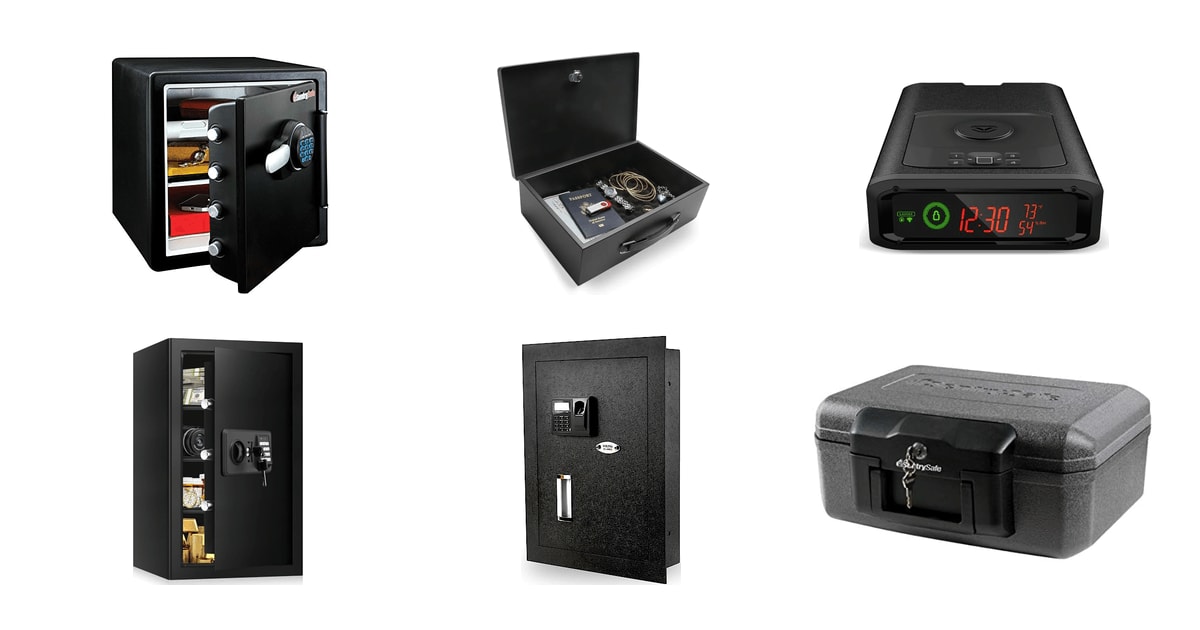
A home safe is something you buy once and then mostly ignore. It sits in a closet holding passports, the deed, birth certificates, a will, maybe a backup drive and some cash. You'll open it twice a year. The rest of the time it's doing one job: surviving a bad night that probably won't come. That's why the boring details matter more than the product photo — the certification label on the side, the water rating, and whether the thing is bolted to something solid.
Here's the honest part. No safe of this kind stops a thief who has time and a pry bar, and none of them protect your things forever. A fire rating buys minutes, not immunity. Digital media is worse off than paper, too: USB sticks, drives and discs start failing around 125°F, while a standard document safe only promises to hold under 350°F. And a safe light enough for you to carry upstairs is light enough for someone else to carry out the front door.
So shop for the fire you're likely to have, not the movie version. Crews typically knock down a house fire within 20 to 30 minutes of arriving, which makes a one-hour rating plenty of margin for nearly everyone. Then be realistic about how much you need to store, and anchor whatever you buy. We think that the SentrySafe SFW123FUL is the best fireproof home safe for most people, and that the SentrySafe 1210 chest is the one to buy if you rent, move often, or only need to protect a small stack of papers.
Everything we recommend
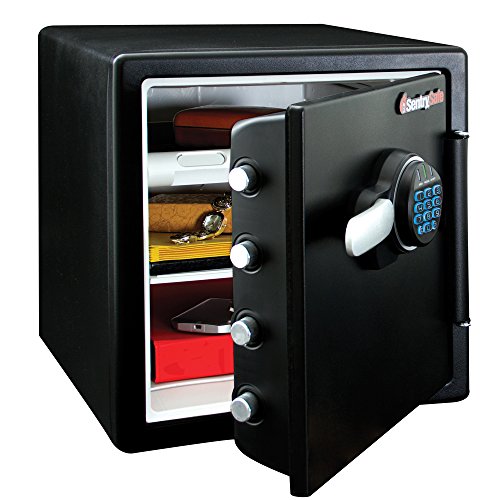
Certified fire and water protection, in a size most homes need
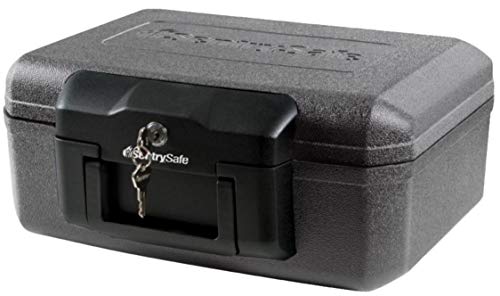
Grab-and-go fire protection for a small stack of papers

Far more room inside, with thinner credentials on paper
At a glance
| Product | Capacity | Fire Rating | Price | |
|---|---|---|---|---|
| SentrySafe Fireproof and Waterproof Steel Home SafeTop pick | 1.23 Cu Ft | 1 hr at 1700°F | $286.99 |
 | Honeywell Safes & Door Locks - SmallAlso consider | 0.17 Cu Ft | — | $45.14 |
 | VAULTEK Smart Station™ Biometric Smart Safe withAlso in lineup | — | — | $419.99 |
| 5.2 Cub Large Fireproof Safes for HomeAlso great | 5.2 Cu Ft | — | $139.99 |
 | Viking Security Safe VS-52BLX Hidden Wall BiometricAlso in lineup | — | — | $347.97 |
| SentrySafe Fireproof Safe with Key LockBudget pick | 0.18 Cu Ft | 1/2 hr at 1550°F | $36.46On sale |
How we picked
Certified, not claimed. We separated safes carrying a UL Classification or ETL Verification from those that only say "fire-resistant" in the marketing copy. A UL Class 350 rating means an independent lab held the exterior at 1,700°F and confirmed the interior stayed below 350°F for the full rated time.
Water as well as fire. Firefighting runoff destroys documents as thoroughly as flames do, so we gave weight to models with an ETL submersion verification rather than a vague splash-resistant claim. That test means 24 hours under eight inches of water with the contents dry.
Locks that open. Published lab work has found digital keypads failing to open at under 2% after heat exposure, against 7 to 9% for fingerprint-only models exposed to smoke and heat. We favored keypads and keys with mechanical overrides, and treated biometrics as a convenience feature rather than the primary lock.
Weight and anchoring. Consumer testing has shown that two people can walk a sub-55-pound safe out of a house in about 90 seconds. So we looked for bolt-down hardware in the box on every model, and we weighed heft as a security feature in its own right.
Room for what you own. We compared stated capacity against actual interior dimensions, because the two often disagree. Then we asked what each interior really fits: a passport stack, a legal-size folder, or a shelf of binders.
Top pick
Certified fire and water protection, in a size most homes need
SentrySafe Fireproof and Waterproof Steel Home Safe
This is a 1.23-cubic-foot steel safe that's UL Classified for an hour at 1,700°F and ETL Verified for a full day under water. It has a battery-powered keypad, four live-locking bolts, a shelf and a lit interior, and at 86 pounds it's a genuine nuisance to steal.
$286.99fromAmazonThe certifications are the whole point, and this safe has both. UL Classified means the inside stays cool enough for paper through an hour at 1,700°F. Paper ignites around 451°F, and the Class 350 standard leaves a real buffer under that. The ETL water verification covers 24 hours under eight inches of water. That second rating matters more than people expect, because firefighters flood a house, and a soaked deed is just as gone as a burned one.
Picture what actually happens in a bad fire: the ceiling gives way and your safe falls through it. This one is ETL Verified to survive a 15-foot drop during a fire and stay shut, which is the exact failure mode that ruins cheaper boxes. The door pops open, and everything inside cooks. Four live-locking bolts and a pry-resistant hinge bar cover the more ordinary threat of somebody with a crowbar and ten minutes alone.
At 1.23 cubic feet, it swallows what most households really keep. A folder of titles and deeds, passports for a family of four, the insurance binder, some jewelry, a couple of thumb drives. There's a shelf so the small things don't get buried under the big ones, plus an interior light. The light sounds like a gimmick until you're crouched in a dark closet at night hunting for one envelope.
It's also the safest bet on service. SentrySafe is the volume seller in North American homes, and that shows up in the unglamorous stuff: replacement keys, lost-combination recovery, support people who've handled your problem a thousand times. Owner feedback across the fire-and-water line lands in the same place year after year. The keypad works, the door shuts tight, and nothing interesting happens. Boring is exactly the right outcome here.
Flaws but not dealbreakers
It weighs 86 pounds, which sounds reassuring and isn't quite. Two people can move that, and two people will. Use the included bolt-down hardware and put it into a slab or floor joists, because an unanchored safe is just a locked box with a handle on it. You'll also need 14.75 inches of clearance in front for the door to open, which rules out some tight closets and cabinet bays.
The keypad runs on batteries, and dead batteries are the single most common complaint owners raise about any digital safe. Change them on a schedule, and keep the override key somewhere that isn't inside the safe. One more thing worth measuring: the usable interior is quite a bit smaller than the outside suggests, so check your largest binder against 12.6 by 11.9 by 13.8 inches before you commit.
Budget pickOn sale
Grab-and-go fire protection for a small stack of papers
SentrySafe Fireproof Safe with Key Lock
A 13-pound steel chest that's UL Classified for a half hour at 1,550°F and ETL Verified to protect CDs, DVDs and USB drives. It locks with a flat key, has a built-in carry handle, and holds roughly a folder's worth of documents.
$36.46fromAmazonList priceHalf an hour of fire protection sounds thin next to a full hour. In practice it covers a lot of ground. Crews usually control a residential fire within 20 to 30 minutes of arriving, and a chest sitting low in a closet rides out the coolest part of a burning room. You're trading margin for portability. For a passport, a birth certificate and a car title, that trade is usually fine.
The media rating is the sleeper feature here. Most document safes only promise to keep paper readable, and paper survives far hotter conditions than a thumb drive or a disc. This chest is ETL Verified specifically for CDs, DVDs and USB drives, so a backup copy of your photos has a real chance of coming out usable. If digital storage is the reason you're shopping at all, that's the label you should be hunting for.
It weighs 13 pounds and has a handle, which changes how you use it. You can slide it under a bed, take it with you to the next rental, or carry it out yourself if you've got thirty seconds and a clear path to the door. Bolt-down hardware comes in the box for when you'd rather it stayed exactly where you left it. Renters get both options, and that's rare.
The key lock is old-fashioned, and that's not entirely a downside. Nothing runs out of batteries, nothing needs reprogramming, and no keypad decides to fail at two in the morning. The flat key also holds the lid down during a fire, which is part of how the chest earns its rating in the first place. Keep both keys, and don't tape one to the bottom.
Flaws but not dealbreakers
Thirteen pounds is a one-hand carry. Anyone who finds it simply takes it and opens it later, which is why the bolt-down kit isn't really optional if you're leaving it in an empty house.
The interior is only 3.5 inches tall, so this is a documents-and-jewelry box, not a home for a laptop or a run of binders. There's also no waterproof rating, and a chest that survives the flames can still sit in the runoff for hours. Bag the contents in something sealed and you've handled most of that yourself.
Also great
Far more room inside, with thinner credentials on paper
5.2 Cub Large Fireproof Safes for Home
A cabinet-style digital safe about two feet tall, with three removable shelves, four 20mm locking bolts, and a keypad that sounds an alarm after three wrong codes. It holds far more than our other picks, which makes it the one for households with real volume to protect.
$139.99fromAmazonSome households have more than a folder to protect. Tax records going back a decade, a coin collection, camera bodies, the box of letters nobody is ever throwing out. This safe stands about two feet tall and takes three removable shelves, so you can organize it like a cabinet instead of piling everything into one heap. Nothing else in this guide comes close on usable volume.
The lock setup is more considered than the size suggests. You get a programmable keypad, two emergency override keys, and an alarm that trips after three wrong codes — genuinely useful if the safe lives somewhere a houseguest or a contractor might get curious. There's a silent mode for when you don't want the beeps announcing that you're opening it, and an LED that lights the interior when the door swings.
For its size, it's light, and that changes what you have to do about it. A tall cabinet at 36 pounds is easy to tip, walk and drag, especially when it's empty. The good news is that it ships ready to anchor. Bolt it into studs or a concrete floor and it turns into a real obstacle instead of a large box with your valuables pre-packed inside.
Flaws but not dealbreakers
The headline 5.2-cubic-foot capacity doesn't square with the dimensions listed on the same page, which work out to closer to half that. Plan around the measurements, not the number in the title.
It's also the least documented pick here on fire protection. The listing calls it fireproof and waterproof but names no UL classification and no ETL verification, and there's a physical reality behind that: our top pick weighs more than twice as much while holding half the volume, and the difference is insulation in the walls. Treat this as a big, sturdy cabinet with some fire resistance, not as a certified document vault. If the papers inside are irreplaceable, keep them in our top pick and use this for bulk.
Who this is for
Buy one of these if you keep anything at home that you can't reprint or re-buy. Deeds, titles, birth certificates, immigration paperwork, a will, appraisals, the backup drive with twenty years of photos on it. Renters count too, and probably benefit most, since a landlord's insurance doesn't cover your documents and you can't bolt a 300-pound vault into someone else's floor. If your valuables already live in a bank box and you're happy driving there, a home safe is a convenience purchase rather than a necessity.
This guide covers freestanding document safes and fire chests for the home — the kind you can carry in yourself and anchor with a drill. It doesn't cover full-size gun safes, in-floor vaults, or commercial burglary-rated cabinets, all of which start heavier and need different installation. It also doesn't cover UL Class 125 media safes, which hold the interior under 125°F for drives and discs. If digital storage is your main concern, read the media rating on the box carefully, because a standard Class 350 document safe isn't built for it.
How we picked
We started from what an independent lab will actually put in writing. Certification: a UL Classification or ETL Verification beats any listing that only calls itself fire-resistant, since the rating is a test result rather than a description. Water: an ETL submersion verification covers the firefighting runoff and basement flooding that ruin documents flames never reached. Access: keypads with a mechanical override key have a better published record after heat exposure than fingerprint-only locks, so biometrics are a bonus and not the plan. Weight and anchoring: two people can carry off a sub-55-pound safe in about 90 seconds, so bolt-down hardware in the box was non-negotiable. Capacity: we compared claimed cubic feet against the real interior dimensions, and asked what fits in practice.
Other fireproof home safes worth considering
If you want the smallest, simplest lock box for a handful of documents: The Honeywell Safes & Door Locks - Small ($45.14) — The Honeywell 6104 is 0.17 cubic feet and under eight pounds, with double steel walls, fire-resistant insulation, a reinforced hinge and a foam-padded floor. Two keys come with it, and that's the whole system — nothing to program, nothing to power. It slides into a desk drawer or a suitcase, and it's the right size for passports, a spare set of keys and a few certificates. What you give up is real: the listing names no UL fire classification and no water rating, so you're taking the insulation claim on faith. It's also light enough for a burglar to pocket, so it belongs somewhere out of sight.
The competition
This is what our research surfaced, not a survey of every safe on the market. A few models here are perfectly good products that lost on fire protection specifically, which is the one thing this guide is about.
The Viking Security Safe VS-52BLX Hidden Wall Biometric ($347.97) — The Viking Security Safe VS-52BLX is a wall safe designed to slot between studs, with a 500 DPI fingerprint reader that stores up to 32 prints, a PIN backup, two motorized 20mm deadbolts, a 5mm door, adjustable shelves and a lit interior. As a fast-access box for a handgun, medications or cash, it's well built and it hides completely. But the listing claims no fire rating at all, and recessing a safe into a wall cavity means drywall is doing most of the thermal work. Choose it if concealment and speed are the goal and your documents live somewhere else.
The VAULTEK Smart Station™ Biometric Smart Safe with ($419.99) — The Vaultek Smart Station is the most modern thing here by a mile: WiFi alerts for tampering, impacts and temperature or humidity changes, a fingerprint scanner, a keypad, a wireless charging pad on top, USB-C ports and a drawer that slides open on ball bearings. There's an anti-pry latch and a steel tether cable. It also has no fire rating, a very flat 9-by-7.5-by-1.5-inch interior, and a requirement to stay plugged into AC power. It's a nightstand safe with a phone dock attached, not a document vault — a fine second safe for the bedroom, not a replacement for a picking here.
Placement and anchoring
Put the safe on the lowest floor you reasonably can, since heat rises and a first-floor closet stays cooler than an upstairs one. Then bolt it down, because that step does more for your security than any other feature you paid for. Concrete gets a hammer drill and sleeve anchors; a wood floor gets lag bolts driven into joists, not just subfloor. Leave the door clearance the manual asks for. Once it's installed, store everything closed and locked with the feet down, keep papers in sealed bags as cheap insurance against water, and swap the keypad batteries on a schedule you'll actually remember. Keep the override key off-site, at a relative's house or in a bank box — not in a drawer beside the safe.
Questions we get
What is UL Class 350, and why does it matter?
It's the certification that separates a tested safe from a marketing claim. To earn it, a lab holds the safe's exterior at 1,700°F for the rated time and confirms the interior never exceeds 350°F. Paper ignites near 451°F, so that threshold leaves a real buffer. If a listing says "fire-resistant" but never names a UL or ETL rating, no one independent has verified anything.
Can a fireproof safe protect USB drives and hard drives?
Not reliably, unless it's rated for media. Drives, discs and memory cards degrade above about 125°F, and a standard document safe only promises to stay under 350°F. Look for a UL Class 125 media rating or an explicit ETL verification for CDs, DVDs and USB drives — our budget pick carries one. Otherwise, keep a copy of anything important in cloud storage or at another address.
Are fireproof safes waterproof too?
Some are, and it's not a small detail. Firefighters put thousands of gallons into a burning house, and a safe that survives the flames can end up sitting in water for a day. An ETL waterproof verification means the safe stayed sealed under eight inches of water for 24 hours. Our top pick has that rating; most of the smaller chests here don't.
How heavy does a safe need to be to stop a thief?
Heavier than you'd guess. Two people can carry a safe under about 55 pounds out of a house in roughly 90 seconds, and burglars know that a locked box means the valuables are already sorted for them. Weight helps, but anchoring is what really matters. Bolt down anything under 100 pounds, and honestly, bolt down the heavy ones too.
Is a fingerprint lock more reliable than a keypad?
For everyday convenience, fingerprints are great. For a fire, they're the weaker choice. Published lab work has found keypad locks failing to open at under 2% after heat exposure, while fingerprint-only models failed 7 to 9% of the time after simulated smoke and heat. Get biometrics if you want them, but insist on a keypad or mechanical key as the backup.
What shouldn't go in a fireproof home safe?
Anything you'd need in a hurry while evacuating, for starters — keep a digital copy of your insurance policy on your phone. Unprotected drives and discs belong in a media-rated safe. Skip anything that can be harmed by humidity, since these safes release moisture as they heat, and firearms plus ammunition need a purpose-built gun safe. And don't store the only copy of anything if you can avoid it.
Why you should trust us
For this guide:
- We read the UL and ETL certification language behind each safe's fire and water claims, and compared it against what the product listings actually promise.
- We reviewed published testing and buying guidance from Consumer Reports, Good Housekeeping and Wirecutter on how consumer safes behave under heat, water, impact and forced entry.
- We looked at recurring themes in owner feedback — dead keypad batteries, lost override keys, interiors smaller than expected — rather than individual complaints.
- We read owner reviews on every listing, weighted toward the critical ones, because that is where the recurring failures show up.
- We have a systematic way of automatically fetching the latest prices, so the numbers on this page stay current.
- This is a research-focused guide, so the team may not own every product listed — though we often do own the top winners, which gives us extra context for the recommendations.
- We don't accept free products, and the retailer commission never changes which product we recommend.
Sources
Best Fireproof Safes – Wirecutter / NYT, Wirecutter — tested SentrySafe SFW123GDC in drop, submersion, and thermal cycling tests; named it top overall pick
Best Fireproof Safes – Forbes Home, Forbes Home — ranked AMSEC BF series as the top premium pick for combined burglary and fire resistance
Best Home Safes – SafeWise 2026, SafeWise — compared lock failure rates across biometric and digital keypad models after simulated heat exposure
Home Safe Buyer's Guide – Consumer Reports, Consumer Reports — found safes under 55 lbs removable by two people in under 90 seconds, recommending bolt-down kits for all lightweight safes
Best Fireproof Safes – Bob Vila, Bob Vila — highlighted First Alert 2087F as the best compact pick for renters with limited installation options
Best Home Safes – Good Housekeeping Institute, Good Housekeeping Institute — lab-tested digital keypad vs. biometric access failure rates after thermal cycling; digital keypads averaged under 2% failure rate vs. 7–9% for biometric-only models
Best Fireproof Safes – This Old House, This Old House — provided installation guidance and anchoring torque specs for floor bolt-down kits
Best Fireproof Safes – Popular Mechanics, Popular Mechanics — tested safe door seal integrity and insulation degradation after repeated heat cycles
UL Standard 72: Fire Tests of Record Protection Equipment, UL (Underwriters Laboratories) — defines Class 350, Class 150, and Class 125 temperature thresholds and the testing protocol all certified safes must pass
Home Fires Statistical Report – NFPA, NFPA — reports ~346,800 home structure fires in 2023, with $9.9 billion in direct property losses
Residential Fire Losses – U.S. Fire Administration / FEMA, FEMA / USFA — documents average fire department response times and typical residential fire duration of 20–30 minutes
FBI Uniform Crime Report 2023 – Burglary Statistics, FBI — reported a burglary occurring approximately every 25 seconds in the U.S., reinforcing the importance of theft resistance alongside fire protection
Amazon product listings and owner reviews for all 6 products
Manufacturer specification pages for each product
Some passages in this guide may be paraphrased with AI help. Prices are refreshed automatically.
More like this.
Continue exploring home reviews and recommendations.

The Best Shower Drain Hair Catchers
Hair is what clogs a shower drain. Not soap, not hard water, not old pipes - hair. It slips through the drain cover, tangles around whatever's already…

The Best Indoor Air Quality Monitors
You can't see most of what you breathe at home. Cooking throws fine particles across the kitchen. A closed bedroom door pushes CO2 past the point where…

The Best Freestanding Electric Fireplaces
A freestanding electric fireplace asks almost nothing of you. There's no chimney, no gas line, no permit and no wood to split. You slide it against a…

The Best Knife Sharpeners
A dull knife is the most annoying tool in your kitchen, and the most dangerous one. It slides off a tomato skin instead of biting in. It crushes basil…

The Best Mattress Toppers for Back Pain
Back pain rarely announces itself at bedtime. It shows up at 6 a.m., when you roll over and your lower back feels like it's been clenched for hours. A lot…

The Best Wood Chippers and Shredders
A wood chipper earns its keep on one specific afternoon: the one where you'd otherwise be dragging a brush pile to the curb or paying someone to haul it.…