The Best Ellipticals for Small Spaces
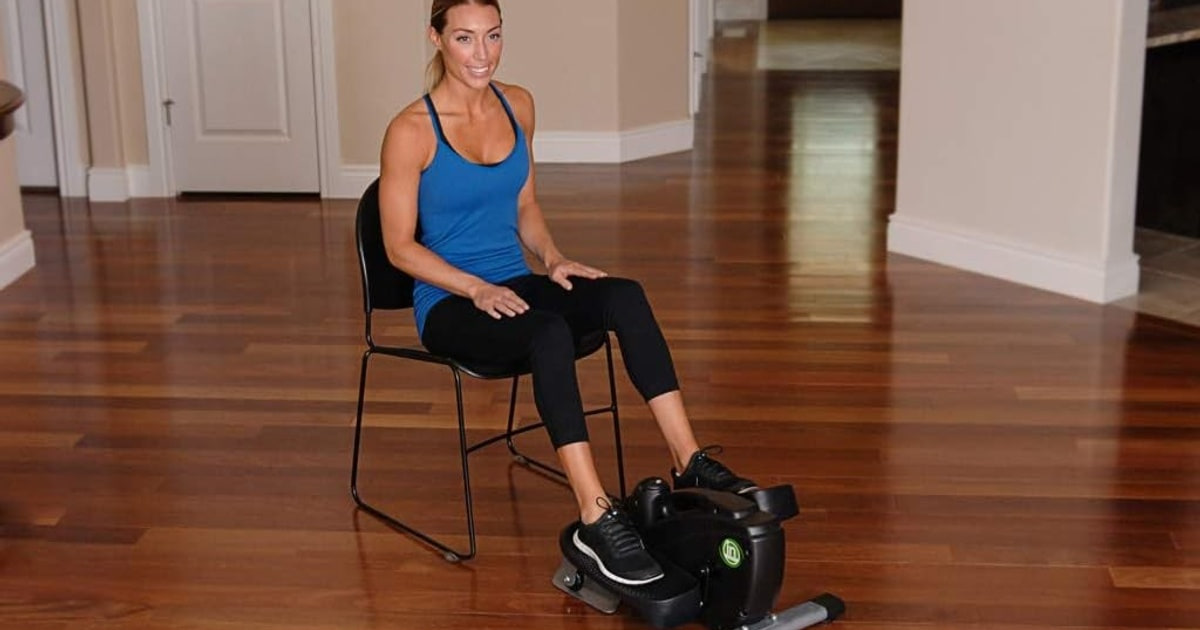
A small apartment doesn't leave much room for cardio. A treadmill eats a whole wall. A full-size elliptical eats a corner and then some. That's why compact ellipticals sell the way they do. Some are little pedal units you tuck under a desk and use while you answer email. Others are standing machines built on a shorter frame than the ones at the gym. Both let you move your legs without pounding your knees, and both can be quiet enough that your downstairs neighbor never learns your workout schedule.
Here's the honest part. Nothing in this category matches a gym elliptical. Under-desk models drop the handlebars entirely, so your arms sit out the whole session, and the stride is a short shuffle rather than a long glide. Verywell Fit frames mini ellipticals as a way to break up long stretches of sitting, not a substitute for harder cardio. Standing compact machines get closer. But they still shorten the stride, and Consumer Reports warns that strides under about 14 inches feel cramped if you're over six feet.
So choose based on where the thing will actually live. If it has to vanish under a desk between calls, buy a mini and accept the limits. If you've got a corner to give up and want a session that raises your heart rate on its own, buy a standing machine and measure the floor first. Insist on magnetic resistance either way, since it runs much quieter than friction pads. We think that the Cubii Move is the best elliptical for small spaces for most people, and that the Stamina InMotion Compact Strider is the one to buy if you want to pedal standing up as well as seated.
Everything we recommend

The quietest way to keep moving while you sit and work

A carry handle, a tension dial, and not much else
A full 18-inch stride if you can give up a corner
Prices as of Oct 24, 6:27 AM PT · Details
At a glance
| Product | Footprint (L x W) | Machine weight | Price | |
|---|---|---|---|---|
| Cubii Move Under Desk Elliptical Bike ExerciserTop pick | — | 17.6 lb | $159.99 |
 | Sunny Health & Fitness Magnetic Elliptical TrainerAlso consider | 58 x 22 in | 86.5 lb | $289.99 |
| Stamina InMotion Compact Strider Elliptical Foot PedalBudget pick | 24.5 x 17 in | 24 lb | Check price |
| SCHWINN Fitness 411 Compact EllipticalUpgrade pick | 53.8 x 24 in | 100 lb | $699 |
 | Marcy Magnetic Elliptical Trainer Cardio Workout MachineAlso in lineup | 51 x 20.5 in | 71.65 lb | $291.25 |
Prices as of Oct 24, 6:27 AM PT · Details
How we picked
Floor space. We compared published length and width for every machine, since that's what decides whether it fits under a desk or takes over a corner. Anything that needed a dedicated room was out.
Stride and fit. We read manufacturer stride specs alongside Consumer Reports' guidance that strides under about 14 inches feel cramped for users over six feet. Machines that state an 18-inch stride got credit for taller households.
Quiet operation. We favored magnetic resistance over friction, because published specs and owner feedback both point to it as the quieter system. In an apartment with shared walls, that's the difference between using a machine and avoiding it.
Weight capacity. Listed capacities across this category swing widely, so we checked each spec sheet rather than assuming a common number. Anything with an unusually low ceiling got flagged rather than hidden.
Tracking and setup. We looked at what each console reports, whether app tracking syncs or has to be typed in, and what owners say about assembly. Simple, honest displays beat features nobody uses.
Top pick
The quietest way to keep moving while you sit and work
Cubii Move Under Desk Elliptical Bike Exerciser
The Cubii Move is an under-desk elliptical that pedals smoothly and quietly enough to use during a video call. It's under 20 inches long, weighs less than 18 pounds, and tracks strides, mileage, duration and calories on a small LCD you can read from your chair.
$159.99fromAmazonPrices as of Oct 24, 6:27 AM PT · Details
Get this one if the machine has to disappear. Cubii lists it at roughly 19.7 inches long and 9.4 inches wide, and it weighs 17.6 pounds. That's a strip of floor about the size of a cereal box laid on its side. Cubii says most desks with about 28 inches of clearance will take it. When you're done, you nudge it under the couch with your foot.
The magnetic resistance is the real reason it works in an apartment. There are no friction pads rubbing, so you get a low hum instead of a grind. Cubii markets it as whisper-quiet and pitches it for use during calls, and that's the practical bar here: your coworkers shouldn't hear it, and neither should the unit next door. If you share a floor with someone, put a mat under it anyway.
The LCD is basic and that's fine. It shows stride count, distance, time and calories, which is all most people check. Cubii's app gives you a place to log those numbers and watch them add up over weeks. Seeing a stride count climb while you sit through a long meeting is a surprisingly good motivator, especially on days when you never make it outside.
Low impact is the entire point of buying one of these. The American Council on Exercise notes that elliptical training loads your joints far less than running, which is why it keeps getting recommended for home setups. Cubii pitches the Move for rehab and for gently rebuilding strength, and it activates six muscle groups in the legs. If your knees have opinions about impact, this is the gentlest thing here.
Flaws but not dealbreakers
You pedal sitting down, and your arms do nothing. There are no handlebars, no console tower and no standing option, so this is leg work only. The stride is short by design. If you're tall, measure the gap between your chair and the underside of your desk before you order, because knees hitting a desk drawer ends the workout fast.
App tracking isn't automatic. Cubii's listing says you enter your stats into the app by hand, so there's no Bluetooth sync doing it for you. The listing also doesn't state how many resistance levels the Move has, which makes it hard to know how much room you have to progress. If you want guided intervals and structured programs, this isn't the unit for that.
Budget pick
A carry handle, a tension dial, and not much else
Stamina InMotion Compact Strider Elliptical Foot Pedal
The Stamina InMotion Compact Strider is a bare-bones pedal unit with steel construction, non-slip pedals and an adjustable tension knob. It measures 24.5 by 17 inches, weighs 24 pounds, holds up to 250 pounds, and works under a desk or standing up if you steady yourself.
Check priceatAmazonPrices as of Oct 24, 6:27 AM PT · Details
It has a carry handle, which sounds trivial until you own one. You grab it off the office floor, walk it to the living room, and pedal through an episode of something. Then it goes in a closet. At 24.5 by 17 inches it doesn't demand a permanent spot in your home, and that's usually the difference between a machine you use and a machine you step around.
Standing is the feature the Cubii doesn't have. Stamina says you can use it seated or standing, so on days you want a bit more effort you can get up, hold a counter or a wall for balance, and drive through your legs instead of just spinning them. It's not a substitute for a real elliptical. But it's a genuinely different workout from the same small box.
The tension knob and the monitor cover the basics. You dial resistance up when pedaling gets too easy, and the built-in display shows strides, time and calories. Stamina also connects it to the müüv app if you want guided sessions rather than freestyling. For a first piece of home cardio, that's enough structure to build a habit without a subscription to think about.
Steel construction and non-slip pedals matter more than the spec sheet suggests. Cheap minis skate across hardwood and rattle under load. The oversized pedals take large shoes, and the 250-pound capacity covers most buyers, though it's the lowest ceiling among the picks here. Check that number against your own weight before ordering rather than assuming it's fine.
Flaws but not dealbreakers
Stamina doesn't publish a number of resistance levels, just an adjustable tension dial, so you're turning a knob until it feels harder. Strong riders may run out of resistance. The 250-pound capacity is also the lowest here, and it rules the machine out for some buyers entirely.
Standing use works, but it's awkward. There's nothing to hold, so you need a counter, a wall or a sturdy chair back nearby, and the short stride feels choppy upright. At 24 pounds it's also heavier than the Cubii Move despite doing less, which you'll notice on stairs.
Upgrade pick
A full 18-inch stride if you can give up a corner
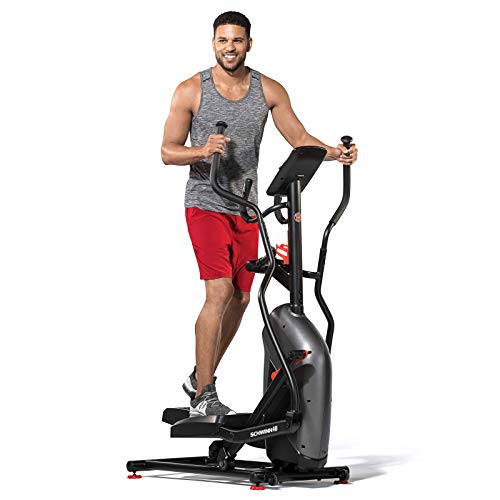
SCHWINN Fitness 411 Compact Elliptical
The Schwinn 411 is a standing elliptical with an 18-inch stride, 16 resistance levels, and both moving and fixed handlebars with heart-rate grips. Its frame runs about 53.8 by 24 inches, which is small for a real elliptical but far too big to hide.
$699fromAmazonPrices as of Oct 24, 6:27 AM PT · Details
This is the closest thing here to the machine at your gym. Schwinn gives it the 18-inch stride of a large elliptical on a compact frame, plus moving handlebars so your arms actually work. That combination is what the minis can't offer at any size. If you want a session that leaves you breathing hard without leaving the apartment, this is the one to buy.
Sixteen resistance levels is double what most compact ellipticals give you. That sounds like a spec-sheet detail, and it isn't. Eight levels run out quickly once you've been training a few months, and then your only way to work harder is to move faster. Sixteen levels leaves you somewhere to go, which is the difference between a machine you outgrow and one you keep.
The console covers time, speed, distance, calories and heart rate, and the contact grips read your pulse without a chest strap. Schwinn also connects it to the Explore the World app, which drops you into virtual routes through real places. Three courses come free and the rest need a subscription. Riding a coastline beats staring at a wall in a spare bedroom.
Consumer Reports' advice about stride length is the real argument for spending up. Short-stride machines feel cramped for anyone over six feet, and that cramped feeling is why compact cardio equipment ends up as a coat rack. At 18 inches, tall users get a stride that doesn't fight them. If you're the tall person in the household, start here.
Flaws but not dealbreakers
It weighs 100 pounds and it doesn't fold. Once it's assembled and in position, it stays there, so you're committing a corner of a room permanently. Assembly is a two-person job for the heavy pieces, and you'll want the box opened in the room where the machine will live.
The app is the part that keeps costing you. Three courses are free, and everything after that sits behind a subscription. You can ignore it and use the console, but you're paying for a feature you may not fully unlock. This is also the most expensive machine in this guide by a wide margin.
Who this is for
Buy one of these if your space is the binding constraint. That's renters, small-condo owners, anyone in a one-bedroom, and remote workers who want their legs moving during a long stretch of meetings. It's also a sensible category if you want low-impact cardio for cranky knees or hips, since the American Council on Exercise points to elliptical motion as gentler on joints than running. If you're rebuilding after an injury, check with a clinician first, but the movement itself is forgiving.
Skip this category if you have a garage or a basement and a real budget. A full-size elliptical will feel better and last longer, and you won't be trading stride length for square footage. Skip the under-desk minis entirely if you're expecting them to replace a run. This guide covers seated pedal units and standing ellipticals with compact frames. It doesn't cover treadmills, exercise bikes, rowers or full-size gym ellipticals.
How we picked
We started with the numbers that decide whether a machine survives in a small home. Floor space: we compared listed length and width, since a few inches decide whether it slides under a desk or blocks a walkway. Stride and fit: we leaned on Consumer Reports' warning that short strides feel cramped above six feet, and gave credit to machines that publish an 18-inch stride. Quiet operation: magnetic resistance won over friction, because it hums instead of grinding and that matters through a shared wall. Weight capacity: listed ceilings vary a lot here, so we read every spec sheet instead of assuming. Tracking and setup: we looked at what the console shows, whether app data syncs or has to be entered by hand, and what owners report about assembly.
Other ellipticals for small spaces worth considering
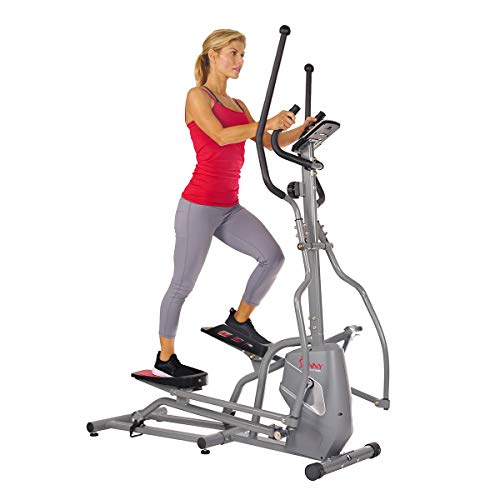
If you want a standing 18-inch stride without a name-brand console: The Sunny Health & Fitness Magnetic Elliptical Trainer — The Sunny Health & Fitness SF-E3810 gives you the same 18-inch stride as the Schwinn 411, with 8 magnetic resistance levels, pulse grips, a device holder for your phone and transport wheels so you can roll it to another room. What you give up is headroom to progress, since 8 levels is half of what the Schwinn offers, and a weight ceiling of 220 pounds that's the lowest in this guide. It's also the tallest machine here and runs 58 inches long, so calling it compact is generous. Measure before you commit.
The competition
This is what our research surfaced, not a survey of everything sold. Compact ellipticals turn over constantly, and plenty of models we didn't see could work fine for you. Here's the machine that came up short against the picks above.
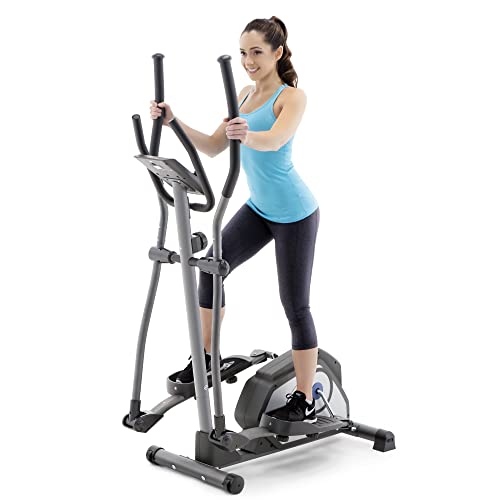
The Marcy Magnetic Elliptical Trainer Cardio Workout Machine — The Marcy NS-40501E is a standing elliptical with moving handles for upper-body work, 8 magnetic resistance levels, an LCD that logs time, distance and calories, and transport wheels for pushing it out of the way. It comes with a two-year limited manufacturer warranty, which is longer coverage than most of this group states. It lost to the Schwinn 411 on the specs that matter most: Marcy doesn't publish a stride length or a weight capacity, and 8 levels leaves less room to progress. Owner feedback on it is also the most divided of any machine here, mostly around long-term durability. Still, it takes a smaller footprint than the Sunny at 51 by 20.5 inches, and it's the pick if a stated warranty is what you care about.
Placement and upkeep
Measure twice before anything ships. For an under-desk unit, check the clearance from floor to desk underside and the gap between your chair and the drawers, because a few inches decide whether your knees clear. Put a mat under any machine on a hard floor. It kills the buzz that travels into a downstairs ceiling and keeps the unit from sliding as you pedal. Wipe the pedals down now and then, since sweat and dust make non-slip surfaces slick over time. Check the pedal bolts every month or two and snug anything that's loosened. Most of these consoles run on batteries, so keep spares around. Standing machines want a foot of clear space behind them for the handlebars and your elbows.
Questions we get
Can you get a real workout from an under-desk mini elliptical?
You can get real movement, but not a hard cardio session. Verywell Fit describes mini ellipticals as a way to counter long stretches of sitting, and they should supplement higher-intensity exercise rather than replace it. Pedaling for an hour of meetings adds up over a week. Just don't expect it to substitute for a run or a class.
What's the quietest option for an apartment with thin walls?
Look for magnetic resistance, which every machine in this guide uses. There are no pads rubbing a flywheel, so you get a hum rather than a grind. Cubii markets the Move as whisper-quiet and pitches it for use during video calls, which is about the strictest noise test a home machine faces. Add a mat underneath to stop vibration from carrying into the floor.
How much floor space does a compact elliptical actually need?
Under-desk minis need very little. The Cubii Move takes roughly 19.7 by 9.4 inches, and the Stamina InMotion about 24.5 by 17 inches. Standing machines are a different story: the Schwinn 411 runs 53.8 by 24 inches and the Sunny SF-E3810 is 58 inches long. Add about a foot behind a standing machine for handlebar swing and your own elbows.
Is a seated mini better than a standing compact elliptical?
It depends on whether you want exercise or motion. A seated mini gives you gentle leg movement while you work, and it disappears when you're done. A standing elliptical works your arms too, gives you a longer stride, and gets your heart rate up on its own. If you have the corner to spare, the standing machine is the better workout.
What should tall people look for?
Stride length, first and foremost. Consumer Reports advises checking stride against your height, because short-stride machines under about 14 inches feel cramped for users over six feet. The Schwinn 411 and the Sunny SF-E3810 both list an 18-inch stride, which suits taller users. If you're tall and buying an under-desk unit, measure your desk clearance carefully.
What weight capacity should I look for?
Check the listed number rather than assuming, because it varies a lot in this category. The Stamina InMotion lists 250 pounds and the Sunny SF-E3810 lists 220 pounds, which is the lowest here. Some manufacturers, including Marcy on the NS-40501E, don't publish a capacity at all. Give yourself margin above your own weight, since standing use loads the frame harder than seated pedaling.
Why you should trust us
For this guide:
- We read the manufacturer specifications and listing details for every machine here, comparing footprint, stride length, resistance type and stated weight capacity side by side.
- We drew on published guidance from Consumer Reports on stride length, the American Council on Exercise on low-impact training, and Verywell Fit on how mini ellipticals fit a desk worker's day.
- We reviewed recurring themes in owner feedback, particularly around noise, assembly and long-term durability, to inform the flaws and caveats in this guide.
- We read owner reviews on every listing, weighted toward the critical ones, because that is where the recurring failures show up.
- We have a systematic way of automatically fetching the latest prices, so the numbers on this page stay current.
- This is a research-focused guide, so the team may not own every product listed — though we often do own the top winners, which gives us extra context for the recommendations.
- We don't accept free products, and the retailer commission never changes which product we recommend.
Sources
Cubii Move — Official Product Specifications, Cubii
Cubii CTZN Circuit — Official Product Specifications, Cubii
Schwinn 411 Elliptical Machine — Official Product Page, Schwinn
Sunny Health & Fitness Magnetic Elliptical Trainer — Official Product Page, Sunny Health & Fitness
Stamina InMotion Elliptical Trainer — Official Product Page, Stamina Products
Best Compact Home Gym Equipment for Small Spaces, Wirecutter (NYT)
Under-Desk Exercise Equipment Reviews and Testing, Consumer Reports
Low-Impact Cardio Equipment for Apartments, Verywell Fit
Best Mini and Under-Desk Ellipticals, Tested, SELF
American Council on Exercise — Elliptical Training Benefits and Form, American Council on Exercise (ACE)
Amazon product listings and owner reviews for all 5 products
Manufacturer specification pages for each product
Some passages in this guide may be paraphrased with AI help.
Product prices and availability are accurate as of the date/time indicated and are subject to change. Any price and availability information displayed on Amazon.com at the time of purchase will apply to the purchase of this product.
More like this.
Continue exploring health reviews and recommendations.

The Best Foldable Treadmills for Small Spaces
A treadmill in a small apartment is a negotiation. It has to be big enough that you'll actually use it, and small enough that it doesn't eat your living…

The Best Portable Air Conditioners for Small Spaces
A portable air conditioner is what you buy when a window unit isn't an option. Maybe your lease forbids anything hanging outside. Maybe your windows slide…

The Best Under Desk Ellipticals
You sit more than you think. Between email, meetings and the occasional doomscroll, most desk days pass with your legs completely still. An under-desk…

The Best Ways to Display Collectibles in a Small Apartment
Collections grow faster than apartments do. The average US apartment has shrunk from 941 square feet in 2015 to about 882, and studios in big cities often…

The Best Foot Massagers for Plantar Fasciitis
If you have plantar fasciitis, you know the worst moment of the day comes before you're fully awake. You swing your feet to the floor, stand up, and a…

The Best Home Gym Flooring
Flooring is the part of a home gym nobody thinks about until something goes wrong. A dumbbell chips the concrete. The treadmill hums through the ceiling…