The Best Folding Treadmills
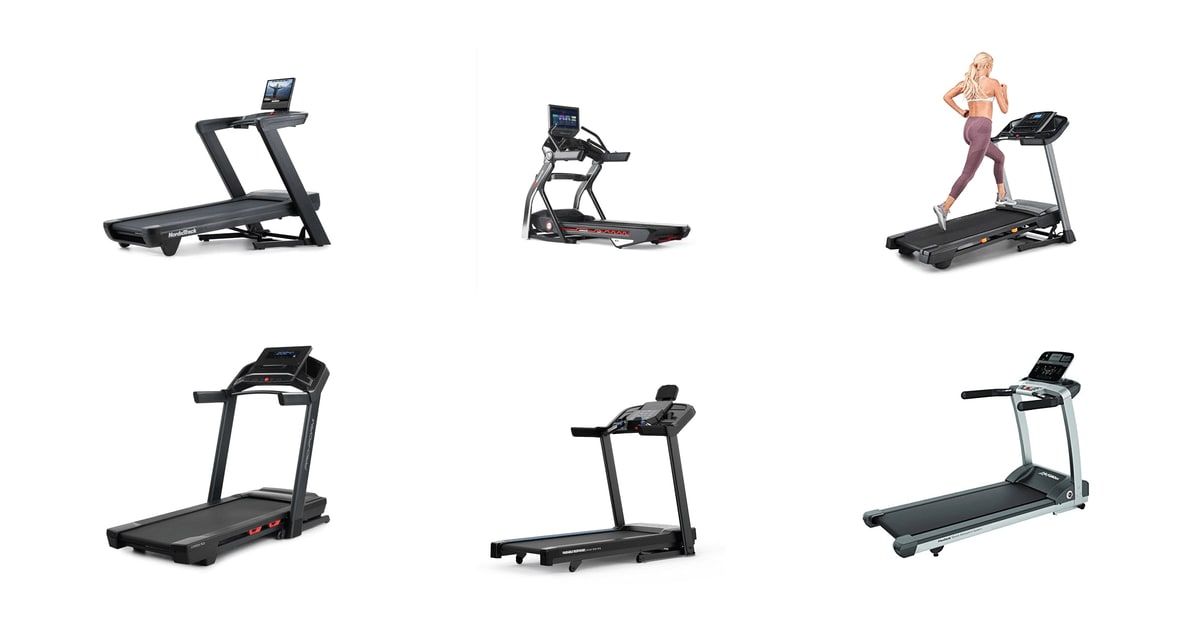
A folding treadmill has one job beyond running: it has to disappear when you're done. Most end up in a spare bedroom, a basement corner or a garage, where the deck is still the biggest thing in the room. So the numbers on the box aren't really what you'll care about. You'll care about how loud the motor sounds through the ceiling, whether the belt is wide enough that you're not tiptoeing down the middle, and how much of a fight it is to roll the thing out of the way.
Here's the honest part. No folding treadmill actually folds away. The deck swings up, the footprint shrinks by a foot or two, and you're still living with a few hundred pounds of steel parked against a wall. None of these go in a closet. They also share a weak spot that has nothing to do with running: delivery is rough, assembly takes two people and the better part of an hour, and when a control board or a motor quits, owners across every brand here describe long waits for parts.
We went through spec sheets, published reviews and a lot of owner feedback for six folding treadmills, from a plain walker's machine to a wide-deck runner with a screen bigger than a laptop. What separated them wasn't top speed. It came down to deck size, incline range, how much of the console is locked behind a subscription, and how the frame behaves once someone runs on it every day. We think that the ProForm Carbon TLX is the best folding treadmill for most people, and that the NordicTrack T Series 6.5 S is the one to buy if you mostly walk and want to spend less.
Everything we recommend

Runner-grade speed and incline, without the giant screen

Plenty of machine if you walk more than you run

Decline, a huge screen and a frame built for daily miles
At a glance
| Product | Max Speed | Max Incline | Price | |
|---|---|---|---|---|
| NordicTrack Commercial 1750 Treadmill with iFITUpgrade pick | 0-12 MPH | 12% to -3% | $1,999On sale |
 | BowFlex Treadmill 22Also in lineup | — | -5% to 20% | $4,299.99 |
| NordicTrack T Series 6.5 S TreadmillBudget pick | 0-10 MPH | 0-10% | $743.85On sale |
| ProForm Carbon TLX TreadmillTop pick | 0-12 MPH | 0-12% | $999 |
 | Horizon Fitness T101 Connect TreadmillAlso consider | — | Up to 10% | $699.99On sale |
 | Life Fitness T3 Treadmill with Track ConnectAlso in lineup | — | — | $4,119 |
How we picked
Deck and cushioning. A running surface has to be wide and long enough that you're not correcting your stride every few steps. We favored full-size decks over compact ones and read owner feedback for reports of belt slip or a harsh landing.
Incline and speed. We treated a 12% incline and a 12 mph belt as the threshold for a machine you can genuinely train on. Models that stop short still qualify for walkers, and we say so.
Subscription strings. We checked how much of each console still works without a paid membership. A screen that goes dark when you stop paying isn't really a feature you own.
Fold and footprint. We compared folded dimensions, weight and whether the deck lowers on a hydraulic bar. A deck that drops hard is a deck people stop folding within a month.
Support after a failure. Owner feedback across every brand here keeps landing on parts availability and service response. We weighted repeated reports of long waits heavily, and ignored one-off complaints.
Top pick
Runner-grade speed and incline, without the giant screen
ProForm Carbon TLX Treadmill
The Carbon TLX gives you the parts that matter for running — a 12 mph motor, a 12% incline and cushioning under a full-size deck — and it skips the big touchscreen. Owners consistently describe it as solid and quiet underfoot, and it's the machine we'd point most people to first.
$999fromAmazonOn paper, this is a runner's treadmill. The belt tops out at 12 mph, the deck climbs to a 12% incline, and ProShox cushioning sits under a full-size running surface. Those three numbers separate a machine you can train on from one you can only walk on. Plenty of folding treadmills stop at 10 mph and a 10% grade, which is fine right up until you want intervals or a real hill workout.
The console is where ProForm made its trade. You get a 7-inch LCD and a shelf for your phone or tablet instead of a big touchscreen. If you want iFIT's guided runs, they play on your own device and the treadmill still adjusts its speed and incline to match the trainer. If you don't, the LCD shows pace, distance and time, and that's all a lot of people ever look at anyway.
Weight sounds like a downside until you're running. At 221 pounds the Carbon TLX plants itself, and owners describe it as stable and quiet under a hard stride, without the side-to-side wobble that shows up in lighter frames. It's heavier than a walking-focused machine and lighter than the two big-screen units here, which is about the right place to land.
Folding it is a one-hand job. The frame lifts and locks, and a hydraulic foot bar lowers the deck instead of letting it drop. That matters more than it sounds. A deck you have to wrestle down is a deck you'll stop folding after the first week, and then the treadmill just lives in the middle of the room forever.
Flaws but not dealbreakers
The iFIT side is the shaky part. The hardware runs fine in manual mode, but owners who bought this specifically for auto-adjusting trainer workouts report app crashes and dropped connections, and the support experience when that happens isn't good. If the guided classes are the whole reason you're buying, go in knowing the app is the weakest link.
Assembly is a two-person job at the end, whatever the box says. It's over two hundred pounds, and the last steps involve lifting the deck into position. The 7-inch display also looks plain next to the touchscreens on the bigger machines here — no video, no map, just numbers.
Budget pickOn sale
Plenty of machine if you walk more than you run
NordicTrack T Series 6.5 S Treadmill
The T Series 6.5 S covers the basics well: 10 mph, a 10% incline, cushioning and a frame that folds and rolls. It's the machine to buy if you want a real treadmill rather than a walking pad, and you don't need a screen built into it.
$743.85fromAmazonList priceThis is the most familiar treadmill in the guide, and that's part of the point. It's been sold widely enough that the failure modes are well documented and parts aren't hard to find. Owner feedback runs consistently positive on the things you notice first: it arrives well packed, two people can put it together in under an hour, and the incline steps up smoothly instead of lurching.
The specs are a step down from our top pick, not a different sport. Ten miles per hour is a six-minute mile, which is faster than most people ever run at home. A 10% incline is a steep hill. If you're a walker who wants hills, or a jogger doing easy miles a few times a week, you'll never get near the ceiling.
It's sturdier than the weight suggests. At 203 pounds it's the lightest of our three picks, and owners who run on it regularly describe it as planted rather than springy. The front wheels do most of the work when you move it, and the assisted foot bar handles the deck on the way down, so folding it doesn't turn into a project.
The console is an LCD, not a tablet. Your stats show up on the screen and you bring your own device for iFIT, which needs a paid membership to unlock the guided library. Plenty of owners skip the subscription entirely, prop a phone on the shelf and walk to whatever they were already watching.
Flaws but not dealbreakers
A handful of owners describe units that stopped working almost immediately after setup, sometimes within minutes of a professional install. The wait for a part or a technician afterward is the common thread. That risk runs through this whole category, but it stings more on a machine you bought to keep things simple.
If you're a serious runner, you'll find the limits. There's no decline, the top speed is lower than our other picks, and the display is a plain LCD with no built-in classes. It's a treadmill that expects you to bring the entertainment.
Upgrade pickOn sale
Decline, a huge screen and a frame built for daily miles
NordicTrack Commercial 1750 Treadmill with iFIT
The Commercial 1750 adds what the smaller machines can't: a -3% decline, a 16-inch pivoting touchscreen and RunFlex cushioning on a 265-pound frame. It's the one to buy if you run most days and want the treadmill to drive the workout for you.
$1,999fromAmazonList priceDecline is the feature nobody thinks about until they have it. Dropping to -3% lets you simulate the back half of a hilly route instead of just the climb, and it loads different muscles than flat running does. It's gentler on the knees than it sounds, as long as you keep the speed sensible. Nothing else here offers it except the BowFlex.
The 16-inch screen is the reason people buy this one. It pivots, so you can turn it toward the floor for the yoga and strength classes that come with the membership. Owners point to the scenic runs and guided hikes as the thing that keeps them coming back, and the console handles streaming apps too. All of that needs the paid membership.
The rest of the range is generous. Speeds run to 12 mph, the incline climbs to 12%, and the cushioning takes the sting out of long walks and easy runs according to owners who use it daily. At 265 pounds it doesn't shift under a sprint. It also doesn't shift when you want it to, so plan on two or three people for delivery day.
Measure the room before you commit. Folded, it's still 65 inches tall and eats most of a wall, and the footprint when it's down runs about six and a half feet long. Check the ceiling if it's going in a basement, because you're adding your own height on top of the deck. This is the biggest machine we'd put in a normal house.
Flaws but not dealbreakers
Owner feedback splits harder here than on any other pick. Most people are delighted. But a real minority describe machines that didn't work correctly out of the box, and what follows is usually weeks of phone calls, missing parts and appointments that don't happen. Buy it somewhere with a return policy you trust.
Almost everything on that screen needs the membership, billed monthly for the household. Without it you've still got a very good treadmill with manual controls, but you're staring at a 16-inch console you're barely using. It also won't run YouTube, which comes up often from owners who assumed it would.
Who this is for
This guide is for you if you've got a spare room, a basement or a garage and you want to walk or run indoors no matter what the weather's doing. You need to be honest about the space, though. Even the smallest machine here is roughly six feet long and weighs about as much as two adults, and it doesn't get much smaller when folded. If you're in a second-floor apartment and you plan to run early, your neighbors will know — cushioning helps with your joints, not with the thumping below.
We're covering motorized folding treadmills built for home use. That leaves out under-desk walking pads, which are a different tool for a different job, along with non-folding commercial decks and curved manual treadmills. If your goal is a few thousand extra steps while you answer email, a walking pad will serve you better and cost far less to move.
How we picked
We compared six folding treadmills on five things. Deck and cushioning: enough width and length to run naturally, with no owner reports of slipping belts or jarring impact. Incline and speed: a 12% grade and a 12 mph belt as the bar for real training, with lower ceilings noted rather than disqualified. Subscription strings: how much of the console keeps working if you never pay for the app. Fold and footprint: folded height and length, total weight, and whether the deck lowers on an assisted bar. Support after a failure: repeated owner reports about parts, technicians and warranty response, which turned out to be the biggest difference between these brands.
Other folding treadmills worth considering
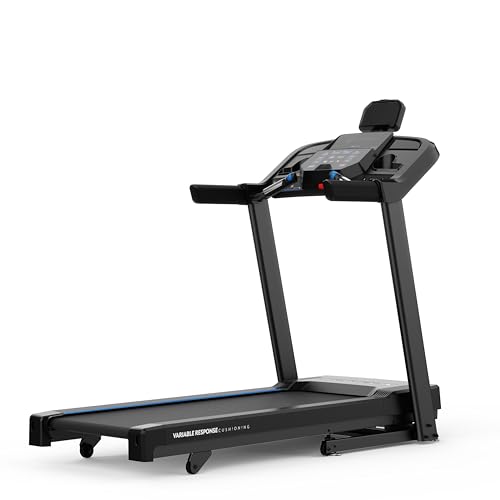
If you want the quietest, simplest machine: The Horizon Fitness T101 Connect Treadmill ($699.99) — The Horizon T101 Connect drops the screen and gives you a dial for speed and another for incline, which is the fastest way to change pace mid-run without looking down. The deck is a full 20 by 55 inches with three-zone cushioning, and the Johnson drive system is genuinely quiet — the recurring theme in owner feedback is that it doesn't announce itself through the floor. At 180 pounds it's the easiest one here to reposition by yourself. You give up real range: the incline stops at 10%, there's no built-in display beyond the basics, and several owners report trouble getting the Bluetooth link to the Peloton and JRNY apps working as advertised. The owner base is small, too, and a few describe failures inside the first several months followed by slow parts support.
The competition
This is what our research surfaced, not a census of every folding treadmill on the market. Two machines didn't make the picks, for completely different reasons.
The BowFlex Treadmill 22 ($4,299.99) — The BowFlex Treadmill 22 has the most extreme incline range of the group — a 20% climb and a 5% decline — plus a 22-inch screen, Bluetooth speakers and a heart-rate armband in the box. It's also the heaviest thing here by a wide margin at 336 pounds, and it needs a serious amount of room. What kept it out of the picks is the pattern in owner feedback, which is more polarized than any other machine in this guide. The complaints cluster around two things: the streaming apps people bought it for sit behind the JRNY membership, and warranty service after a failure is slow and frustrating. If you want maximum incline for hiking workouts and you can live with that risk, it's the only machine here that climbs that steep.
The Life Fitness T3 Treadmill with Track Connect ($4,119) — The Life Fitness T3 with the Track Connect console comes from a company best known for the equipment in commercial gyms, and the frame reflects that — 243 pounds, a long deck and a straightforward console rather than a media screen. The problem is how little there is to go on. The listing carries no feature detail at all, and owner feedback is essentially nonexistent, so we can't tell you how it holds up in a house or what happens when something breaks. If you've used one at a club and you already know you like it, that's a reasonable basis for buying. Otherwise our picks are far better documented.
Care and maintenance
Two habits keep a treadmill alive. Wipe the deck and the console after every session, since sweat is what corrodes the electronics underneath, and vacuum the dust from under the machine every month or so — a treadmill motor pulls in whatever is on your floor. The other habit is the belt. Check that it's tracking centered every few weeks, adjust the rear tension bolts per the manual if it drifts, and lubricate underneath it with silicone on whatever schedule the manual gives you. A dry belt is the most common reason a home treadmill starts hesitating mid-stride. Unplug it and pull the safety key when you're done if there are kids in the house, and put a mat under it on a hard floor.
Questions we get
Do I need the subscription?
No, but you'll lose most of what the screen does. Every iFIT machine here runs fine in manual mode with speed, incline, time and distance, and the BowFlex and Horizon work the same way with their apps. What the membership buys is the guided classes, the scenic runs and the auto-adjusting workouts. If you don't want it, buy the treadmill with the smaller console and put the difference elsewhere.
How much space do I actually need?
More than the folded dimensions suggest. Plan on roughly six to seven feet of length and about three feet of width while you're using it, plus a couple of feet of clear space behind the belt in case you stumble off the back. Folded, these still stand five to six feet tall against a wall. Measure ceiling height too if you're on an incline in a basement.
Can I really run on a folding treadmill?
On these, yes. The folding mechanism doesn't compromise the deck — all of our picks weigh over two hundred pounds and stay planted at speed. Where you'd notice a difference is on a lightweight compact machine or a walking pad, which flex underfoot once you pick up the pace. Look at the frame weight and the deck size, not the fold.
Will my downstairs neighbors hear it?
Probably. Cushioning protects your joints, not the floor below you. The motor noise on the Horizon is genuinely low, and every machine here is quieter than an old belt-drive unit, but footfall transmits through a floor no matter what you buy. A dense rubber mat helps a little. A ground floor or a slab helps a lot more.
What usually breaks first?
Based on owner reports across these brands, it's the electronics and the motor controller rather than the mechanical parts. The belt and deck wear slowly if you keep them lubricated. The frustrating part isn't the failure rate so much as the repair — long waits for parts and technicians come up repeatedly, so buy from a seller whose return window gives you time to catch an early problem.
Why you should trust us
For this guide:
- We read manufacturer spec sheets and published reviews for every folding treadmill in this guide, and compared deck sizes, incline ranges, fold mechanisms and console requirements side by side.
- We read through owner feedback for each model, looking for failure modes that repeat rather than one-off complaints.
- We have not run on any of these machines, so every claim here traces back to a published specification, a published review, or a pattern in what owners report.
- We read owner reviews on every listing, weighted toward the critical ones, because that is where the recurring failures show up.
- We have a systematic way of automatically fetching the latest prices, so the numbers on this page stay current.
- This is a research-focused guide, so the team may not own every product listed — though we often do own the top winners, which gives us extra context for the recommendations.
- We don't accept free products, and the retailer commission never changes which product we recommend.
Sources
Best Treadmills of 2026 — Wirecutter (NYT), Wirecutter — testers logged 200+ miles across candidates, measuring motor consistency and handrail ergonomics under 60-minute sustained runs
Best Folding Treadmills — Consumer Reports, Consumer Reports — reliability ratings and owner survey data covering long-term motor and belt durability across brands
Best Home Treadmills, Tested by Fitness Experts — Good Housekeeping, Good Housekeeping — hands-on testing covering cushioning feel, incline smoothness, and ease of fold mechanism across 15+ models
Best Treadmills for Home — Runner's World, Runner's World — expert running-coach evaluation of deck size, belt stability at speed, and foot-strike feel for serious runners
Best Treadmills Tested and Reviewed — Verywell Fit, Verywell Fit — certified personal trainer assessments with heart rate accuracy and incline response testing
Best Treadmills 2026 — Forbes Health, Forbes Health — pricing analysis and subscription cost breakdowns showing total 5-year cost of ownership across iFIT, JRNY, and subscription-free models
Best Treadmills — Tom's Guide, Tom's Guide — technology-focused testing of touchscreen responsiveness, app integration, Bluetooth stability, and smart-home compatibility
Best Treadmills for Home Gyms — Garage Gym Reviews, Garage Gym Reviews — stress testing showing motor thermal performance at sustained 8 mph for 60-minute sessions and long-term ownership data from community surveys
Calorie Expenditure on Treadmill at Varying Inclines — Harvard Health Publishing, Harvard Health Publishing — calorie burn tables by body weight, speed, and incline grade used as reference benchmarks in treadmill content
The Relationship Between Running on a Treadmill and Overground — Journal of Sports Sciences, Journal of Sports Sciences (Jones & Doust) — foundational study establishing that 1% treadmill incline corrects for reduced caloric expenditure versus outdoor running
Treadmill Buying Guide — American Council on Exercise (ACE), ACE Fitness — guidelines on motor power, deck size minimums, and weight capacity recommendations from certified exercise physiologists
Treadmill Market Size & Forecast Report — Grand View Research, Grand View Research — market data showing the global treadmill market projected to reach $5.6 billion by 2027, driven by sustained home gym adoption
Amazon product listings and owner reviews for all 6 products
Manufacturer specification pages for each product
Some passages in this guide may be paraphrased with AI help. Prices are refreshed automatically.
More like this.
Continue exploring health reviews and recommendations.

The Best Folding Windshield Sun Shades
Park in an open lot on a July afternoon and your car turns into an oven. AAA's research found that a cabin sitting in 80-degree weather climbs to 116…

The Best Foldable Treadmills for Small Spaces
A treadmill in a small apartment is a negotiation. It has to be big enough that you'll actually use it, and small enough that it doesn't eat your living…

The Best Treadmills for Home Cardio
A treadmill is the rare piece of home equipment you either use four times a week or hang laundry on. What separates the two outcomes usually isn't the…

The Best Under-Desk Treadmills
Sitting still for eight hours is the default of desk work, and most of us feel it by mid-afternoon. An under-desk treadmill is a way out that doesn't…

The Best Dog Treadmills
Most dogs don't get enough exercise, and most owners know it. Work runs long, it rains for a week, the pavement hits scorching in July, and the walk gets…

The Best Knee Braces for Arthritis
Arthritic knees don't hurt on a schedule. They hurt on the third flight of stairs, an hour into a grocery run, or the morning after a weekend in the…