The Best Gifts for Piano Players
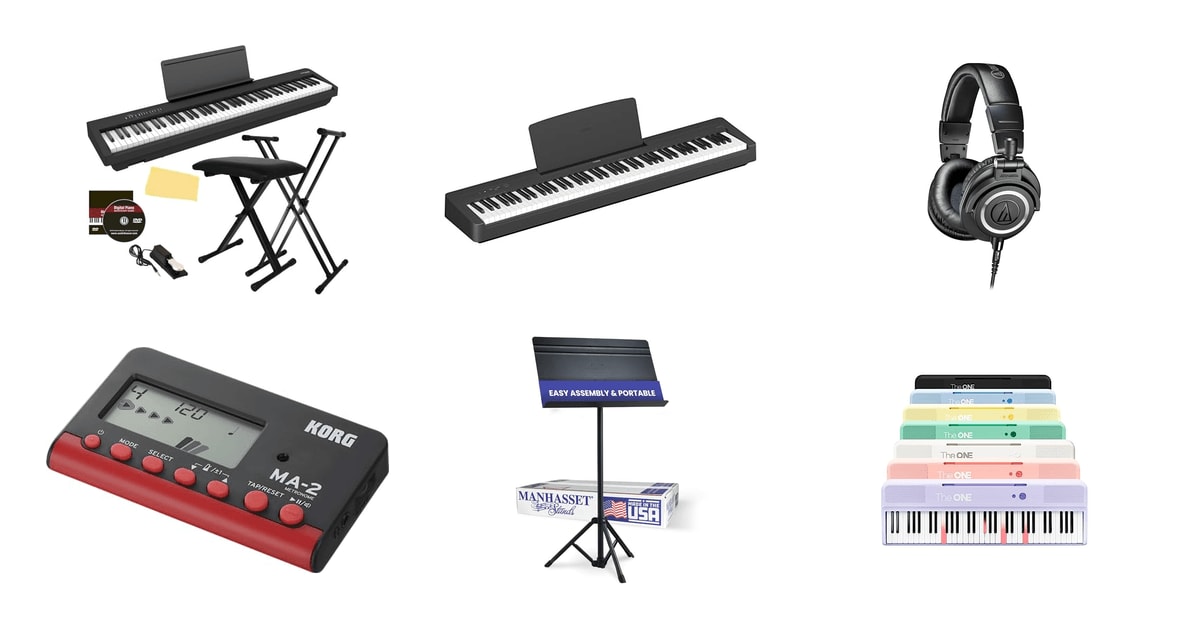
Piano is a hobby made of small frictions. The sheet music slides off a flimsy stand. The good keyboard sits in the corner because there's nowhere to put it. Practice happens at nine at night, when everyone else in the house is trying to wind down. Most of that is fixable with things a pianist won't buy for themselves, because spending on your own hobby always feels a little indulgent. That's the gap a gift fills. You're not buying them a piano so much as a better hour at the one they already play.
Here's the honest part: nothing on this page replaces an acoustic piano, and no gift makes practice fun on its own. A digital piano with weighted keys gets close to the feel of the real thing, but it's still an approximation, and a picky player will notice. Light-up keys and learning apps help a beginner start, then quietly stop mattering after a year. And any gift that assumes a skill level — a method book, a hard piece of repertoire — is the one most likely to end up in a drawer.
So shop for the situation rather than the talent. Someone in a third-floor apartment needs headphones more than another songbook. A kid who might quit in two weeks doesn't need hammer action yet. An adult who's been playing on a borrowed keyboard for three years absolutely does. Our favorite gift here is the Yamaha P-145BT, and the Audio-Technica ATH-M50x is the safe choice when you're less sure of their taste or what they already own.
Everything we recommend
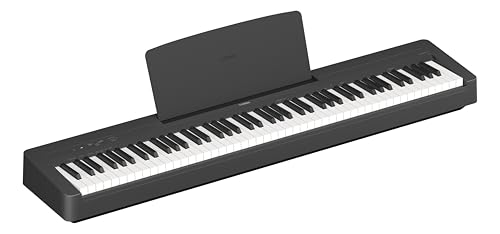
A real weighted keyboard that still fits a small apartment
For the adult learner with no room for an upright
$469.99 from Amazon
Grand-piano touch, with the stand and bench already included
For the player who's outgrown a hand-me-down keyboard
$749.99 from Amazon
Private practice at midnight, in headphones they'll use daily
For the pianist who shares walls with roommates or a baby
$159 from Amazon
A small, unglamorous gift they'll actually use every day
For the student who rushes every tricky passage
$18.99 from Amazon
For the kid who needs the keys to light up to keep going
$179.99 from Amazon
For the pianist who plays from thick books and hauls them around
$79.75 from AmazonHow we picked
Weighted key action. For any keyboard gift, we treated hammer action as the dividing line, following buying guides and teacher recommendations that rank it above sound engine and connectivity. Unweighted keys build habits a student has to unlearn later.
Fits their actual room. We compared published dimensions and weights, because a gift that doesn't fit the apartment gets stored, not played. Anything that a single person can move and set up scored higher.
Quiet practice built in. Headphone output came up constantly in owner feedback from people in apartments and shared houses. We favored gifts that make practice possible at eleven at night.
Complete on day one. We looked at what's in the box against what a pianist needs before they can play a note — pedal, music rest, power supply. Gifts that require a second purchase before the first song lose momentum fast.
Things they won't self-buy. Forum gift threads and teacher recommendations point to the same practical items that pianists skip when spending their own money. Those make better presents than another songbook.
Our favorite gift
A real weighted keyboard that still fits a small apartment
Yamaha 88-Key Digital Piano with Weighted Keys
For the adult learner with no room for an upright
It's a full 88 keys with weighted action, and it's slim and light enough that one person can carry it upstairs and set it up alone. Bluetooth lets your recipient play along with songs from a phone, and the headphone jack keeps late-night practice private.
$469.99fromAmazonWeighted keys are the one thing you shouldn't compromise on. MusicRadar's digital piano buying guide puts hammer action ahead of polyphony, connectivity and brand as the criterion that matters most to intermediate and advanced players. The P-145BT uses Yamaha's Graded Hammer Compact action, so the low keys push back harder than the high ones, the way they do on a real piano. That's what lets someone move between this and a teacher's acoustic without relearning their touch.
It weighs about 24 pounds and is roughly five inches deep. That sounds like trivia until you picture the room it's going into. It slides behind a couch, sits on a desk, goes in a car trunk for a trip home at the holidays. If your recipient lives somewhere an upright would never fit, this is the version of the gift that actually gets used instead of resented.
Bluetooth audio means they can stream a song from their phone and play along through the piano's own speakers. It also connects to Yamaha's Smart Pianist and Rec'n'Share apps, which is how most self-taught adults practice now. You don't need to buy them a subscription for this to pay off. Plenty of free lesson videos work fine, and the connection is there when they want more.
The box includes the music rest, a sustain foot switch and the power adapter, so nothing is missing on the morning they open it. That matters more than it sounds. A gift that needs a second order before it can be played loses most of its momentum, and the sustain pedal is the part beginners don't know to ask for.
Flaws but not dealbreakers
There's no stand or bench, and no dedicated case. A keyboard sitting on a dining table is playable but awkward, so budget for a stand if the recipient doesn't already have one. That's an easy add-on, but it does mean this isn't quite a complete setup out of the box.
The controls are minimal — a lot of the settings live behind button combinations or the app rather than a screen. Owners also occasionally report a single key arriving silent or unresponsive, which is a warranty exchange rather than a fix. Check it works before wrapping if you can.
The built-in speakers are fine for a bedroom and thin in a big open room. Anyone who wants the piano to fill a living room will end up plugging into headphones or an external speaker.
Best splurge
Grand-piano touch, with the stand and bench already included
Roland FP-30X 88-Key Digital Piano - Black
For the player who's outgrown a hand-me-down keyboard
This is the digital piano serious players keep recommending, sold with an adjustable stand, a bench and a sustain pedal in the same box. The hammer action is the closest thing to a real grand you'll find in a portable instrument, and the speakers fill a living room.
$749.99fromAmazonThe action is the reason to spend here. Roland's PHA-4 Standard keyboard includes escapement — the subtle notch you feel near the bottom of a grand piano key — across all 88 keys, with heavier resistance in the bass and a lighter touch up top. A player who takes lessons on an acoustic will feel the difference within about thirty seconds. Someone who's only ever played a spring-loaded keyboard will feel it too, and probably won't want to go back.
It's the rare gift that's genuinely complete. The bundle adds an adjustable stand, a bench, a deluxe sustain pedal, an instructional DVD and access to online lessons, so there's no second shopping trip and no improvised setup on a kitchen chair. If you're giving this to a household that doesn't own any piano gear yet, that packaging is worth as much as the specs.
The SuperNATURAL sound engine tracks how hard the keys are struck, so quiet passages stay quiet instead of collapsing into one flat volume. A 22-watt stereo speaker system pushes that through a normal-sized room without sounding strained. Owners describing the tone tend to reach for comparisons to a small grand, which is a high bar for something that lives against a wall.
Two headphone outputs sounds like a footnote and isn't. A teacher and a student can both listen while the rest of the house stays quiet, which is exactly how lessons run in an apartment. Bluetooth MIDI and audio are onboard too, so it pairs with learning apps and Roland's Piano Partner 2 without a cable running across the floor.
Flaws but not dealbreakers
The full bundle ships around seventy pounds and arrives in a box you cannot hide in a closet. If the surprise matters, plan the delivery date carefully or accept that they'll know something large is coming.
Assembly is the weak point. Owners regularly describe the stand instructions as confusing, and it's a two-person, thirty-minute job rather than a five-minute one. Building it before you gift it is a kindness.
There's no display, so changing settings means button combinations or the app, and it's easy to forget the sequence. A few owners have also had frustrating experiences with support when a fault appeared after a month or two, which is worth knowing before you commit to the most expensive gift on this page.
Safest bet
Private practice at midnight, in headphones they'll use daily
Audio-Technica ATH-M50X Professional Studio Monitor Headphones
For the pianist who shares walls with roommates or a baby
These closed-back studio headphones are a fixture in home studios, and they measure close to neutral, so a piano still sounds like a piano through them. Plug them into any digital instrument and your recipient can practice late without anyone else in the house hearing a note.
$159fromAmazonThis is the gift that's almost impossible to get wrong. RTINGS.com measurements put the M50x within roughly 3dB of a neutral target across most of the audible range, which means it isn't adding bass thump or scooping out the midrange where a piano lives. Your recipient hears what they're actually playing, including the parts they'd rather not hear. That's the whole point of practicing in headphones instead of just going quiet.
The circumaural earcups seal around the ear, so the sound stays in and the household stays out of it. That solves the real problem for anyone in an apartment, a dorm, or a house with a sleeping toddler: the practice window shrinks to whenever the neighbors are awake, and this reopens it. Both digital pianos on this page have a headphone jack, so it works with either.
And it doesn't only get used at the piano. These are a standard pair of everyday headphones — 45mm drivers, a detachable cable, replaceable parts, earcups that swivel for one-ear monitoring. If your recipient turns out to already own a pair, that's the one real risk, and it's worth a quick check with someone who knows their setup.
Flaws but not dealbreakers
They clamp firmly out of the box, which is what makes the seal work and what makes the first few weeks a bit tight. The pressure eases with use, but people with larger heads or glasses often notice it during long sessions.
The earpad material wears. Owners who've had them for years consistently report the coating flaking off and needing replacement pads, which are cheap and easy to swap but still a chore. And they're wired only, so they're tethered to the instrument.
Best stocking stuffer
A small, unglamorous gift they'll actually use every day
Korg MA-2 Digital Metronome for Orchestral Instruments
For the student who rushes every tricky passage
A pocket metronome with a big display, tap tempo and a battery that runs for hundreds of hours. It's the thing every piano teacher tells students to use and almost no student buys for themselves, which is exactly what makes it a good small gift.
$18.99fromAmazonPiano World's recurring gift threads land on the same two answers year after year: a metronome and a decent music stand are the practical things pianists appreciate and never purchase. The reason is simple. Nobody feels good about buying themselves a device whose entire job is to point out that they're speeding up in the hard bar.
The MA-2 covers everything a piano student will run into. Tempo runs from 30 to 252 BPM, time signatures go from zero to nine beats per measure, and there are eight rhythm patterns for practicing subdivisions. Tap tempo lets them match a recording by ear. A timer mode turns it into a practice clock, which is quietly the most useful feature for a kid who's supposed to put in twenty minutes.
It runs about 400 hours on alkaline batteries and fits in a coat pocket or a music bag, so it travels to lessons instead of living on top of the piano. The display is large enough to read from the bench. For a small gift, it's the one on this list most likely to still be in use in five years.
Flaws but not dealbreakers
The beep is polarizing. It's a high, sharp electronic tick, and there's no volume control — some owners find it piercing at close range, while others say it disappears under a loud instrument. For piano at normal practice volume it's usually fine, but it's the most common complaint by a wide margin.
It's also a small, plain-looking thing to unwrap. On its own it can read as an afterthought, so it works best tucked in alongside a bigger gift or a stack of sheet music.
Who this is for
This guide is for people shopping for someone else: a parent buying for a kid halfway through a first year of lessons, a partner buying for an adult who's been teaching themselves on a borrowed keyboard, a friend who knows the person plays and not much beyond that. We've sorted the picks so you can shop by situation rather than by skill level, because you often don't know the skill level, and asking spoils the surprise.
It covers instruments, practice tools and accessories that suit a beginner through an experienced hobbyist. It doesn't cover acoustic pianos, sheet music or method books — those depend on knowing someone's exact level and repertoire, and the wrong-level book is the single most reliably unused piano gift there is. If your recipient is a professional performer with a fully kitted-out studio, treat this as a starting point rather than an answer; at that point a gift card toward the specific thing they've been eyeing beats a guess.
How we picked
We built this list around what a gift has to survive once the wrapping's off. Key action: for anything with keys, weighted hammer action came first, since buying guides and teachers both rank it above every other spec for players past the first few months. Room and portability: we read published dimensions and weights as a practical question — can one person carry it up a staircase and find a wall for it? Quiet practice: headphone output and closed-back isolation mattered because so much owner feedback is really about neighbors and sleeping kids. Complete in the box: we checked whether a pedal, music rest and power supply are included, so nobody's ordering parts on the twenty-sixth. Rarely self-bought: we leaned on recurring forum gift threads to find the practical items pianists appreciate but skip when it's their own money.
Other gifts for piano players worth considering
If you want a gift that teaches while they play: The The ONE Smart Keyboard COLOR 61 Lighted ($179.99) — The ONE Smart Keyboard COLOR lights up its 61 full-size keys in time with a companion app, color-coding left hand, right hand and both together, with thousands of pieces of sheet music, instructional videos and games behind it. For a visual learner — or a kid who bounces between hobbies — that turns practice into something closer to a game, and parents of easily distracted children are the ones who rate it most enthusiastically. It runs on batteries, weighs under eight pounds, and connects over Bluetooth and USB MIDI. What it gives up is the thing our top picks are built on: the keys aren't weighted, and 61 of them means classical repertoire starts running off the end of the keyboard within a year or two. Check which apps are available on your recipient's phone platform first, since coverage isn't identical across Android and iOS.
More good gifts
These are the gifts our research surfaced, not everything on the market — think of this last section as more good gifts rather than runners-up. The product below suits a specific kind of pianist very well, and if that description matches your recipient better than anything above, buy it without hesitating.
The Manhasset Voyager Portable Folding Music Stand ($79.75) — The Manhasset Voyager is the portable version of the stand you've seen in every school band room and orchestra pit, with retractable legs and a desk that detaches so the whole thing folds down for a car. It suits the pianist who accompanies a choir, plays in a ukulele group or a community ensemble, or just refuses to fight a flimsy wire stand that buckles under a hardback anthology. The desk is large and the base is genuinely stable, which is the whole reason to spend on a stand at all. It's a heavier, more serious object than the folding stands most people own, and a few owners find the plastic twist-lock less solid than the classic fixed-base Manhasset — the desk can slide when you adjust the height one-handed. If your recipient never leaves the house with their music, the standard non-folding version is the better buy.
Setup and gifting notes
Two things make a keyboard gift land better. First, set it up before you give it. Assembling a stand and bench on Christmas morning while someone waits is the fastest way to drain the excitement, and the stand instructions on bundled kits are often the worst part of the whole experience. Second, put the pedal and the headphones in the same box. A digital piano without a sustain pedal sounds abrupt and unmusical, and a beginner won't know that's why it feels wrong. Beyond that, keep the instrument out of direct sun and away from a radiator, wipe the keys with a dry cloth rather than anything wet, and pull the batteries out of a metronome that's going into storage. If you're gifting headphones, keep the receipt — fit is personal, and a return is a normal part of that particular gift.
Questions we get
What's a good gift for a piano player who already owns a piano?
Go for the things that improve the hour they spend at it. Closed-back headphones for silent practice, a metronome, or a sturdy stand that holds a thick book open are all reliably welcome. These are exactly the items pianists appreciate and don't buy for themselves, since spending on your own hobby always feels a bit self-indulgent.
Should I get a 61-key or an 88-key keyboard for a beginner?
It depends on how likely they are to stick with it. Sixty-one lighted keys are great for a curious kid or a casual adult who wants to see if the interest holds, and cost far less. But anyone taking lessons will hit the end of the keyboard within a year, and unweighted keys build habits they'll have to unlearn, so buy 88 weighted keys if they're already committed.
Are headphones actually a good gift for a pianist?
They're one of the highest-satisfaction gifts on this list, especially for anyone living with roommates, family or thin walls. Headphones turn a practice window that closes at nine into one that stays open all night. Look for closed-back studio headphones with a fairly neutral response, so the piano tone they hear matches what they're actually playing.
Is a metronome a boring gift?
It's boring to unwrap and genuinely useful for years, which is a good trade. Every teacher asks students to practice with one, and almost no student buys one voluntarily. Pair it with something larger if you're worried it looks slight on its own — it works better as the small extra than as the whole gift.
Should I buy sheet music or a method book?
Only if you know their exact level, and most givers don't. Wrong-level books are the most consistently unused piano gift there is: too easy is patronizing, too hard is discouraging. If you want something in that spirit, a well-made music stand or a gift card to a sheet music retailer lets them choose.
What's a good gift for a child who just started lessons?
Something that makes daily practice less of a fight. A light-up keyboard works well for a young visual learner who needs the immediate feedback, and a metronome with a timer mode helps a kid see when the required twenty minutes are done. If they're already on a real piano at home, a proper bench-height setup and headphones do more than another toy instrument.
Why you should trust us
For this guide:
- We read manufacturer specifications for each instrument and accessory here, focusing on key action, key count and what's actually included in the box.
- We compared published measurements and buying guides from outlets including RTINGS.com and MusicRadar to weigh sound accuracy and purchase criteria.
- We read through recurring gift-recommendation threads on Piano World and owner feedback themes for each product to find the complaints that show up repeatedly rather than once.
- We read owner reviews on every listing, weighted toward the critical ones, because that is where the recurring failures show up.
- We have a systematic way of automatically fetching the latest prices, so the numbers on this page stay current.
- This is a research-focused guide, so the team may not own every product listed — though we often do own the top winners, which gives us extra context for the recommendations.
- We don't accept free products, and the retailer commission never changes which product we recommend.
Sources
Best Digital Pianos 2026 — Sweetwater Sound, Sweetwater
Best Headphones for Piano Practice — RTINGS.com, RTINGS.com
The Best Digital Pianos and Keyboards — MusicRadar, MusicRadar
Best Gifts for Musicians — Wirecutter (NYT), Wirecutter
Roland FP-30X Full Specifications — Roland Official, Roland
Yamaha P-45B Product Specifications — Yamaha USA, Yamaha
Audio-Technica ATH-M50x Full Review — RTINGS.com, RTINGS.com
Korg MA-2 Metronome Specifications — Korg Official, Korg
Piano World Forum — Acoustic & Digital Piano Discussion, Piano World
Simply Piano by JoyTunes — App Store Editorial, Apple App Store
Best Piano Learning Apps 2026 — Tom's Guide, Tom's Guide
The ONE Smart Piano Review — Digital Trends, Digital Trends
Amazon product listings and owner reviews for all 6 products
Manufacturer specification pages for each product
Some passages in this guide may be paraphrased with AI help. Prices are refreshed automatically.
More like this.
Continue exploring lifestyle reviews and recommendations.

The Best Science Books for Curious Readers
A good science book has to do two jobs at once. It has to be accurate, and it has to keep you turning pages on a Tuesday night when you're tired. Most…

The Best Disc Golf Bags and Backpacks
A disc golf bag is the one piece of gear you touch on every single hole. You'll sling it on and off two dozen times a round, dig through it for a putter…

The Best Backyard Fire Pits
A fire pit is the rare backyard purchase that actually changes how you use your yard. It pulls people outside on a chilly evening, it stretches your patio…

The Best Robotic and Cordless Electric Lawn Mowers
Mowing is the one chore you can't skip, and for most of us it eats a Saturday morning every week from April through October. Electric mowers change that…

The Best Gifts for History Buffs
History buffs are easy to shop for and easy to get wrong. They already own the popular books. They've seen the documentaries you'd think to mention. What…

The Best Lawn Mowers
Mowing is a chore you repeat 25 or 30 times a season, so small annoyances compound fast. A mower that starts on the first try, cuts evenly, and doesn't…